Longibranchus putnami
A small nudibranch found on reef muck sites in Luzon and Bali, sitting in warm 25-31 C water year-round and easy to miss without a sharp eye.
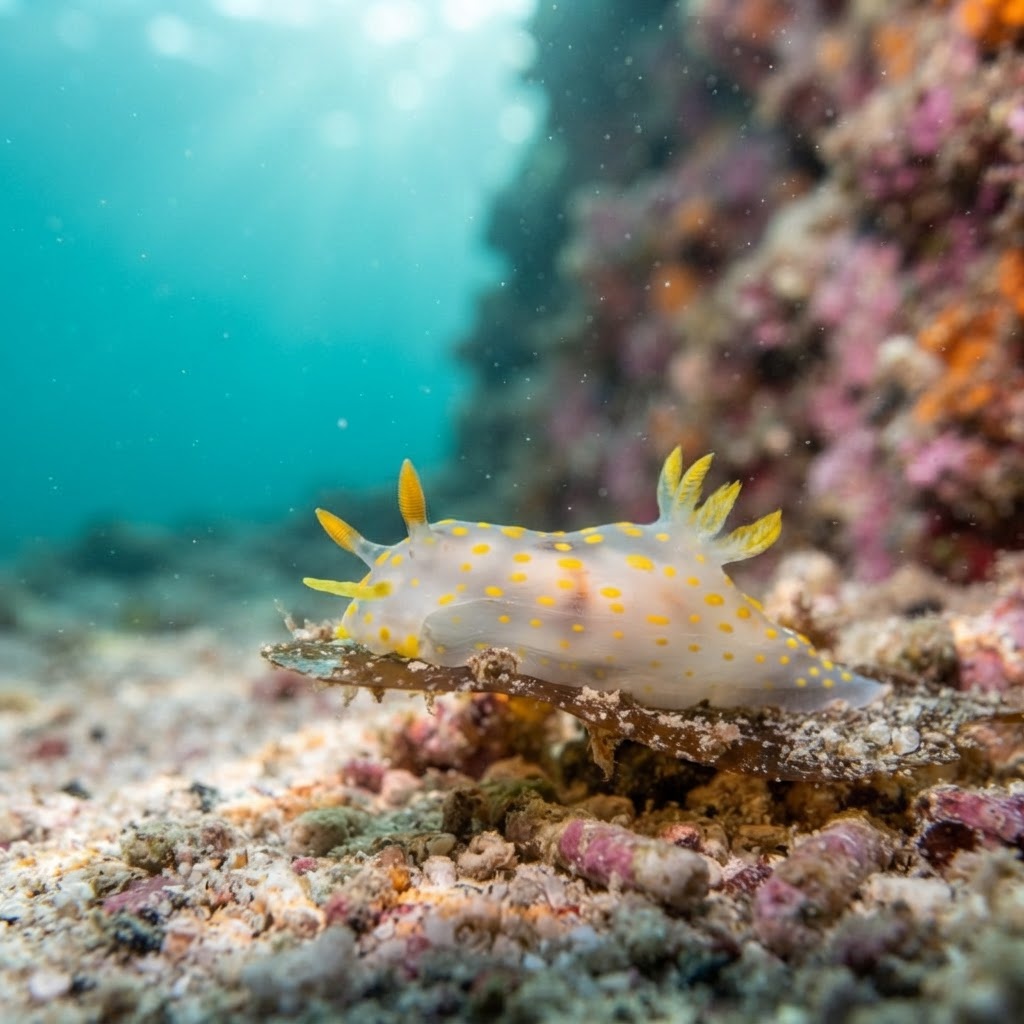
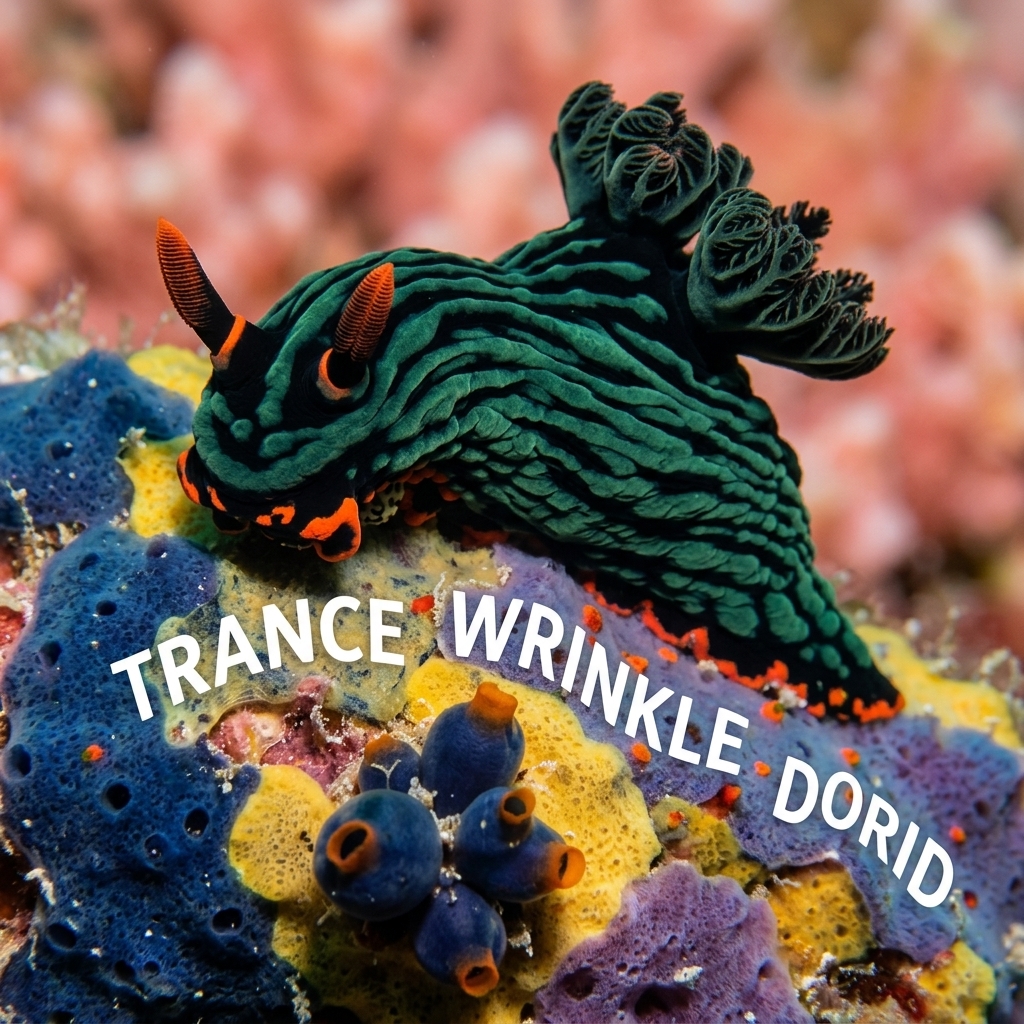
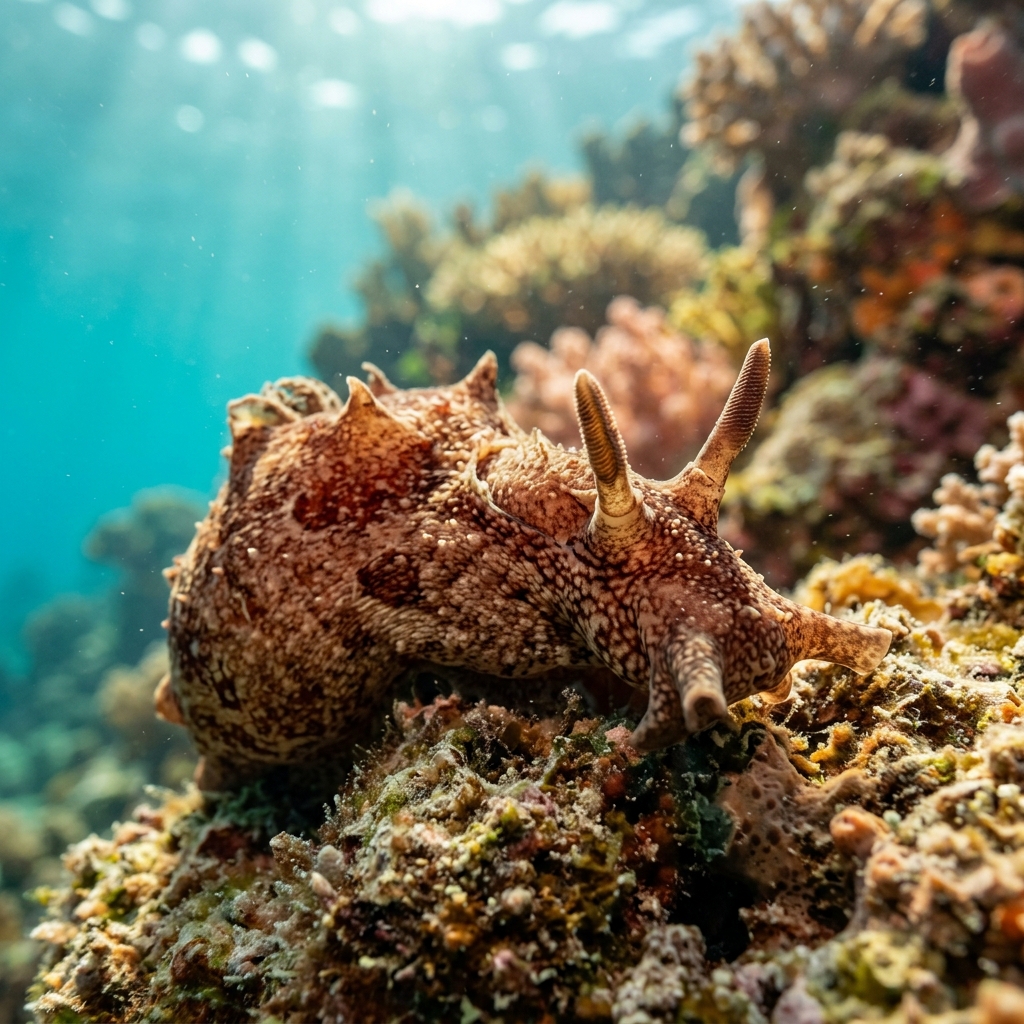
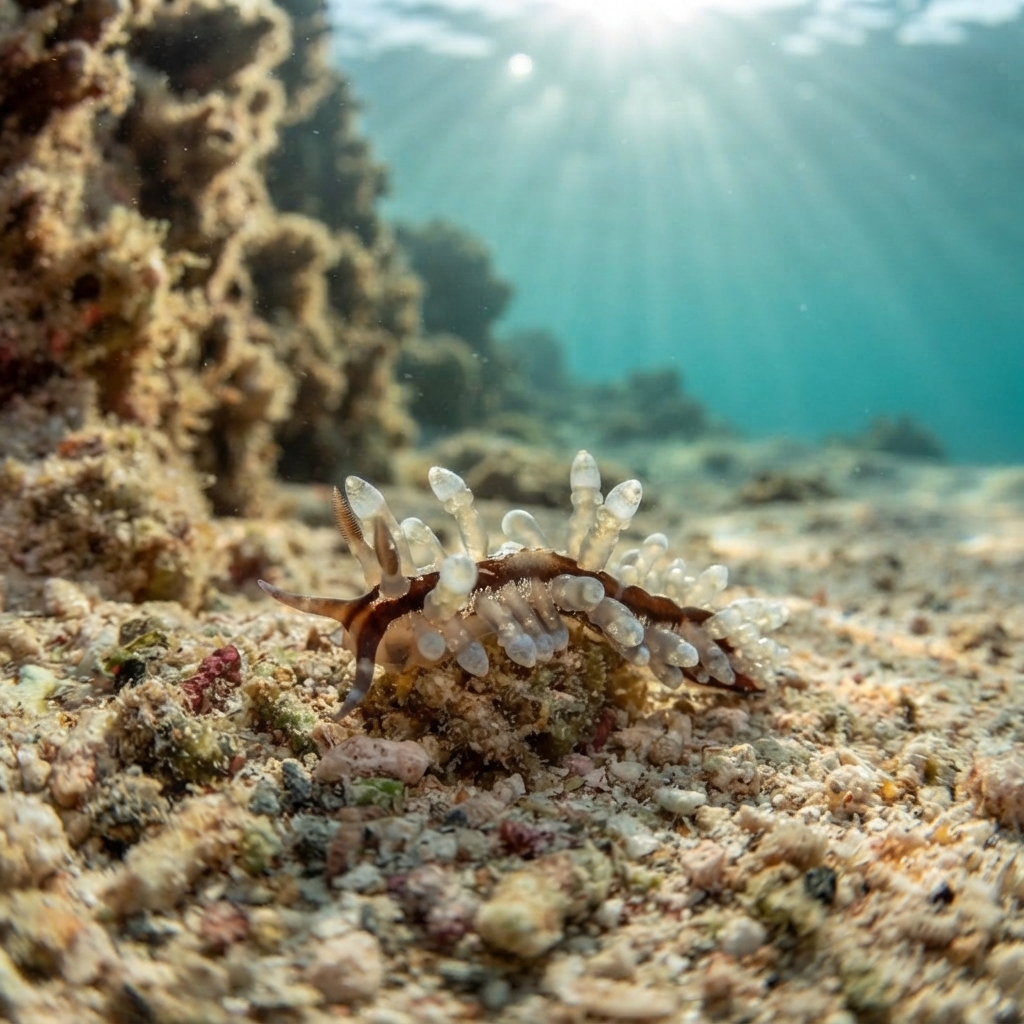
A slender, elongated nudibranch built for squeezing between rubble and coral debris rather than sitting in open view. Look for a slim, tapering body with the feathery gills (cerata) running along the back that give the eubranchid family its look. It stays small in the water, so most divers spot it only when a guide points a torch at a patch of hydroid growth on the reef.
Divers typically find it moving slowly across rubble or grazing on the hydroids it feeds on, usually during a deliberate macro dive rather than a passing glance. It shows no reaction to divers beyond the usual slow crawl, since it has no eyes for spotting you and no real predator-avoidance behaviour to speak of. Best found by scanning likely hydroid-covered surfaces with a torch rather than swimming past open reef.
Like other eubranchids, it almost certainly feeds on hydroids and may store stinging cells from its prey in its cerata for its own defence, a trick common across this nudibranch family.
No clear seasonal pattern shows up in the sightings, and the warm 25.3 to 31.3 C range it's been recorded in holds steady on these reefs year-round, so any month works for a dedicated look.
Reef neighbours a diver could mistake it for. Use the identification notes above to tell them apart.
Most reliably logged in the Philippines, especially around Luzon and Mindanao, and in Indonesia's Bali region, which together account for almost every recorded sighting. These are muck and rubble reef systems where divers doing slow, macro-focused dives tend to find it tucked into hydroid patches.
Mapping where Putnam's Longibranchus is logged…
It's most often logged in the Philippines, particularly Luzon and Mindanao, and in Bali, Indonesia. These muck and rubble dive sites, worked slowly with a torch, are where divers have the best odds.
There's no detected seasonal pattern, and it's been recorded across a warm 25.3 to 31.3 C range, so it's considered a year-round find rather than a seasonal one.
Look for a small, slender nudibranch with a tapering body and feathery cerata running along its back, usually found tucked into hydroid growth on rubble or reef debris rather than out in the open.
Exact size data isn't available, but like most eubranchid nudibranchs it stays small, typically only a centimetre or two, which is why divers usually need a guide or a sharp eye to spot one.
It's logged as uncommon at most sites where divers have found it, with a smaller number of sites reporting it as rare and only a few calling it common, so it's a find rather than a guarantee.
No, it poses no danger to divers. It's a tiny, slow-moving nudibranch that can be safely observed and photographed without any risk.
Site and sighting data is aggregated from diver logs, iNaturalist and GBIF. For taxonomy and conservation status:
Light-spotted Aegires
3,168 sites