Stegastes diencaeus
Dusky reef damsel with electric-blue eye rings, common on Caribbean reefs from Bonaire to the Yucatán in 26-28°C water year-round.
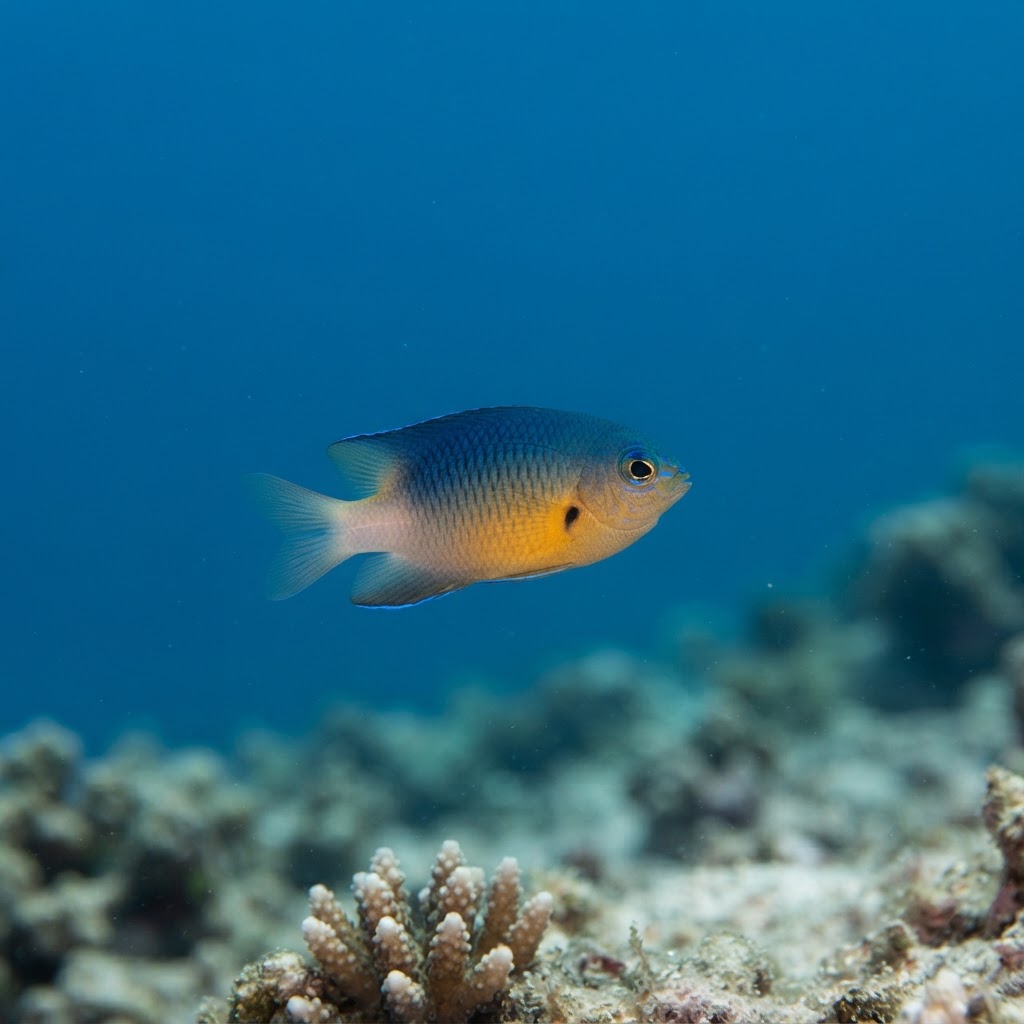
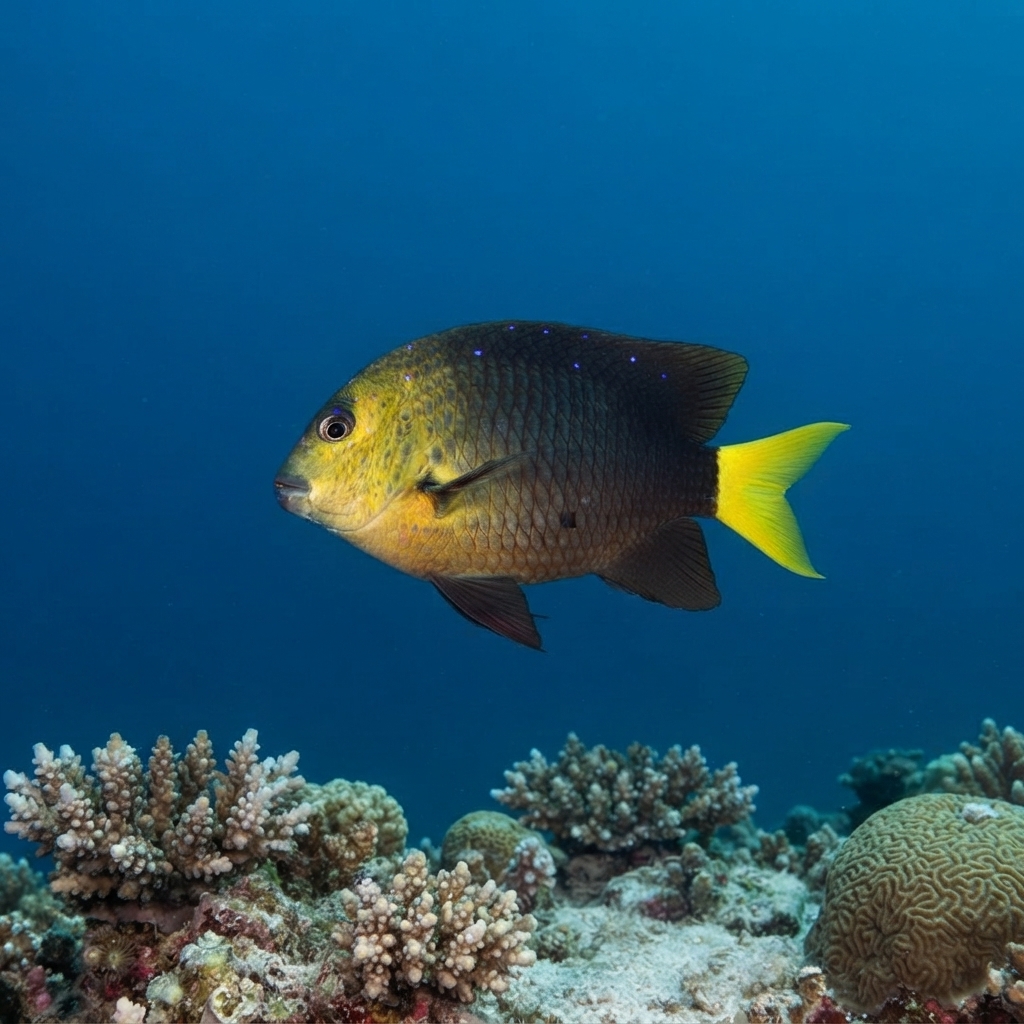
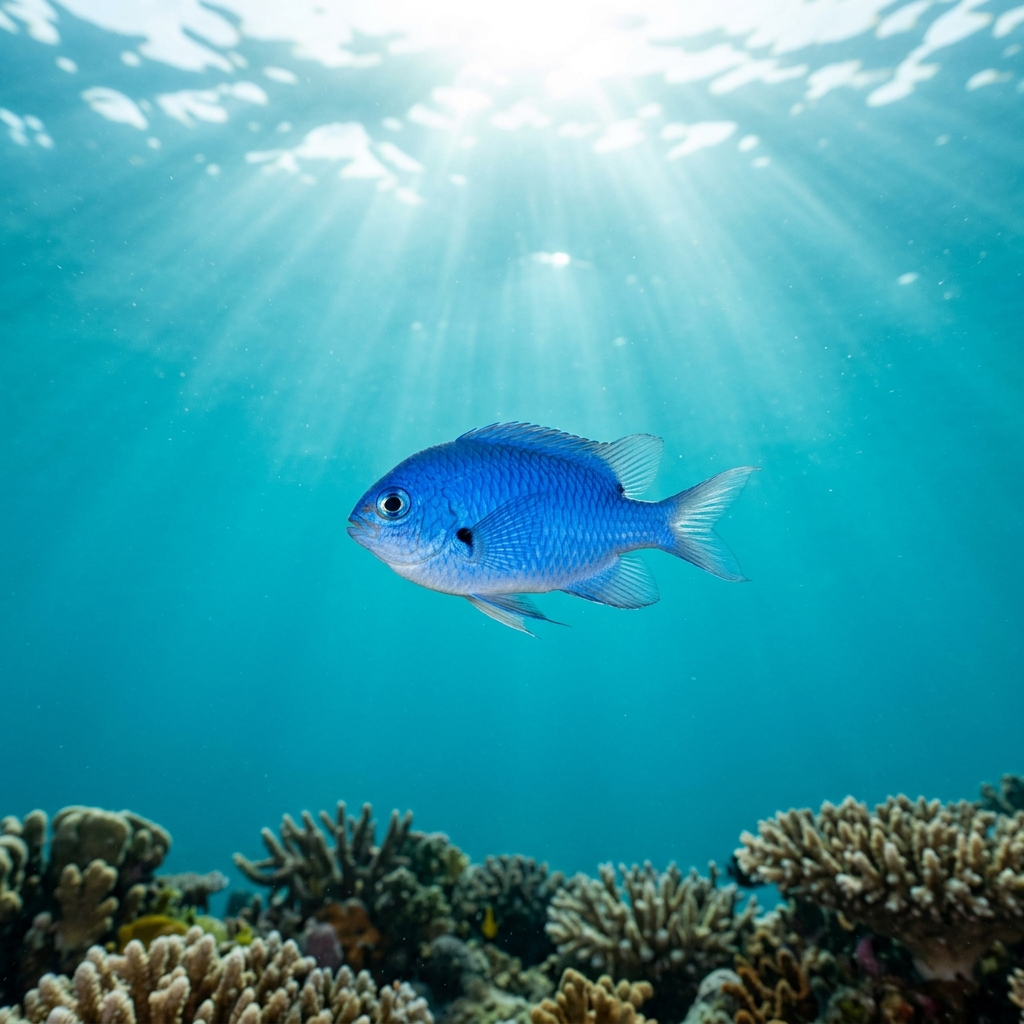
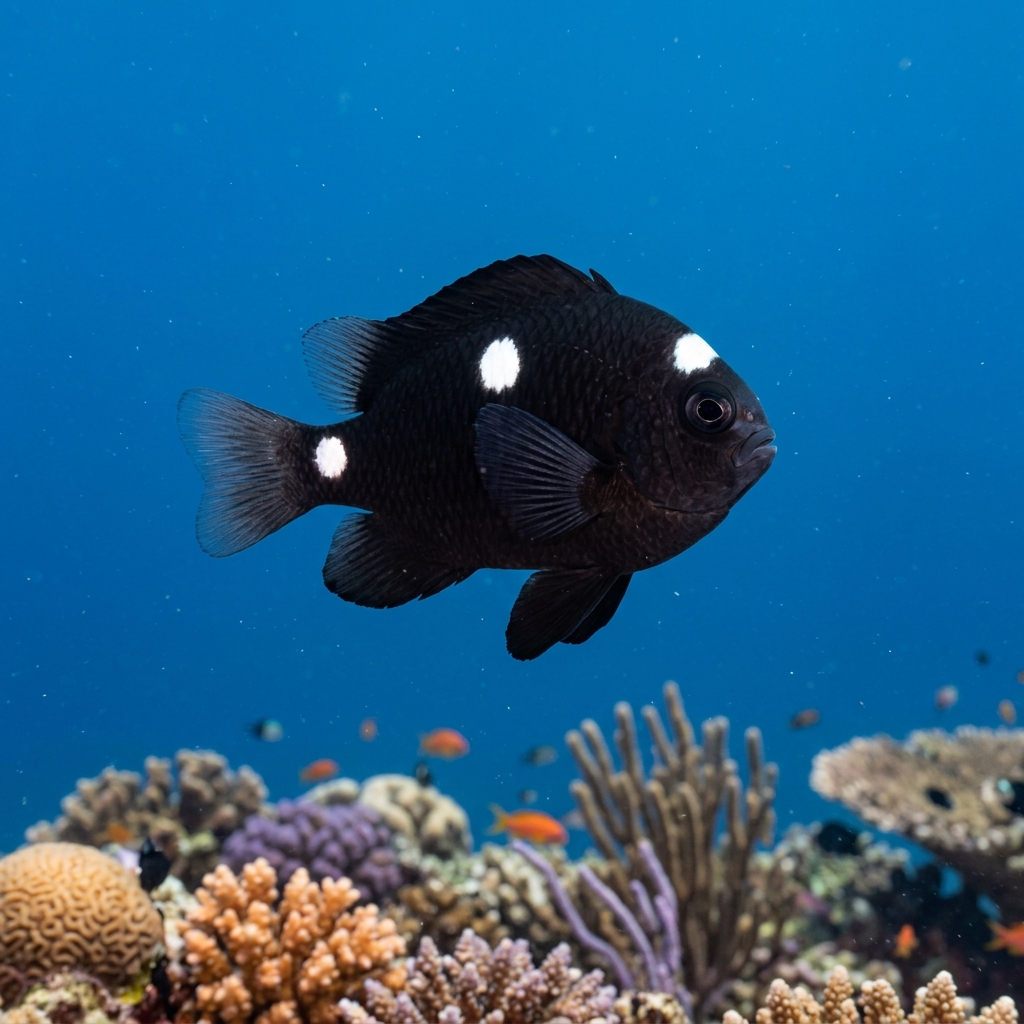
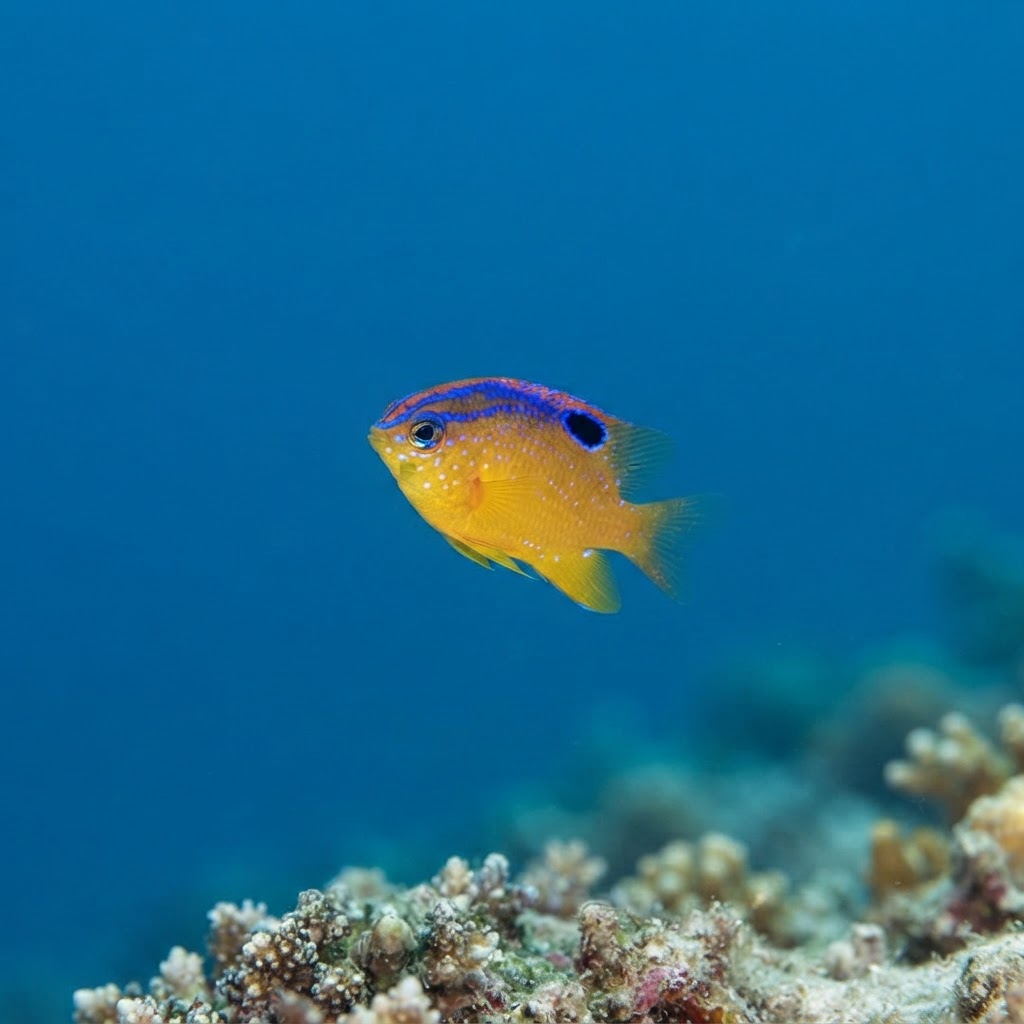
Small, deep-bodied reef fish around 8 cm, dark brown to almost black overall with a faint dusting of blue flecks around the eyes and upper body. The tail and dorsal fin edges often show a slightly paler, elongated fringe, which is where the common name comes from. Juveniles are more strikingly marked, with bright blue spots and lines over a darker body that fade as the fish matures.
Spend most of the dive parked over a patch of reef or rubble they consider home, nipping at algae growing on rock and dead coral. They are territorial for their size and will dart out to chase off intruders, including the occasional curious diver who gets too close to their patch. Usually seen singly, hovering close to shelter rather than out in open water.
Like other Stegastes damselfish, they cultivate small algae patches on the reef and actively defend them, functioning as tiny reef gardeners that will square up to fish many times their size.
No real seasonal pattern shows up in sightings, and with water sitting comfortably between 26.1 and 28.2°C, these damsels are on the reef year-round. Any month works for a Caribbean trip built around finding them.
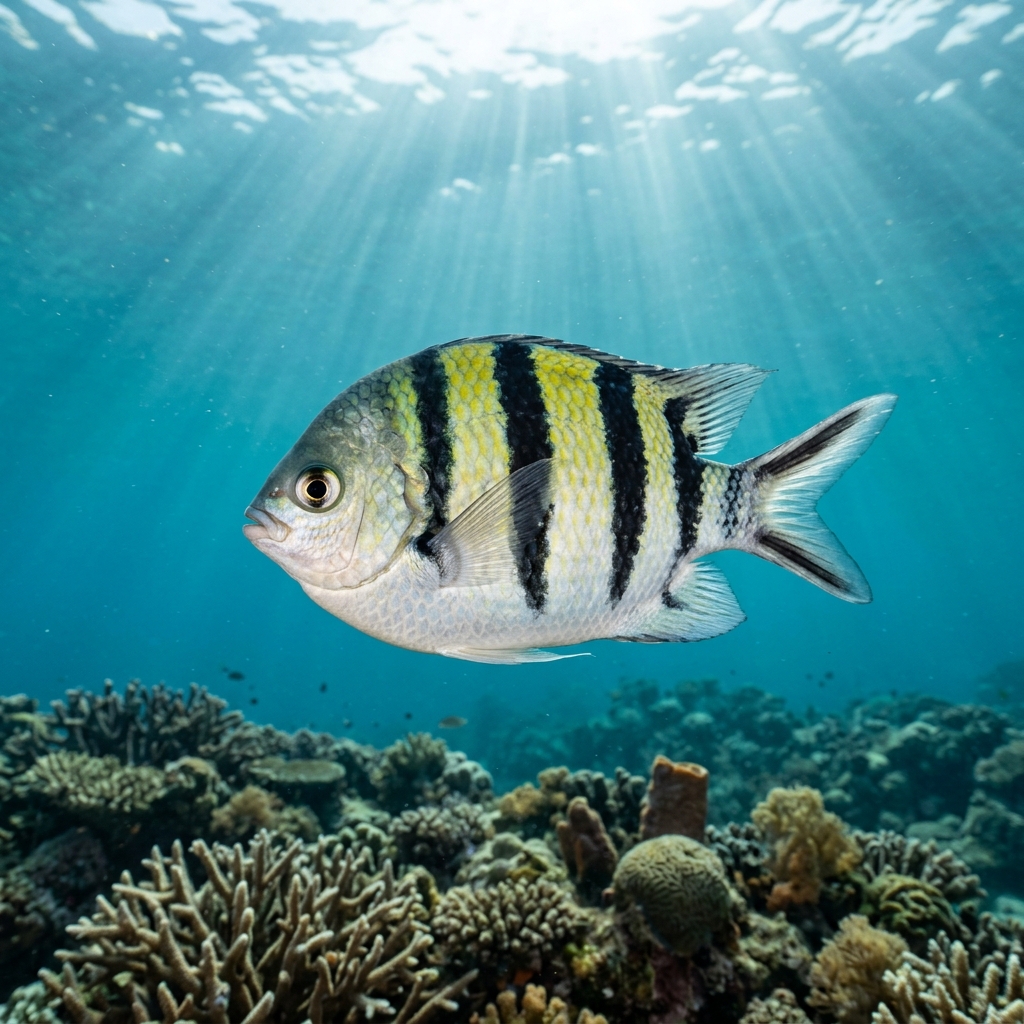
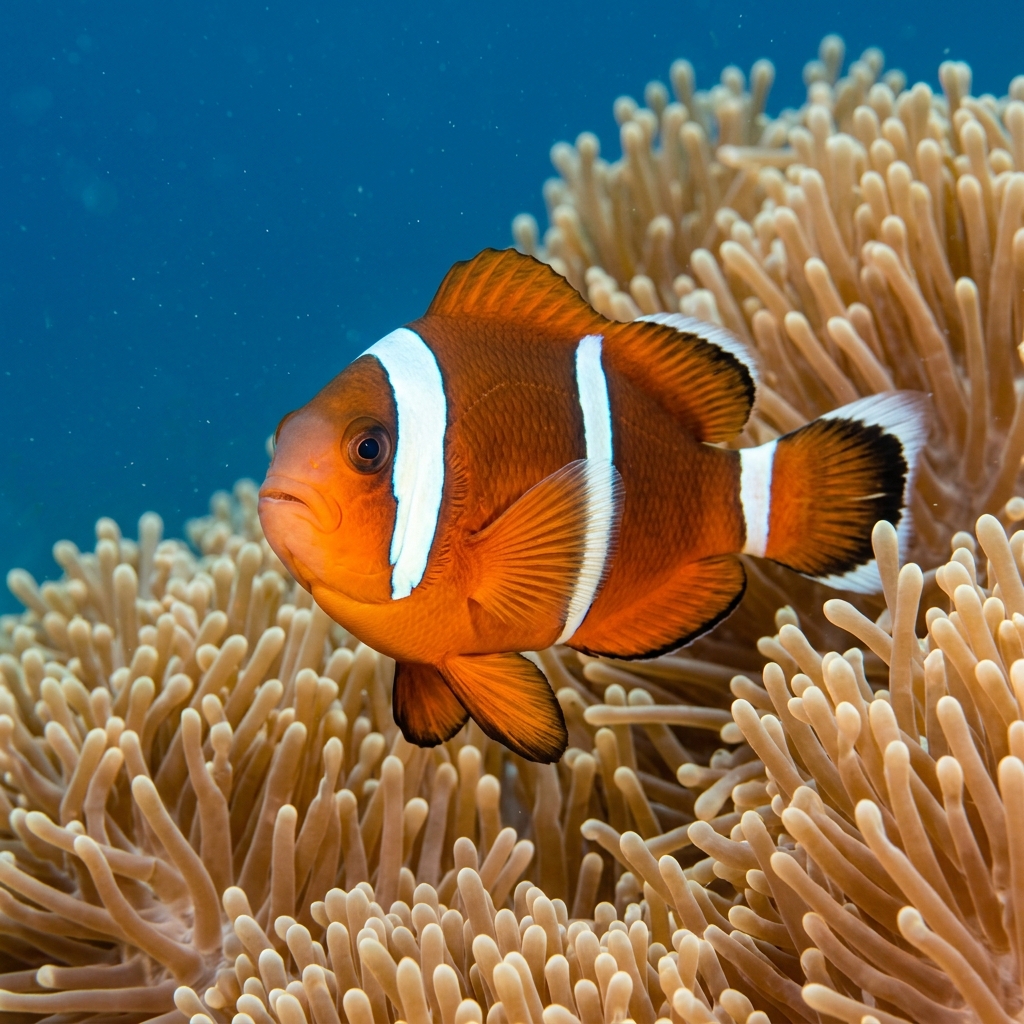
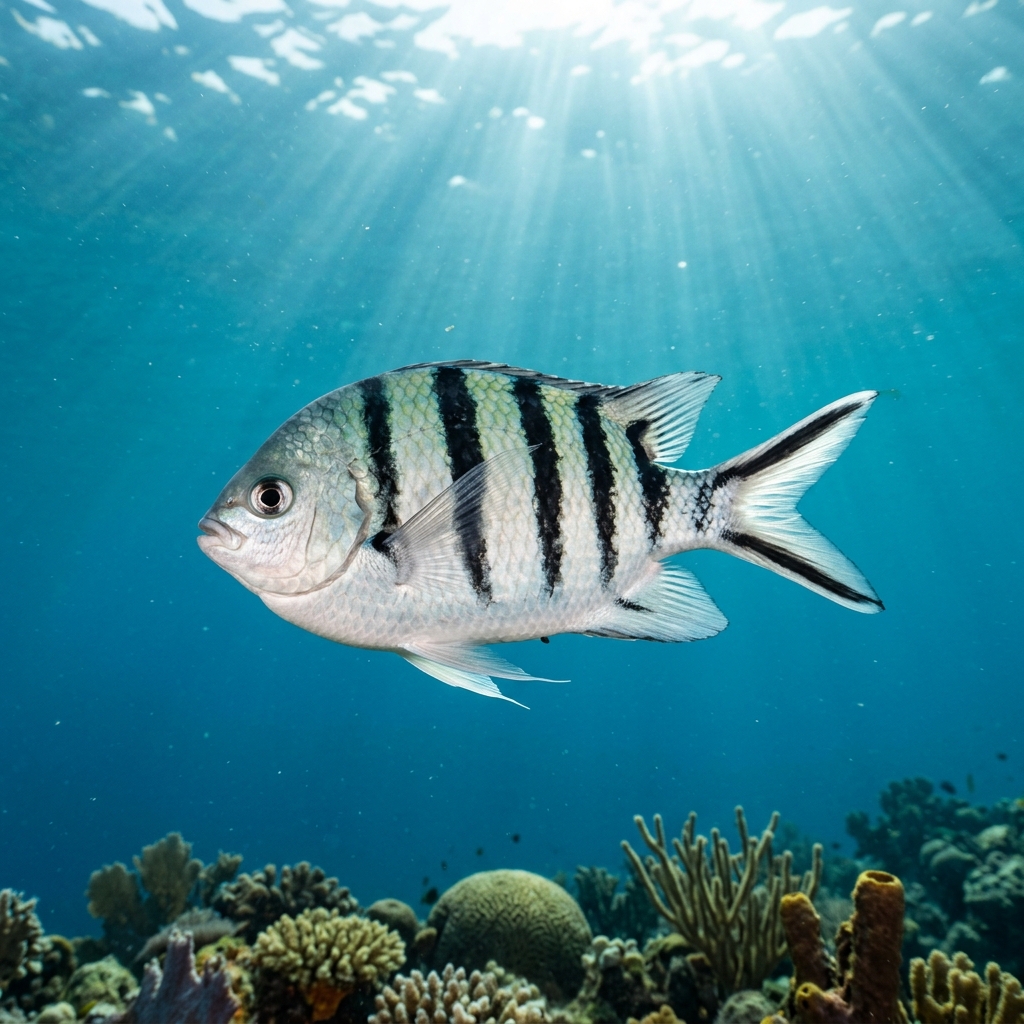
Reef neighbours a diver could mistake it for. Use the identification notes above to tell them apart.
Most reliably logged across the Caribbean, with strong numbers on the reefs of the Yucatán Peninsula in Mexico, the leeward coast of Bonaire, and Curaçao's Willemstad and south coast sites. Also a regular find in Honduras's Bay Islands, the British Virgin Islands around Tortola, and the US Virgin Islands off Saint Thomas.
Mapping where Longfin Damselfish is logged…
They turn up widely across the Caribbean, most often on reefs in Mexico's Yucatán Peninsula, Bonaire's leeward coast, Curaçao, and Honduras's Bay Islands. Also a solid find around Tortola in the BVI and Saint Thomas in the US Virgin Islands.
There is no strong season in the sighting data, and warm 26-28°C reef water year-round means they are present on any dive trip to the Caribbean, whatever month you go.
Look for a small, dark brown to black reef fish around 8 cm long with faint blue speckling near the eyes and a slightly elongated fringe on the tail and dorsal fin. It typically hovers close to a patch of reef or rubble rather than swimming in open water.
They stay small, typically around 8 cm as adults, which is normal for damselfish in the Stegastes genus.
No. They pose no real threat to divers, though they can be feisty and will chase off anyone who lingers too close to their patch of reef.
Site and sighting data is aggregated from diver logs, iNaturalist and GBIF. For taxonomy and conservation status:
Dascyllus
3,697 sites