Plectorhinchus lineatus
Bold black stripes over yellow, most often logged on reefs in Raja Ampat and Queensland at 24-29 C, year-round.
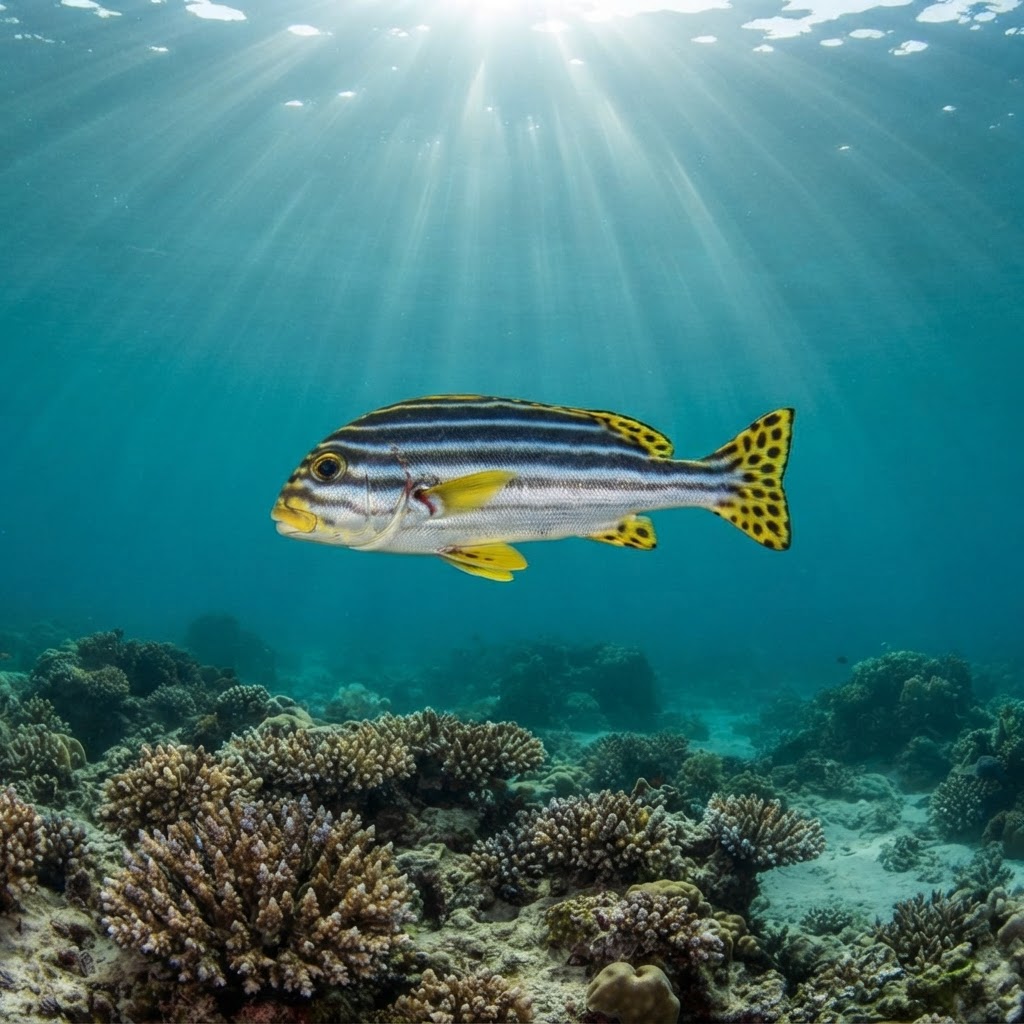
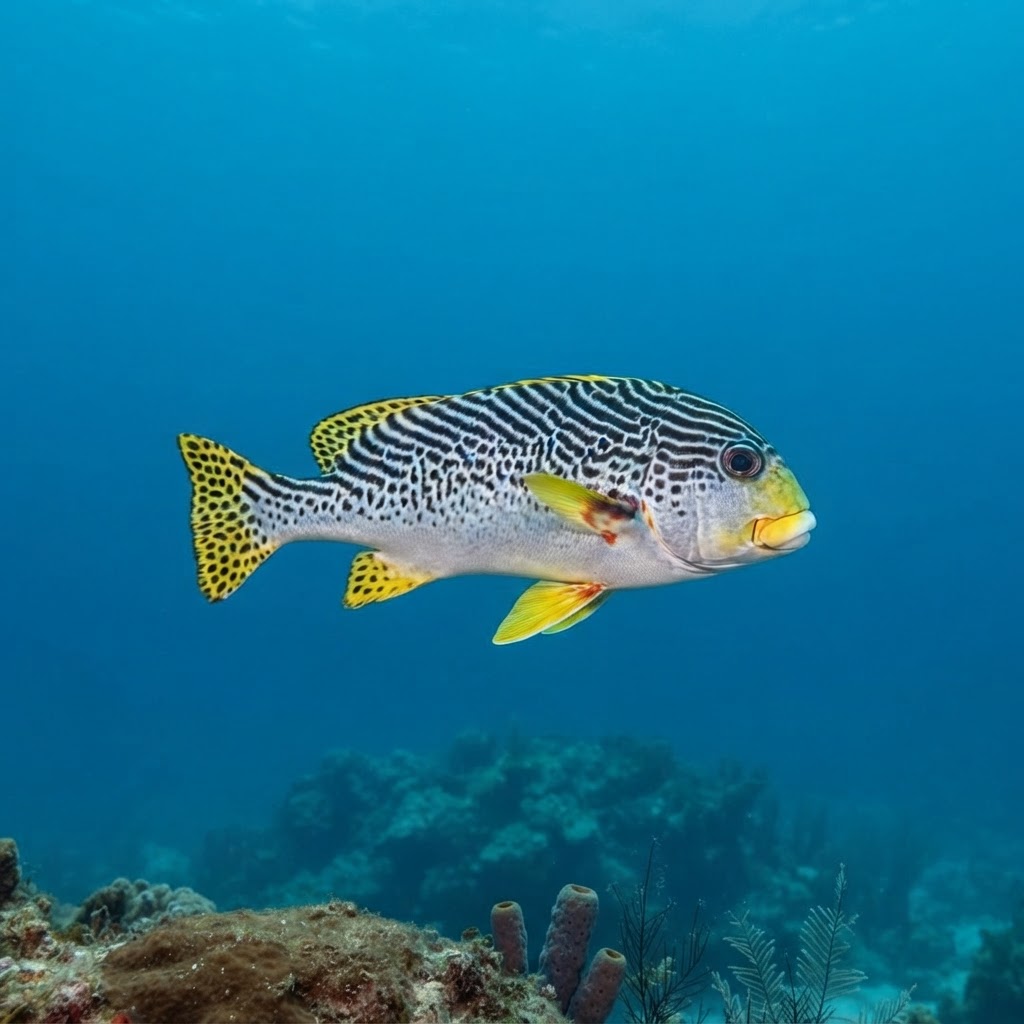
Bold black horizontal stripes run the length of a deep, oval yellow body, giving it a striking barcode look against the reef. The lips and fins carry small blue-white spots, and the tail and rear fins are blotched with black. It grows to around 50 cm and swims with a slow, deliberate roll rather than a dart, which usually gives it away even at a distance.
Usually seen hanging almost motionless under ledges, in caves or beside bommies during the day, often solo or in a loose pair rather than a big group. It tends to ignore divers unless approached too closely, at which point it will slide deeper into cover rather than bolt across open reef. Most sightings come from daytime reef dives rather than night dives, consistent with it feeding more actively after dark.
Despite the bold, hard-to-miss pattern, it's logged as uncommon at most sites where it does occur, so a sighting is more of a nice surprise than a guaranteed reef fixture.
No clear seasonal pattern shows up in sightings, and its comfort range of roughly 24 to 29 C matches tropical reefs year-round, so any month is a reasonable bet where it's known to occur.
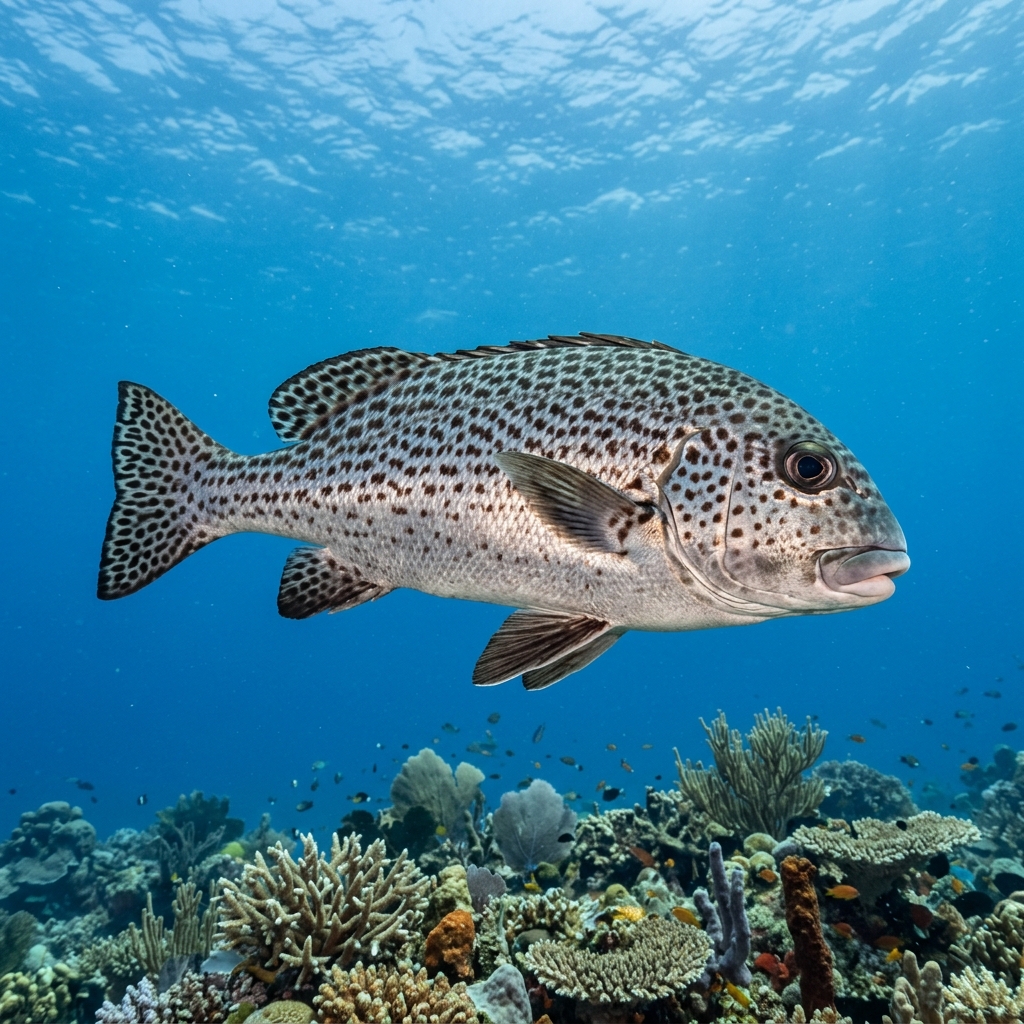
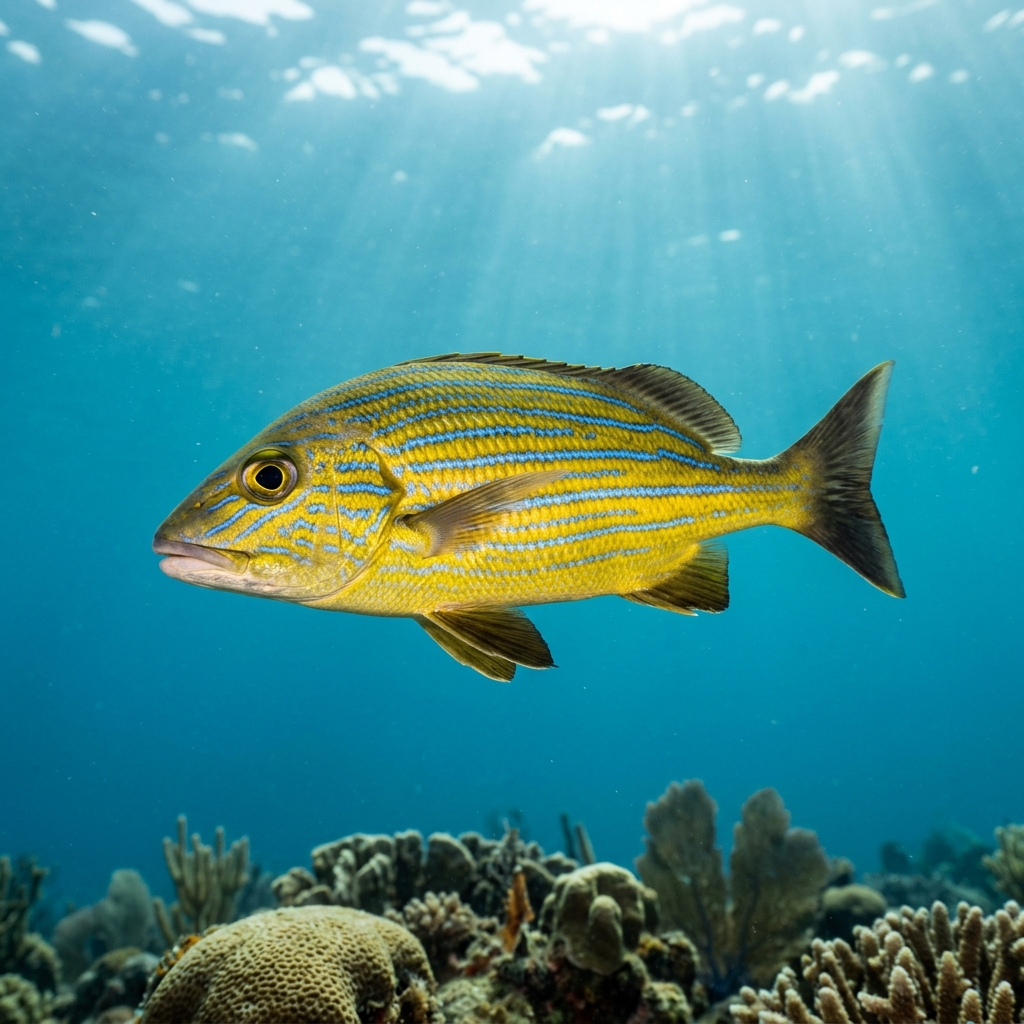
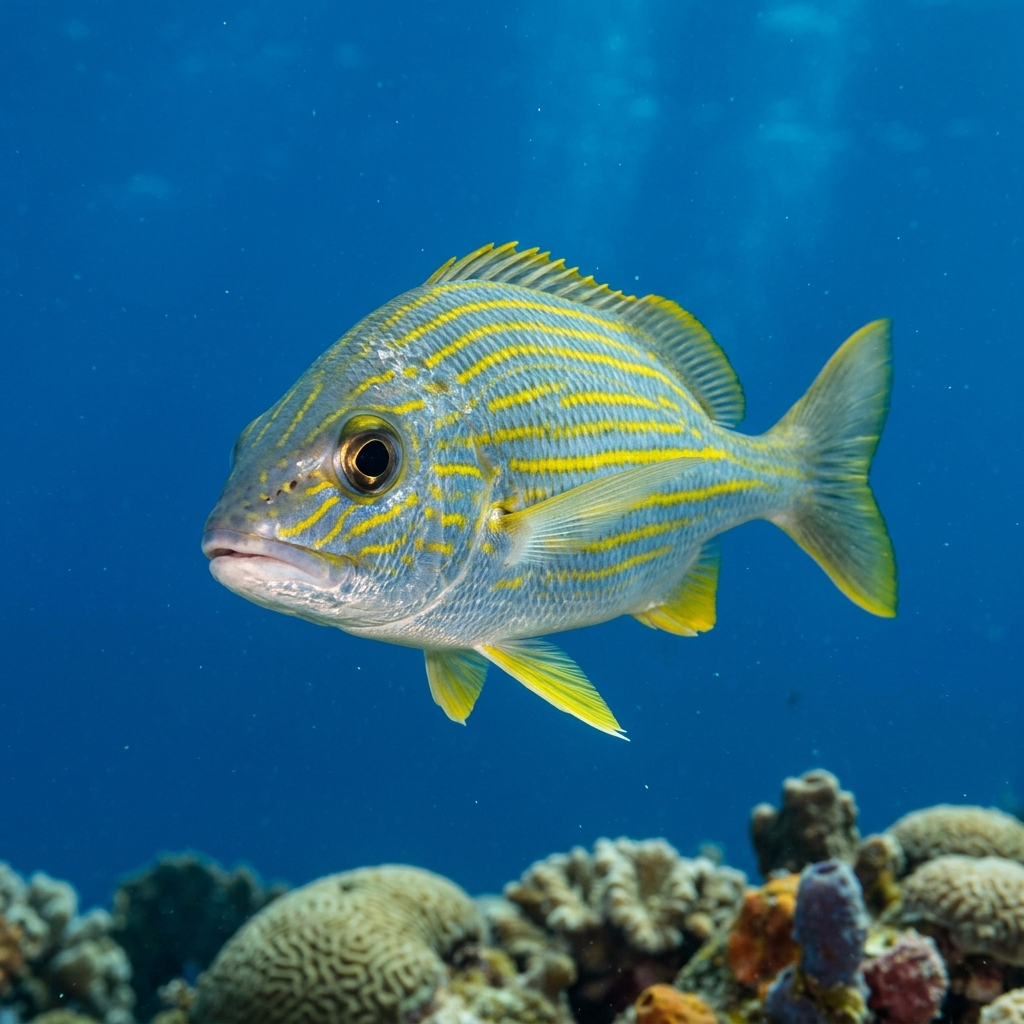
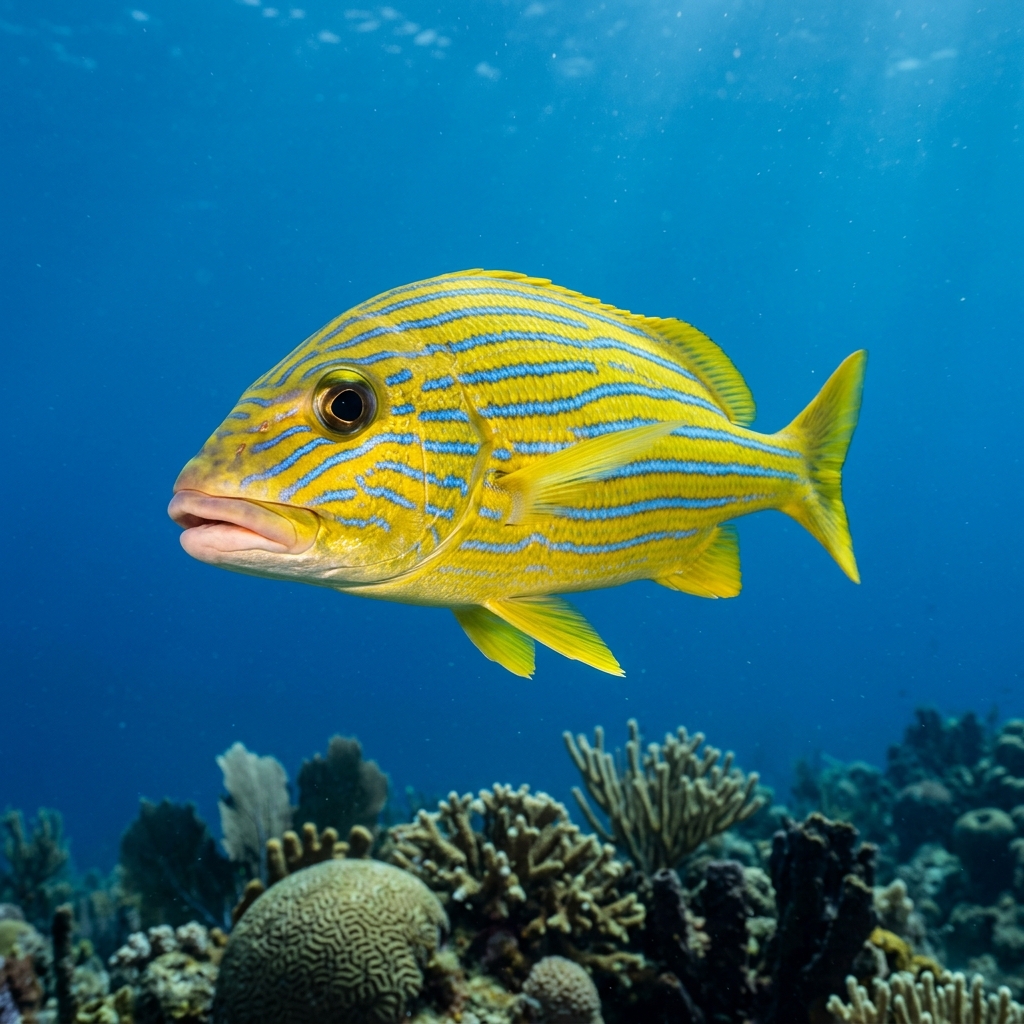
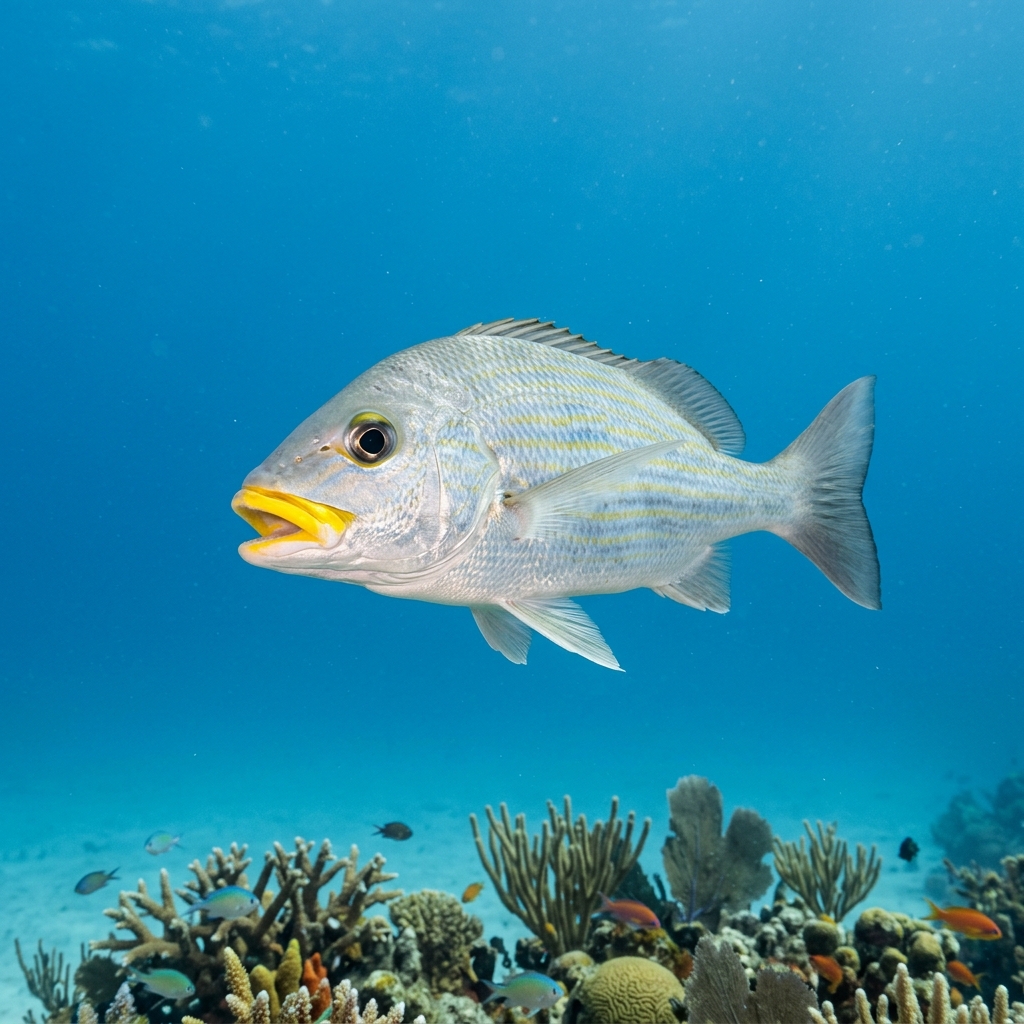
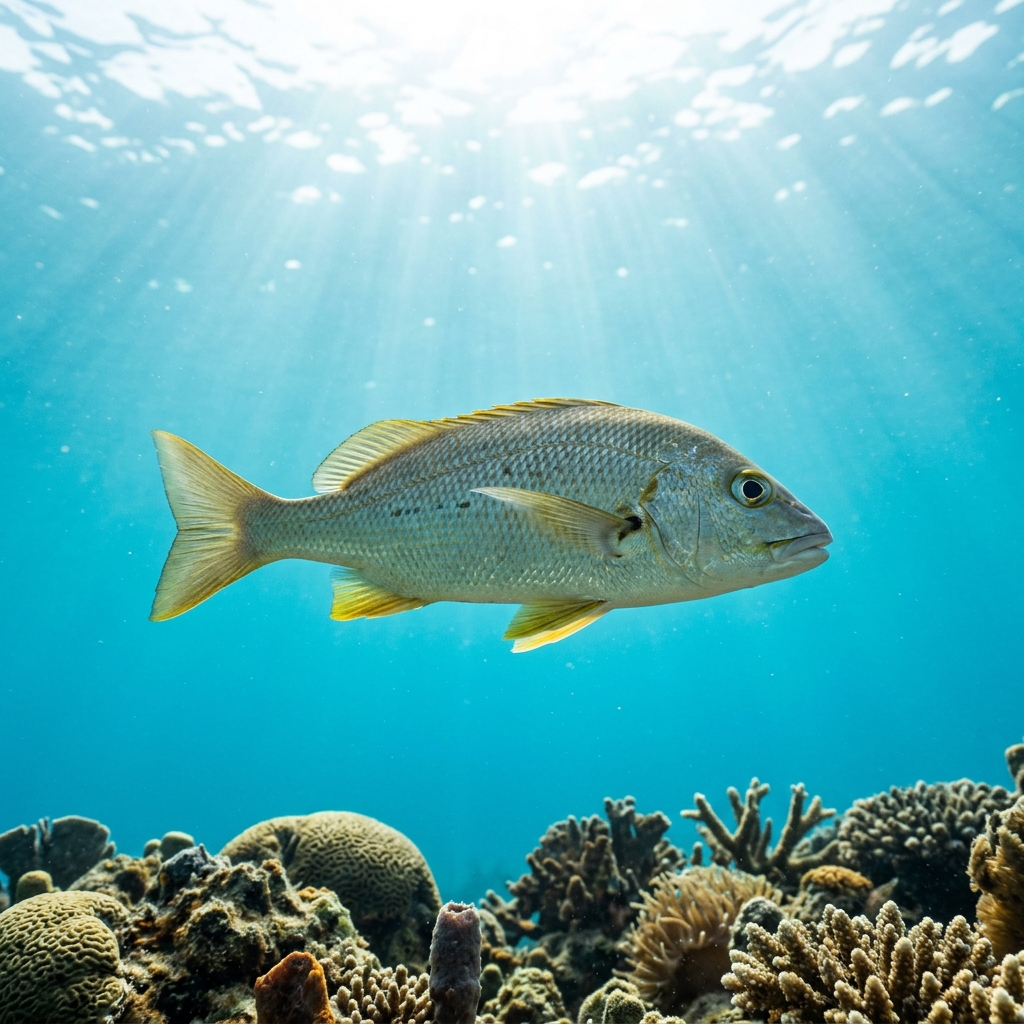
Reef neighbours a diver could mistake it for. Use the identification notes above to tell them apart.
Most reliably logged in Indonesia, especially Raja Ampat, Bali and Nusa Tenggara, and in Queensland, Australia, where it turns up on a large number of reef sites. It also has a steady presence in Sabah in Malaysia, across the Philippine Visayas, around Nouméa in New Caledonia, and at Atauro Island in Timor-Leste.
Mapping where Oblique-banded Sweetlips is logged…
Best chances are in Indonesia, particularly Raja Ampat, Bali and Nusa Tenggara, and on Queensland's reefs in Australia. It also shows up around Sabah in Malaysia, the Philippine Visayas, Nouméa in New Caledonia and Atauro Island in Timor-Leste.
There's no strong season in the sightings data, and its 24 to 29 C comfort range covers tropical reefs all year, so it can be seen in any month at the right sites.
Look for a deep-bodied yellow fish with bold black horizontal stripes running its full length, blue-spotted lips and fins, and a slow, unhurried swimming style, often resting under a ledge.
They reach around 50 cm, making them one of the larger reef sweetlips a diver is likely to encounter, though most individuals seen are somewhat smaller.
No, they're not considered dangerous. They're calm reef fish that will retreat under cover if a diver gets too close, rather than show any aggression.
Site and sighting data is aggregated from diver logs, iNaturalist and GBIF. For taxonomy and conservation status:
Bluestriped Grunt
1,907 sites