Bullina lineata
A pea-sized orange-striped sea snail turning up on New South Wales reefs, most reliably logged as an uncommon find year-round.
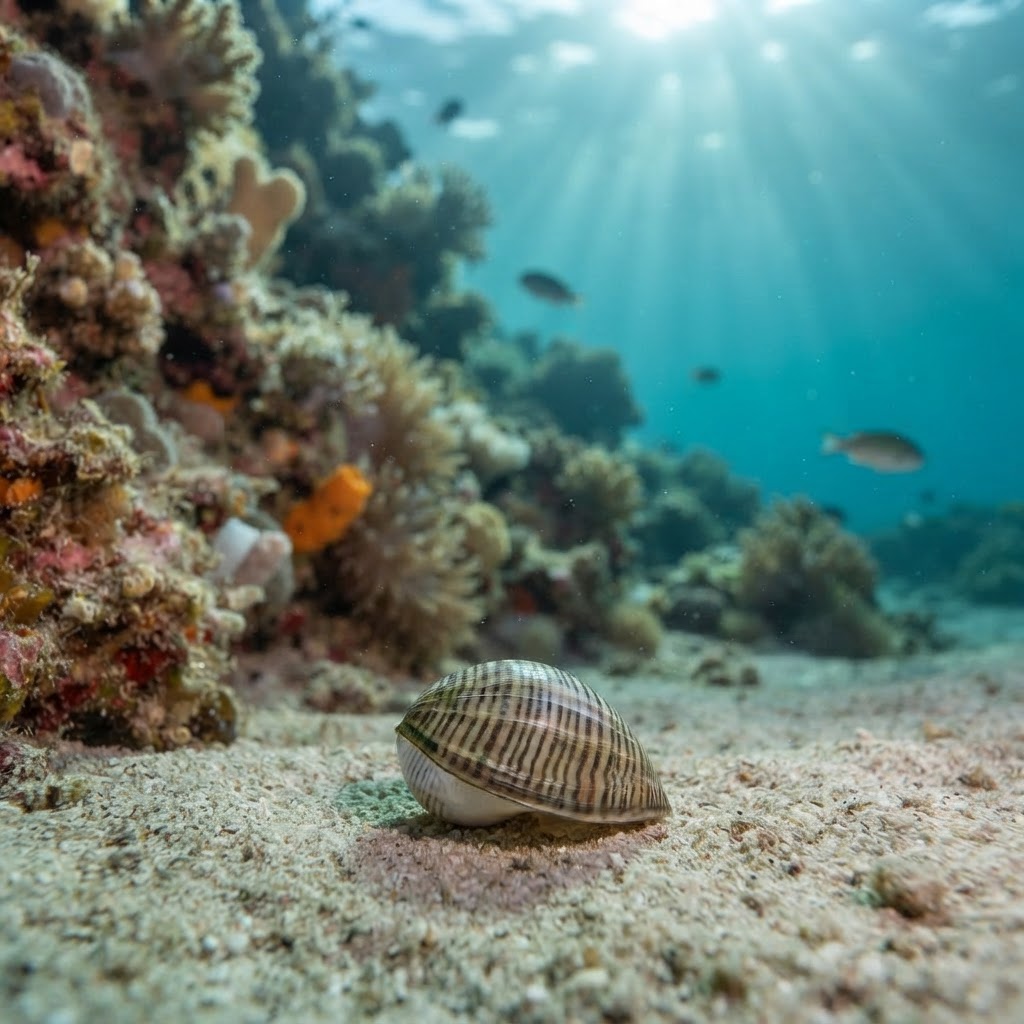
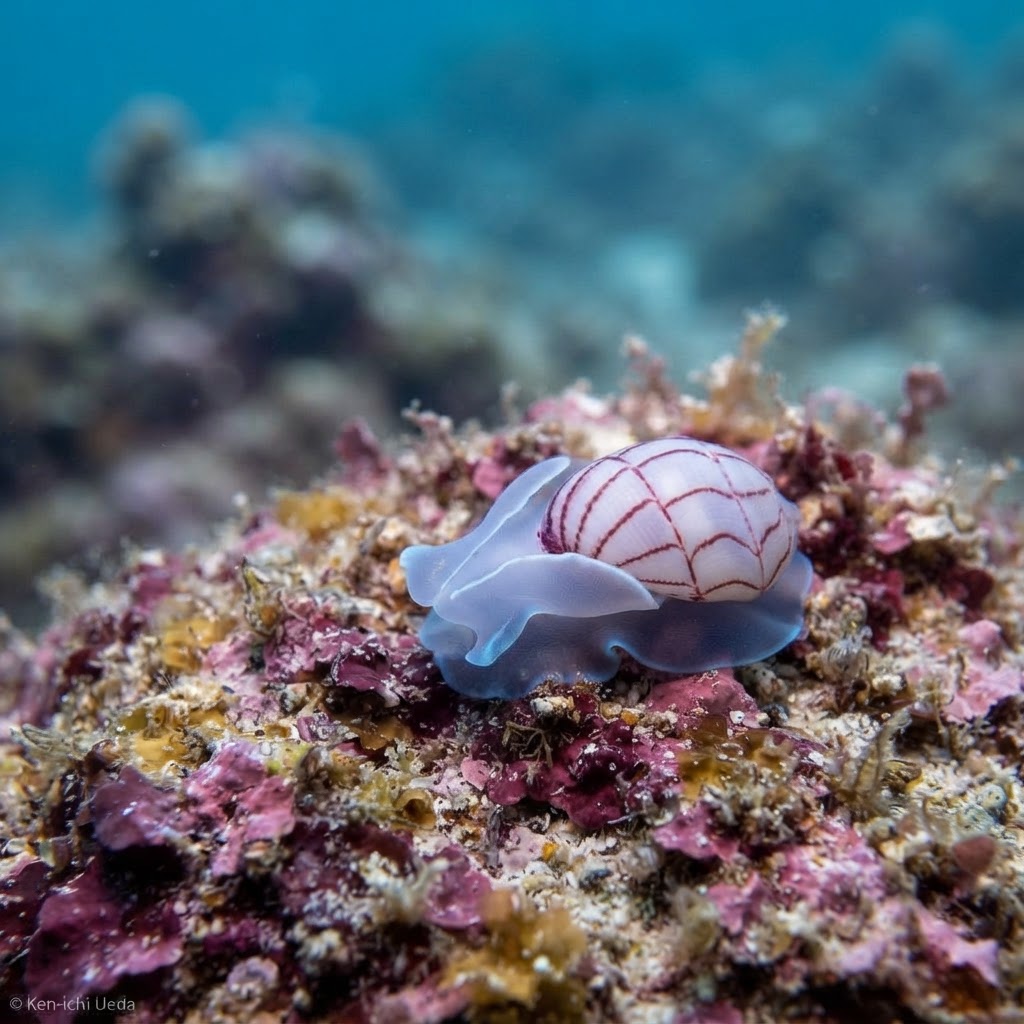
A glossy, translucent shell barely a centimetre long, coiled in a rounded bubble shape rather than a typical spiral cone. Bold orange-brown lines run across a pale cream to white background, giving it a striped, almost barber-pole look under torchlight. The soft body extends beyond the shell when active, often mottled in the same orange tones, and the whole animal is easy to miss unless you're scanning sand and rubble patches closely.
Divers find this one parked on sand, rubble, or low reef structure, moving slowly and rarely reacting to a torch or close approach. It's most often spotted during muck and critter-focused dives where people are already moving at a crawl and checking the substrate rather than the water column. Night dives improve your odds simply because more attention goes to the bottom.
Its bubble-shaped shell is a holdover from ancestral sea snails with coiled shells, even though it belongs to a group most people think of as slugs; the shell offers some protection that true nudibranchs have given up entirely.
No clear seasonal pattern shows up in the data, so treat this as a year-round find. Its recorded temperature range of roughly 19 to 25 C spans the cooler and warmer ends of New South Wales' seasons, which likely explains why sightings don't cluster into one month.
Reef neighbours a diver could mistake it for. Use the identification notes above to tell them apart.
New South Wales, Australia is by far the strongest area for this species, with Queensland also producing regular sightings. It has been logged at a single site in Hawaii, United States, but Australia's east coast is where divers actually go looking for it.
Mapping where Lined Bubble Snail is logged…
New South Wales, Australia is the most reliable region, with Queensland also producing sightings. It's been recorded once in Hawaii, but Australia's east coast is the place to search.
There's no strong seasonal pattern in the sighting data, so it's considered a year-round find on the sites where it turns up.
Look for a tiny, rounded, glossy shell under 1.5 cm with bold orange-brown stripes on a pale background. It sits on sand or rubble rather than swimming, and the soft body often shows matching orange mottling.
They stay small, typically around 1 cm, so most divers need a close look or a torch to spot one at all.
Unlike most sea slugs, it still carries a coiled bubble-shaped shell, a trait inherited from snail ancestors that many related species have lost entirely.
Site and sighting data is aggregated from diver logs, iNaturalist and GBIF. For taxonomy and conservation status:
Triton Shell
2,297 sites