Ecsenius lineatus
Look for this 6cm blenny peeking from reef holes in the Central Atolls, Maldives, in water around 25 to 29 C, year-round.
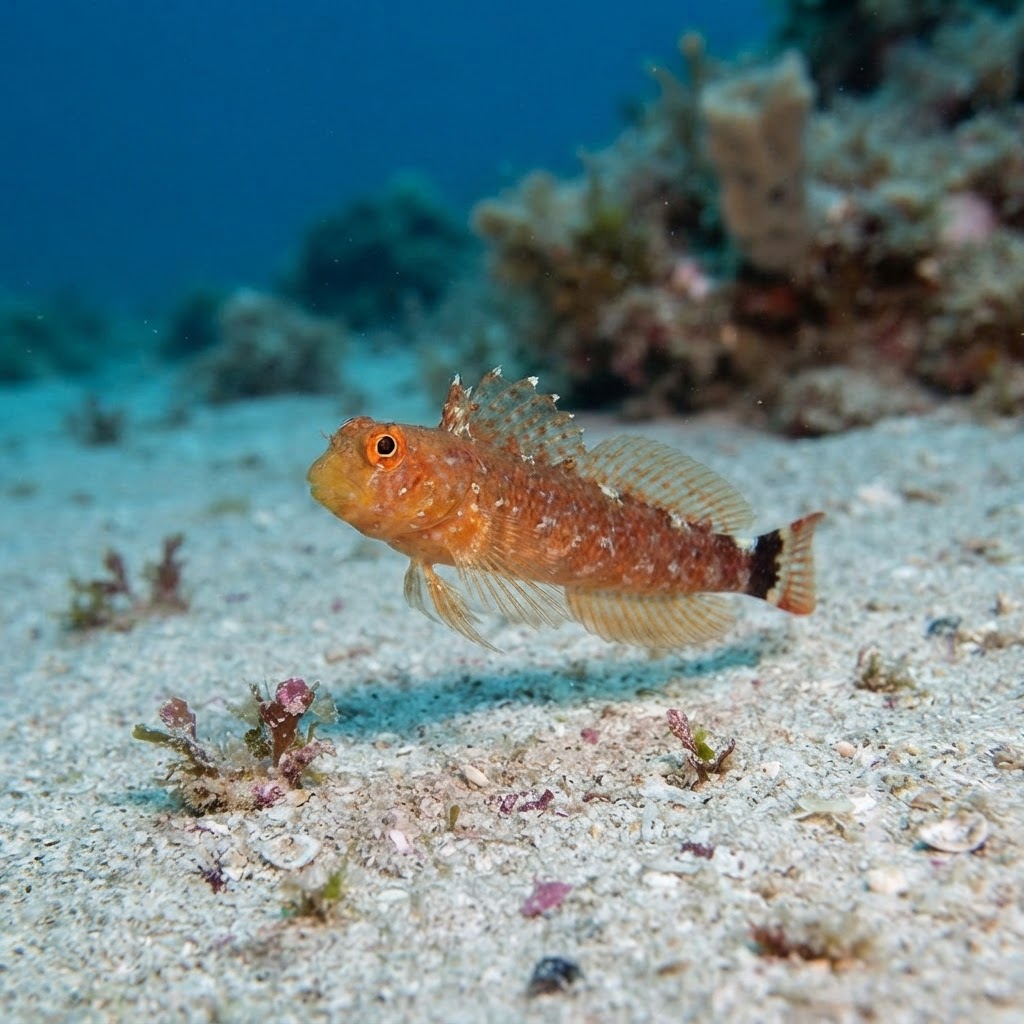
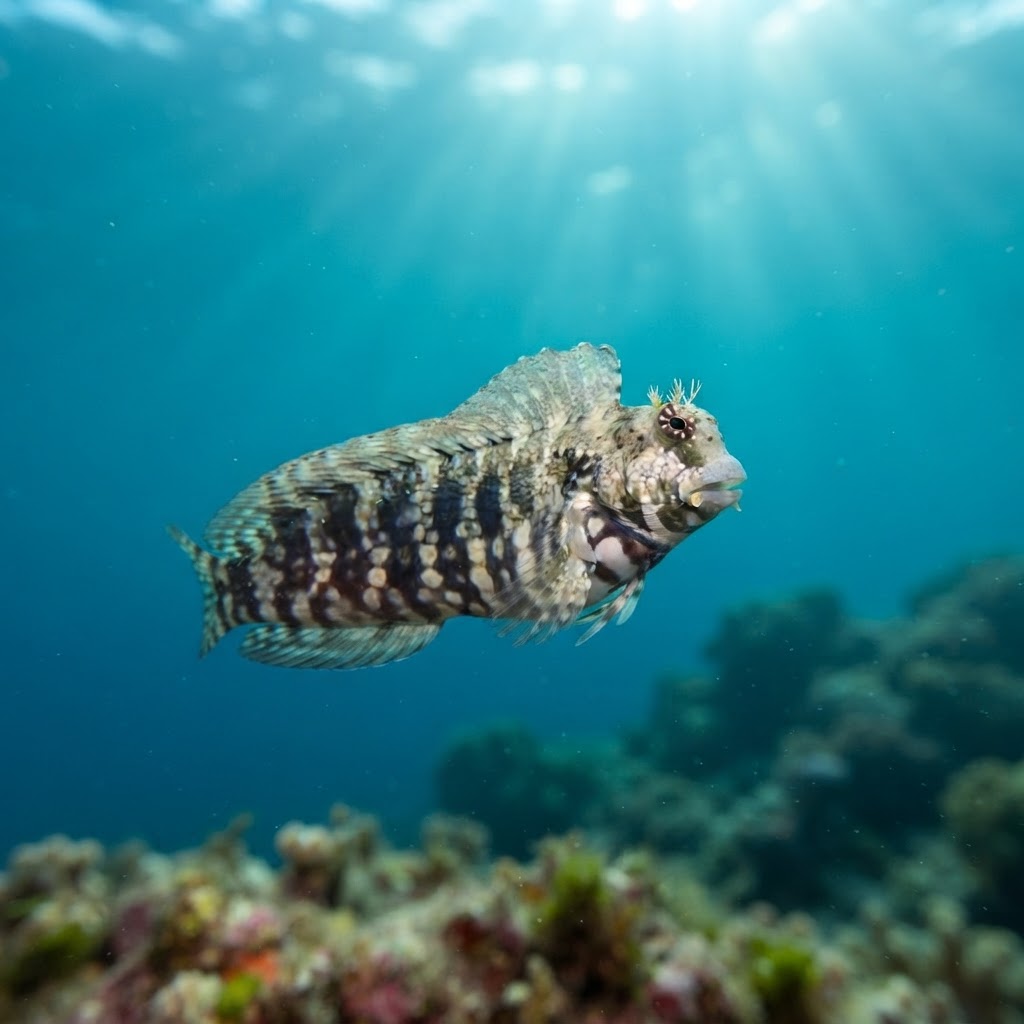
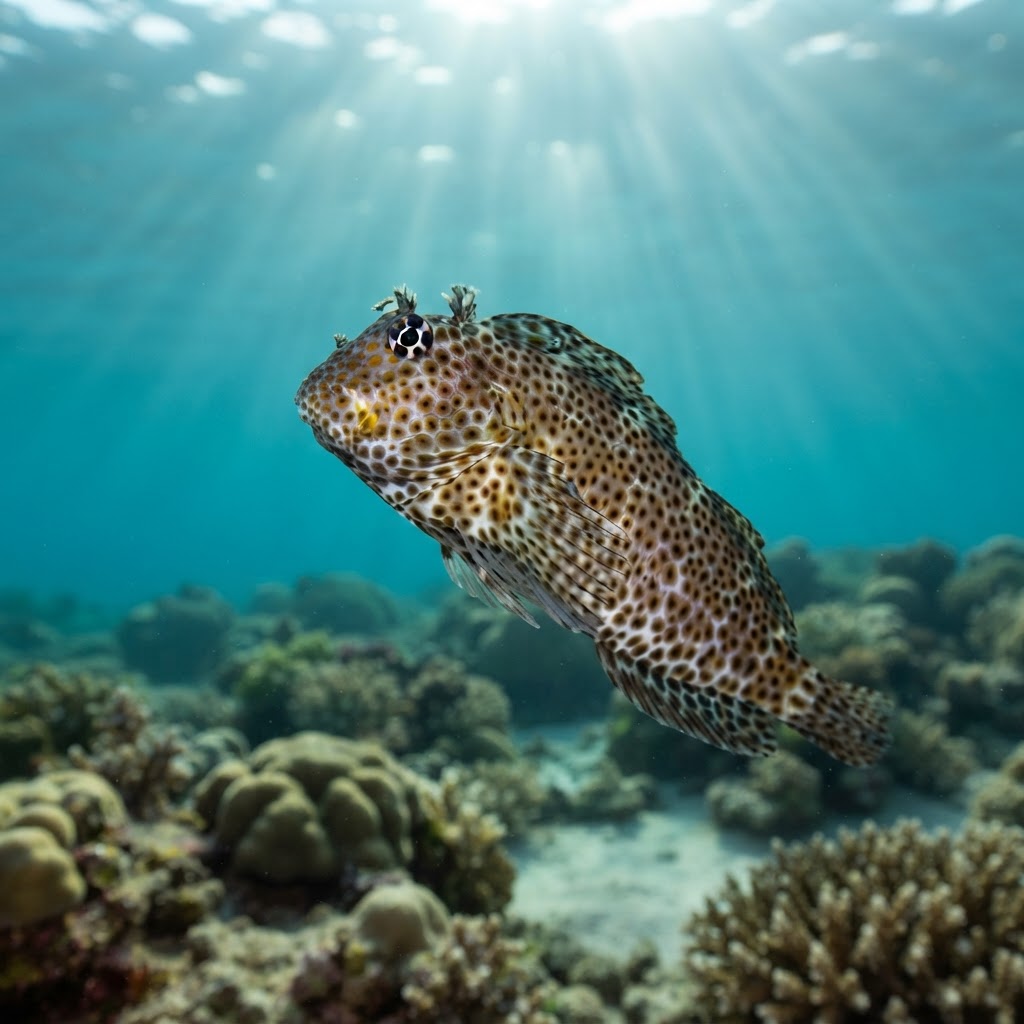
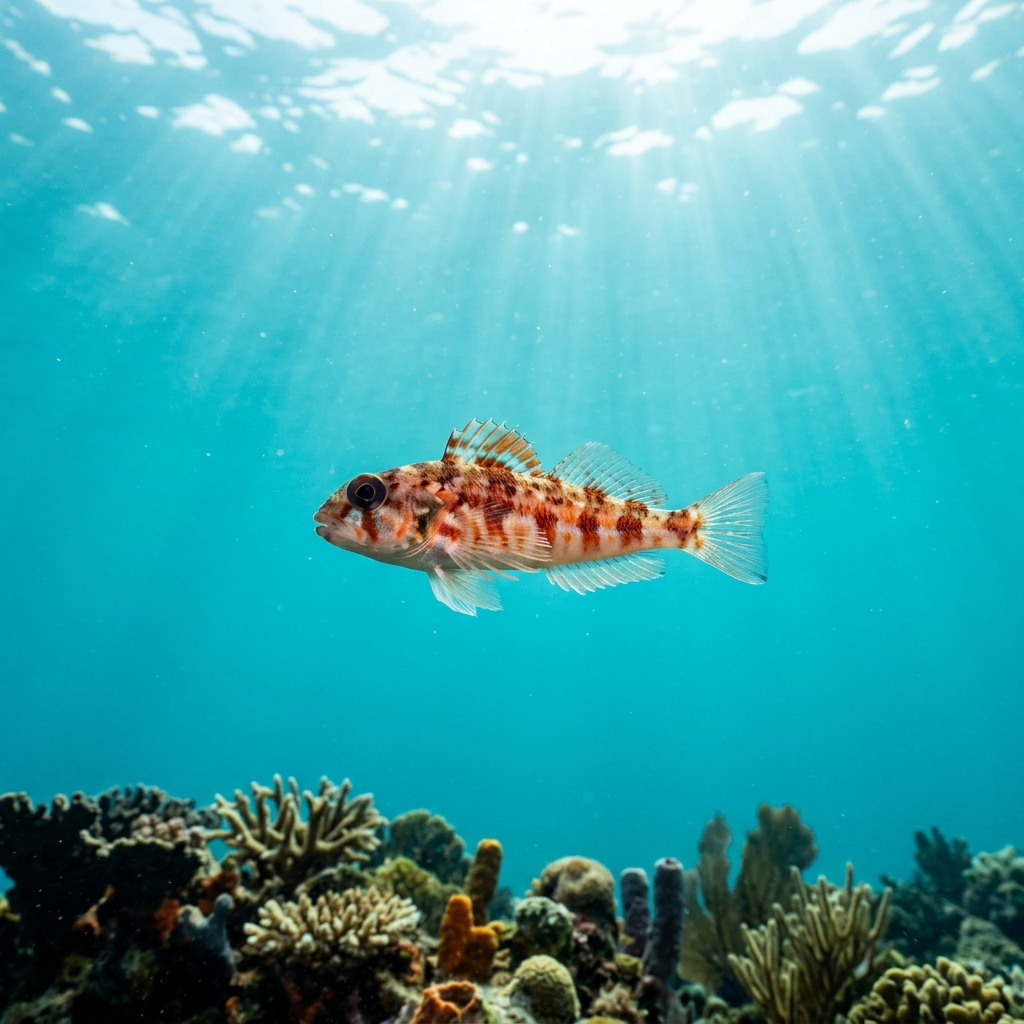
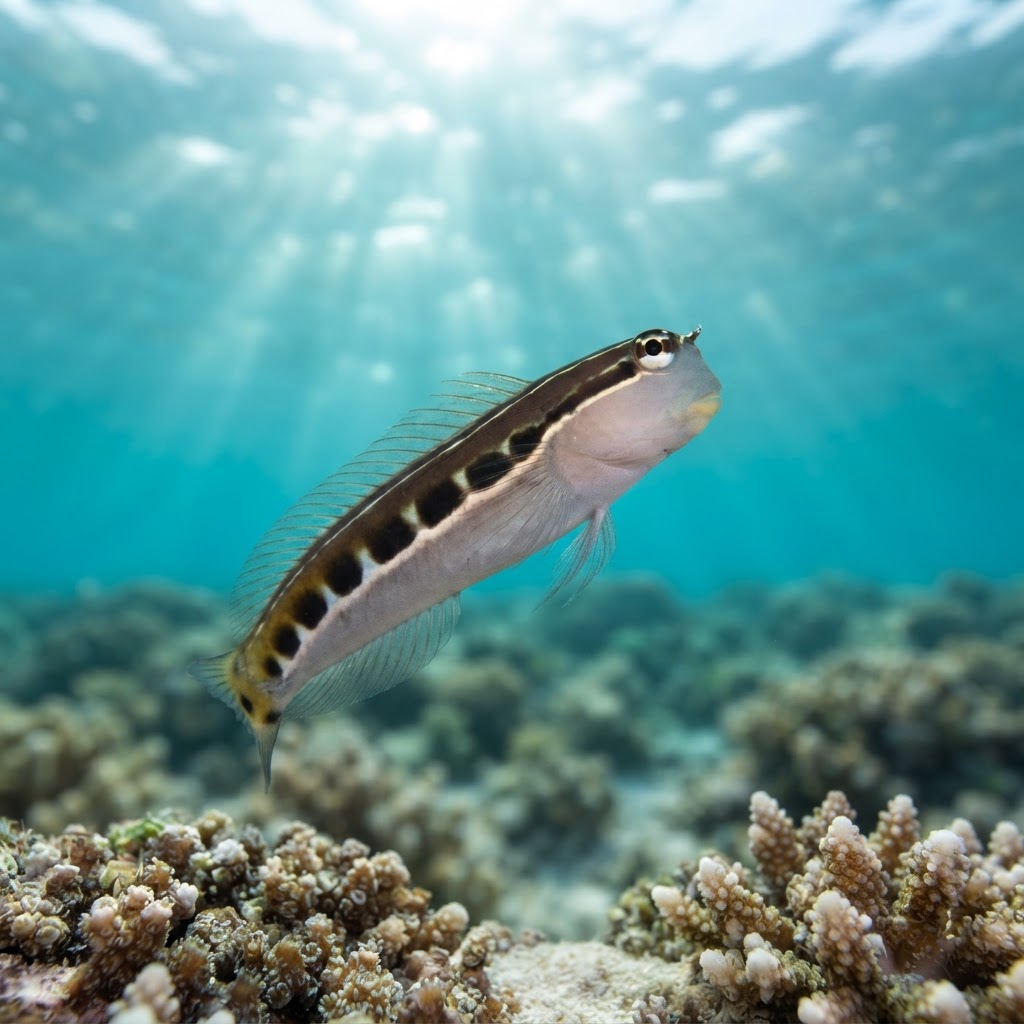
Tops out around 6 cm, a slim, torpedo-shaped body typical of blennies, propped on the reef with its head raised rather than swimming freely. Look for a series of pale longitudinal stripes running the length of the body, which is the feature that gives it its name. It sits still for long stretches in a burrow or crevice, so the giveaway is often the stripe pattern catching light as it turns to watch you.
Spends most of its time perched at the mouth of a small hole or crevice in the reef, rarely straying far, and will duck back inside the instant a diver gets too close or moves too fast. Slow down and hover a body length away and it often re-emerges within a minute or two to resume watching the reef. Divers usually find it on close-focus passes over rubble patches and coral heads rather than while cruising open water.
Like other Ecsenius blennies, it lacks scales and relies on tucking into a snug burrow rather than speed to avoid predators, which is why it never strays far from one particular hole.
No clear season shows up in the sighting data, and it sits comfortably in water from about 24.6 to 29.3 C, so it is a fair bet on tropical reefs at any time of year.
Reef neighbours a diver could mistake it for. Use the identification notes above to tell them apart.
Most reliably logged in the Maldives, with strong numbers across the Central Atolls and Northern Atolls, making it the easiest place to plan a search. It also turns up with fair consistency on Reunion's reefs around Saint-Leu and Saint-Paul, and shows up in smaller numbers in Okinawa and the Ryukyu Islands of Japan, plus at least one site near Longdong, Taiwan.
Mapping where Linear Blenny is logged…
The Maldives is the standout location, especially the Central and Northern Atolls, where it is logged more than anywhere else. It is also seen around Saint-Leu and Saint-Paul in Reunion, and in smaller numbers around Okinawa in Japan and Longdong in Taiwan.
There is no strong seasonal pattern in the sighting data, and it tolerates a wide warm-water range of roughly 24.6 to 29.3 C, so it is a reasonable find on tropical reefs throughout the year.
Look for a small, slender fish around 6 cm long with pale stripes running the length of its body, perched at a burrow entrance rather than swimming in the open. It watches divers closely and darts inside its hole if approached too quickly.
They stay small, typically reaching only about 6 cm in length, which makes them easy to overlook against busier reef backgrounds.
No, they pose no threat to divers. They are shy, hole-dwelling fish that retreat rather than confront anything approaching their burrow.
It rarely leaves its chosen burrow, using the hole as a permanent refuge and only venturing a short distance out to feed or watch its surroundings before retreating back inside.
Site and sighting data is aggregated from diver logs, iNaturalist and GBIF. For taxonomy and conservation status:
Rusty Blenny
2,605 sites