Maja crispata
Spot this small spiny crab tucked into Adriatic and Mediterranean reefs, most often logged around Kvarner, Istria and Catalonia.
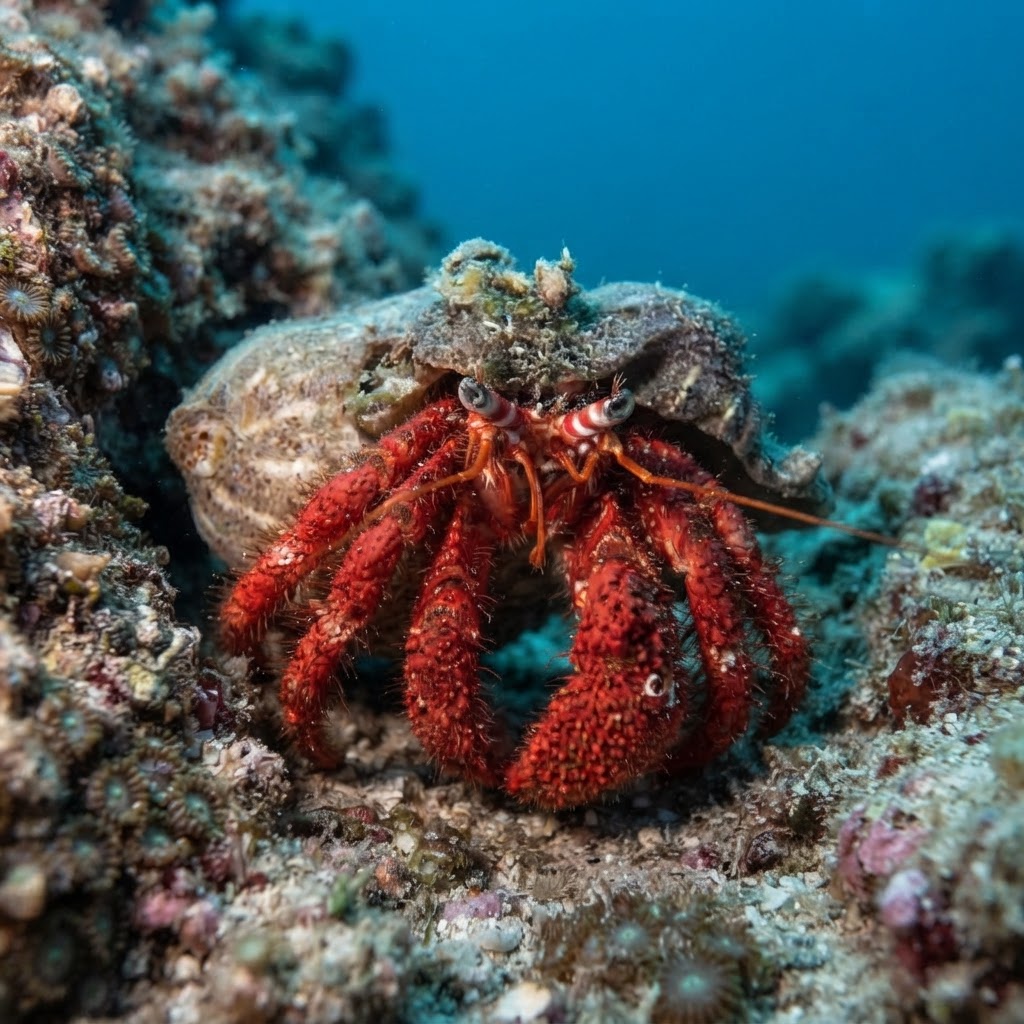
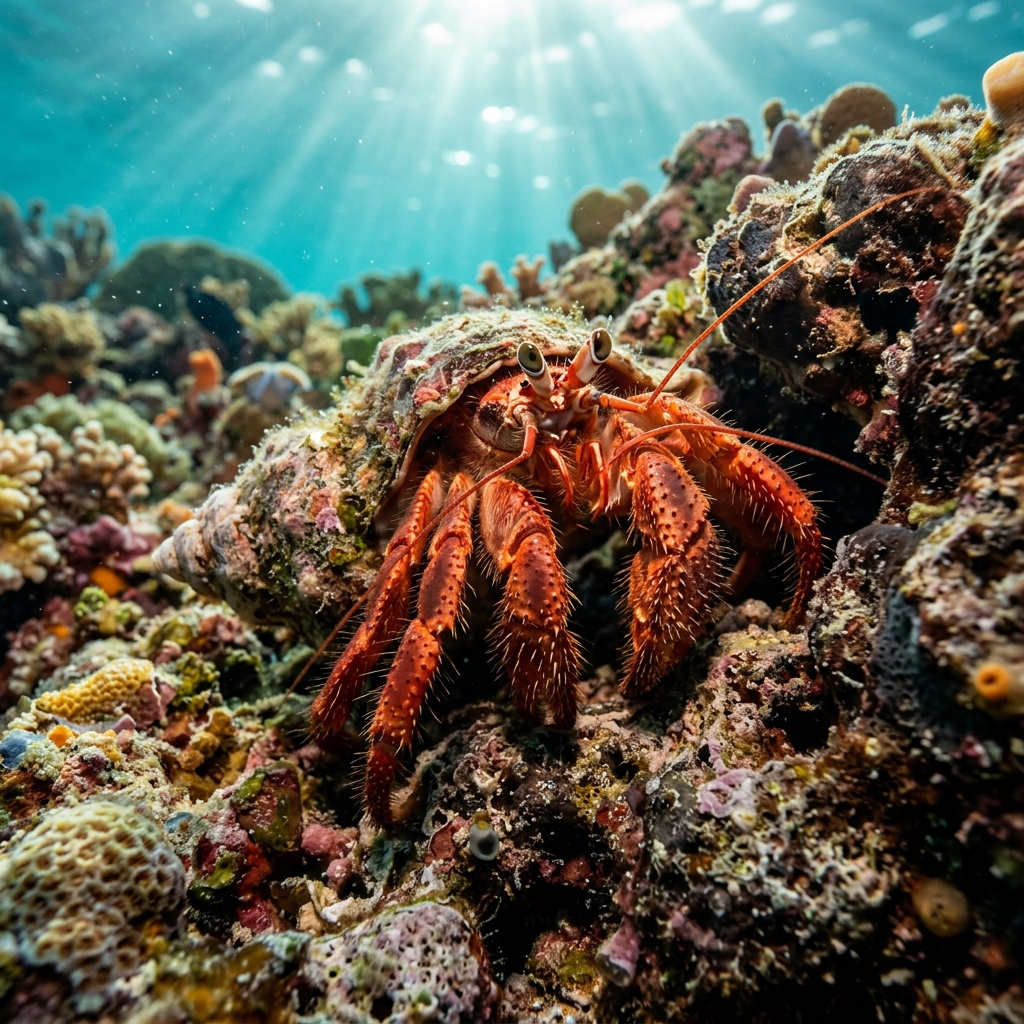
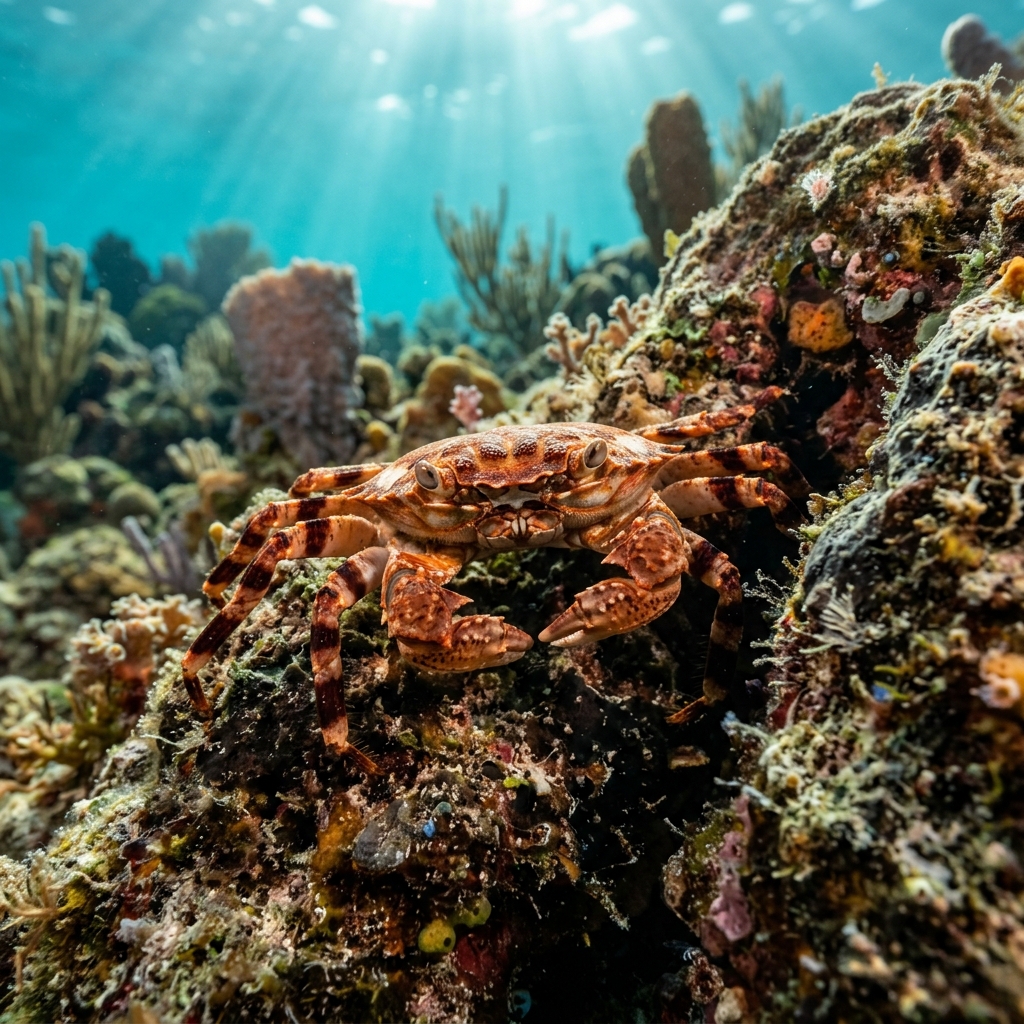
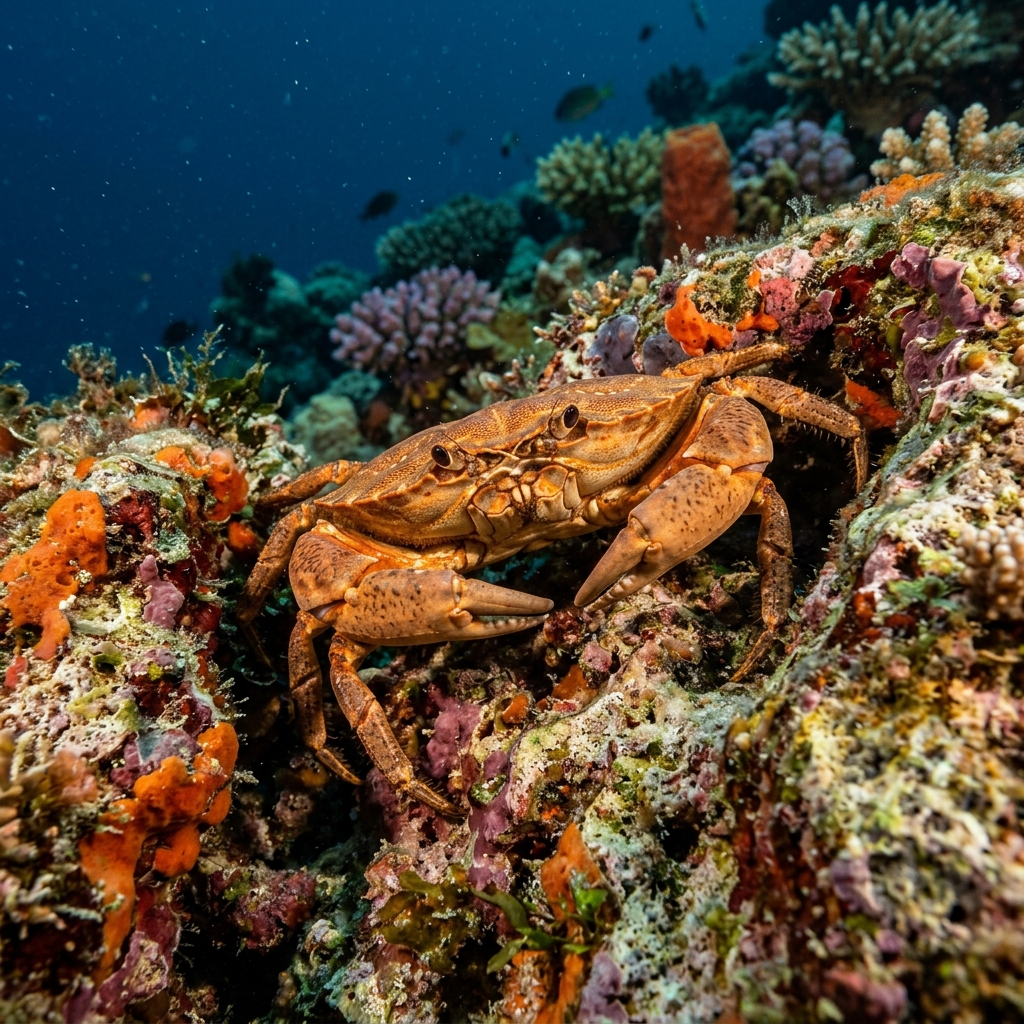
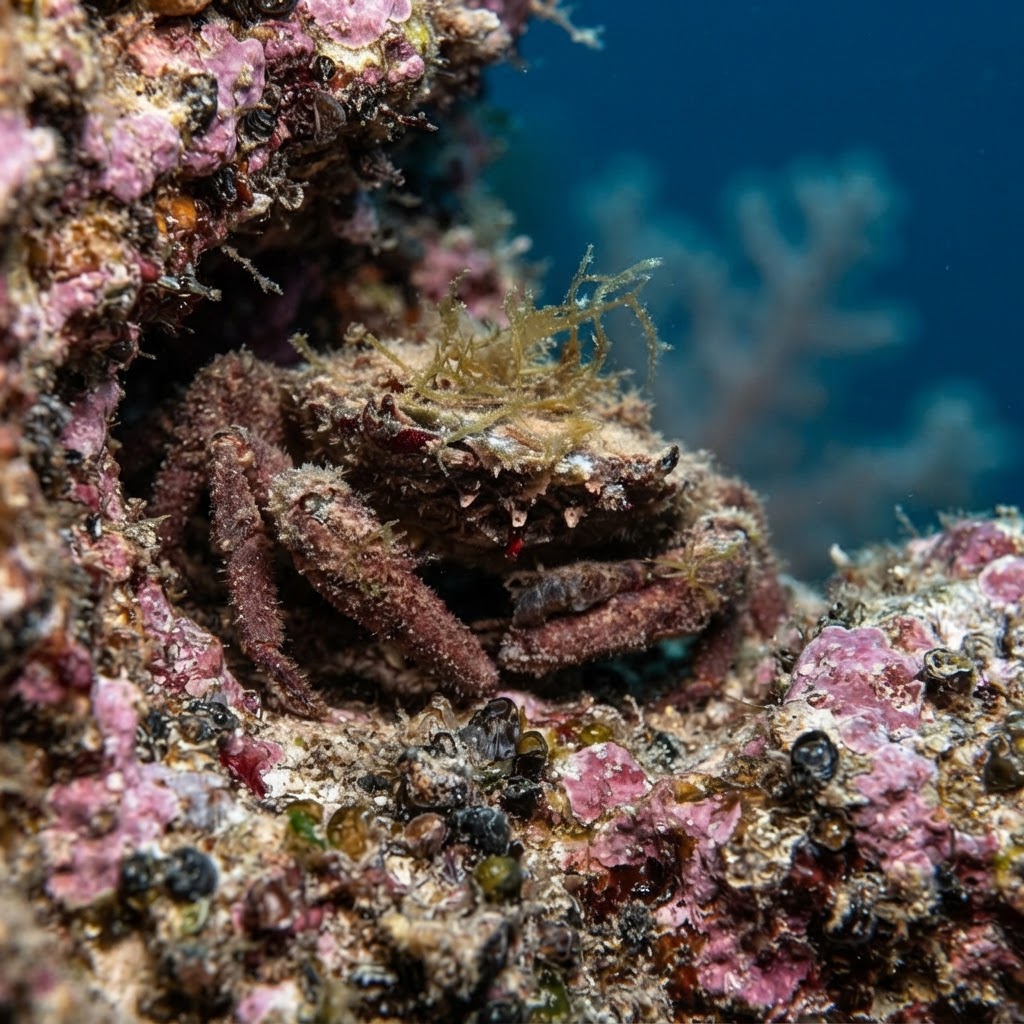
A small, triangular-shelled crab reaching around 6 cm across, with a spiny, textured carapace that often carries a coating of algae or debris for camouflage. Long, thin walking legs give it a spider-like silhouette rather than the rounder profile of a typical swimming crab. It tends to sit motionless against rock or weed, so the outline and the debris-covered shell are usually what catch a diver's eye before any colour does.
Divers usually find it sitting still on rock, weed or mixed rubble, often disguised under a layer of algae and sediment it has picked up on its shell. It rarely bolts when approached, relying on staying camouflaged rather than fleeing, so a slow scan of ledges and crevices is the best way to pick one out. Most logs describe single animals rather than groups, tucked into the same kind of low-current, structure-rich spots divers check for other small benthic life.
Like other spider crabs, it decorates its shell with bits of algae and debris as a form of camouflage, which is often the main reason it goes unnoticed until a diver looks twice at what seemed like a lump of weed.
Sightings show no clear seasonal pattern, and with a comfortable range of roughly 14 to 20 C it is logged across the year on Mediterranean and Adriatic reefs rather than in one particular month.
Reef neighbours a diver could mistake it for. Use the identification notes above to tell them apart.
This is a reliable sighting across the Adriatic and western Mediterranean, with the strongest logs coming from Croatia, particularly Kvarner, Istria and Central Dalmatia. Spain is close behind, led by Catalonia and Murcia, and it also turns up regularly in Italy, Malta and Gozo, France and Slovenia.
Mapping where Lesser Spider Crab is logged…
It is most reliably found in the Adriatic, especially Croatia's Kvarner, Istria and Central Dalmatia regions, and along Spain's Catalonia and Murcia coasts. It also shows up in Italy, Malta, Gozo, France and Slovenia.
There is no strong seasonal pattern in the sightings, and it tolerates a fairly wide temperature range, so it is logged on Mediterranean and Adriatic dives throughout the year.
Look for a small triangular, spiny-shelled crab around 6 cm across with long thin legs, often coated in algae or debris for camouflage. It usually sits motionless on rock or weed rather than moving in the open.
They are small, typically reaching around 6 cm across the shell, so they blend easily into rocky and weedy terrain.
No, they pose no danger to divers. They are small, slow-moving and rely on camouflage rather than any defensive threat.
It decorates its own shell with algae and debris, a camouflage trick shared with other spider crabs that makes it look more like a clump of weed than an animal until you look closely.
Site and sighting data is aggregated from diver logs, iNaturalist and GBIF. For taxonomy and conservation status:
European Green Crab
2,469 sites