Lepomis microlophus
Spot redear sunfish in Florida's springs and southeastern US freshwater sites. Here's when, where, and how to recognise this distinctive sunfish underwater.
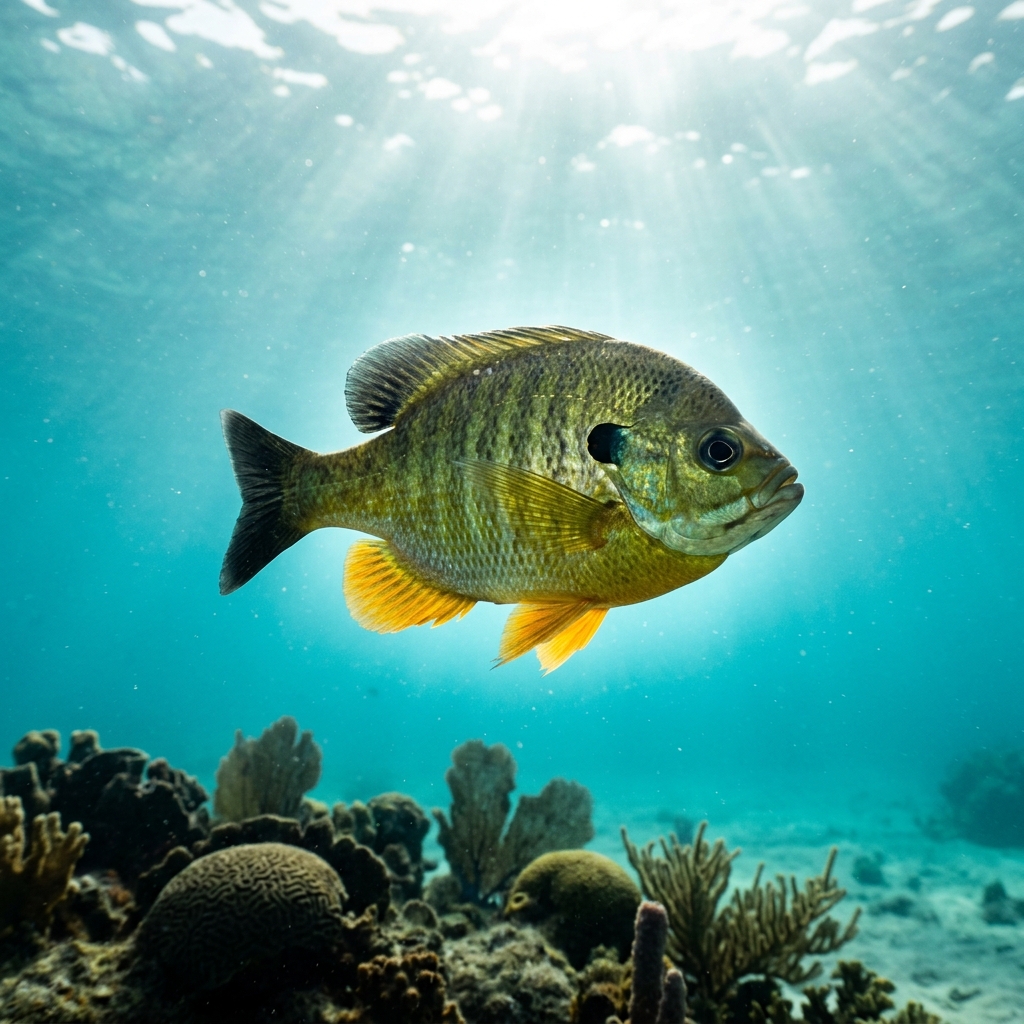
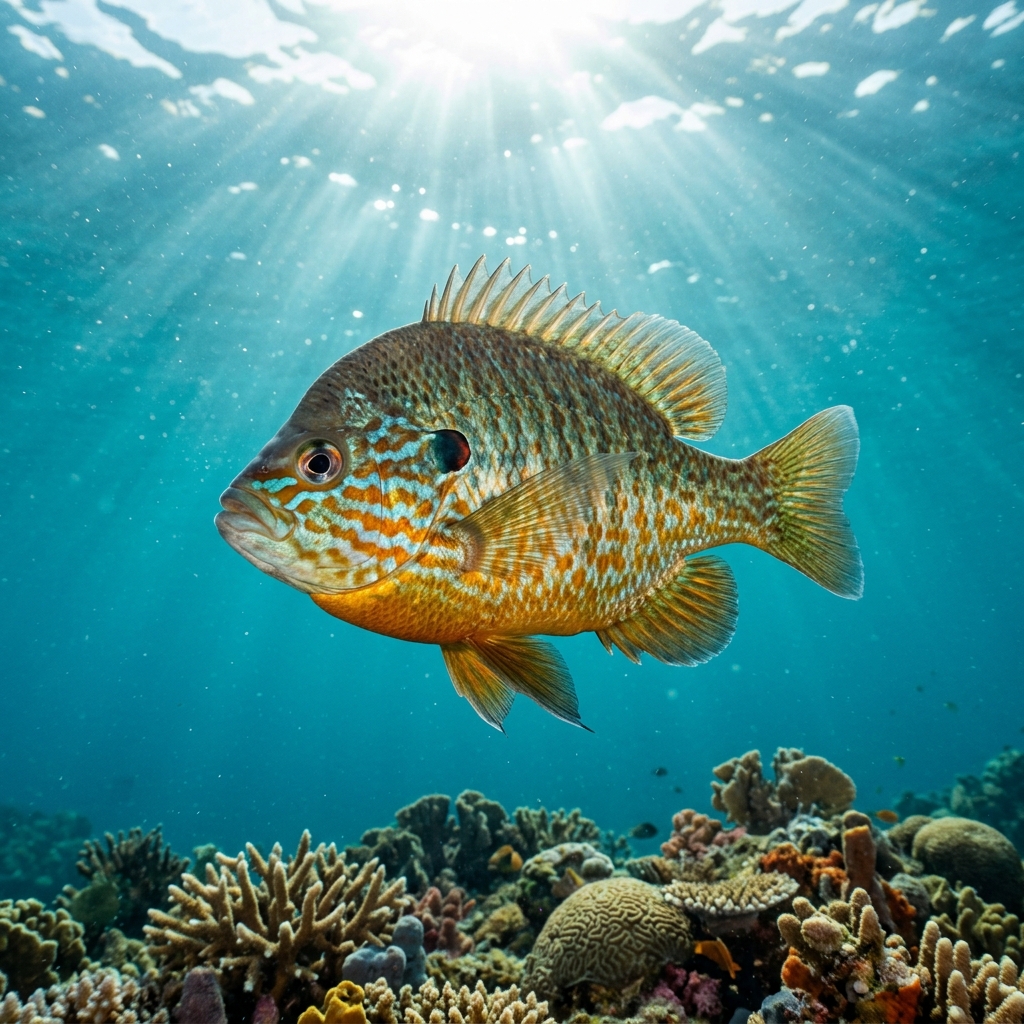
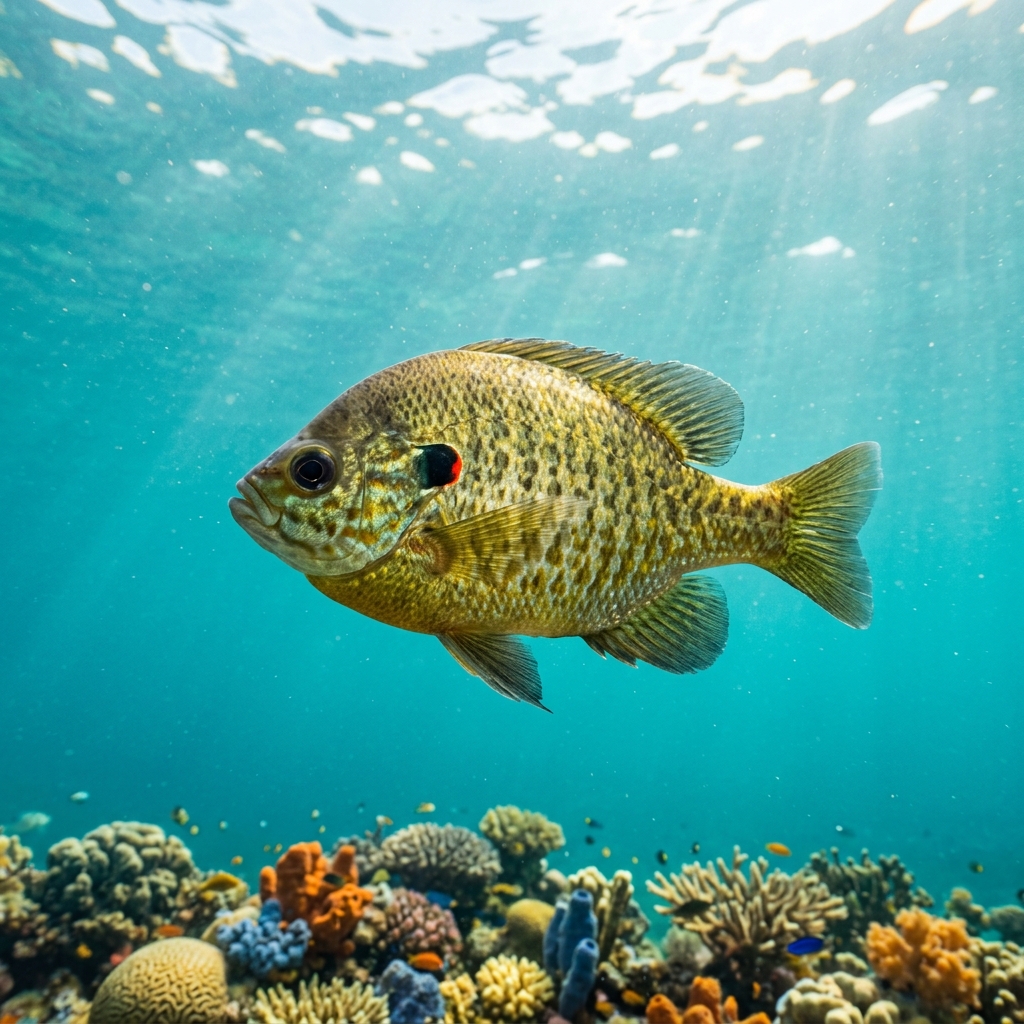
Look for a deep, laterally compressed (disc-shaped and flat-sided) body with olive to bronze-green flanks peppered with faint spots or mottling. The single feature that sets it apart from other sunfish is the opercle tab (the small flap at the rear of the gill cover), which has a bright red or orange edge on males and a pale yellow-white edge on females. The mouth is notably small and downturned compared to a bluegill. Overall colouration tends to be more subdued and earthy than its relatives, without strong vertical banding.
Redear sunfish tend to hold close to the bottom, often near submerged vegetation, woody debris, or shell beds, where they root around for molluscs and snails using their specialised crushing teeth. They are not particularly shy around divers and will often hover in place or move off slowly rather than bolt. Encounters are typically quiet and close-range, making them approachable subjects for observation.
The redear sunfish earned the nickname 'shellcracker' for good reason: it has hardened teeth deep in its throat specifically adapted to crush the shells of snails, clams, and mussels, a feeding strategy almost unique among North American sunfish.
There is not enough monthly sighting data to identify a peak season, so treat sightings as possible year-round. The observed water-temperature range of 17 to 29 °C suggests it is most active and visible in the warmer months of spring through autumn, particularly in the cooler northern parts of its range.
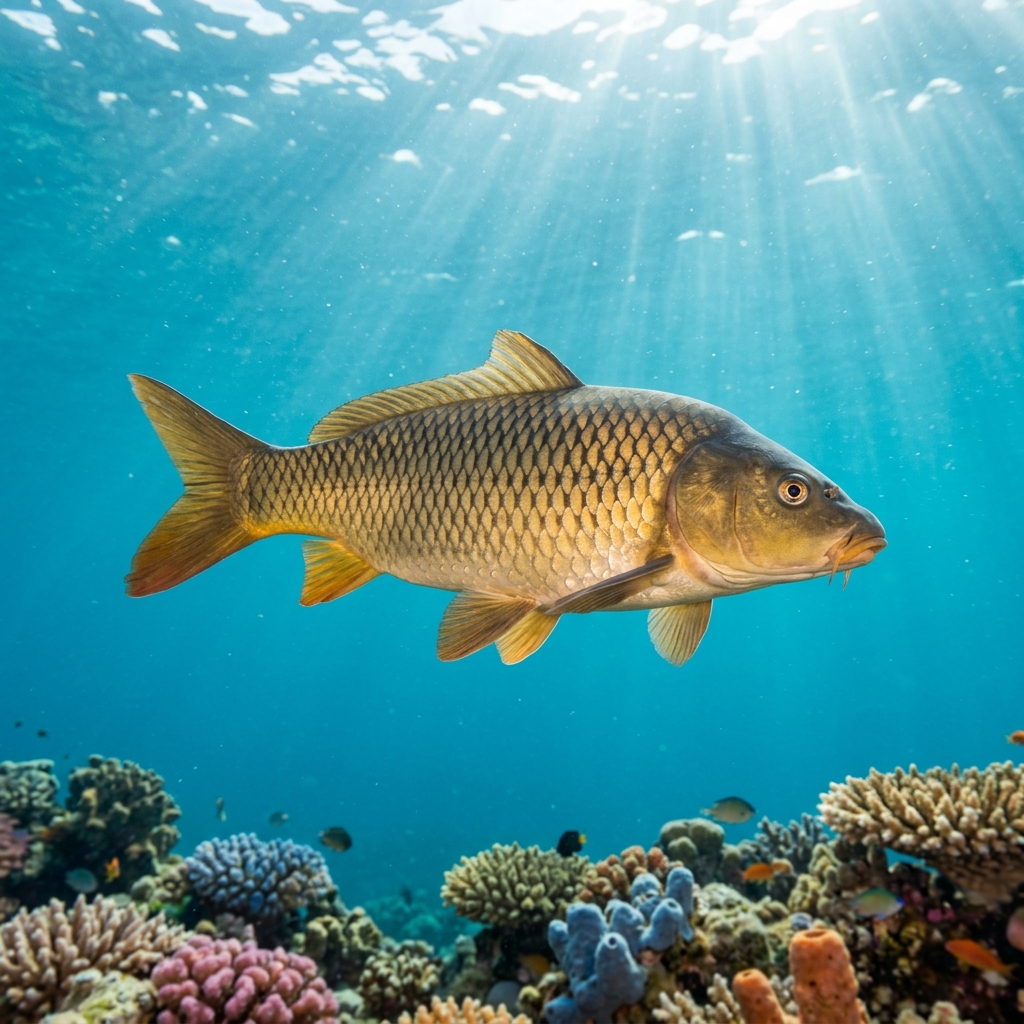
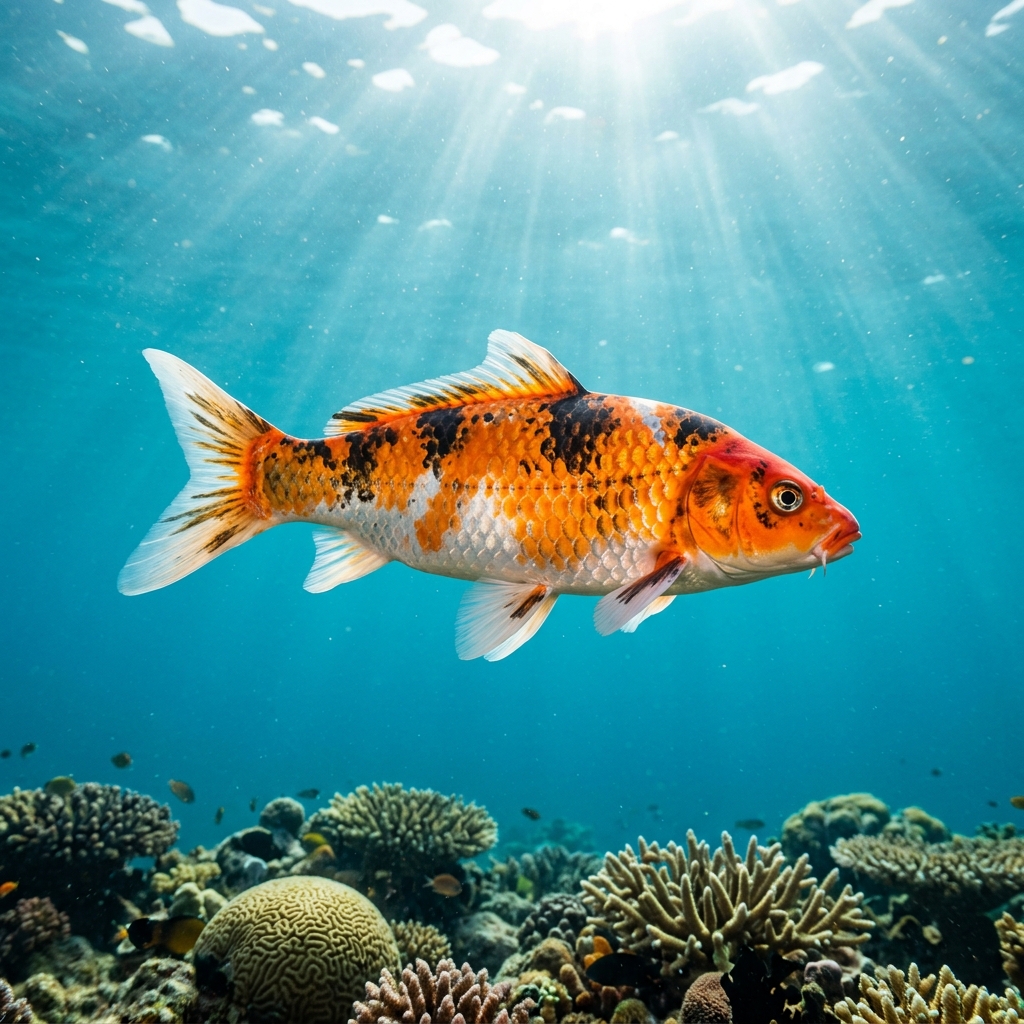
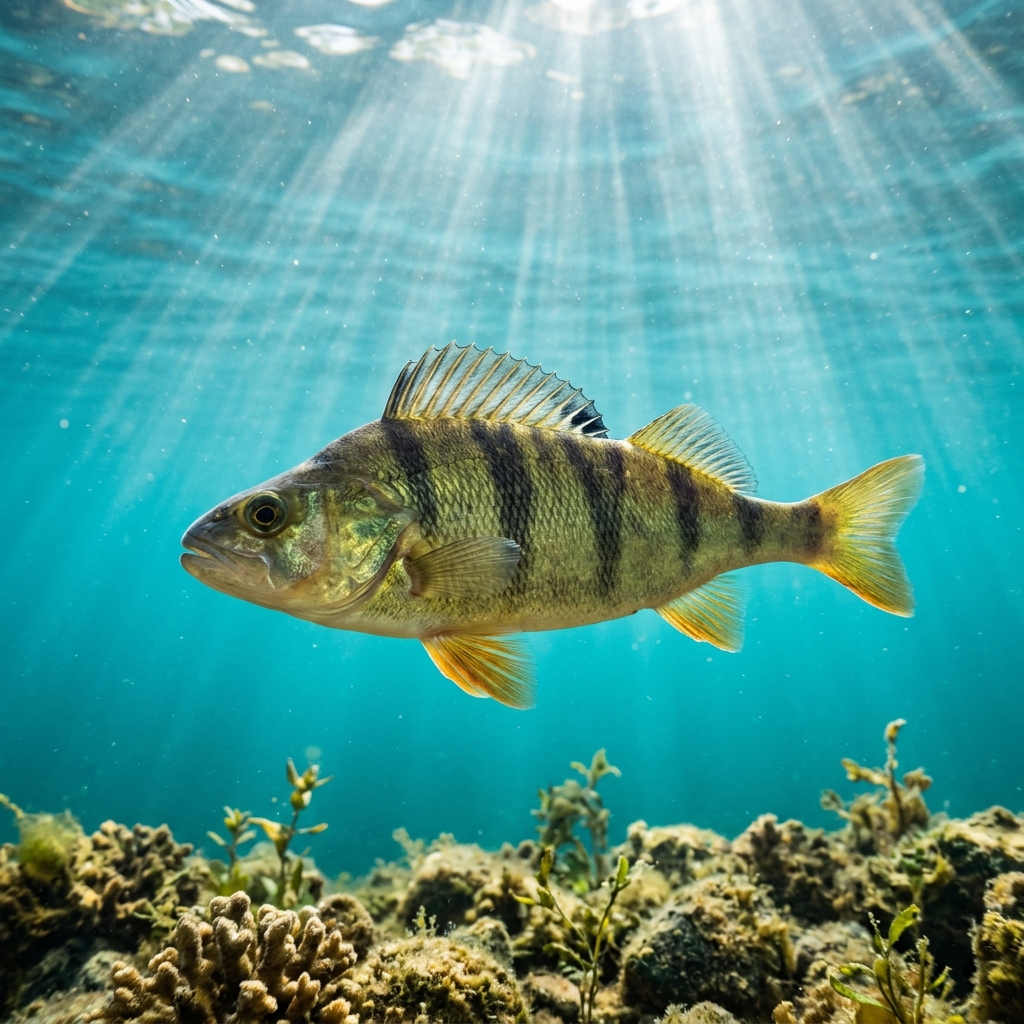
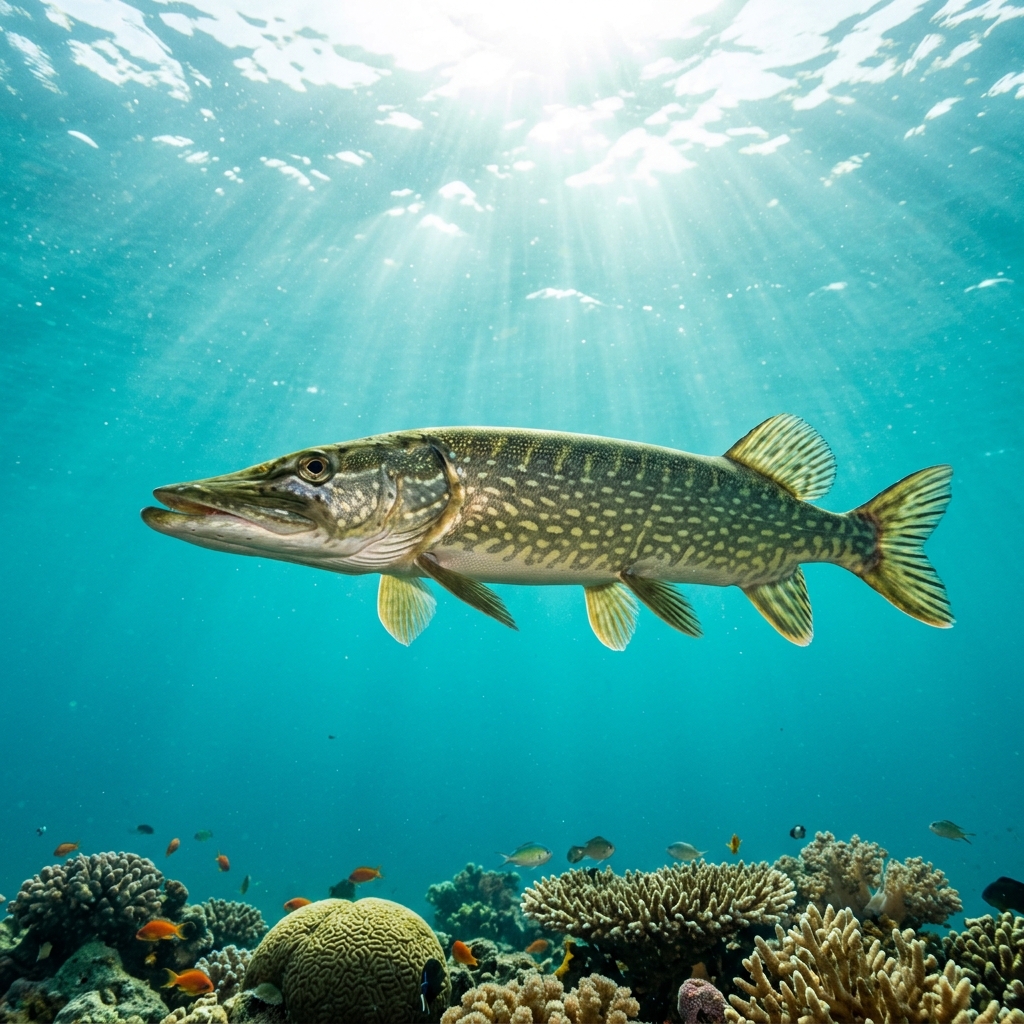
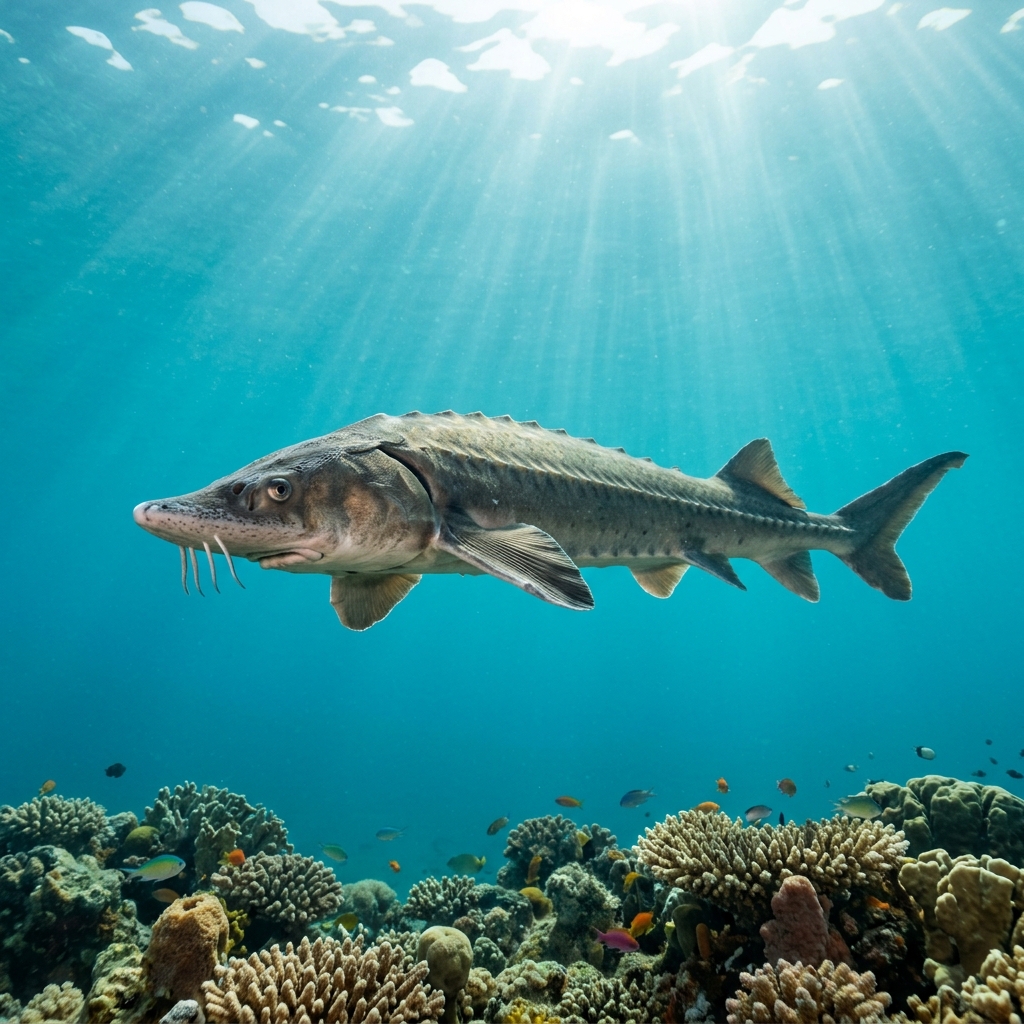
Reef neighbours a diver could mistake it for. Use the identification notes above to tell them apart.
Almost all logged sightings come from the United States, with the strongest concentration in Florida and the broader Southeast region. There is also a meaningful cluster of sightings across the Central and Mountain West states, where it has been widely introduced. If you are searching for a reliable encounter, freshwater springs and clear lakes in the Southeast are your best starting point.
Mapping where Redear Sunfish is logged…
Logged dive sightings are concentrated in the United States, particularly in Florida and the broader Southeast region, as well as across Central and Mountain West states. Freshwater springs, clear lakes, and slow rivers are the most productive environments to search.
Sightings have been recorded across multiple seasons with no clear peak, so encounters are possible year-round. In practice, warmer water between about 20 and 29 °C tends to bring the fish into shallower, more visible water, so late spring through early autumn is a reasonable window in temperate sites.
Key in on the opercle tab at the rear of the gill cover: males have a bold red or orange edge, females a pale yellow-white edge. The body is disc-shaped and olive-bronze with subtle spotting, the mouth is small and slightly downturned, and the overall impression is more muted in colour than a bluegill.
Redear sunfish commonly reach around 20 to 30 cm in length, with large individuals in rich freshwater environments occasionally exceeding 35 cm. Underwater they appear as a solid, palm-sized to plate-sized disc-shaped fish.
Redear sunfish have specialised pharyngeal teeth (crushing teeth located deep in the throat) adapted to grind through the shells of snails, clams, and mussels. This sets them apart from most other sunfish, which target insects and small fish. The audible crunching as they feed gave rise to the 'shellcracker' nickname.
Site and sighting data is aggregated from diver logs, iNaturalist and GBIF. For taxonomy and conservation status:
Sun Perch
2,182 sites