Lepomis megalotis
Spot the longear sunfish by its vivid blue-streaked face and bold ear flap in North American freshwater. Here's how to identify it and where to look.
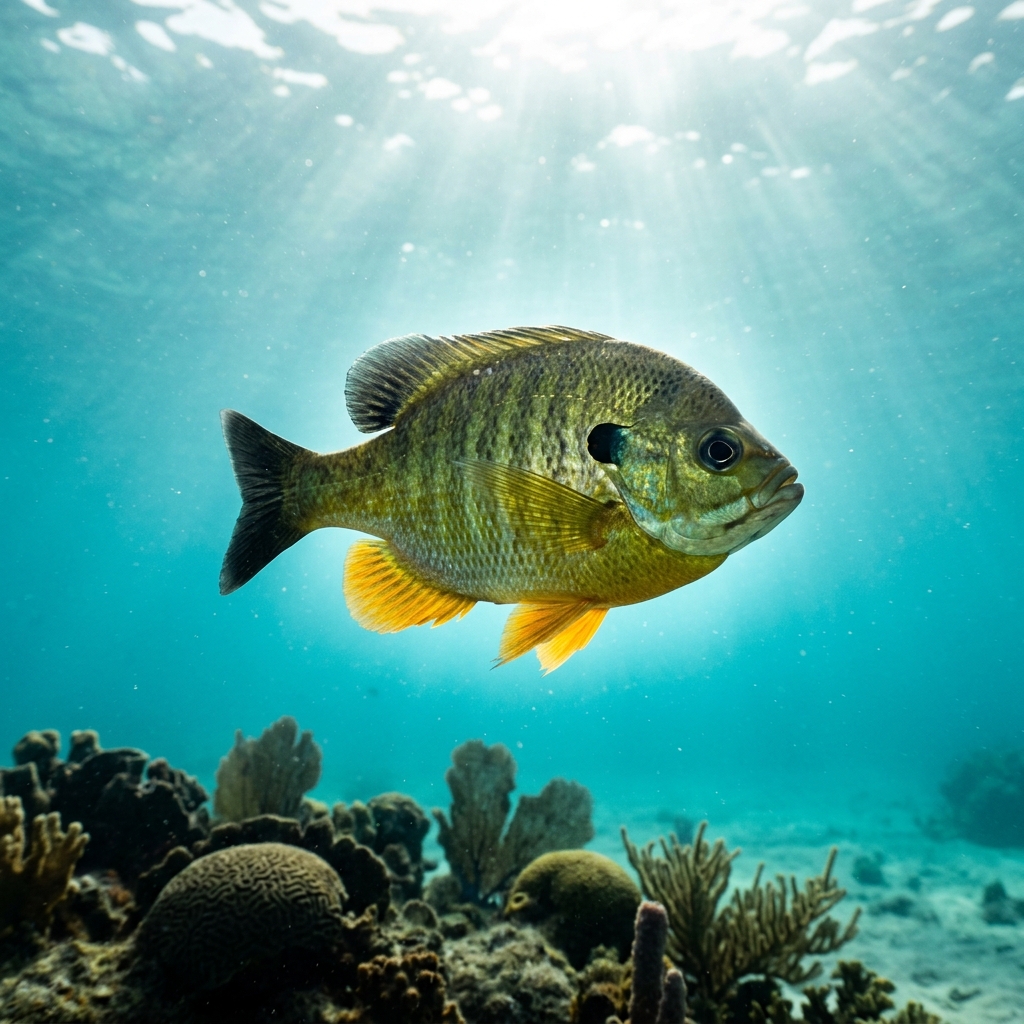
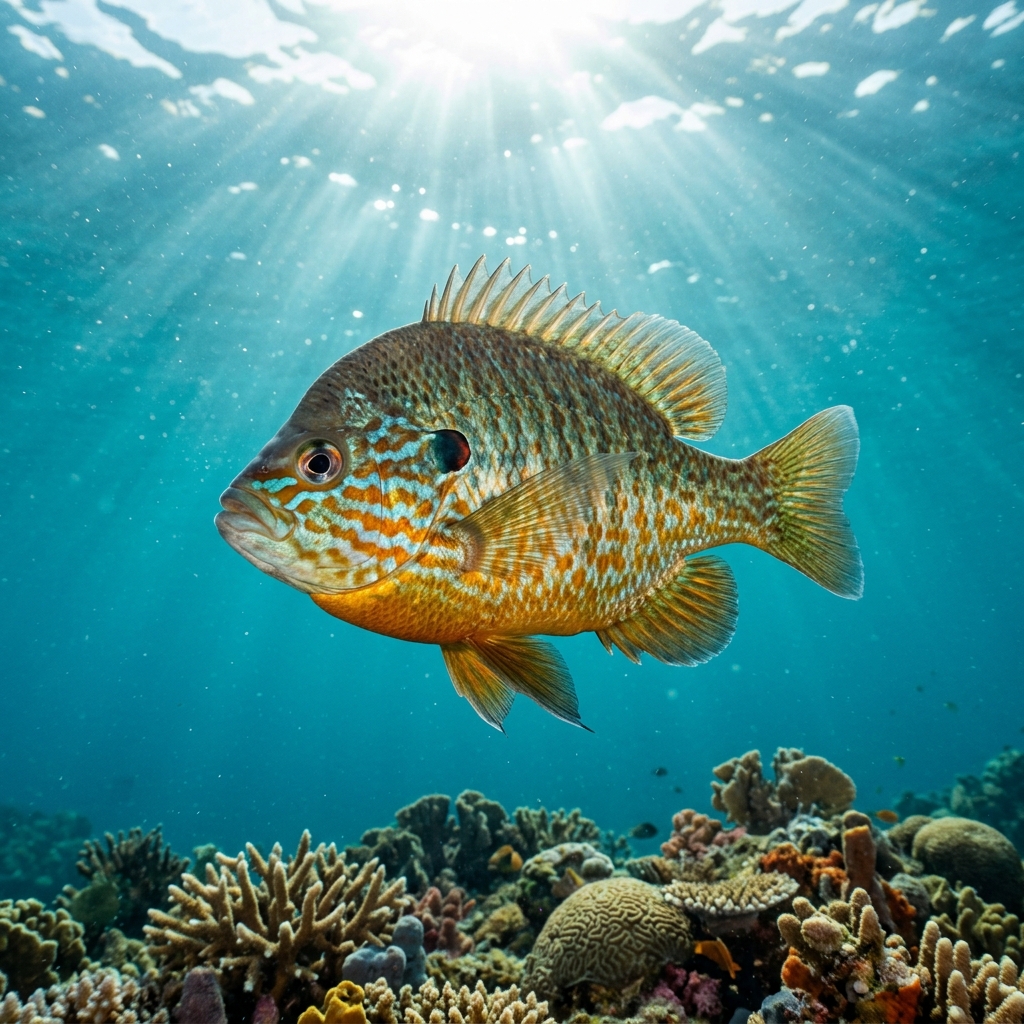
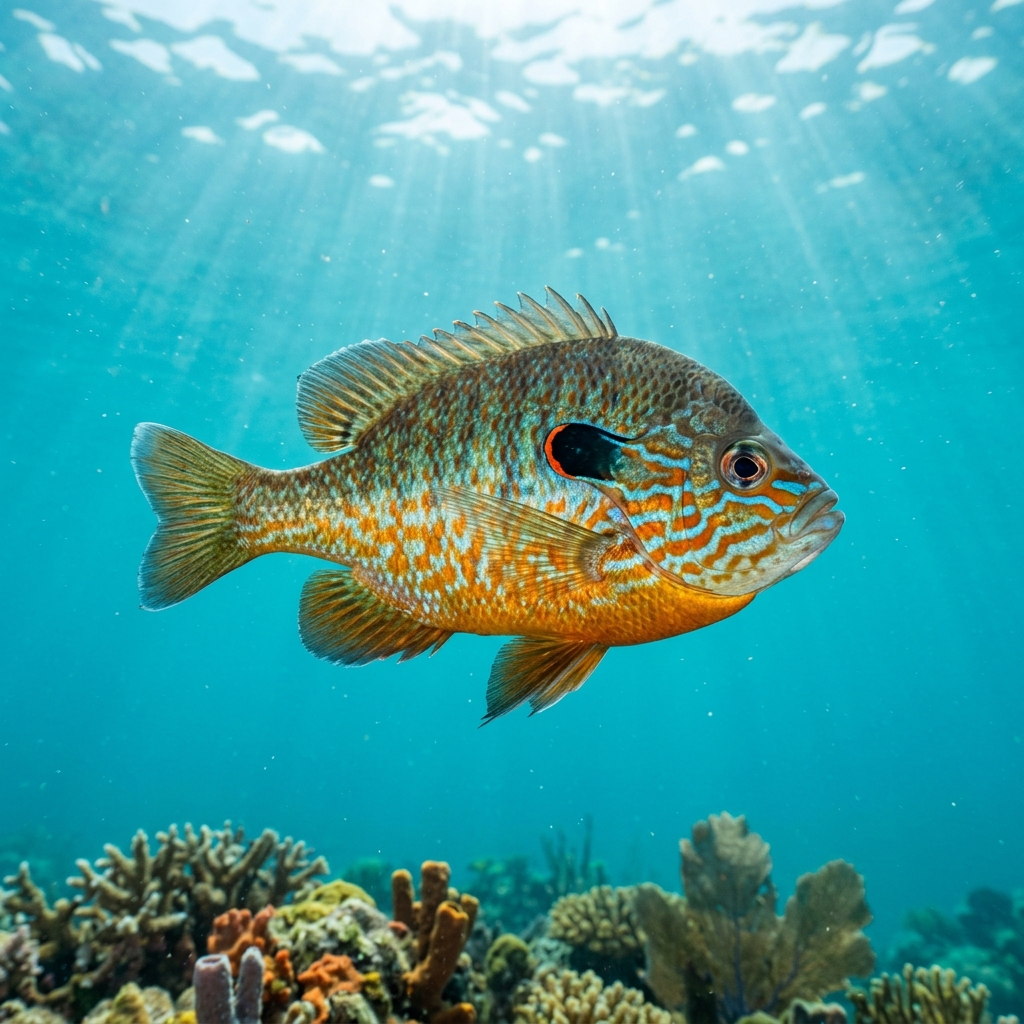
A compact, deep-bodied sunfish, rarely exceeding 20 cm in most waters, with a vivid mosaic of orange and blue-green on its sides and a striking pattern of wavy blue lines across its cheeks and gill cover. The feature that clinches the ID is the elongated opercular flap (the "ear" extending from the gill cover), which is black with a pale or reddish border and noticeably longer than in other sunfish. Males in breeding condition flush with intense orange and turquoise. Females and non-breeding fish are duller but retain the characteristic long ear flap.
Longear sunfish tend to hover close to submerged vegetation, woody debris, or rocky substrate in shallow water, often in less than two metres depth. Males are notably territorial during the spawning season, fanning out a nest on sandy or gravelly bottom and actively chasing off intruders, which can make them unusually approachable as they hold their ground rather than fleeing. Outside the breeding season they are more retiring, drifting through vegetation or congregating in loose groups near cover.
Male longear sunfish are among the most colourful freshwater fish in North America, and their colour intensifies dramatically during the spawning season as they compete to attract females to their nests.
There is not yet enough logged sighting data to point to a specific season. Longear sunfish are active throughout the warmer months when water temperatures rise above about 15 °C, with breeding activity and peak visibility typically occurring in late spring and summer.
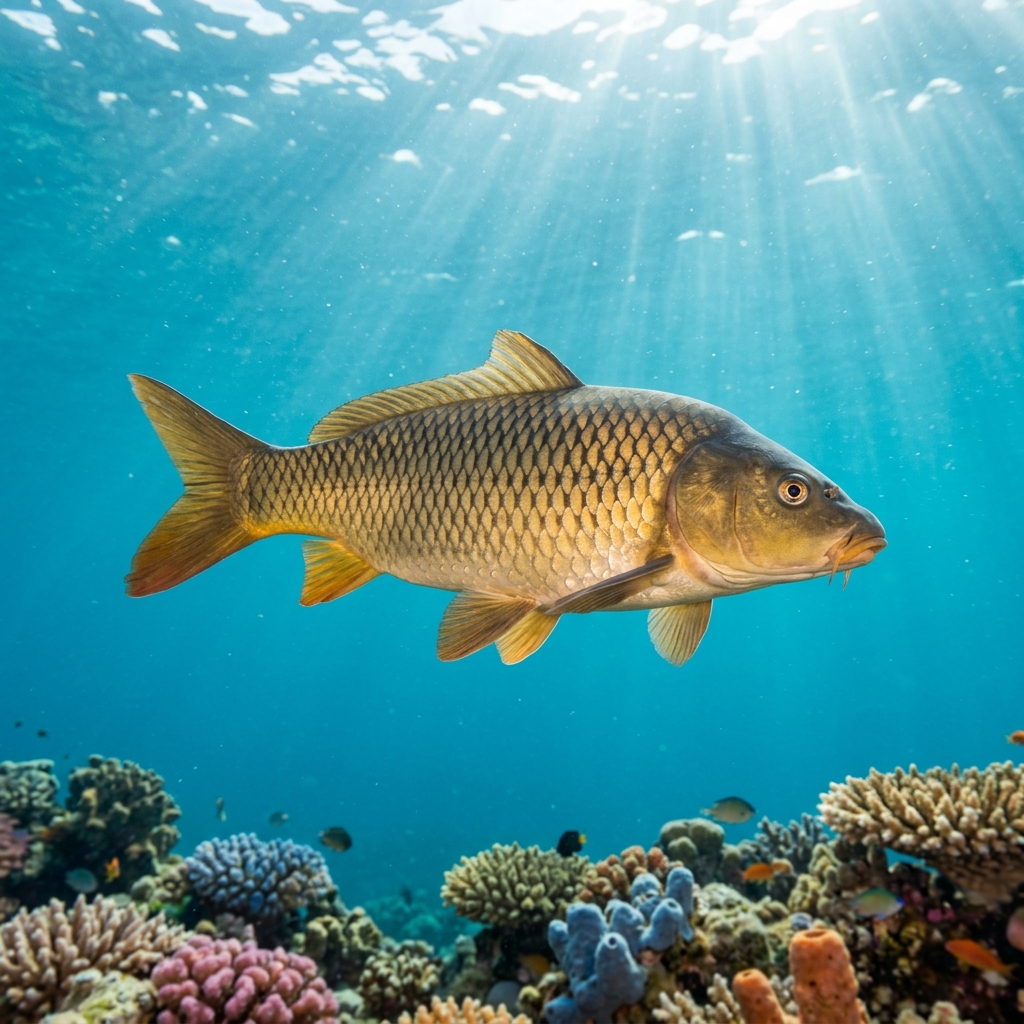
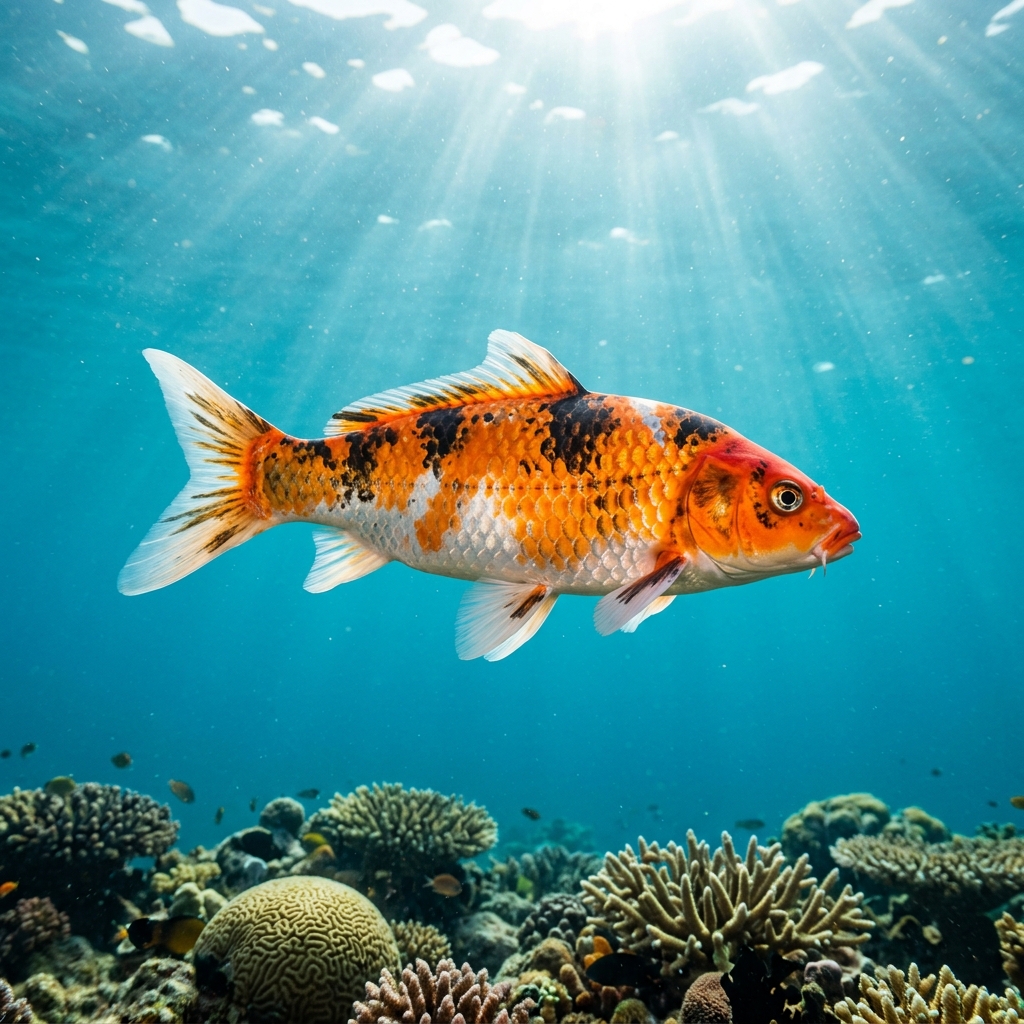
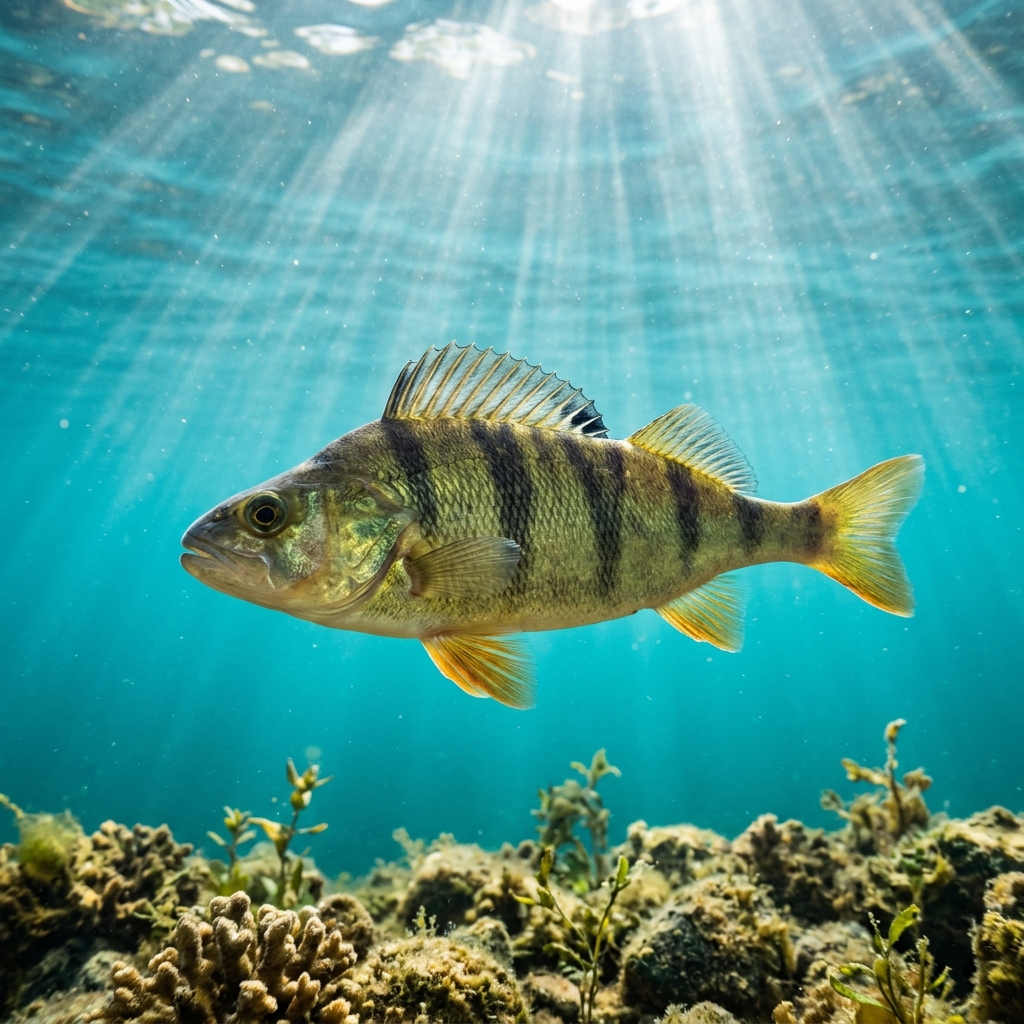
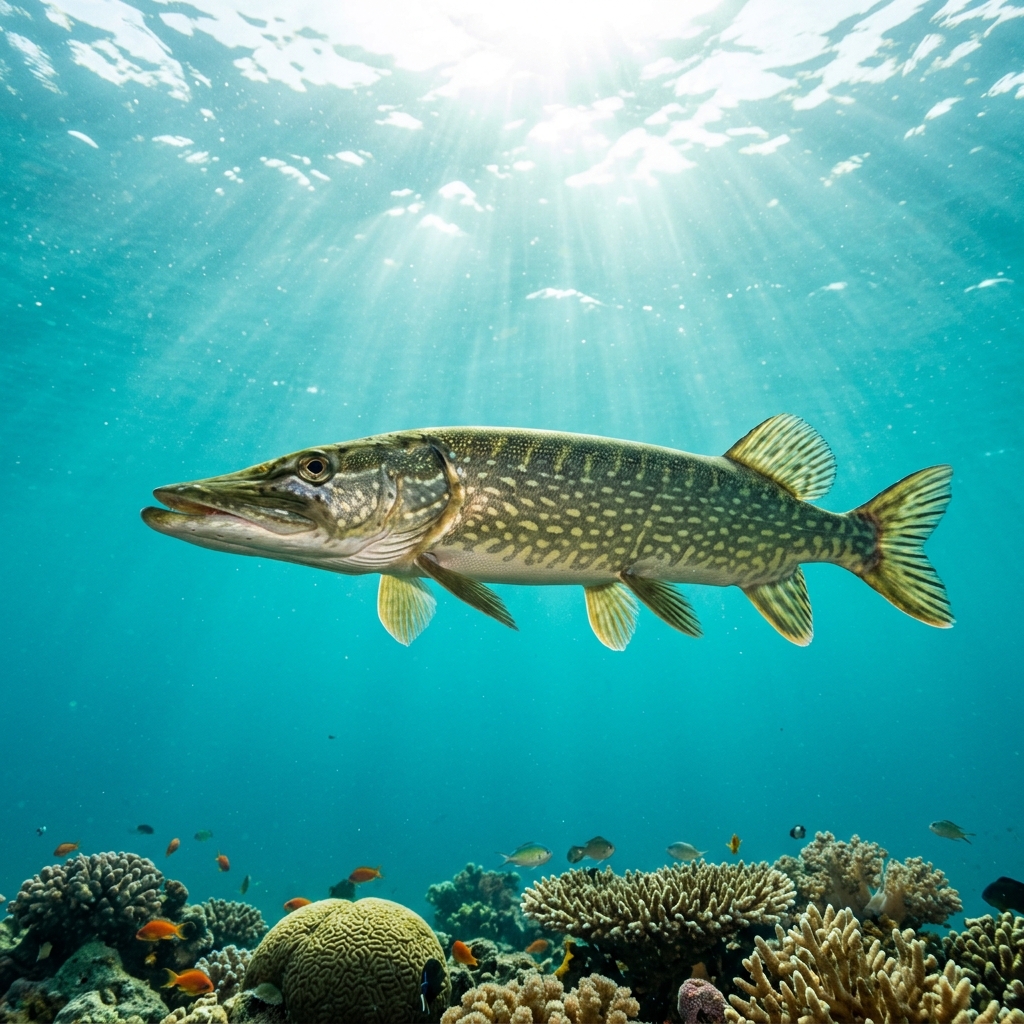
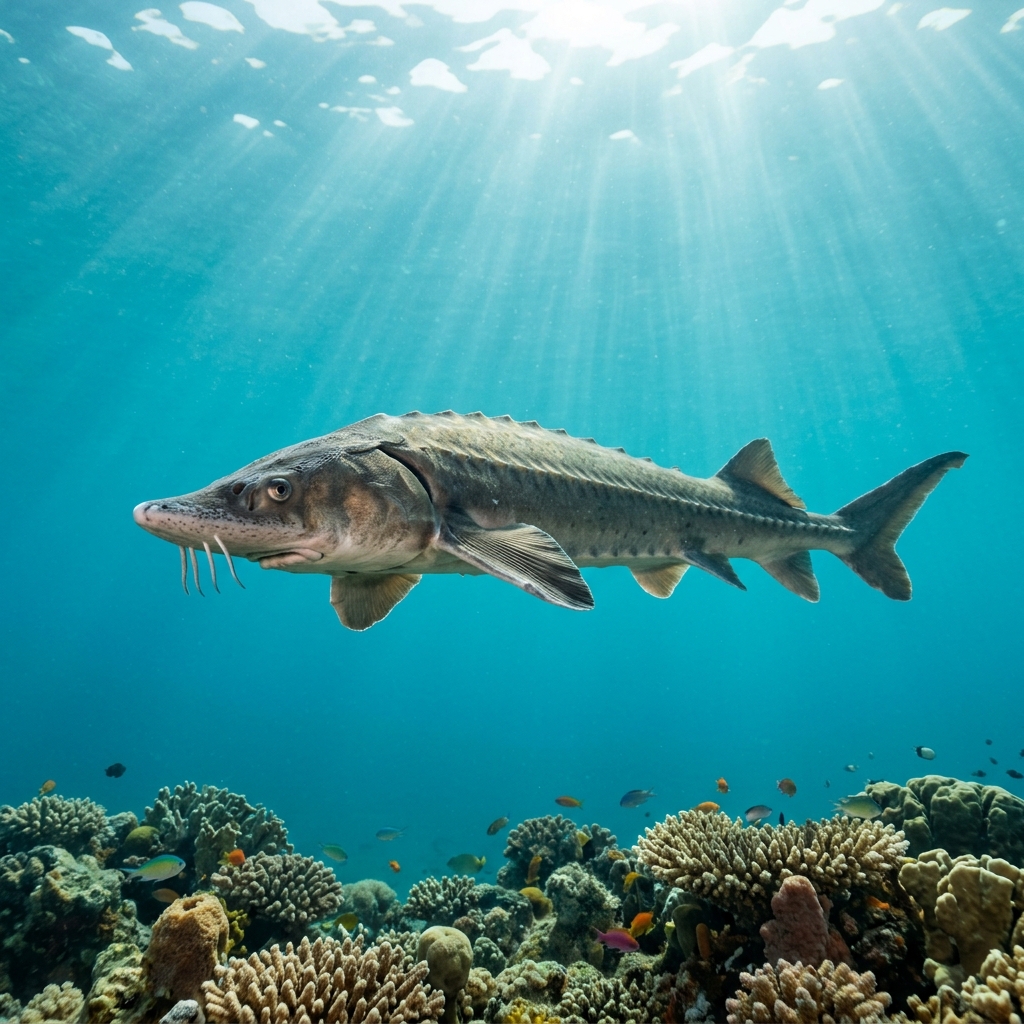
Reef neighbours a diver could mistake it for. Use the identification notes above to tell them apart.
No dive-site records have been logged on Fin yet for this species. The longear sunfish is native to the river systems and lakes of central and eastern North America, from the Great Lakes drainage south through the Mississippi basin and into the Gulf states. Snorkellers and freshwater divers exploring clear, slow-moving rivers and weedy lake margins in that region are the most likely to encounter one.
Mapping where Longear Sunfish is logged…
Longear sunfish live in freshwater rivers, streams, and lakes across central and eastern North America. No dedicated dive sites are logged on Fin yet, but snorkellers exploring clear, shallow rivers and weedy lake edges in the Mississippi basin, Great Lakes region, and Gulf Coast drainages are in the right habitat to find them.
Late spring through summer is your best window. Water temperatures above 15 °C bring them into shallow water to feed and breed, and spawning males are most visible and least skittish from around May to July when they are guarding nests.
Look for the long, narrow black ear flap edged in pale or reddish-white extending from the gill cover. Combined with the orange and blue-streaked flanks and wavy blue facial lines, this flap sets it apart from other sunfish. Breeding males are especially vivid and unmistakable.
Most longear sunfish encountered by snorkellers are between 10 and 20 cm long. Occasional individuals in rich, undisturbed habitat can approach 24 cm, but anything over 15 cm is considered a good-sized fish for the species.
No. Longear sunfish pose no threat to divers or snorkellers. Territorial males may dart towards you to defend a nest, but this is a bluff and they will not bite or harm a person. Simply hovering still at a slight distance is usually enough to observe nest behaviour without disturbing them.
Site and sighting data is aggregated from diver logs, iNaturalist and GBIF. For taxonomy and conservation status:
Sun Perch
2,182 sites