Lepomis auritus
Spot redbreast sunfish across the US Southeast and Central states in summer. One of the most vivid freshwater fish a diver can encounter.
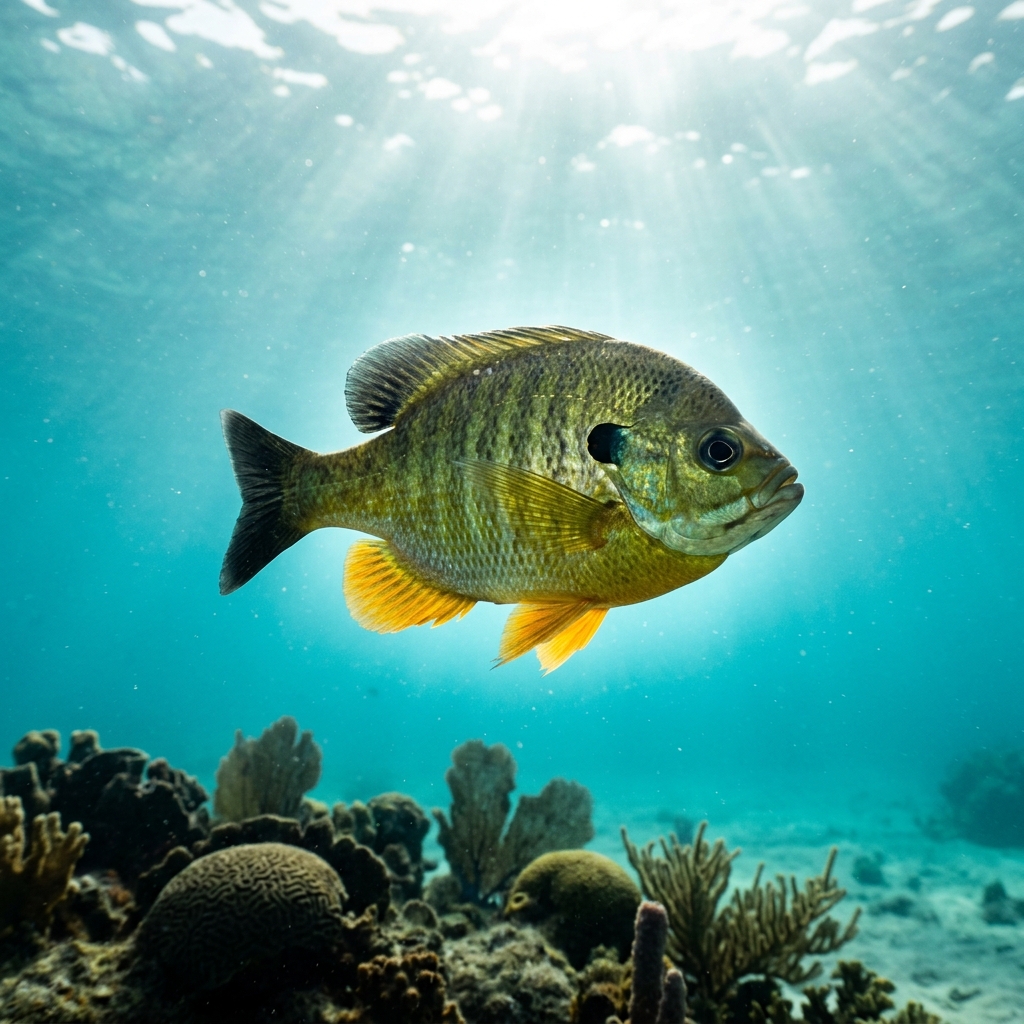
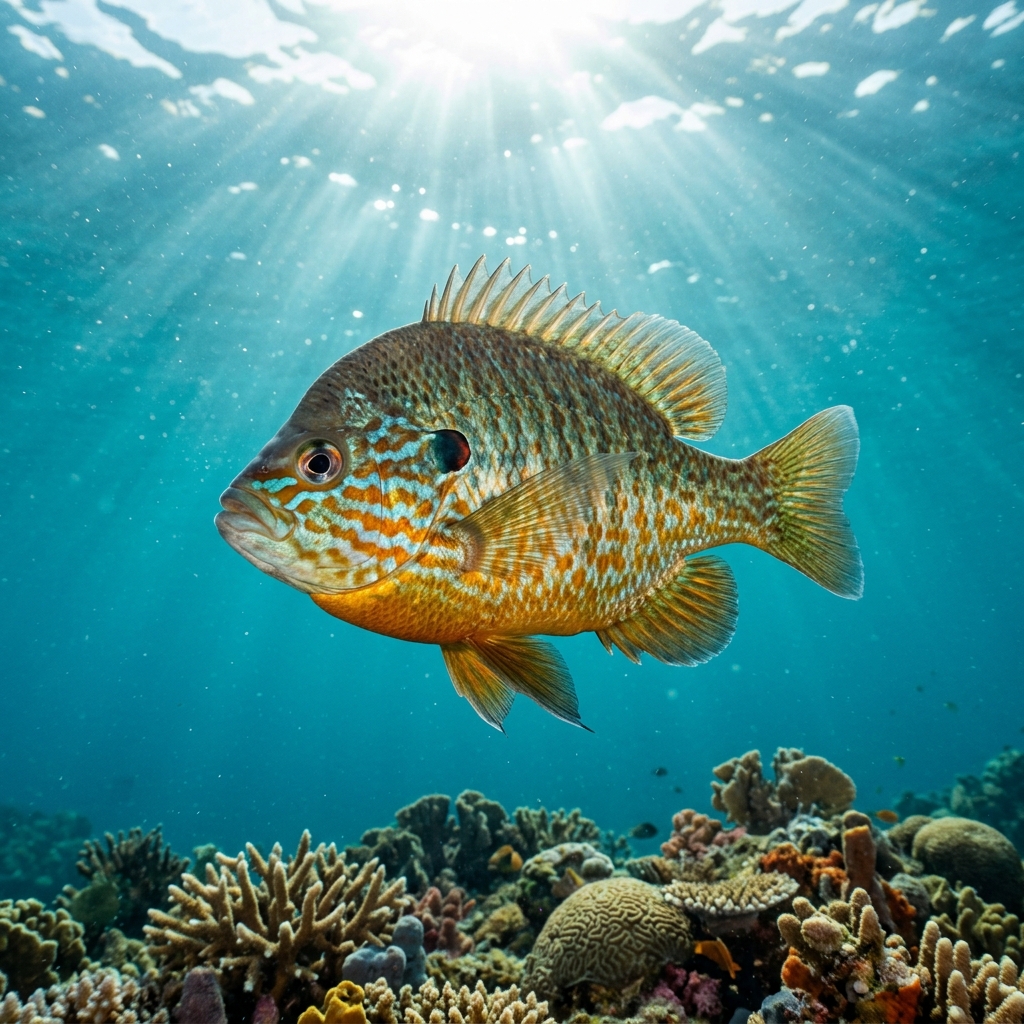
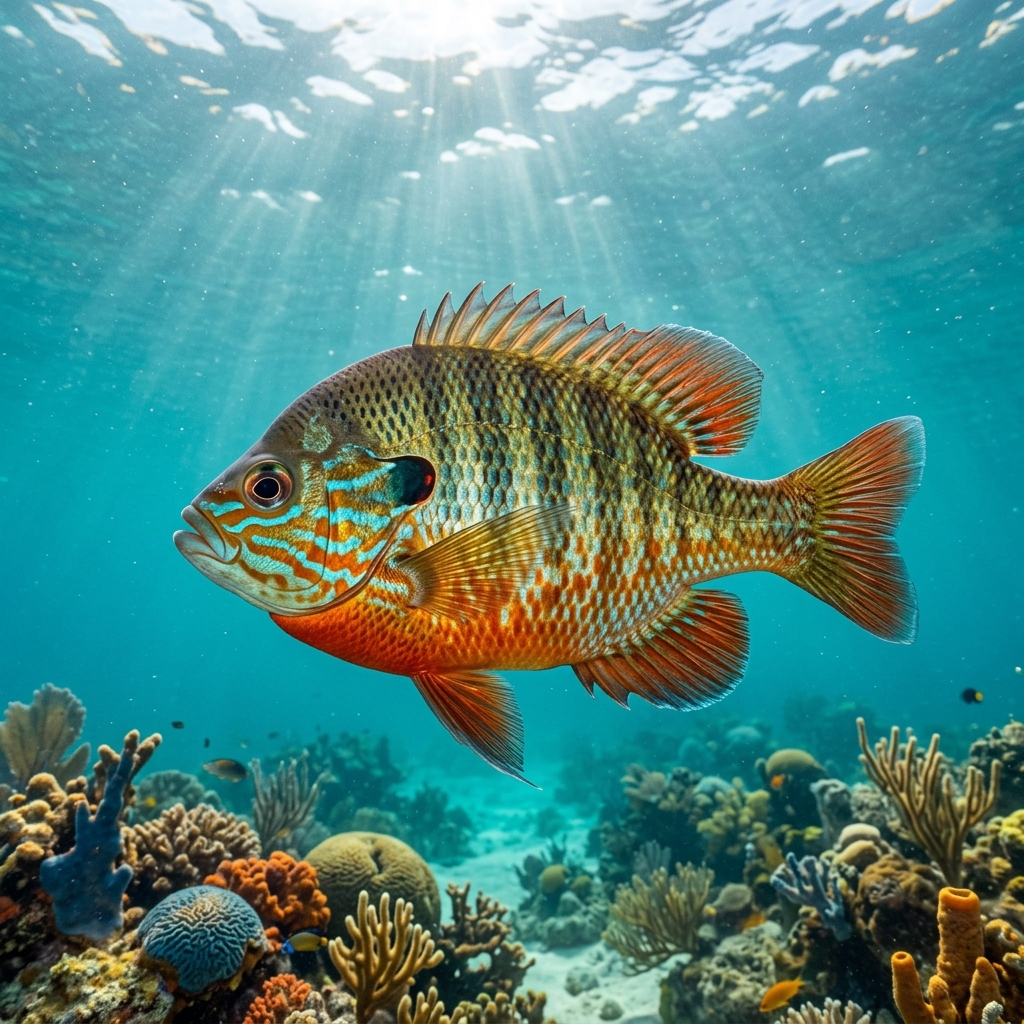
That fiery orange-to-red breast is the key field mark, it flushes the entire underside and is visible from several metres away in clear river water. Look also for the unusually long, narrow black ear flap (opercular tab) extending from the gill cover, which is longer than on any similar sunfish. The body is deep and laterally flattened in the classic sunfish disc shape, olive-green to bluish on the flanks with faint orange spotting. Males in breeding condition intensify to a vivid reddish-orange on the belly.
Redbreast sunfish are often seen holding position in moderate current near submerged structure, roots, rocks, or woody debris, where they watch for invertebrates drifting past. They are curious but not bold; most individuals will hold their ground and observe a diver briefly before retreating into cover. During the summer spawning season males guard shallow, fanned-out nest depressions and can be remarkably approachable while tending eggs.
Males excavate and fan out small circular nests on sandy or gravelly river bottoms and actively guard eggs and newly hatched fry, fanning them with their fins to keep them oxygenated, a behaviour that makes nesting males easy to observe and photograph.
Sightings concentrate in June through August, when warm water and active spawning behaviour bring redbreast sunfish into the shallows and make them easiest to find.
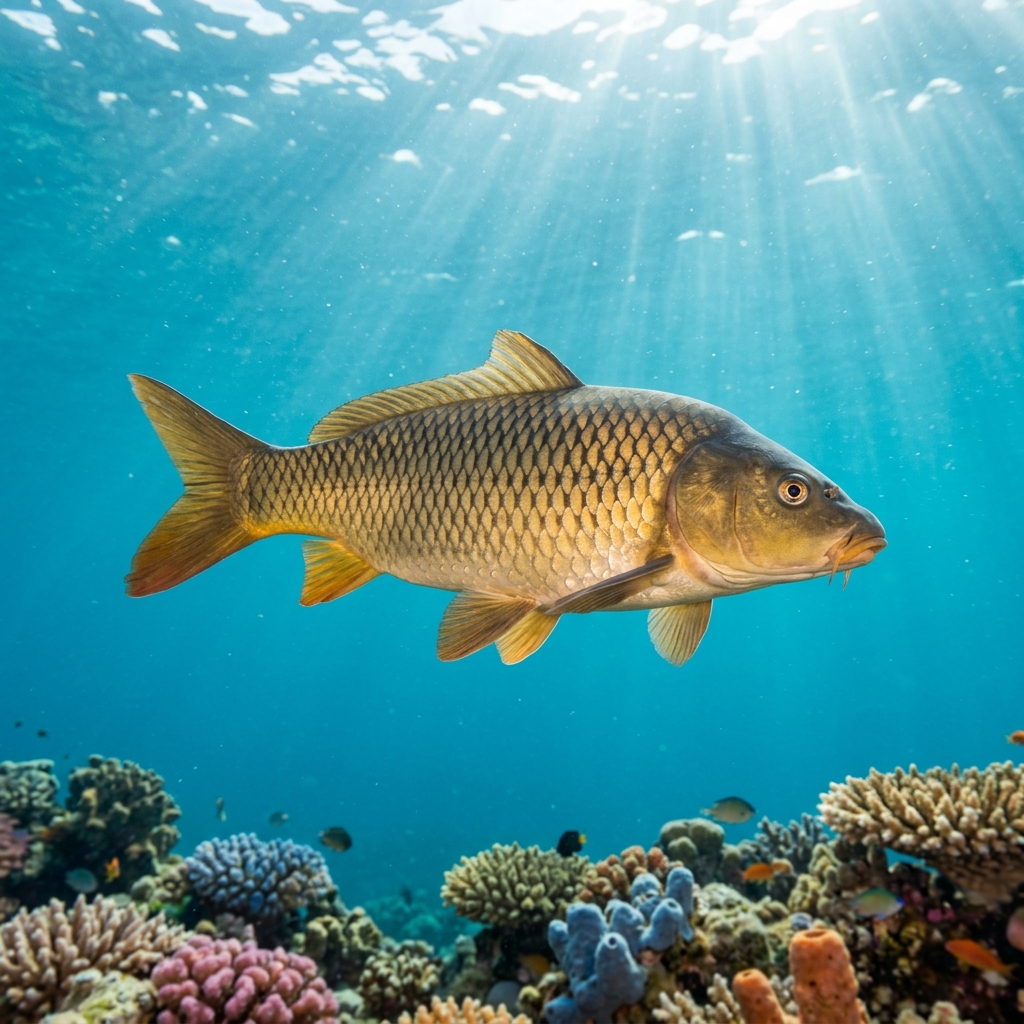
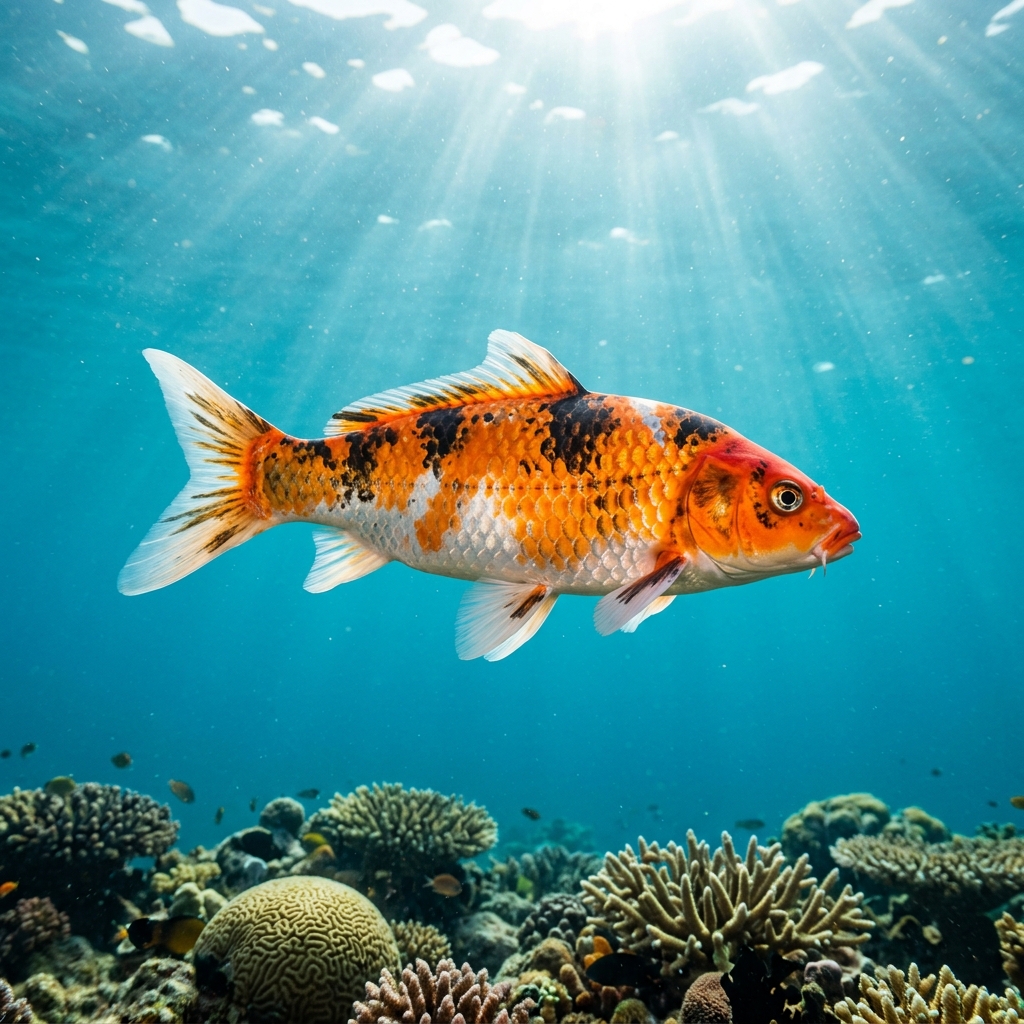
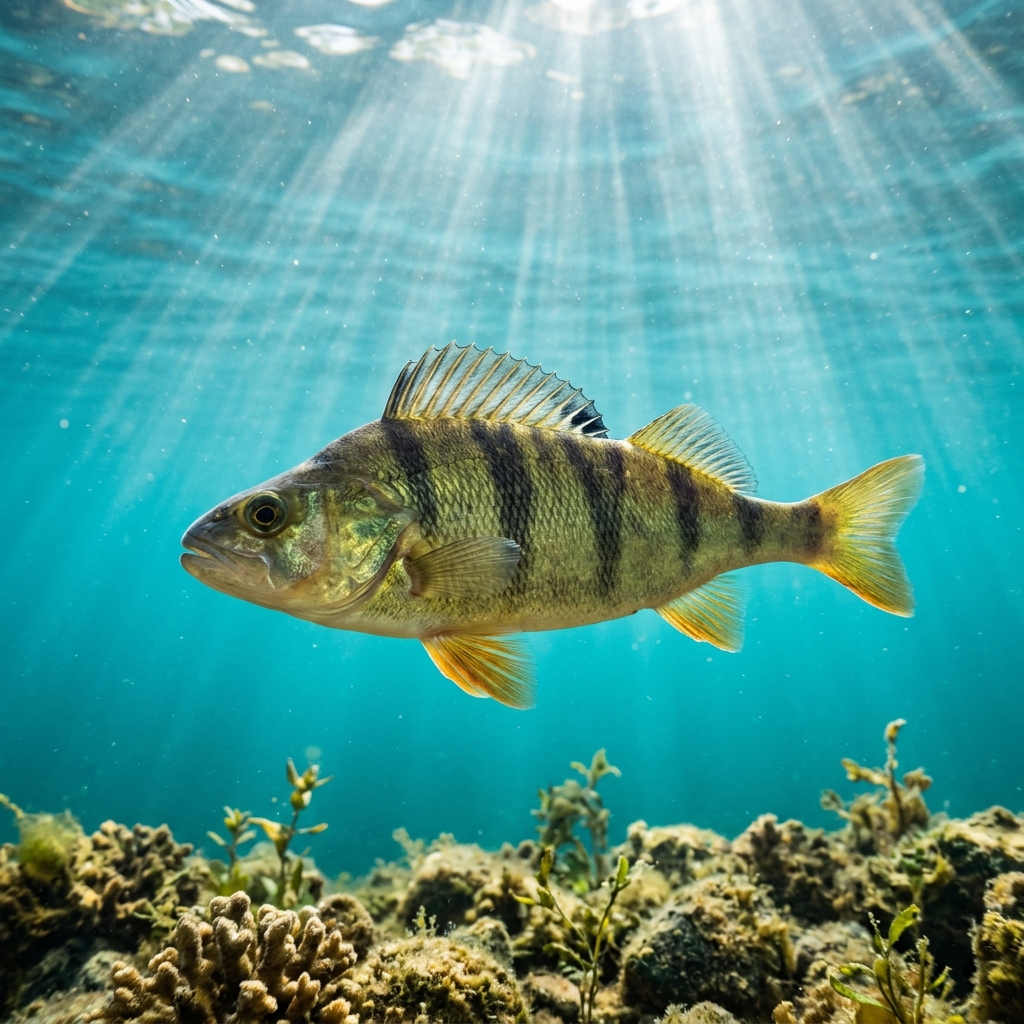
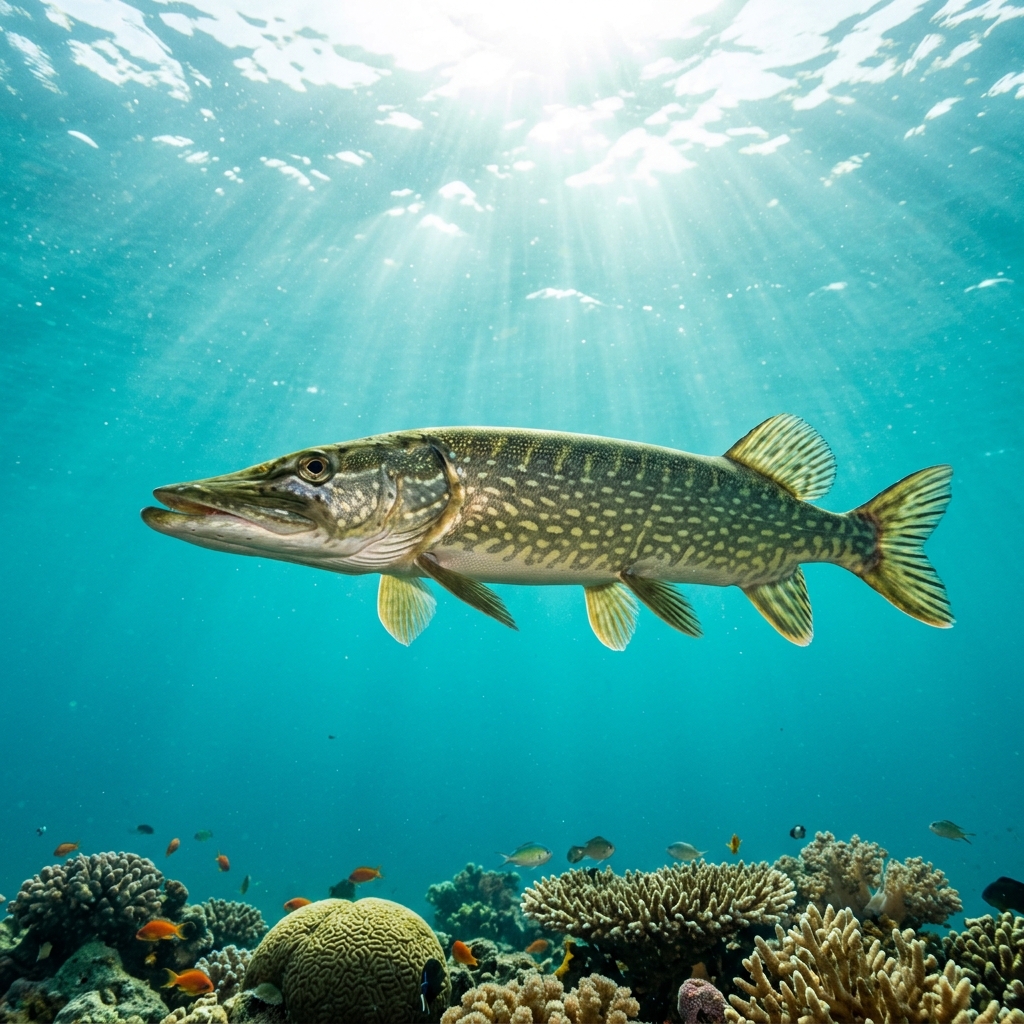
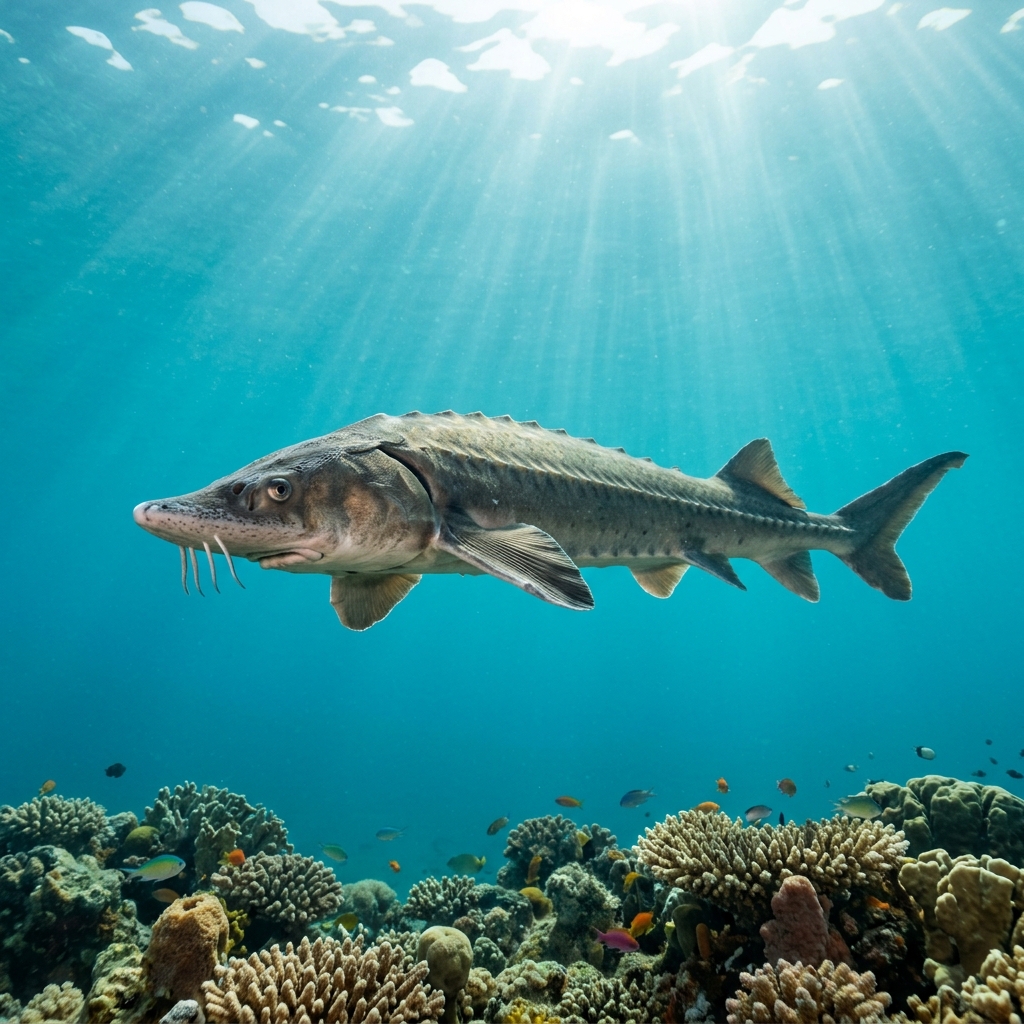
Reef neighbours a diver could mistake it for. Use the identification notes above to tell them apart.
All logged sightings are from the United States, with the strongest representation in the Central and Mountain West and across Florida and the Southeast. The Great Lakes and Northeast region also has reliable records. River and spring diving in these areas gives the best access to this species.
Mapping where Redbreast Sunfish is logged…
Redbreast sunfish are a freshwater species logged entirely from the United States. The Southeast and Florida have a strong concentration of sighting sites, with further records from the Central and Mountain West and the Great Lakes and Northeast. River dives and freshwater spring dives offer the most reliable encounters.
Sightings peak from June through August. Summer brings warmer water and active spawning, which draws fish into the shallows where they are most visible. The species tolerates a wide temperature range, but summer is clearly the prime window based on diver records.
Focus on two marks: the bright orange-red belly and the distinctively long, thin black ear flap extending from the gill cover. No other common sunfish combines both. The disc-shaped olive-green body with faint spotting on the flanks completes the picture.
Redbreast sunfish are a small to medium-sized freshwater fish. Most individuals divers encounter are palm-sized, typically in the range of 15 to 25 cm in length, though larger specimens can occasionally be found in productive rivers.
Yes, males fan out shallow, circular nest depressions on sandy or gravelly river bottoms in summer and guard the eggs attentively. A nesting male will often hold position even as a diver approaches, making this one of the easier freshwater fish behaviours to observe up close.
Site and sighting data is aggregated from diver logs, iNaturalist and GBIF. For taxonomy and conservation status:
Sun Perch
2,182 sites