Cephalopholis leopardus
A small spotted grouper most often found in the Maldives' Central Atolls, hovering on reef edges in 26.6 to 29 C water year-round.
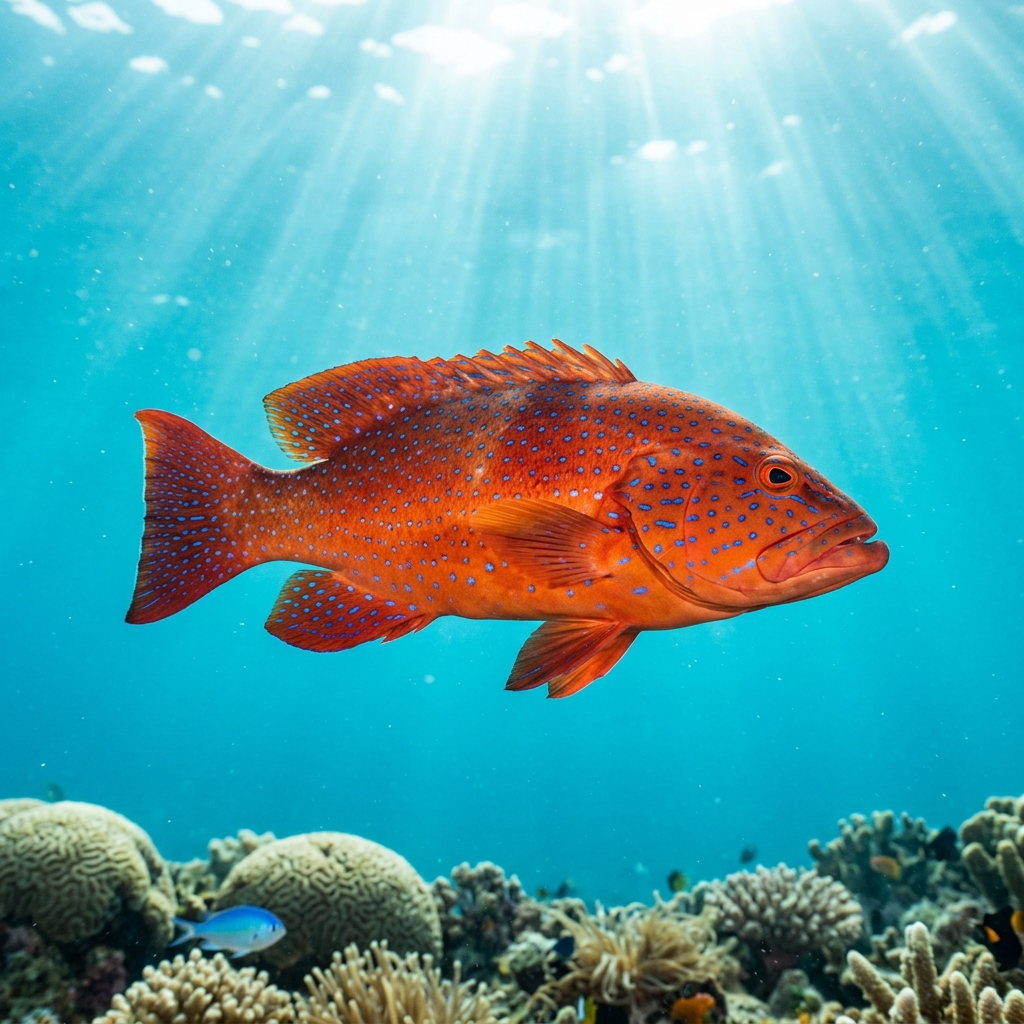
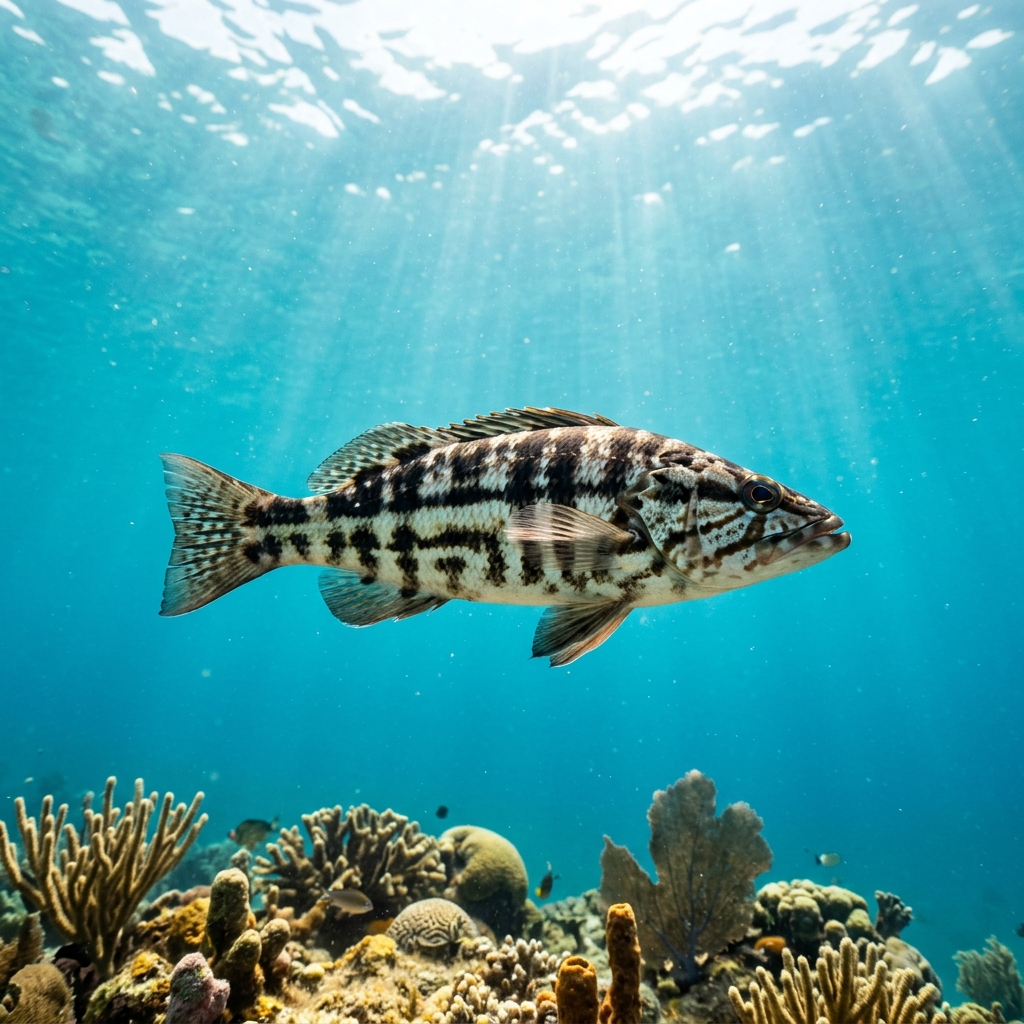
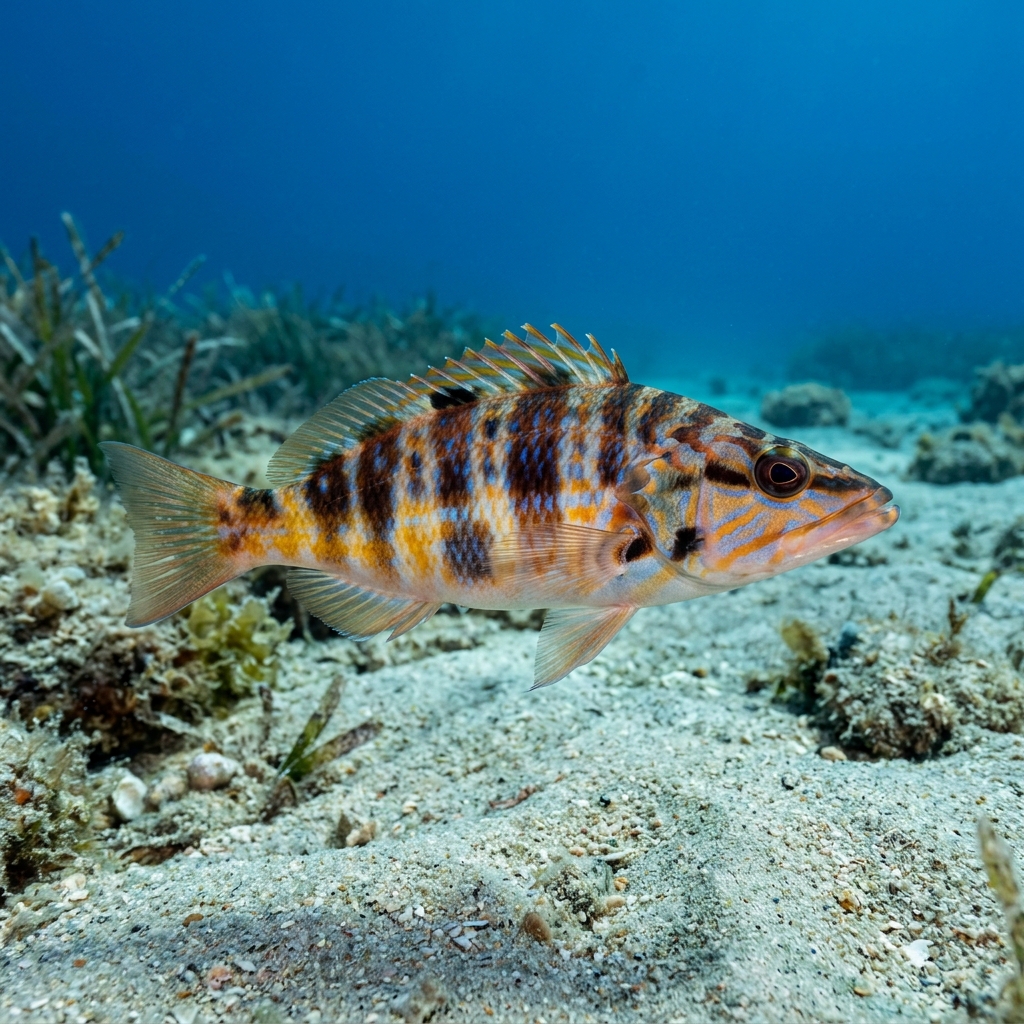
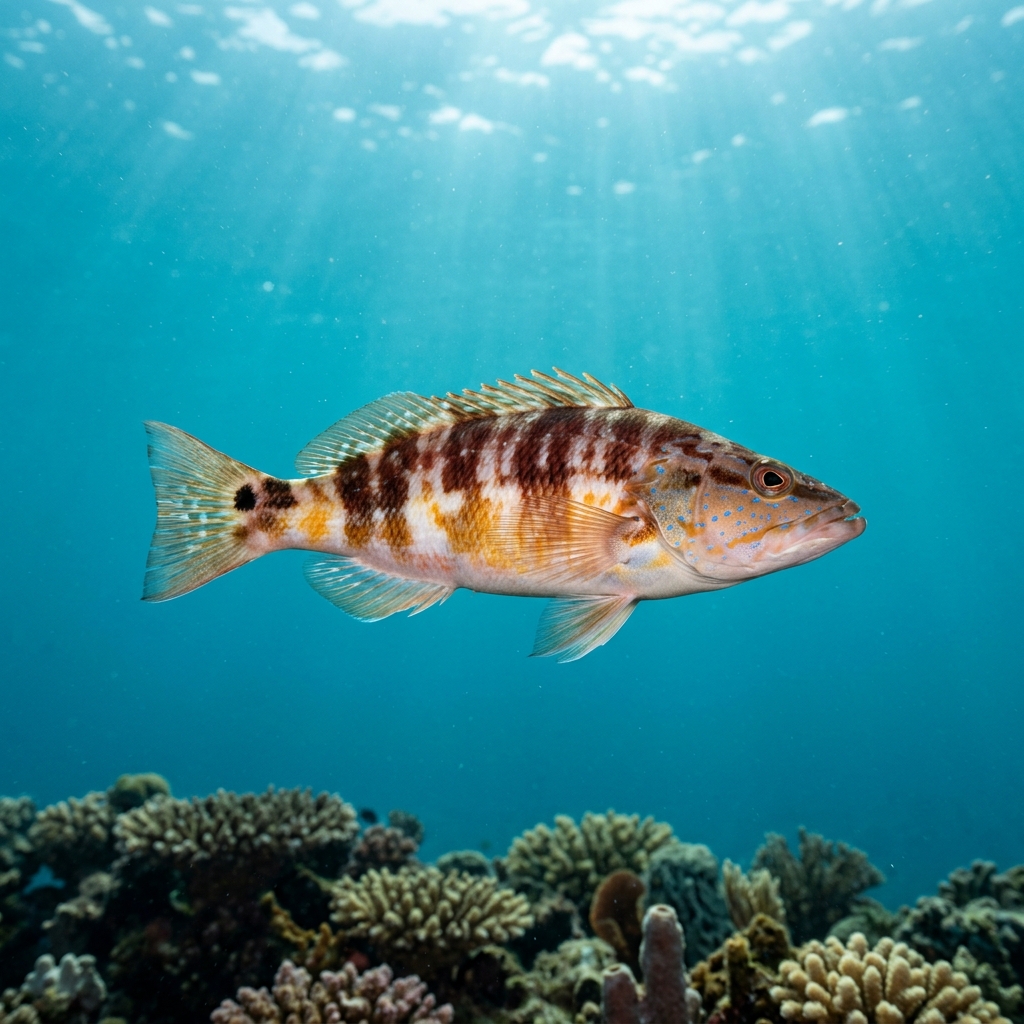
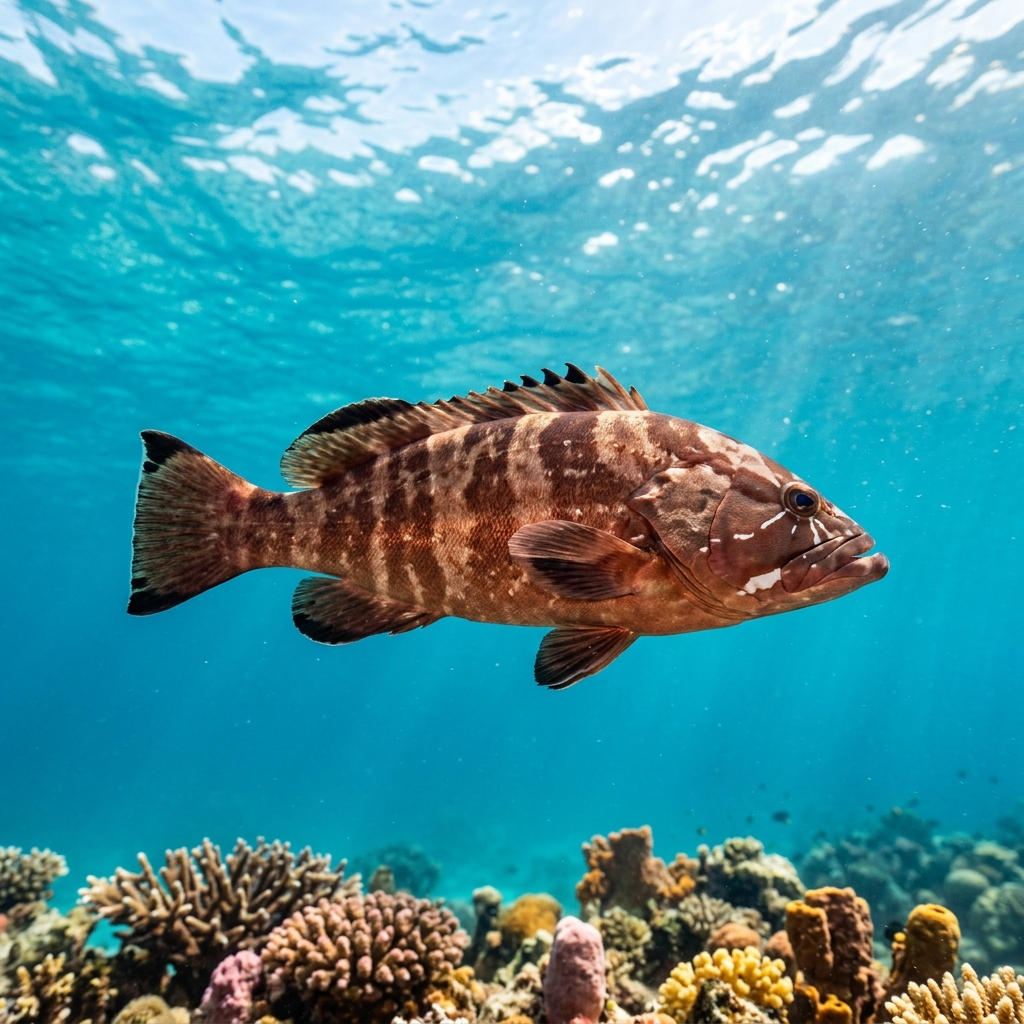
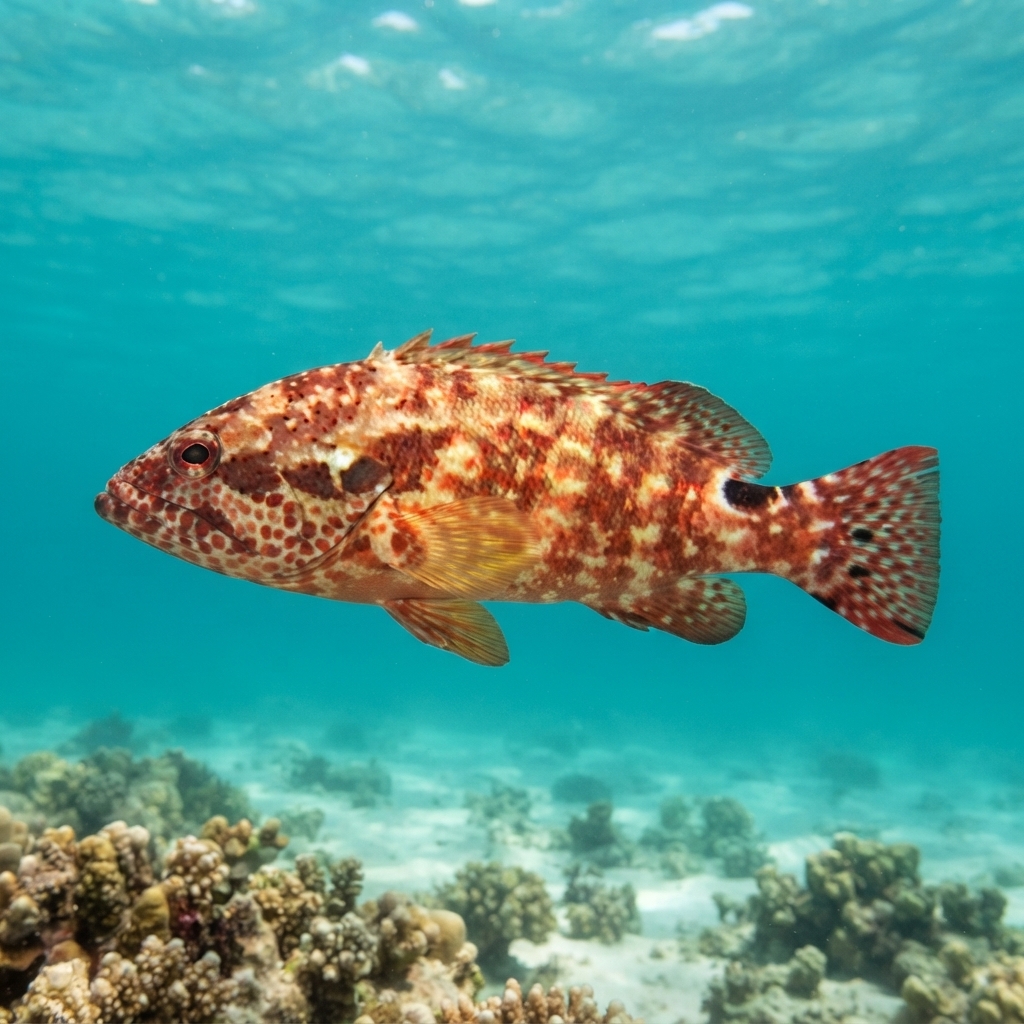
A small, thickset grouper barely bigger than a hand, topping out around 17 cm. Base colour ranges from reddish-brown to pale orange, covered head to tail in dense dark brown to black leopard-style spots that give it away instantly against plain reef substrate. It has the classic hind body shape: rounded fins, a slightly humped back, and a habit of perching motionless rather than swimming in open water.
Divers typically find it perched still on coral heads, ledges, or rubble patches rather than out swimming, using its spotted camouflage to blend into the reef背景 while it watches for small prey to pass. It tends to hold its ground rather than bolt when a diver approaches, though it will slip into a crevice if pressed too closely. Most sightings come from reef slopes and coral-rich bottoms rather than open sand or deep wall faces.
Like other hinds and groupers in this family, it's a solitary ambush predator, relying on its mottled camouflage to stay hidden until prey ventures close rather than chasing anything down in open water.
No clear seasonal pattern shows up in sightings, and with a comfortable range of 26.6 to 29 C it's present on these reefs all year round, so any month works for a dive trip.
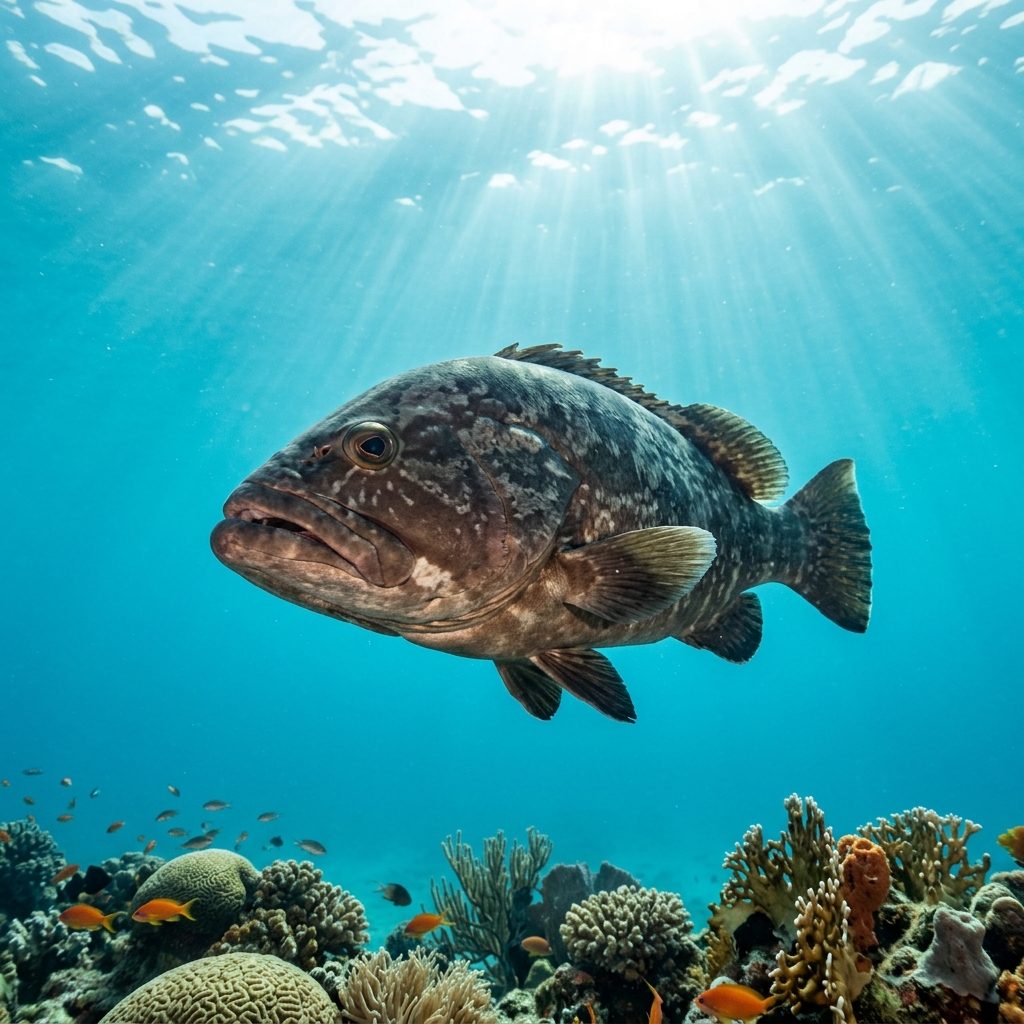
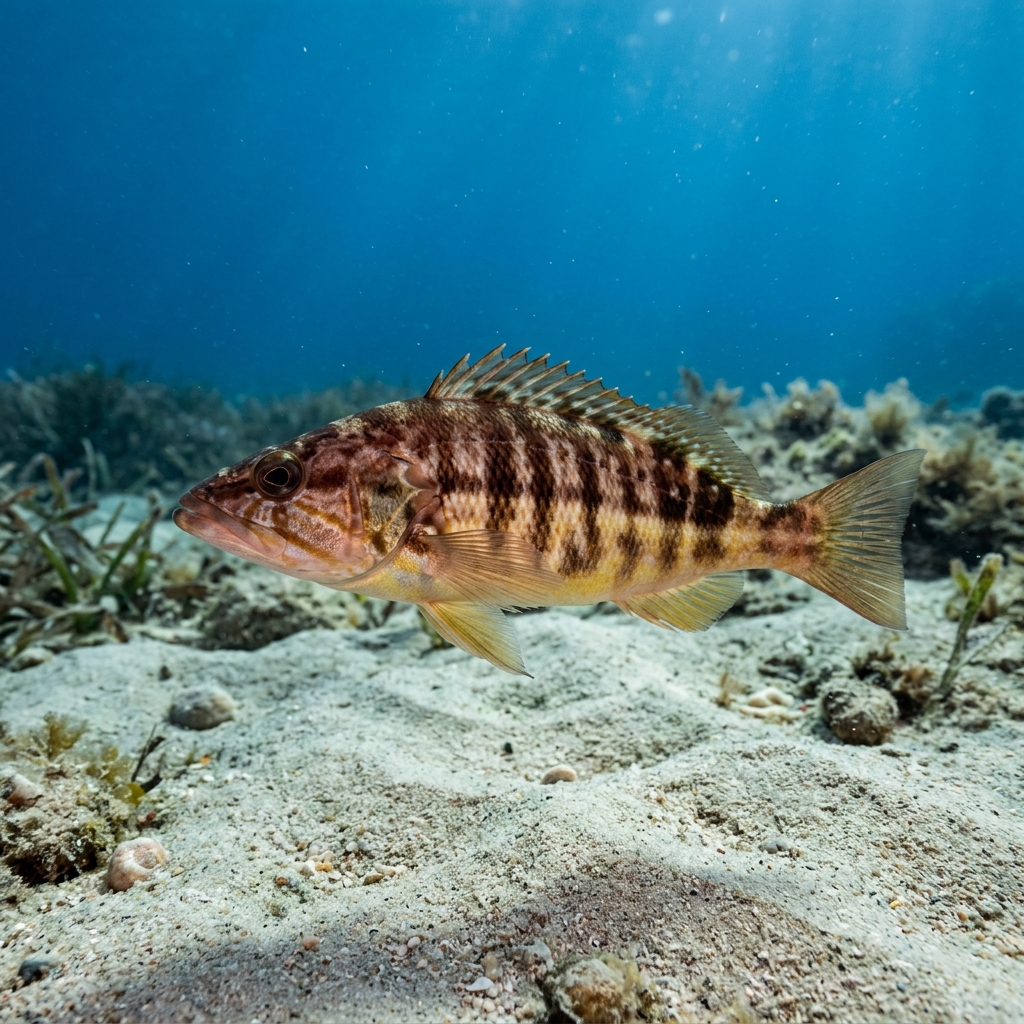
Reef neighbours a diver could mistake it for. Use the identification notes above to tell them apart.
Most reliably logged in the Maldives, especially across the Central Atolls, with a solid secondary population in Indonesia's Sulawesi region. Smaller numbers turn up in Fiji's Mamanuca Islands, around Dili in Timor-Leste, and occasionally in Raja Ampat.
Mapping where Leopard Hind is logged…
The most consistent sightings come from the Maldives, particularly the Central Atolls, with a good number of records from Sulawesi in Indonesia. It also turns up around Fiji's Mamanuca Islands and near Dili in Timor-Leste.
There's no strong seasonal pattern in the data, and it lives comfortably in 26.6 to 29 C water, so it's a year-round sighting on the reefs where it occurs.
Look for a small, stocky grouper around 17 cm long, reddish-brown to orange, covered in dense dark spots that resemble leopard markings. It's usually perched still on coral or rubble rather than swimming freely.
They're a small member of the grouper family, typically reaching around 17 cm, making them easy to overlook against a busy reef background.
Yes, it relies on camouflage and stillness rather than speed, waiting on coral heads or rubble for small prey to come within striking range rather than actively hunting in open water.
Site and sighting data is aggregated from diver logs, iNaturalist and GBIF. For taxonomy and conservation status:
Blacktip Grouper
2,726 sites