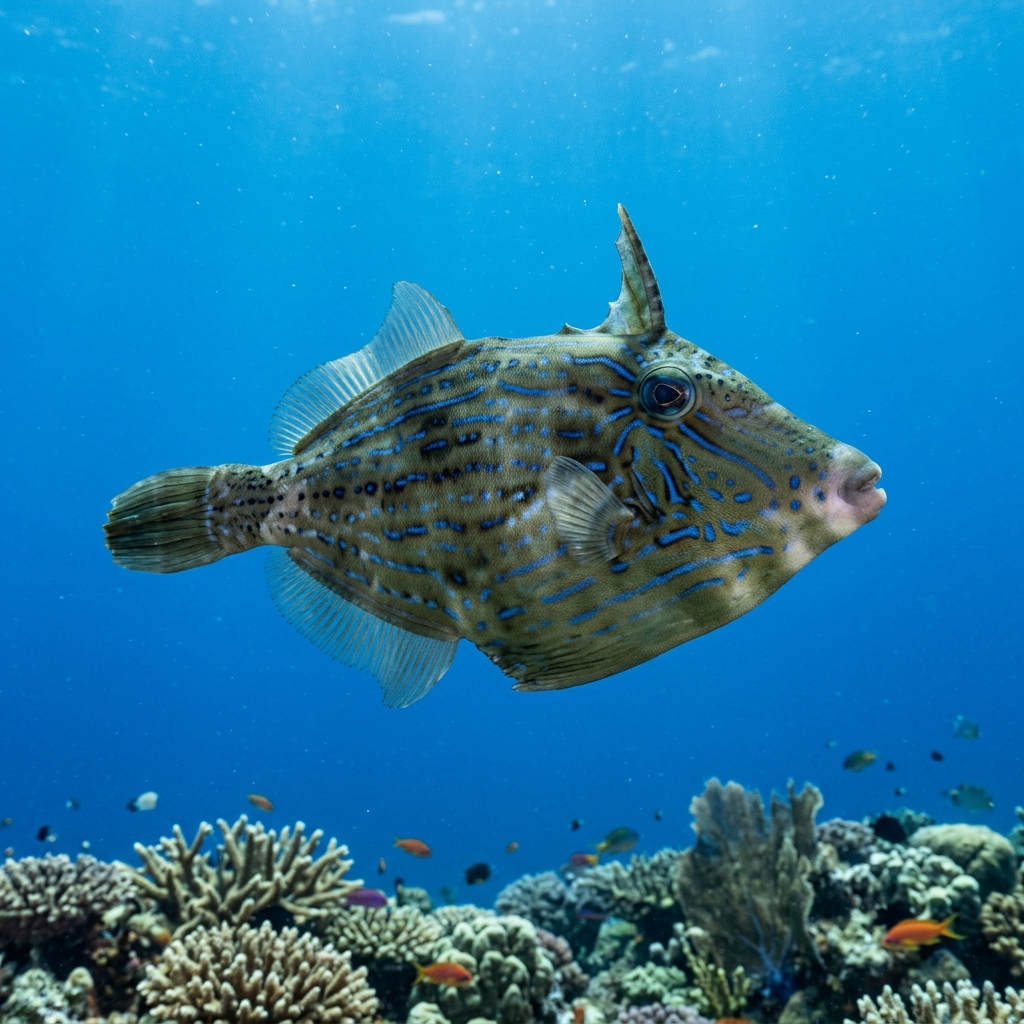
Oligoplites saurus
Slim, silvery jack rarely logged on Florida dive sites, most often around 21.8 to 28 C water and seen year-round.
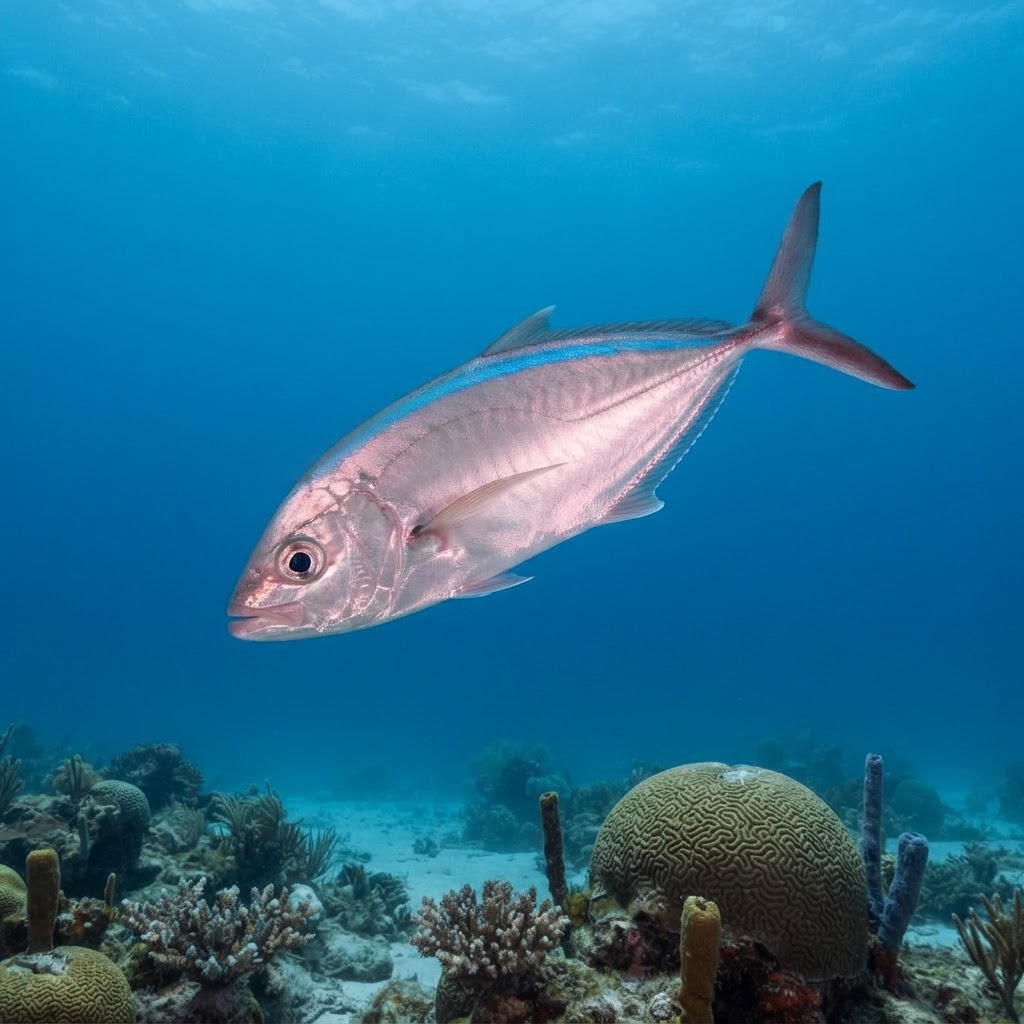
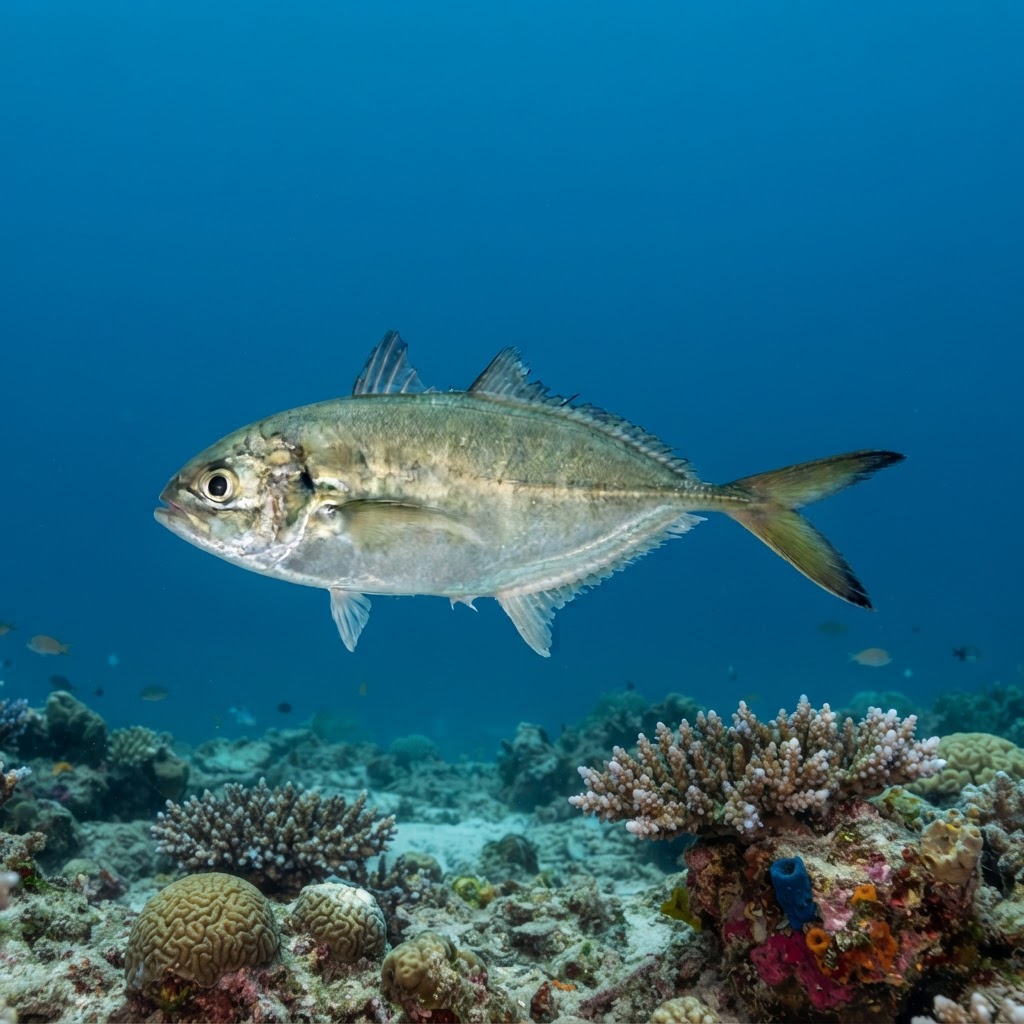
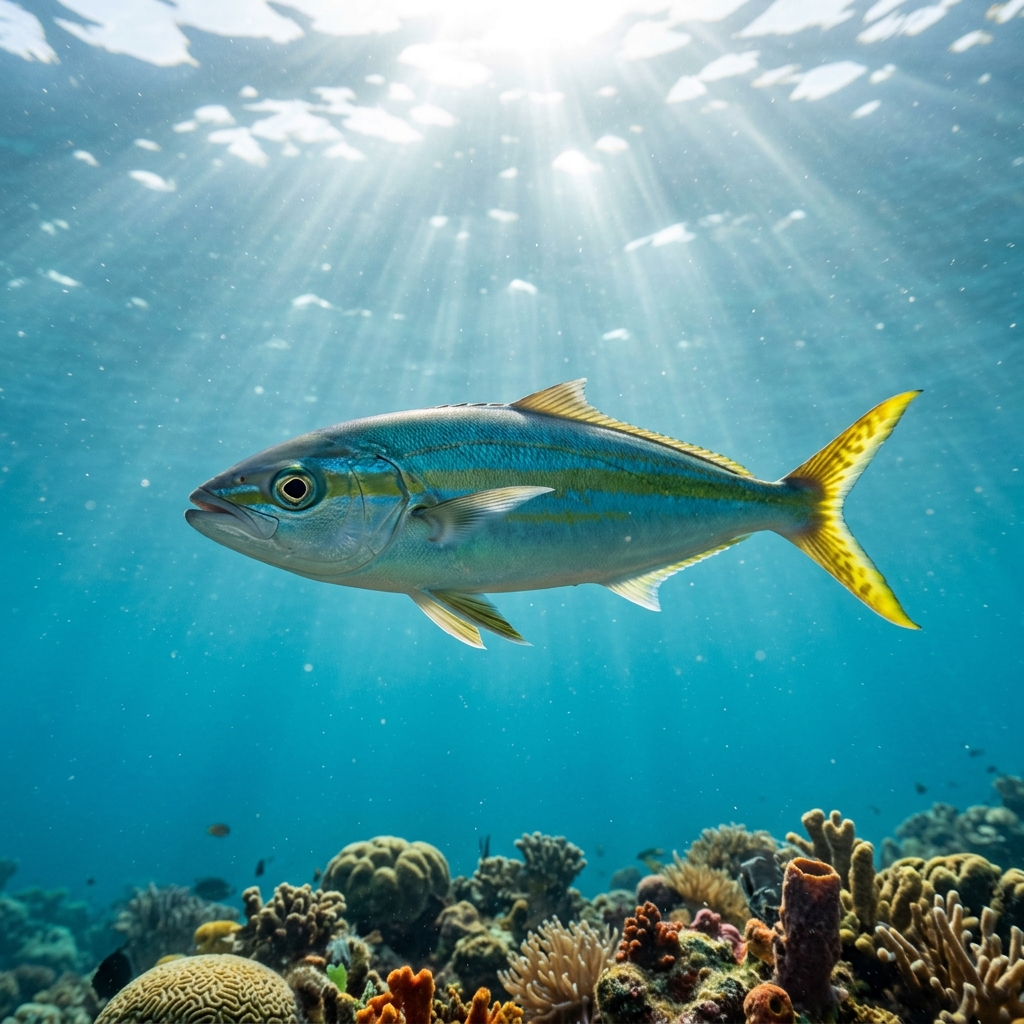
Slim, laterally compressed body with a greenish-silver back fading to a bright yellow underside and tail. Grows to around 24 cm, small for a jack, with a noticeably pointed snout and a sloping forehead profile. The dorsal and anal fins carry a row of small detached spines in front of them, a detail worth checking if you get a close look, since most similar jacks lack this feature.
Divers tend to spot it cruising alone or in loose small groups over sand patches and reef edges rather than tucked into structure. It swims with quick, slightly nervous bursts and keeps its distance, showing little interest in divers. Most logs describe brief, fleeting encounters rather than lingering sightings, consistent with its rare rating at nearly every site where it's been recorded.
Leatherjackets carry small venom glands at the base of their dorsal and anal spines, an unusual trait for a jack and one reason handling any jack species underwater is best avoided.
Sightings don't show a clear season, and the observed temperature range of 21.8 to 28 C spans Florida's cooler winter and warm summer readings alike, so it appears to be a year-round, if infrequent, encounter.
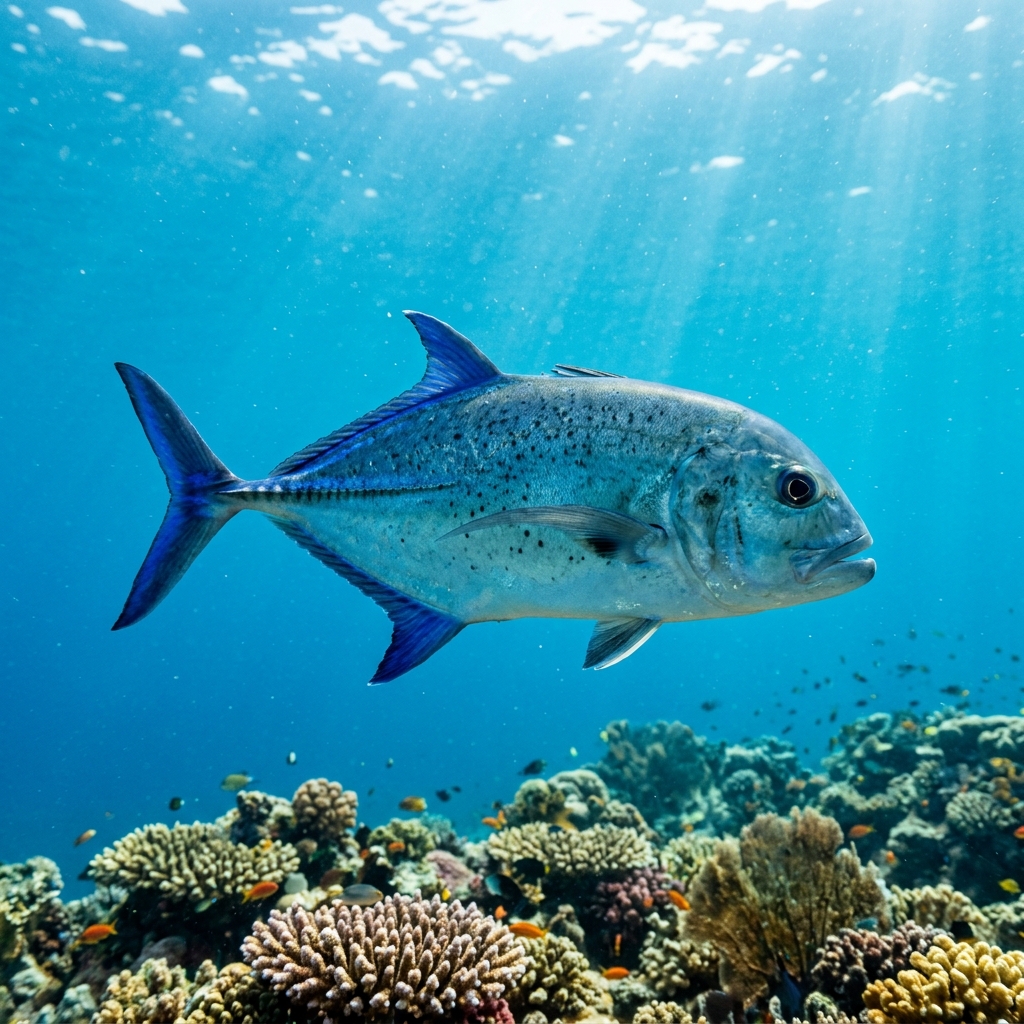
Reef neighbours a diver could mistake it for. Use the identification notes above to tell them apart.
Almost all logged sightings come from the United States, concentrated on Florida dive sites, with a single additional record from Texas. Within Florida it turns up as a scattered, low-density presence rather than a headline species at any one site.
Mapping where Leatherjacket is logged…
Nearly every logged sighting is from Florida dive sites in the United States, with one additional record from Texas. It's not a species tied to any single famous site, more a scattered, occasional find across Florida's coastal reefs and wrecks.
There's no clear seasonal pattern in the sightings, and the water temperatures it's been logged in, 21.8 to 28 C, cover most of the year in Florida. Treat it as a possible year-round encounter rather than a seasonal target.
Look for a slim, compressed silver-green body with a yellow belly and tail, growing to about 24 cm. A row of small detached spines just ahead of the dorsal and anal fins is the detail that separates it from similar jacks.
They're a small jack, typically around 24 cm, making them noticeably slighter in the water than most trevally and jack species divers are used to spotting.
No, they're not considered dangerous to divers. They do carry small venomous spines at the base of their dorsal and anal fins, so it's sensible not to handle one, but they keep their distance from divers anyway.
Site and sighting data is aggregated from diver logs, iNaturalist and GBIF. For taxonomy and conservation status:
Bigeye Trevally
2,591 sites