Dermatolepis dermatolepis
Bulky grey grouper seen year-round at 23 to 26 C, most reliably at Malpelo and Cocos Island where it's logged as very common.
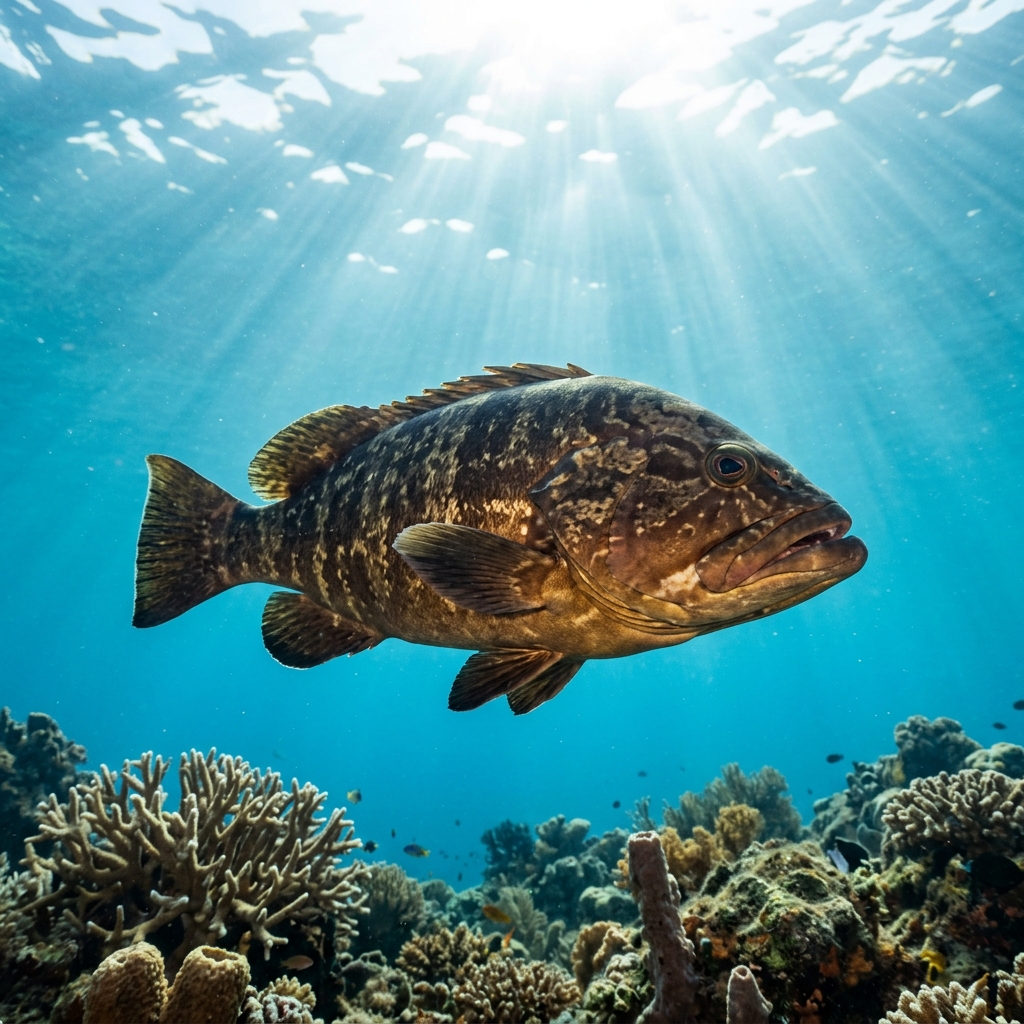
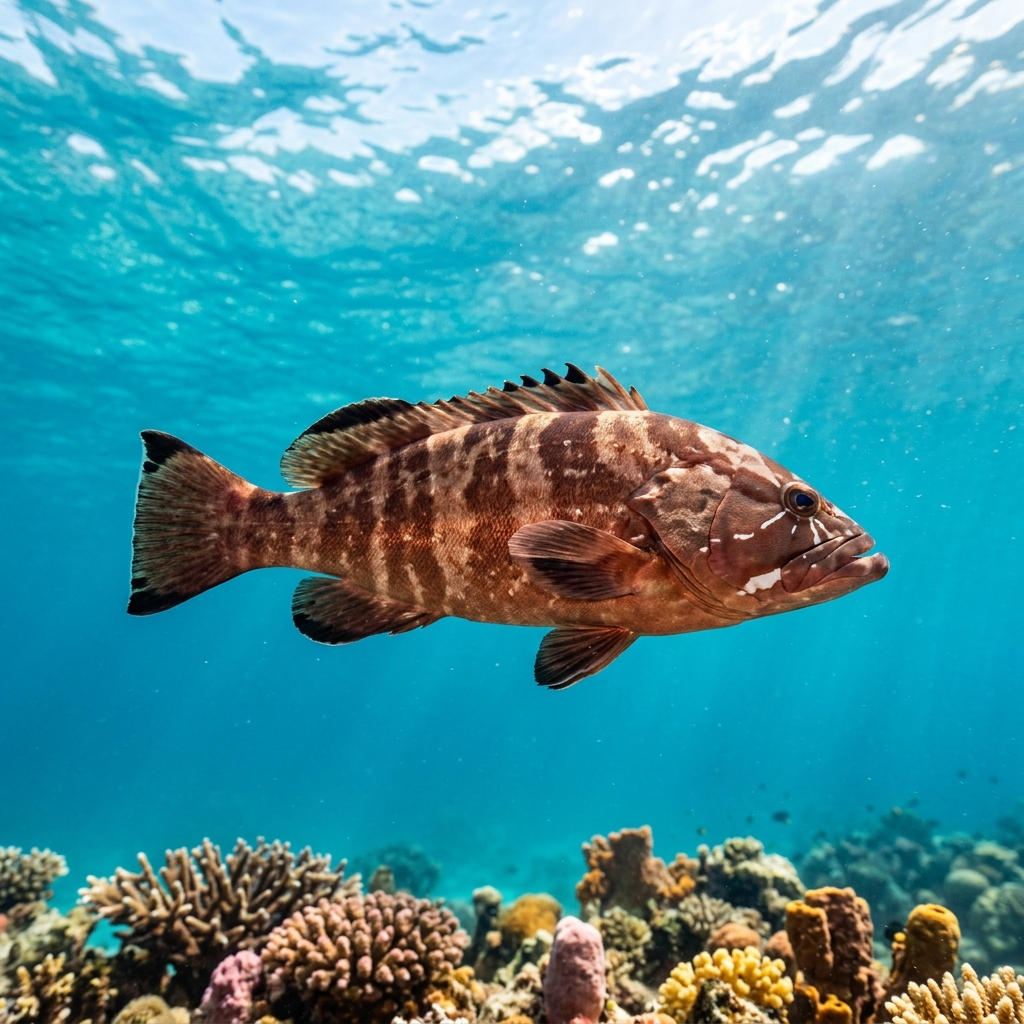
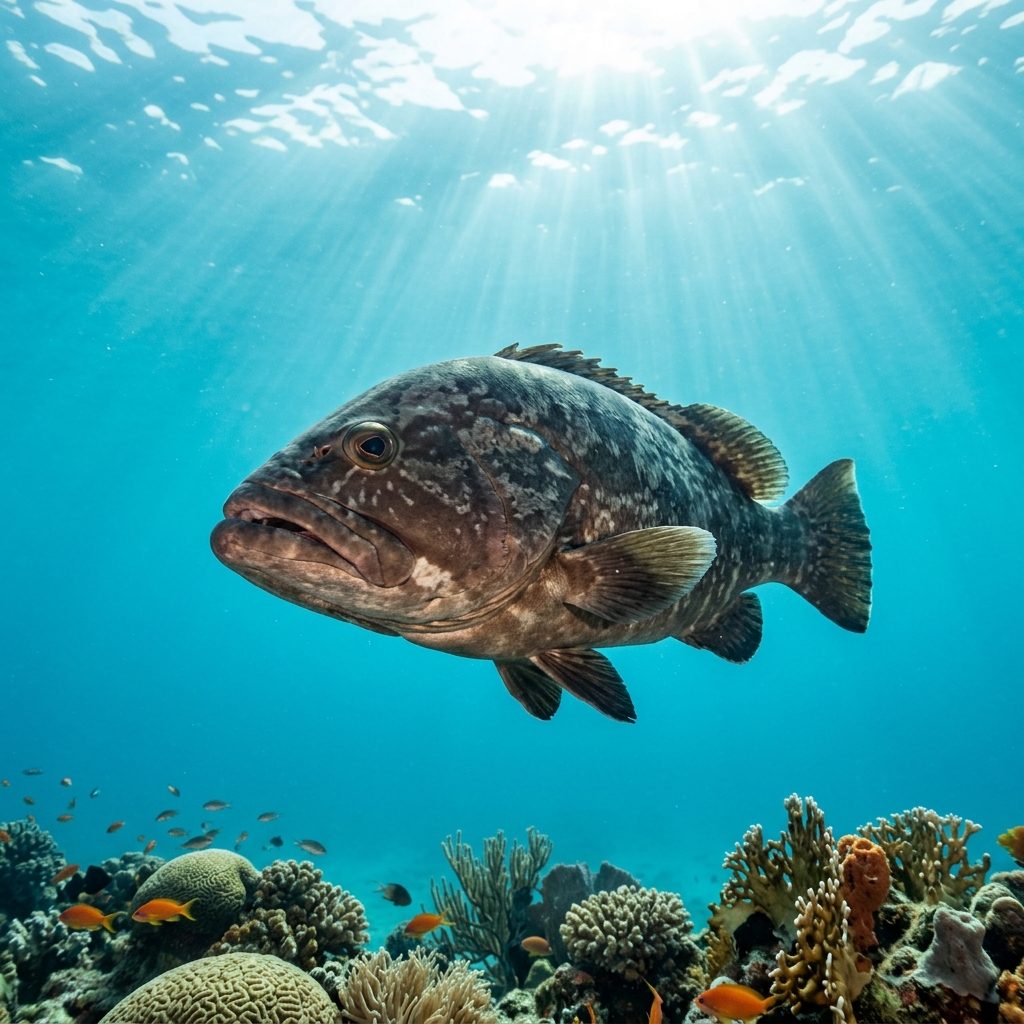
A thickset, heavy-bodied grouper reaching around 70 cm, usually seen in mottled grey-brown to olive tones that can look almost leathery underwater, hence the name. The head is broad and blunt with a slightly sloping profile, and the body lacks the bright spotting seen on many reef groupers, giving it a plainer, more uniform look. It often hangs motionless near rock or reef structure, using its size and stillness rather than colour to stand out.
Divers typically find it holding station near rocky walls and reef structure, often solitary and unbothered by passing divers rather than darting for cover. It tends to sit in the open at cleaning stations or along ledges rather than tucking into crevices like some groupers, making it an easy fish to approach slowly for a closer look.
Its very common rating at sites like Malpelo and Cocos makes it one of the more dependable large groupers to encounter on Eastern Pacific offshore pinnacles, even though it barely registers outside this handful of countries.
Sightings hold steady year-round, with no clear seasonal pattern in the data, which fits its comfort range of 23 to 26.3 C on these Eastern Pacific offshore sites. Plan around Malpelo, Cocos or Galápagos trip logistics rather than a particular month.
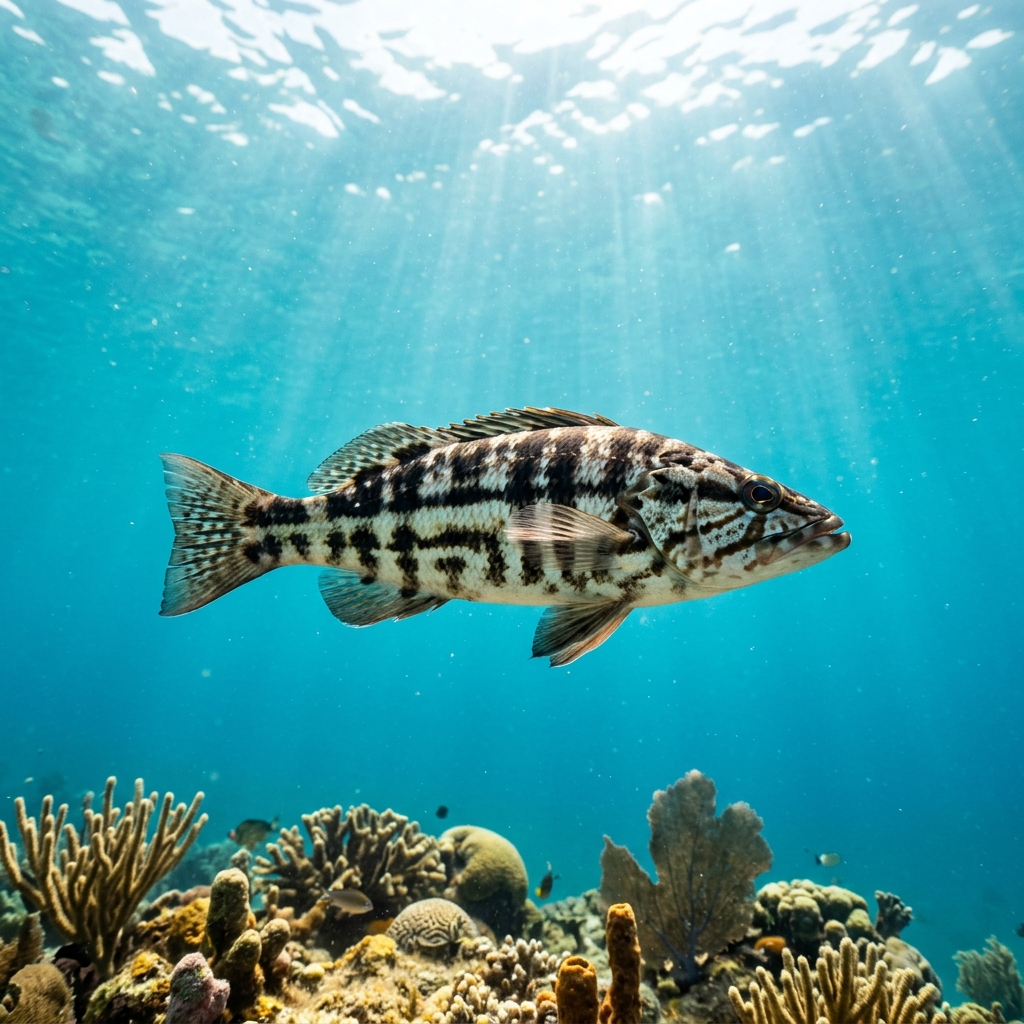
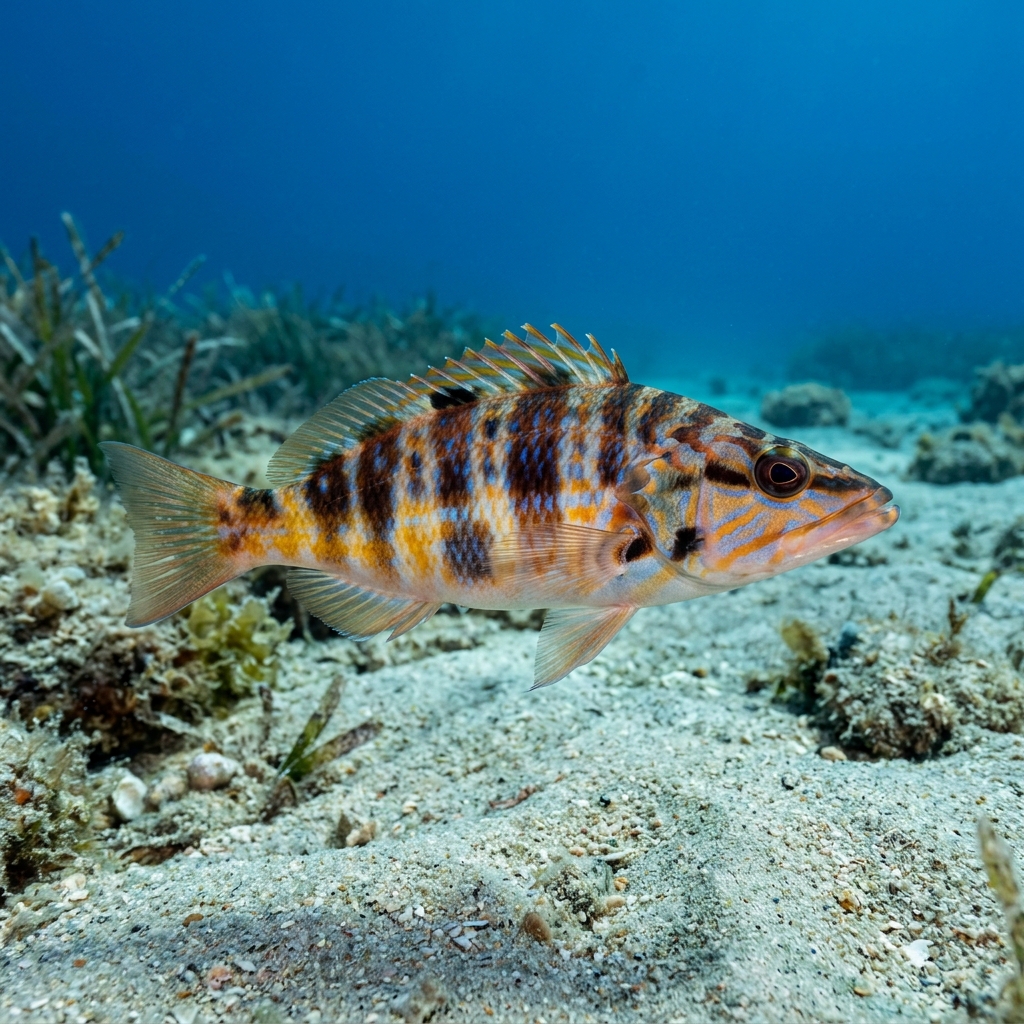
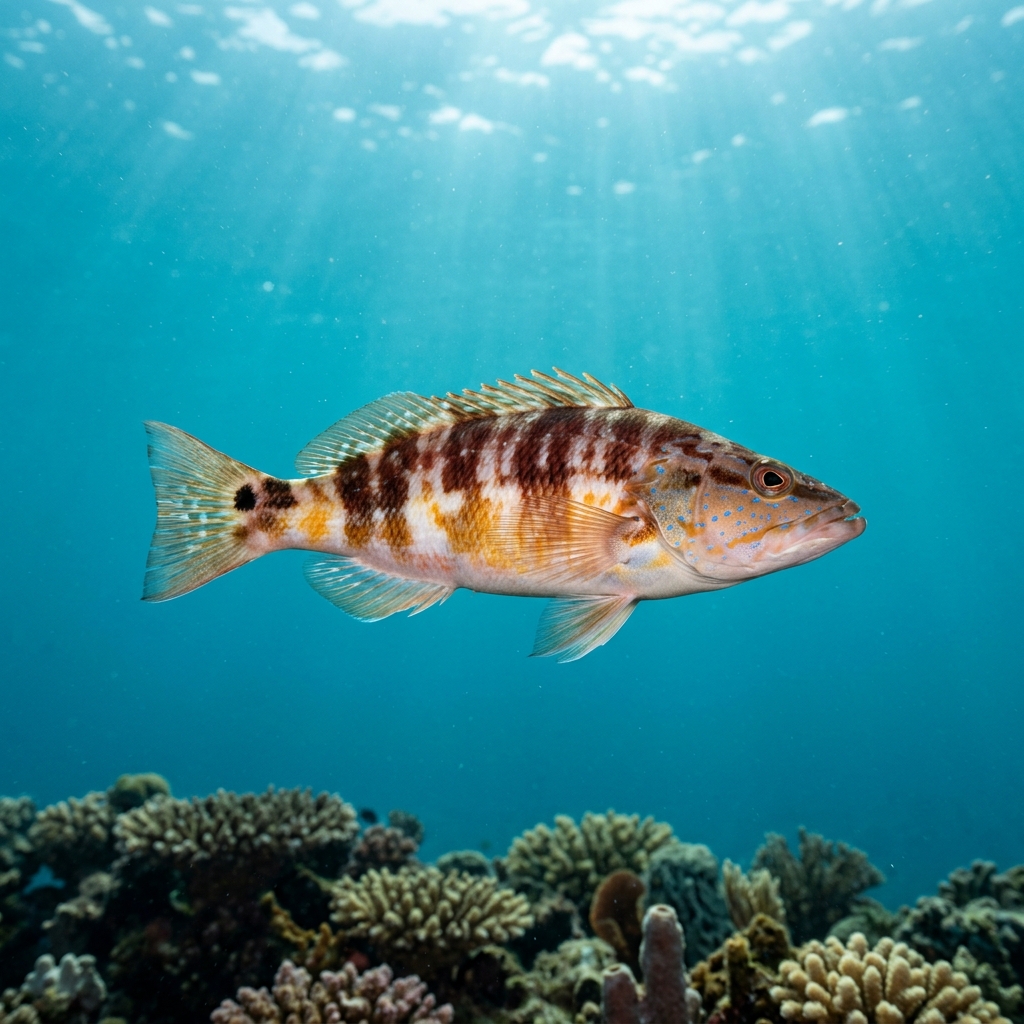
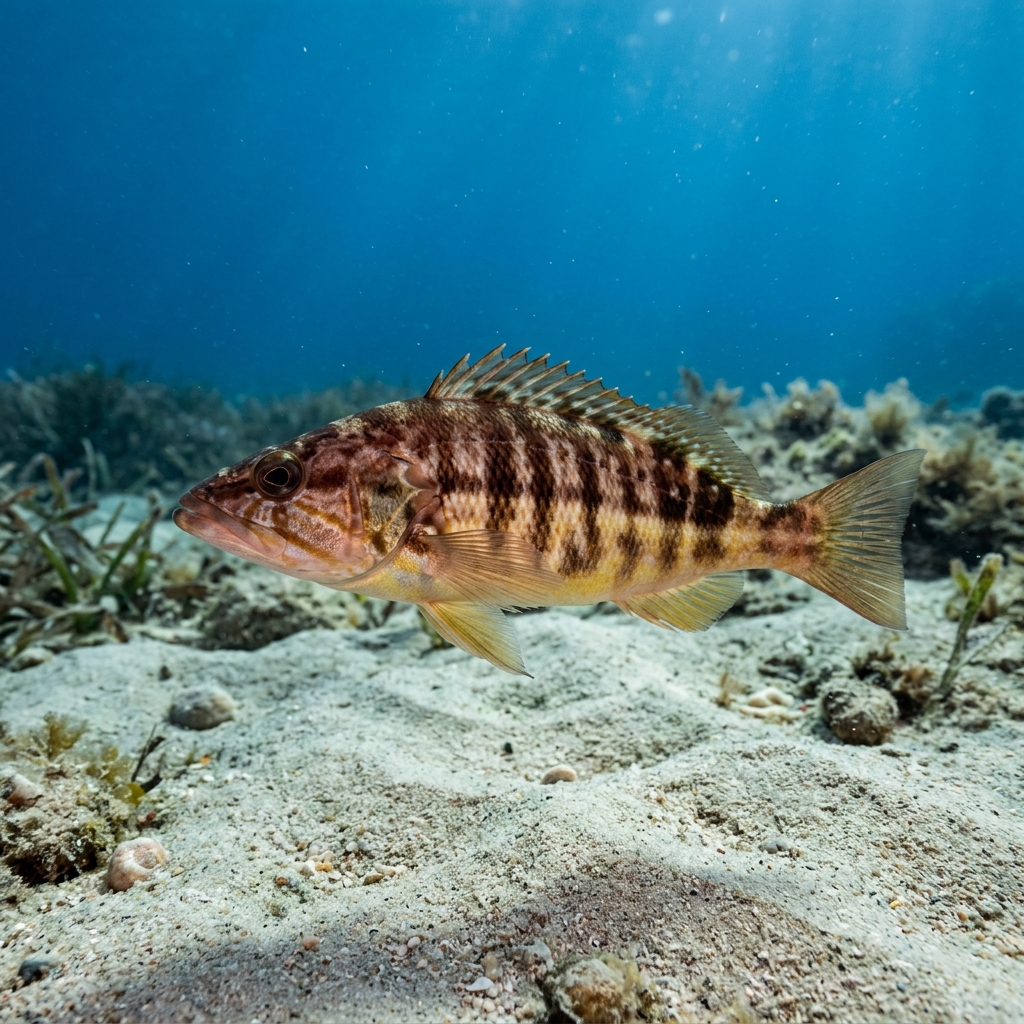
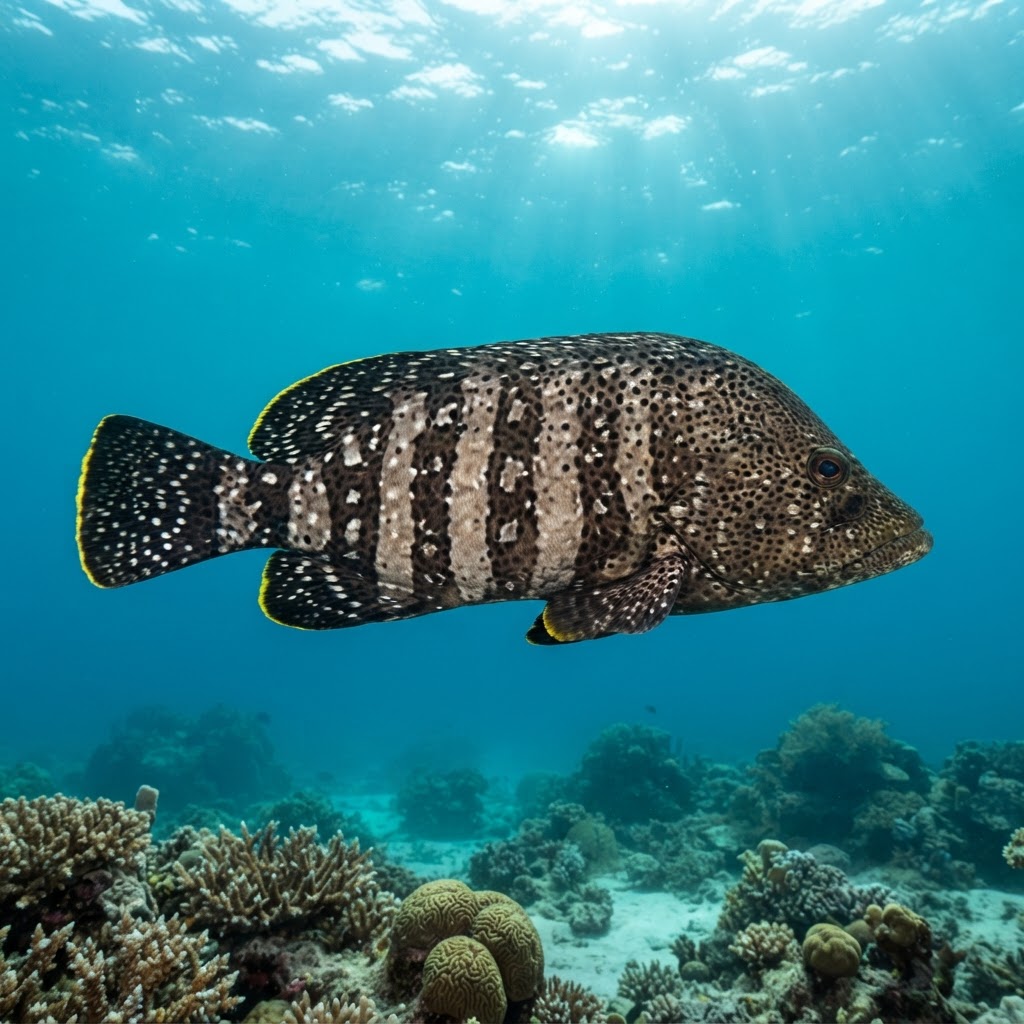
Reef neighbours a diver could mistake it for. Use the identification notes above to tell them apart.
Most reliably found in Colombia, especially around Malpelo, where it turns up on a majority of dives at the right sites. Strong populations also show up in the Galápagos Islands in Ecuador and around Cocos Island in Costa Rica, with smaller but steady numbers on Panama's Pacific coast.
Mapping where Leather Bass is logged…
Malpelo in Colombia is the strongest location, followed by the Galápagos Islands in Ecuador and Cocos Island in Costa Rica. Smaller numbers also show up along Panama's Pacific coast.
There's no strong seasonal pattern, so sightings are possible year-round on these Eastern Pacific sites, which sit consistently between 23 and 26.3 C.
Look for a bulky, blunt-headed grouper around 70 cm with plain grey-brown to olive colouring rather than bold spots. It's usually seen holding still near rock structure rather than actively swimming.
They typically reach around 70 cm in length, a solid mid-sized grouper rather than one of the giant species.
No, they're not considered a threat to divers and are usually seen calmly holding position near reef structure.
Site and sighting data is aggregated from diver logs, iNaturalist and GBIF. For taxonomy and conservation status:
Blacktip Grouper
2,726 sites