Phycodurus eques
Find leafy seadragons diving South Australia and Western Australia in cool 16-18 °C waters. ID tips, behaviour, and best dive regions inside.
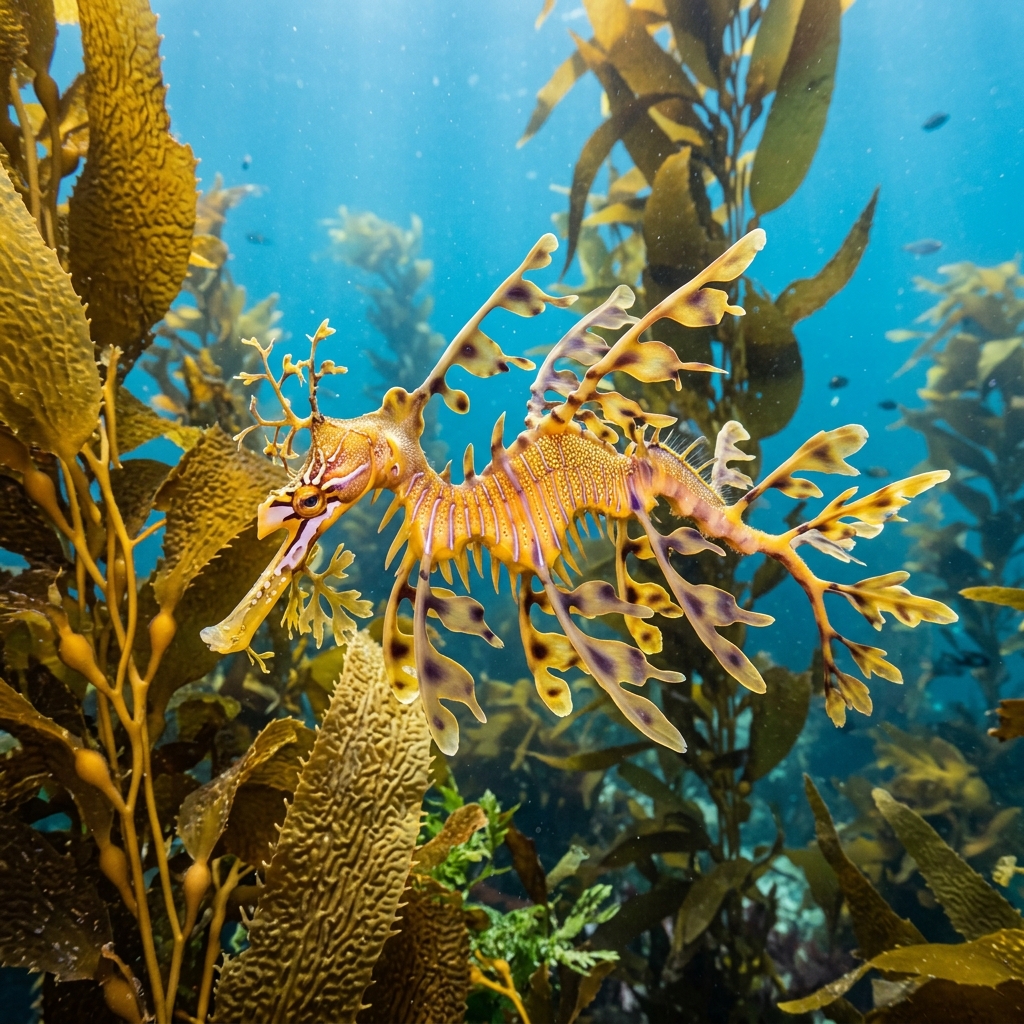
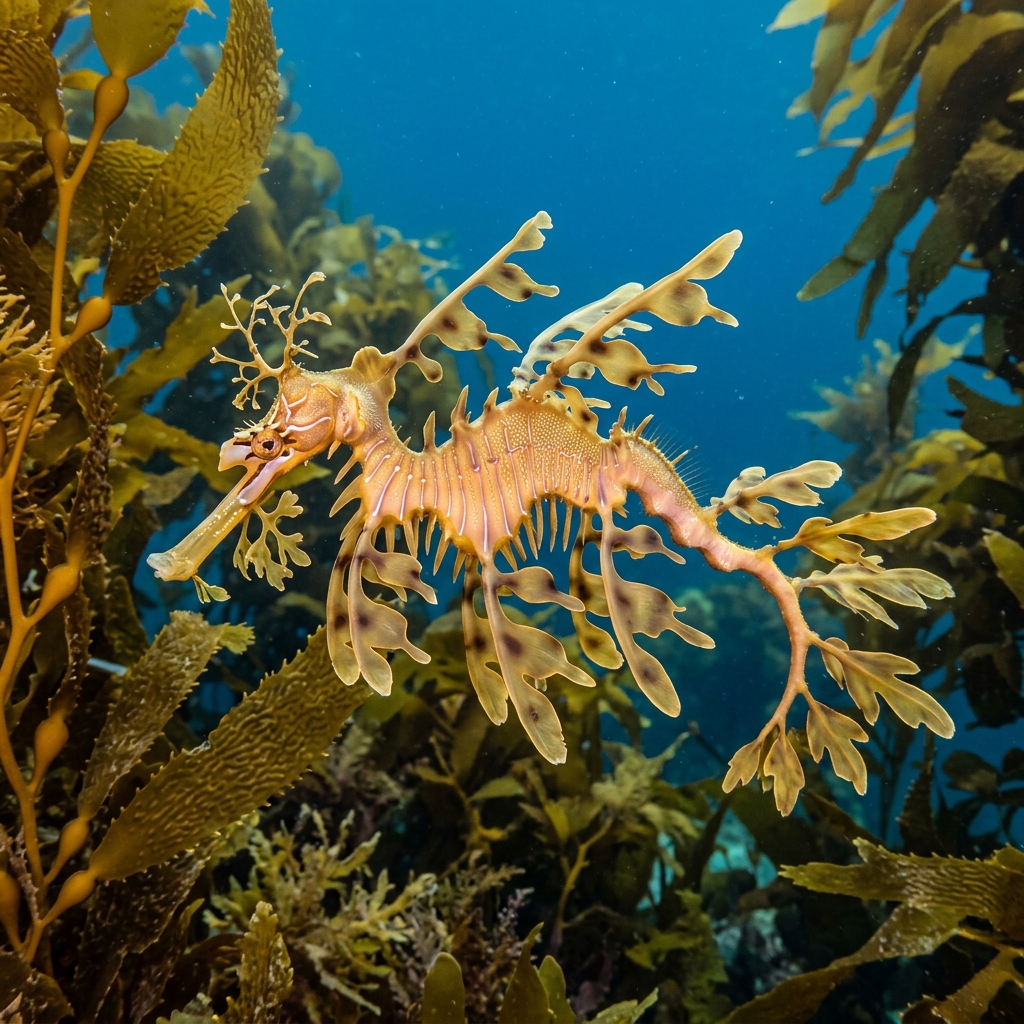
Those elaborate leaf-like appendages (lobes of skin that mimic drifting seaweed) make this one of the most instantly recognisable fish in Australian waters. At around 24 cm, the body is elongated like a pipefish but adorned with long, branching dermal lobes along the head, trunk, and tail. Colouration runs from olive-green and yellow to brownish, with pale banding that deepens or lightens to match the surrounding kelp and seagrass. The absence of a prehensile (gripping) tail distinguishes it from the closely related weedy seadragon.
When you find one, it will almost certainly be drifting slowly with the current in shallow kelp beds or seagrass, looking exactly like a piece of floating weed, which is the whole point. They do not approach divers and will ease away with unhurried, almost imperceptible fin movements if you get too close. Feeding strikes on small crustaceans are blink-and-miss-it fast, so watch carefully if one pauses near a patch of mysid shrimp.
Like all syngnathids, it is the male that carries and broods the eggs, the female deposits up to 250 eggs directly onto a specialised brood patch on the underside of the male's tail, where he fertilises and incubates them until they hatch.
There is not yet enough monthly sighting data to identify a peak season, so treat it as year-round. Its observed temperature niche of 16 to 18 °C matches the cool temperate waters of southern Australia throughout the year, suggesting no strong seasonal absence.
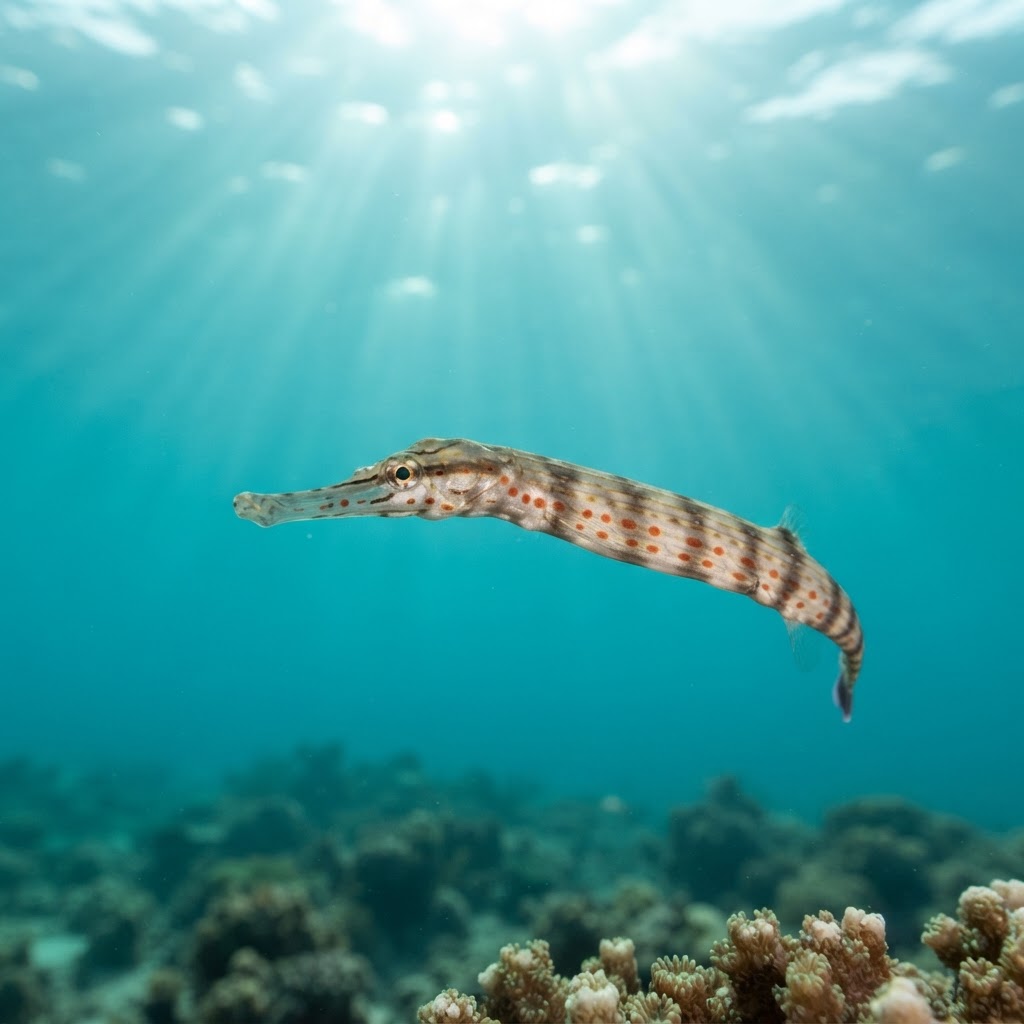
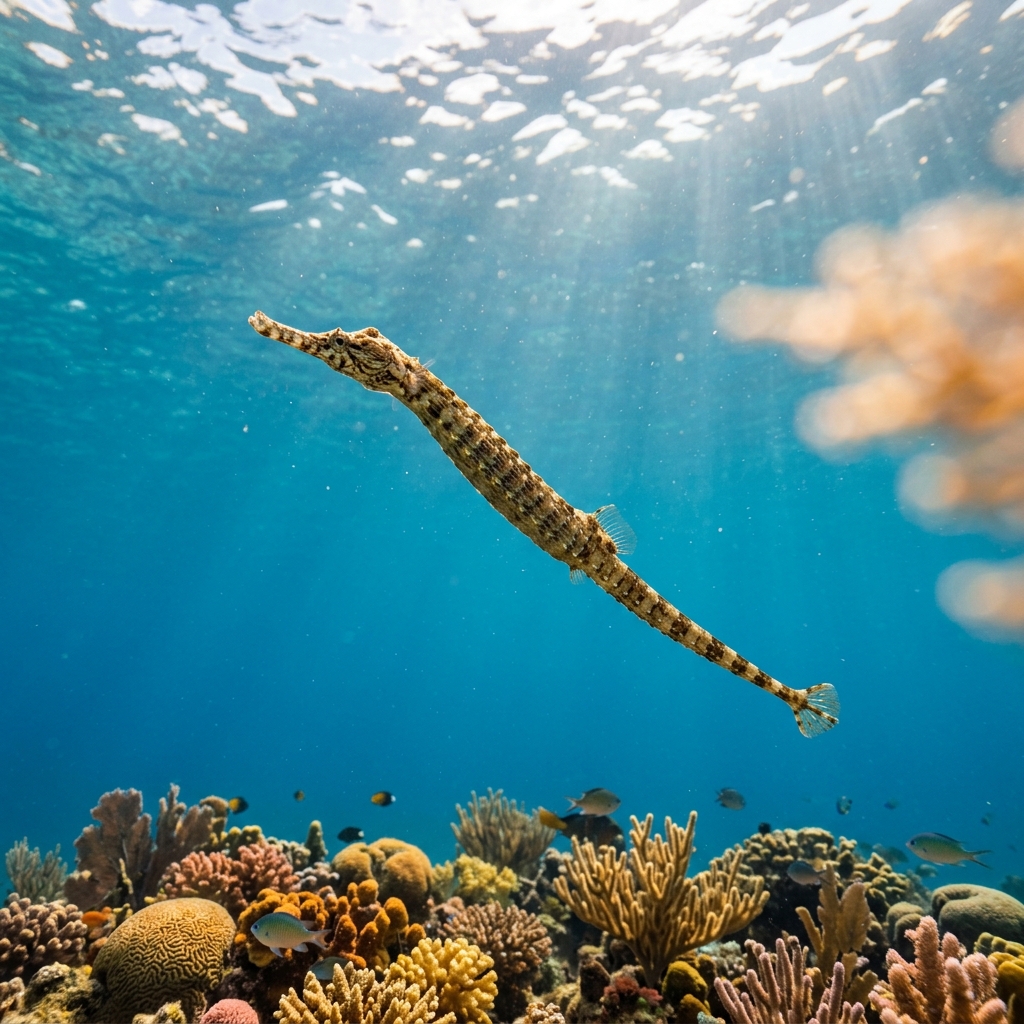
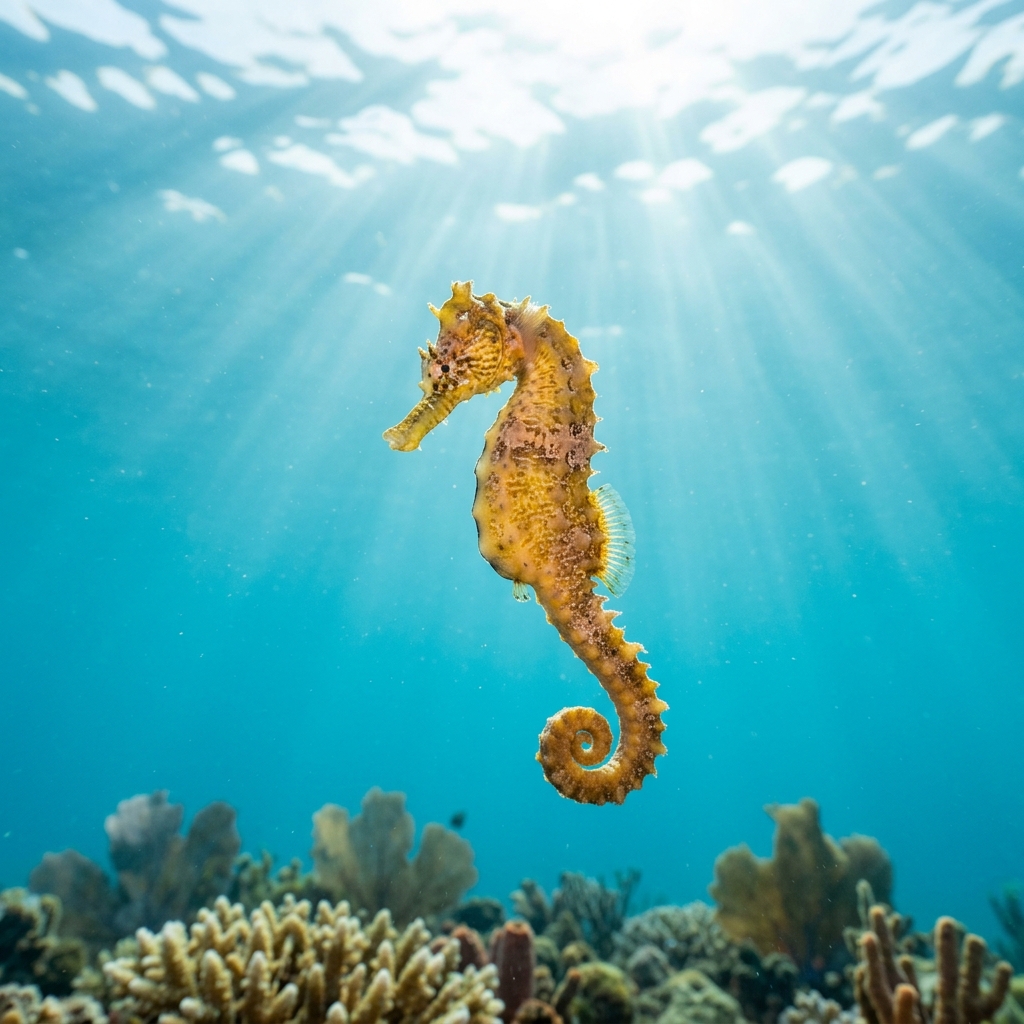
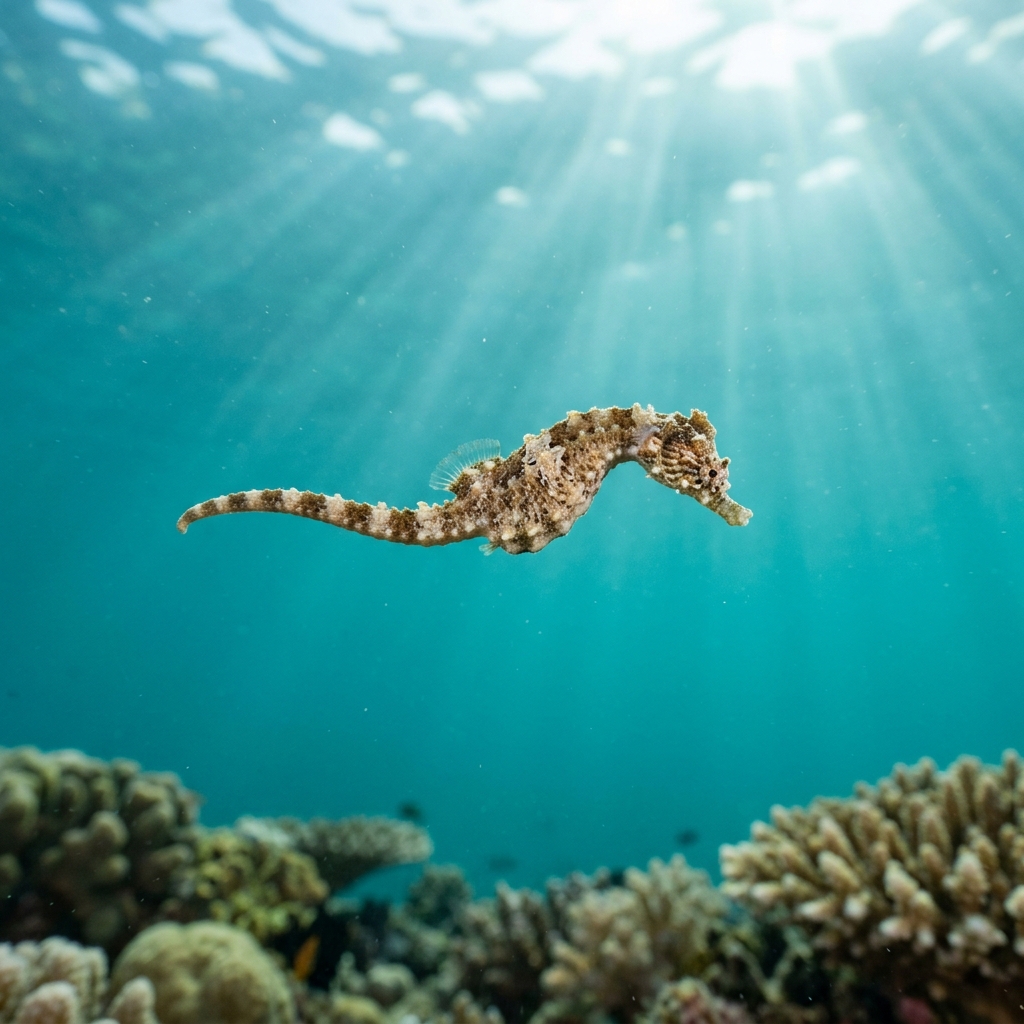
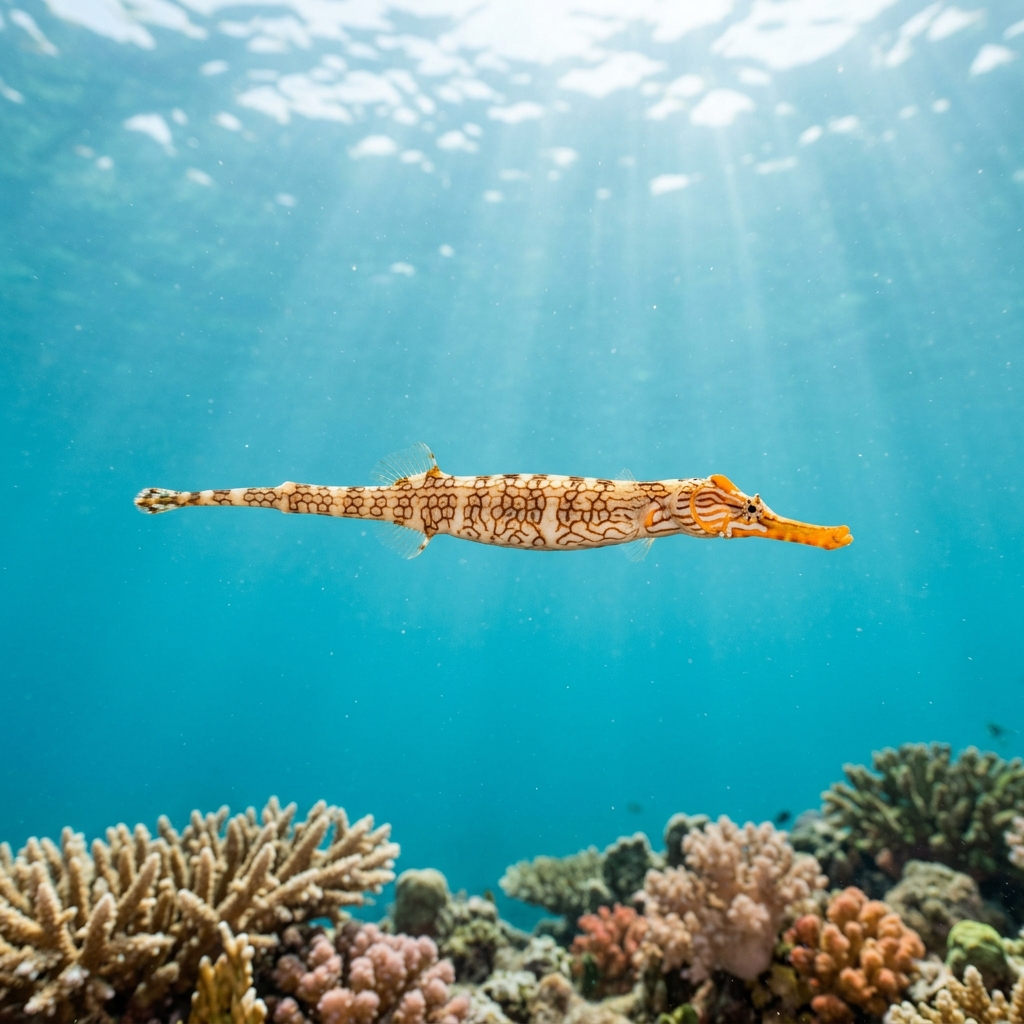
Reef neighbours a diver could mistake it for. Use the identification notes above to tell them apart.
All confirmed dive sites are in Australia, with the strongest concentration in South Australia, particularly around the Yorke and Fleurieu Peninsulas and Kangaroo Island, making it the go-to destination. Western Australia also holds a solid spread of sites, and a smaller cluster appears in Queensland and one site in New South Wales. If leafy seadragon diving is your goal, South Australia is where to start planning.
Mapping where Leafy Seadragon is logged…
Leafy seadragons are found exclusively in southern Australian waters. South Australia has by far the most dive sites, centred on cool, kelp-rich coastlines. Western Australia, Queensland, and a single New South Wales site round out the known range. Outside Australia, they simply do not occur.
No strong seasonal peak has been identified from dive data, so they can be encountered year-round. Their preferred water temperature of 16 to 18 °C is a constant feature of South Australia's coastline regardless of season, which likely explains their year-round presence.
Look for elaborate leaf-like skin lobes extending from a elongated, pipefish-style body in olive, yellow, or brownish tones. At around 24 cm, they are larger than most seahorses. The lobes make them resemble drifting kelp fragments, if a piece of weed appears to move against the current, look closer.
Adults typically reach around 24 cm in length. Their leaf appendages can make them appear slightly larger in the water, but the body itself is slender, roughly the dimensions of a large ruler.
Yes. Males brood the eggs on a specialised patch beneath the tail, where the female deposits them during mating. He carries and oxygenates them until they hatch as fully formed miniature seadragons. This paternal pregnancy is shared across the Syngnathidae family, which includes seahorses and pipefish.
Site and sighting data is aggregated from diver logs, iNaturalist and GBIF. For taxonomy and conservation status:
Seahorse
1,346 sites