Rhinecanthus rectangulus
Spot the Wedgetail Triggerfish across Hawaii, the Maldives and the Philippines in waters from 25 to 29°C. Tips on ID, behaviour and when to dive.
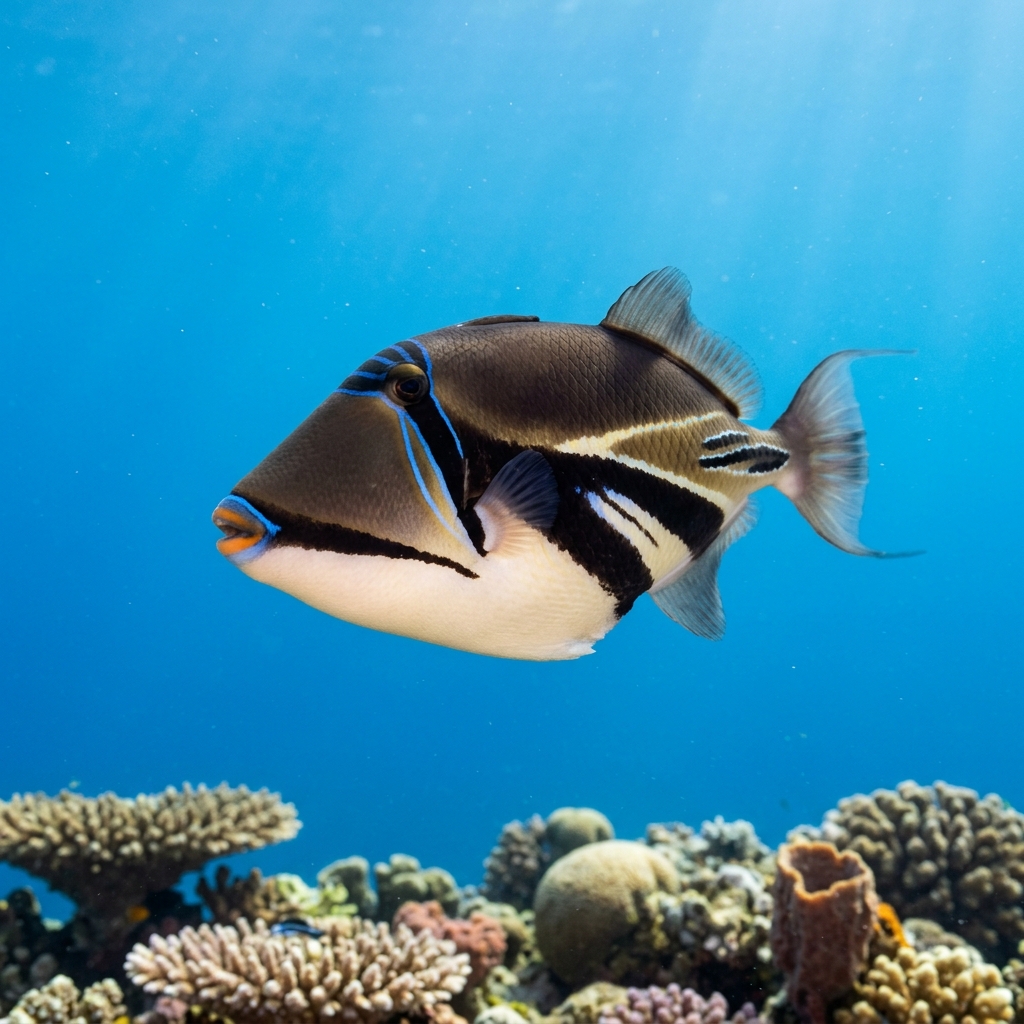
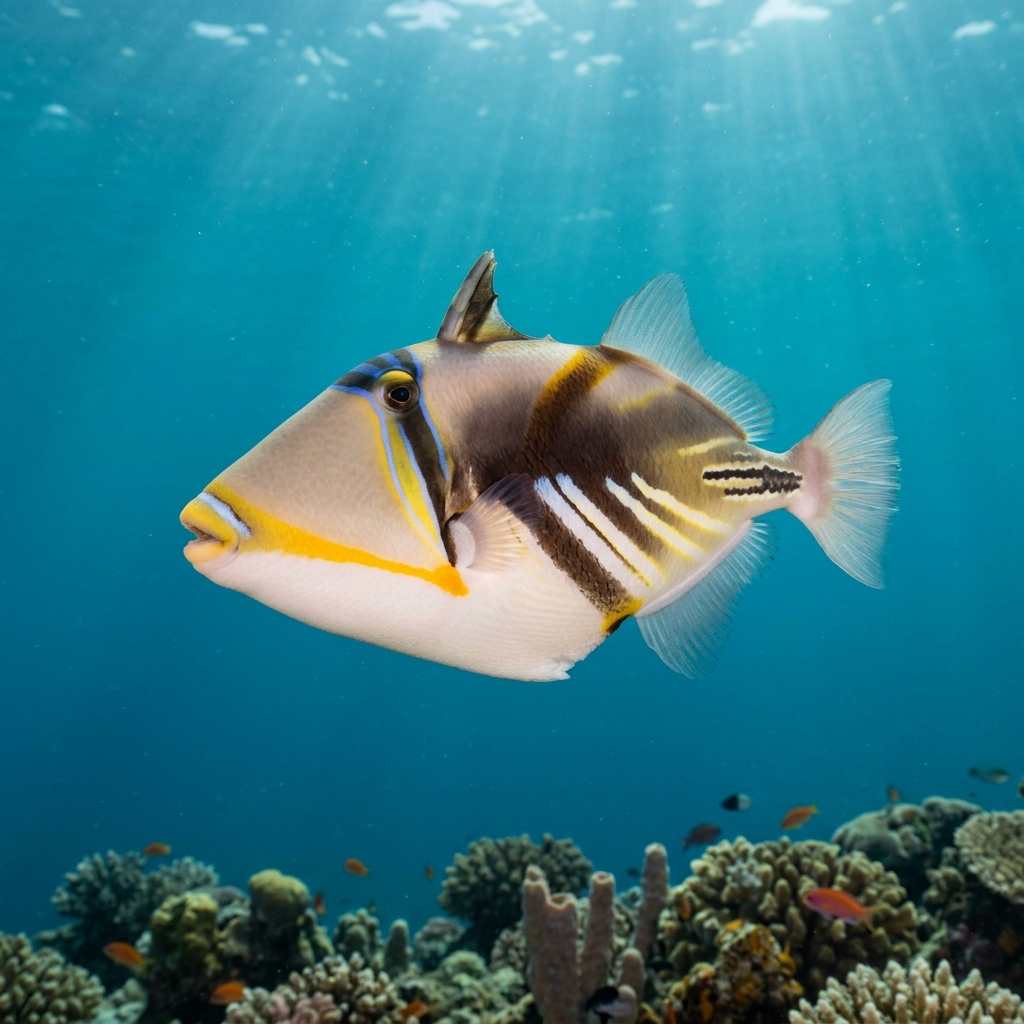
At around 21 cm, this triggerfish is immediately picked out by its striking black wedge-shaped patch running from the lower body down into the tail base, the feature its name describes. The upper body is pale tan to white with brown and black diagonal stripes angling across the flanks, while a bold black stripe runs from behind the eye toward the pectoral fin. Most sightings are in very shallow water, rarely deeper than 20 m, so you often encounter it in bright ambient light that makes the contrast markings pop.
You will nearly always find this triggerfish in shallow reef flats and rubble zones during daylight, often picking at algae or using its strong beak-like jaws to crack open small invertebrates and crustaceans. It can be territorial, particularly near nest sites on the sand or rubble, and may face you head-on as a warning posture if it feels cornered. Giving it a metre or two of space, especially during breeding periods, means it usually carries on feeding and ignores you entirely.
Like other triggerfish, it can lock itself into a crevice by erecting its first dorsal spine and wedging a second 'trigger' spine behind it to hold it rigid, making it nearly impossible to pull free from a hiding spot.
In Northern Hemisphere locations such as Hawaii and the Maldives, sightings concentrate between November and May. The species is comfortable in the 25 to 29°C water temperatures typical of tropical Indo-Pacific reefs, so on equatorial sites it can be encountered throughout the year.
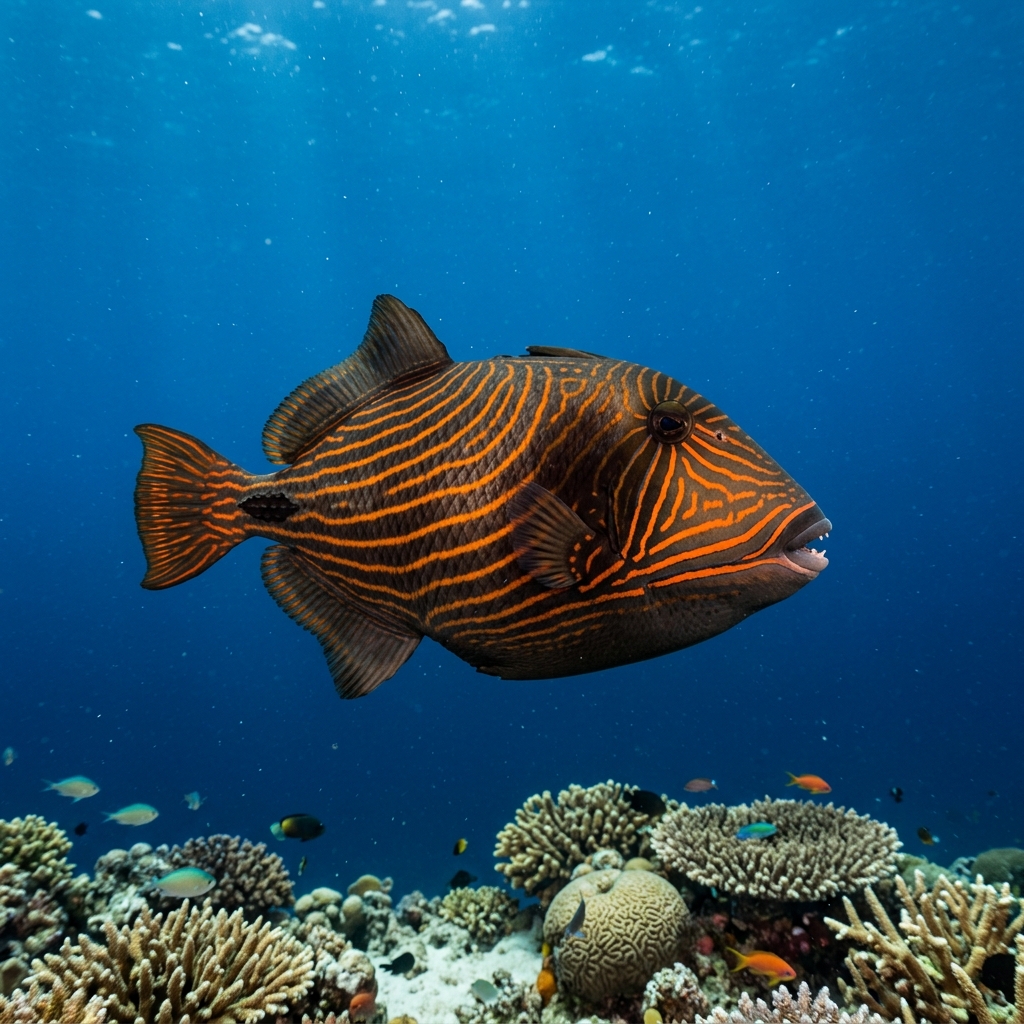
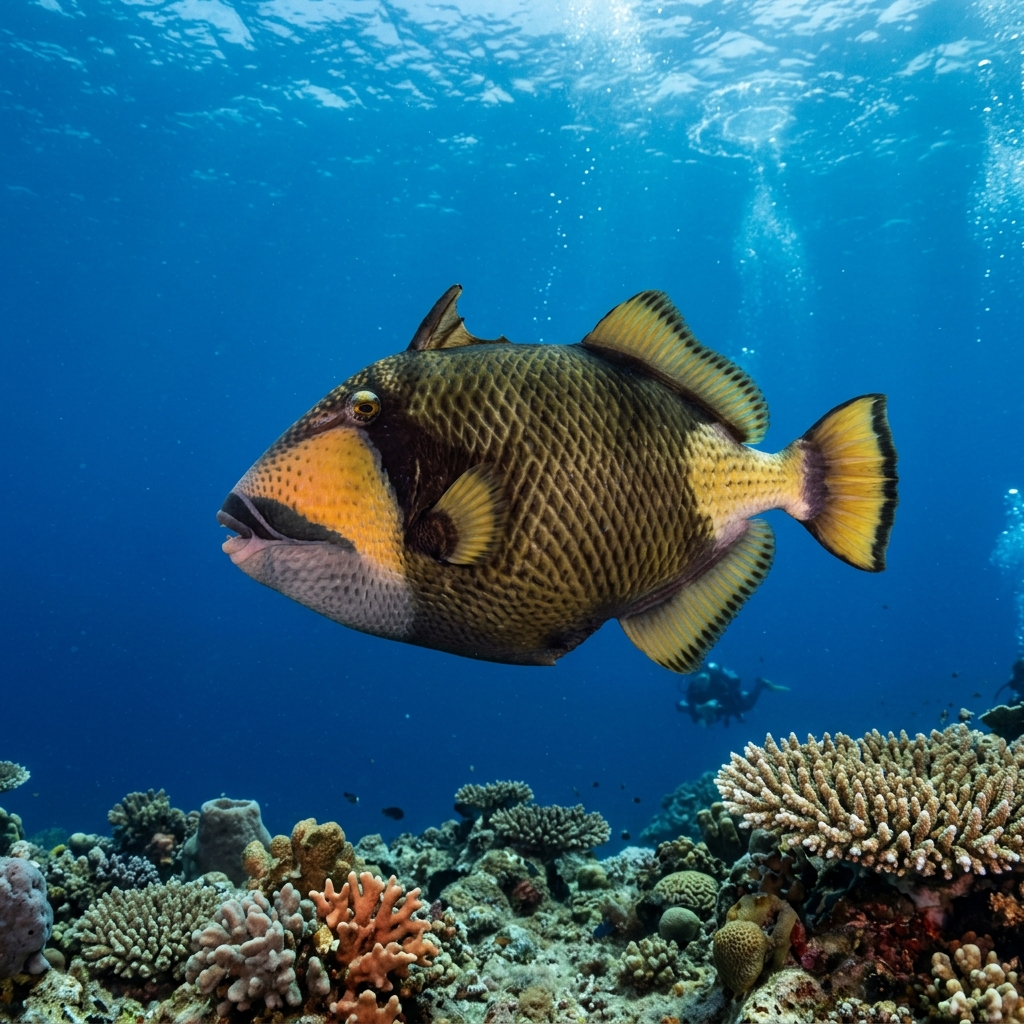
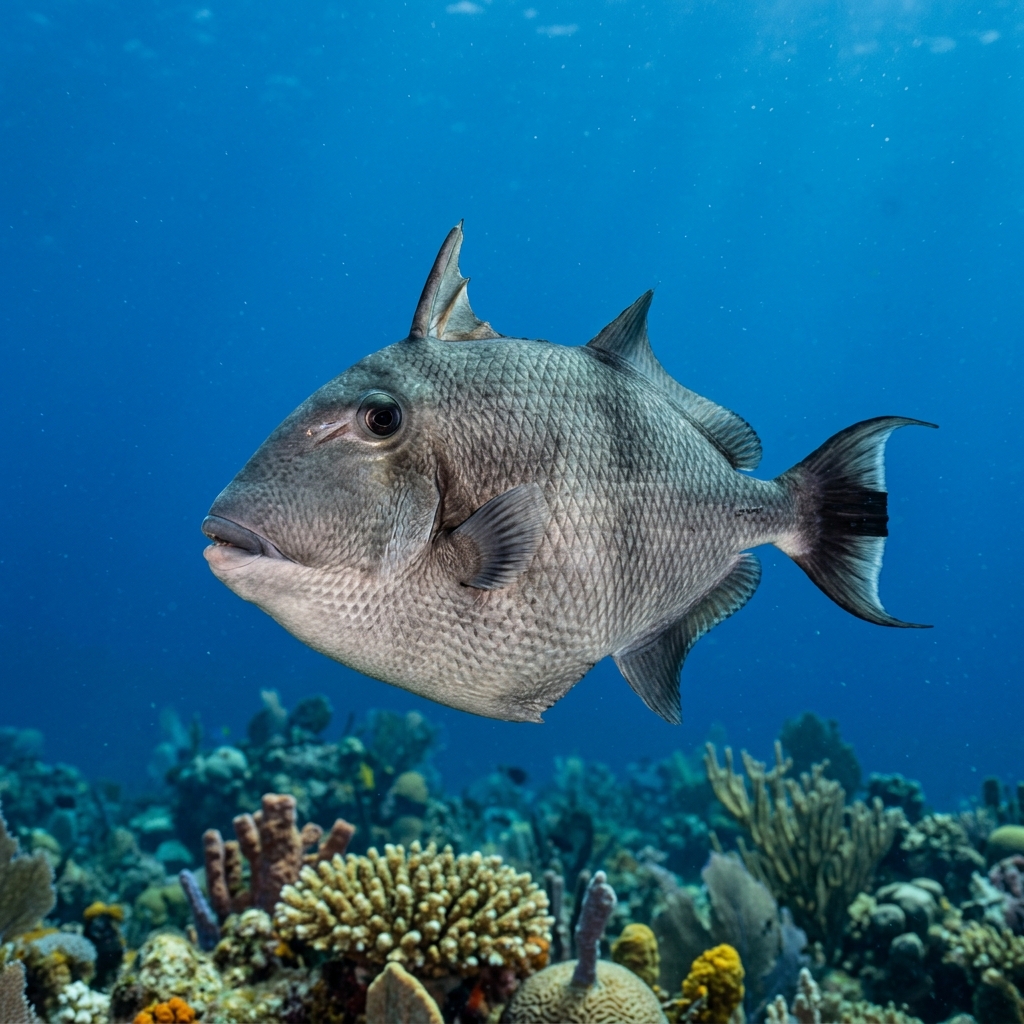
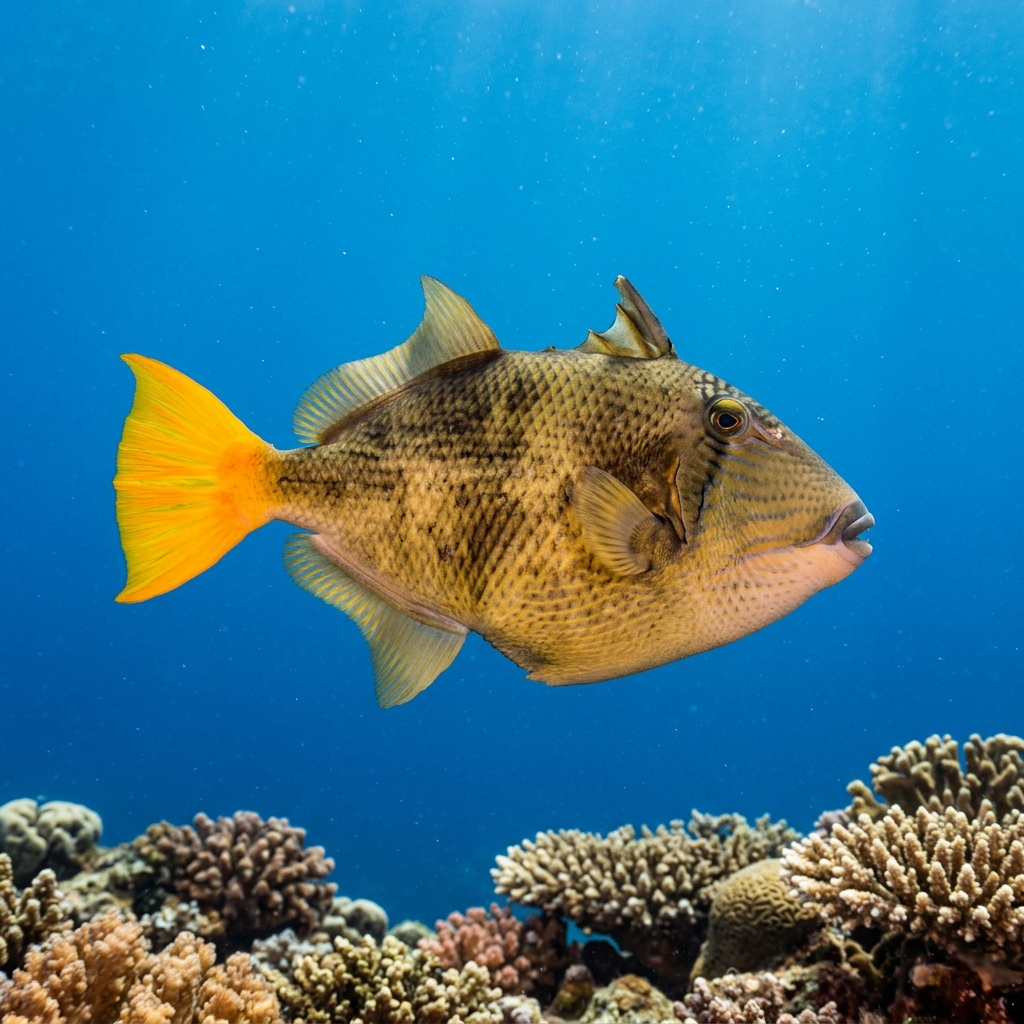
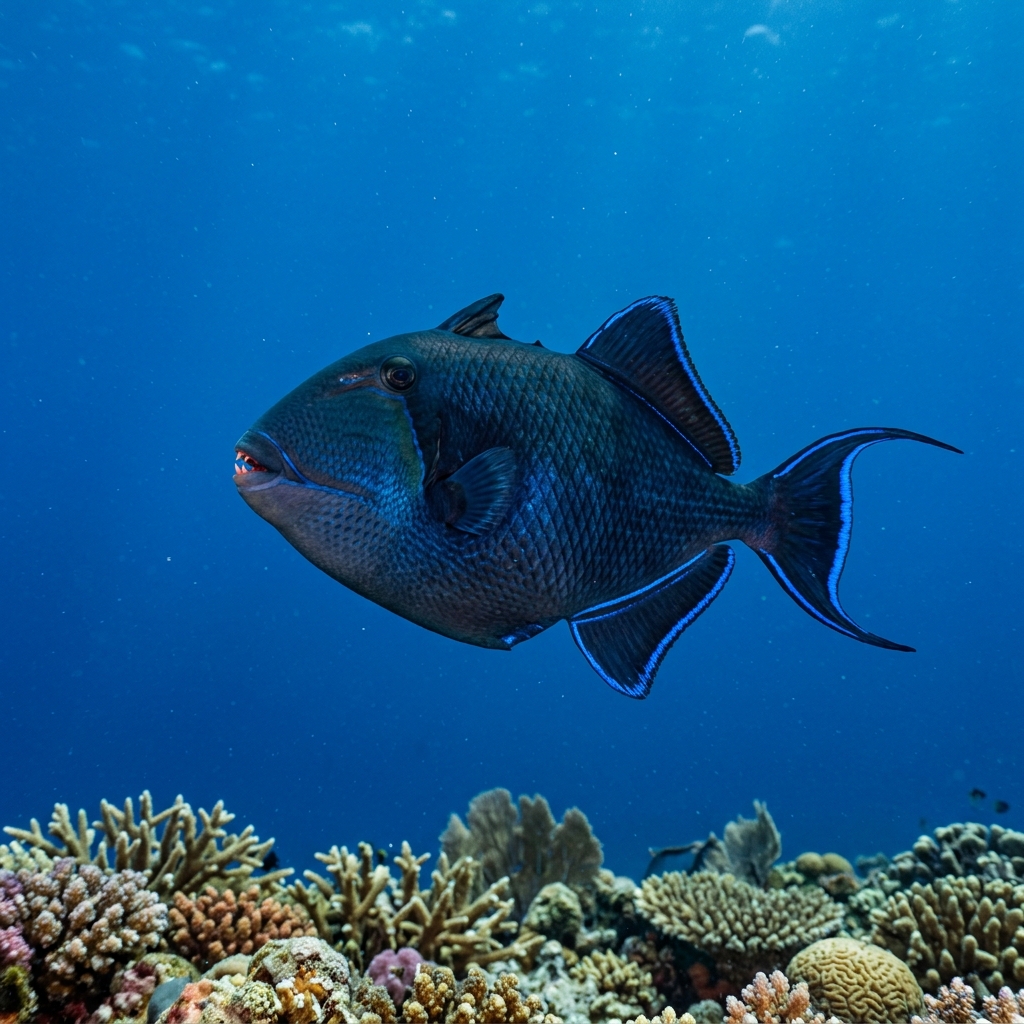
Reef neighbours a diver could mistake it for. Use the identification notes above to tell them apart.
Most commonly logged in Hawaii, the Maldives, the Philippines, and Indonesia, with strong populations also recorded in Australia's Queensland reefs and across Thailand and Malaysia. Within those countries, the North & Central Atolls of the Maldives, Hawaii's dive sites, the Visayas and Palawan in the Philippines, and Sulawesi in Indonesia produce the most reliable sightings. It shows up across a wide Indo-Pacific range, but the sites above give you the best realistic odds.
Mapping where Wedgetail Triggerfish is logged…
The best places are Hawaii, the Maldives, the Philippines, and Indonesia, all of which log strong numbers of sightings. Queensland in Australia, Thailand, and Malaysia are also reliable options. Look for it on shallow reef flats and lagoon margins rather than deeper walls.
In Northern Hemisphere destinations like Hawaii and the Maldives, sightings cluster from November through May. On equatorial reef systems further south, the warm water temperatures year-round mean you can encounter the species in any month.
Look for the bold black wedge that sweeps from the lower belly down to the tail base, that single mark is the key. Pair it with diagonal brown and black stripes across a pale body and a black stripe behind the eye, and you have a confident ID at around 21 cm.
They are not considered dangerous. However, like most triggerfish, they can display territorial behaviour near nesting sites, facing you head-on or making short charge movements. Simply back off and give them space, and the behaviour usually stops quickly.
Typical adults reach around 21 cm. That makes them a mid-sized triggerfish, noticeably smaller than a Titan Triggerfish but easy to spot because of their high-contrast markings against the reef background.
Site and sighting data is aggregated from diver logs, iNaturalist and GBIF. For taxonomy and conservation status:
Lagoon Triggerfish
2,435 sites