Ovalipes ocellatus
Purple-spotted and quick to bury, the lady crab turns up on cool Northeast US and New Brunswick dive sites year-round in 8-15C water.
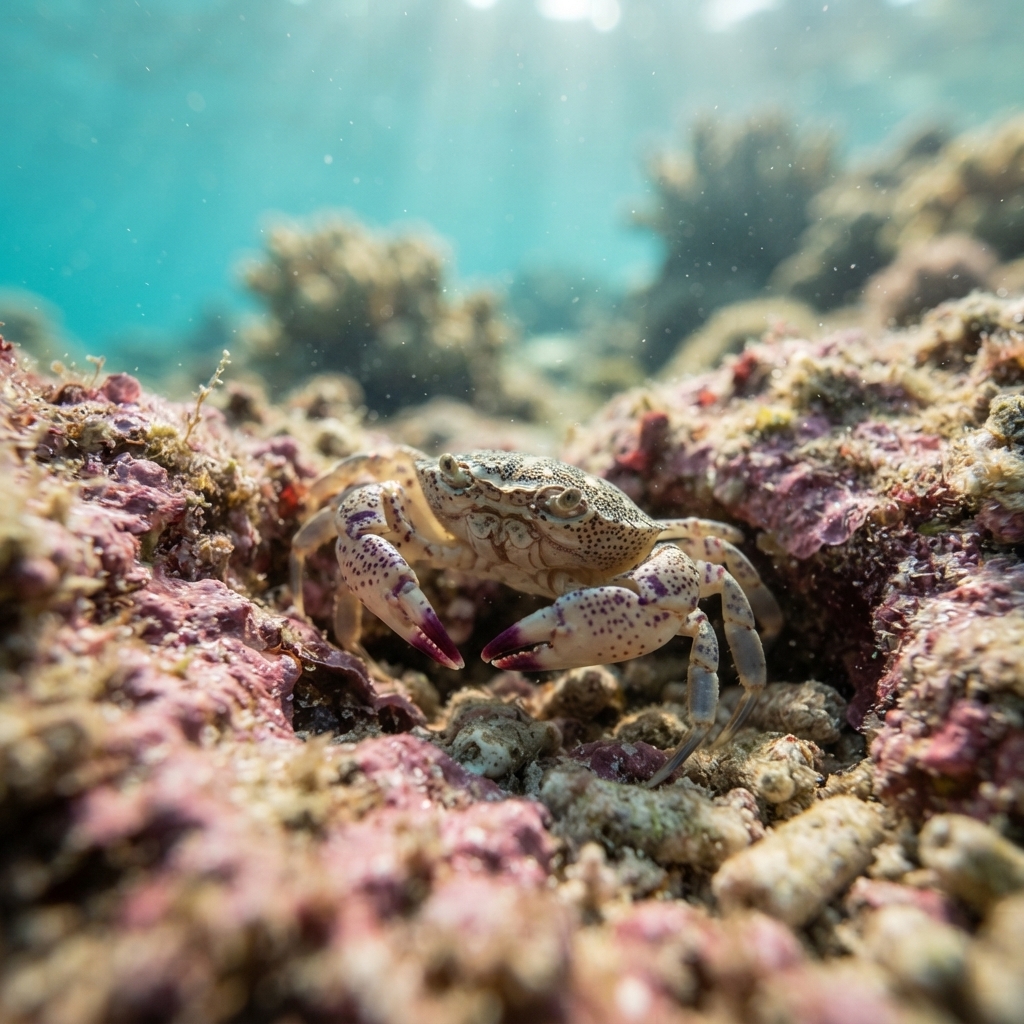
Small crab, around 6cm across, with a pale grey-yellow shell scattered with distinctive purple-grey spots that give it a speckled look against sand. The shell is broadly oval and the last pair of legs is flattened into paddles for swimming, a good tell against most other shallow crabs. It often sits half-buried, so look for the eyes and antennae poking above the sediment before you spot the whole body.
Divers most often find it partly buried in sand with just its eyes and antennae showing, waiting to ambush passing prey or avoid being spotted itself. When disturbed it can dig in fast or dart off sideways using its paddle-like rear legs to swim short bursts across the bottom. It is not shy about defending itself and will raise its claws if cornered, but it has no interest in divers beyond that.
Those flattened back legs are a real swimming adaptation, letting it scull through open water in short bursts rather than only walking, which is unusual among shallow-water crabs.
Sightings show no clear seasonal pattern in the data, and it is logged across a range of cool water temperatures from 7.9 to 14.5C, so treat it as a year-round find on Northeast US and Canadian Atlantic sites whenever conditions allow diving.
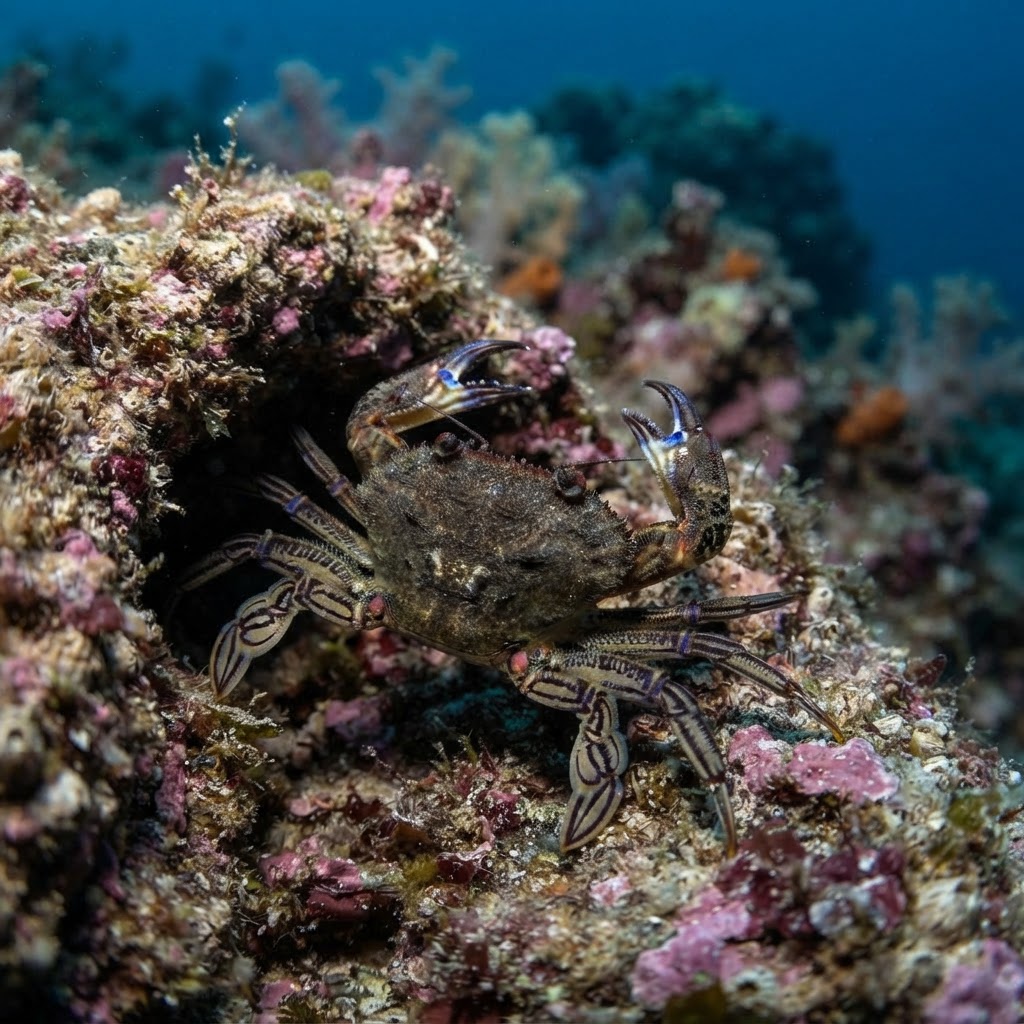
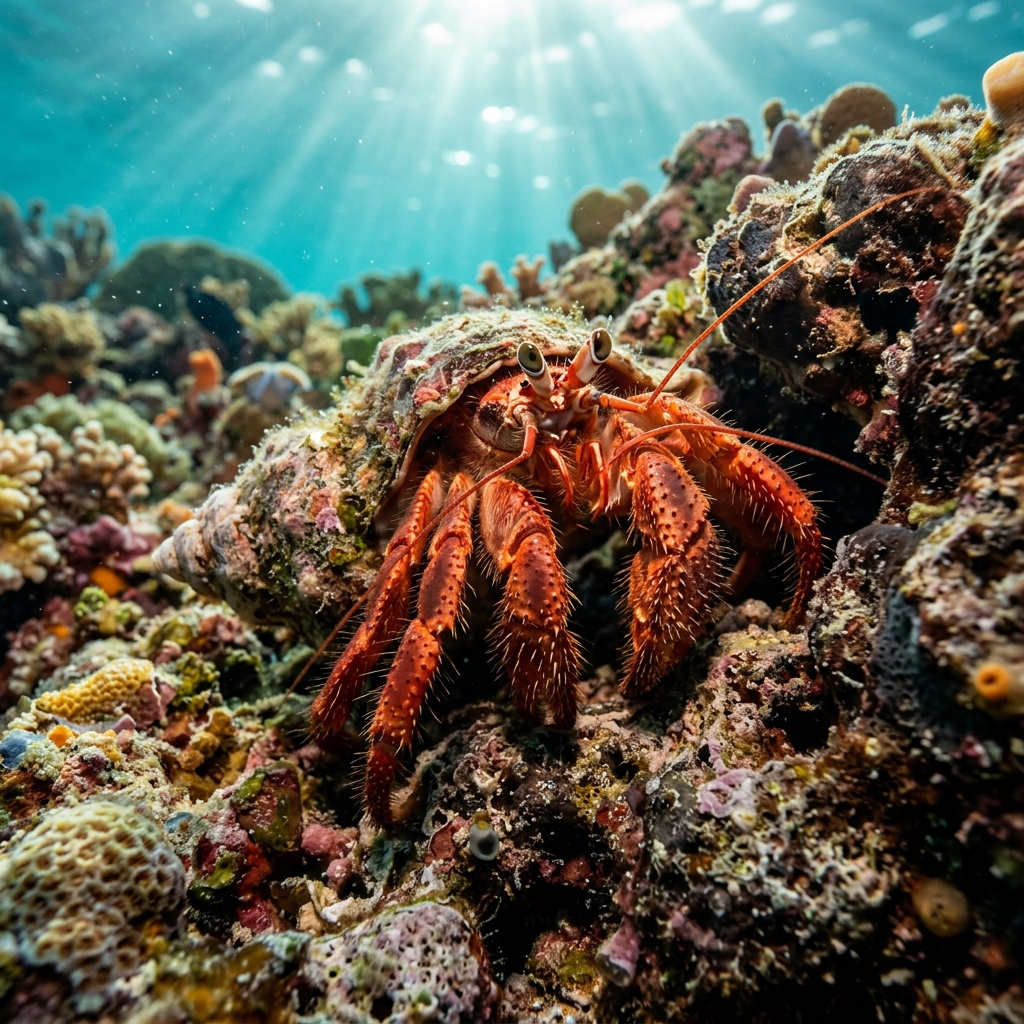
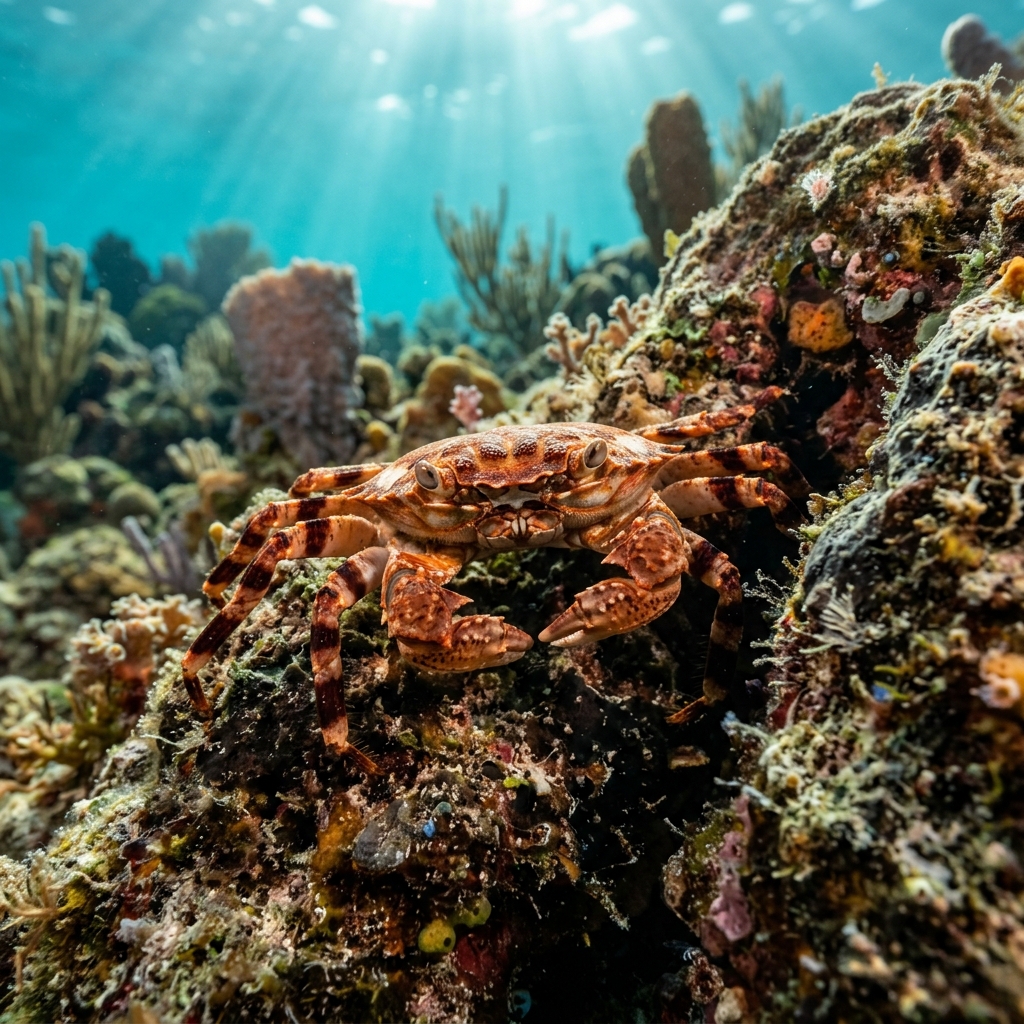
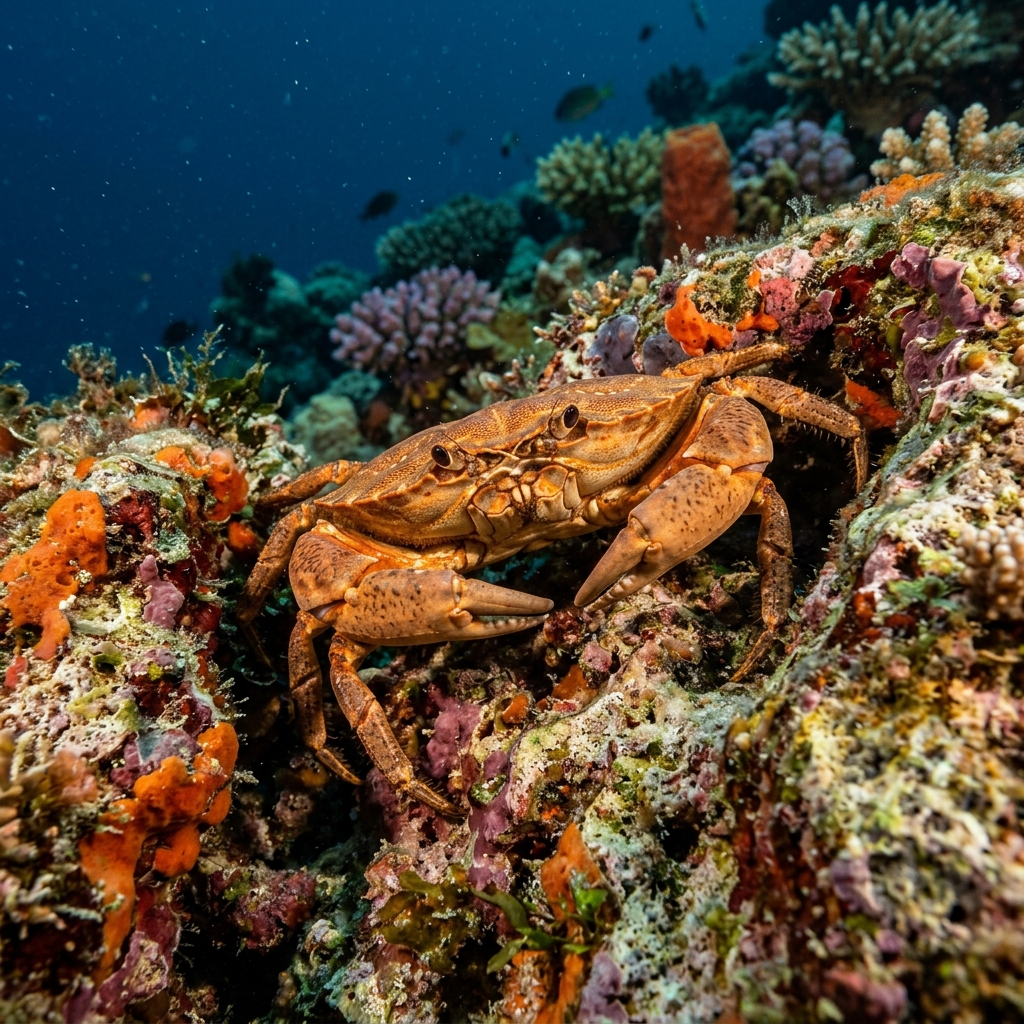
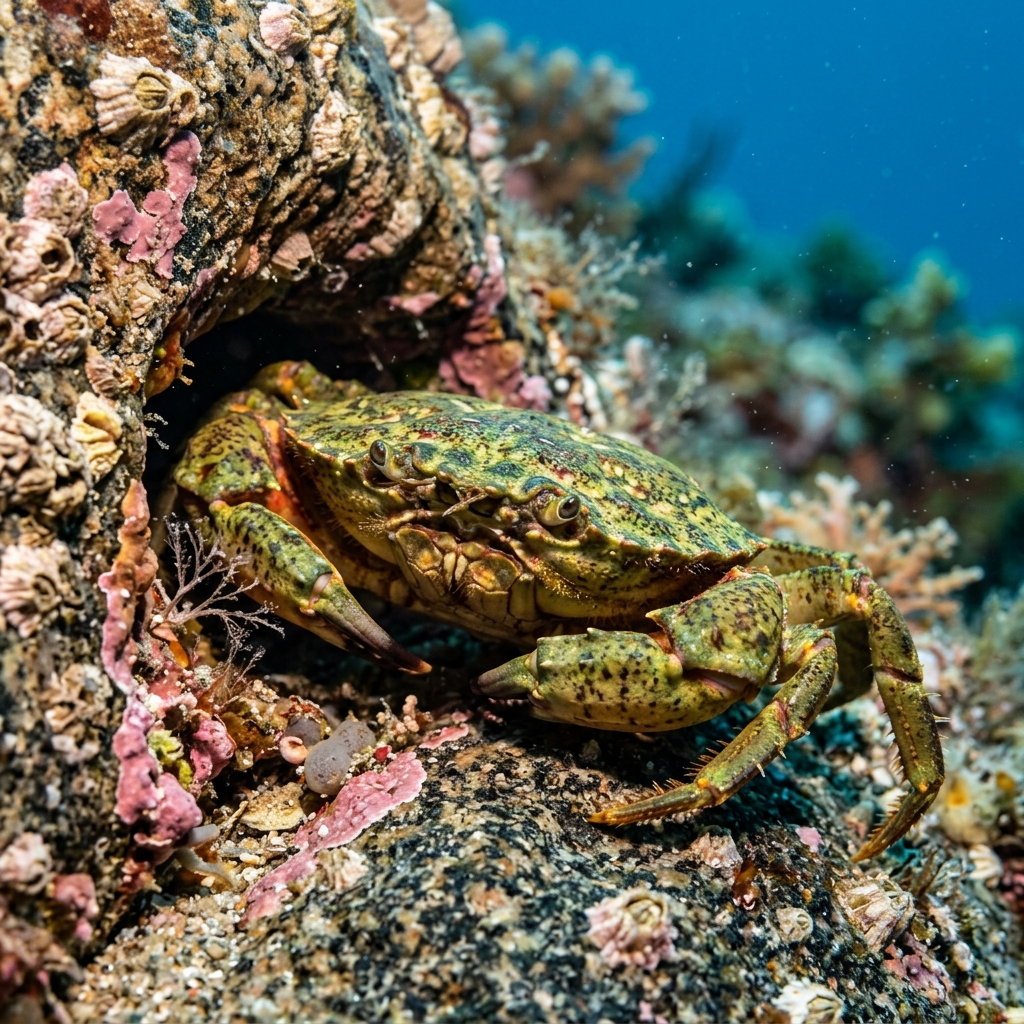
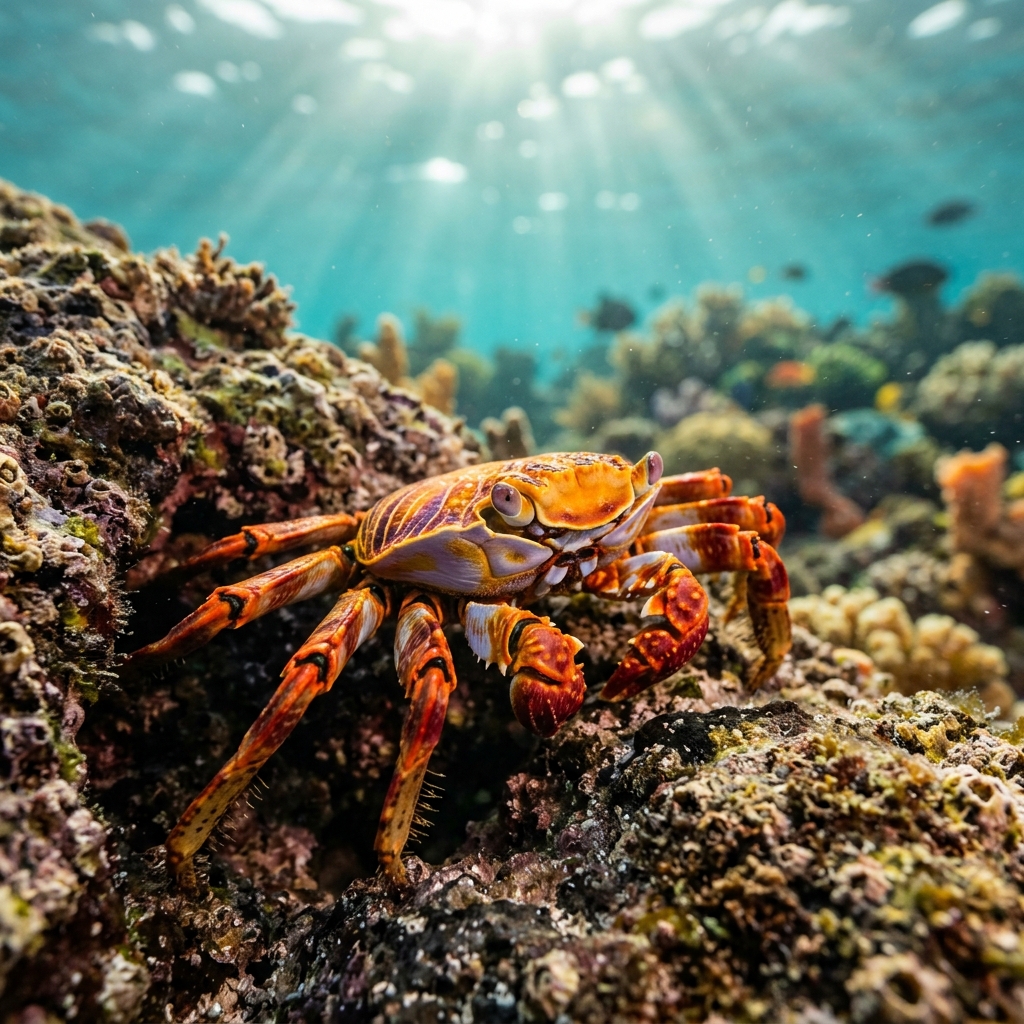
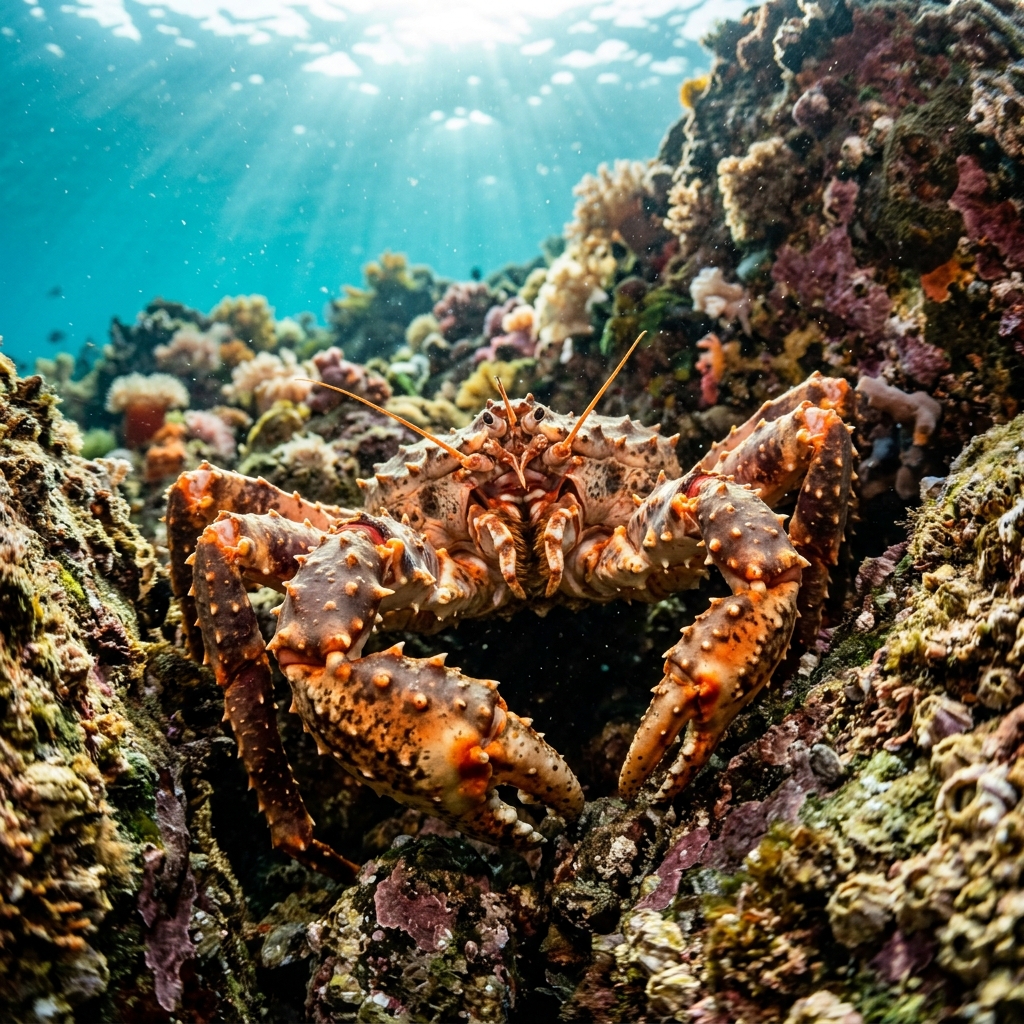
Reef neighbours a diver could mistake it for. Use the identification notes above to tell them apart.
Most commonly logged on dive sites across the Northeast United States, with a further cluster in New Brunswick, Canada, and a couple of sites down in the Carolinas. It is a sandy-bottom species of the cold Atlantic coast rather than a reef animal, so look for it on sand and gravel patches near rocky or wreck sites in these regions.
Mapping where Lady Crab is logged…
It is most reliably logged on dive sites in the Northeast United States and in New Brunswick, Canada, with a couple of additional sightings in the Carolinas. Look for sandy or gravel patches near rocky reefs and wrecks rather than open reef.
There is no strong seasonal signal in the sighting data, so it appears to be a year-round find across its cool-water range, typically in water between about 8 and 15C.
Look for a small oval crab around 6cm across with a pale shell covered in purple-grey spots, often sitting half-buried in sand with just the eyes showing. The flattened rear legs used for swimming are a useful extra clue.
They typically reach around 6cm across the shell, making them a small, easy-to-miss find unless you are specifically scanning sandy patches.
No, they pose no danger to divers. They may raise their claws defensively if handled or cornered, but they have no interest in approaching or bothering divers.
Site and sighting data is aggregated from diver logs, iNaturalist and GBIF. For taxonomy and conservation status:
European Green Crab
2,469 sites