Lachnolaimus maximus
Spot hogfish across Florida, Grand Cayman, and Roatán year-round. Here's how to recognise this reef-roaming wrasse and where divers log it most.
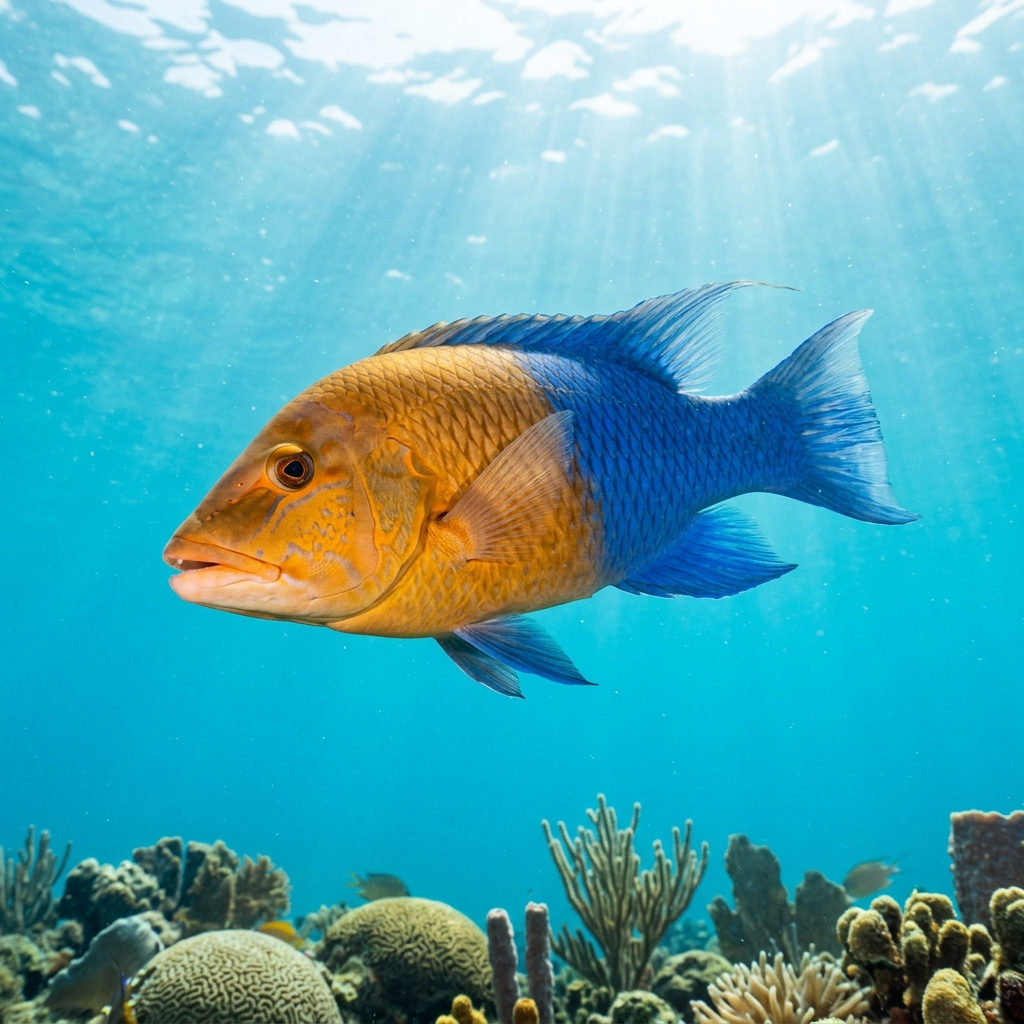
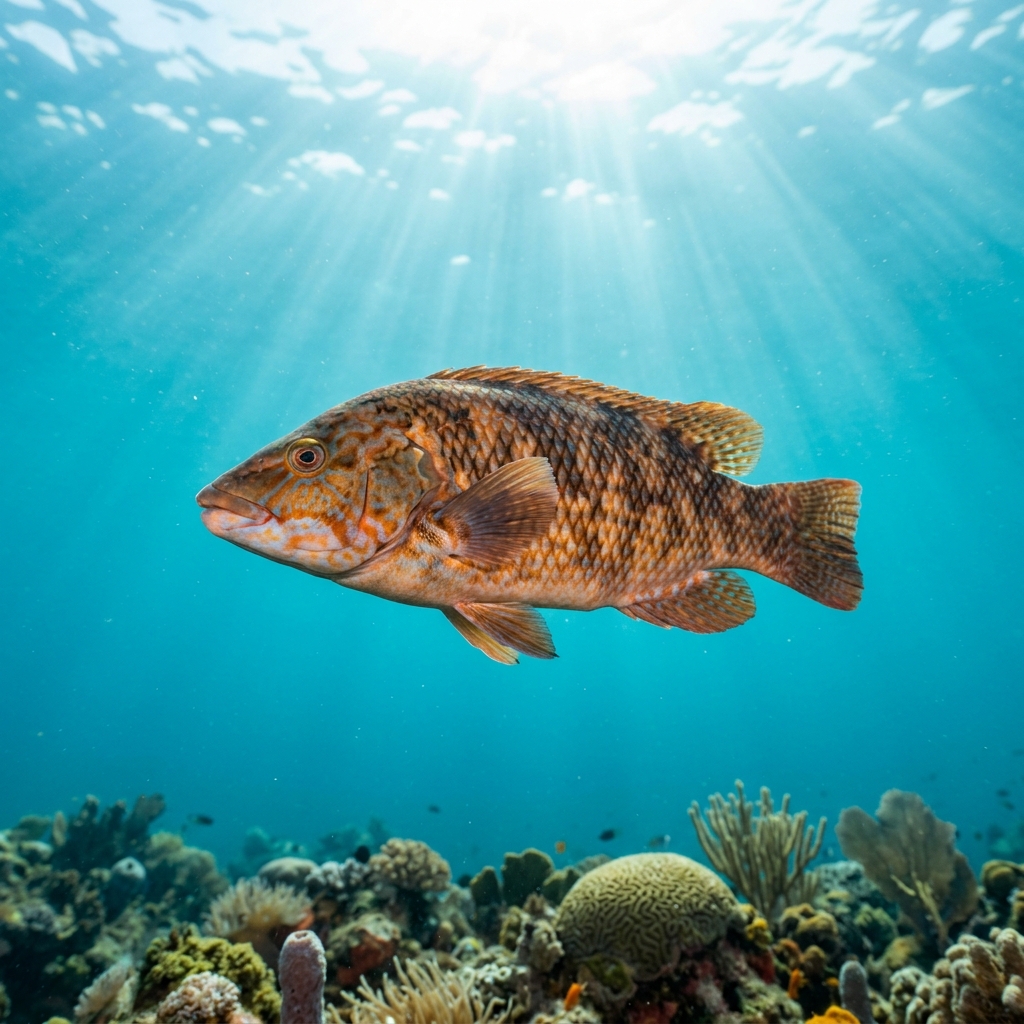
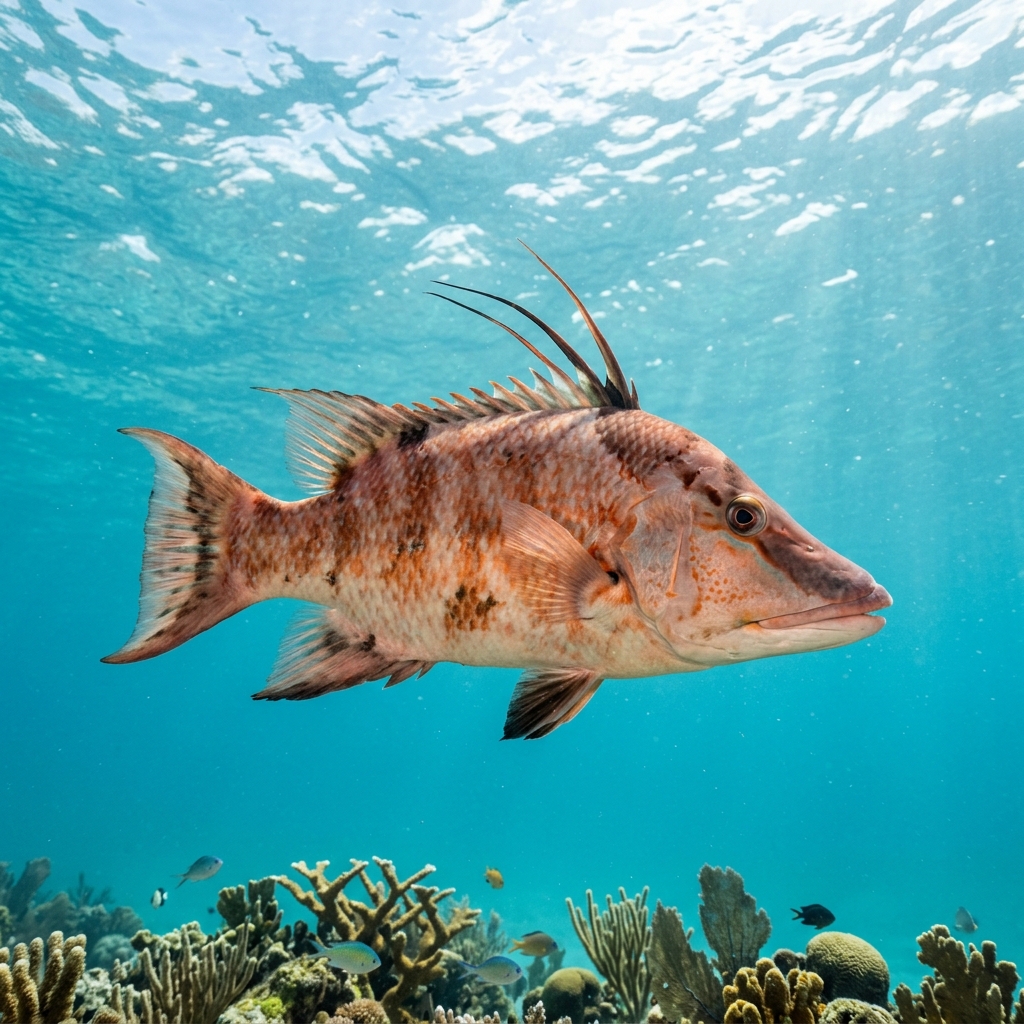
That long, pig-like snout is the one feature you won't second-guess: it's proportionally longer than any other wrasse in Caribbean waters and gives the species its name. Adults are typically a mottled reddish-brown to pinkish-grey, often with a dark blotch at the base of the tail and the first three dorsal spines extended into long trailing filaments. Large males develop a distinctive dark patch behind the pectoral fin and a steeper forehead profile. Juveniles and females run paler, often whitish to light brown, so colour alone won't clinch the ID, lean on that snout every time.
You'll most often find hogfish working the sand and rubble near reef edges, rooting through sediment with that long snout in search of molluscs and crustaceans, the digging is visible and distinctive. They tend to be unhurried and tolerant of divers at a respectful distance, though larger males can drift away if approached too quickly. Sightings are typically solitary or in small loose groups rather than schools.
Hogfish are protogynous hermaphrodites: individuals start life as females and the largest, most dominant individual in a group transitions to male. Remove the dominant male and a female steps up, which is one reason spearfishing pressure on large individuals can disrupt local populations disproportionately.
Hogfish are present year-round across their Caribbean range, which aligns neatly with the observed water-temperature niche of roughly 25 to 29 °C, conditions that tropical and subtropical reef sites maintain consistently through all seasons.
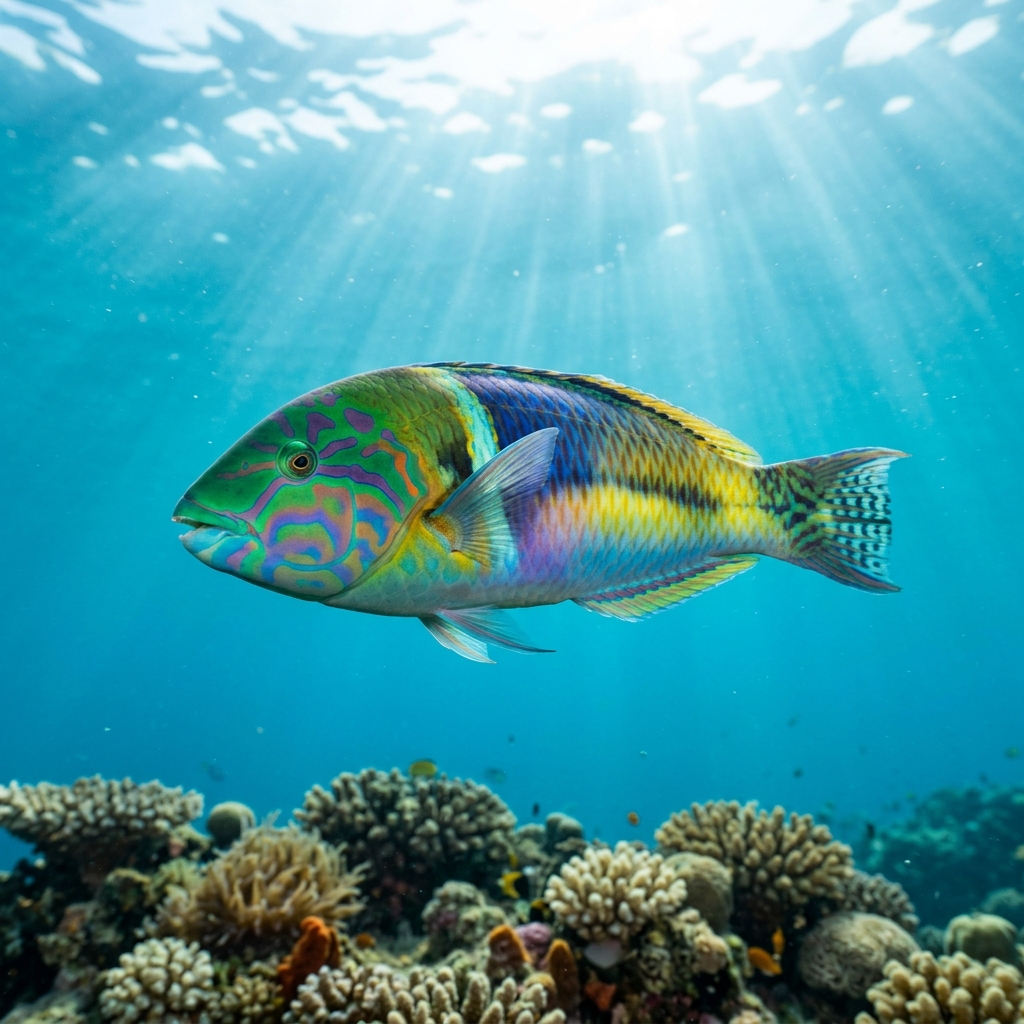
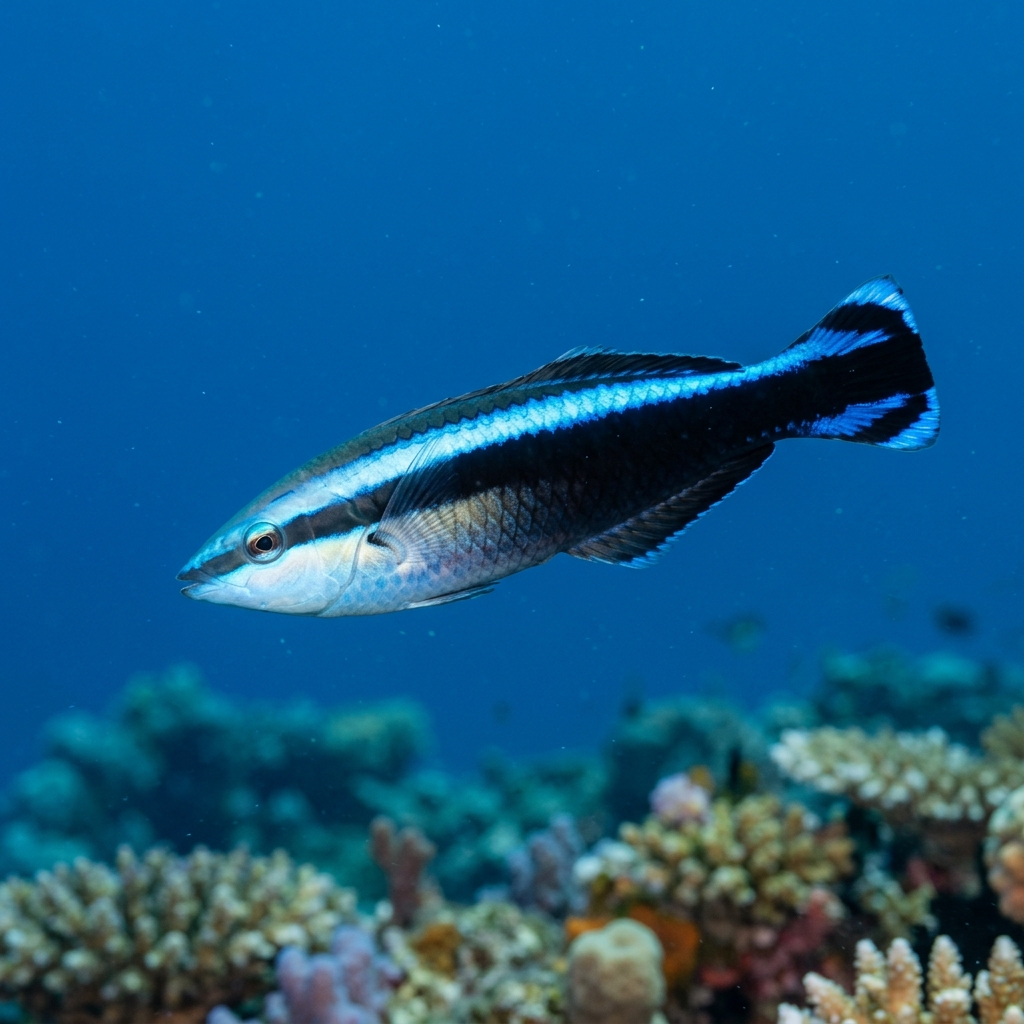
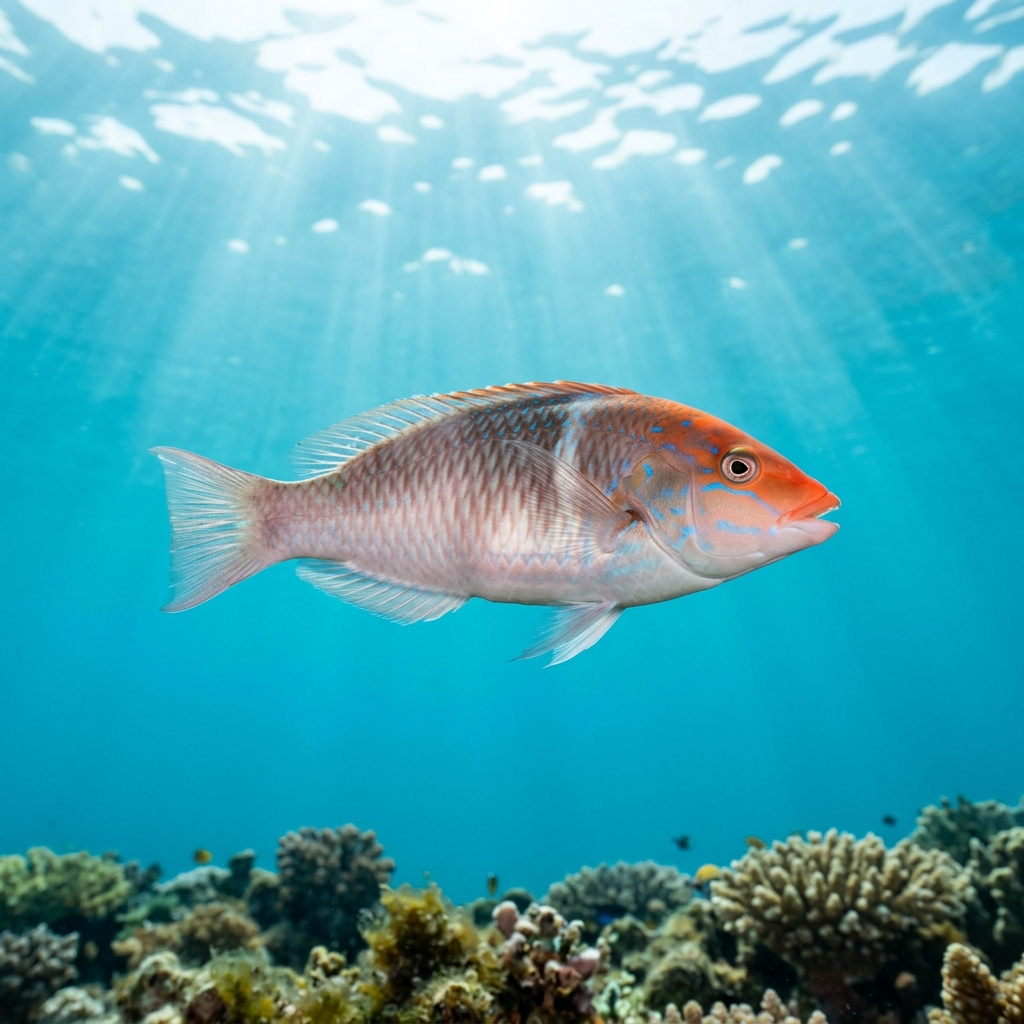
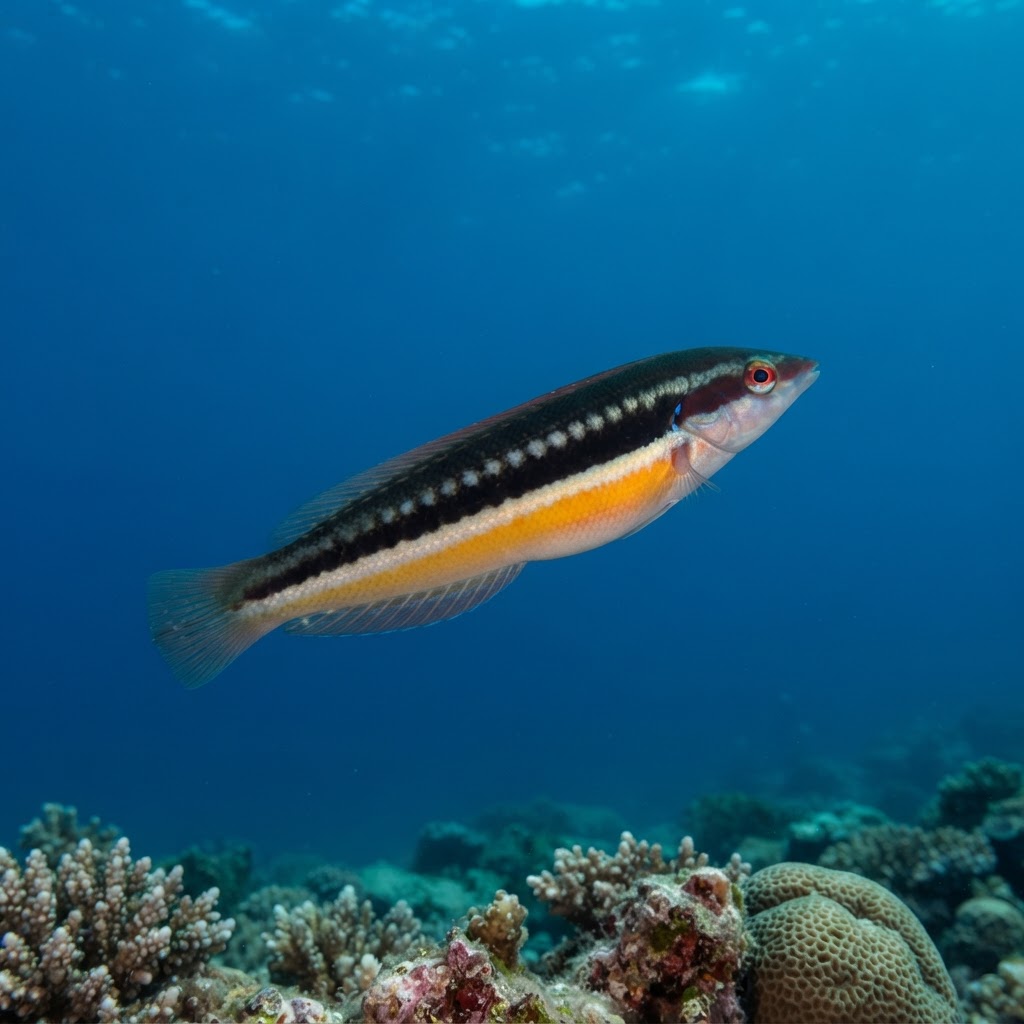
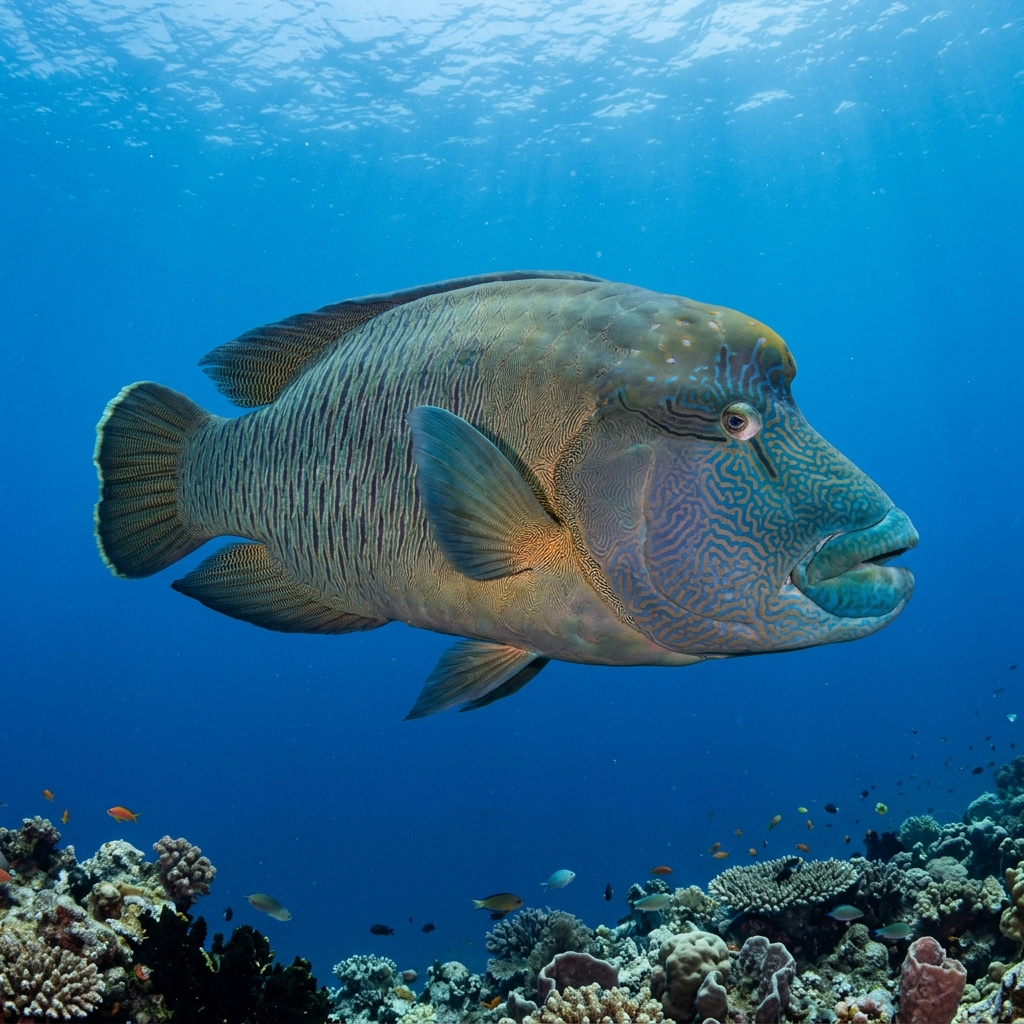
Reef neighbours a diver could mistake it for. Use the identification notes above to tell them apart.
Hogfish are most consistently logged across the Caribbean and the subtropical Atlantic, with the strongest sighting records in Florida and the Southeast United States, Grand Cayman, and Roatán, Honduras. Belize (particularly Ambergris Caye), the Bahamas, and Guadeloupe also return solid records. Within this range, shallow-to-mid reef structures and sandy rubble patches are the most reliable spots to search.
Mapping where Hogfish is logged…
Hogfish are most reliably logged in Florida, Grand Cayman, and Roatán, Honduras, with strong records also from the Bahamas, Belize, and Guadeloupe. They favour shallow to mid-depth reef edges and sandy rubble areas throughout the Caribbean and subtropical Atlantic.
Hogfish are present year-round. Their observed temperature range of roughly 25 to 29 °C matches the stable conditions found on Caribbean reefs in every season, so there is no single peak month to target.
The long, pig-like snout is the definitive feature, no other Caribbean wrasse comes close. Adults are mottled reddish-brown to pinkish-grey with extended trailing dorsal spines. Large males add a dark patch behind the pectoral fin and a steeper forehead. Lean on the snout shape when colour is ambiguous.
Hogfish are one of the larger Caribbean wrasses, with adults commonly reaching around 50 to 60 cm and exceptional individuals recorded beyond 90 cm. Large terminal males are noticeably bulkier than females of the same age.
Hogfish are currently listed as Vulnerable by the IUCN. Sustained fishing pressure on large adults, the dominant males, is the primary concern, as losing these individuals can disrupt reproduction across local populations. Marine protected areas where the species is observed offer the best refuge.
The Hogfish is listed as vulnerable by the IUCN. Observe from a distance, avoid touching or feeding it, and report sightings to local marine research organisations.
Hogfish are listed as Vulnerable on the IUCN Red List, primarily due to overfishing pressure on large adults. Divers can help by reporting sightings, supporting marine protected areas, and avoiding any interaction that disturbs normal behaviour.
Site and sighting data is aggregated from diver logs, iNaturalist and GBIF. For taxonomy and conservation status:
Cleaver Wrasse
2,700 sites