Labrus mixtus
Spot the cuckoo wrasse along the French Riviera, Northwest Italy, and Bohuslän. A rare but rewarding find in cooler European waters from 12 to 22 °C.
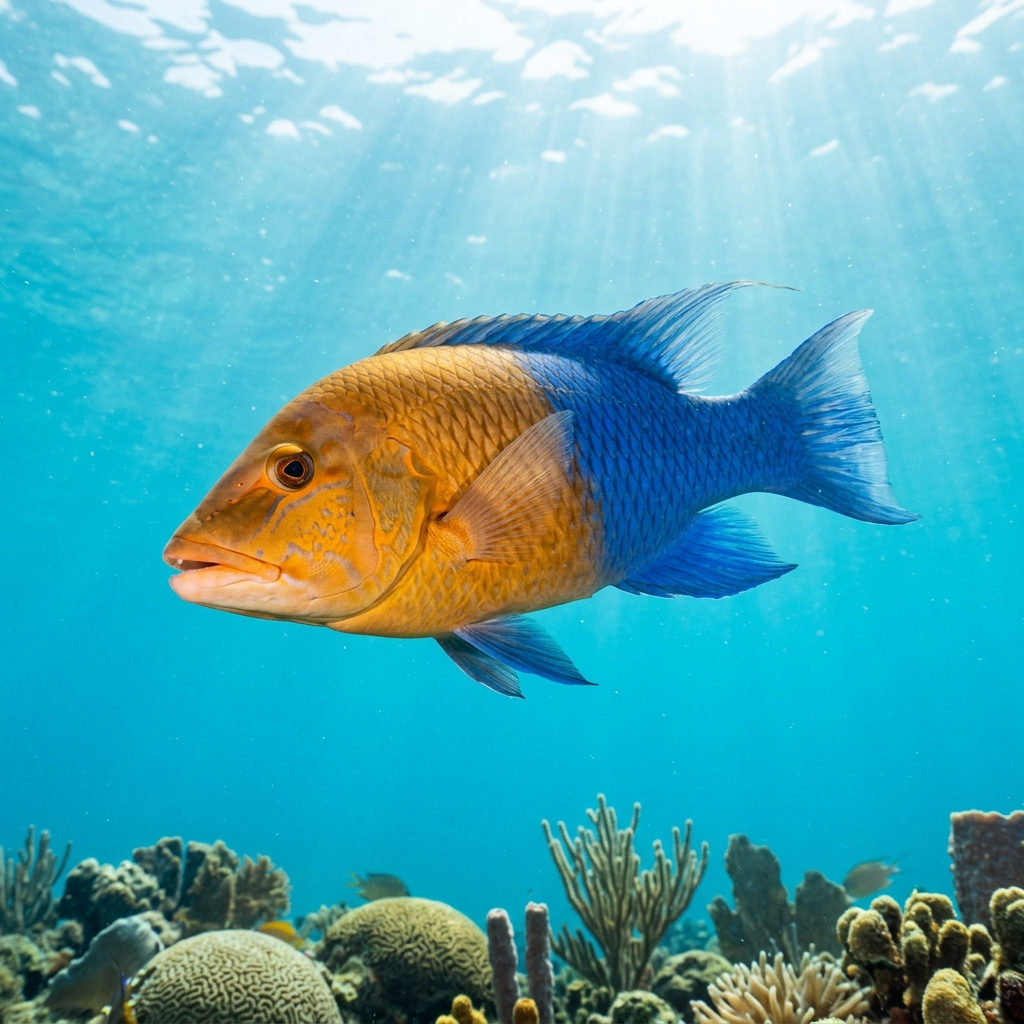
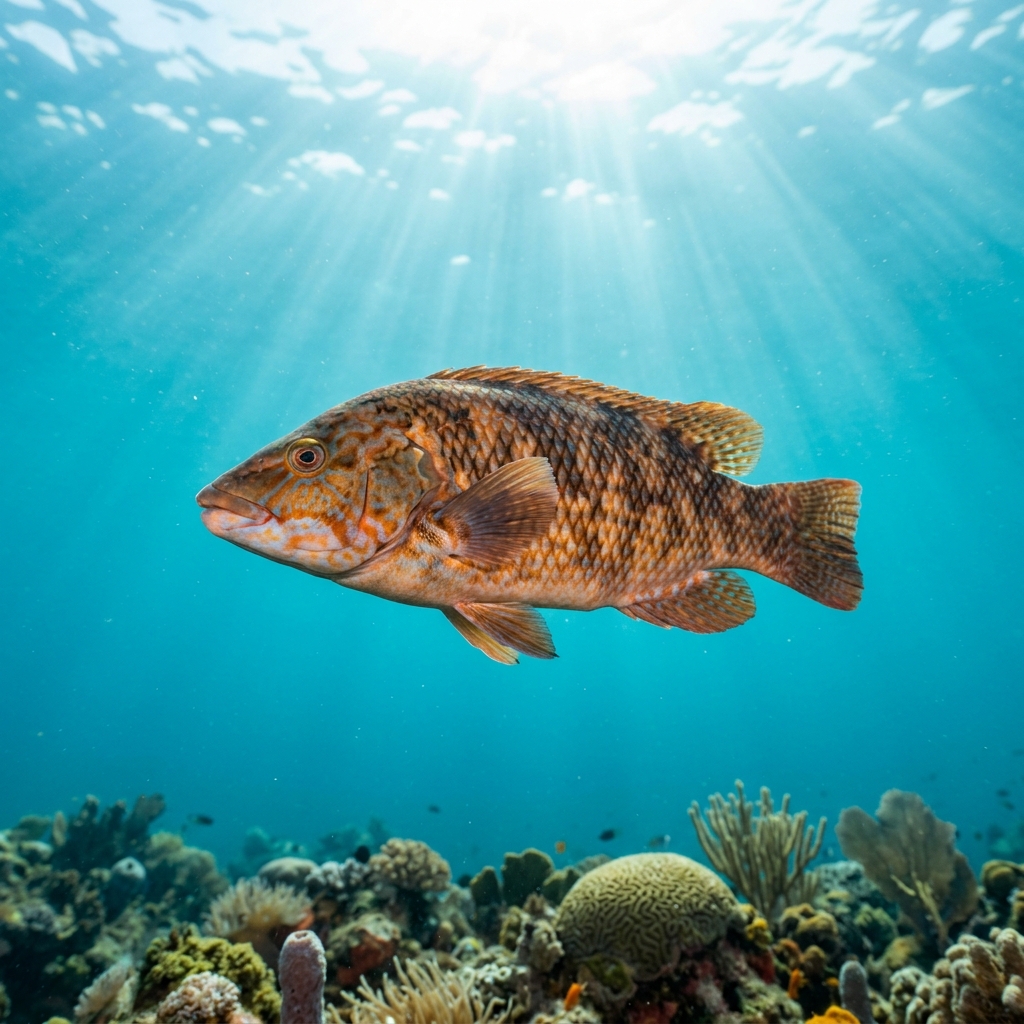
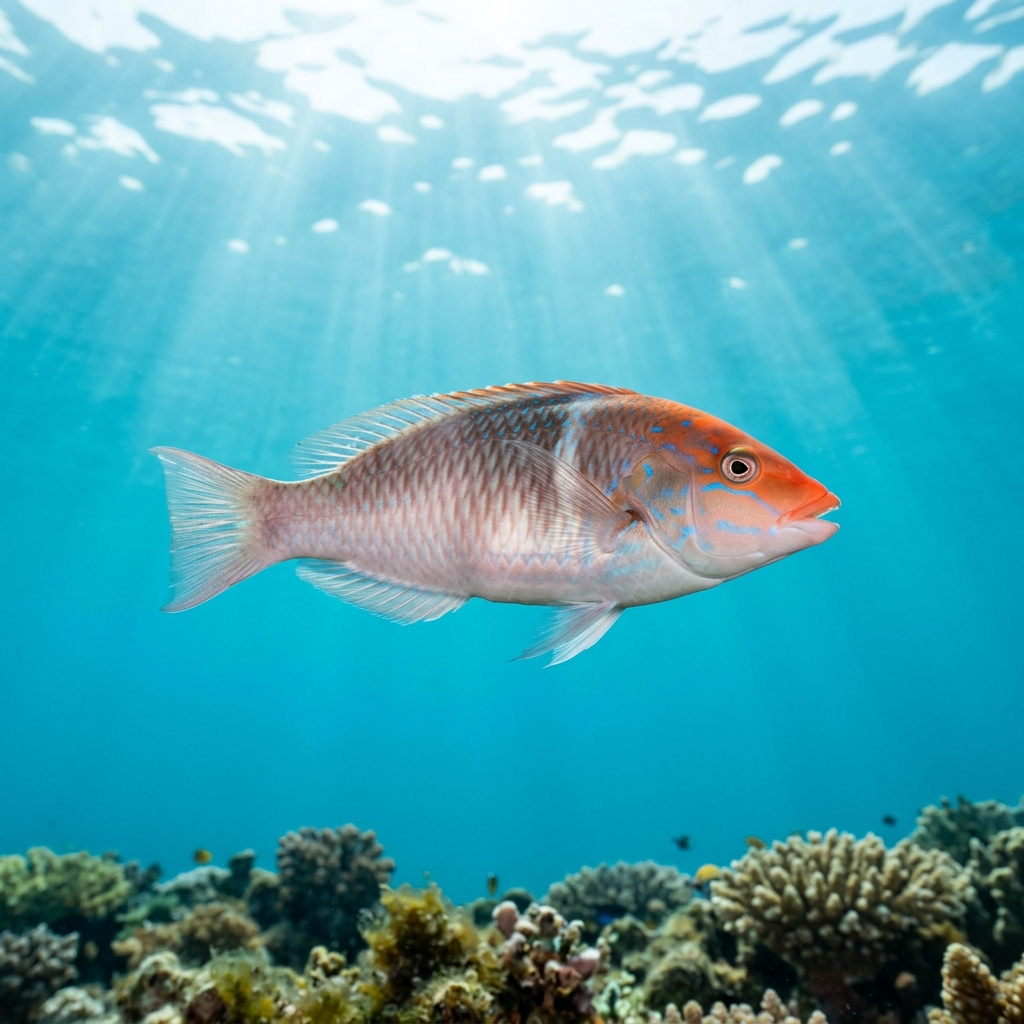
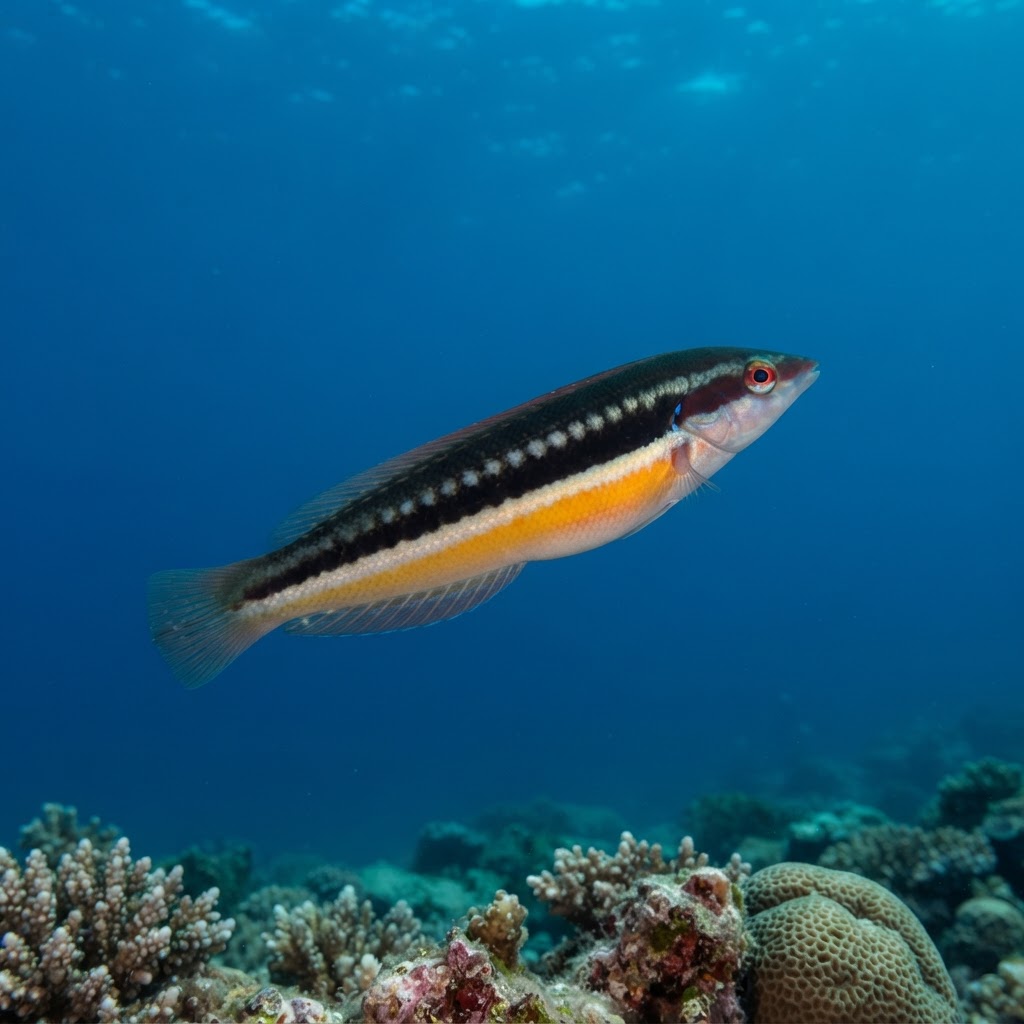
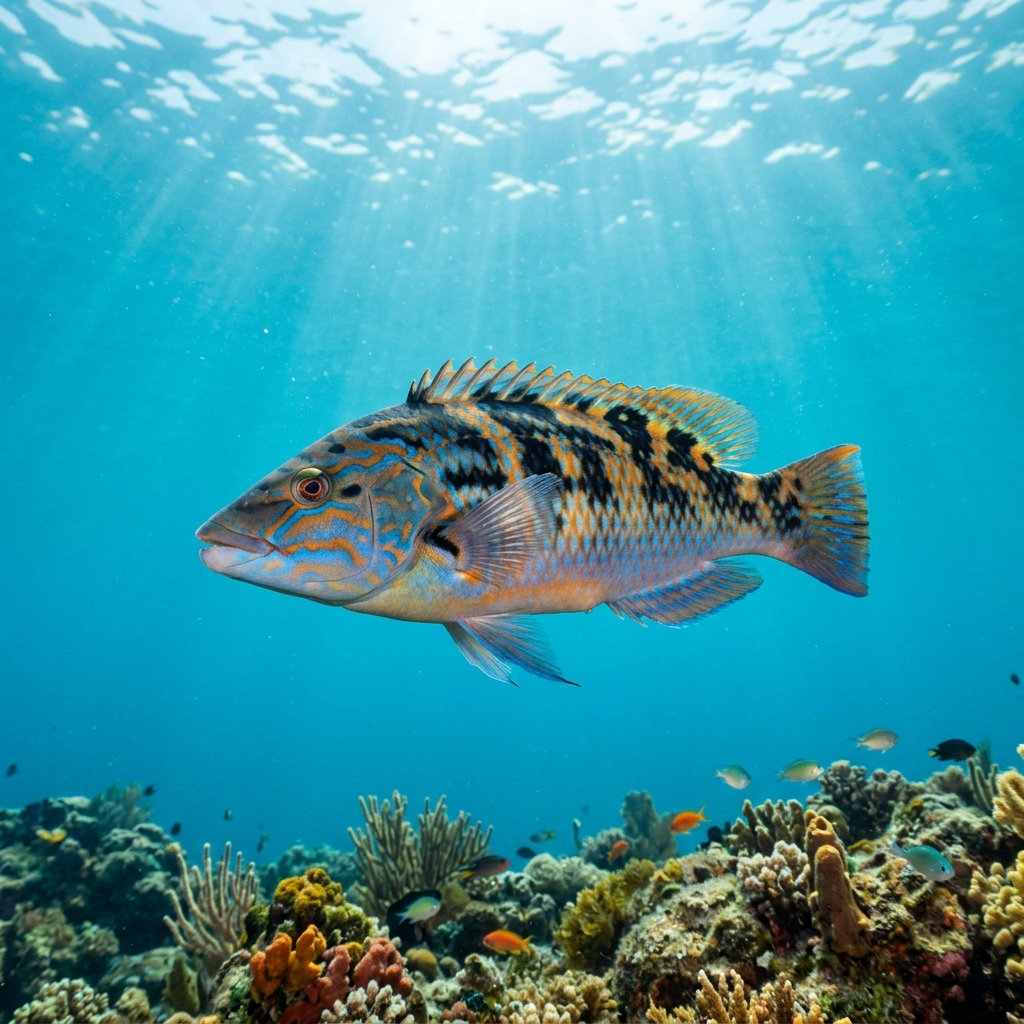
Males are among the most colourful fish in European waters: a bright orange or reddish-orange body contrasted with brilliant blue stripes across the head and blue-tipped fins. Females and juveniles are far more subdued, showing an orange-pink base colour with three dark blotches along the back near the tail. Body shape is classic wrasse, elongated and torpedo-like, typically reaching around 30 to 35 cm in the water, though they can grow larger. That male colouration is so bold it is usually the clinching field mark; females are easy to overlook until you know the blotch pattern.
Cuckoo wrasse are active, constantly-moving fish that patrol rocky reefs and kelp-covered boulders, rarely sitting still long enough for a relaxed approach. Males in particular are bold and may swim up to inspect divers, which is how many close-up encounters happen. They are typically seen singly or in loose groups, working the reef for small invertebrates.
Like many wrasses, cuckoo wrasse are protogynous hermaphrodites: females can transition into fully functional males, complete with the dramatic colour change from the blotched female pattern to the vivid blue-headed male livery.
No clear seasonal peak emerges from the available data, so treat it as a year-round possibility. Its observed temperature range of roughly 13 to 22 °C fits the temperate Mediterranean and northeast Atlantic perfectly, so it can be encountered across all seasons wherever those conditions hold.
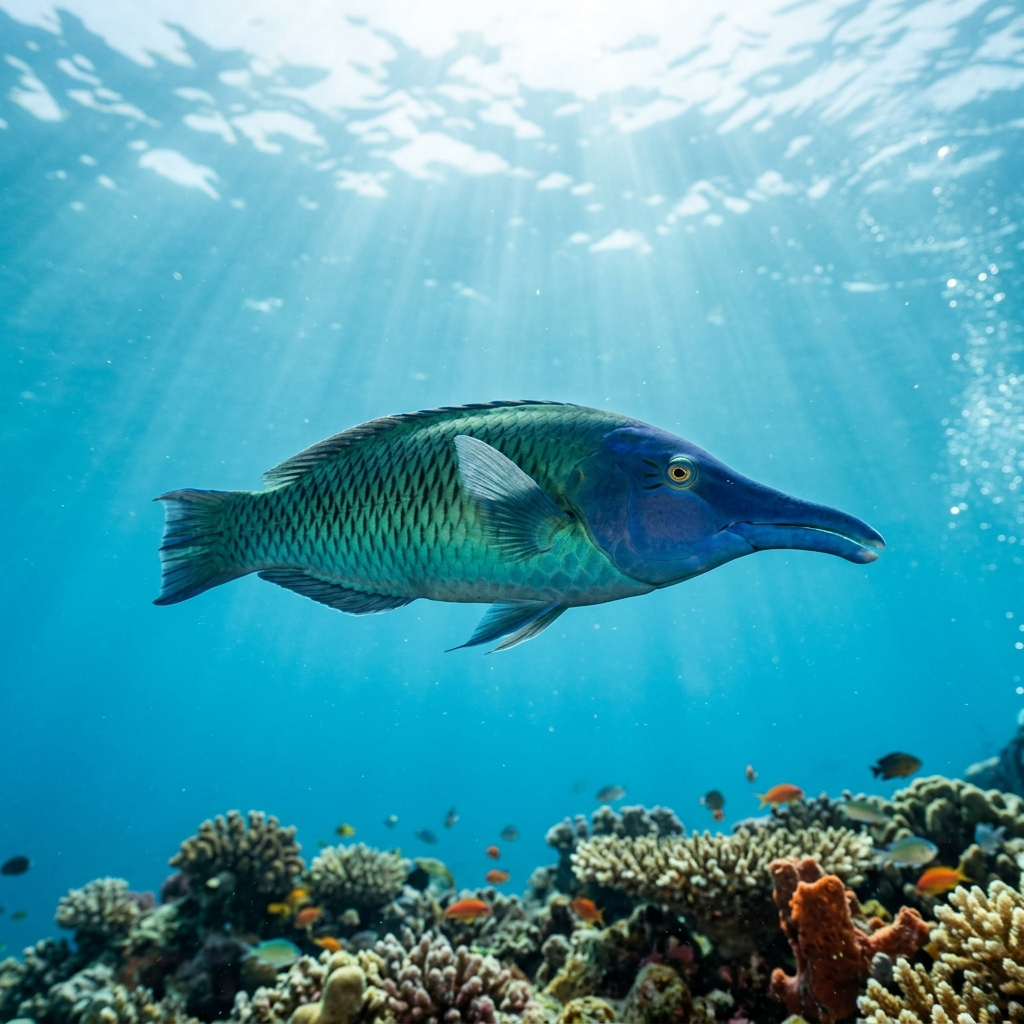
Reef neighbours a diver could mistake it for. Use the identification notes above to tell them apart.
Most sightings come from the Mediterranean coastlines of Northwest Italy, Sardinia, and the French Riviera, with a strong showing along the Lisbon Coast in Portugal and across Brittany and Normandy in France. The species also turns up regularly in the Cantabrico region of Spain and along the Bohuslän coast of Sweden, making it one of the few brilliantly coloured wrasses that ventures into cool northeastern Atlantic waters. The UK has logged it too, though sightings there are rare.
Mapping where Cuckoo Wrasse is logged…
The strongest sighting records come from Northwest Italy, Sardinia, the French Riviera, and the Lisbon Coast of Portugal. Brittany and Normandy in France, the Cantabrico coast of Spain, and Bohuslän in Sweden are also well-represented. It is a predominantly European species tied to temperate rocky reefs.
There is no single peak season in the data, so encounters are possible year-round at suitable sites. The species tolerates water temperatures from around 13 °C up to about 22 °C, which covers most of the temperate European coast across all seasons.
Males are unmistakable: a vivid orange body with electric-blue stripes across the head and blue fin margins. Females are trickier, showing a plainer orange-pink body with three dark blotches near the tail. If you see a brilliantly blue-headed orange fish on a European rocky reef, it is almost certainly a male cuckoo wrasse.
Adults typically reach around 30 to 35 cm, with larger males occasionally exceeding 40 cm. In the water they appear mid-sized, elongated, and torpedo-shaped, similar in bulk to a large perch.
Yes. Cuckoo wrasse are protogynous hermaphrodites, meaning females can transition into males. When a dominant male disappears, a female may change sex and develop the full blue-headed male colouration over time. This is a well-documented trait across the wrasse family.
Site and sighting data is aggregated from diver logs, iNaturalist and GBIF. For taxonomy and conservation status:
Bird Wrasses
3,632 sites