Phyllidiopsis krempfi
A small reef-crawling nudibranch turning up on macro dives across Luzon and Taiwan's Longdong, in water from 23.6 to 29.9 C.
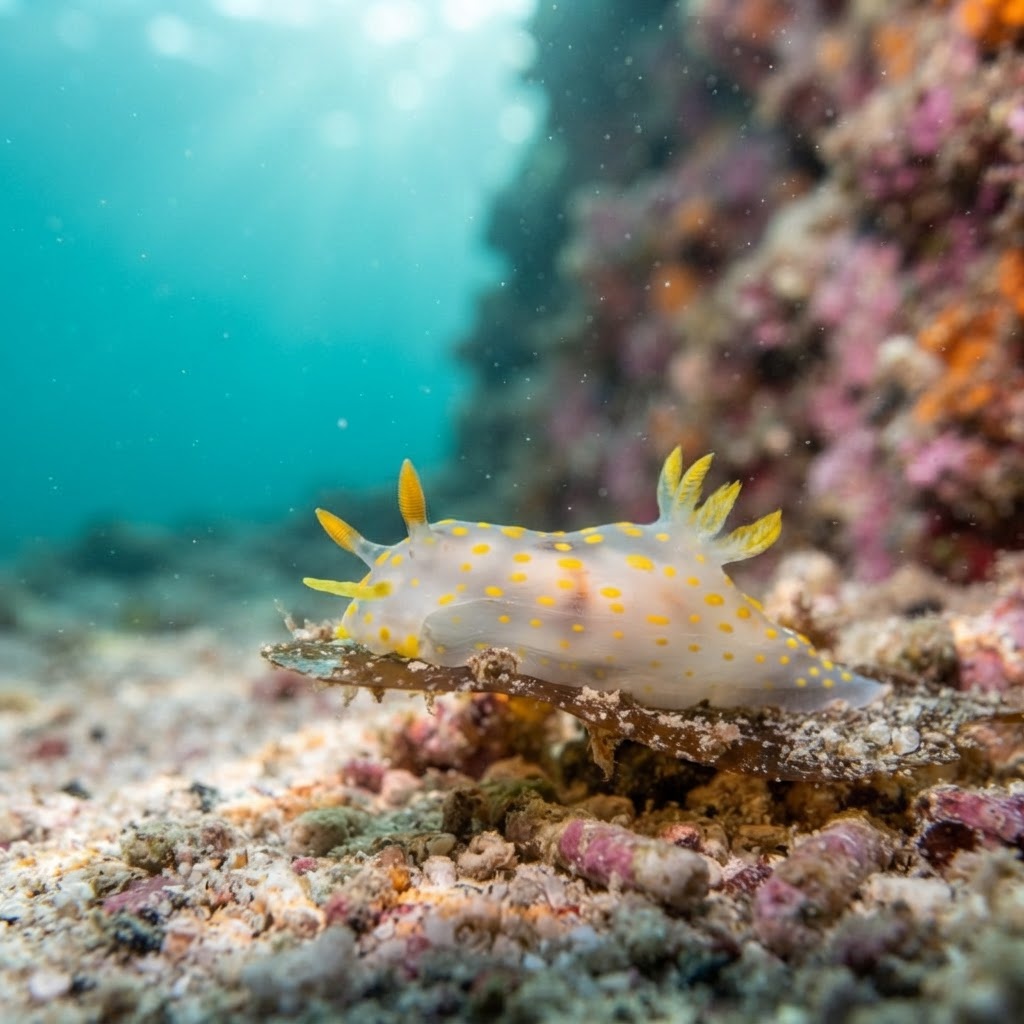
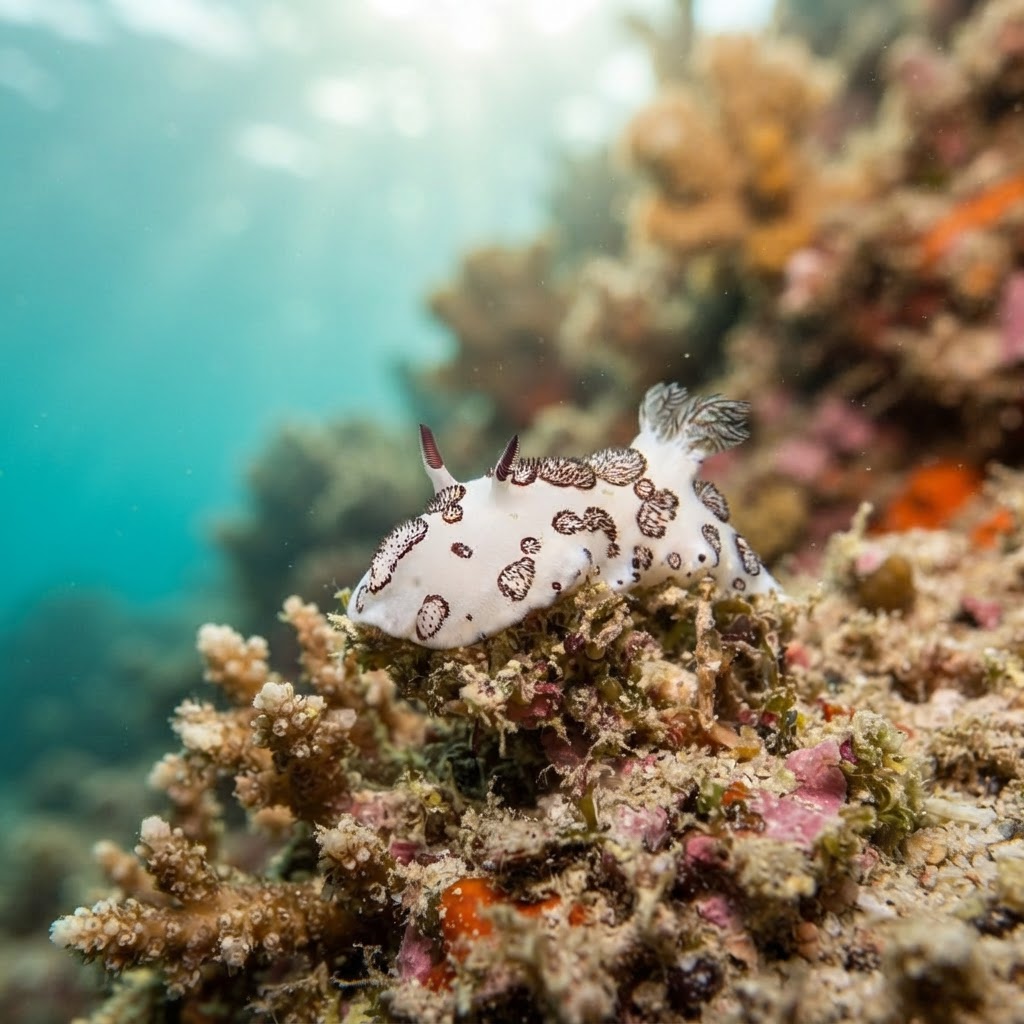
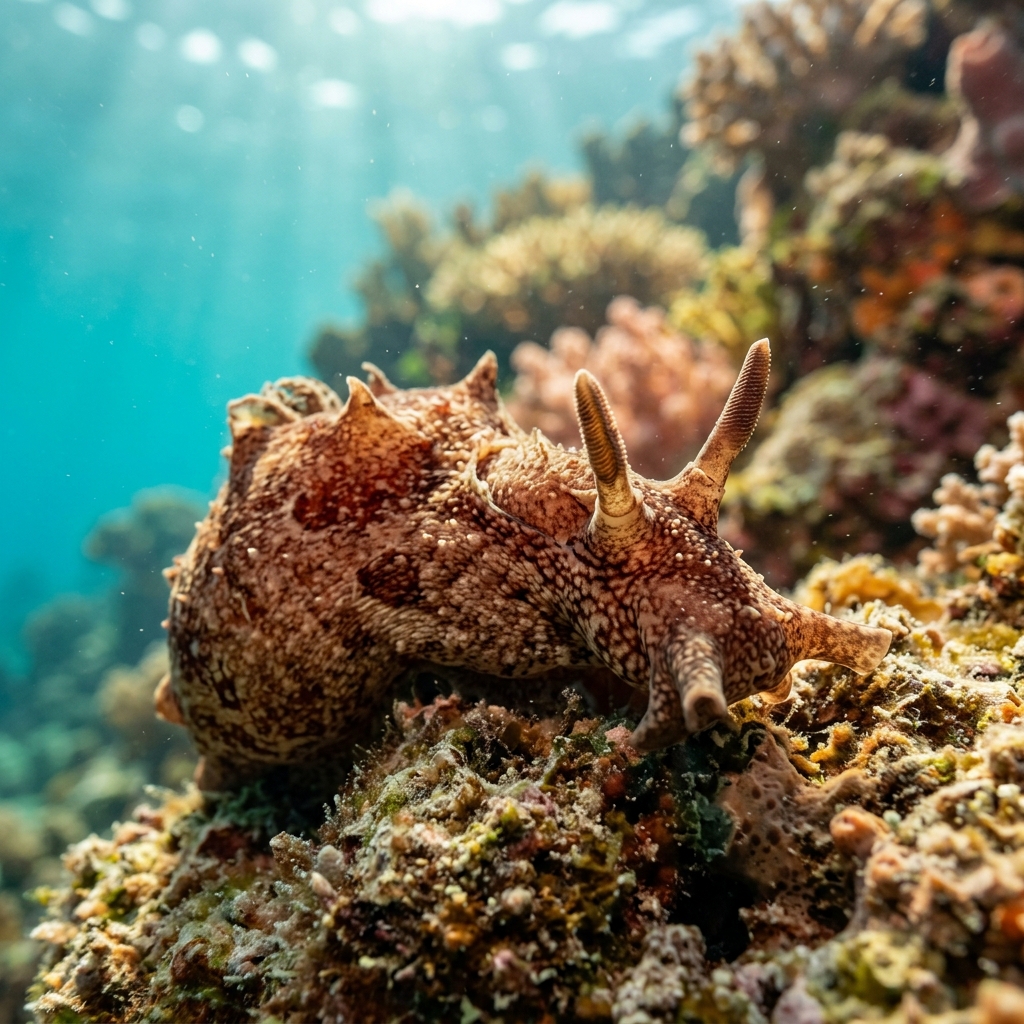
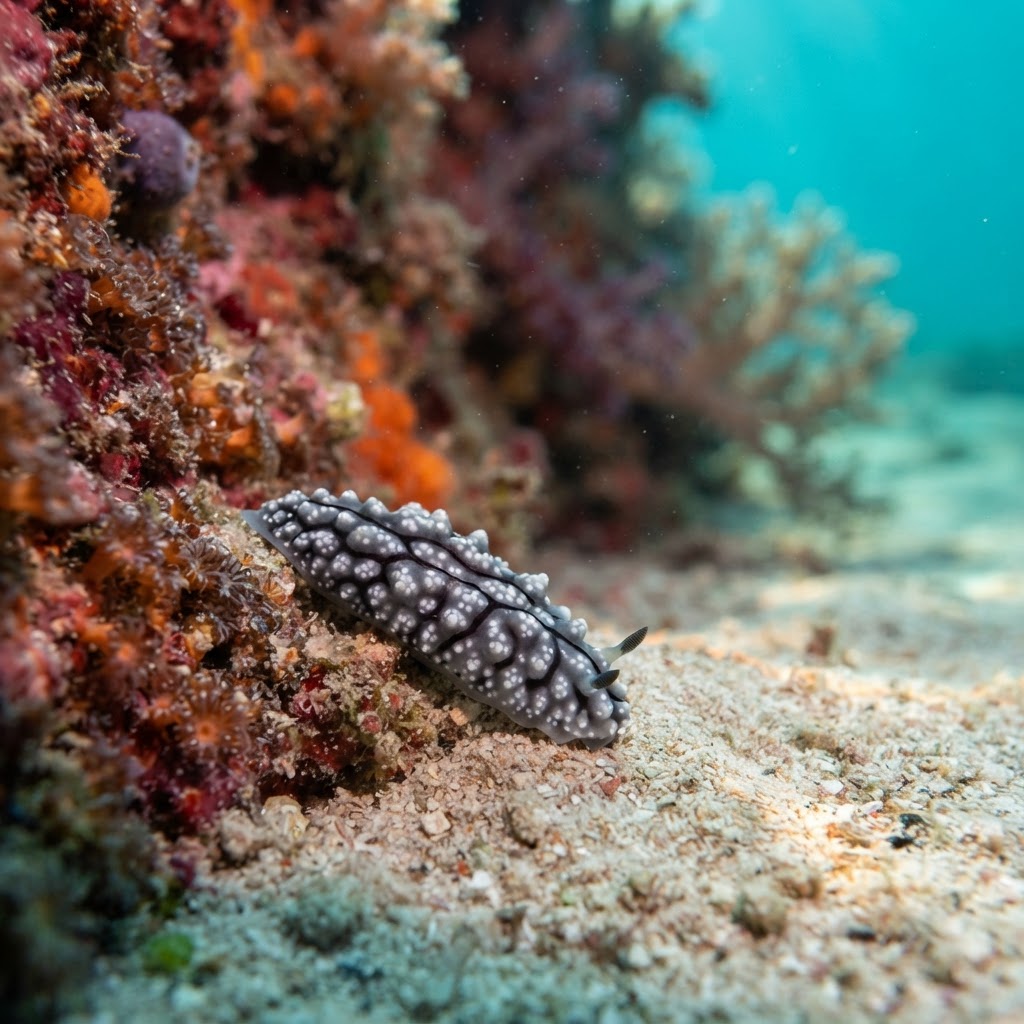
A compact nudibranch reaching about 4 cm, with the ridged, warty mantle typical of the phyllidiid family and a pattern of contrasting lines or blotches running along its back. It moves slowly over hard substrate rather than swimming, and its rhinophores (the small paired sensory horns on the head) are usually visible if you get close. There is no reported difference between juveniles and adults in the data, so size is a better giveaway than colour change.
Divers typically find it parked on the reef substrate, moving at the unhurried pace typical of phyllidiids as it grazes. It shows no reaction to divers beyond continuing to crawl, making it an easy subject for a macro shot once spotted. Most logs describe it as uncommon rather than abundant, so it rewards a slow, close look at the reef surface rather than a quick scan.
Like other phyllidiids, it almost certainly feeds on sponges and stores toxic compounds from that diet in its skin, which is why it can afford to sit out in the open without hiding.
No clear seasonal pattern shows up in the data, so treat it as a year-round find. It sits comfortably in water from 23.6 to 29.9 C, a range that holds across most of its recorded sites all year.
Reef neighbours a diver could mistake it for. Use the identification notes above to tell them apart.
Most reliably logged in the Philippines, especially around Luzon, which accounts for the bulk of recorded sightings. Taiwan's Longdong region is the next best bet, with smaller but consistent numbers from Milne Bay in Papua New Guinea, Bali in Indonesia, and single logged sites in Okinawa, Japan and Nha Trang, Vietnam.
Mapping where Krempf's Phyllidiopsis is logged…
Luzon in the Philippines is the strongest area for sightings, with Taiwan's Longdong region a reliable secondary spot. Smaller numbers turn up in Milne Bay in Papua New Guinea, Bali in Indonesia, Okinawa in Japan, and Nha Trang in Vietnam.
There is no strong seasonal signal in the sightings, so it is considered a year-round find. It has been logged in water between 23.6 and 29.9 C, a range that holds on tropical reefs most of the year.
Look for a small nudibranch around 4 cm long with a ridged, warty mantle and contrasting line or blotch markings, crawling slowly across hard reef substrate. Check the paired rhinophores on the head to confirm it is a phyllidiid rather than a similar-looking dorid.
They reach around 4 cm in length, a typical size for the phyllidiid nudibranch family and small enough that most divers only notice them on a close macro pass.
No, it poses no danger to divers. Like other phyllidiids it likely carries defensive toxins from its sponge diet, but this is a deterrent to predators, not a risk to people who simply look and do not handle it.
It almost certainly feeds on sponges and concentrates toxic compounds from that diet in its skin, a common phyllidiid defence that lets it sit exposed on the reef without needing to hide from predators.
Site and sighting data is aggregated from diver logs, iNaturalist and GBIF. For taxonomy and conservation status:
Light-spotted Aegires
3,168 sites