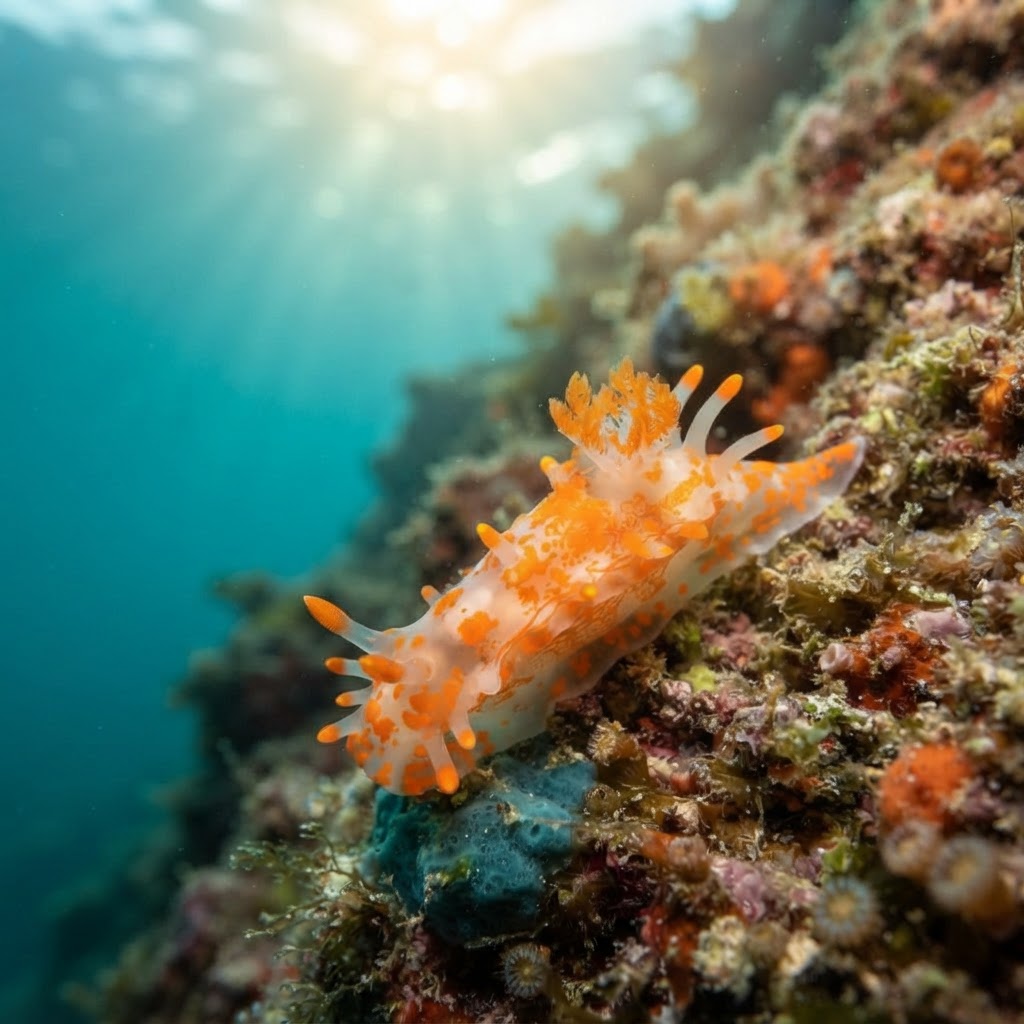
Limacia jellyi
A small white nudibranch with orange-tipped gills, most reliably found on cool Western Cape reefs around 13-19 C.
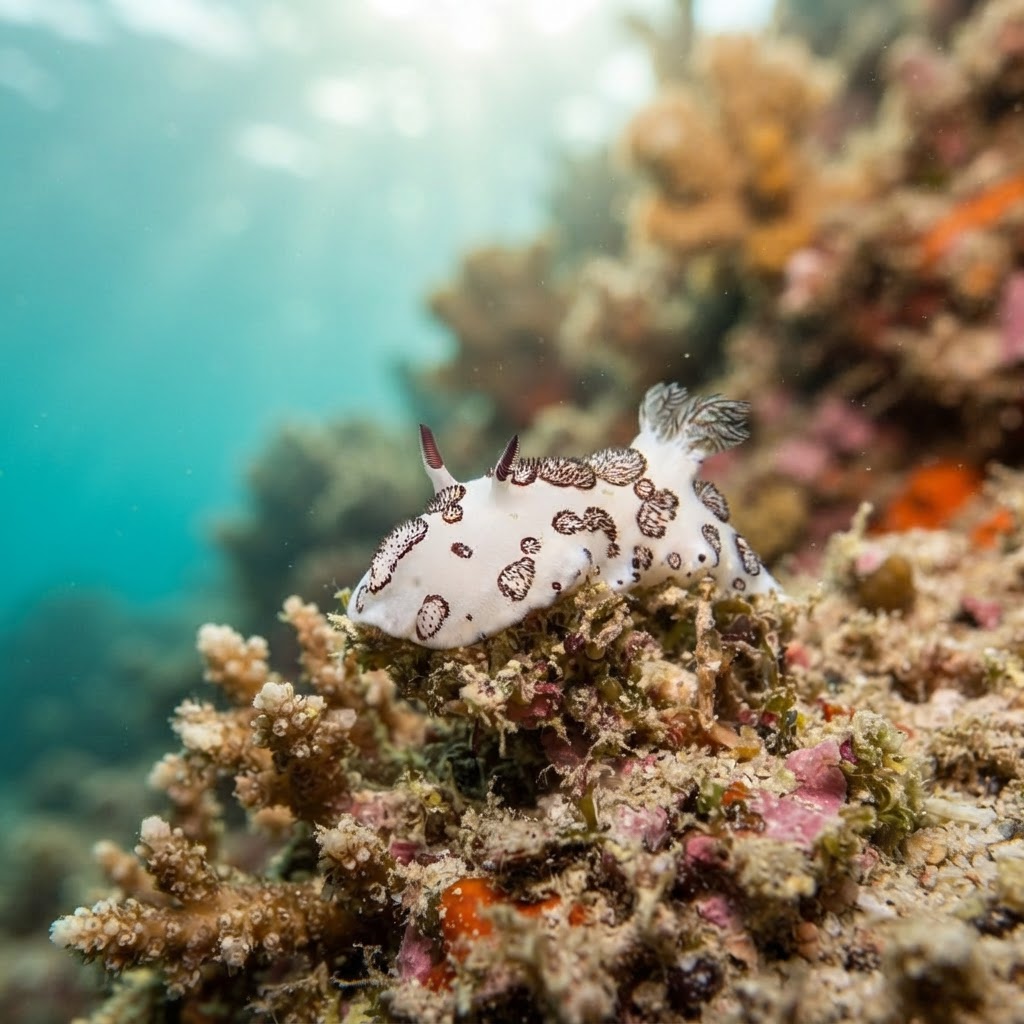
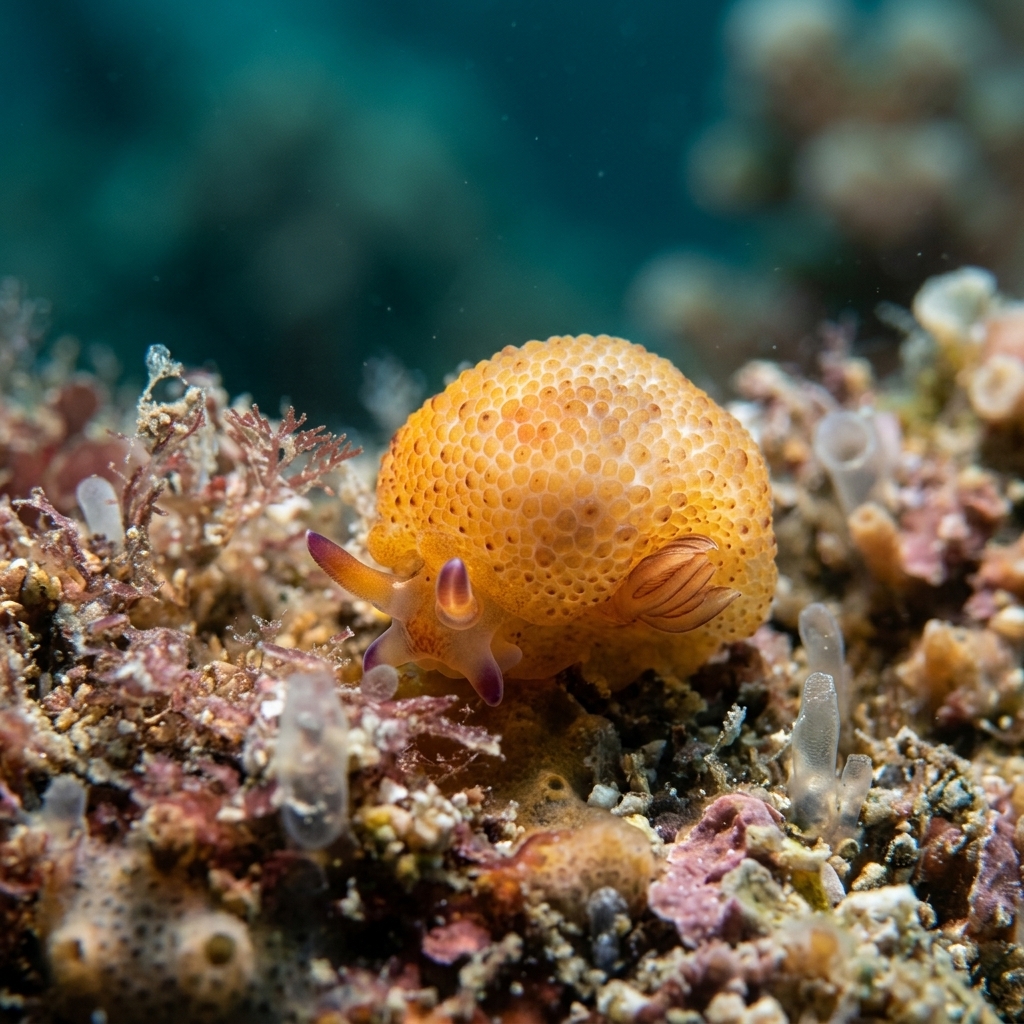
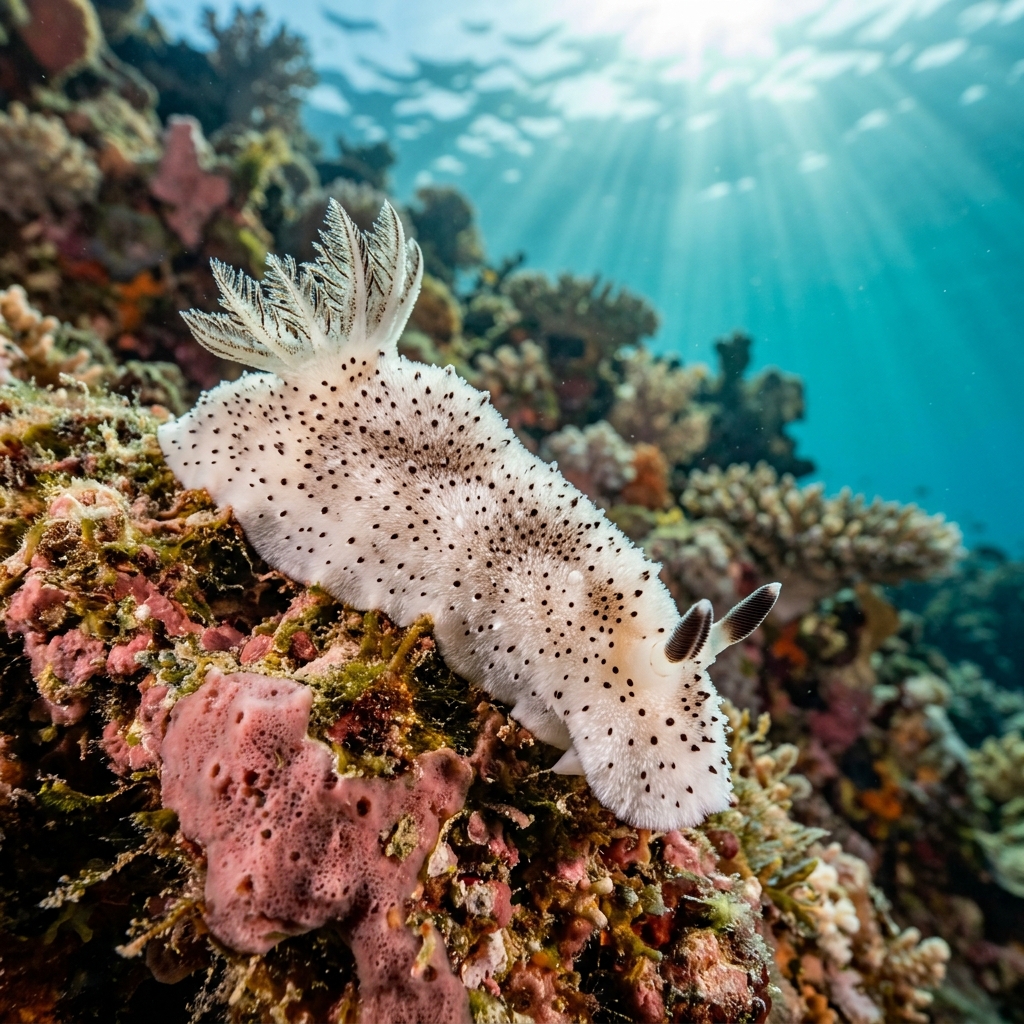
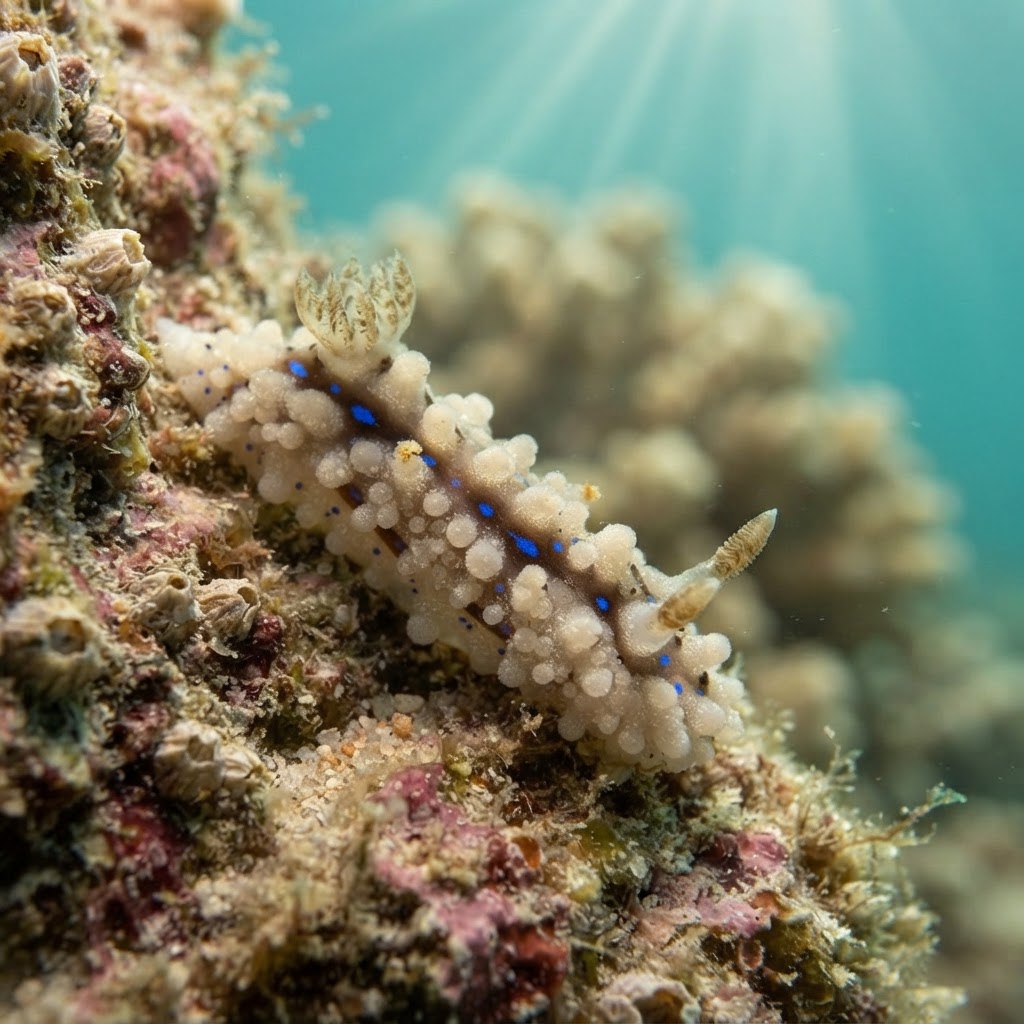
A small, slender white-bodied nudibranch (sea slug) with rows of raised orange-tipped tubercles running down its back and orange-clubbed gills at the rear. Look for the contrast between the pale translucent body and the bright orange highlights, which stand out well against dark kelp holdfasts and encrusting growth. It moves slowly across the substrate, so a careful scan of rock and kelp surfaces rather than open water is what actually turns up a sighting.
Divers find it grazing slowly over rocky reef and kelp holdfasts, usually tucked into cracks or low-lying encrusting growth rather than out in the open. It shows no reaction to divers beyond its usual unhurried crawl, so a slow, close look with a torch is the best way to pick one out against the reef texture.
Like other dorid nudibranchs, it likely feeds on sponges or other encrusting invertebrates and relies on its bright markings and toxic or unpalatable body chemistry, rather than speed, to deter predators.
Sightings are spread across the year with no clear seasonal peak, which fits its cool-water niche of roughly 13.4 to 19.4 C, a range the Western Cape holds for much of the year. Plan around good visibility and calm sea conditions rather than a particular month.
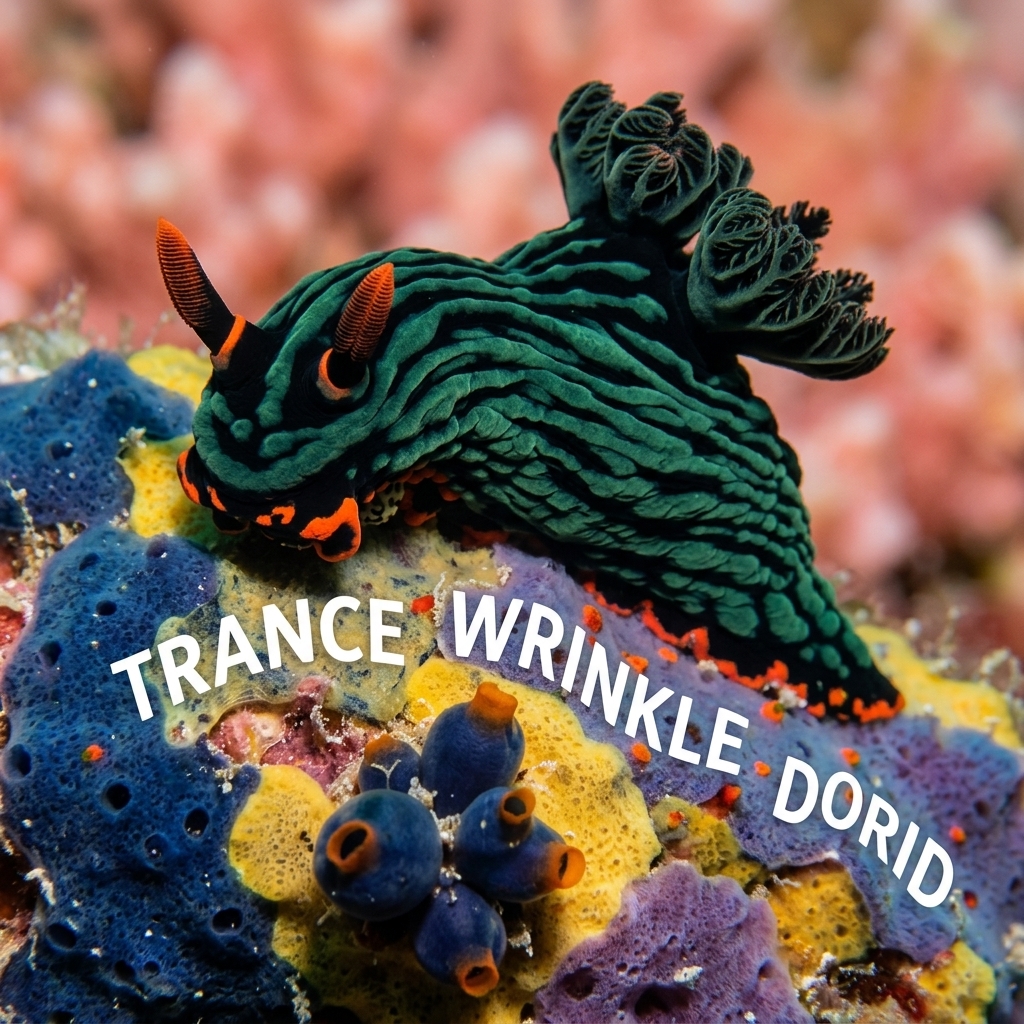
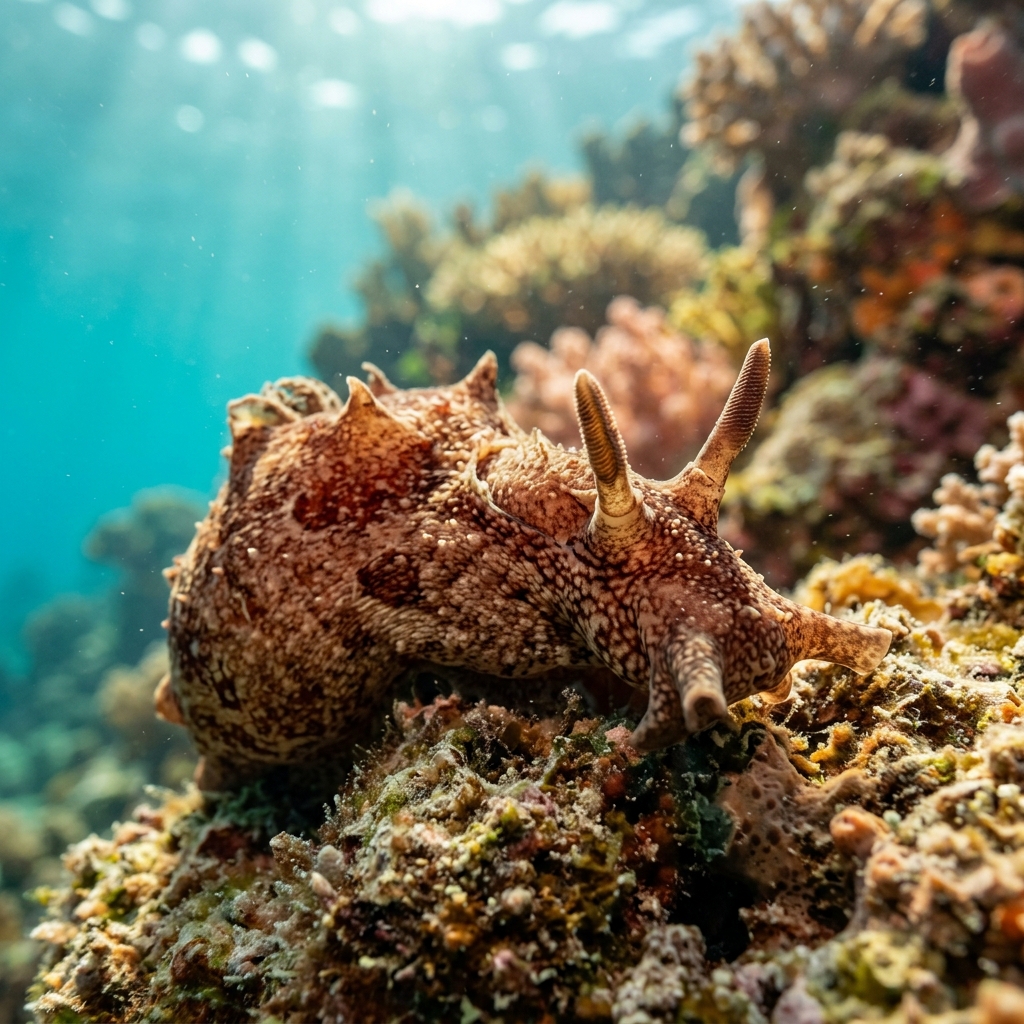
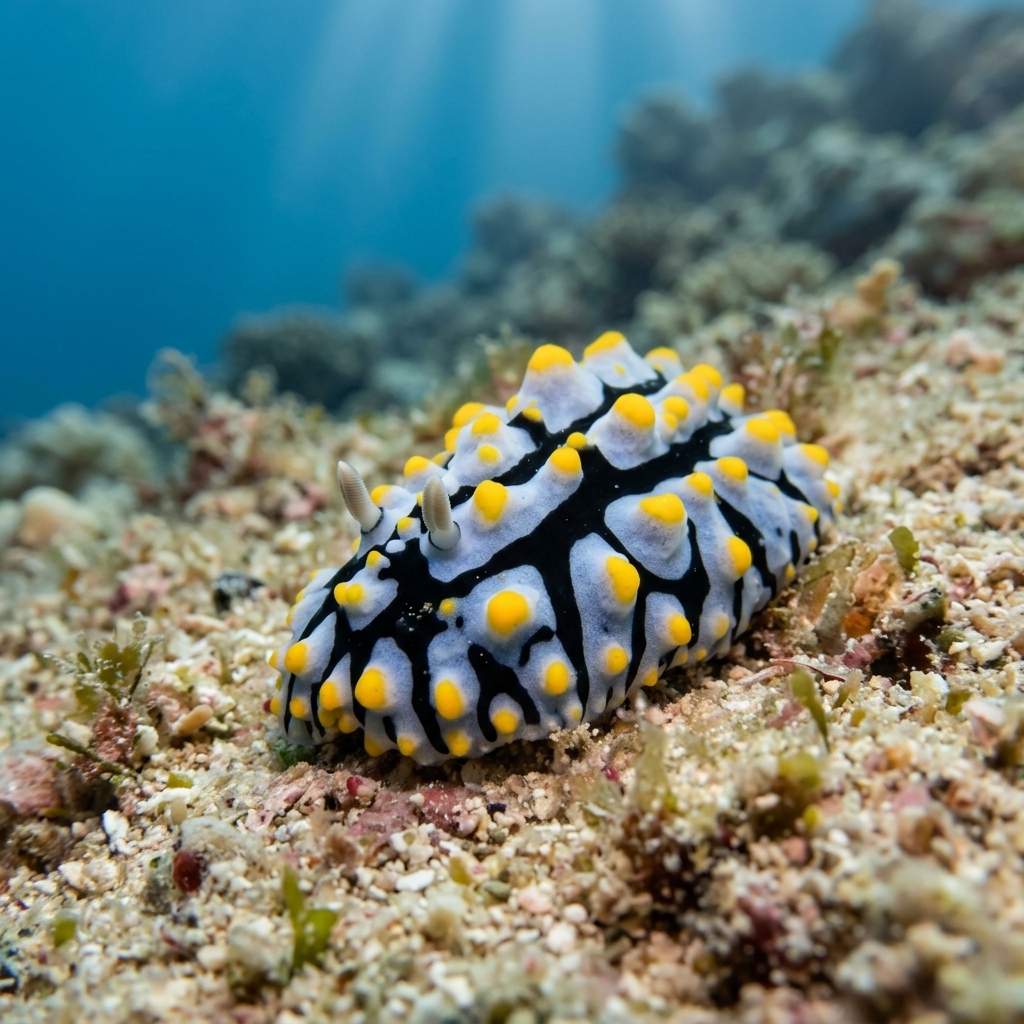
Reef neighbours a diver could mistake it for. Use the identification notes above to tell them apart.
This one is a Western Cape speciality, with every logged sighting so far coming from South Africa's cool-water kelp reefs. Divers looking for it should focus time in the Western Cape rather than expecting it on tropical itineraries elsewhere.
Mapping where Kelp Orange-clubbed Dorid is logged…
It's known almost entirely from South Africa's Western Cape, where it turns up on cool-water rocky and kelp reefs. It hasn't been logged as a reliable sighting outside this region.
There's no strong seasonal pattern in the sightings, so it's considered a year-round find in the Western Cape. It's tied to cool water between roughly 13 and 19 C, which the region holds through most of the year.
Look for a small, pale, slender-bodied nudibranch with rows of tubercles tipped in bright orange and orange-clubbed gills at the tail end. It's usually found moving slowly over rock or kelp holdfasts rather than swimming in open water.
Exact size data isn't available, but like most Limacia species it's a small nudibranch, typically only a centimetre or two long, so a close, careful look at the reef is needed to spot one.
No, it poses no danger to divers. It's a tiny, slow-moving reef invertebrate that simply gets overlooked unless you're scanning closely.
Specific feeding data isn't confirmed for this species, but related dorid nudibranchs graze on sponges and other encrusting invertebrates, which fits its habit of staying close to rock and kelp surfaces.
Site and sighting data is aggregated from diver logs, iNaturalist and GBIF. For taxonomy and conservation status:
Light-spotted Aegires
3,168 sites