Dardanus gemmatus
An uncommon find off Flic-en-Flac and Hawaii, this bejewelled hermit crab wears a matching anemone on its shell year-round in warm reef water.
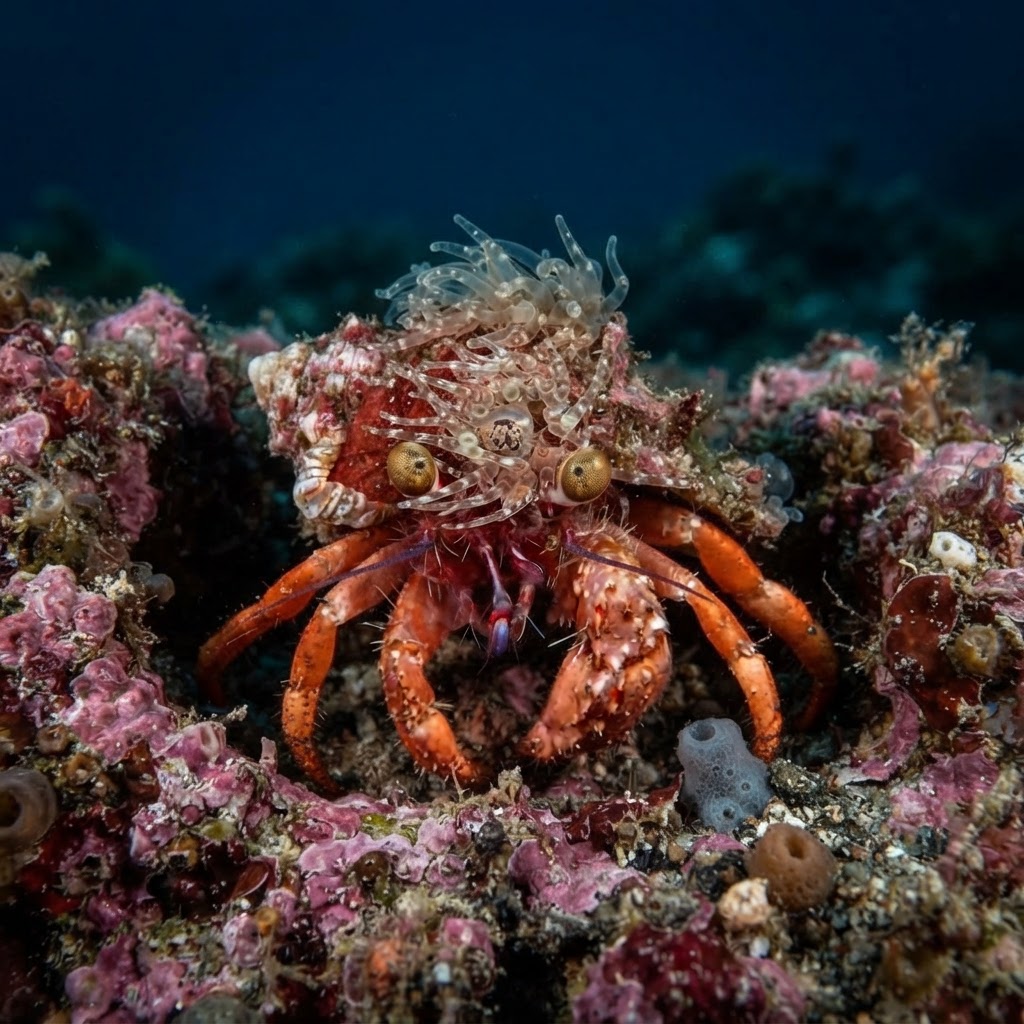
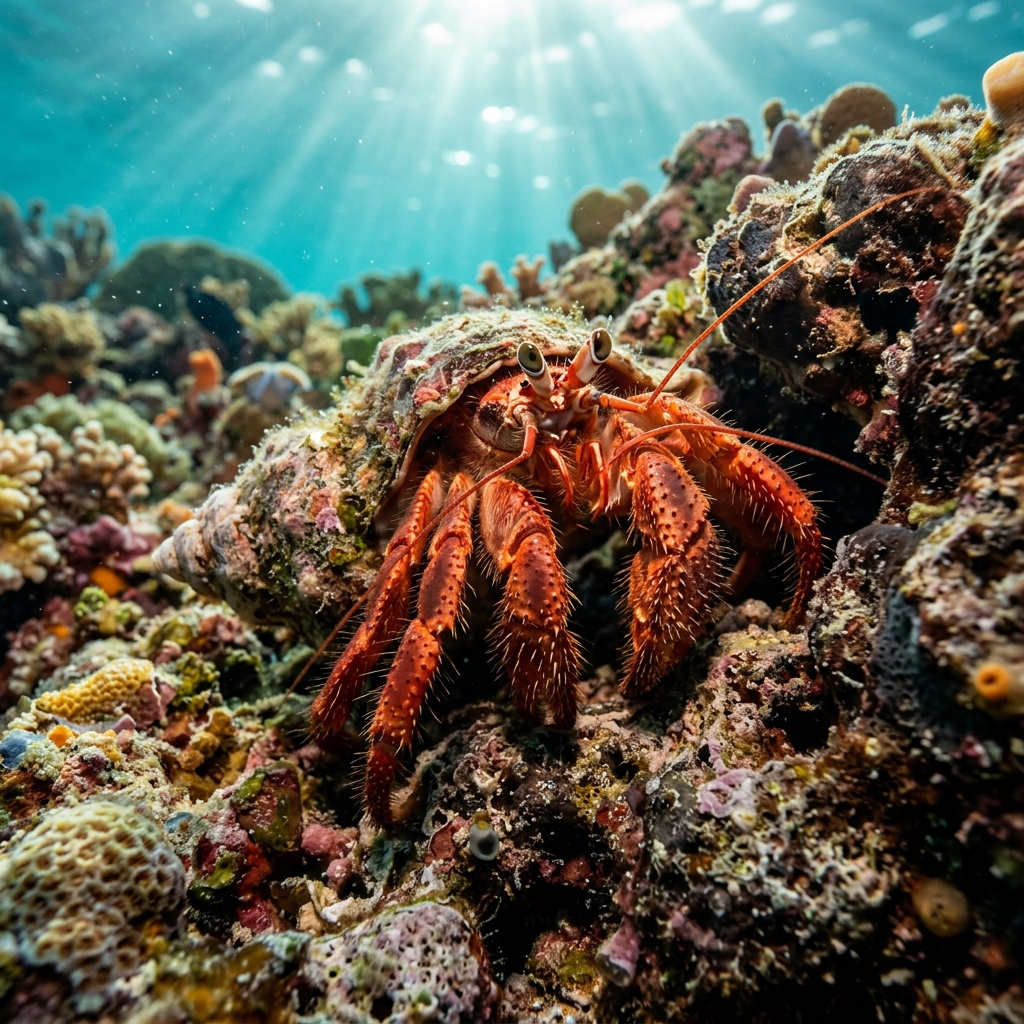
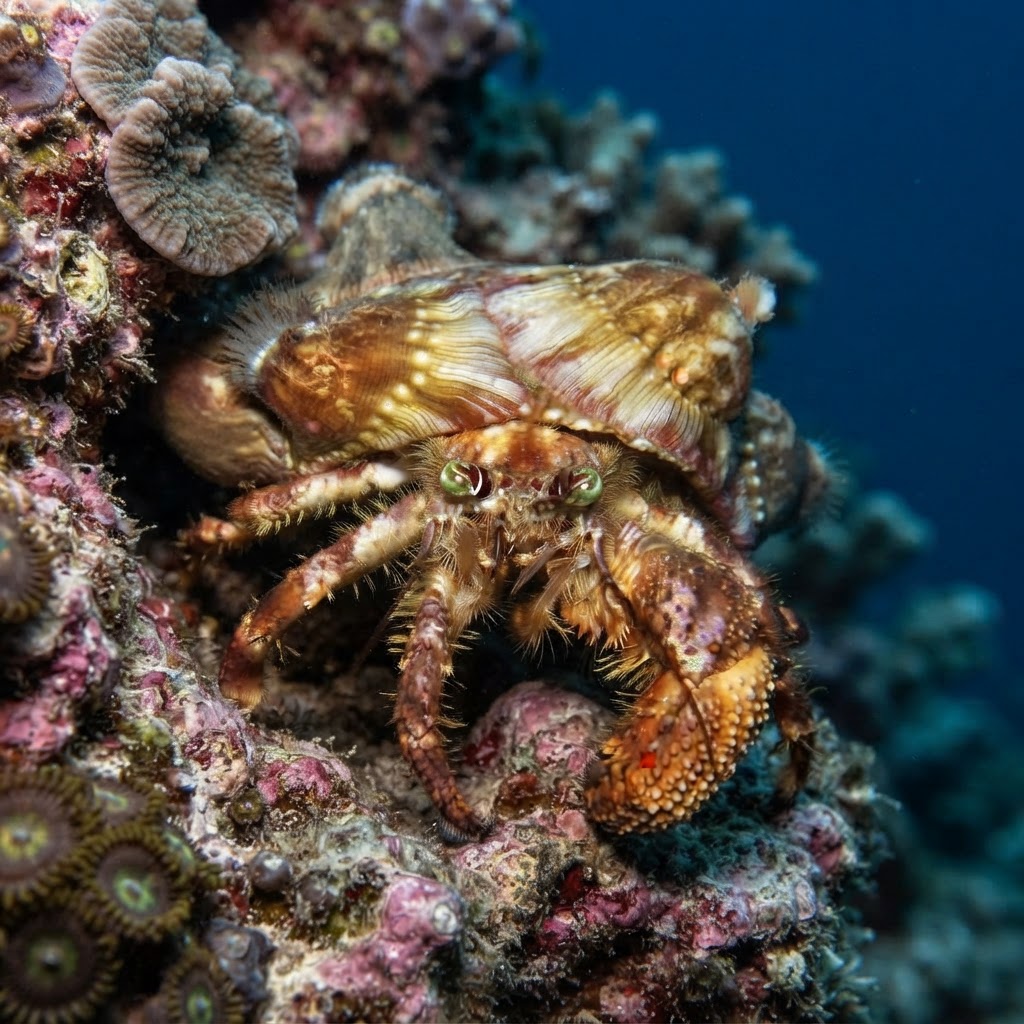
Look for a chunky hermit crab whose shell is often crowned with a small anemone riding along for the trip, giving it a jewelled, textured look against plain gastropod shells. The legs and claws carry rows of bright tubercles (small bumps), spotted or banded in contrasting colour rather than smooth. It moves slowly across the substrate, claws leading, and tends to tuck deep into its shell the moment a torch or hand gets close.
Divers usually find it wedged in rubble, coral crevices or sandy patches during the day, moving at its own unhurried pace over the reef floor. It is not shy so much as cautious, withdrawing into its shell rather than fleeing when a diver hovers close, which makes it an easy subject for a patient macro shot. Night dives tend to catch it more active and out foraging in the open.
Like other anemone hermits, it deliberately picks up a small anemone and fixes it to its shell, turning a passive hitchhiker into a stinging bodyguard that helps ward off predators.
No clear seasonal pattern shows up in the sighting data, and its comfort range of roughly 24 to 30C covers tropical reefs all year, so any month is a fair bet. Treat it as a year-round resident rather than a seasonal target.
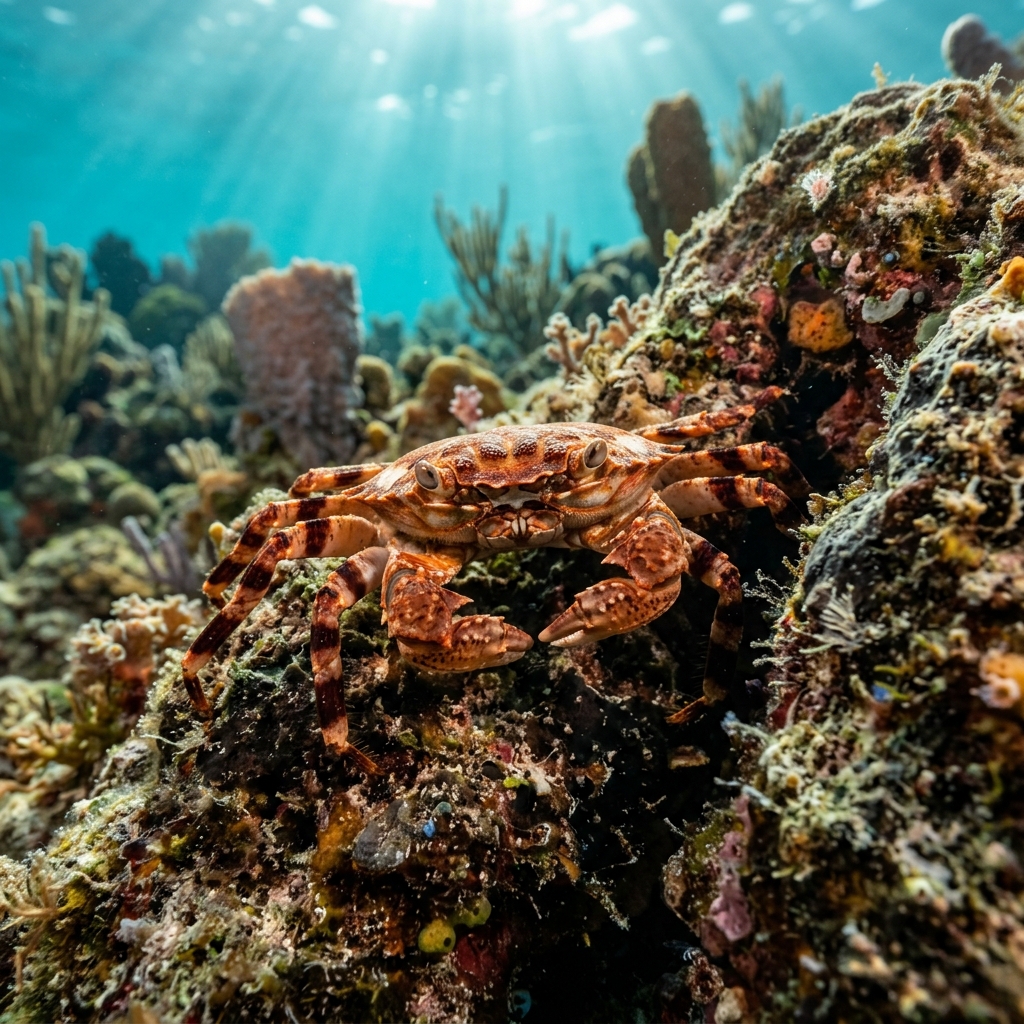
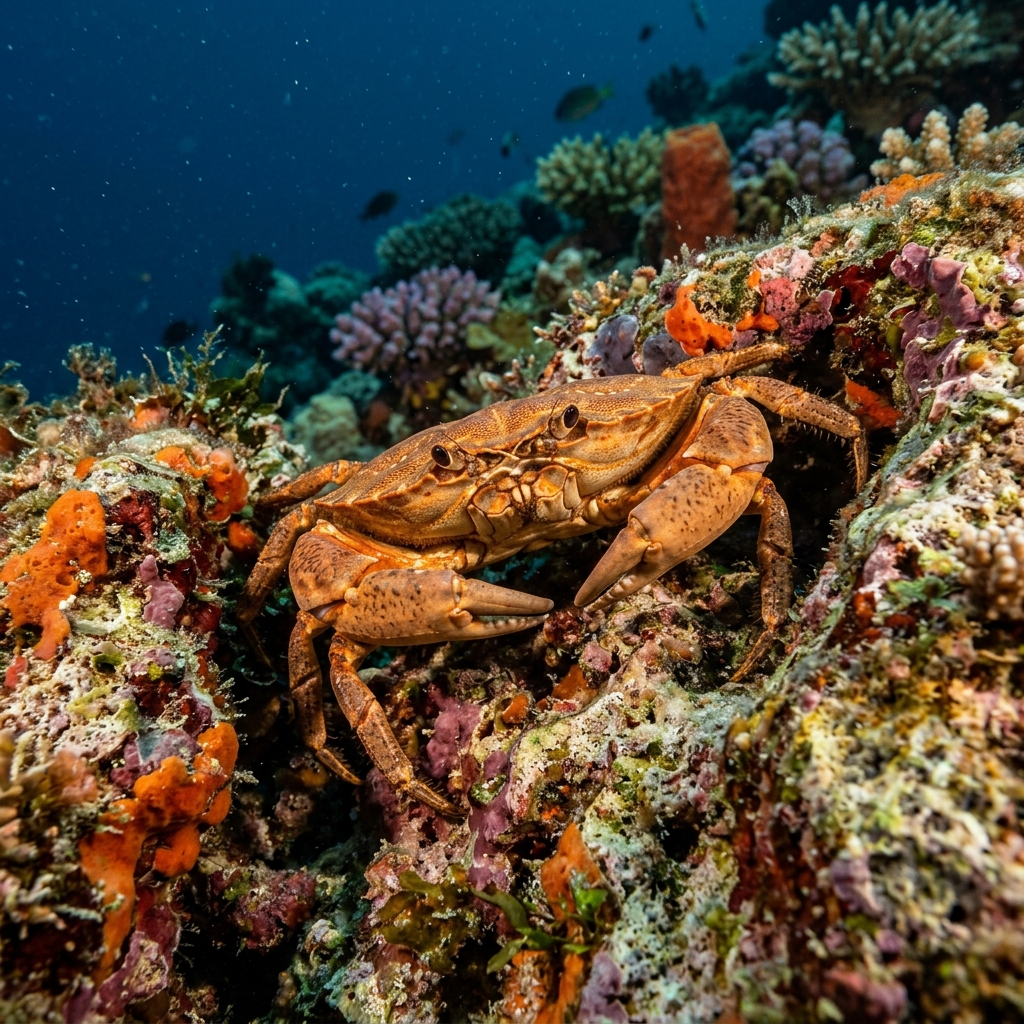
Reef neighbours a diver could mistake it for. Use the identification notes above to tell them apart.
Most reliably logged around Flic-en-Flac in Mauritius, which carries the bulk of sightings, with a second strong showing across Hawaii in the United States. Smaller but consistent counts come from the Visayas in the Philippines, Efate in Vanuatu, and Sulawesi in Indonesia, so it turns up across a broad swathe of the Indo-Pacific and western Indian Ocean.
Mapping where Jeweled Anemone Hermit is logged…
The strongest sightings come from Flic-en-Flac in Mauritius and across Hawaii, with further records from the Visayas in the Philippines, Efate in Vanuatu, and Sulawesi in Indonesia.
There is no detected seasonal pattern, and its warm-water range of about 24 to 30C means it is present on tropical reefs throughout the year, so any month works.
Check for a hermit crab with tuberculate, patterned legs and claws and, often, a small anemone attached to its shell. It moves slowly over rubble or sand and withdraws into its shell when approached.
No, it poses no threat to divers. It is a slow-moving reef scavenger that simply withdraws into its shell if disturbed.
It actively transplants a small anemone onto its shell, using the anemone's stinging tentacles as portable protection against predators while the anemone gets an easy ride and scraps of food.
Site and sighting data is aggregated from diver logs, iNaturalist and GBIF. For taxonomy and conservation status:
European Green Crab
2,469 sites