Xantho poressa
A small, mottled crab hiding under Adriatic rocks, most reliably found around Istria and Kvarner in 14 to 20 C water year-round.
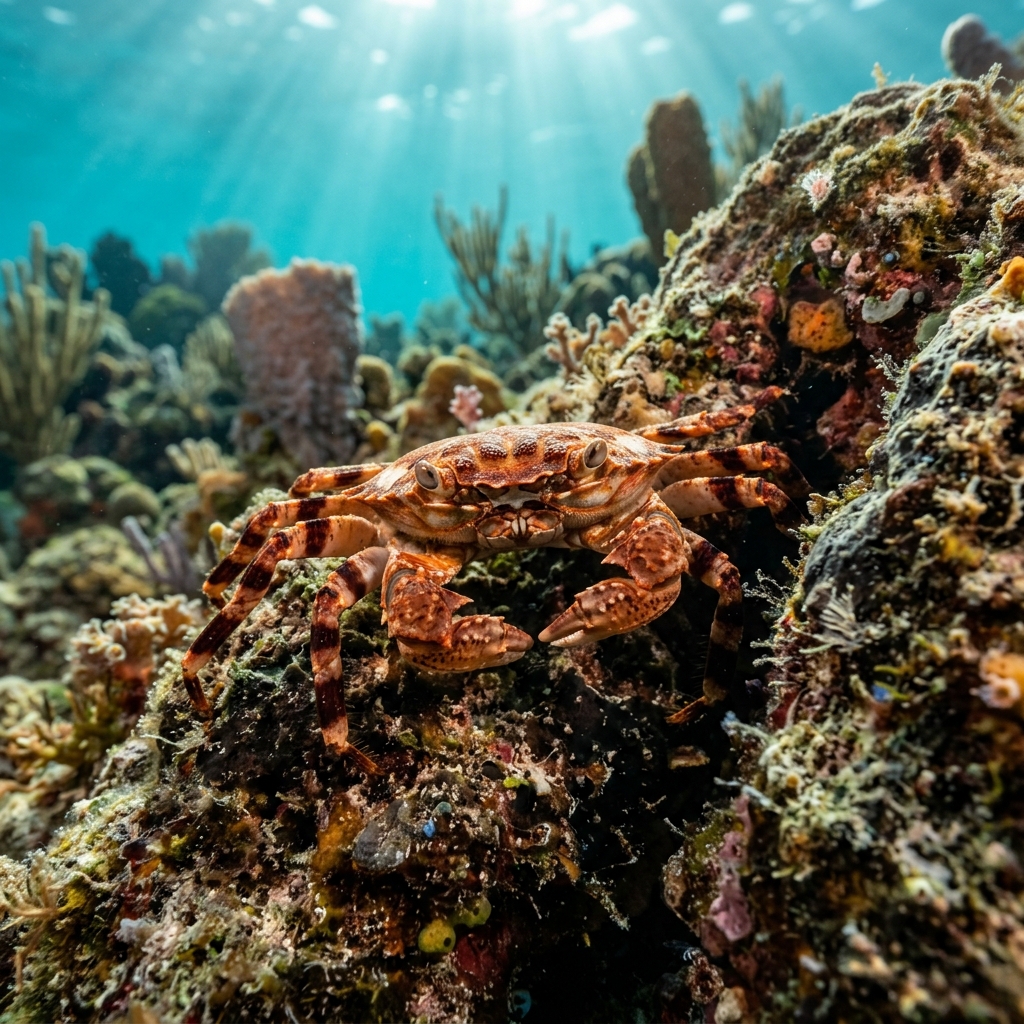
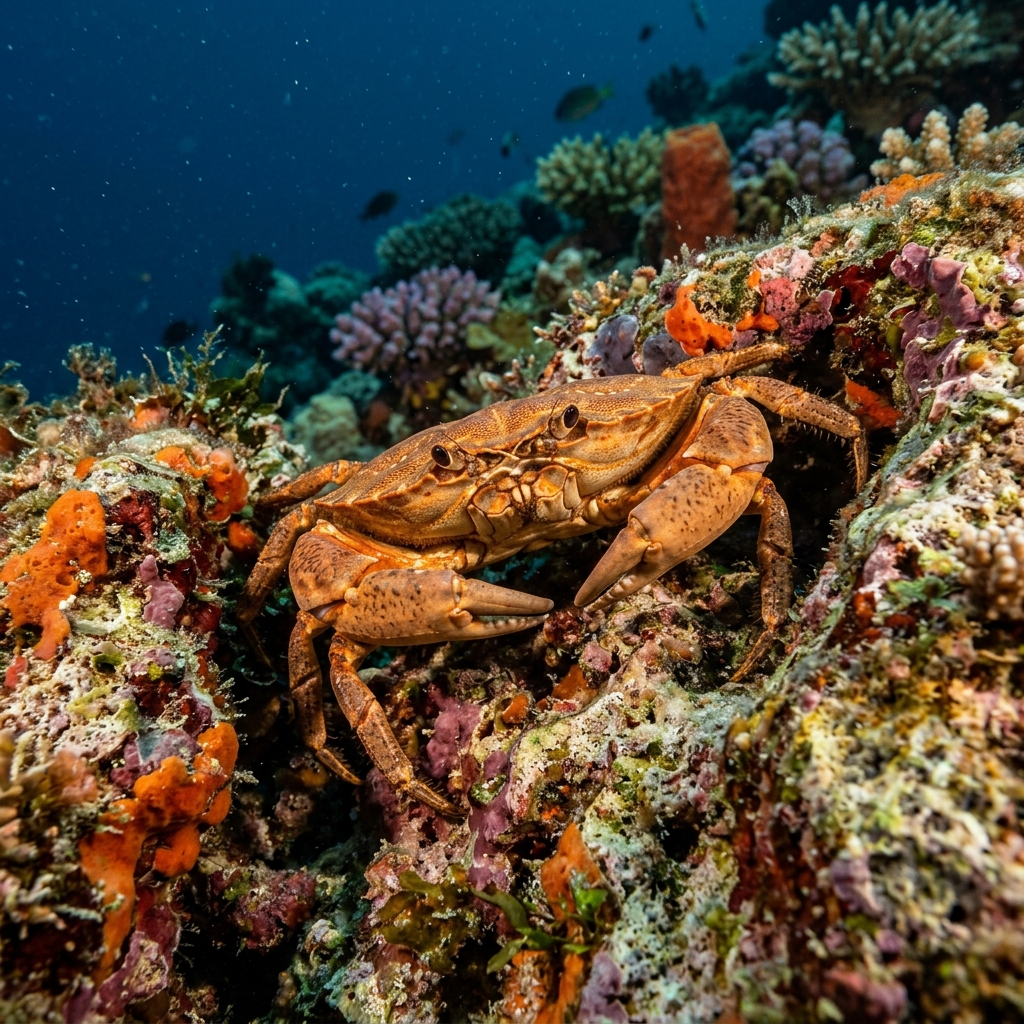
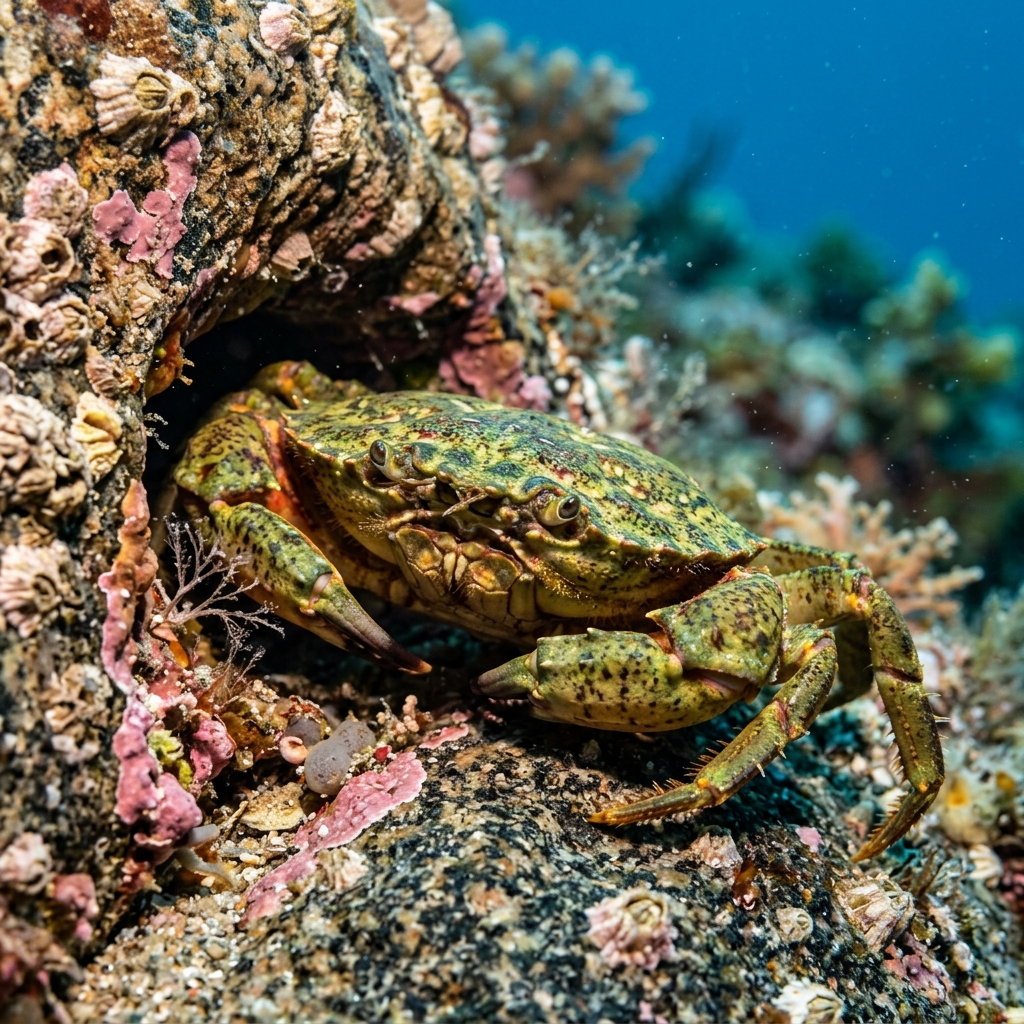
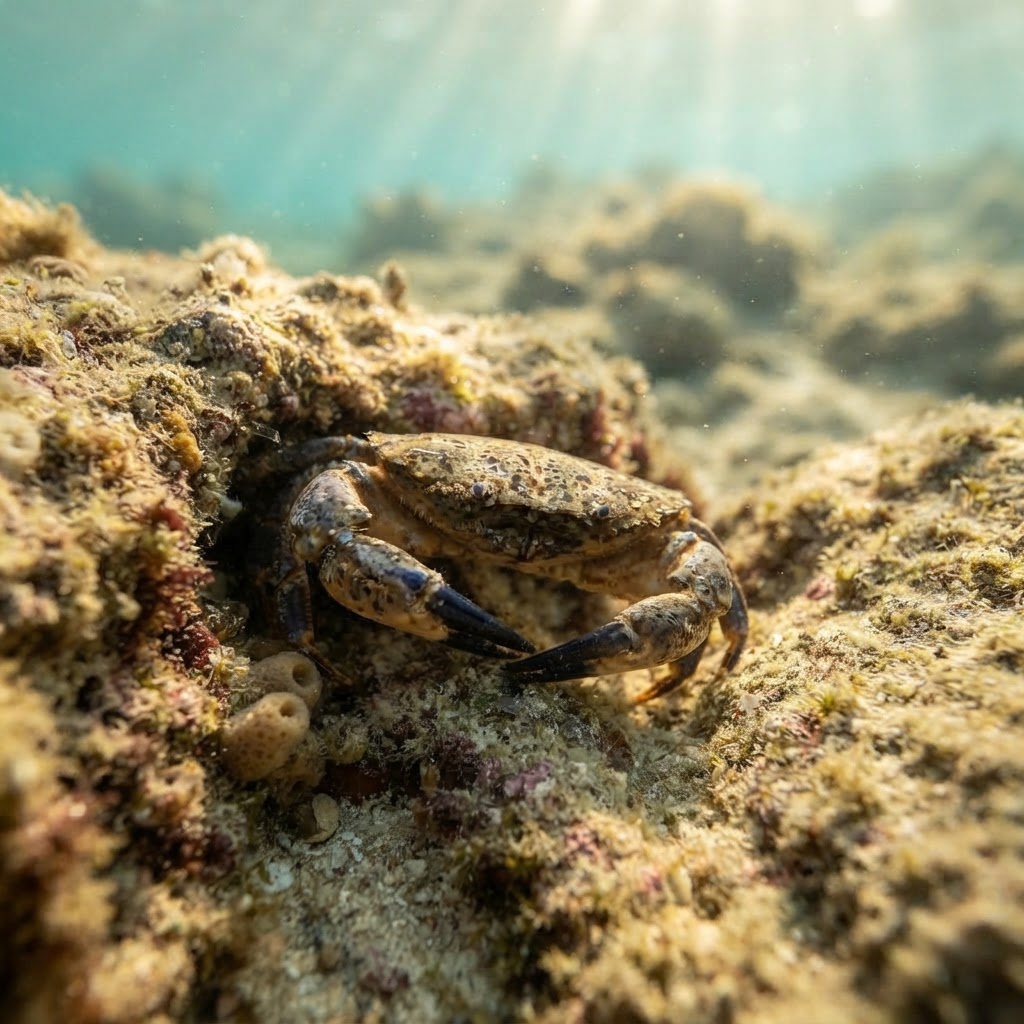
Look for a small, rounded crab about 3 cm across, wedged into rock crevices rather than out in the open. The shell carries a mottled, blotchy pattern of browns and creams that breaks up its outline against rock and rubble, which is where the jaguar nickname comes from. Its claws are stout and roughly equal in size, and the whole animal sits low and compact rather than long-legged.
This is a crevice-and-rubble crab, typically found tucked under rocks or wedged into gaps rather than wandering across open reef. Divers spot it by peering into these hiding spots on shallower rocky and mixed-substrate sites rather than by scanning water. It tends to sit still when a torch or diver passes over, relying on its mottled camouflage rather than fleeing.
Its blotchy shell pattern is a real camouflage tool for a rock-and-rubble life, breaking up its shape against the mottled backgrounds it hides in far better than a plain-coloured shell would.
No clear seasonal pattern shows up in the data, so treat it as a year-round find wherever it occurs. It's been logged in water from about 14 to 20 C, a range that spans most of the diving season in the Mediterranean and nearby regions, so timing your trip around temperature isn't necessary.
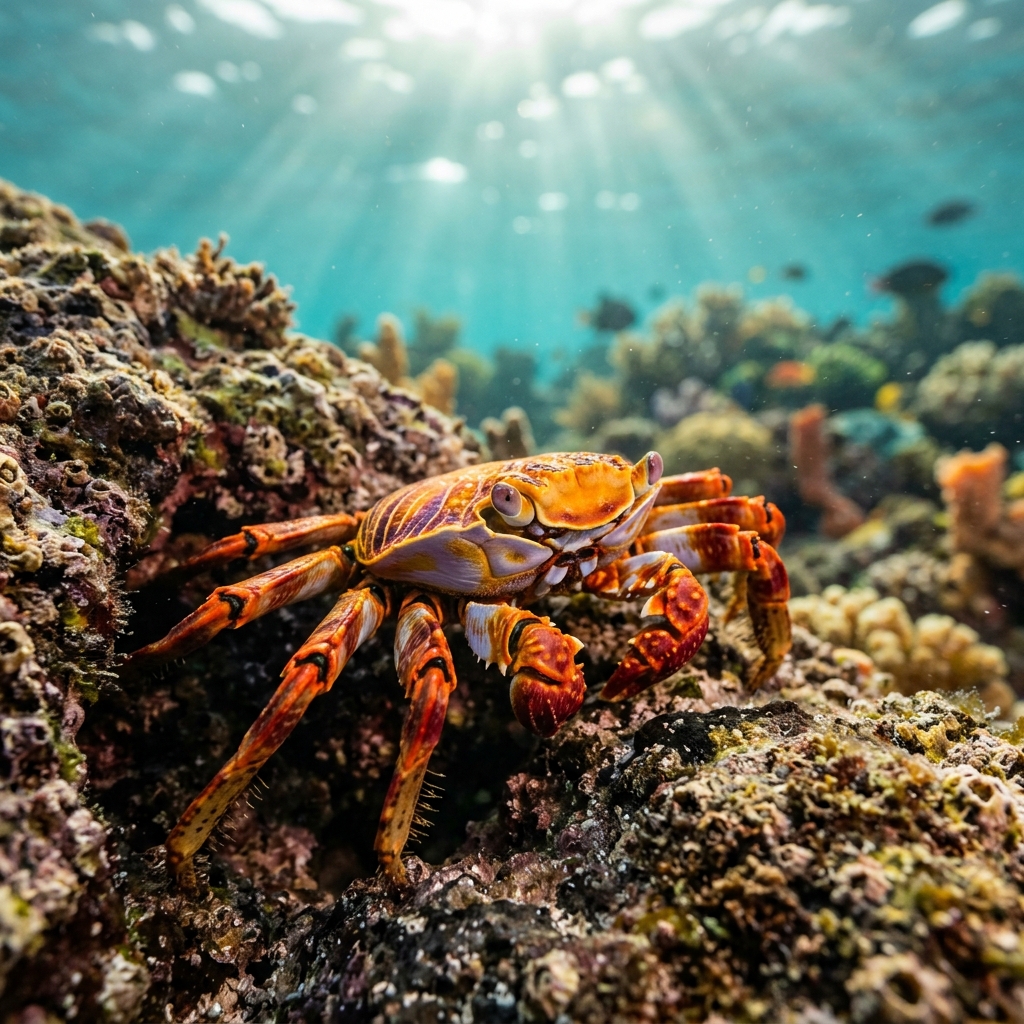
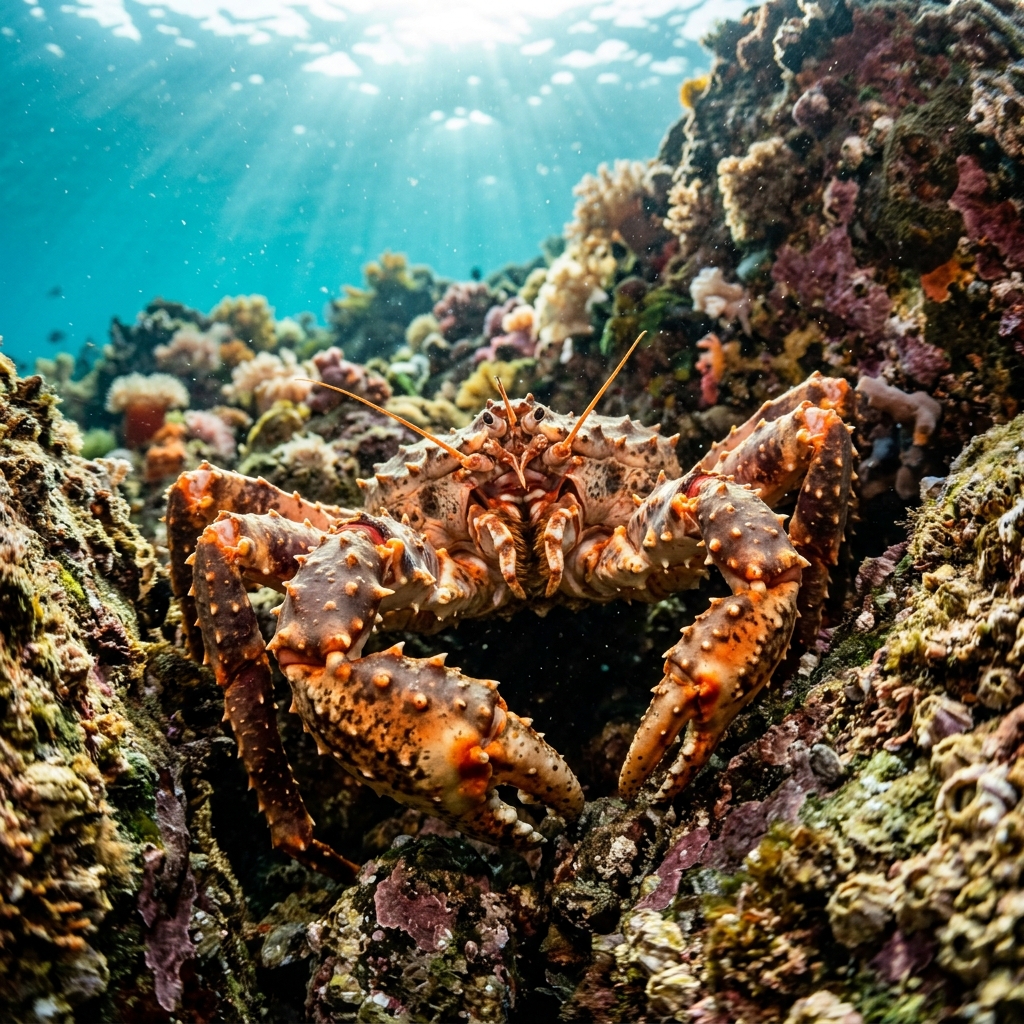
Reef neighbours a diver could mistake it for. Use the identification notes above to tell them apart.
Croatia is by far the strongest bet, with Istria and Kvarner logging the most sightings by a wide margin. Spain follows, particularly Catalonia and Andalusia, with smaller but reliable numbers from the Ionian Islands in Greece, Tenerife in the Canary Islands, the French Riviera, and the Black Sea coast of Russia. Across all of these, expect an uncommon find rather than a given on any single dive.
Mapping where Jaguar Round Crab is logged…
Croatia offers the strongest chances, especially around Istria and Kvarner, followed by Catalonia and Andalusia in Spain. Smaller but reliable numbers turn up in the Ionian Islands of Greece, Tenerife in the Canary Islands, and the French Riviera.
There's no strong seasonal pattern in the sightings, so it's considered a year-round find. It has been recorded in water from about 14 to 20 C, which covers most of the diving season in its range.
It's a small crab, around 3 cm, with a mottled brown and cream shell and stout, roughly equal claws. Look for it tucked into rock crevices and rubble rather than out in the open, since it relies on its blotchy pattern to blend in.
They stay small, typically around 3 cm across the shell, making them an easy species to overlook unless you're actively checking crevices and rocky gaps.
No, they pose no danger to divers. They're small, shy, and tend to stay hidden in crevices rather than interact with divers at all.
Site and sighting data is aggregated from diver logs, iNaturalist and GBIF. For taxonomy and conservation status:
European Green Crab
2,469 sites