Atherinopsis californiensis
Jacksmelt turn up uncommonly at California dive sites, cruising open water in loose silvery schools year-round in 13 to 24 C water.
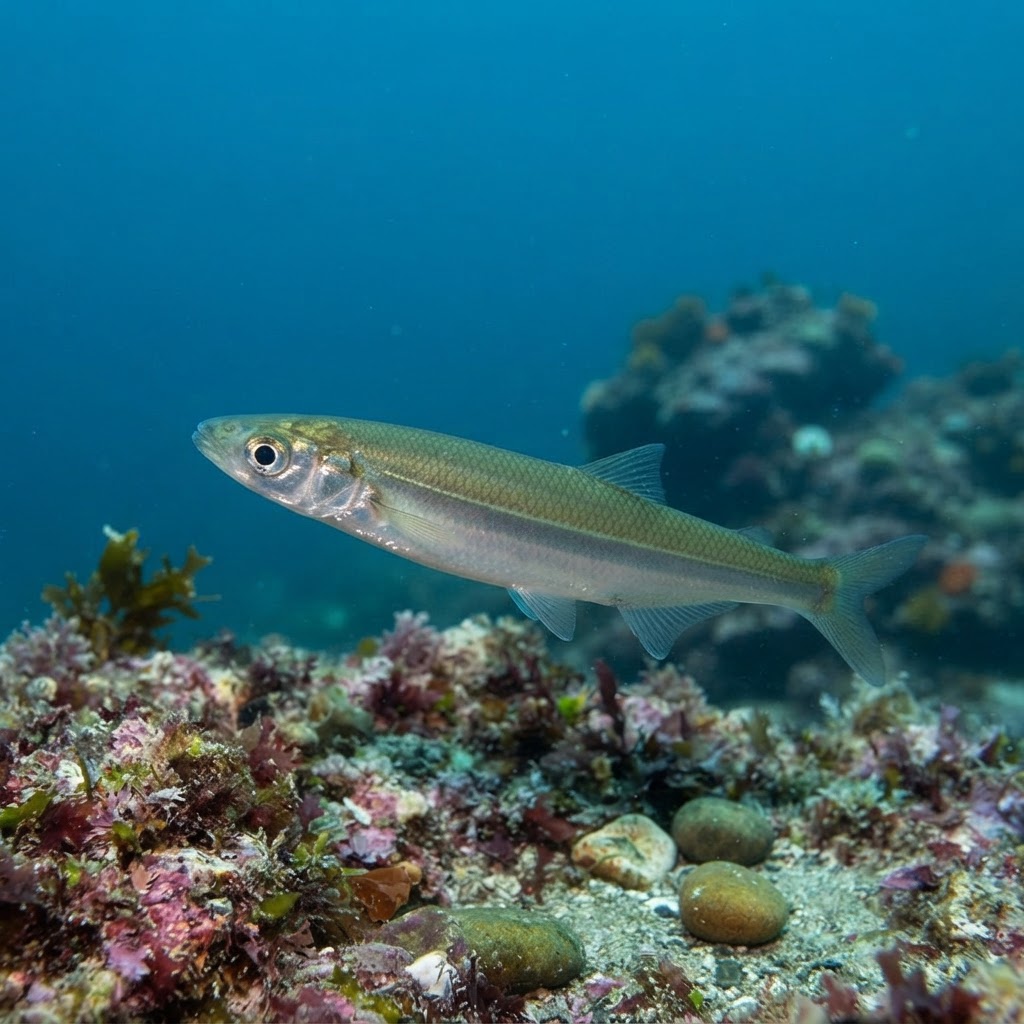
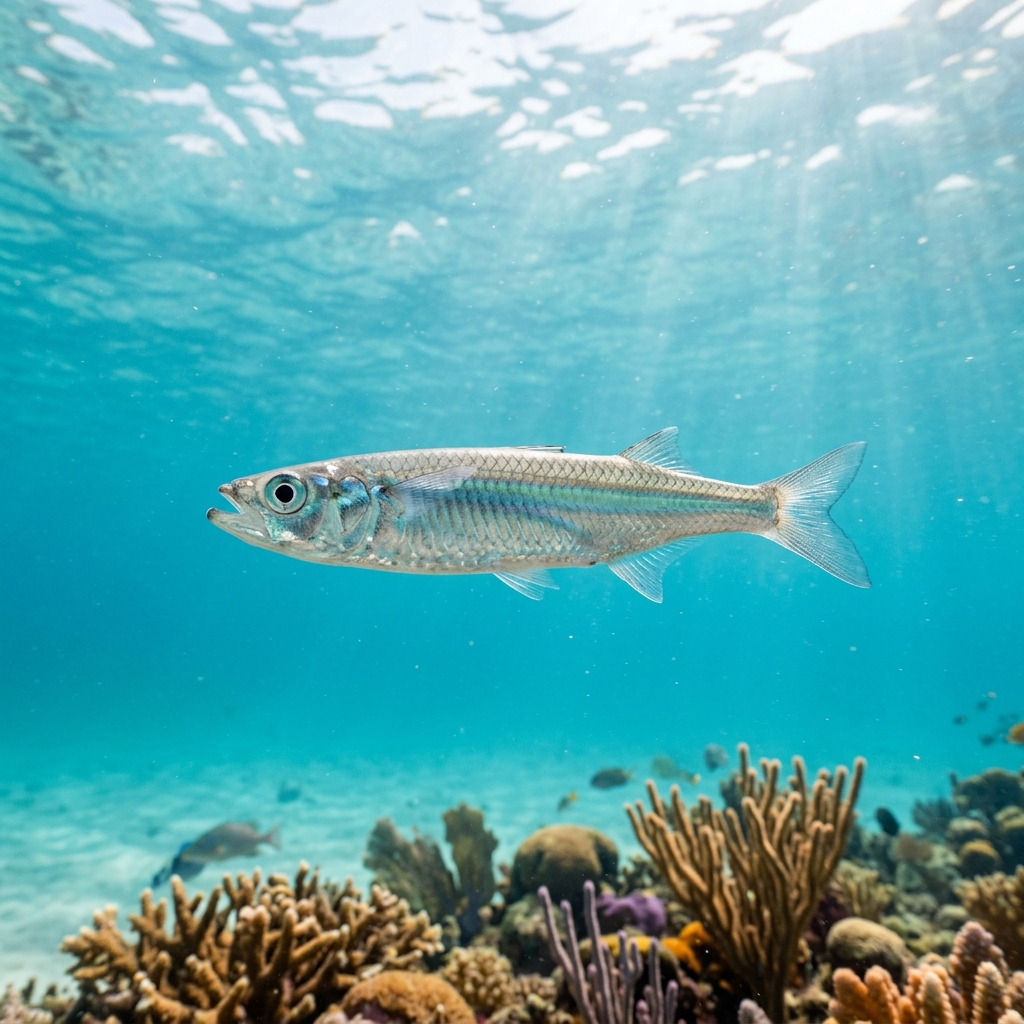
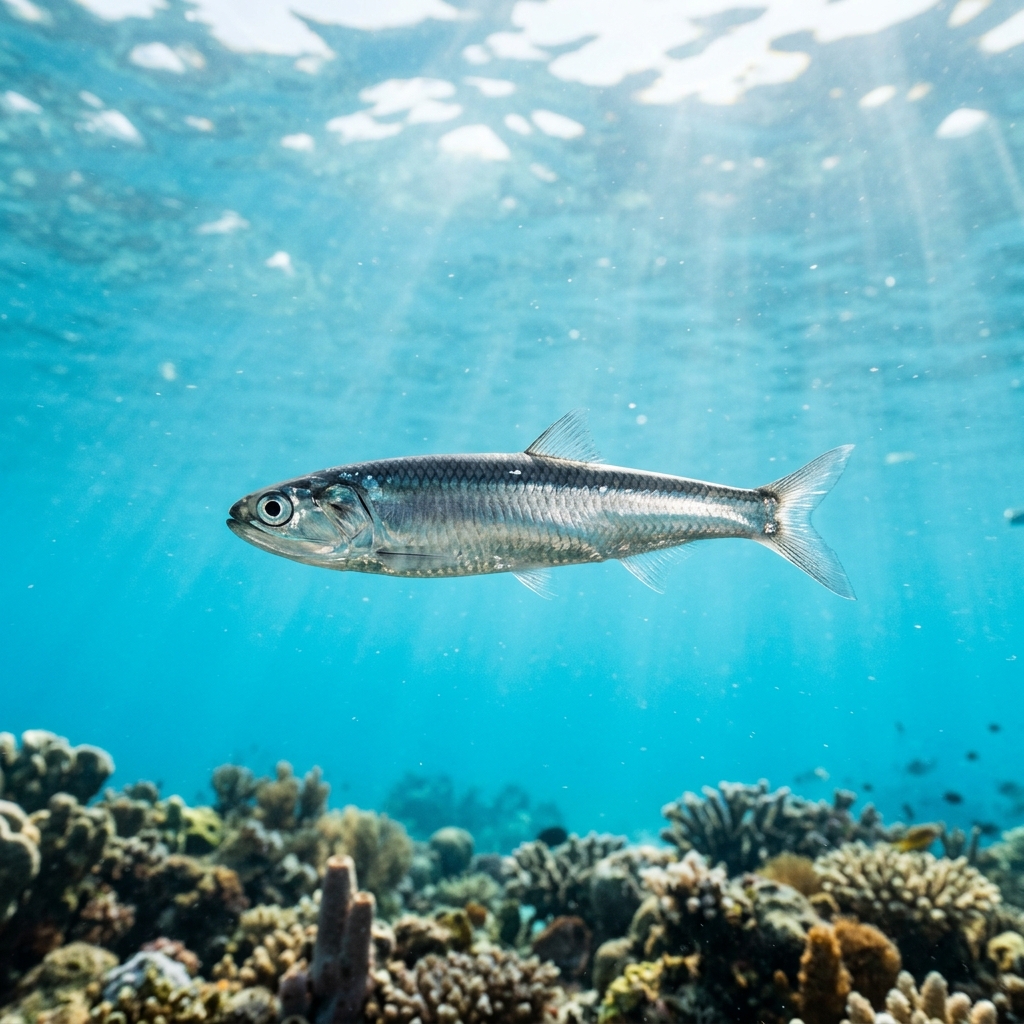
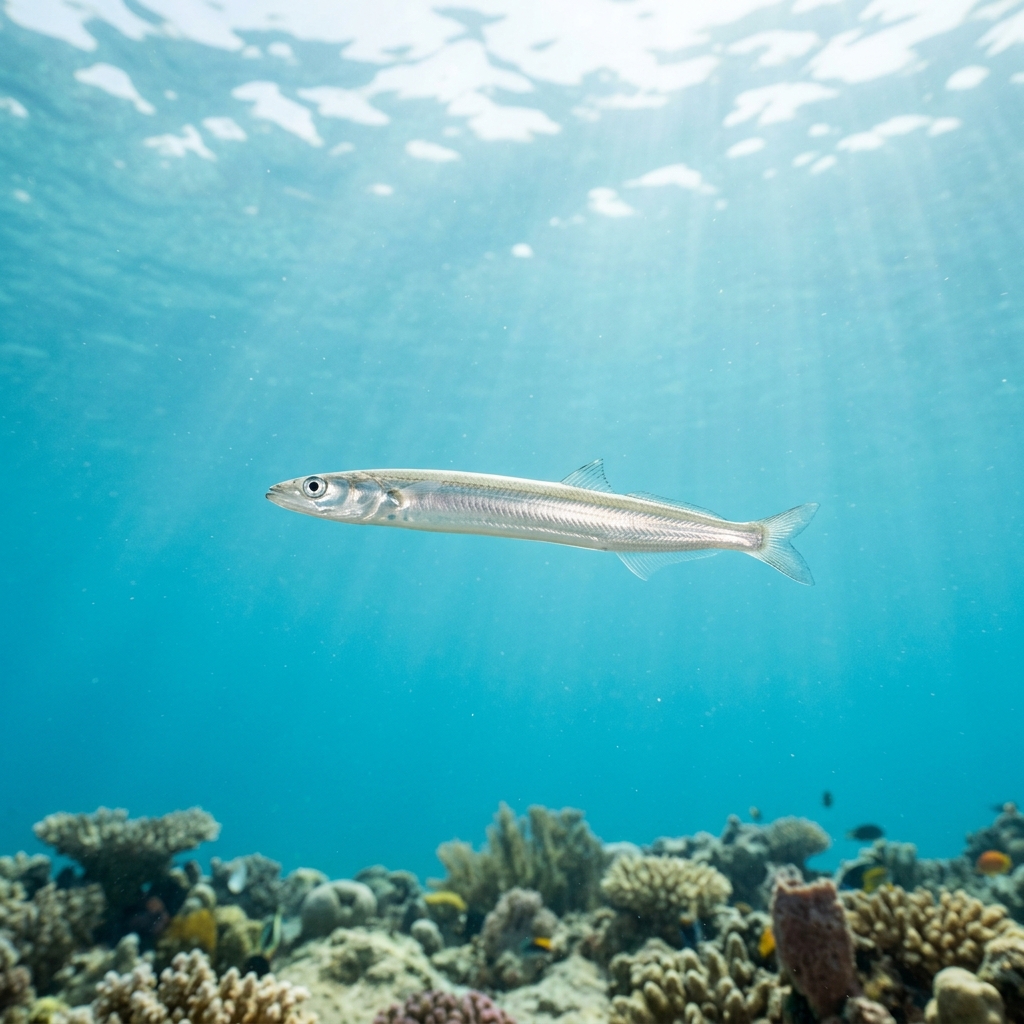
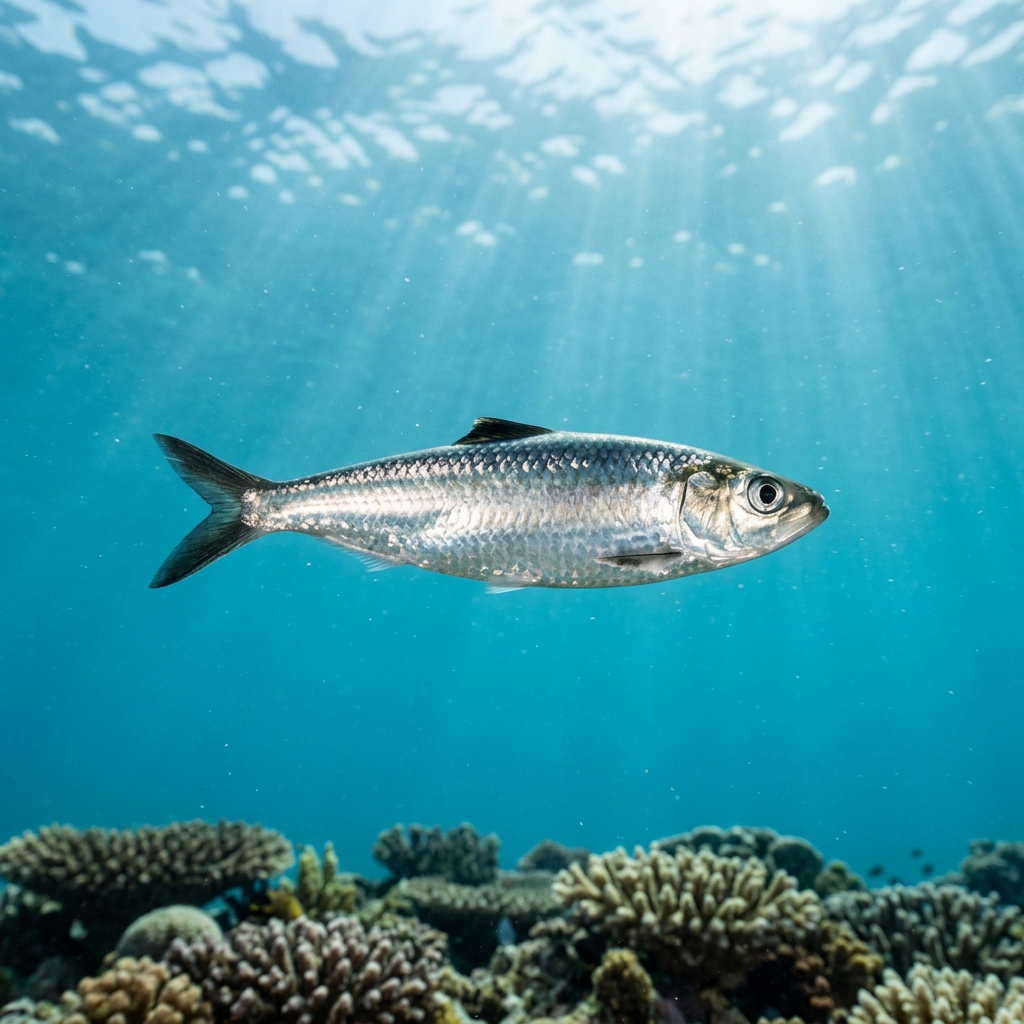
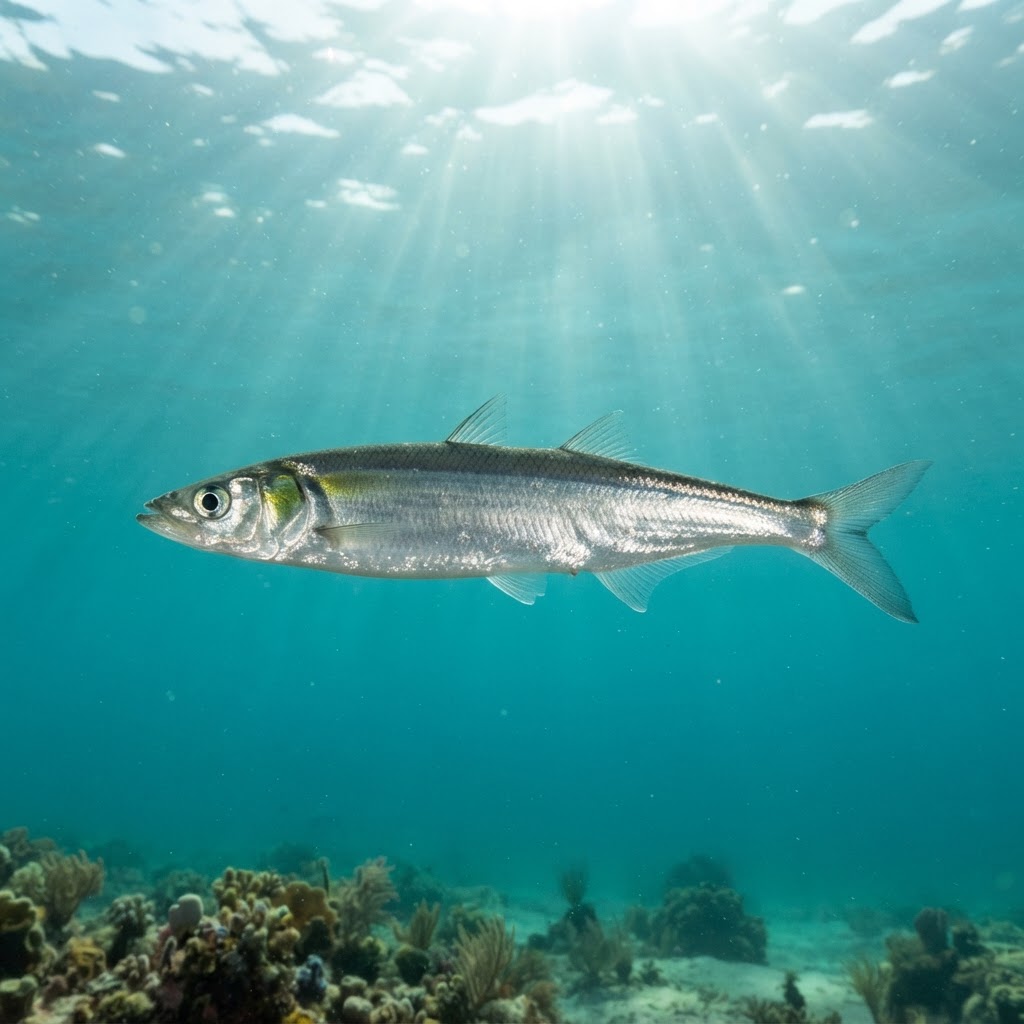
A slim, torpedo-shaped fish reaching around 31 cm, with a silvery body and a distinct greenish-blue stripe running along its flank. Large, reflective scales give it a flash of light as it turns, and its forked tail and pointed snout mark it out from bulkier reef fish nearby. It tends to hold in loose, open-water groups rather than hugging structure, which helps separate it from bottom-dwelling species sharing the same water.
Divers typically find jacksmelt hanging in loose schools in open water above kelp beds or sandy stretches, moving steadily rather than darting for cover. They keep some distance from divers and rarely approach, more often glimpsed as a passing silver shape than a close encounter. Because they're uncommon at the sites where they've been logged, a sighting tends to be a brief mid-water pass rather than a lingering one.
Jacksmelt belong to the silverside family and are known to spawn in large surface aggregations close to shore, which is occasionally the best chance of encountering a dense group rather than scattered individuals underwater.
Sightings show no clear seasonal pattern, and with a comfortable range of roughly 13 to 24 C, jacksmelt can plausibly be encountered across the year in Californian coastal waters. Treat it as a year-round possibility rather than a seasonal target.
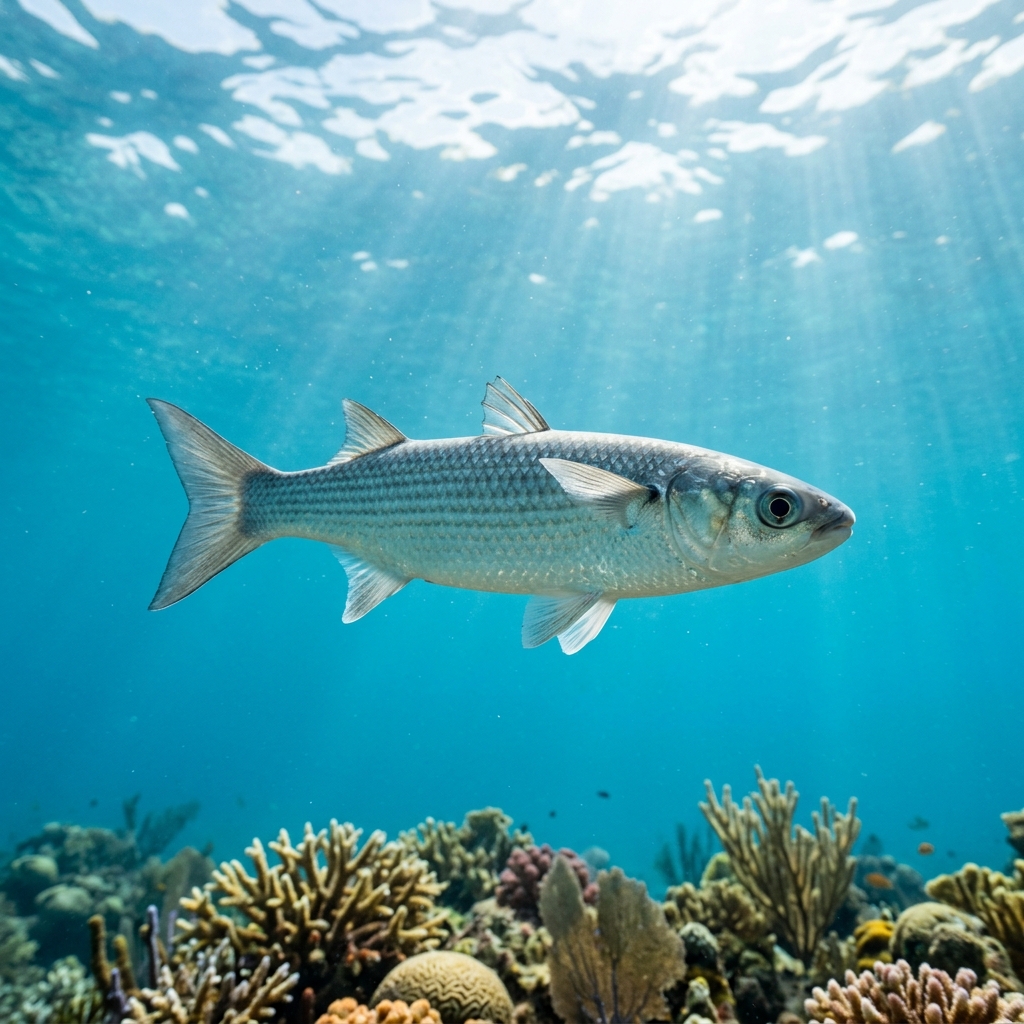
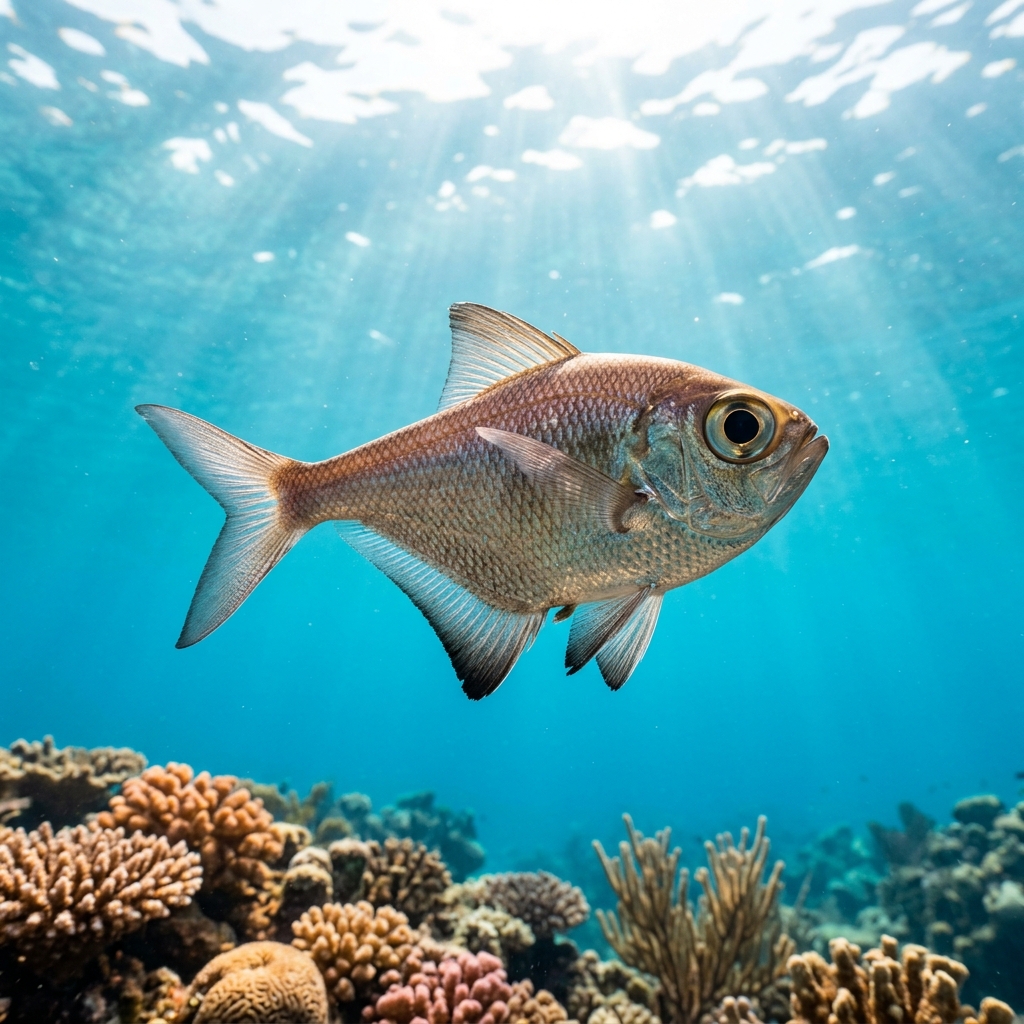
Reef neighbours a diver could mistake it for. Use the identification notes above to tell them apart.
Currently logged only off California in the United States, where it turns up at a small number of sites along the coast. If you're diving Californian kelp forests or nearshore reefs, keep an eye on the water column above the structure rather than the reef itself.
Mapping where Jacksmelt is logged…
The only logged sightings come from California, United States, where jacksmelt have been recorded at a small number of coastal sites. They favour open water over kelp beds and nearshore structure rather than deep reef.
There's no clear season in the sighting data, and the species tolerates a wide temperature range of roughly 13 to 24 C, so it's best treated as a year-round possibility in Californian waters.
Look for a slender, silvery fish around 31 cm long with a greenish-blue stripe along its side and a forked tail. It swims in loose open-water groups rather than sticking close to the reef.
They typically reach around 31 cm in length, giving them a slim, elongated profile in open water rather than the bulkier build of many reef fish.
No, jacksmelt pose no danger to divers. They keep their distance in open water and have no defensive or aggressive behaviours to worry about.
Site and sighting data is aggregated from diver logs, iNaturalist and GBIF. For taxonomy and conservation status:
Anchovy
2,433 sites