Mycteroperca fusca
Uncommon but reliable in Sao Miguel and Santa Maria, Azores, and off Tenerife, in water from 16.7 to 25.3 C, year-round.
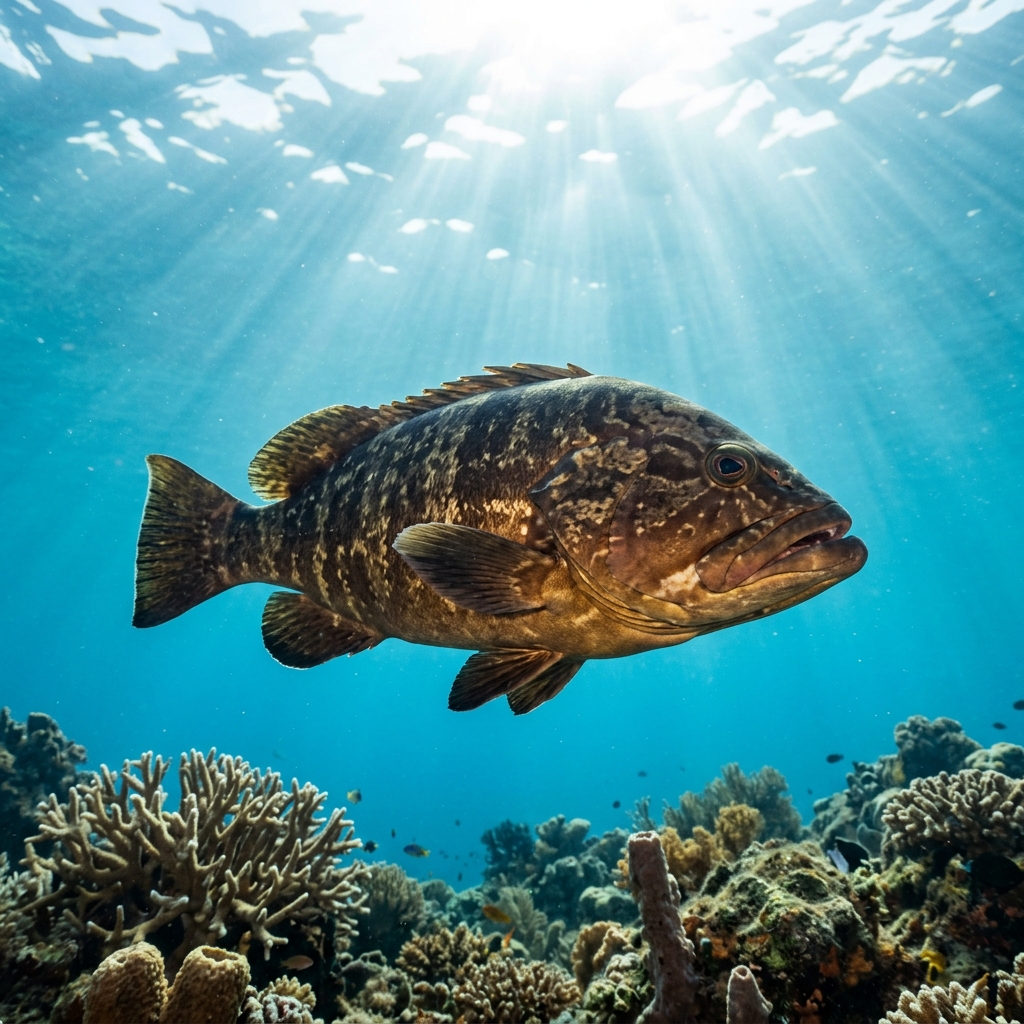
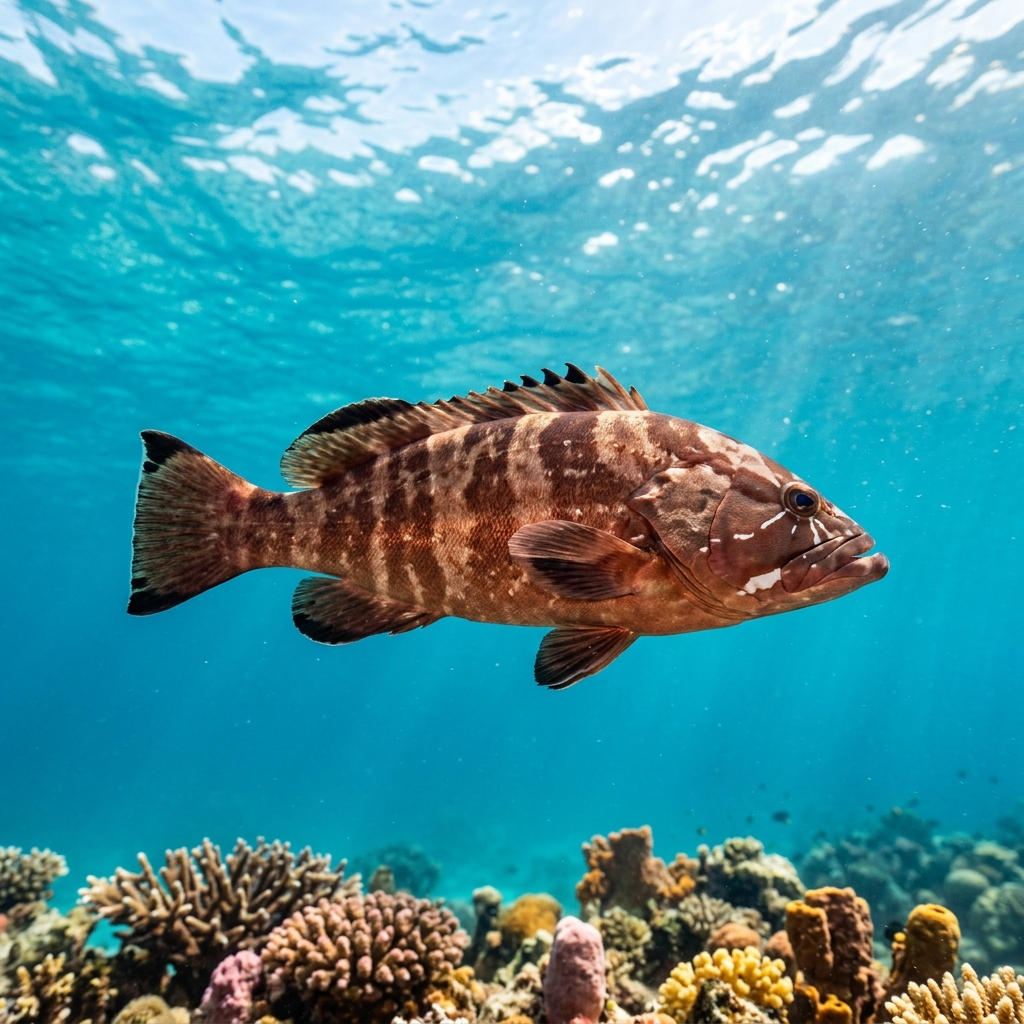
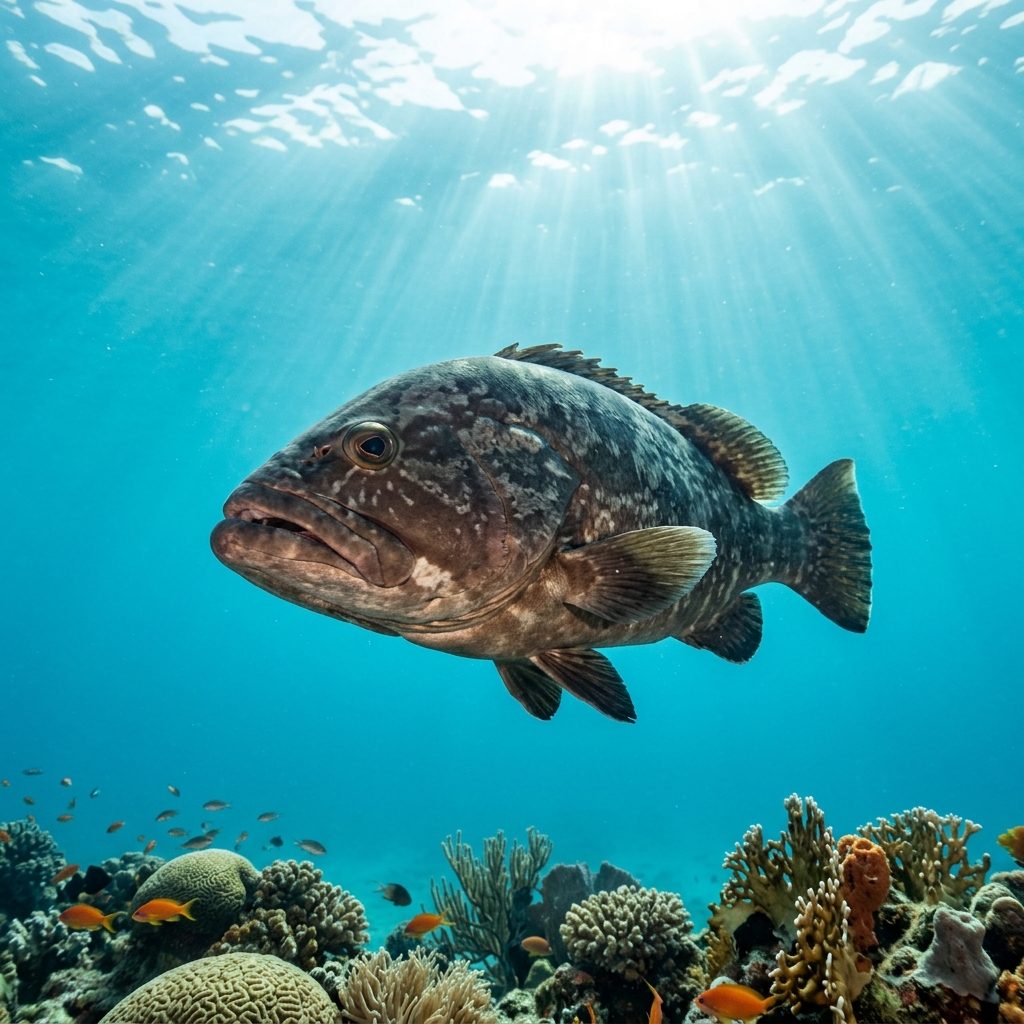
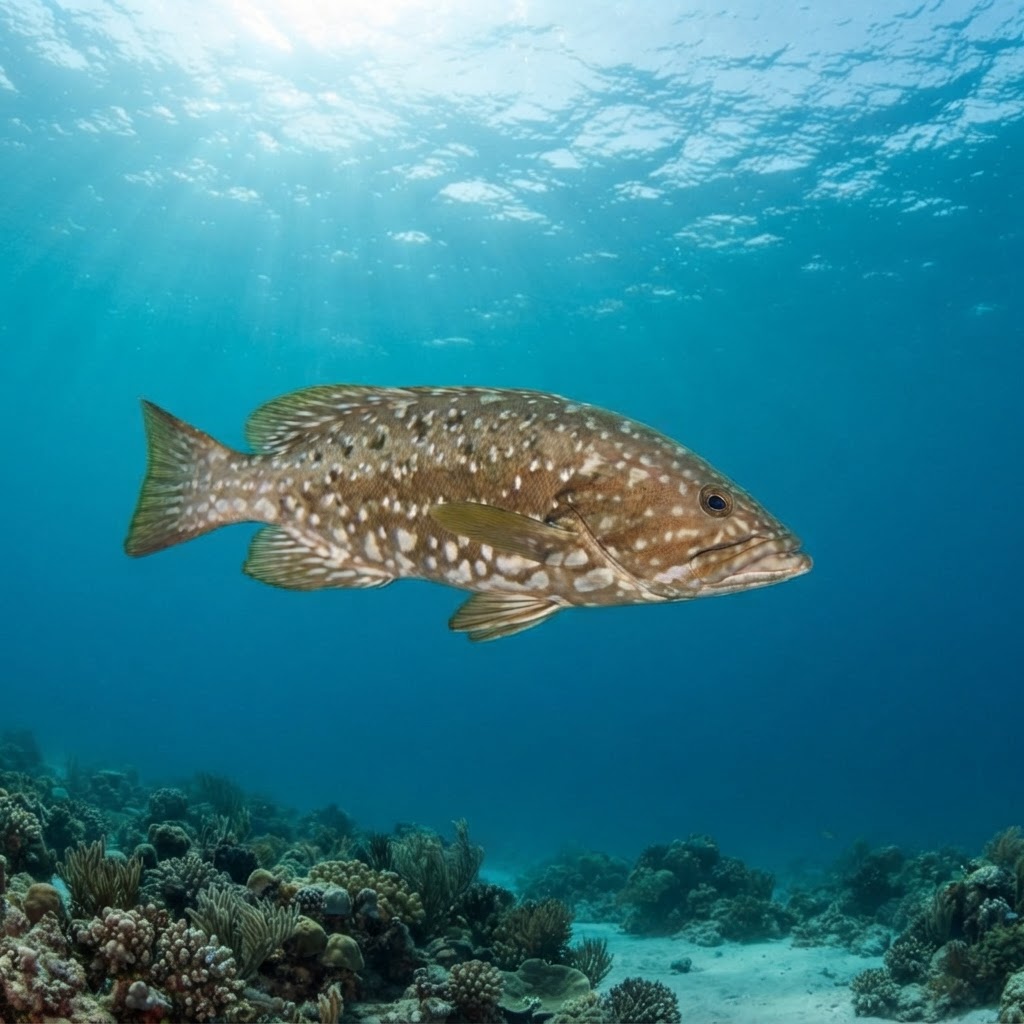
A stocky, heavy-bodied grouper reaching around 56 cm, mottled in shades of grey-brown with faint darker blotching that breaks up its outline against volcanic rock. Look for the typical grouper profile: a broad head, thick lips, and a slightly concave forehead. It often sits still on or near a ledge rather than swimming in open water, which is usually the giveaway alongside its size and colouring.
Typically seen holding station near rocky ledges, crevices, or reef structure rather than roaming open water, often at a cautious distance from divers. Sightings tend to be one or two fish at a time rather than groups, consistent with its uncommon-to-rare status across most sites. Expect it to hold its ground or retreat slowly into cover rather than bolt when approached.
Like many groupers in the family Epinephelidae, it is a protogynous hermaphrodite, meaning individuals typically start life as females and some later transition to males as they grow.
No clear seasonal pattern shows up in the data, and with a comfortable range of roughly 16.7 to 25.3 C it appears to be a year-round resident of these Atlantic sites rather than a seasonal visitor.
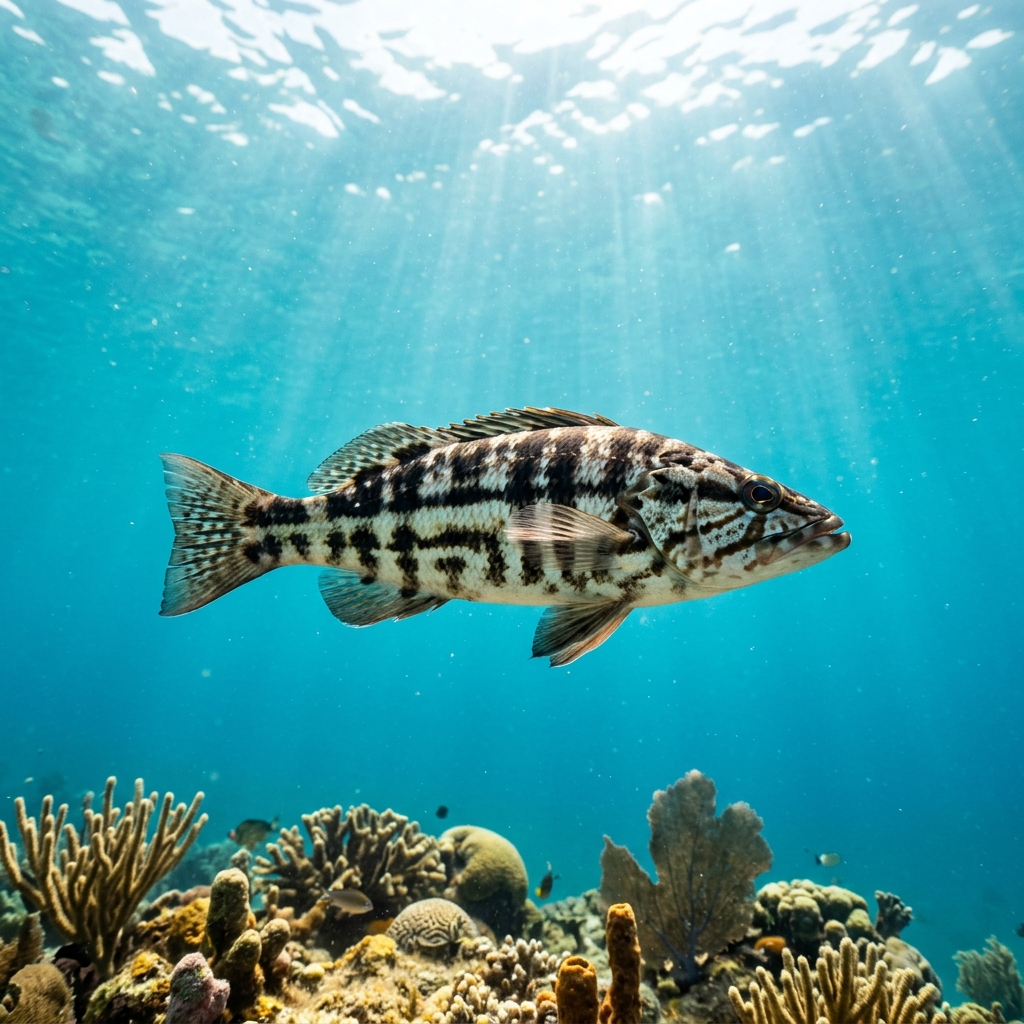
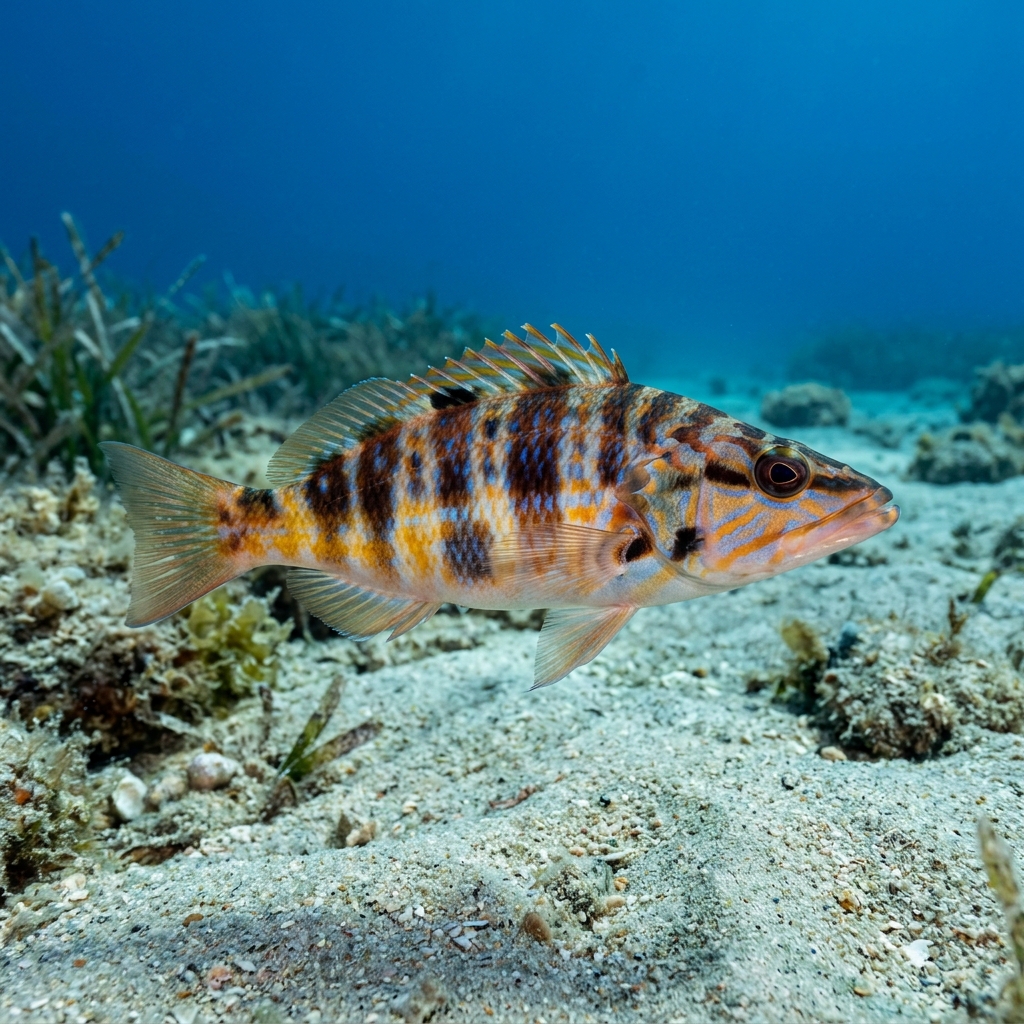
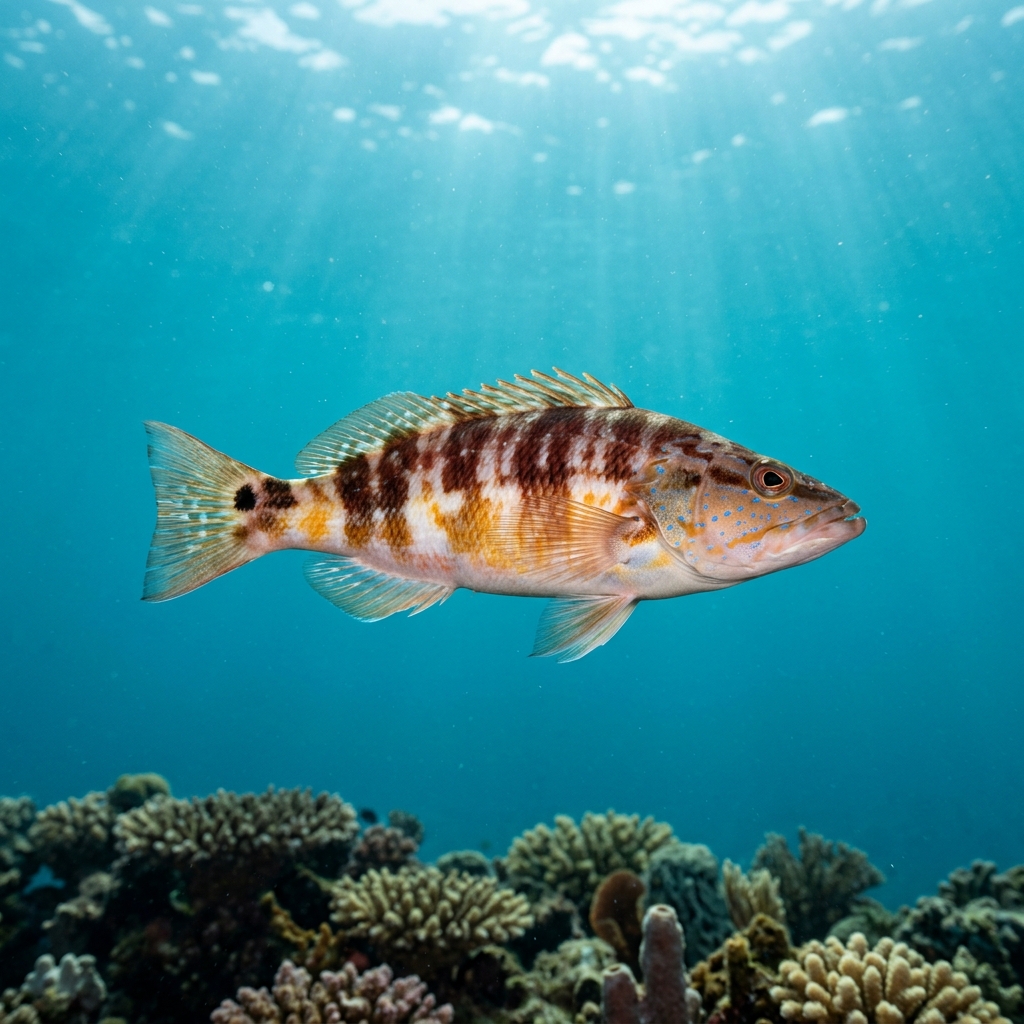
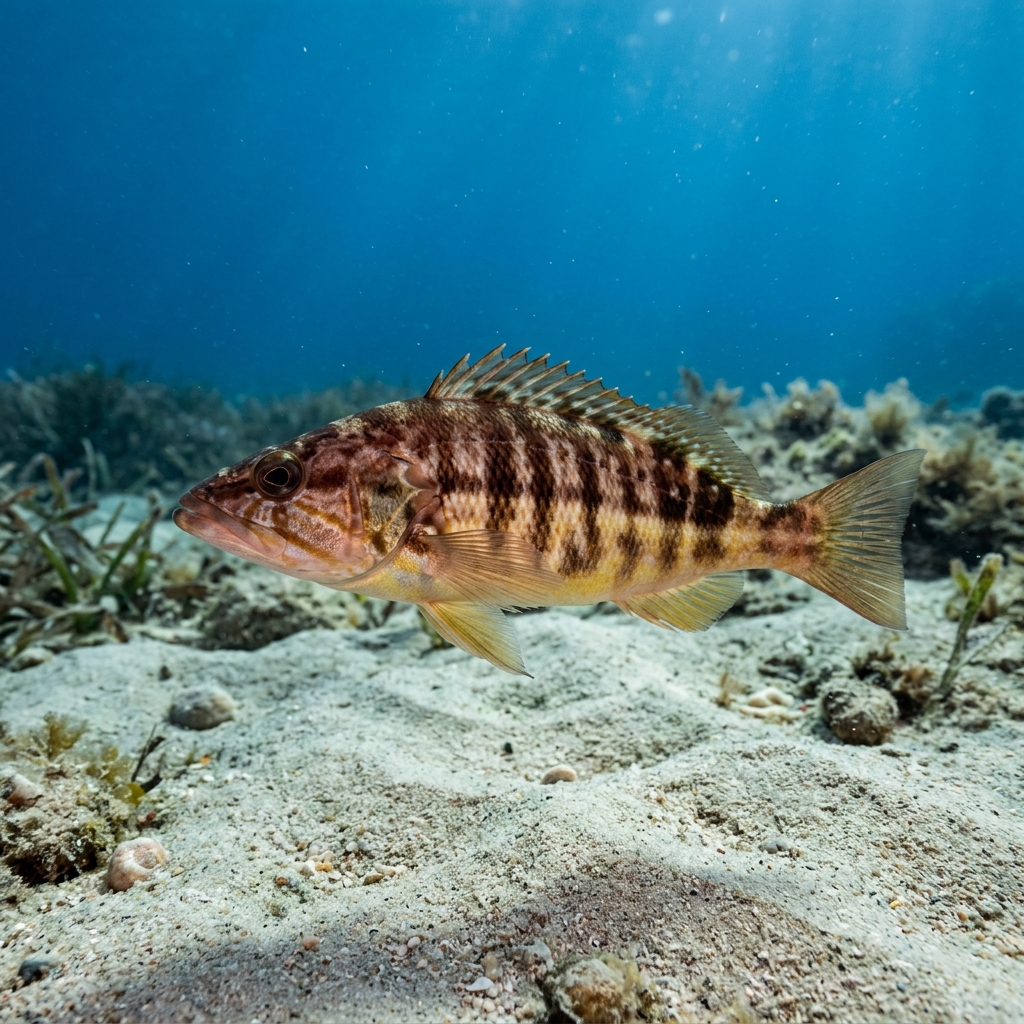
Reef neighbours a diver could mistake it for. Use the identification notes above to tell them apart.
Most reliably found around Sao Miguel and Santa Maria in the Azores, with further sightings off Faial and Sao Jorge and at Princess Alice Bank. In the Canary Islands, Tenerife holds a solid population and is the best bet outside Azorean waters.
Mapping where Island Grouper is logged…
Your best chances are in the Azores, particularly around Sao Miguel and Santa Maria, and to a lesser extent Faial and Sao Jorge. In the Canary Islands, Tenerife is the most productive site outside Azorean waters.
There is no strong seasonal signal in sighting data, and the species tolerates a fairly wide temperature range, so it is considered present year-round at these Atlantic sites rather than tied to a particular month.
Look for a thick-bodied grouper around half a metre long with mottled grey-brown colouring and a heavy-lipped face, usually resting near rocky ledges rather than swimming openly. Its stillness and habitat choice help separate it from more active reef fish nearby.
They typically reach around 56 cm in length, making them a medium-sized grouper rather than one of the giants in the family.
No, they pose no danger to divers. They are a calm, ledge-dwelling species that will usually hold still or retreat rather than react aggressively to a diver's approach.
Site and sighting data is aggregated from diver logs, iNaturalist and GBIF. For taxonomy and conservation status:
Blacktip Grouper
2,726 sites