Melichthys indicus
Common across the Maldives' Central Atolls, this dark blue-black triggerfish turns up on reef dives in water around 25-29C, year-round.
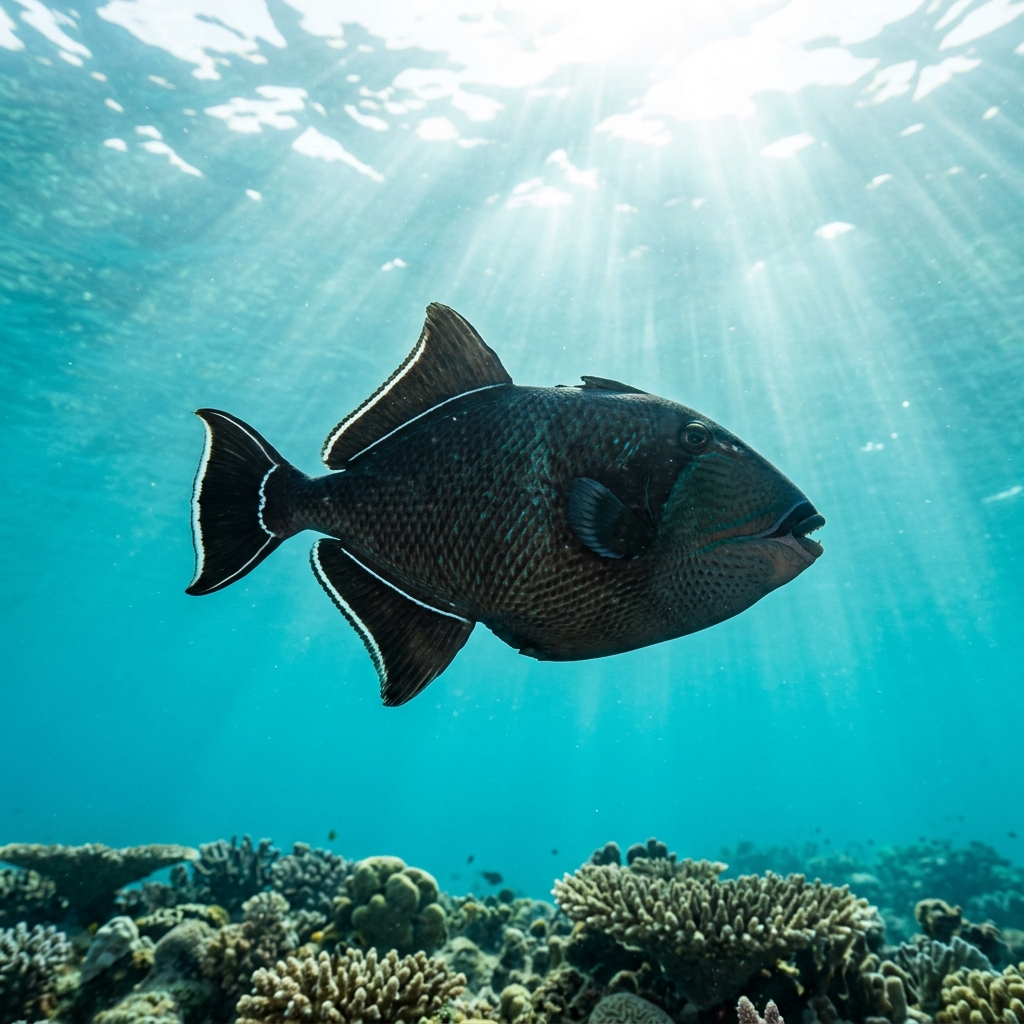
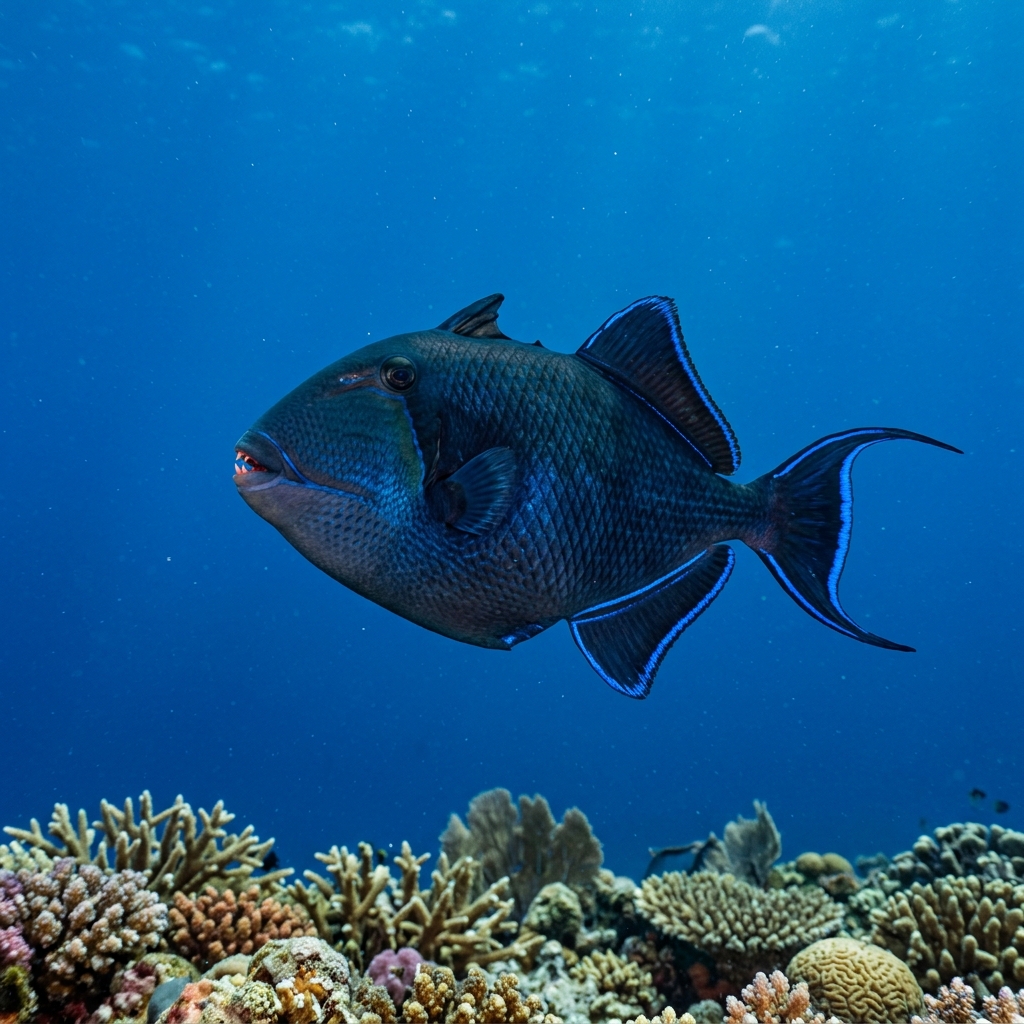
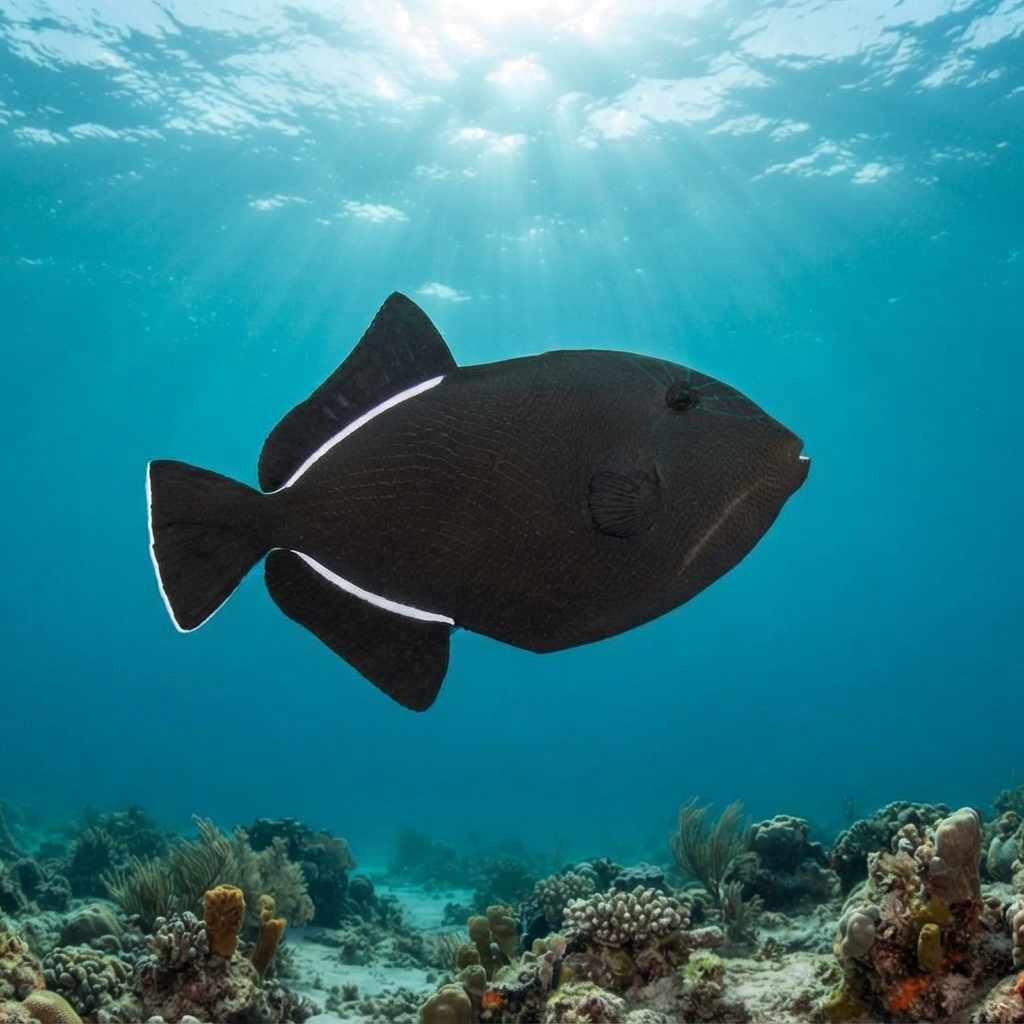
Deep, oval-bodied fish around 18 cm, coloured dark blue to almost black with a faint pale blue line running from the mouth back along the lower jaw. Look for the stiff, almost leathery-looking dorsal spine it can lock upright, and the way it swims with slow, deliberate strokes of its rear fins rather than darting like smaller reef fish. The trailing edge of the tail often shows a thin pale margin, useful for separating it from darker look-alikes at a glance.
Usually seen cruising over reef slopes and rubble patches, often alone or in loose pairs rather than schools, picking at algae and small invertebrates on the substrate. It tends to hold its ground rather than bolt when divers approach, though it will duck into a crevice and wedge itself in using that locking dorsal spine if it feels pressured. Most sightings are at typical daytime reef-diving hours rather than at night.
That dorsal spine isn't decorative: triggerfish use a locking mechanism where a second, smaller spine holds the first upright, letting the fish jam itself into a crevice so tightly that predators (and curious divers) can't pull it out.
No clear seasonal pattern shows up in the data, and with a comfortable range of roughly 25 to 29C on tropical reefs it's a year-round sighting wherever it occurs.
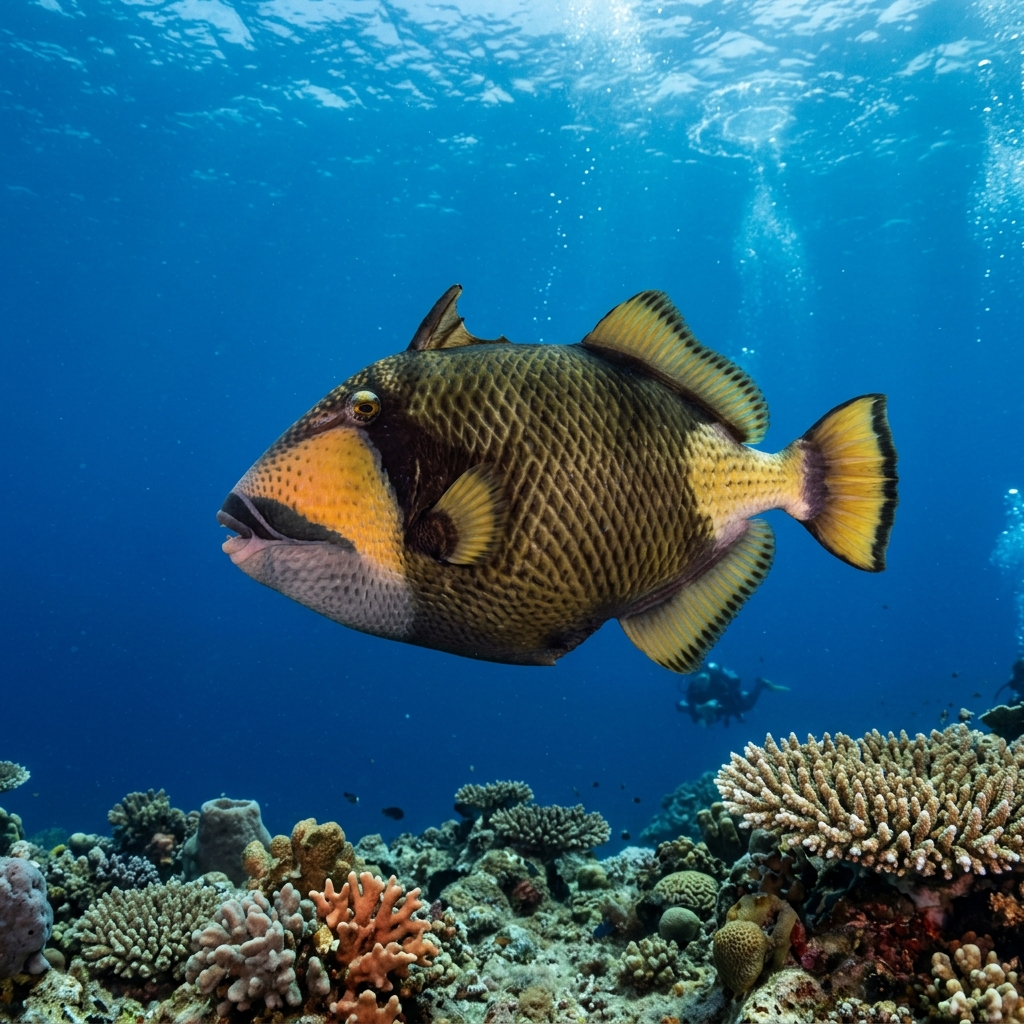
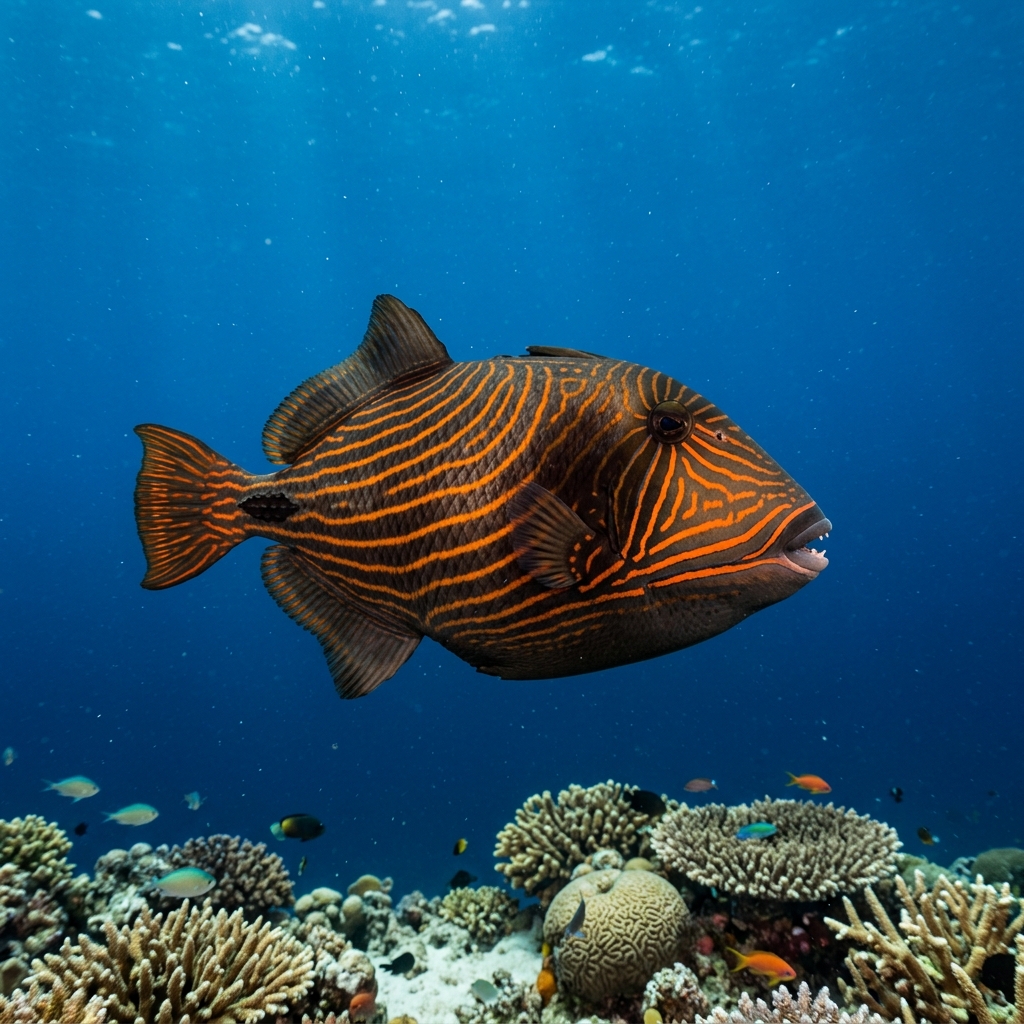
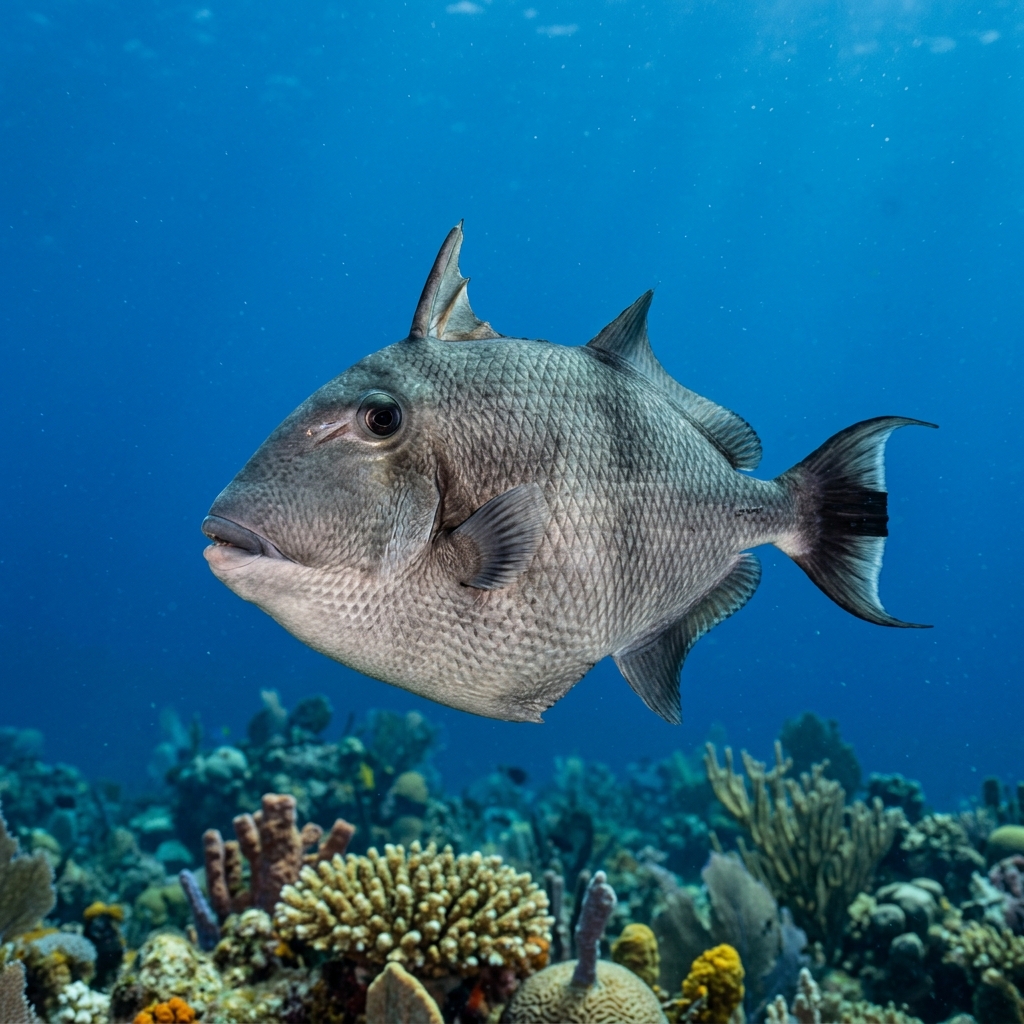
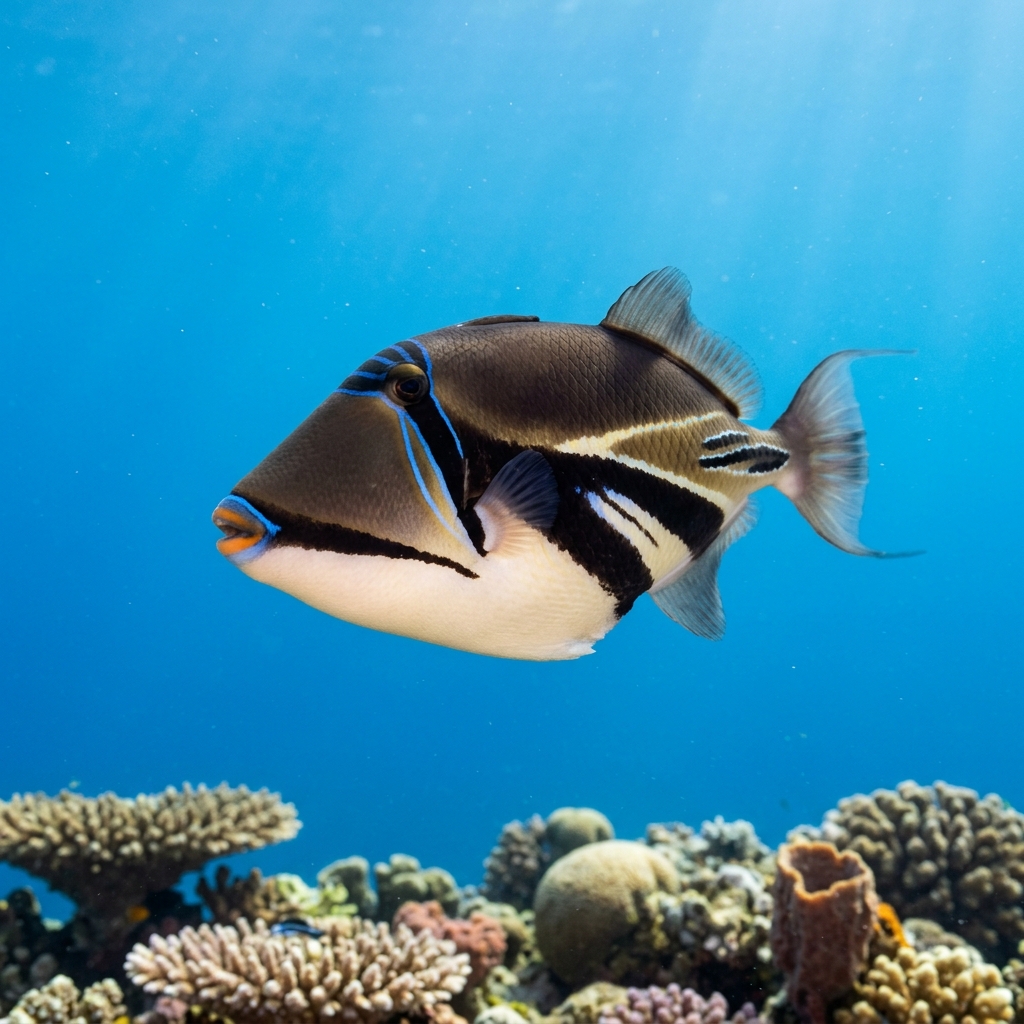
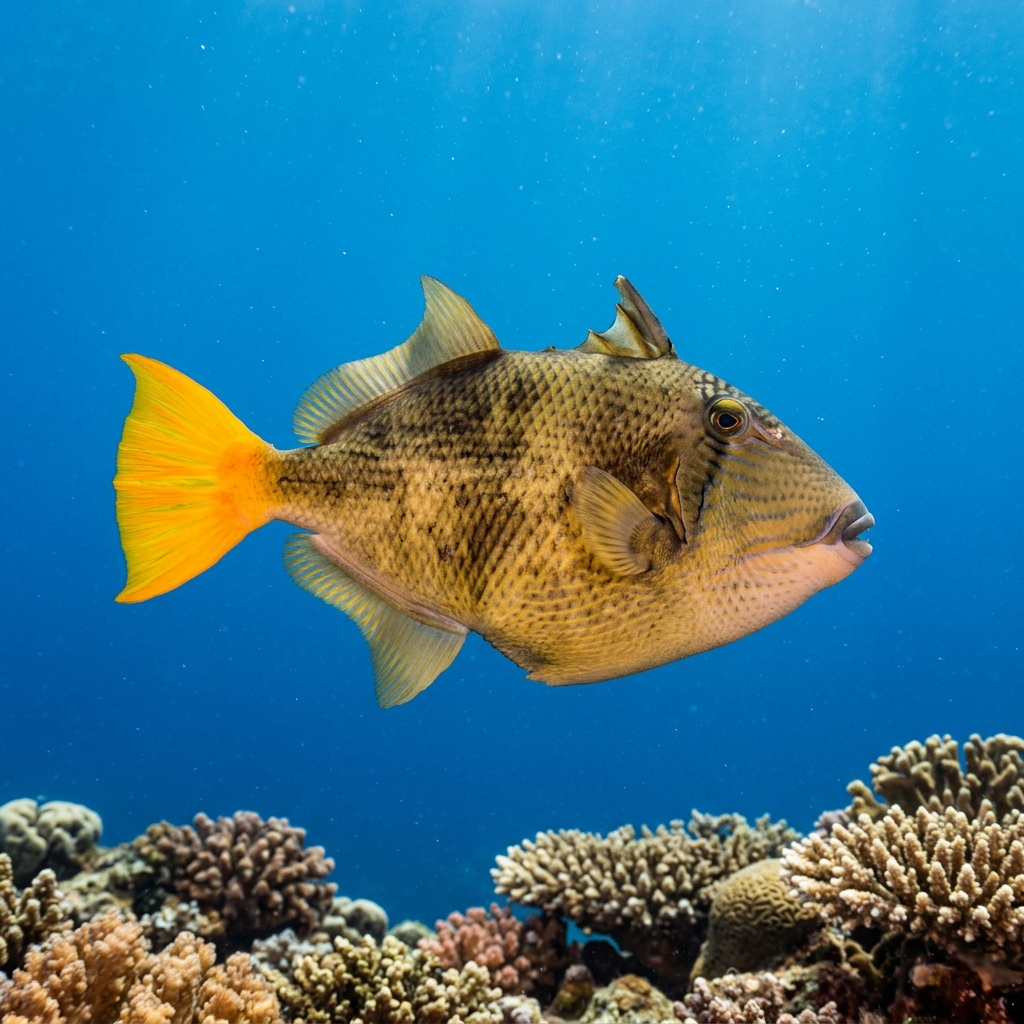
Reef neighbours a diver could mistake it for. Use the identification notes above to tell them apart.
Most reliably logged in the Maldives, especially the Central Atolls, with strong numbers also in the Southern and Northern Atolls. Outside the Maldives it turns up regularly at Khao Lak in Thailand and around Trincomalee and Unawatuna in Sri Lanka, with smaller but consistent sightings in KwaZulu-Natal, South Africa, and off Muscat, Oman.
Mapping where Indian Triggerfish is logged…
The Maldives is by far the most consistent place, particularly the Central Atolls, with the Southern and Northern Atolls also reliable. Thailand's Khao Lak and Sri Lanka's Trincomalee and Unawatuna are good bets too, along with occasional sightings in South Africa and Oman.
There's no strong seasonal pattern in sightings, so it's considered a year-round fish on the reefs it inhabits, comfortable in water from about 25 to 29C.
Look for a dark blue-black, oval-bodied fish around 18 cm with a faint pale blue line near the mouth and a thin pale edge to the tail fin. It swims with slow, deliberate fin strokes over reef and rubble rather than darting.
They typically reach around 18 cm, making them a mid-sized reef triggerfish rather than one of the larger species like the titan triggerfish.
No, they're not considered dangerous to divers. They're generally calm around people and more likely to retreat into a crevice than act defensively.
Site and sighting data is aggregated from diver logs, iNaturalist and GBIF. For taxonomy and conservation status:
Lagoon Triggerfish
2,435 sites