Parupeneus indicus
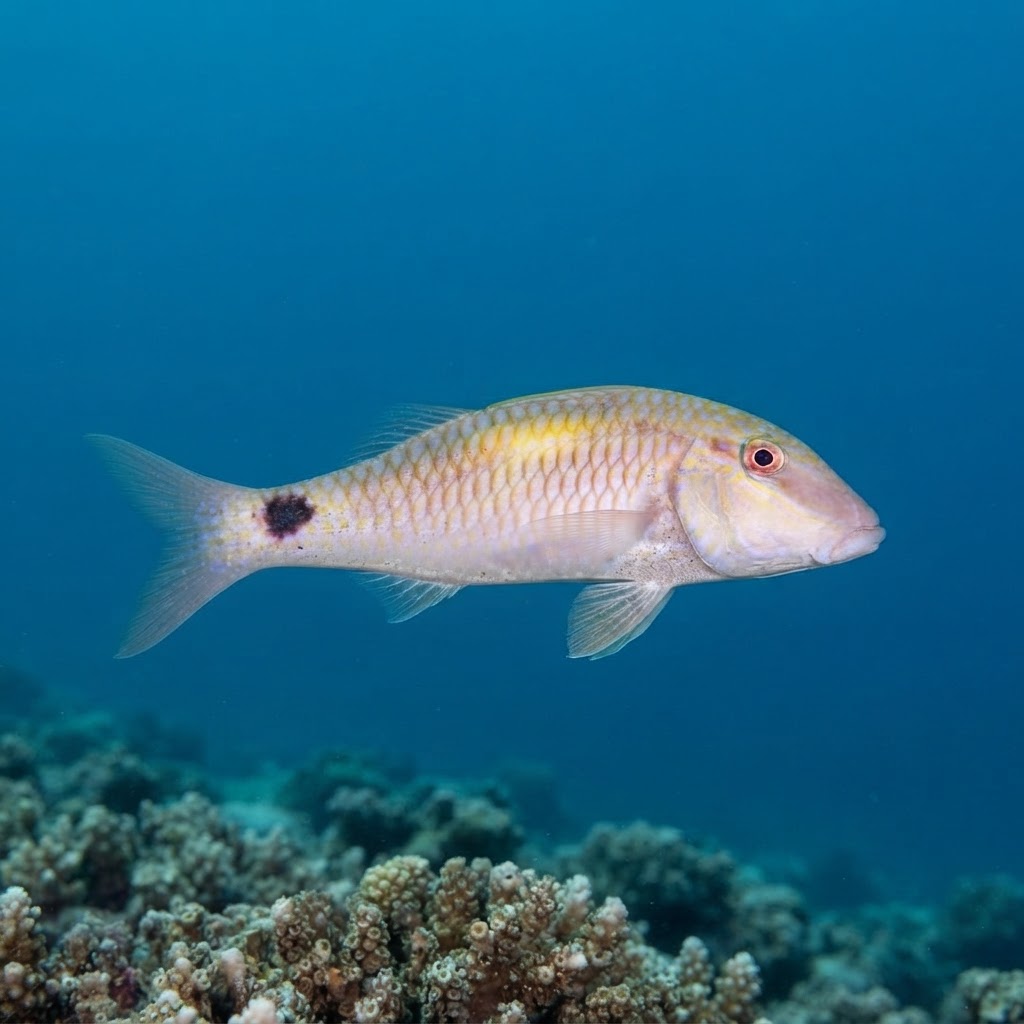
Pale silvery goatfish with a yellow saddle patch, most often logged around Koh Tao and Queensland reefs year-round in warm 26-29C water.
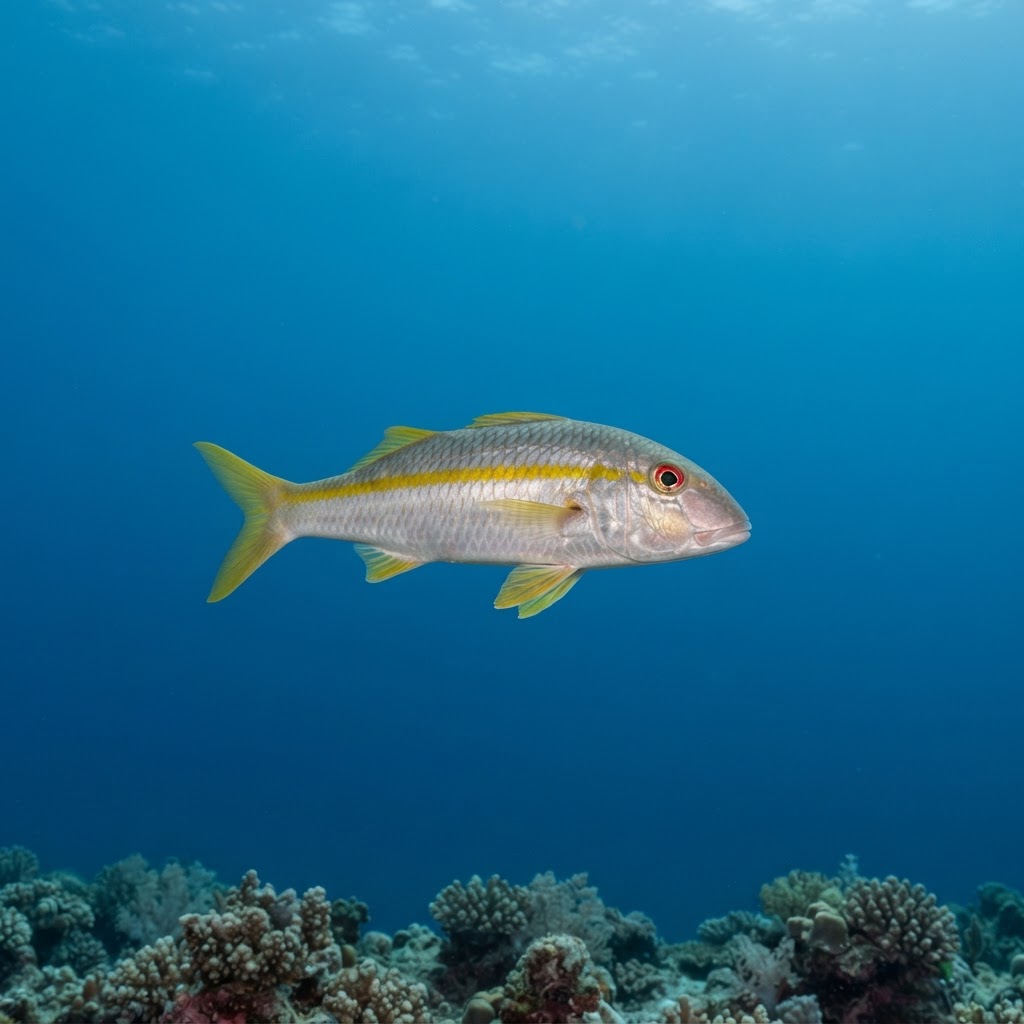
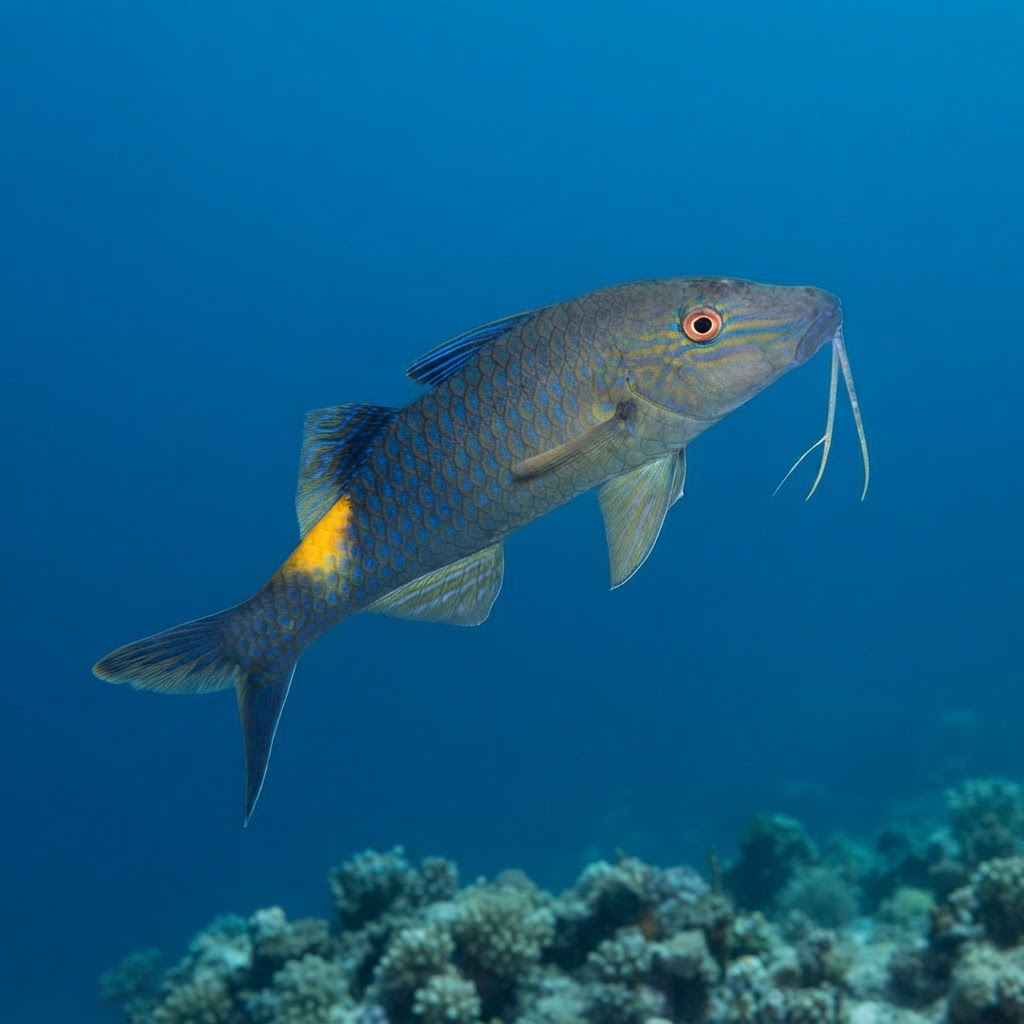
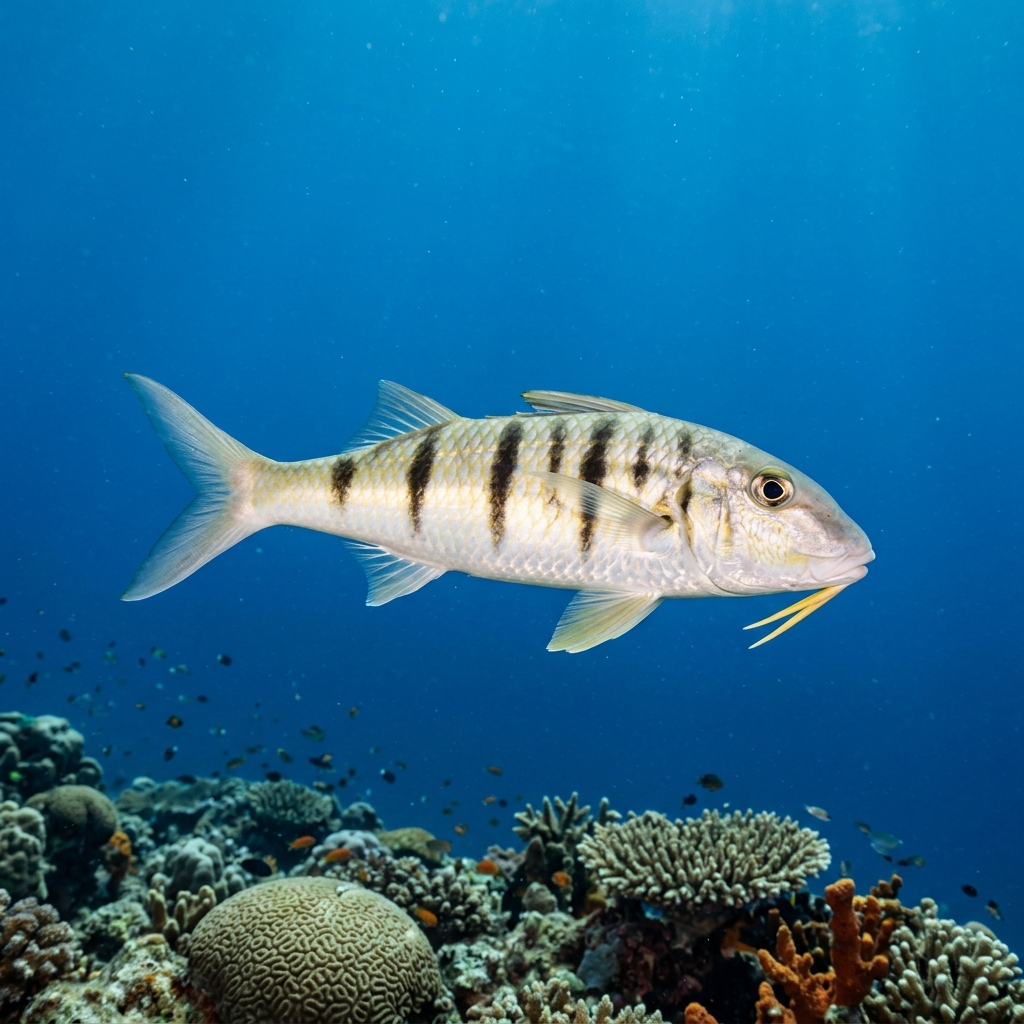
Grows to around 31 cm, with a silvery-white to pale grey body and a distinctive yellow saddle patch on the upper back near the tail. Look for the pair of long, pale barbels (whisker-like feelers) under the chin, constantly probing the sand as it feeds. Body shape is elongated and slightly compressed, typical of the goatfish family, with a fairly steep forehead profile.
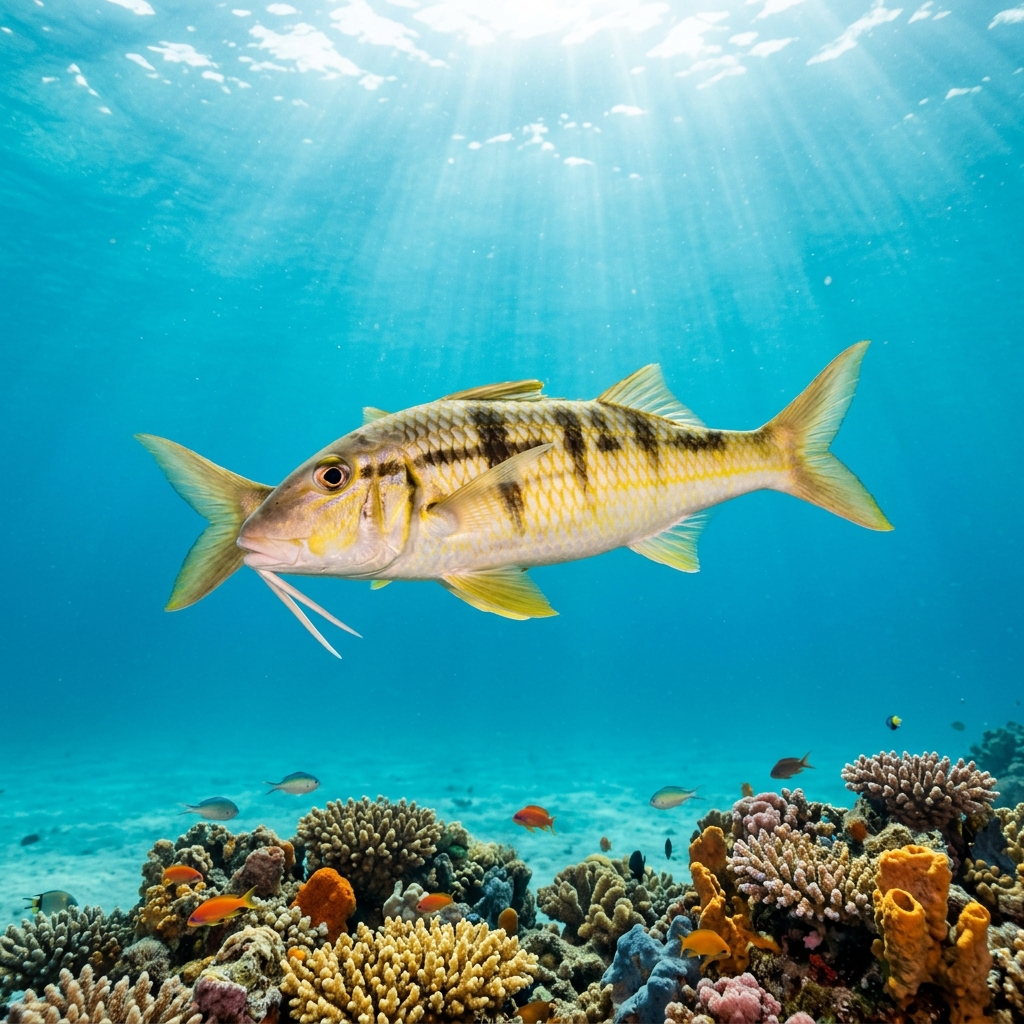
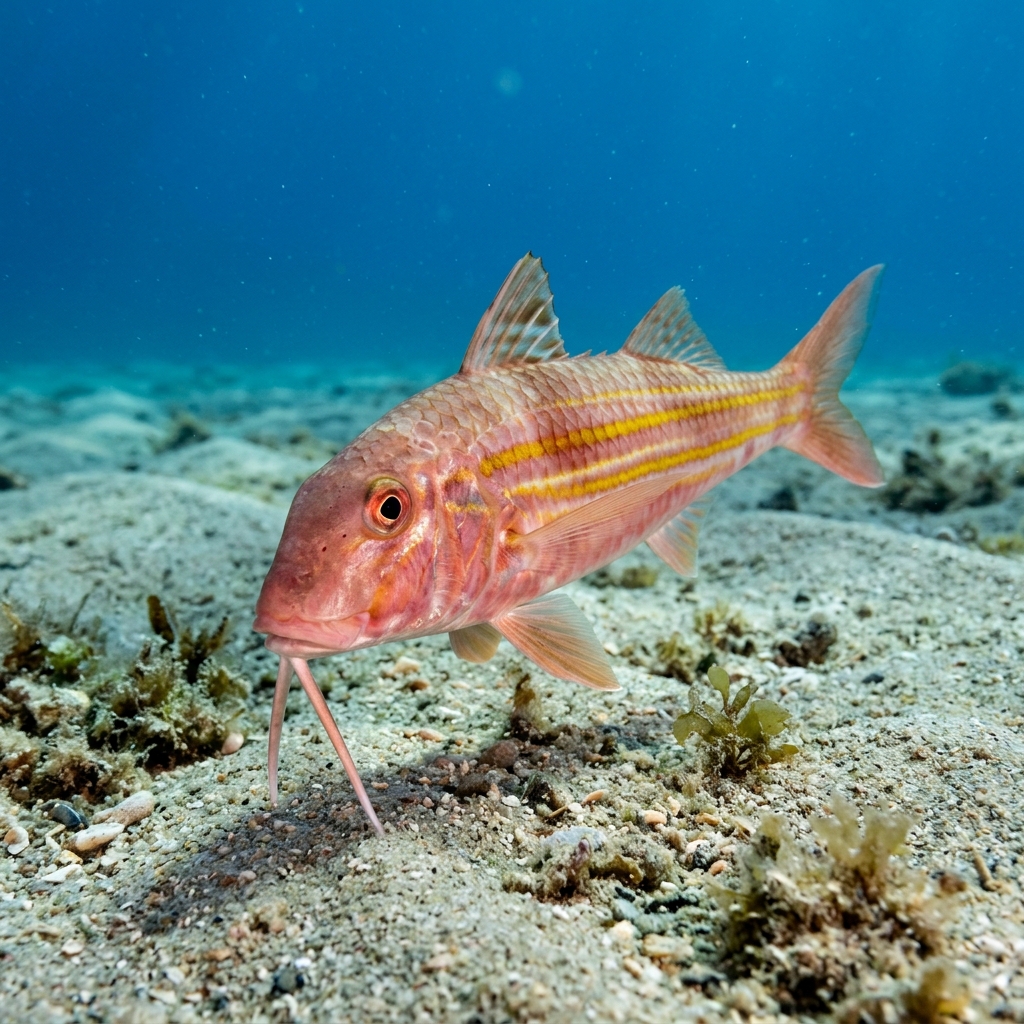
Usually seen alone or in small loose groups working sandy patches and rubble near reef structure, sweeping its barbels through the substrate to root out buried invertebrates. It tends to keep moving rather than settle, so divers often catch it mid-search rather than resting. Generally unbothered by divers at a normal distance, though it will drift off if approached too directly.
Those chin barbels are packed with chemical and tactile sensors, letting it detect prey hidden under sand and rubble without seeing it, a foraging trick shared across the goatfish family.
No clear seasonal pattern shows up in the sighting data, and its comfortable range of 26.2 to 29C matches tropical reef temperatures year-round, so it's a fair bet on any dive at these sites regardless of month.
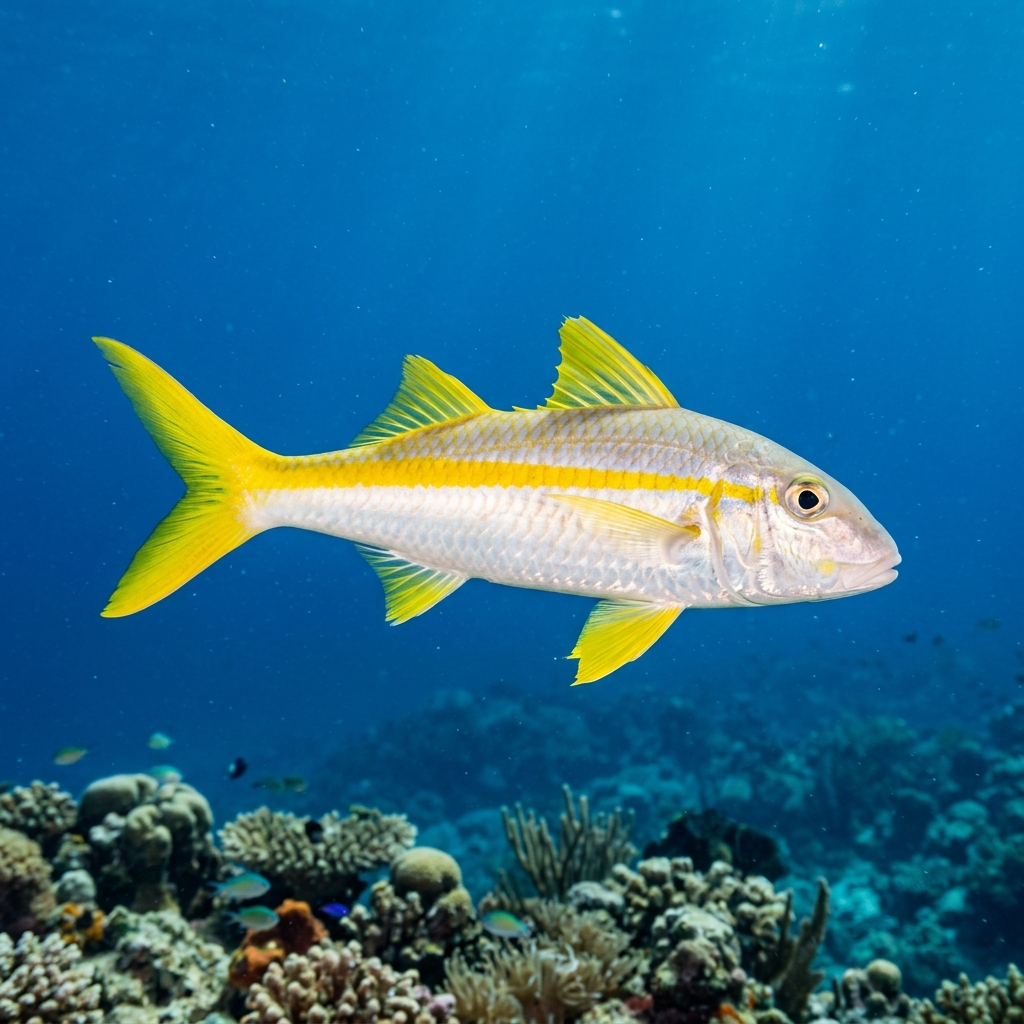
Reef neighbours a diver could mistake it for. Use the identification notes above to tell them apart.
Most reliably logged around Koh Tao and Koh Pha Ngan in Thailand, which together account for the bulk of sightings, with strong secondary populations in Queensland and Western Australia. Divers also report it steadily around Hikkaduwa in Sri Lanka, Efate in Vanuatu, and Nouméa in New Caledonia, with a smaller presence in Mozambique's Inhambane region.
Mapping where Indian Goatfish is logged…
Koh Tao and Koh Pha Ngan in Thailand are the most consistent spots, with Queensland and Western Australia in Australia also producing regular sightings. Hikkaduwa in Sri Lanka and Efate in Vanuatu are reliable secondary locations.
There's no strong seasonal pattern in the sightings, and the species sits comfortably in 26 to 29C water year-round, so any month works at the usual sites.
Look for a silvery-grey body with a yellow saddle patch near the tail and a pair of long barbels under the chin used to probe the sand. It grows to about 31 cm and is usually seen foraging alone over sand or rubble near reef.
They reach around 31 cm in length, a modest, elongated reef fish easily overlooked among sand-dwelling species.
No, they pose no threat to divers and simply forage over sand and rubble, moving off calmly if approached too closely.
Site and sighting data is aggregated from diver logs, iNaturalist and GBIF. For taxonomy and conservation status:
Yellowfin Goatfish
2,241 sites