Idaliadoris depressa
A rare nudibranch find along the French Riviera, logged in waters between 14 and 20C. Here's how to spot one on a dive.
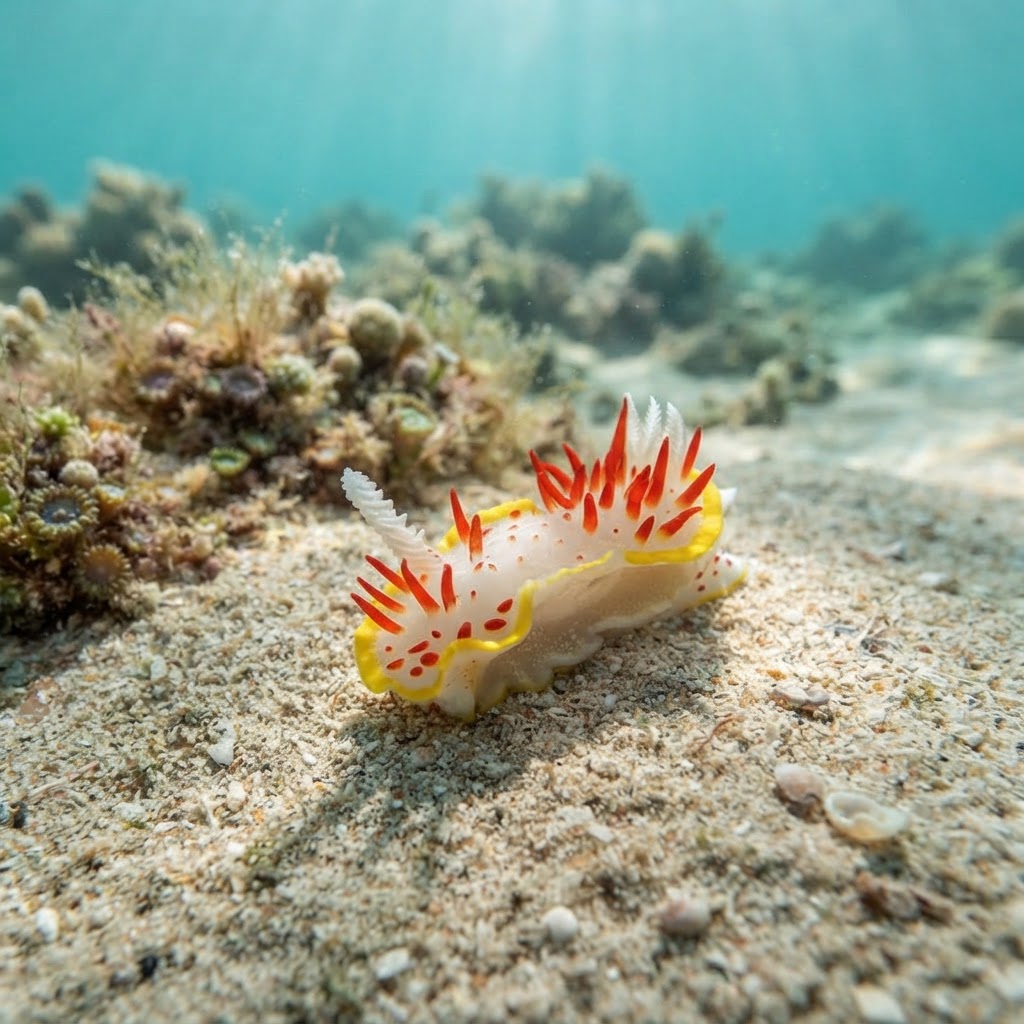
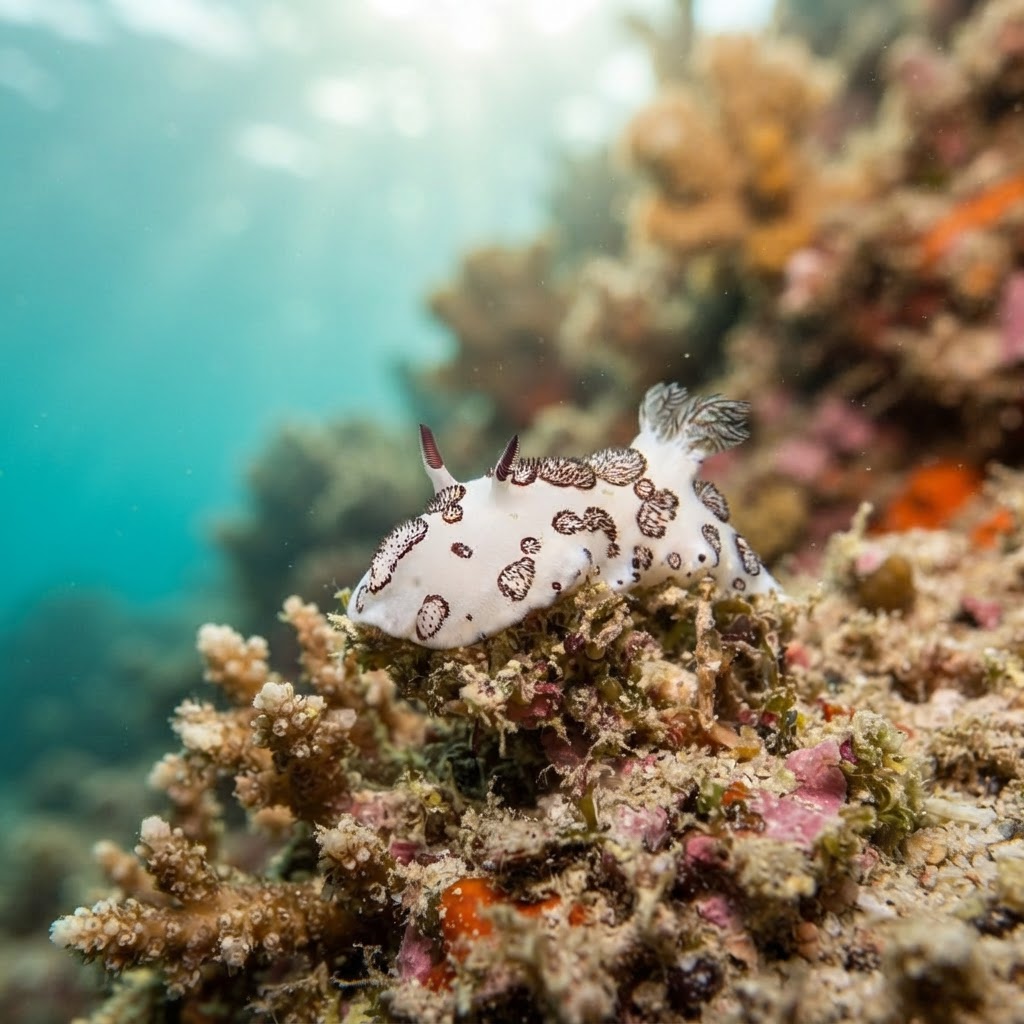
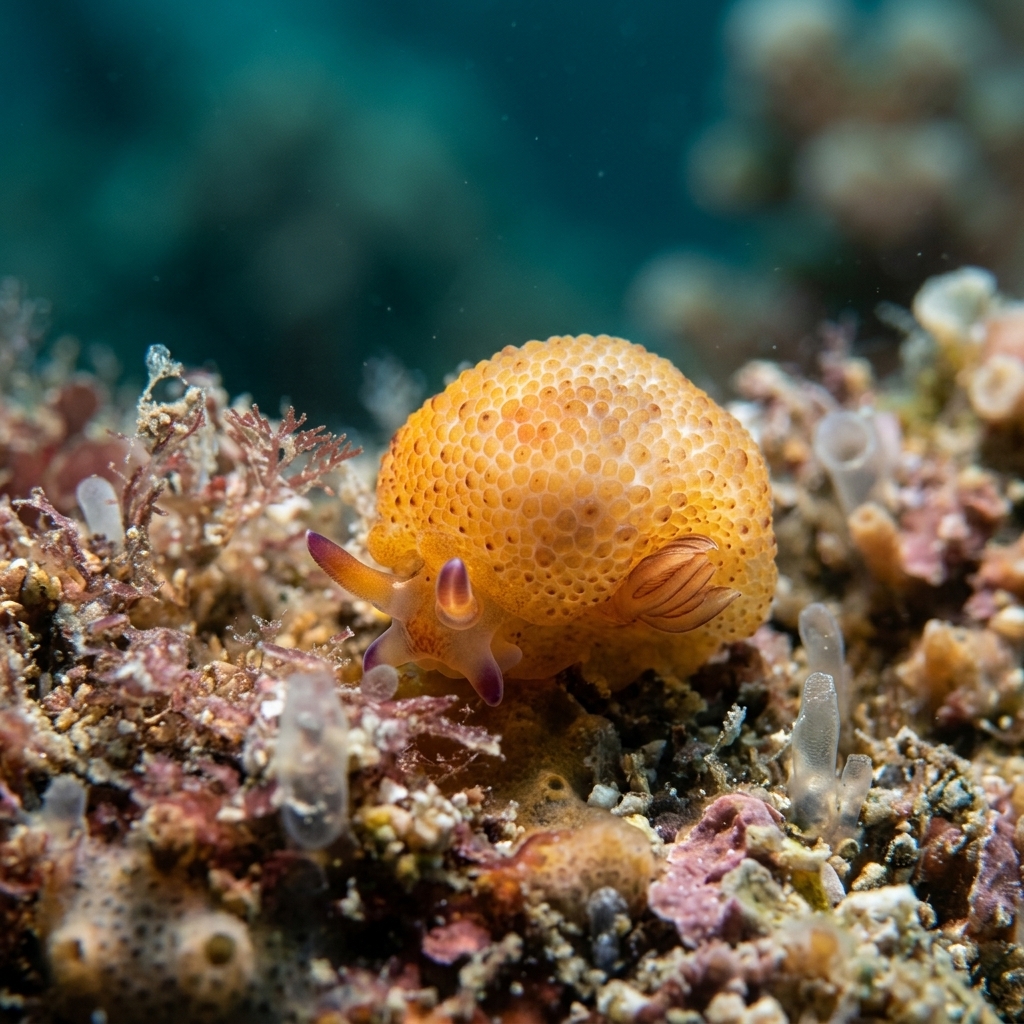
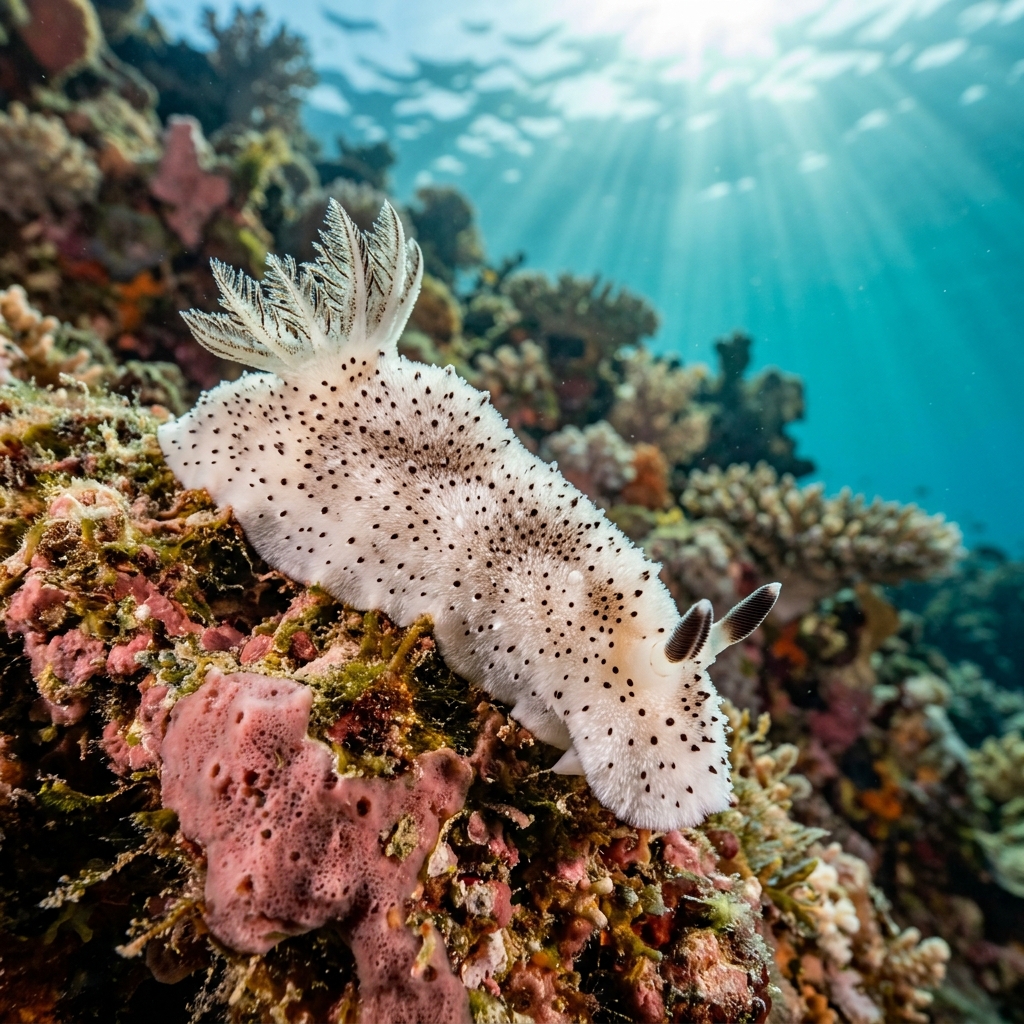
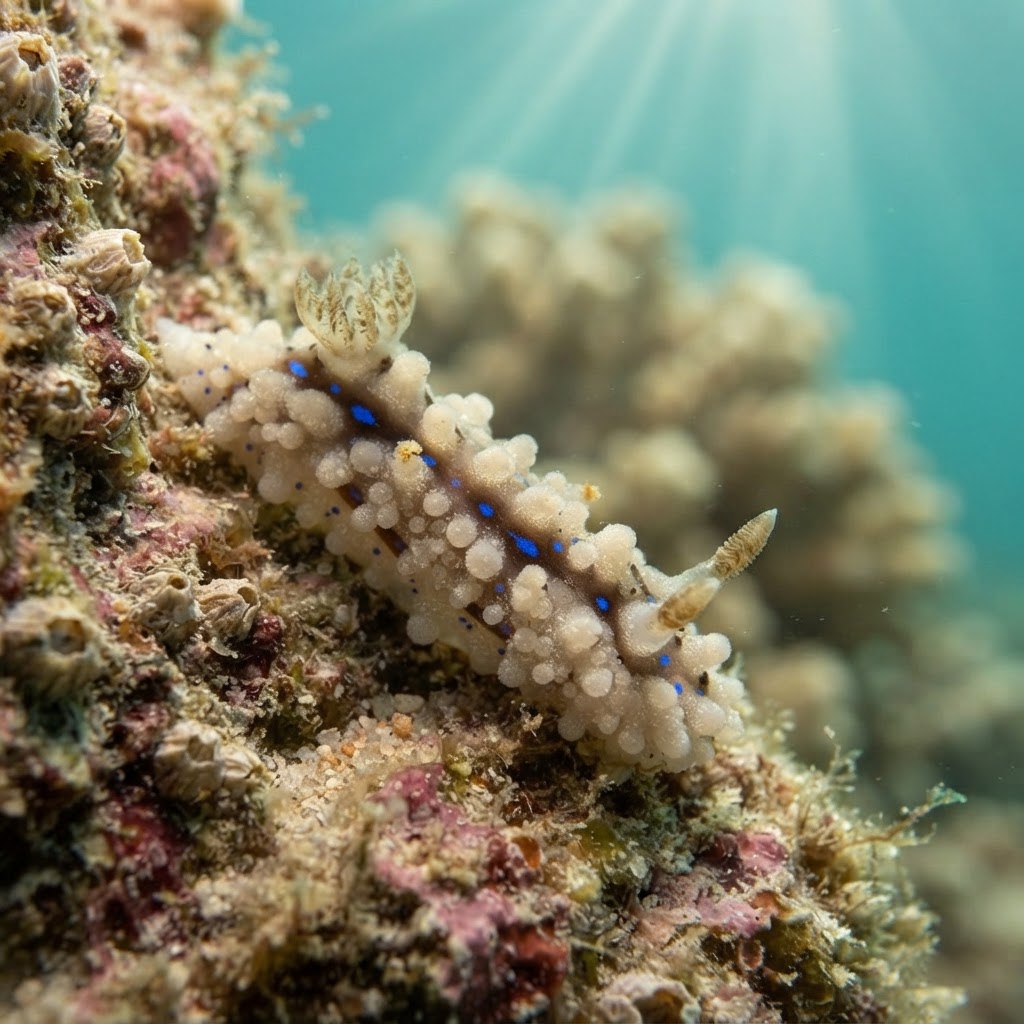
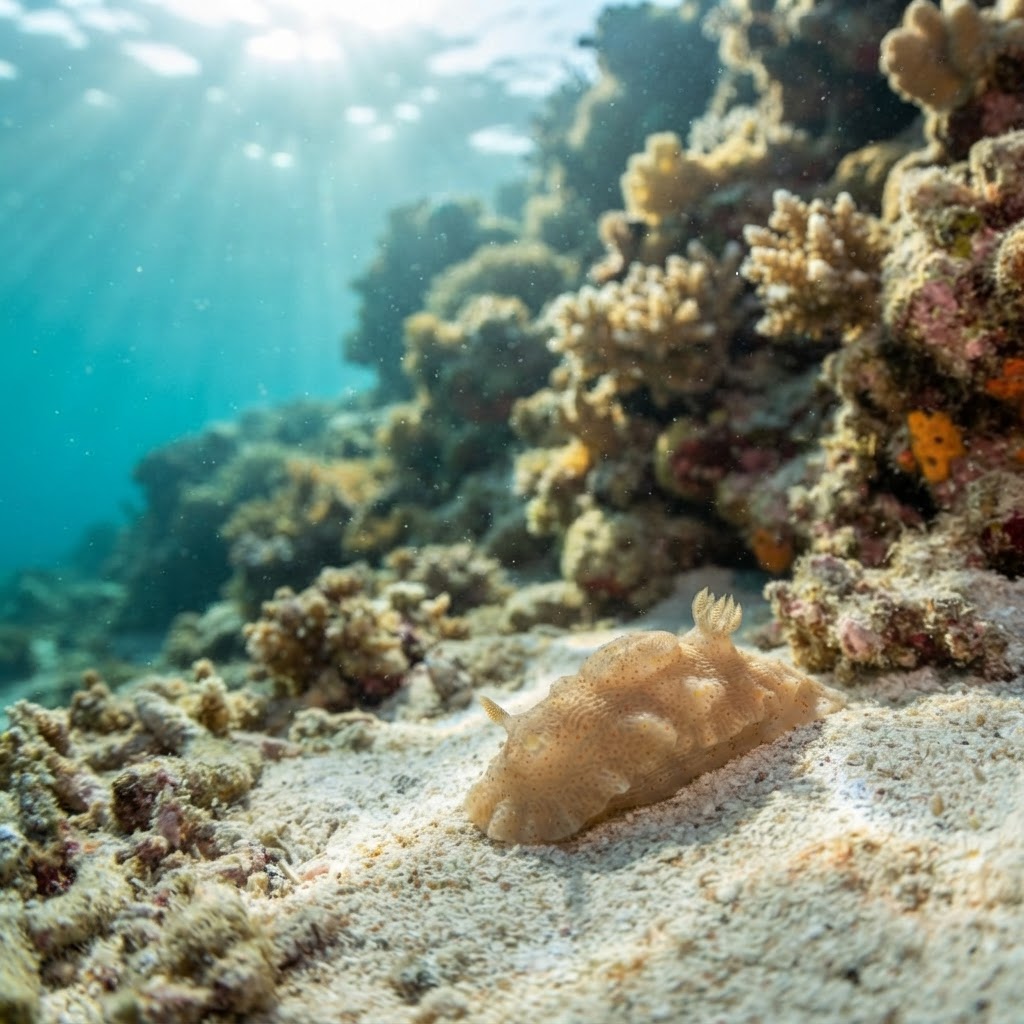
A small, flattened nudibranch (dorid) with a soft, low-profile body that sits close to the substrate rather than standing tall like some of its relatives. Look for a pale, mottled body surface as you scan rocky crevices and encrusted rubble rather than open sand. Its gills and rhinophores (the small sensory tentacles on the head) sit low and are easy to miss unless you slow down and look closely at textured rock surfaces.
Divers find this one moving slowly over rocky and encrusted surfaces, doing what dorid nudibranchs typically do: grazing quietly and paying no attention whatsoever to a diver hovering nearby. It's not an animal that reacts to your presence, so the challenge is spotting it in the first place rather than approaching it carefully. Look during a slow, methodical scan of rock crevices rather than expecting it to appear in open water.
Like other dorid nudibranchs, it almost certainly feeds on sponges or similar encrusting invertebrates, using that diet to store distasteful compounds in its skin as a defence against predators, so it doesn't need to flee or hide when disturbed.
Sightings don't show a clear seasonal pattern, and the observed temperature range of 14.1 to 20.1C spans much of the diving year on the French Riviera, so it's best treated as a year-round possibility rather than a seasonal target.
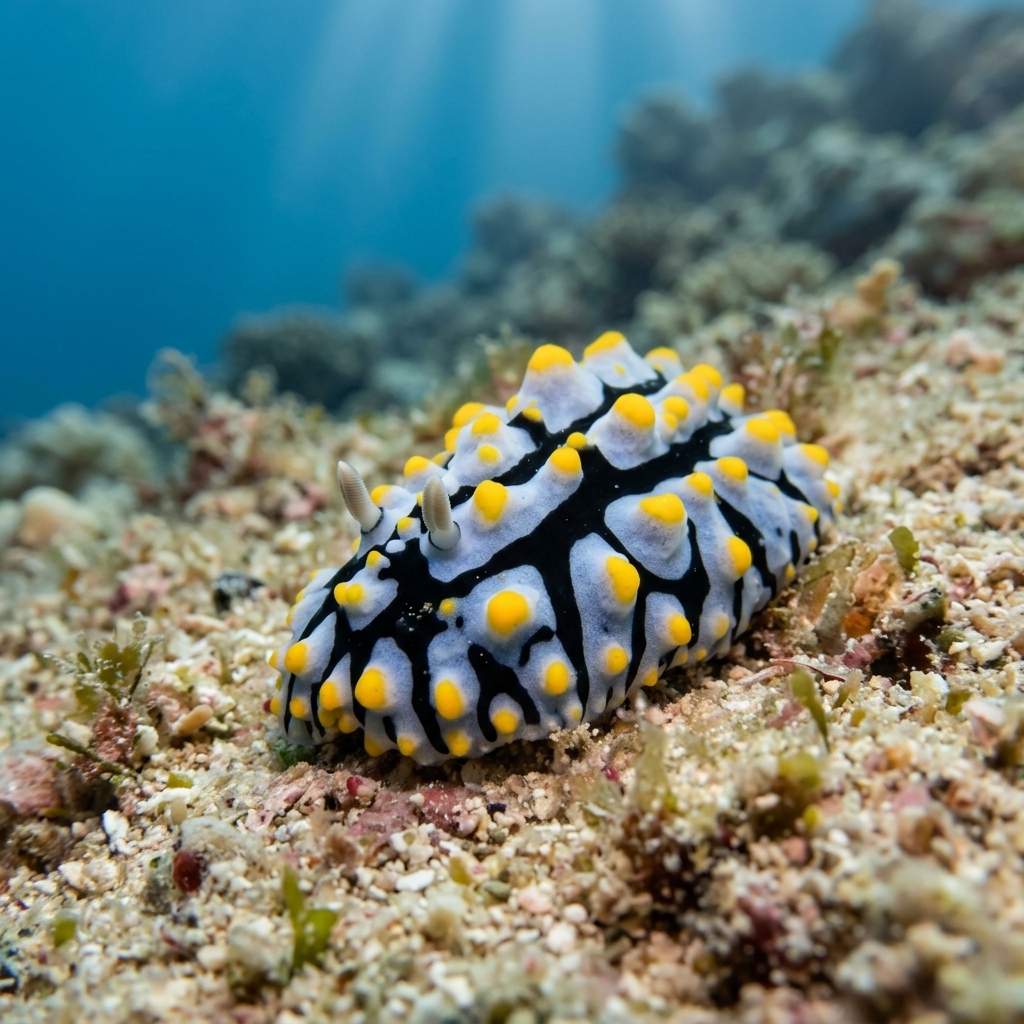
Reef neighbours a diver could mistake it for. Use the identification notes above to tell them apart.
Every logged sighting so far comes from France, concentrated along the French Riviera and Provence coast. If you're hunting for this one, that stretch of Mediterranean coastline is currently the only known place to look.
Mapping where Idaliadoris Depressa is logged…
All confirmed sightings are from France, specifically along the French Riviera and Provence coast. It hasn't been logged elsewhere yet, so this stretch of Mediterranean coastline is your best bet.
There's no detected seasonal pattern in the sighting data, and it's been recorded across a temperature range of 14.1 to 20.1C, so it appears to be a year-round find rather than a seasonal one.
Look for a small, flattened dorid nudibranch with a pale, mottled body sitting low against rocky or encrusted reef surfaces. Its low-profile shape and muted colouring make it easy to overlook unless you're scanning crevices slowly.
No, it poses no danger to divers. Like most nudibranchs, any chemical defences it carries are aimed at predators, not people, so it's completely safe to observe.
It's currently logged as rare at every site where it's been recorded, all of them along the French Riviera. Finding one is a matter of careful, patient searching rather than a common encounter.
Site and sighting data is aggregated from diver logs, iNaturalist and GBIF. For taxonomy and conservation status:
Blue Dragon
3,163 sites