Hypselodoris zephyra
Spot Zephyr Hypselodoris in warm 27-29 °C waters across Bali, Sulawesi and the Philippines. ID tips, best seasons, and top dive regions inside.
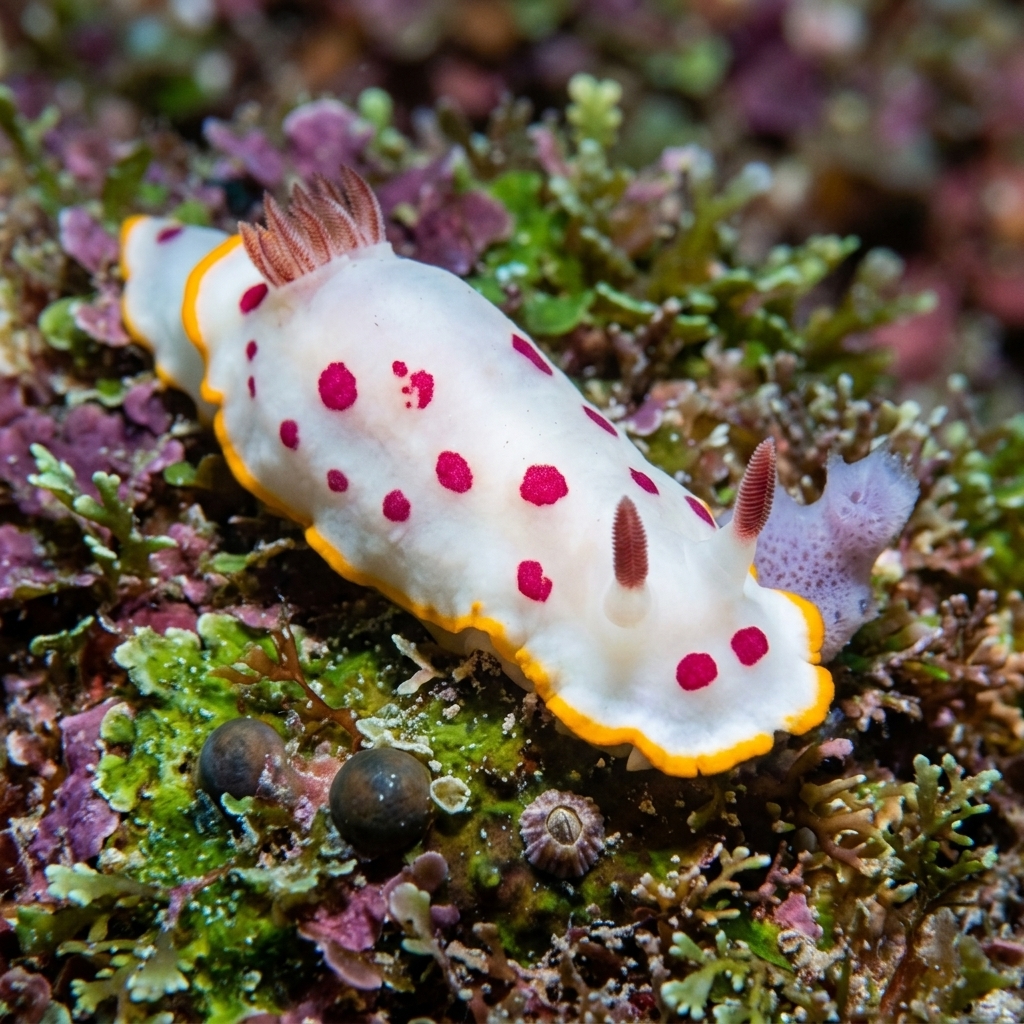
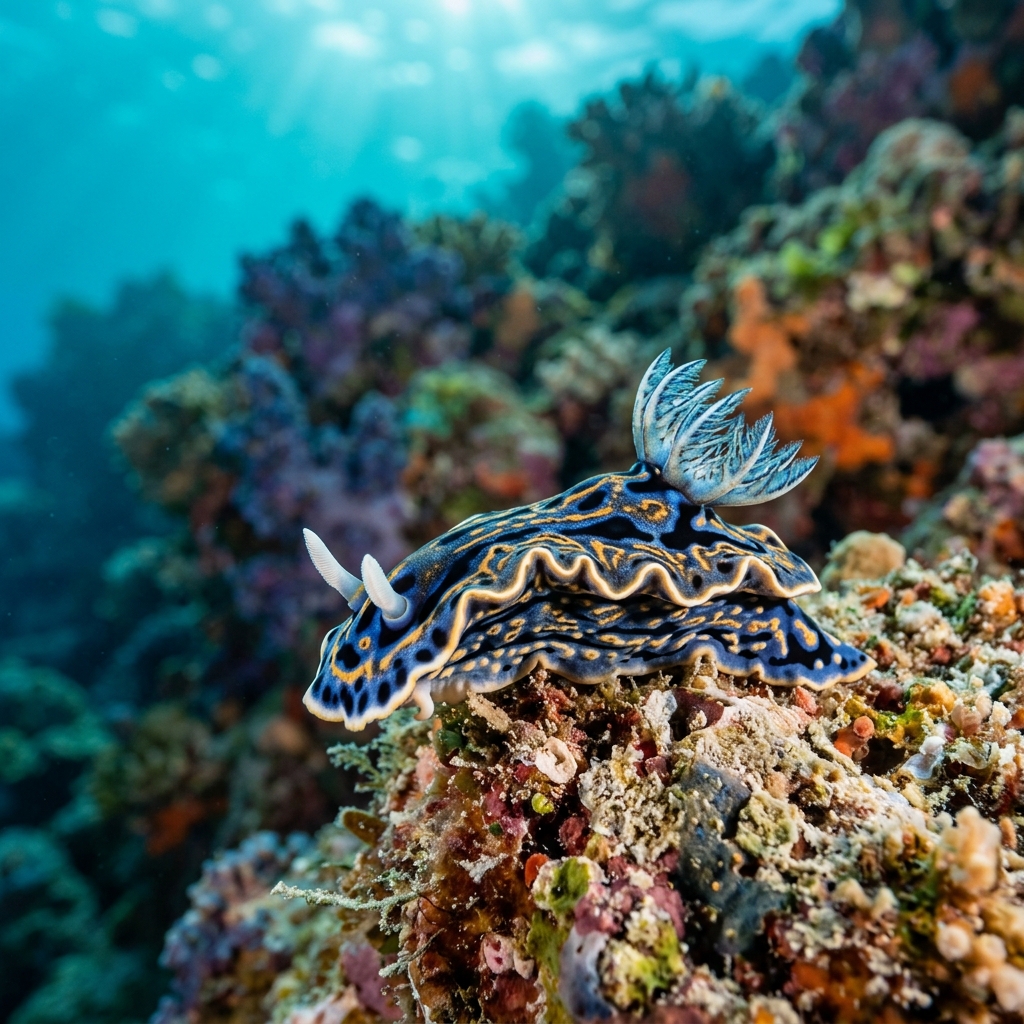
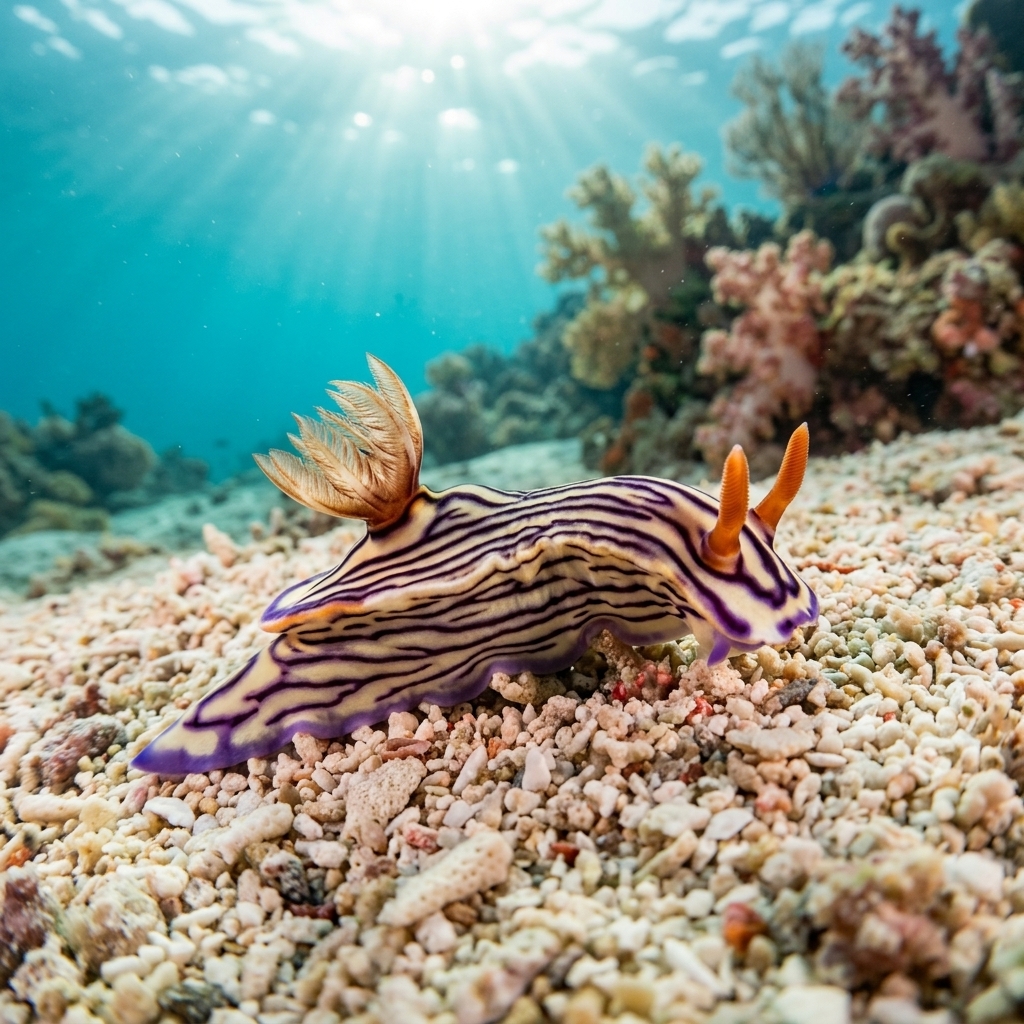
Look for a small, elongated chromodorid nudibranch with a bright blue body edged in white or pale lavender, often with orange or yellow-tipped gill plumes (the feathery respiratory structures on its back) and similarly coloured rhinophores at the head. The colour contrast between the body margin and the central dorsal surface is the key ID mark underwater. It is a compact animal, typically found moving slowly across encrusting sponges or reef rubble.
Like most chromodorids, it is found crawling deliberately across the benthos, typically over sponges, which are the likely food source for this nudibranch family. It moves slowly and shows little response to divers, making it easy to observe once spotted. Finding one usually requires a sharp eye and a slow, methodical dive style; they tend to hug shaded crevices and the undersides of rubble.
Chromodorid nudibranchs such as this species sequester toxic or distasteful compounds from the sponges they feed on, storing them in their mantle as a chemical defence against predators. The vivid colouration is thought to signal this unpalatability to fish.
In the Southern Hemisphere sites where seasonality data exists, sightings concentrate between August and December, so that window is worth targeting in Bali and Timor-Leste. The species is associated with warm water in the 27-29 °C range, which persists year-round across much of its tropical range.
Reef neighbours a diver could mistake it for. Use the identification notes above to tell them apart.
Most sightings come from Indonesia, where Bali, Lombok and Java account for the greatest share of records, followed by Sulawesi. The Philippines, particularly the Visayas, and the north coast of Timor-Leste also have solid clusters of observations. Queensland in Australia rounds out the confirmed range, making the Coral Triangle the heartland for finding this species.
Mapping where Zephyr Hypselodoris is logged…
The strongest sighting record is in Indonesia, particularly around Bali, Lombok, Java, and Sulawesi. The Visayas region of the Philippines and the north coast of Timor-Leste are also reliable areas. Queensland in Australia marks the southern edge of confirmed sightings.
Southern Hemisphere sites show sightings concentrated from August through December, so this is the recommended window for destinations like Bali and Timor-Leste. Across the broader tropical Coral Triangle, warm water persists year-round, so opportunities exist outside that window too.
Key in on the bright blue dorsal surface edged with a white or pale lavender margin, combined with orange or yellow-tipped gill plumes and rhinophores. The strong contrast between the body margin and the central back is the most reliable field mark. It is a small, slow-moving nudibranch typically found on encrusting sponges.
It is most often logged as rare or uncommon at the sites where it appears. Common sightings are recorded at only a small number of locations, so targeted, slow muck or reef dives give the best chance of an encounter.
No, it poses no risk to divers whatsoever. Like other nudibranchs, it is a small, slow-moving invertebrate that can simply be observed without any precautions beyond not touching the reef.
Precise size data for this species is not well documented, but as a member of the Hypselodoris genus it is typically a small nudibranch, in the range of one to a few centimetres in length. Underwater it can be easy to overlook without a careful search.
Site and sighting data is aggregated from diver logs, iNaturalist and GBIF. For taxonomy and conservation status:
Blue Dragon
3,163 sites