Hypselodoris roo
Spot Hypselodoris roo in Sulawesi and the Philippines in warm 27-29°C water. A rare but rewarding nudibranch for sharp-eyed divers.
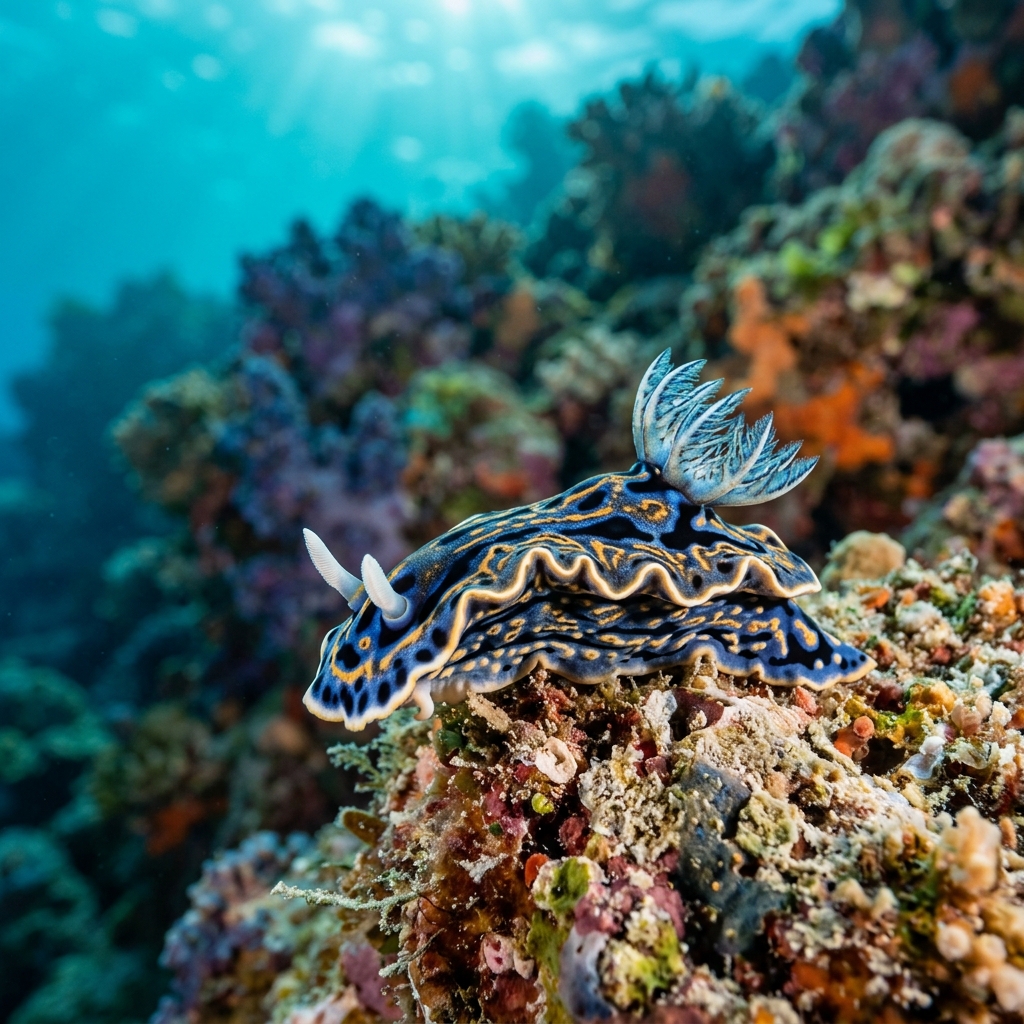
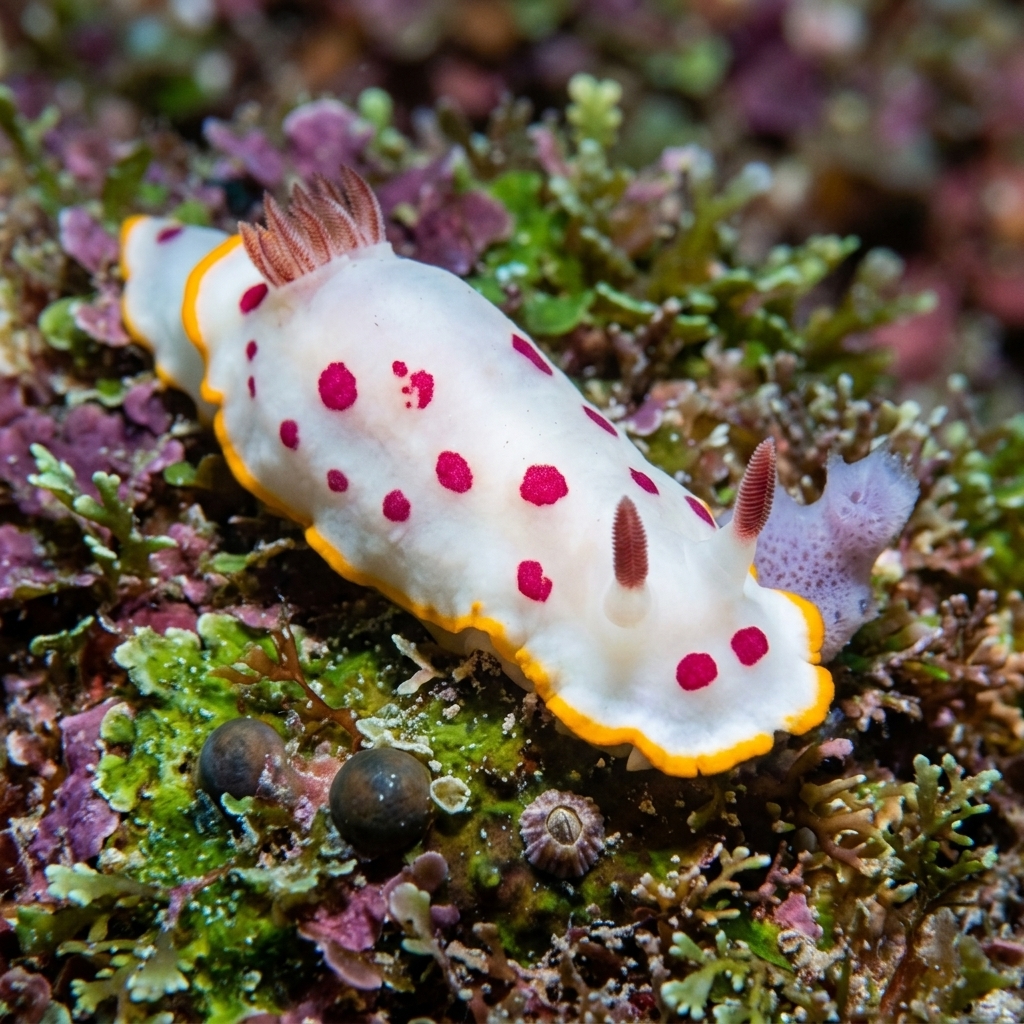
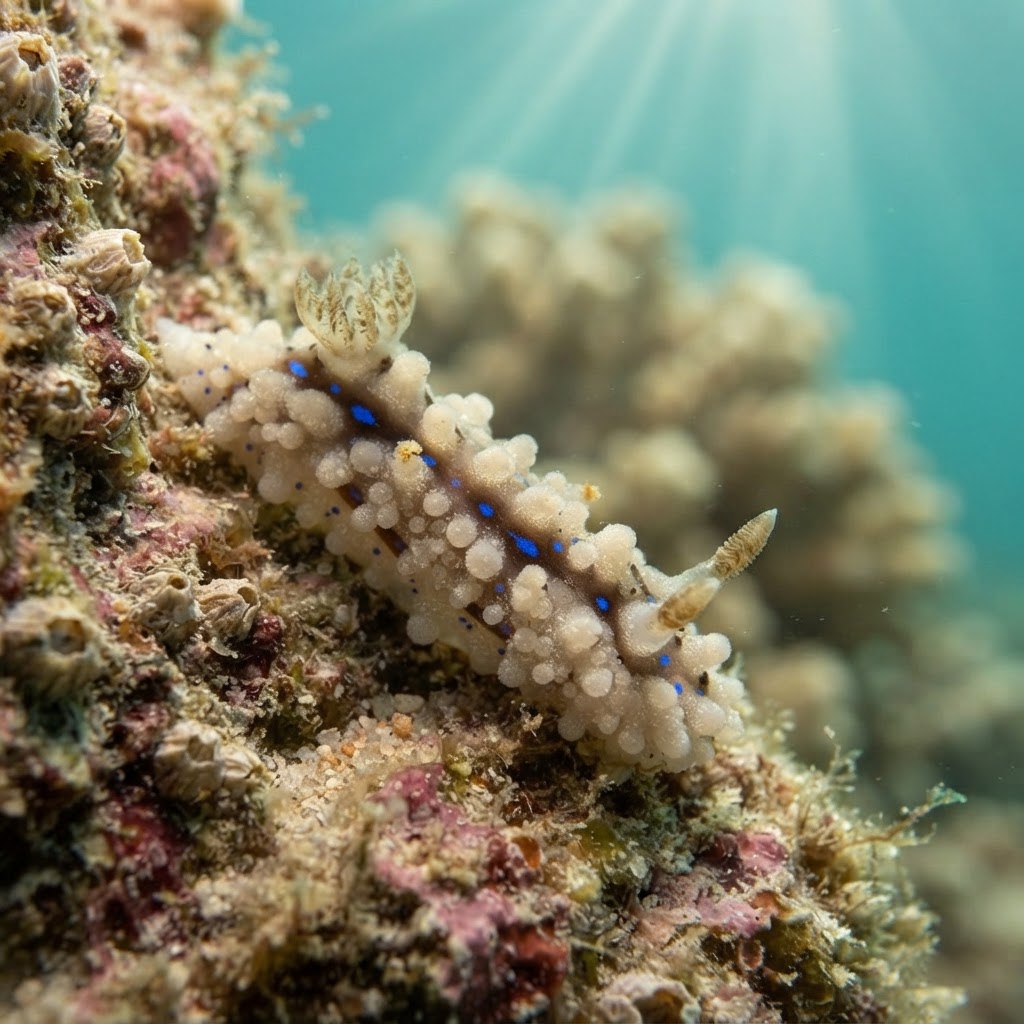
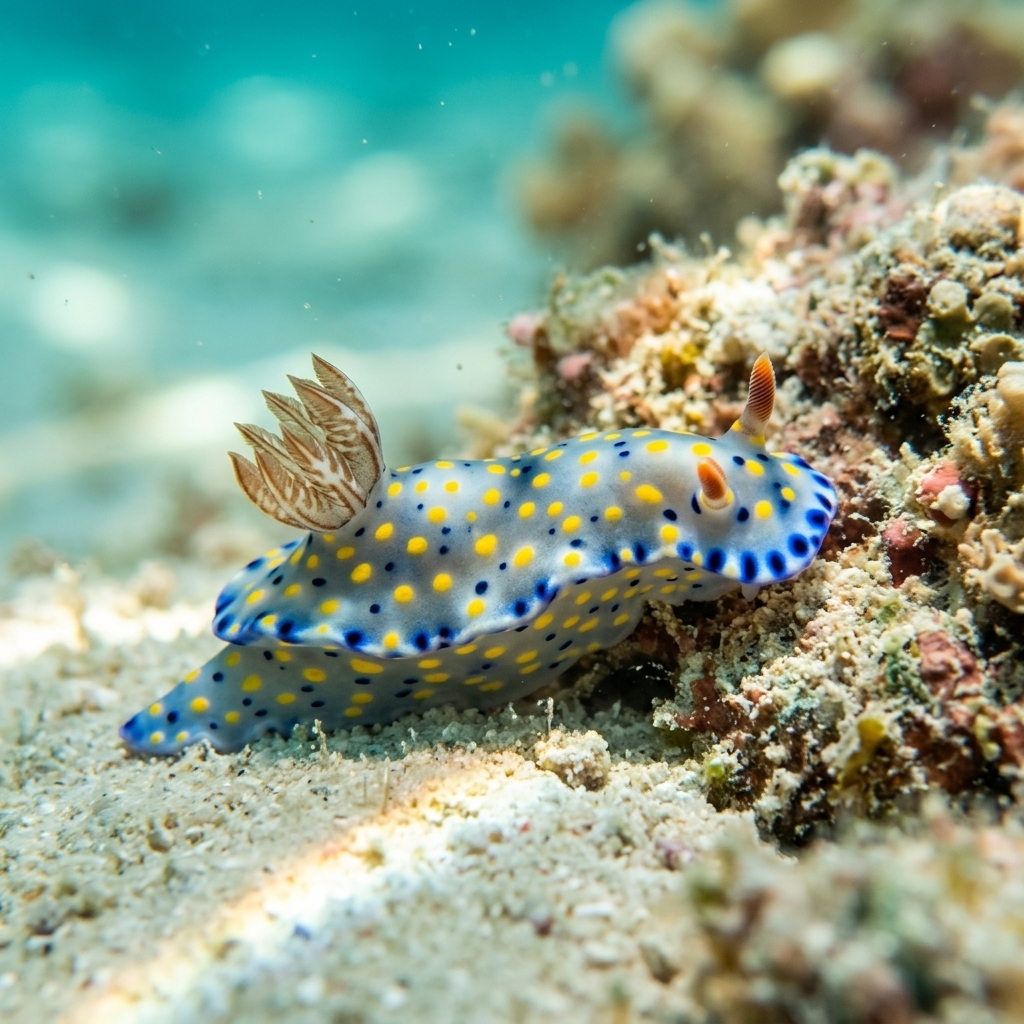
A small chromodorid nudibranch with the vivid body colouring typical of the Hypselodoris genus, usually found creeping slowly across reef surfaces. Look for the characteristic gill plume (the feathery cluster at the rear used for breathing) and the pair of rhinophores (chemosensory tentacles) at the head end, both often brightly tipped. Observed in water between 27 and 29°C, so the reef context is always warm and tropical. Precise size data is limited, so treat any small, vividly patterned dorid on an Indonesian or Philippine reef as a candidate worth photographing for closer inspection.
Like most chromodorid nudibranchs, this species is found moving slowly across hard substrate, sponges, or algae-covered rubble as it forages. It tends to be solitary and does not react dramatically to diver approach, though it may pause or curl slightly if disturbed. Sightings are typically made during the day on reef slopes and sandy reef margins, where careful scanning at low depth pays off.
Chromodorid nudibranchs in the Hypselodoris genus sequester chemical compounds from the sponges they eat and store them in their own tissue as a chemical defence against predators, which is thought to explain why they advertise themselves with such bright colours.
In Northern Hemisphere sites such as the Philippines, sightings concentrate in February through April. In Southern Hemisphere sites such as Indonesia, July through December is the more productive window.
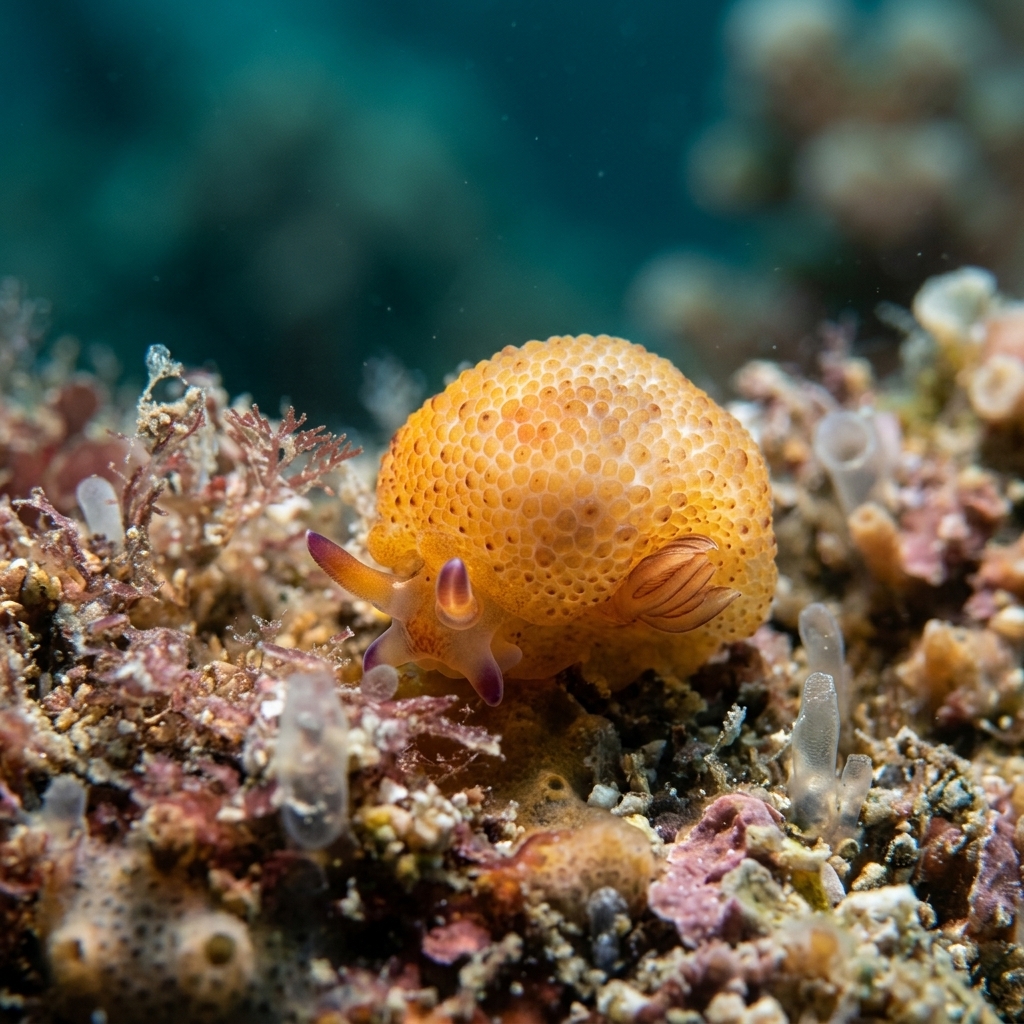
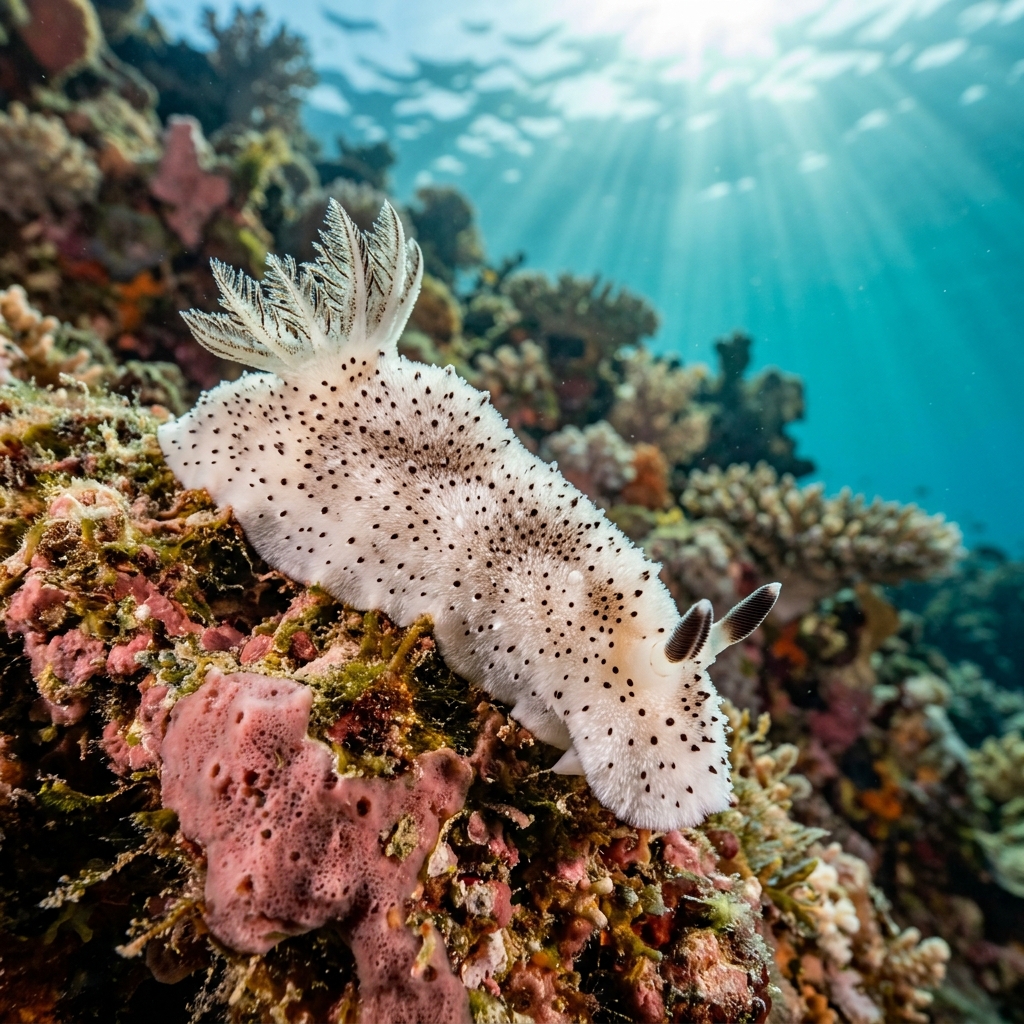
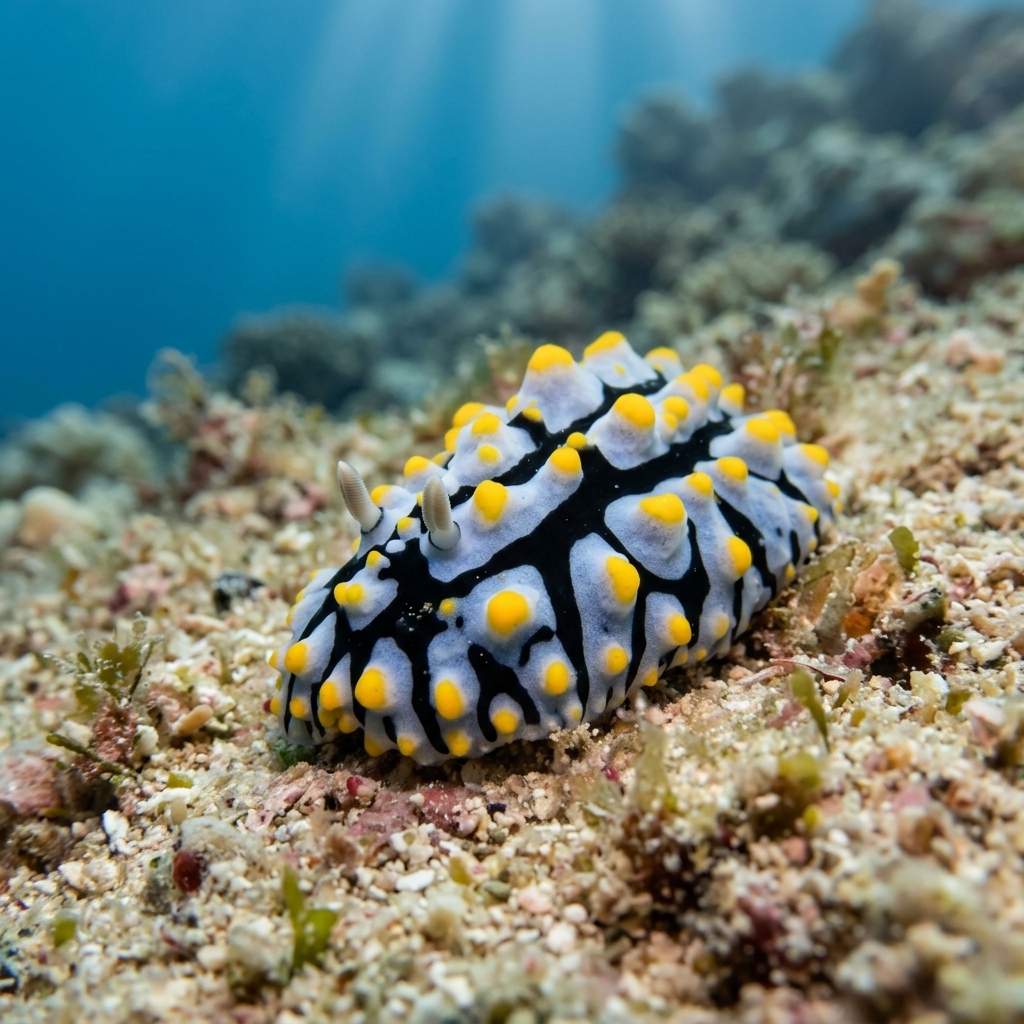
Reef neighbours a diver could mistake it for. Use the identification notes above to tell them apart.
Most sightings come from Indonesia and the Philippines, the two countries that between them account for all logged records. Within Indonesia, Sulawesi and the Bali, Lombok and Java corridor are the strongest areas, while in the Philippines sightings are split between Luzon in the north and the Visayas in the centre. All of these are classic muck and reef diving destinations where patient searching of rubble and coral slopes is the standard tactic.
Mapping where Hypselodoris roo is logged…
It has been logged across sites in Indonesia and the Philippines. The strongest concentrations are in Sulawesi, the Bali and Lombok area, and Luzon in the northern Philippines, with further records from the Visayas. All are warm, tropical dive destinations with active nudibranch-watching communities.
Timing depends on which side of the equator you are diving. In the Philippines and other Northern Hemisphere sites, February to April sees the most concentrated sightings. In Indonesian sites further south, July through December is the peak window.
Look for a small, slow-moving nudibranch with vivid chromodorid colouring on warm tropical reef surfaces. Key features are the feathery gill plume at the rear and the paired rhinophores at the head. Because other Hypselodoris and Chromodoris species share similar body plans, a close-up photo is the best way to confirm the ID after the dive.
It is infrequent: the majority of sites where it has been recorded class it as rare, with a smaller number rating it uncommon and fewer still calling it common. Patient, low-and-slow searching on rubble slopes and reef walls gives the best chance of an encounter.
No. Like all chromodorid nudibranchs it poses no threat to divers. The bright colours are a warning to predators, not to people. Simply avoid touching it, as handling can damage the animal.
Site and sighting data is aggregated from diver logs, iNaturalist and GBIF. For taxonomy and conservation status:
Blue Dragon
3,163 sites