Hypselodoris paradisa
Spot Hypselodoris paradisa in Bali and the Philippines in warm 27-29 °C waters. Here's where divers log it and what to look for.
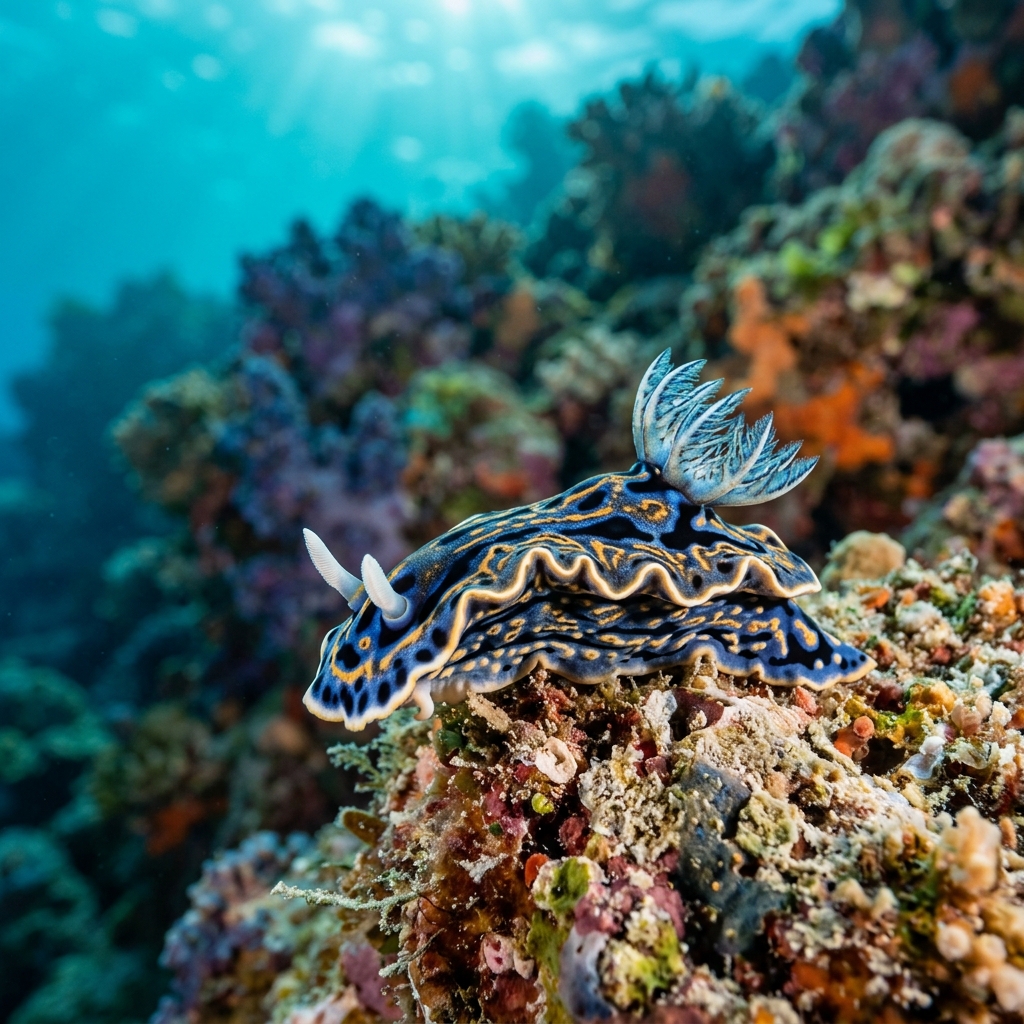
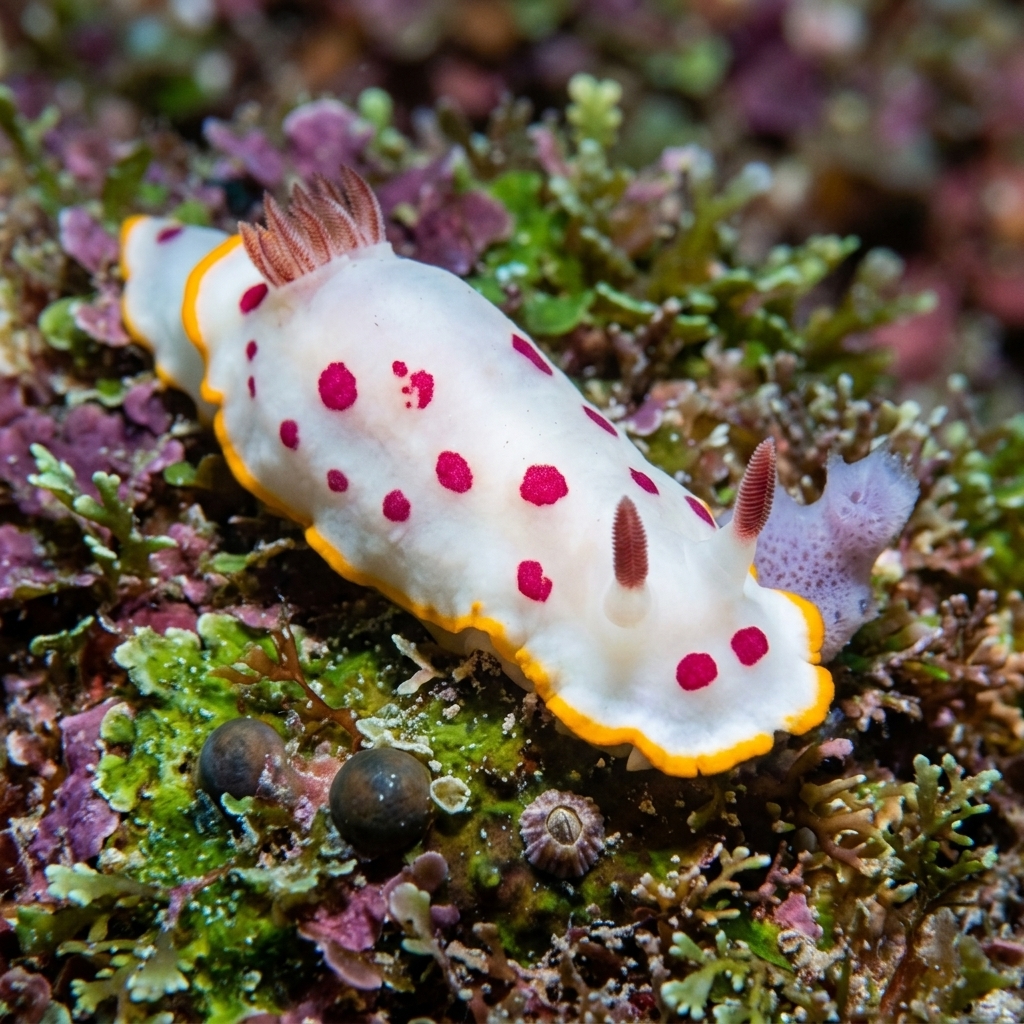
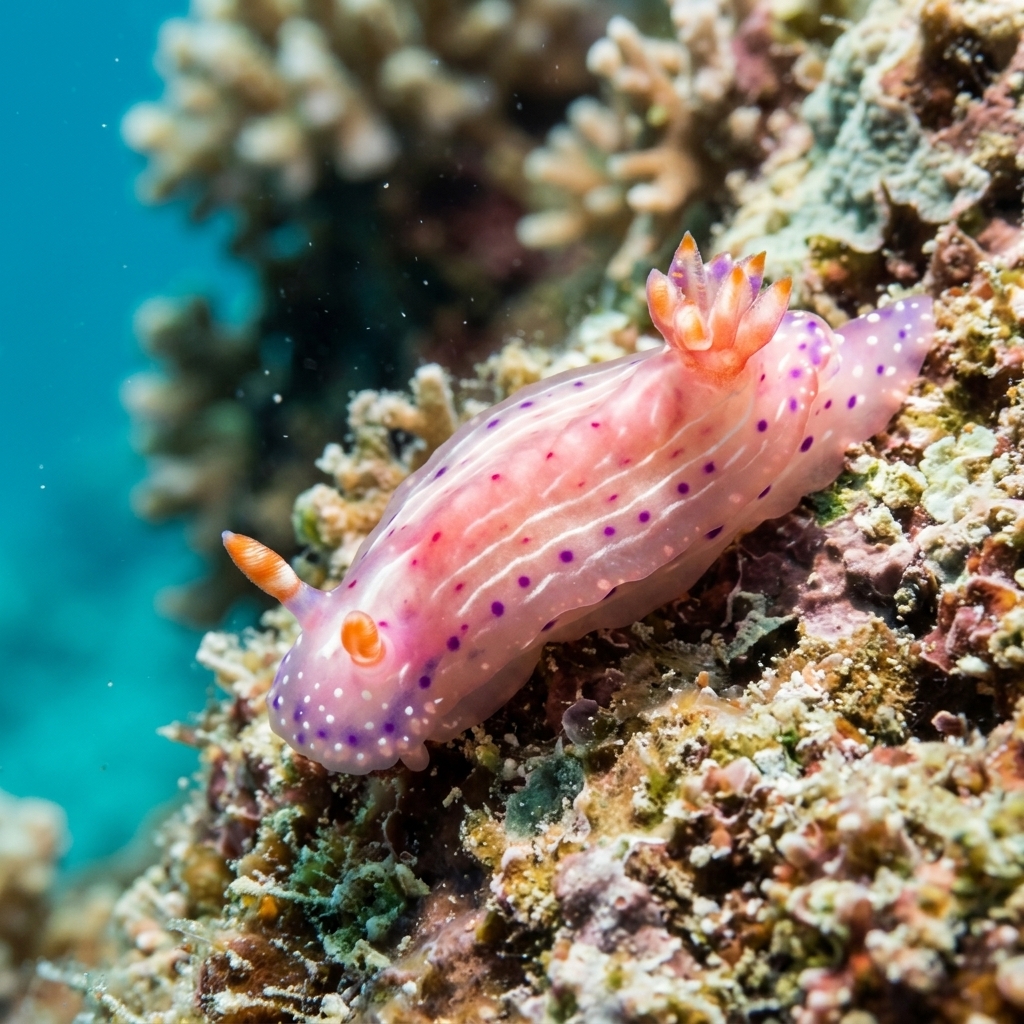
A small, elongated nudibranch with a pale white or cream body edged with bold colour markings, typically vivid blue or purple marginal lines and orange or yellow gill plumes and rhinophores (scent organs on the head). Like most chromodorids, the body is relatively flat and narrow, making it look almost ribbon-like as it glides across the reef. When searching for it, focus on the contrasting gill plumes at the rear and the rhinophores at the front, which stand out even at small sizes.
Like most chromodorids, it is typically seen slowly crawling over hard substrate, rubble, or sponge, the same sponges it feeds on. It moves unhurriedly and shows little reaction to a careful diver hovering close, making it a good subject for macro photography if you approach slowly. Look low on the reef, particularly on encrusting sponge patches in moderate current.
Chromodorid nudibranchs like this one sequester defensive chemicals directly from the sponges they eat, making them unpalatable to predators. The bright colour pattern is thought to serve as a warning signal, advertising that toxicity to anything considering taking a bite.
Southern hemisphere data points to Aug, Dec as the peak window, which aligns with the dry season and excellent visibility conditions around Bali and Lombok. Water temperatures throughout the observed range sit between 27 and 29 °C year-round, so the species is likely present beyond that window but logged less frequently.
Reef neighbours a diver could mistake it for. Use the identification notes above to tell them apart.
Most sightings come from Indonesia, particularly across sites in Bali, Lombok, and Java, making this region by far the best base for a targeted search. The Philippines, especially around Luzon and the north, adds a handful of confirmed sites, with a solitary record from Sipadan and East Sabah in Malaysia rounding out the known range.
Mapping where Hypselodoris paradisa is logged…
The strongest concentration of sightings is in Indonesia, particularly around Bali, Lombok, and Java. The Philippines, around Luzon and the north, is the next best area, with an additional record from Sipadan in East Sabah, Malaysia.
Southern hemisphere sightings concentrate from August through December, covering the second half of the year around Indonesian sites. The species inhabits warm water between 27 and 29 °C, so the reef conditions remain broadly suitable year-round in its core range.
Look for a slender, pale-bodied nudibranch with vivid blue or purple marginal colour lines and brightly coloured gill plumes and rhinophores. Chromodorid nudibranchs all share this general body plan, so focus on the exact edge colouration and gill colour to separate this species from similar ones in the same family.
It is considered rare at most sites where it has been recorded, with only a couple of sites rating it as common. Patience and a slow, methodical search of sponge-covered rubble and reef slopes gives you the best chance of an encounter.
Site and sighting data is aggregated from diver logs, iNaturalist and GBIF. For taxonomy and conservation status:
Blue Dragon
3,163 sites