Hypselodoris maculosa
Spot the Double-banded Split-tooth Dorid in warm Indo-Pacific waters. Most logged in Indonesia and South Africa, here's how to find and ID it.
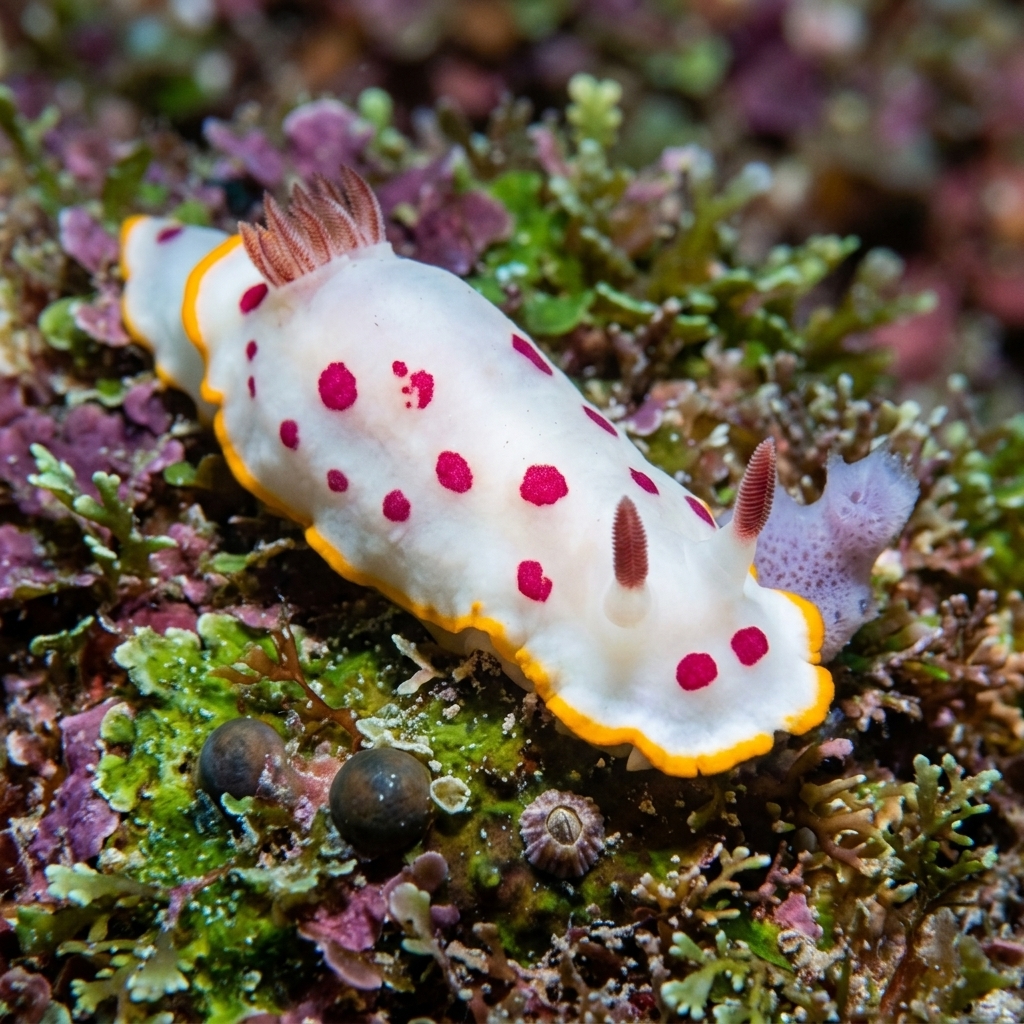
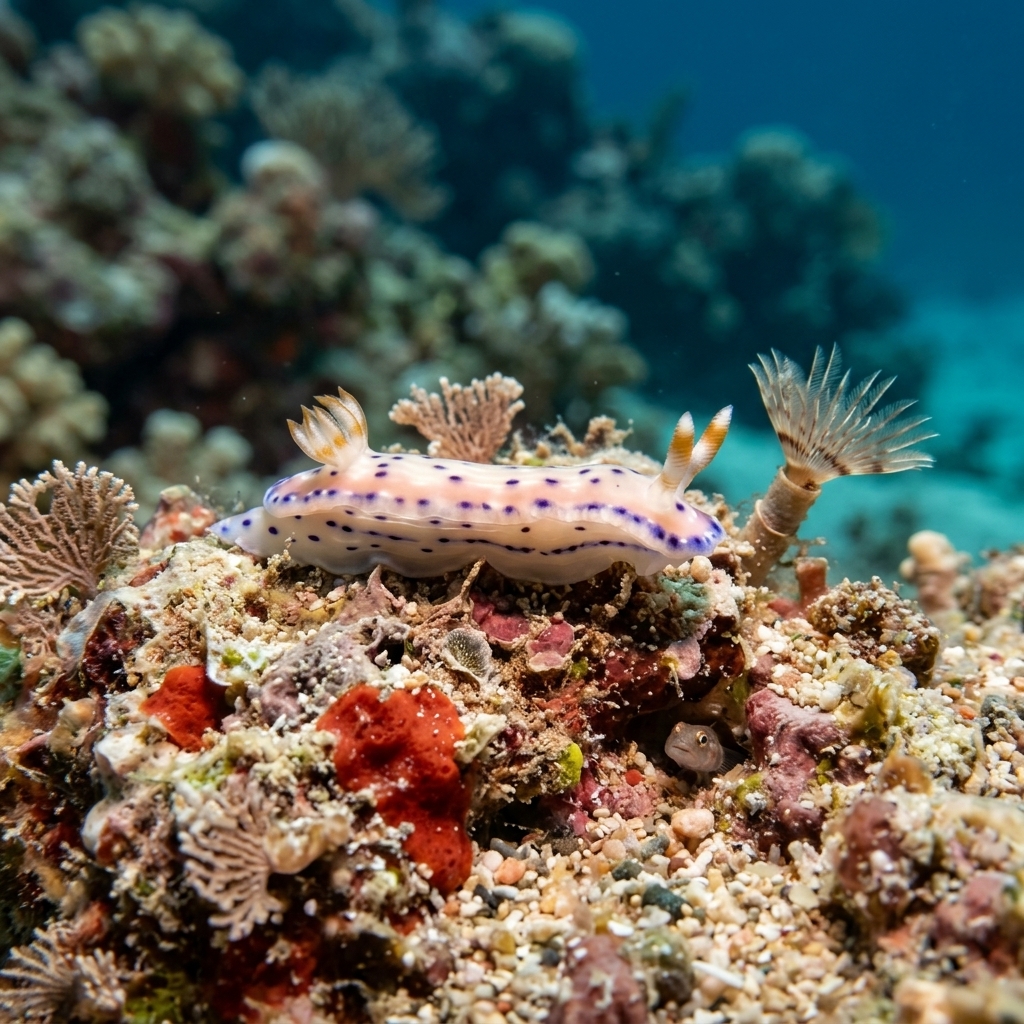
A small chromodorid nudibranch with a pale whitish or cream body marked by two dark transverse bands, the feature that gives it its name. The gills and rhinophores (the club-shaped sensory horns at the head) are typically tipped or ringed with contrasting colour. Like other chromodorids, the body is smooth and flattened, low-slung against the reef, and rarely much larger than a few centimetres. Look closely at any pale-banded dorid in warm Indo-Pacific water and check that double-band pattern before moving on.
Like most chromodorids, this dorid is a slow crawler, usually spotted inching across hard reef, rubble, or sponge, the sponges that make up its likely diet. It shows little reaction to divers and will simply continue moving or pause. Your best chance is to slow right down and scan the reef surface methodically, particularly around encrusting sponges where these nudibranchs tend to concentrate.
Chromodorid nudibranchs sequester toxic or distasteful chemicals from the sponges they eat and store them in their own tissues as a chemical defence against predators, which is why a small, slow, brightly patterned animal has little need to hide.
No clear seasonal peak has emerged from the available data, so this species is treated as year-round across its range. Its observed water-temperature window of roughly 24 to 29 °C fits warm tropical and subtropical reefs, where conditions stay suitable throughout the year.
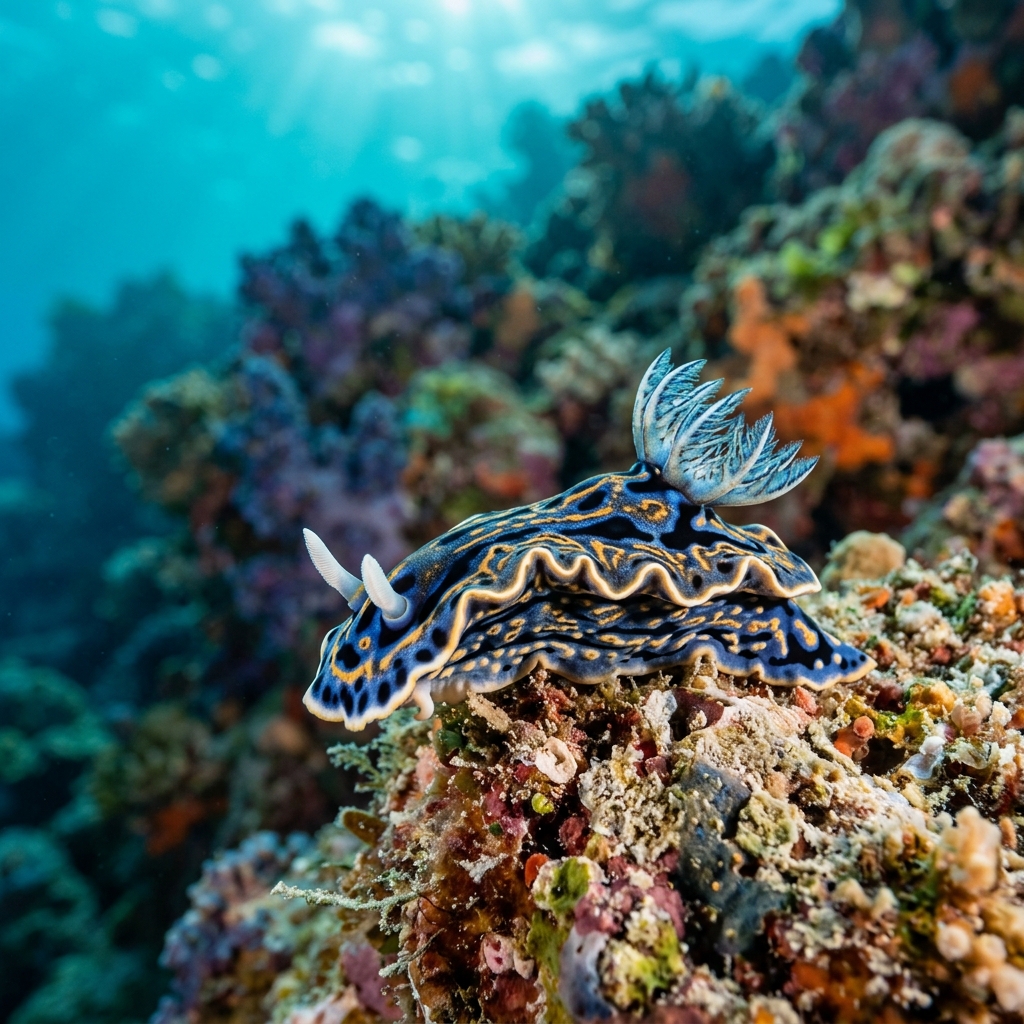
Reef neighbours a diver could mistake it for. Use the identification notes above to tell them apart.
Most sightings come from Indonesia, particularly across Sumatra and Kalimantan, making that region the strongest bet. South Africa's Durban and North Coast is a surprisingly productive second cluster, followed by Queensland in Australia and northern Taiwan. Smaller numbers of records exist from Japan's Amami and Ogasawara islands, Nosy Be in Madagascar, and Kwajalein Atoll in the Marshall Islands.
Mapping where Double-banded Split-tooth Dorid is logged…
The species is most reliably logged in Indonesia, especially across Sumatra and Kalimantan. South Africa's Durban and North Coast is the next strongest region, with additional records from Queensland in Australia, northern Taiwan, Japan, Madagascar, and the Marshall Islands.
There is no defined season in the current data, so diving year-round is reasonable. The species sits in a temperature window of roughly 24 to 29 °C, which matches warm tropical and subtropical reefs across all seasons.
Look for a small, pale cream or white nudibranch with two distinct dark bands crossing the body, that double-band pattern is the key feature. Check also for contrasting colour on the gills and rhinophores. It will be moving slowly over hard reef or sponge.
It is considered rare to uncommon wherever it is logged. At the majority of sites where divers have recorded it, sightings are classed as rare, so do not expect to find one on every dive. Slow, focused reef searching improves your odds considerably.
No. Like all nudibranchs, it poses no threat to divers. Avoid touching it, chromodorids sequester chemicals from their sponge diet as a defence, and handling stresses the animal unnecessarily.
Site and sighting data is aggregated from diver logs, iNaturalist and GBIF. For taxonomy and conservation status:
Blue Dragon
3,163 sites