Hypselodoris imperialis
Spot the Imperial Nudibranch in Hawaii and French Polynesia in waters around 24-27 °C. Tips on ID, best seasons, and where divers log it most.
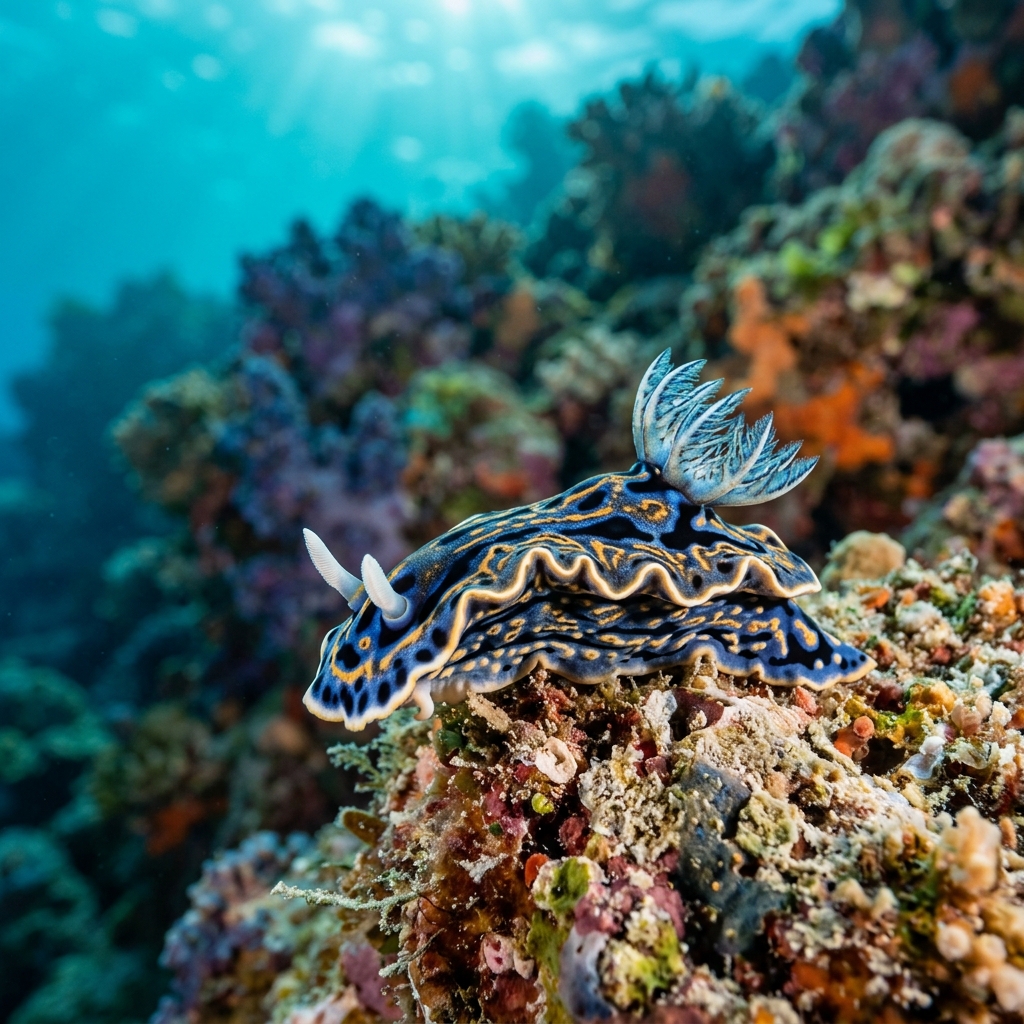
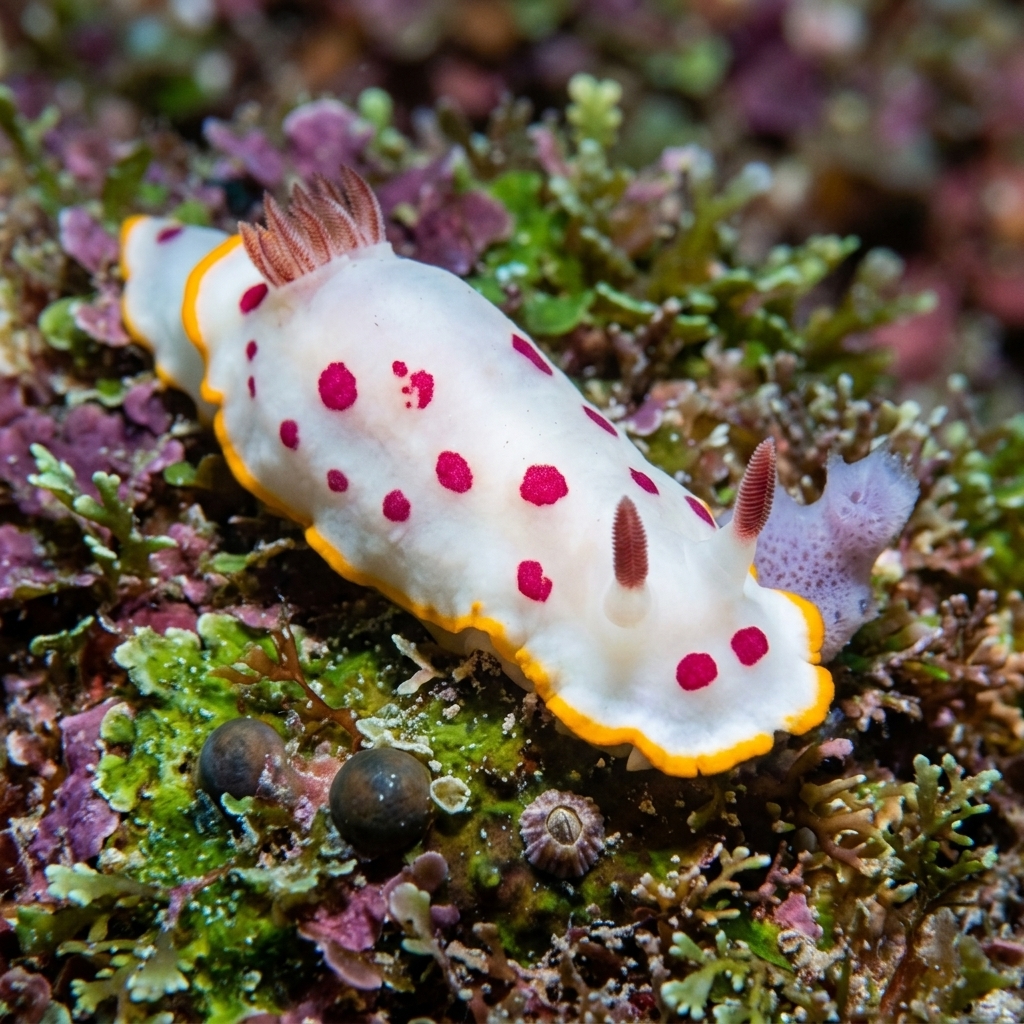
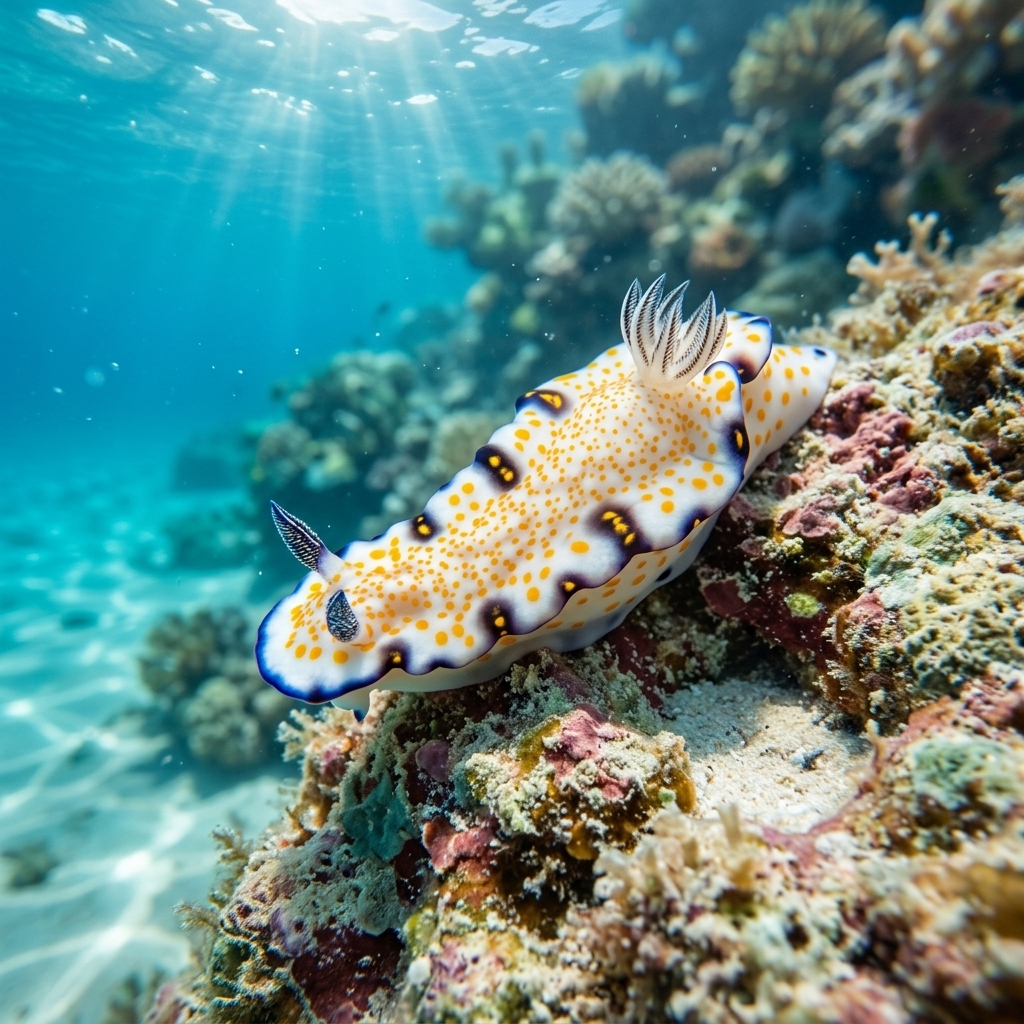
Look for a vivid chromodorid-style body, typically displaying striking blue or purple tones with contrasting white or pale edging along the mantle margins and a cluster of feathery gills (cerata) fanning from the back. It is a small, flattened slug-like animal that moves slowly across hard reef surfaces. The bold colour pattern is its key field mark underwater, standing out clearly against encrusting sponge or algae. No significant visible difference between sexes is documented.
Divers typically spot it moving slowly across hard reef substrate, usually foraging on encrusting sponge, which is the preferred food source for chromodorid nudibranchs. It shows little reaction to diver presence and will continue its slow crawl unless physically disturbed. Look low on the reef, under ledge edges or on rubble patches, especially in shallower sections of a dive.
Like other chromodorids, the Imperial Nudibranch is thought to sequester chemical compounds from the sponges it eats, storing them in the mantle as a chemical deterrent against predators. Its vivid colouration is a visual advertisement of that unpalatability, a strategy known as aposematism.
Northern Hemisphere data shows sightings concentrated from November through September, which covers most of the year, suggesting a broad season in Hawaii rather than a tight peak. Water temperatures at observed sites run 24 to 27 °C, consistent with warm tropical and subtropical reef conditions year-round.
Reef neighbours a diver could mistake it for. Use the identification notes above to tell them apart.
Most sightings come from Hawaii, which accounts for the large majority of logged dive sites, with French Polynesia, especially Tahiti and the Rangiroa and Tikehau atolls, making up most of the remainder. These two regions are far and away the best places to look for this species. No sightings outside the United States and French Polynesia appear in the data.
Mapping where Imperial Nudibranch is logged…
Hawaii is the top spot by a clear margin, with a strong spread of logged sites across the islands. French Polynesia, particularly Tahiti and the Rangiroa and Tikehau atolls, is the other main destination. Outside these two regions, confirmed sightings are not recorded in the data.
Northern Hemisphere data shows sightings across most of the year, from November through September. There is no single narrow peak season, so a Hawaii or Tahiti dive trip at almost any point in that window gives a reasonable chance of an encounter.
Focus on the bold blue or purple mantle with pale contrasting margins and the fan of gills on the back. It crawls slowly on hard reef surfaces and is small enough that slow, low diving pays off. The vivid colour combination is the clearest field mark separating it from plain or brown-toned slugs.
It is most frequently logged as uncommon at the sites where it appears, with a fair number of sites rating it rare. Common sightings do occur but represent a minority of reports. Slow, attentive diving close to the reef bottom improves your chances considerably.
No. Imperial Nudibranchs pose no risk to divers whatsoever. They are tiny, slow-moving, and entirely harmless. Simply avoid touching them, as handling can damage their delicate bodies and disturb their mucus coating.
Site and sighting data is aggregated from diver logs, iNaturalist and GBIF. For taxonomy and conservation status:
Blue Dragon
3,163 sites