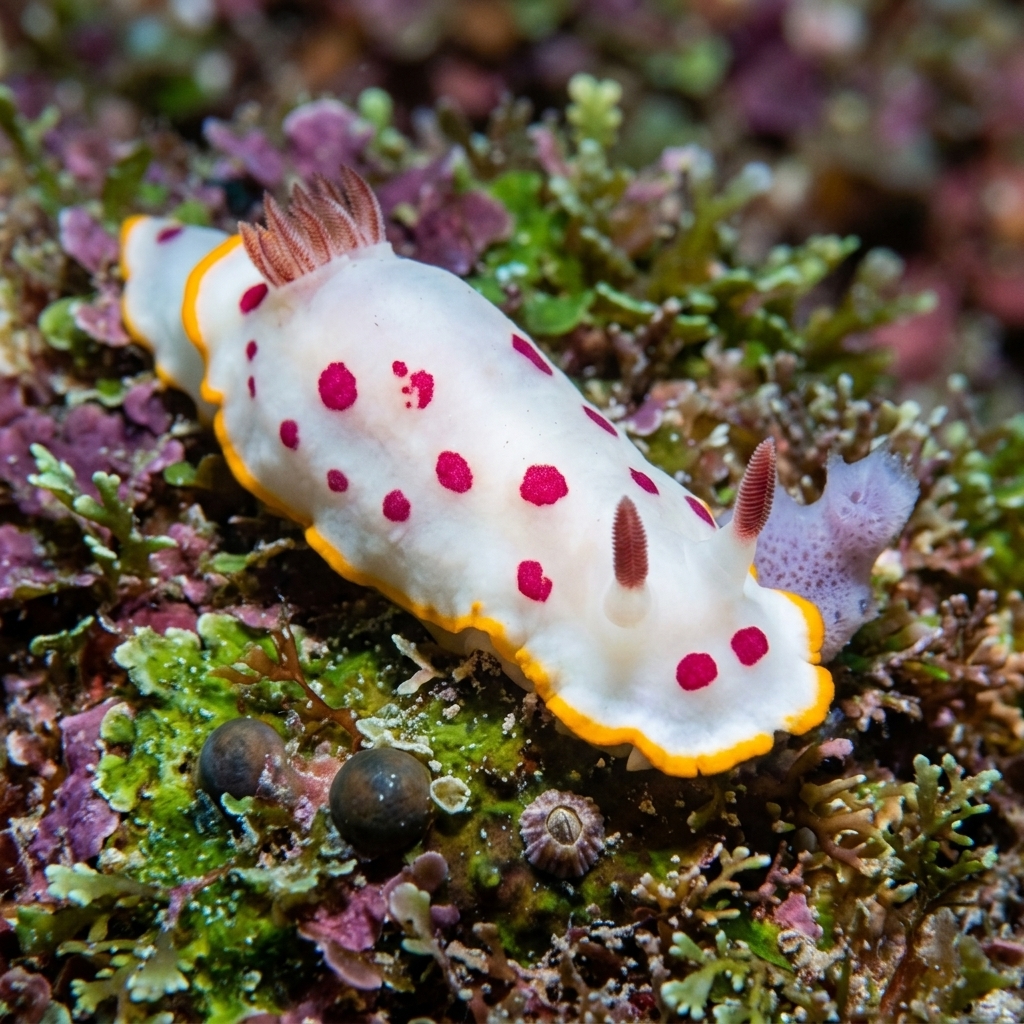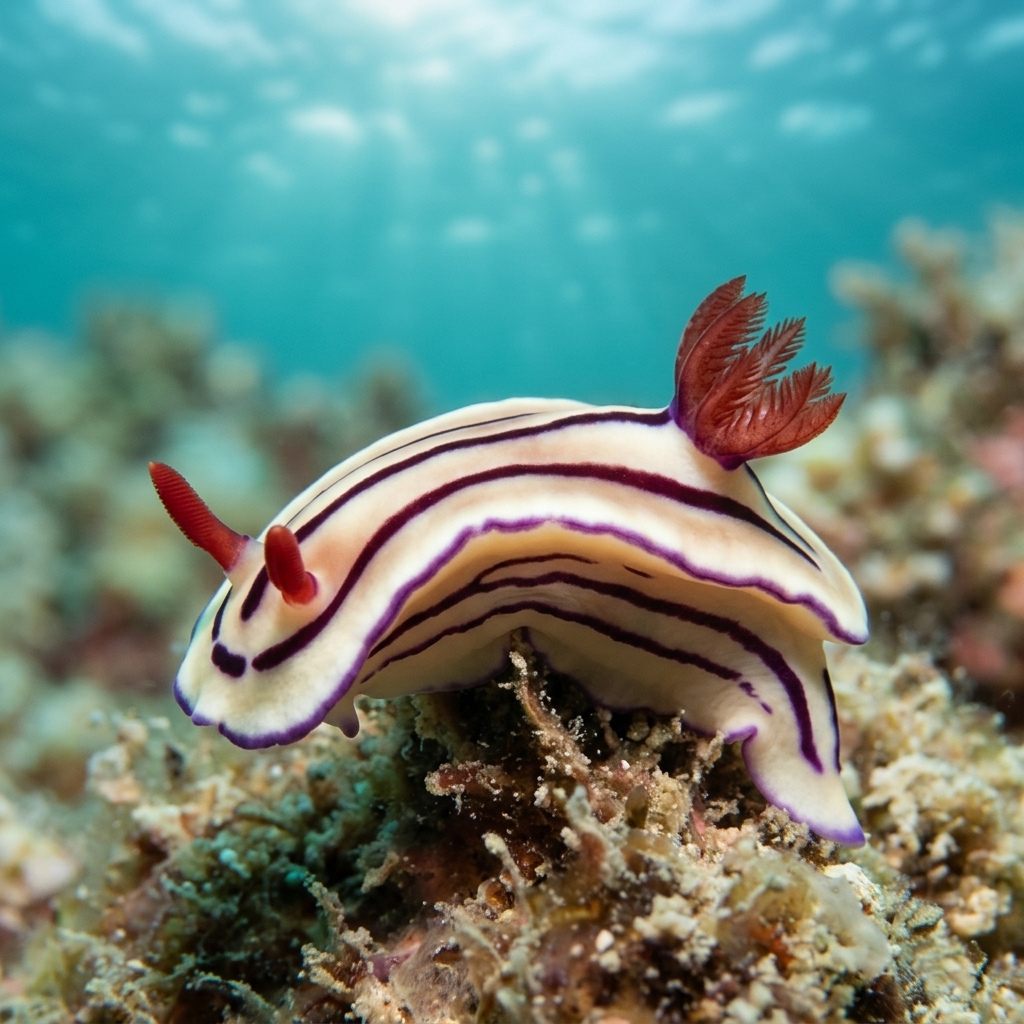
Hypselodoris emma
Spot the Triple-striped Split-tooth Dorid in Sipadan, the Philippines or Sulawesi. Warm 27-29 °C water, Aug, Oct peak. ID tips inside.
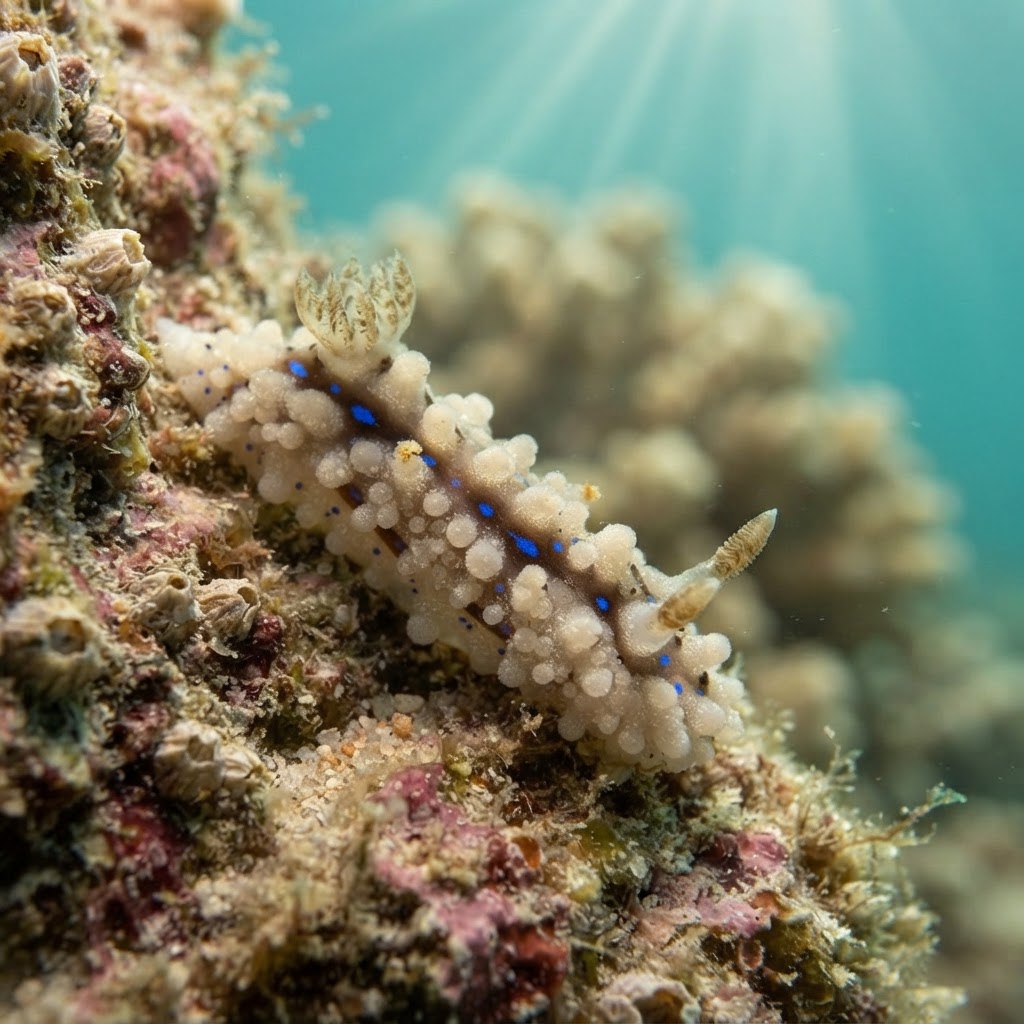
Three bold, dark longitudinal stripes running the length of a pale blue or whitish body are the key field mark that give this dorid its name. The gill plume and rhinophores (sensory head tentacles) typically show contrasting colour, helping it stand out against the reef surface. It is a small nudibranch, so searching the underside of coral rubble, sponges, and encrusting algae at close range is the way to find it.
Like most chromodorid nudibranchs, it is seen slowly crawling across reef substrate in search of the sponges it feeds on, typically on rubble patches, under ledges, or on encrusting growth. It shows little reaction to divers and will simply continue moving when approached, making a steady, slow approach the best tactic for observation. Daytime dives are the standard opportunity, though night dives across similar habitat can also turn one up.
Chromodorid nudibranchs such as this one sequester toxic or distasteful compounds from the sponges they eat and advertise that protection with their vivid patterning, a strategy called aposematism.
In the Northern Hemisphere, sightings concentrate between August and October, so that window is the target for Malaysian and Philippine dives. Southern Hemisphere records from Queensland peak in October.
Reef neighbours a diver could mistake it for. Use the identification notes above to tell them apart.
Most sightings come from Malaysia, particularly the Sipadan and East Sabah reefs, which collectively account for the largest share of logged records. The Philippines, especially Luzon and the Visayas, and Indonesian Sulawesi are the next strongest regions, with smaller numbers recorded in Queensland, Australia, and Singapore's Southern Islands.
Mapping where Triple-striped Split-tooth Dorid is logged…
The species is most reliably logged around Sipadan and East Sabah in Malaysia, with strong sighting records also from Luzon in the Philippines, Sulawesi in Indonesia, the Visayas, and Queensland in Australia. Singapore's Southern Islands have occasional records too.
For dives in Malaysia and the Philippines, August through October is the peak window based on logged sightings. Divers heading to Queensland, Australia should aim for October. Outside these periods the species may still be present, but encounter rates appear lower.
Look for three distinct dark stripes running lengthways along a pale blue or white body. The contrasting gill plume and rhinophores help confirm the ID at close range. It is a small nudibranch, so bring a macro lens and check sponge surfaces and rubble carefully.
It is considered rare at the majority of sites where it has been recorded, and uncommon at most of the rest. Only a small handful of sites report it as common or very common. Targeted searching on rubble and sponge habitat gives you the best chance.
No. Like all nudibranchs, it poses no threat to divers. It moves slowly and ignores you entirely. The bright colours are a warning to predators, not to us.
Site and sighting data is aggregated from diver logs, iNaturalist and GBIF. For taxonomy and conservation status:
Blue Dragon
3,163 sites