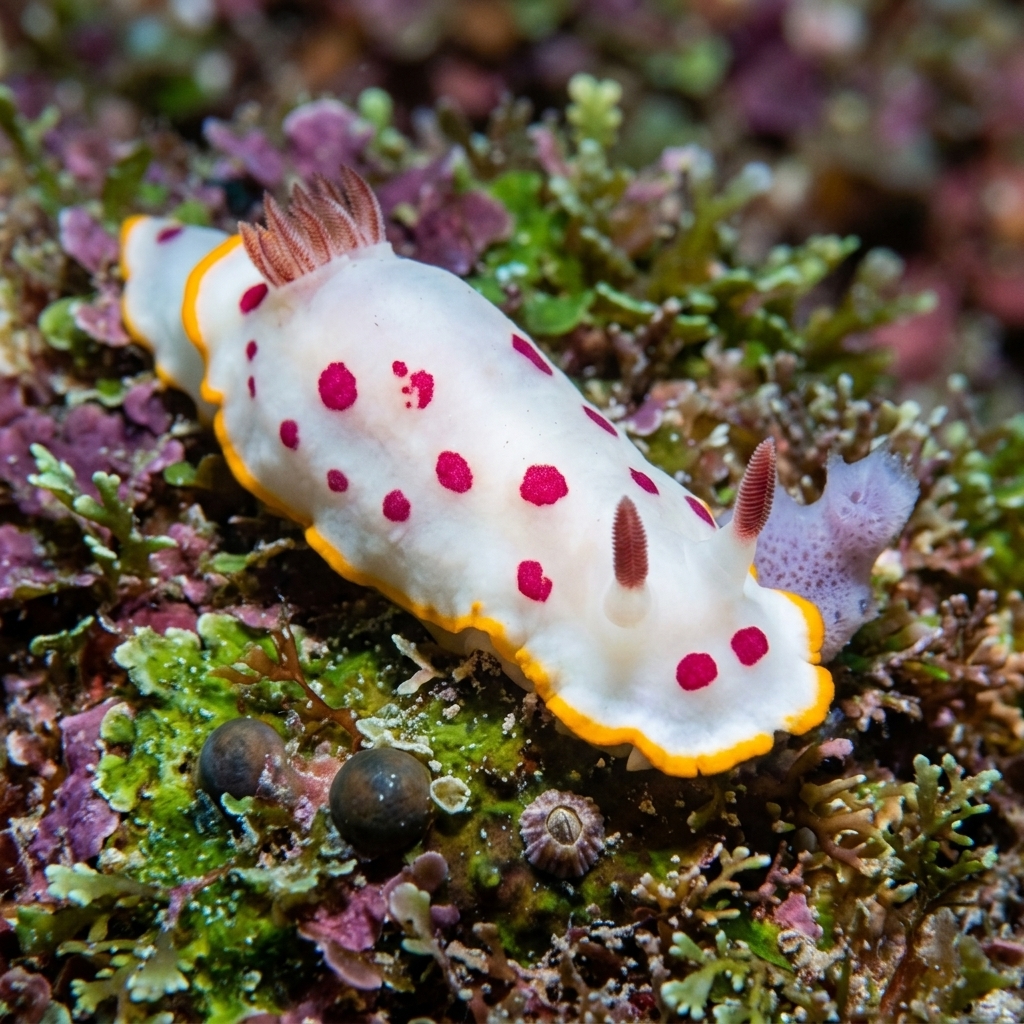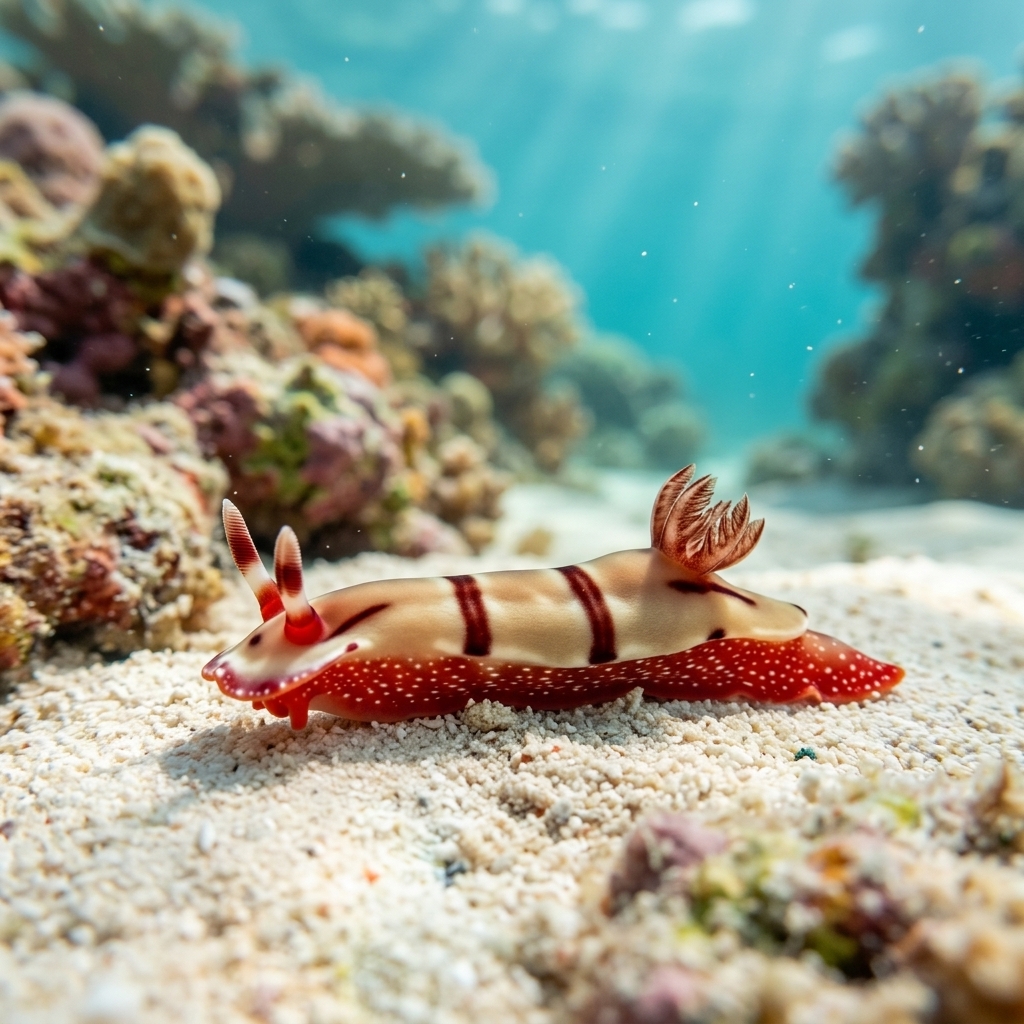
Hypselodoris decorata
Spot the Triple-banded Split-tooth Dorid in warm Indo-Pacific waters. Most sightings come from the Philippines and Taiwan. Here's how to find and ID it.
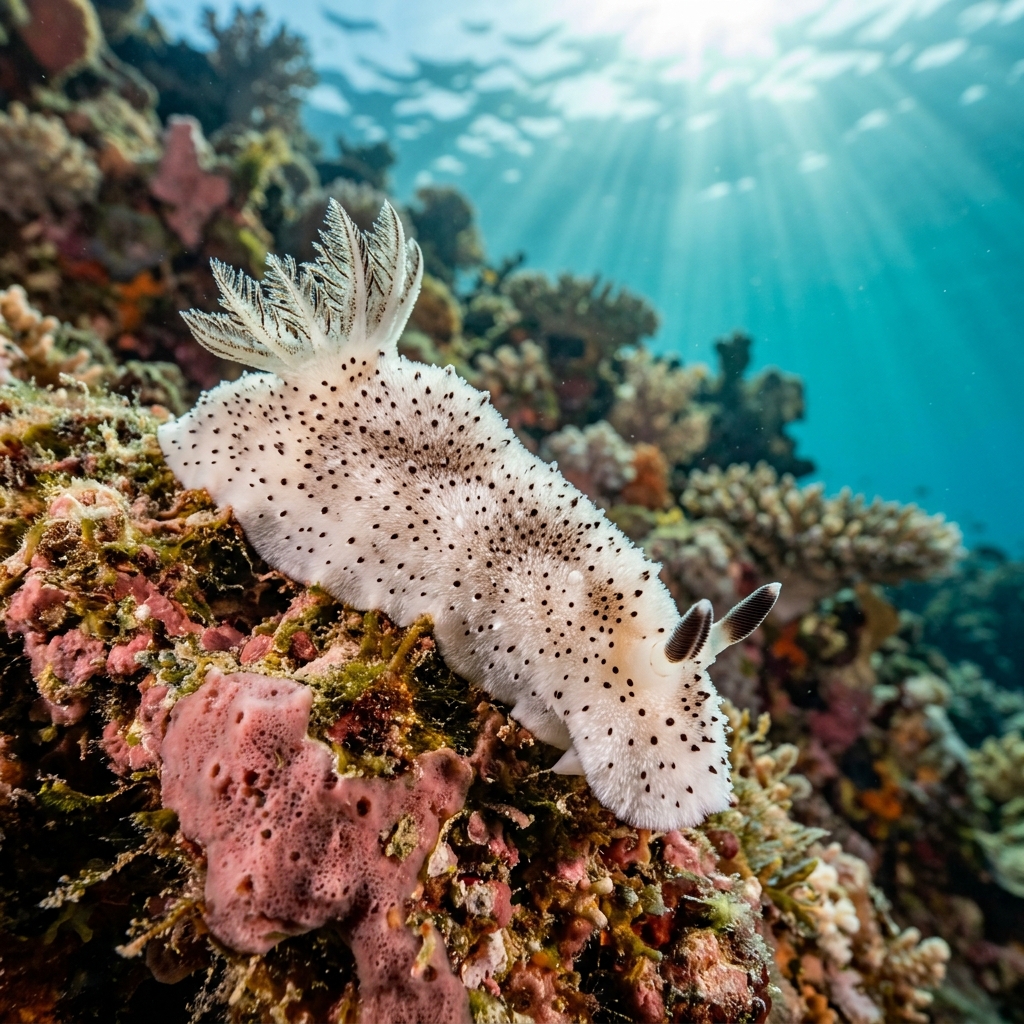
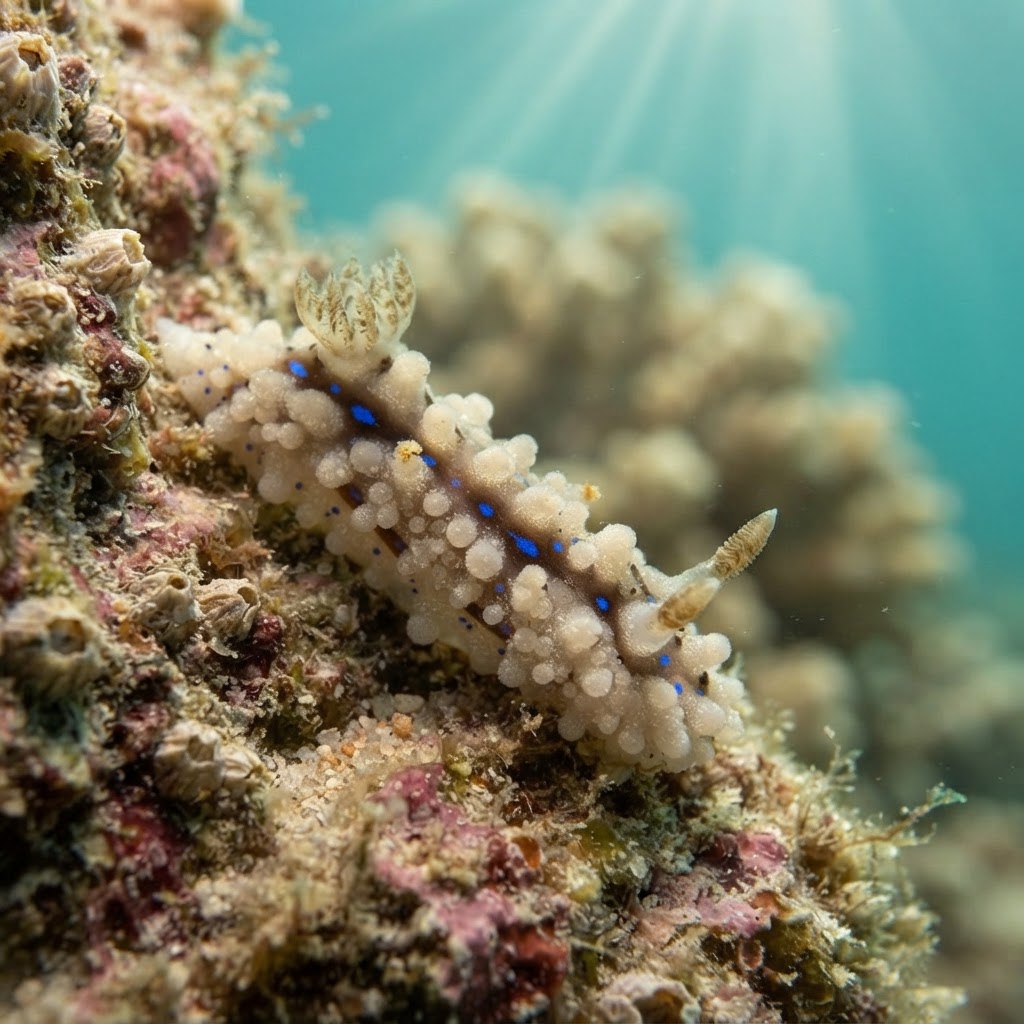
This small chromodorid nudibranch has a pale or white body crossed by three distinct dark (typically blackish or dark blue) transverse bands, which give it both its common name and its underwater identity. The mantle edge is usually contrasted with a bright marginal line, and the gills and rhinophores (the paired sensory stalks on the head) tend to show colour that echoes the banding pattern. At the sizes typical for chromodorids you are likely to encounter it moving slowly across hard substrate or rubble, small enough that a careful eye and macro focus are needed to appreciate the banding clearly.
Like most chromodorids, the triple-banded split-tooth dorid is typically encountered crawling slowly over hard coral, rubble, or encrusting sponges, which make up the diet of species in this family. It tends to ignore divers entirely, continuing its unhurried crawl even when approached closely for a photograph. Searching the shallower rubble and reef slopes during daylight hours, particularly in sheltered bays where its sponge food sources are common, gives the best chance of a sighting.
Chromodoridid nudibranchs like this species are able to sequester toxic or distasteful chemical compounds from the sponges they eat and store them in their own tissues, making their bold colour patterns a real warning signal to potential predators rather than mere decoration.
No strong seasonal pattern has emerged from the available sighting data, so this species is treated as year-round across its range. Observed water temperatures run from about 27 to 29 degrees Celsius, consistent with permanently warm Indo-Pacific reef conditions.
Reef neighbours a diver could mistake it for. Use the identification notes above to tell them apart.
The overwhelming majority of logged sightings come from the Philippines, particularly Western Visayas, Luzon and the northern islands, and the eastern and northern Visayas, making the Philippine archipelago far and away the best destination to search for this species. Taiwan, especially the northern coast and Liuqiu Island, is the next most productive area, followed by Saipan in the Northern Mariana Islands and the Perhentian and Redang islands of Malaysia. Scattered records also exist from Western Australia and Indonesia.
Mapping where Triple-banded Split-tooth Dorid is logged…
The Philippines is by far the top destination, with strong records from Western Visayas, Luzon, and the eastern Visayas. Taiwan's northern coast and Liuqiu Island come next, and Saipan in the Northern Mariana Islands and the Perhentian and Redang islands of Malaysia also have confirmed sightings.
Current sighting data show no clear seasonal peak, so the species appears to be present year-round at its core sites. Water temperatures at sighting locations typically sit between 27 and 29 degrees Celsius, pointing to permanently warm tropical reefs as its preferred habitat.
Look for the three distinct dark transverse bands crossing a pale white or cream body, a pattern that is unique among closely related chromodorids in the same area. The contrasting mantle margin and coloured gills and rhinophores reinforce the ID. It is a small, slow-moving nudibranch, so macro awareness helps.
Sighting data rate this species as rare at the vast majority of sites where it has been recorded, with a small number of sites classing it as uncommon. Even in the Philippines, where it is most frequently logged, a dedicated nudibranch dive with a knowledgeable guide gives you the best odds of an encounter.
No. This nudibranch poses no risk to divers whatsoever. Like other chromodorids it may store distasteful compounds from the sponges it eats, but this is a defence against predators and has no effect on humans who simply observe it underwater.
Site and sighting data is aggregated from diver logs, iNaturalist and GBIF. For taxonomy and conservation status:
Light-spotted Aegires
3,168 sites