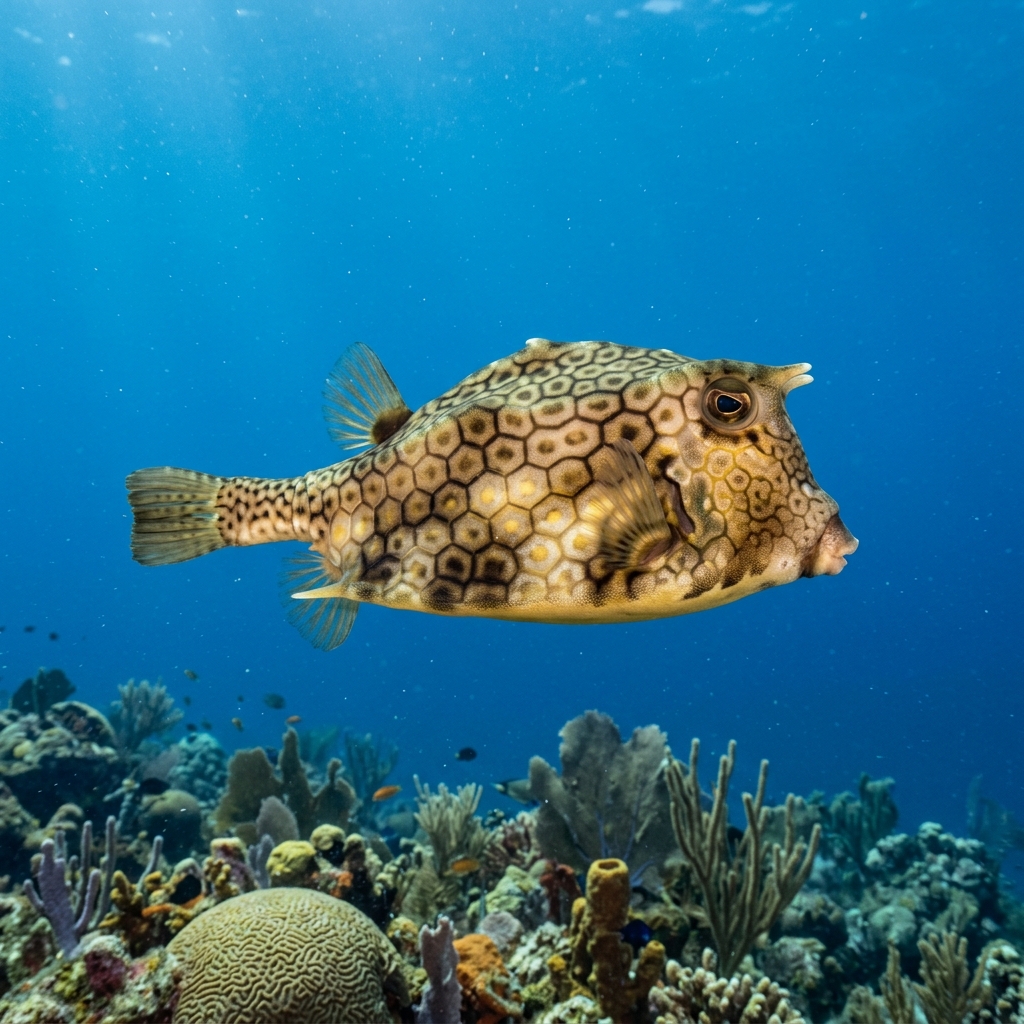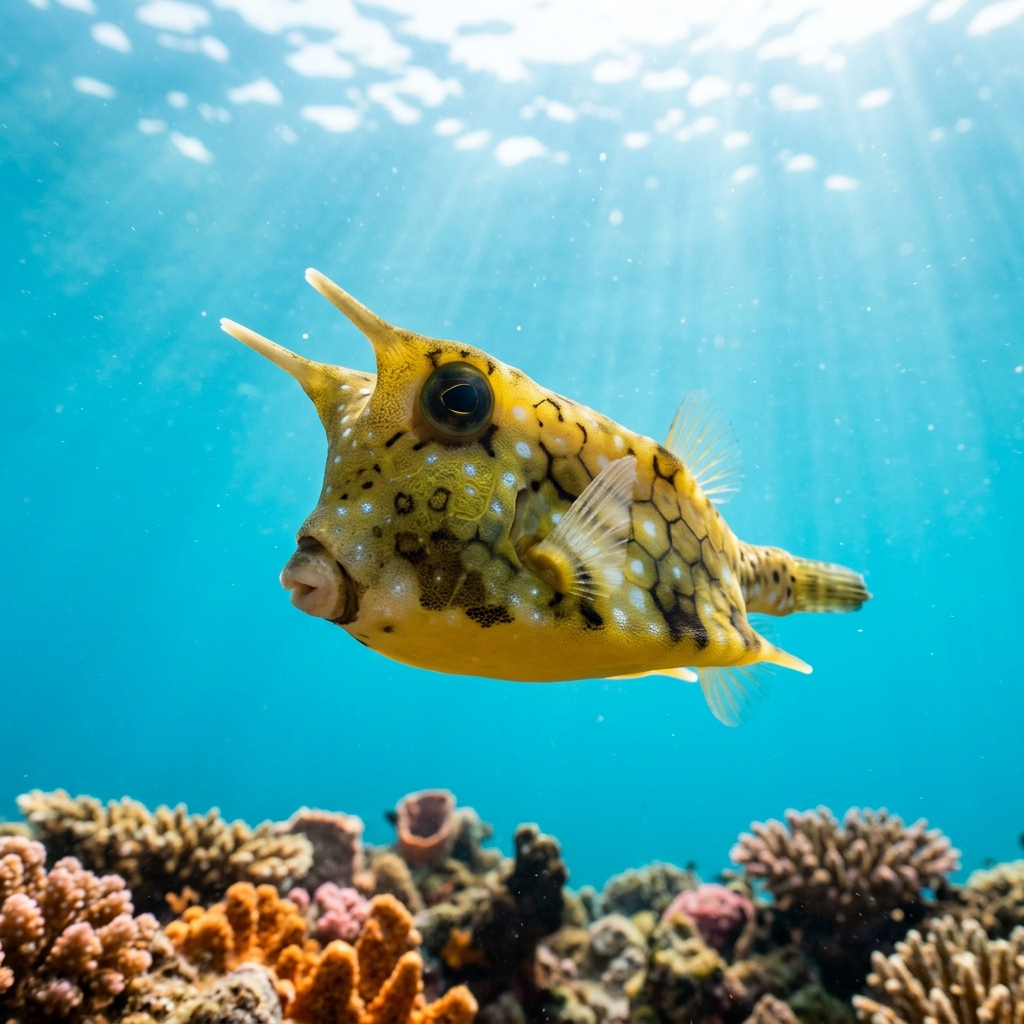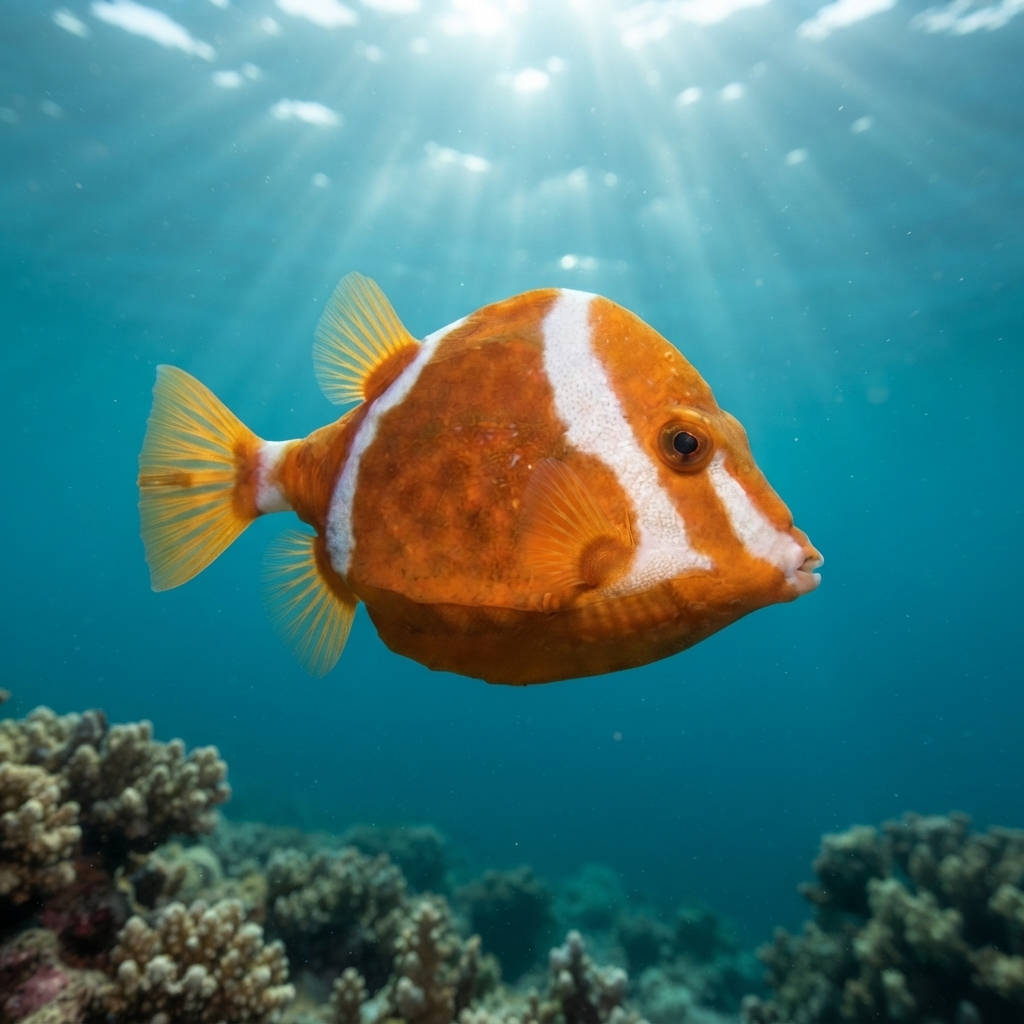
Anoplocapros lenticularis
Boxy, armour-plated and slow-moving, the humpty-dumpty turns up uncommonly across Western Australia in 15 to 21C water, year-round.
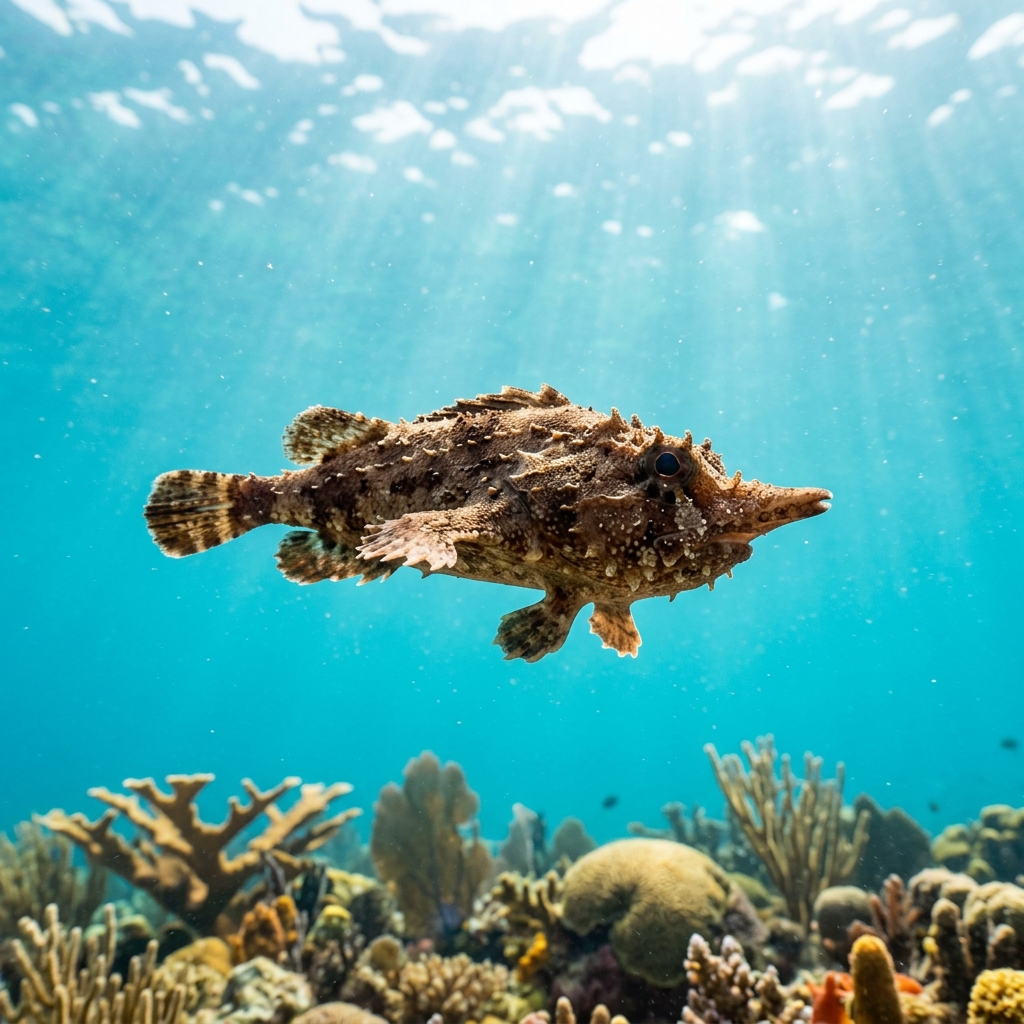
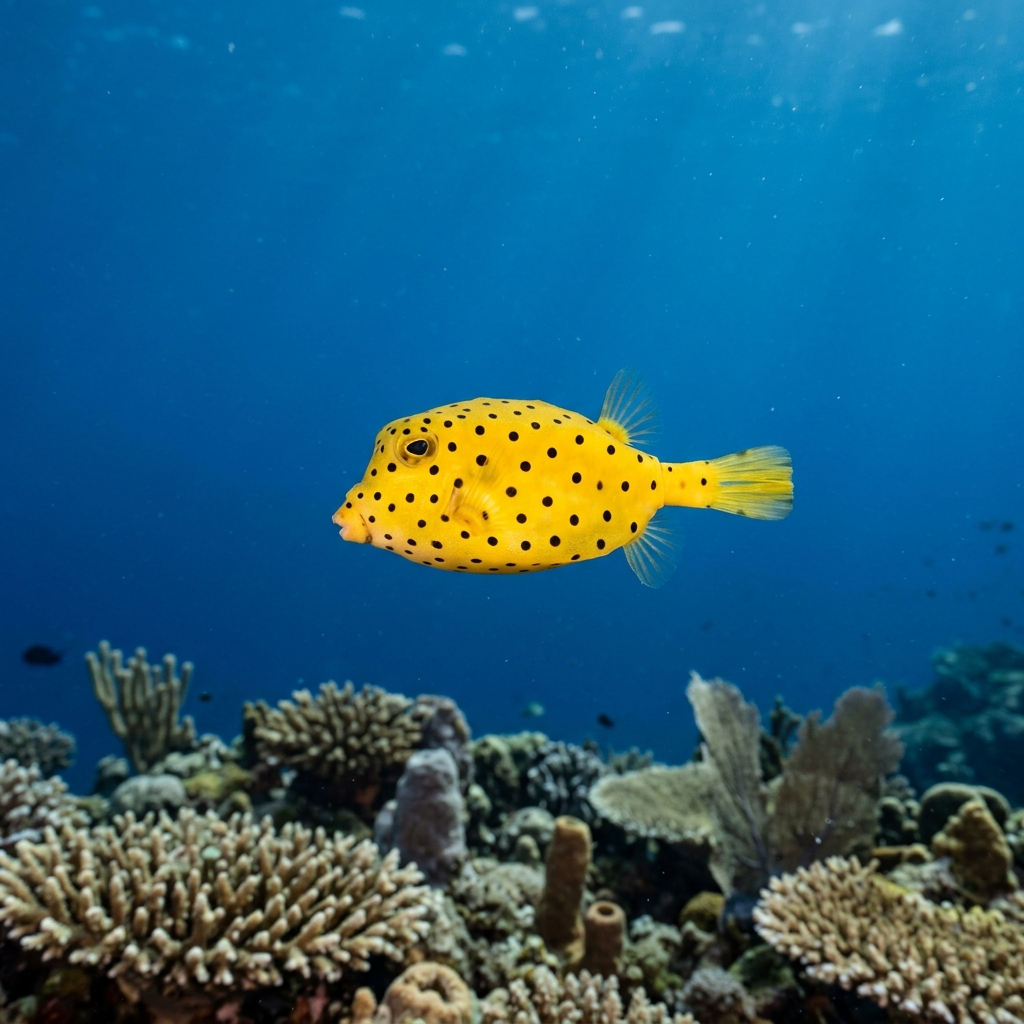
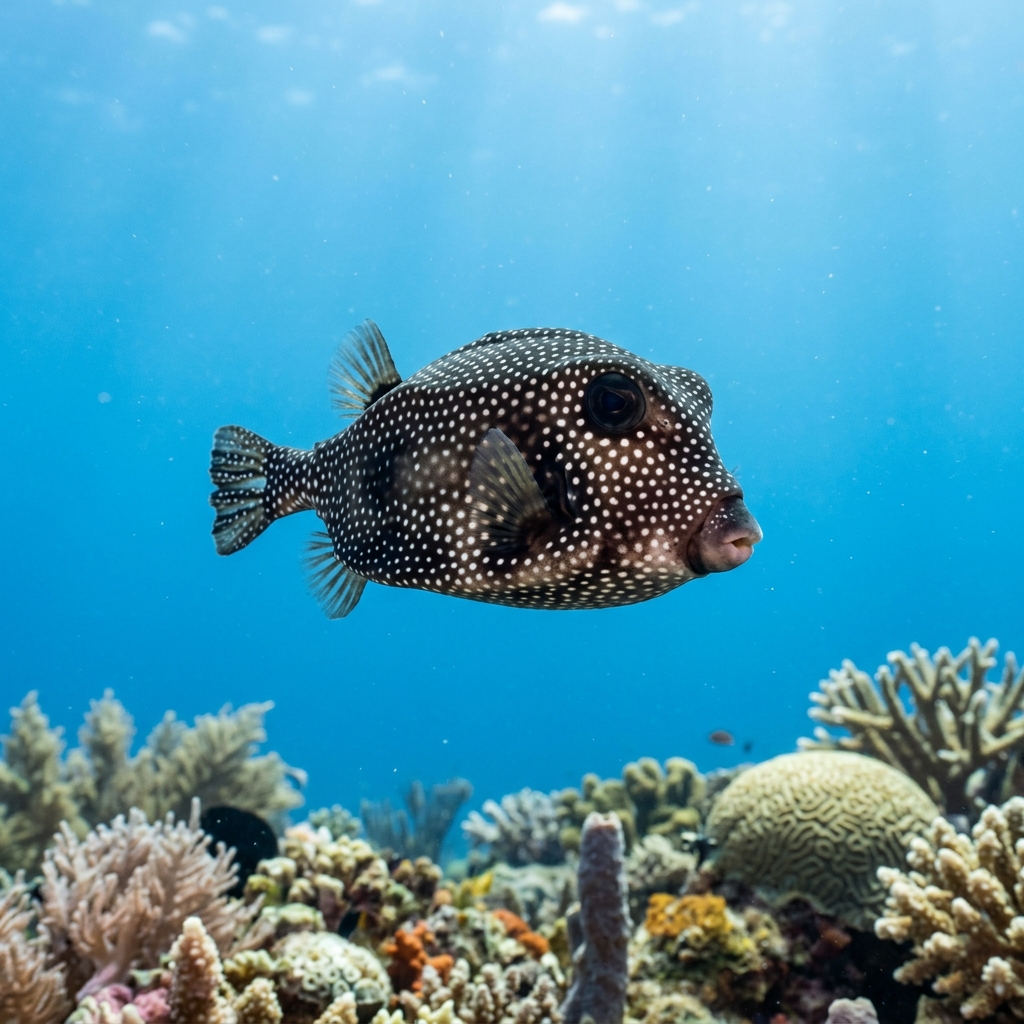
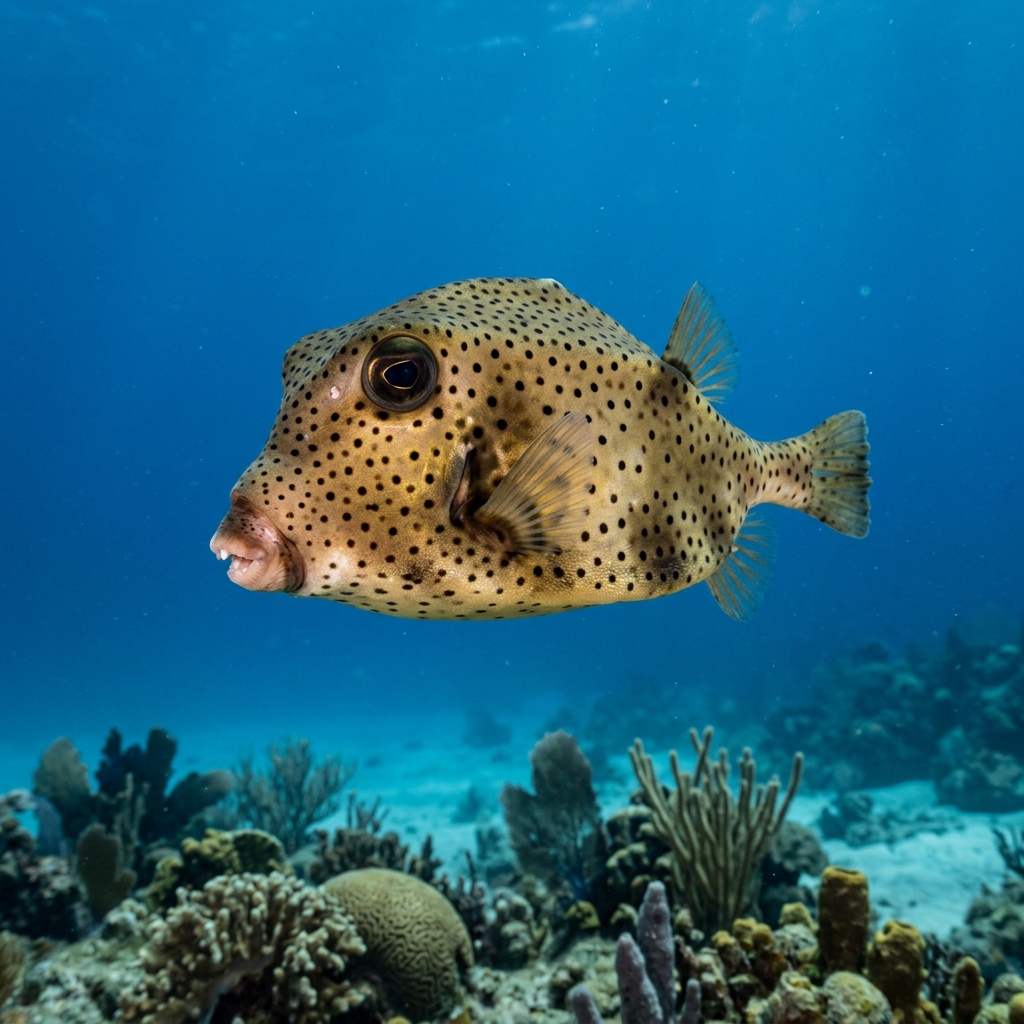
Boxy, almost cube-shaped body encased in a rigid bony shell rather than scales, usually pale grey to yellowish with scattered dark spots. Grows to around 23cm, moves with small stiff fin flicks rather than a fish's usual swimming motion, and has a stubby tail and small mouth set low on a blunt face. The rigid, angular outline is the giveaway, no other fish on Australia's temperate reefs has that armoured, boxed look.
Divers typically find it hovering or resting close to reef structure and rocky ledges, using slow, deliberate fin movements rather than any burst of speed. It's an unhurried animal that tends to hold its ground rather than bolt when a diver approaches, making it an easy one to get a good look at once spotted. Most logs describe it as uncommon rather than a guaranteed find, so patience around ledges and sponge gardens pays off.
That rigid box-like shell isn't just for show, it's a fused bony carapace that replaces the flexible body most fish rely on, trading swimming speed for a suit of armour against predators.
Sightings don't show a clear seasonal pattern, and with a water-temperature niche of 15.4 to 21.1C it seems to sit comfortably in cooler temperate water throughout the year, so any season suits a search.
Reef neighbours a diver could mistake it for. Use the identification notes above to tell them apart.
Almost every logged sighting comes from Australia, with Western Australia by far the strongest area, alongside a smaller number of records from South Australia. If you're diving temperate reef and sponge-garden sites along the WA coast, this is one of the boxfish you're most likely to run into, albeit not on every dive.
Mapping where Humpty-dumpty is logged…
Almost all recorded sightings are in Australia, concentrated in Western Australia with a smaller number in South Australia. It's logged at temperate reef sites rather than tropical coral reefs.
There's no strong seasonal pattern in the sighting data, and it tolerates a fairly wide temperate range of 15.4 to 21.1C, so it's considered a year-round find in Western Australian waters.
Look for a small, boxy fish with a rigid, angular armoured body rather than a typical streamlined fish shape, usually pale with dark spots. It moves stiffly using small fin flicks and tends to hover near reef structure rather than swim actively.
They reach around 23cm, making them a compact, easily overlooked reef resident rather than a large fish.
No, they pose no danger to divers. They are slow, armoured and generally unbothered by a diver's presence.
Instead of a flexible, scaled body, it has a fused bony shell that forms a rigid box shape, which is why it swims stiffly rather than gliding like most fish.
Site and sighting data is aggregated from diver logs, iNaturalist and GBIF. For taxonomy and conservation status:
Honeycomb Cowfish
1,691 sites