Octopus hubbsorum
Find Hubb's Octopus on rocky reefs in Guanacaste, Costa Rica and Baja California, Mexico, in warm 23 to 29 C water year-round.
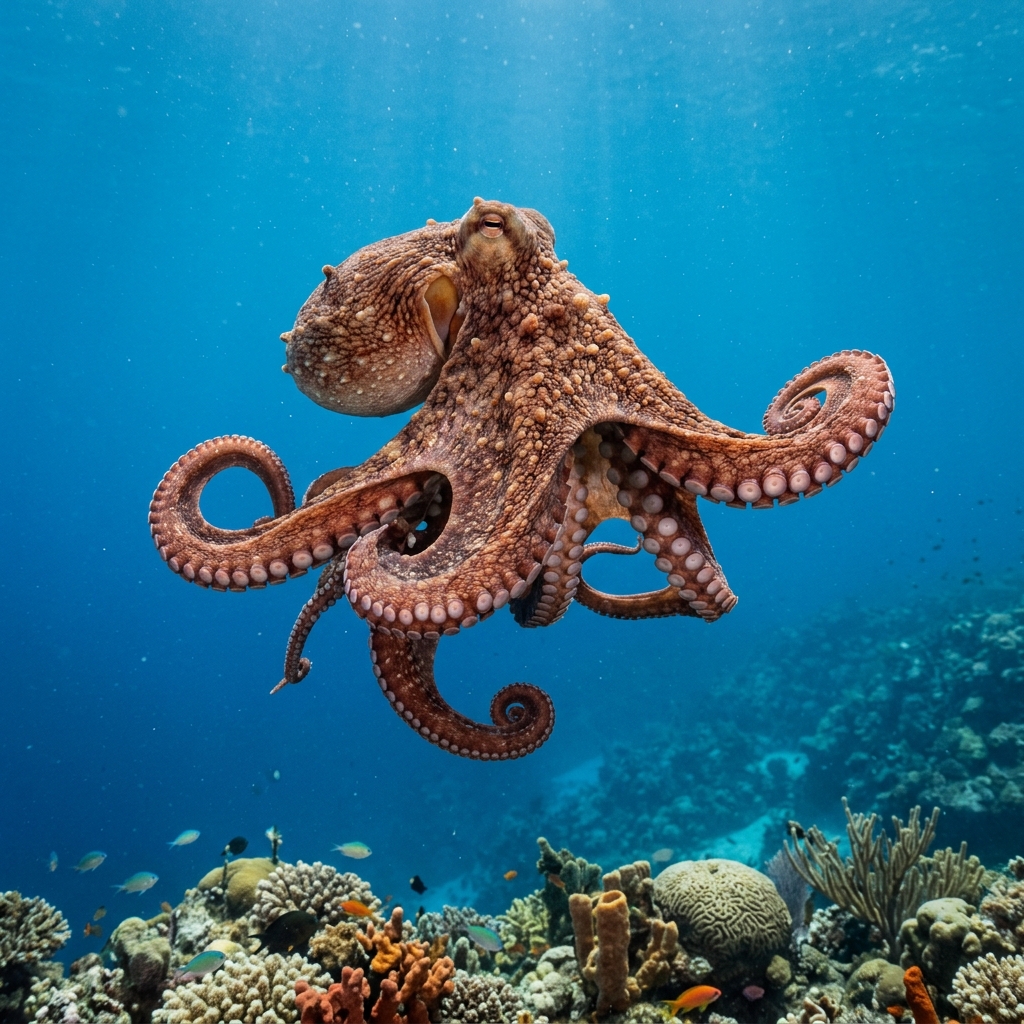
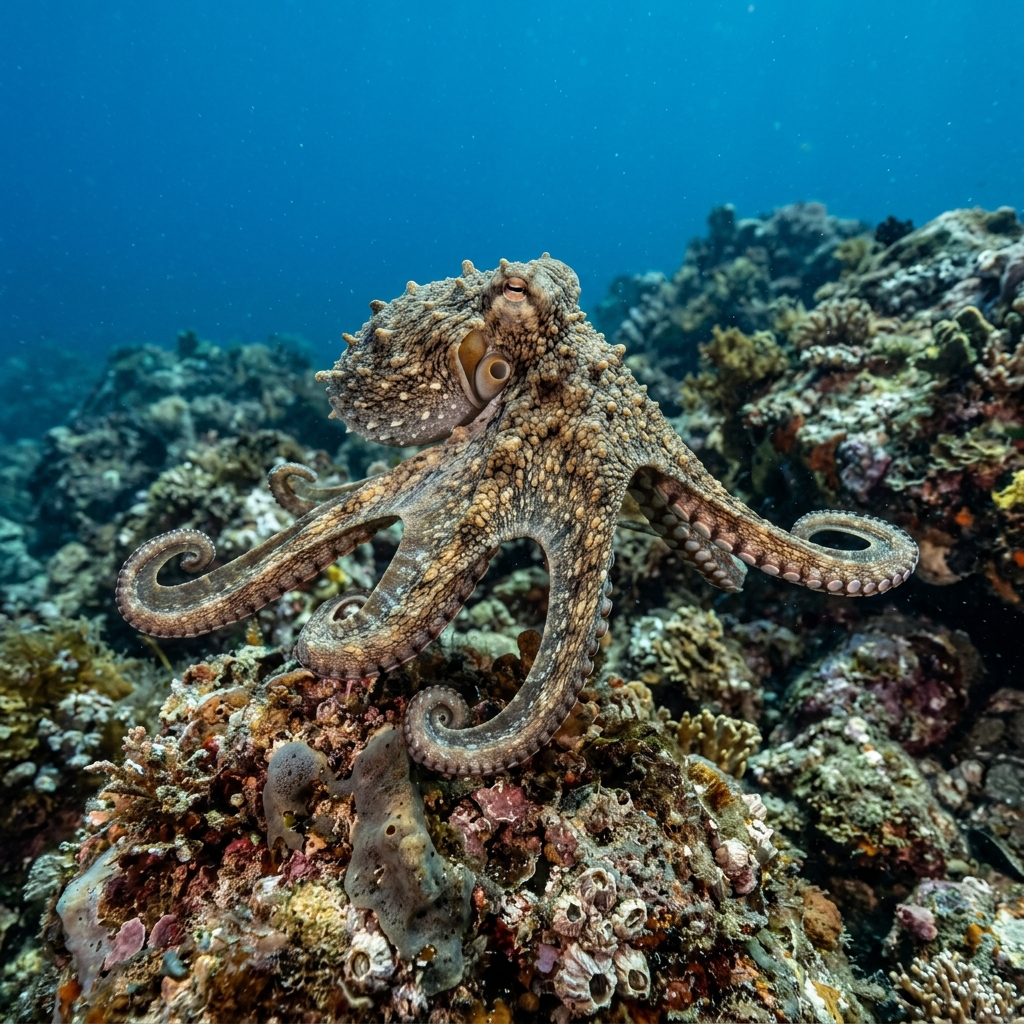
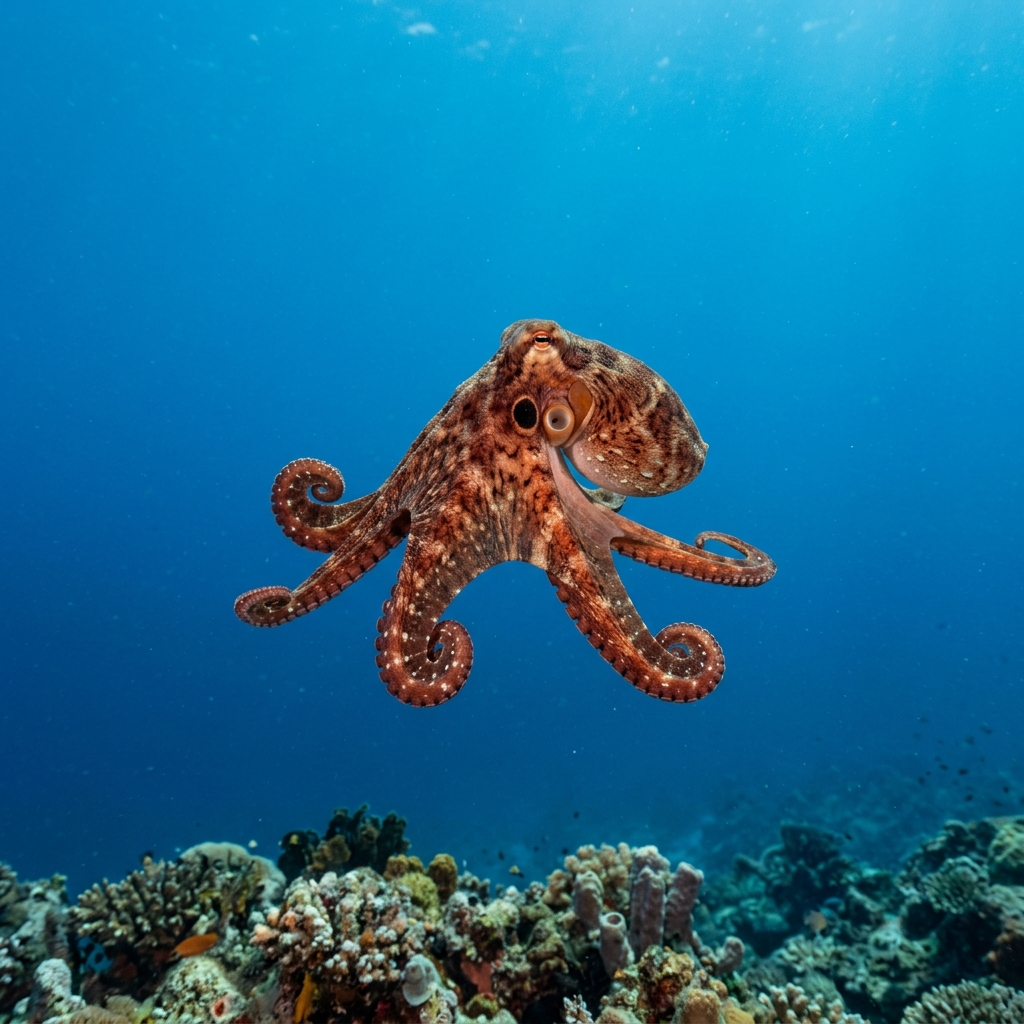
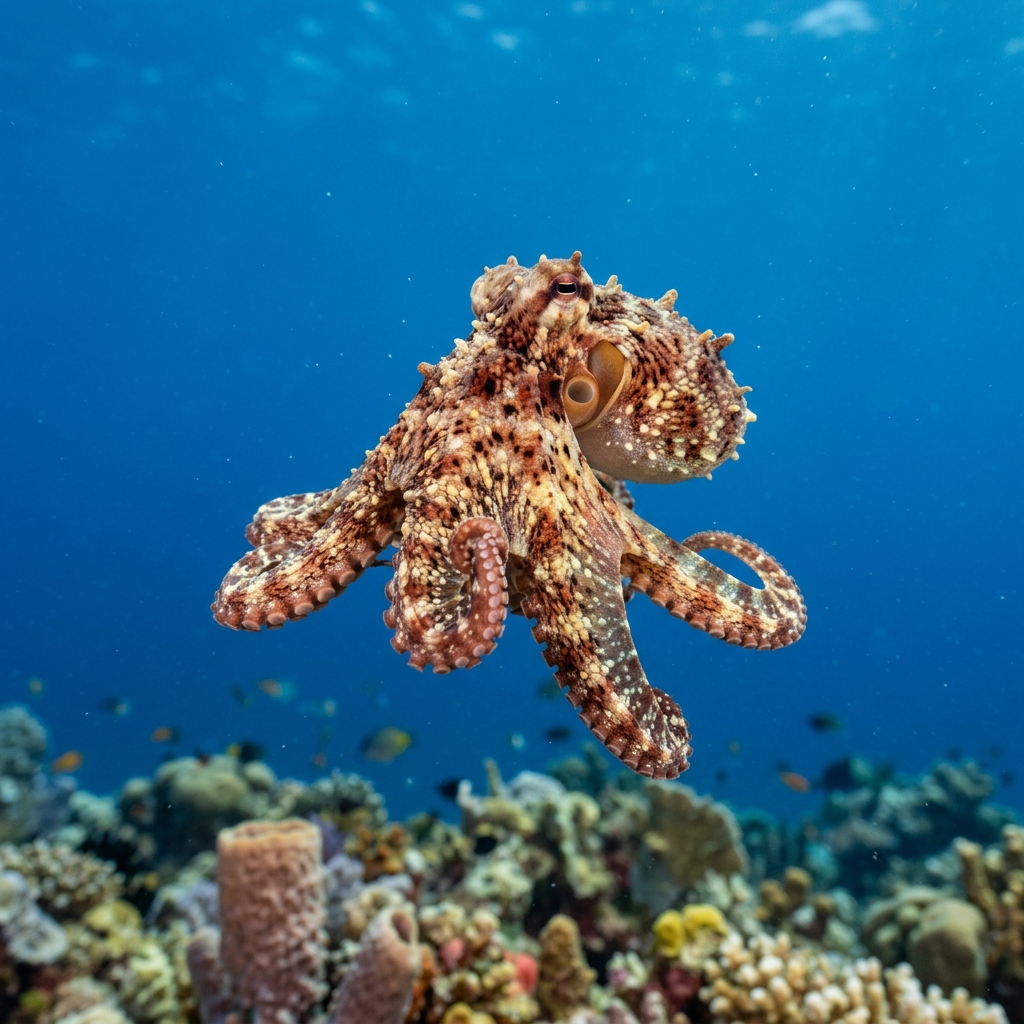
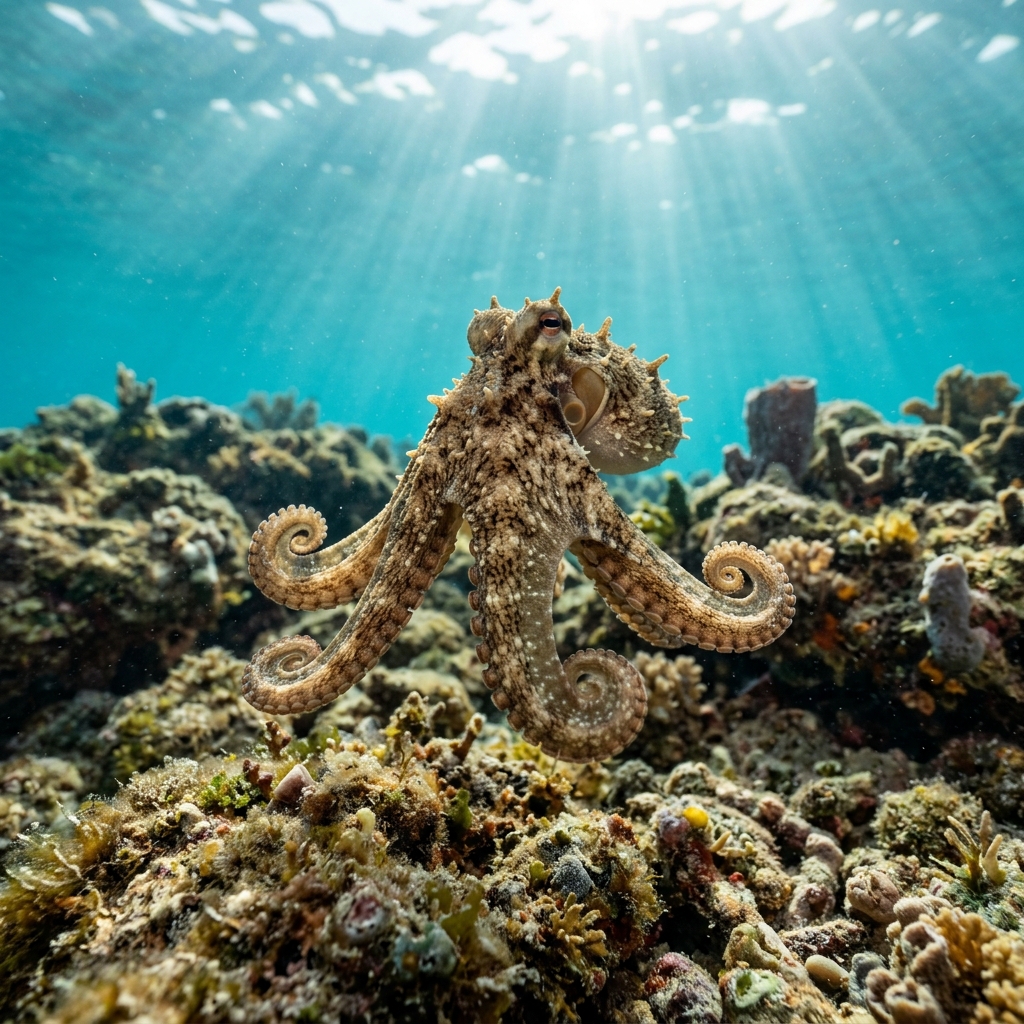
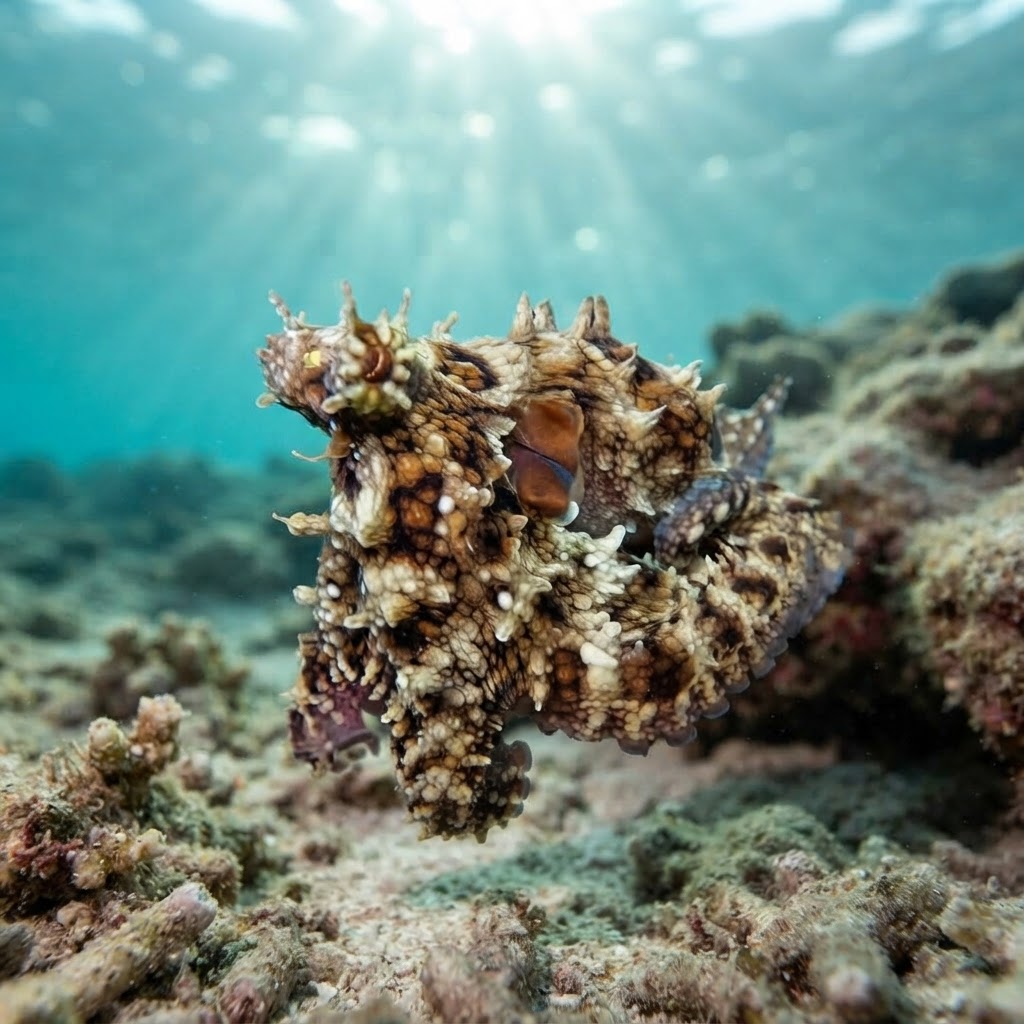
A small octopus, growing to around 15 cm across the body, with mottled reddish-brown to grey-brown skin that shifts tone against the rock. Look for a stocky, warty-textured mantle and arms tucked close to rocky crevices and holes on the reef rather than out in the open. Like most octopuses it can change colour and texture in seconds, so pattern alone is less reliable than finding it wedged into a den.
Usually found tucked into a rocky den or crevice by day, often with only an arm or eye visible until you look closely. It tends to sit still and rely on camouflage rather than bolt when divers approach, so slow, patient looking pays off more than a wide search. Night dives on the same rocky ground tend to turn up more active individuals foraging over the reef.
Like other octopuses, it can flush its skin colour and raise or smooth its skin texture in an instant to match the rock it is denning in, which is often the only reason a diver spots it at all.
Sightings run year-round with no detected seasonal peak, which fits its comfort range of 23.4 to 29.4 C, warm water that holds steady across most of the year in Guanacaste and Baja California.
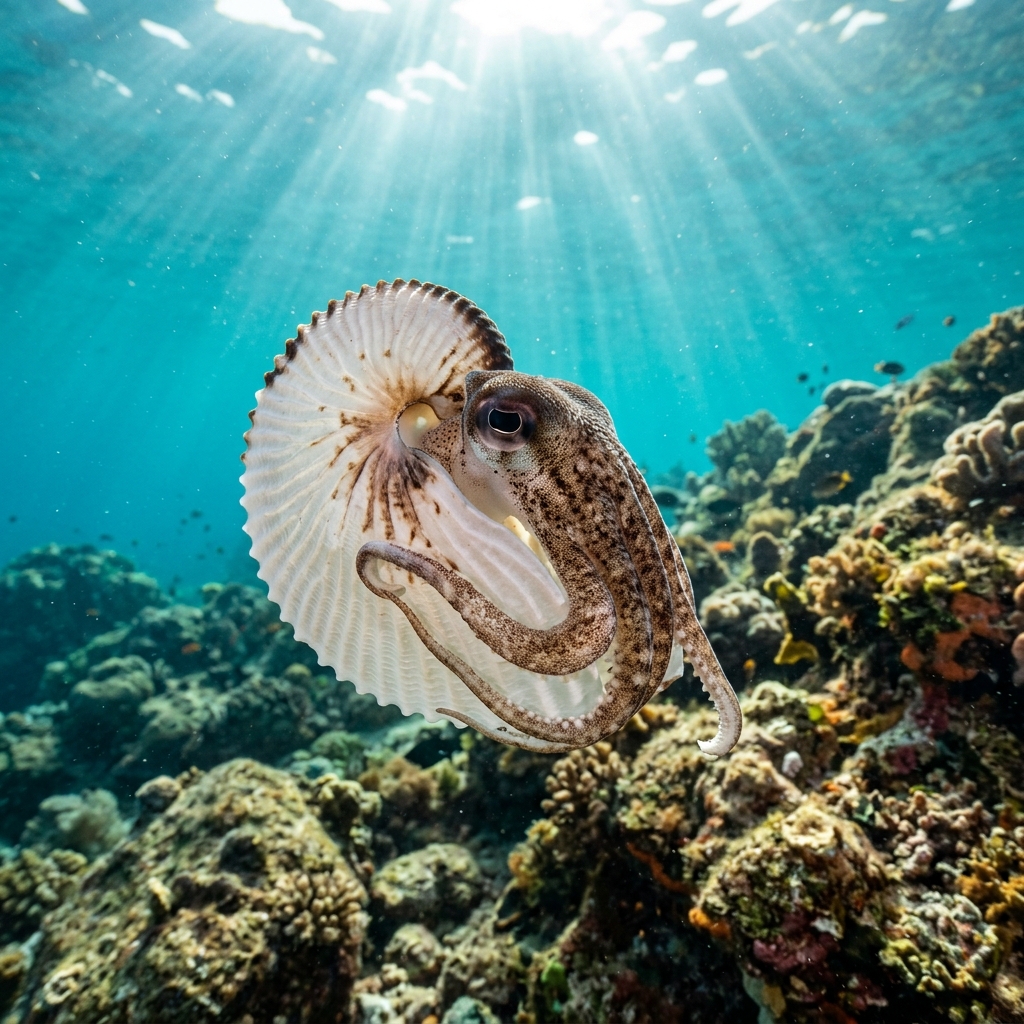
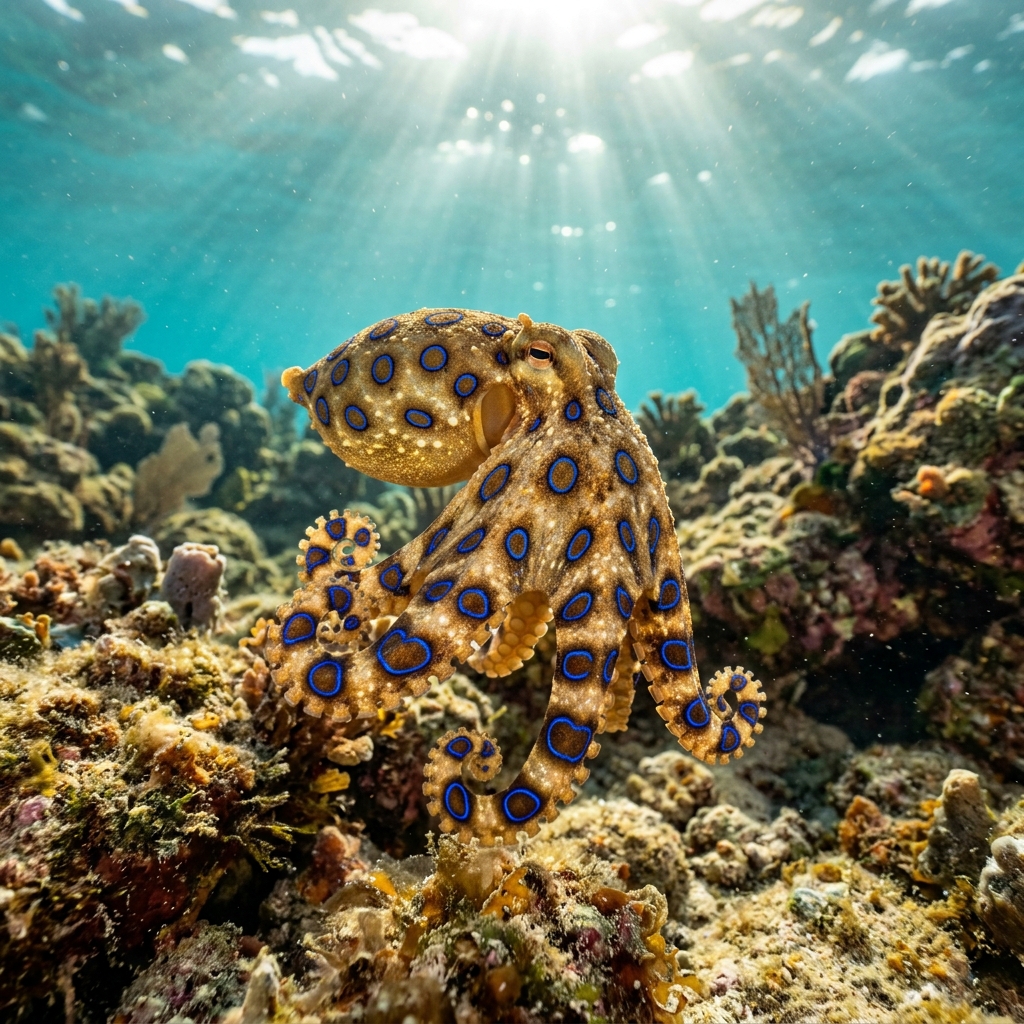
Reef neighbours a diver could mistake it for. Use the identification notes above to tell them apart.
Most reliably logged on rocky reef sites in Guanacaste, Costa Rica, and in Baja California, Mexico, which together account for nearly all recorded sightings. Divers searching rock crevices and boulder fields in these two regions have the best odds of finding one.
Mapping where Hubb's Octopus is logged…
The strongest logged populations are on rocky reef sites in Guanacaste, Costa Rica, and in Baja California, Mexico. These two regions account for almost all recorded sightings, so they're the places to focus a search.
There's no clear seasonal pattern in the sightings, so it's considered a year-round find. It favours warm water between roughly 23 and 29 C, which both Guanacaste and Baja California hold for most of the year.
Look for a stocky, warty-skinned octopus around 15 cm across, mottled reddish-brown to grey, usually wedged into a rocky crevice rather than out on open reef. It relies on colour and texture change to blend into the rock, so check dens and holes closely.
They typically reach around 15 cm across the mantle and arms, making them a small to medium-sized reef octopus rather than a giant.
No, it isn't considered dangerous to divers. It's a shy, den-dwelling octopus that relies on hiding and camouflage rather than any aggressive defence.
It can change both the colour and texture of its skin almost instantly to match the rocky den it's hiding in, which is usually the giveaway that helps divers spot it.
Site and sighting data is aggregated from diver logs, iNaturalist and GBIF. For taxonomy and conservation status:
Brazilian Reef Octopus
1,142 sites