Meuschenia hippocrepis
Uncommon but rewarding, this filefish turns up on temperate reefs in Victoria and Western Australia at 15 to 20 C, year-round.
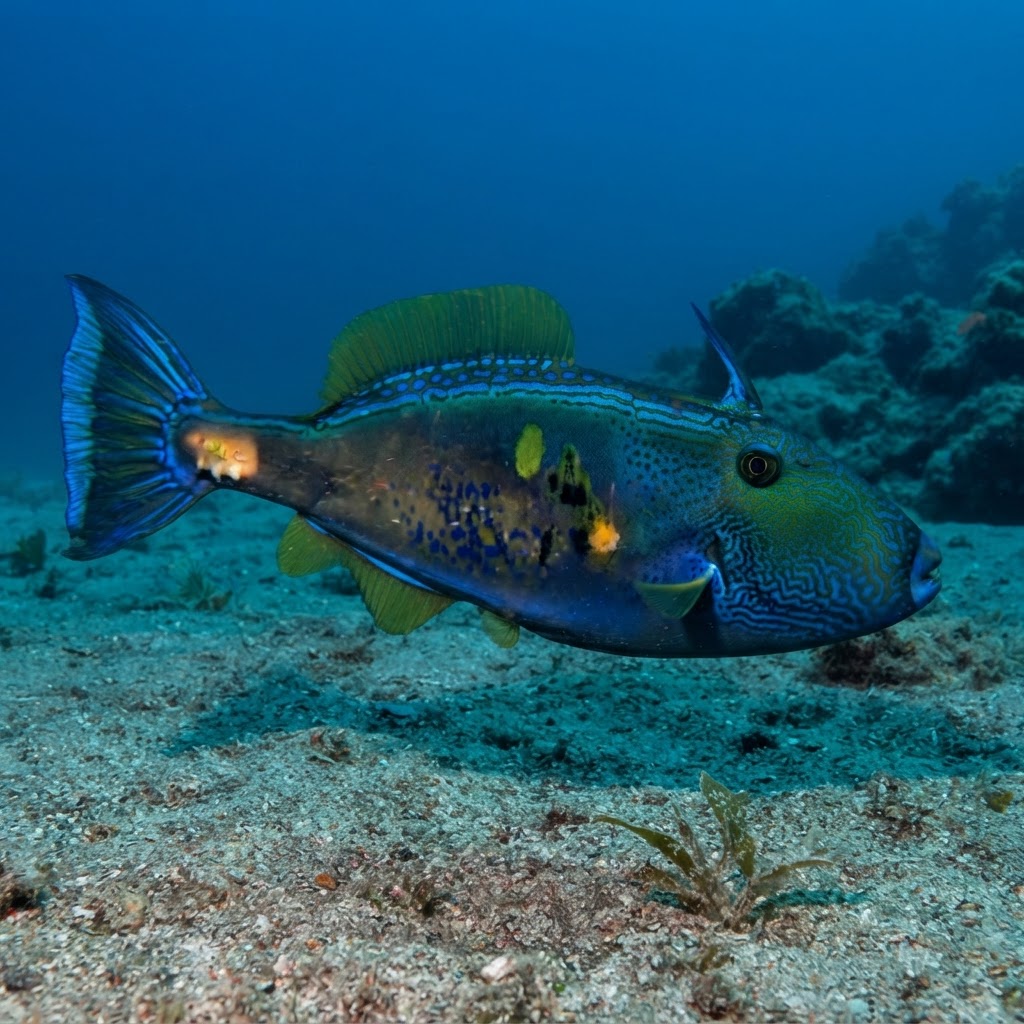
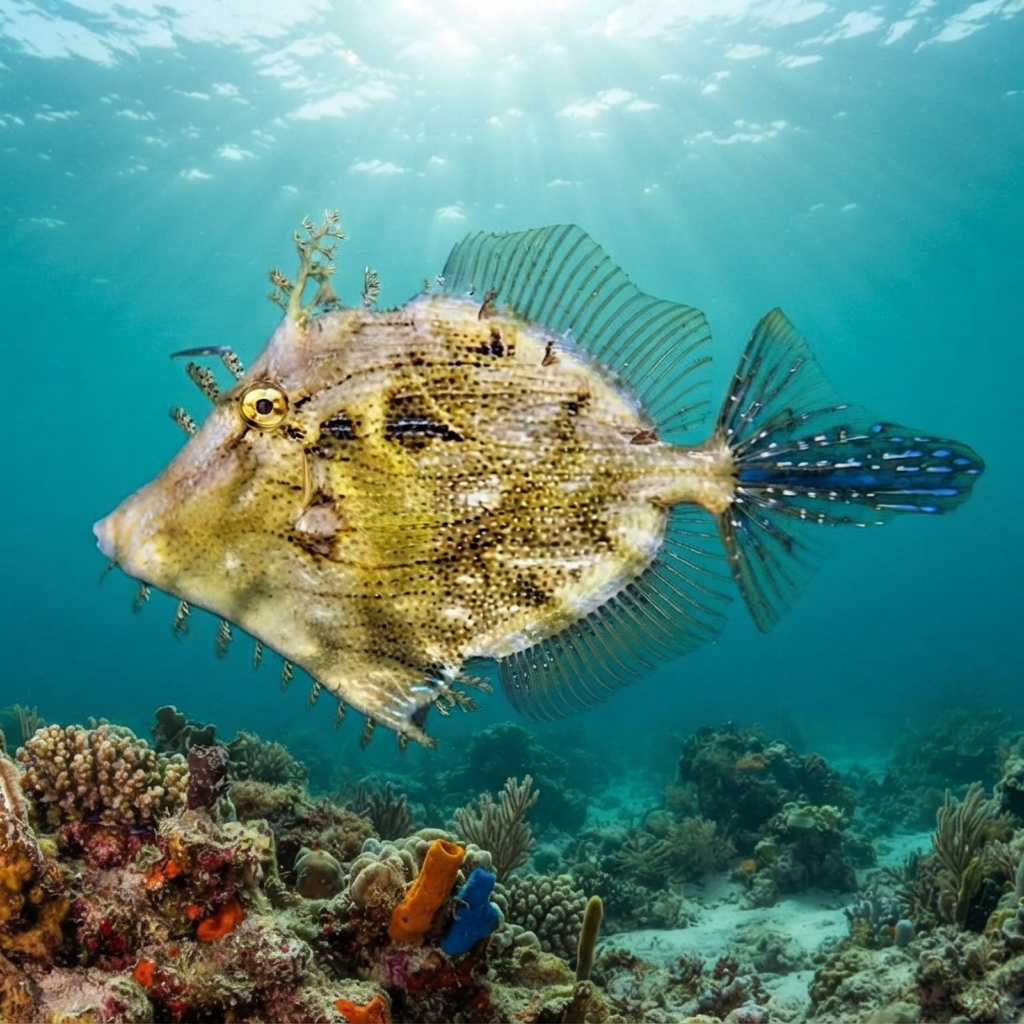
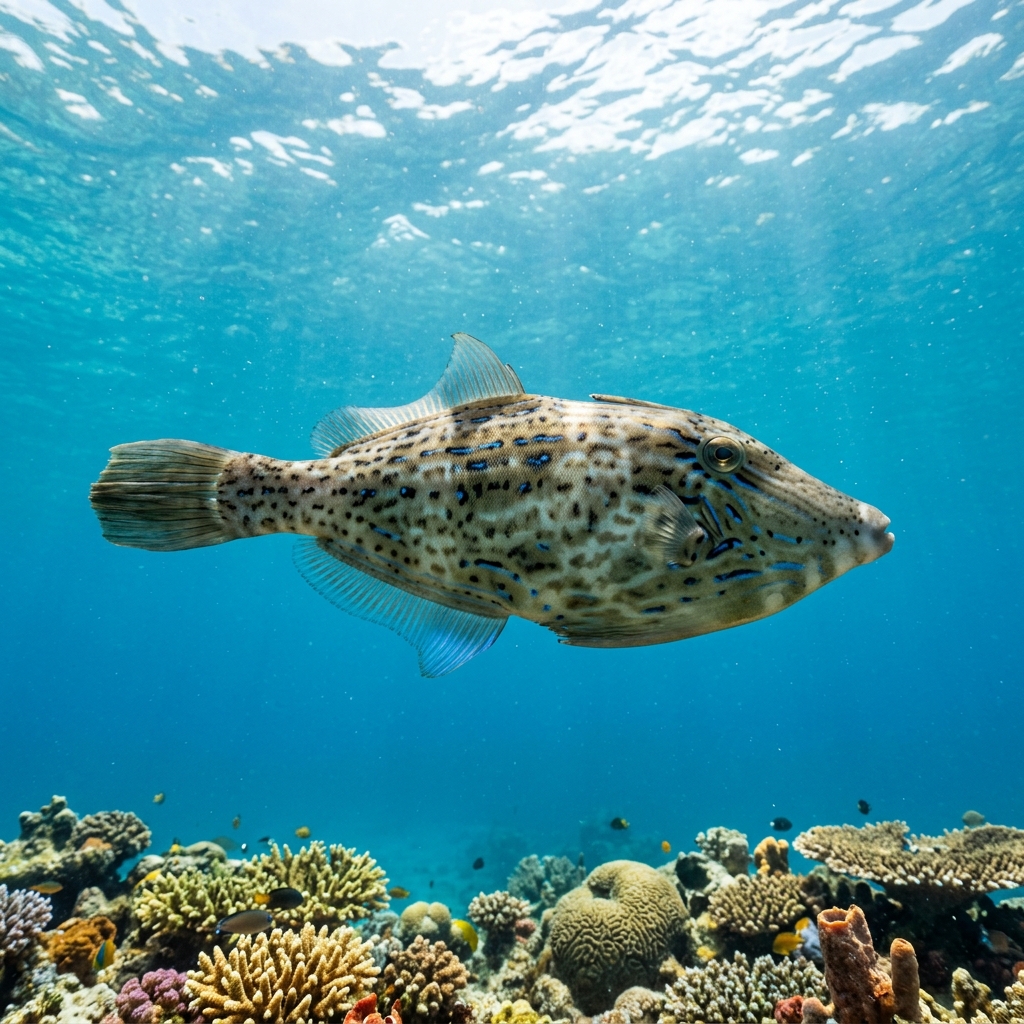
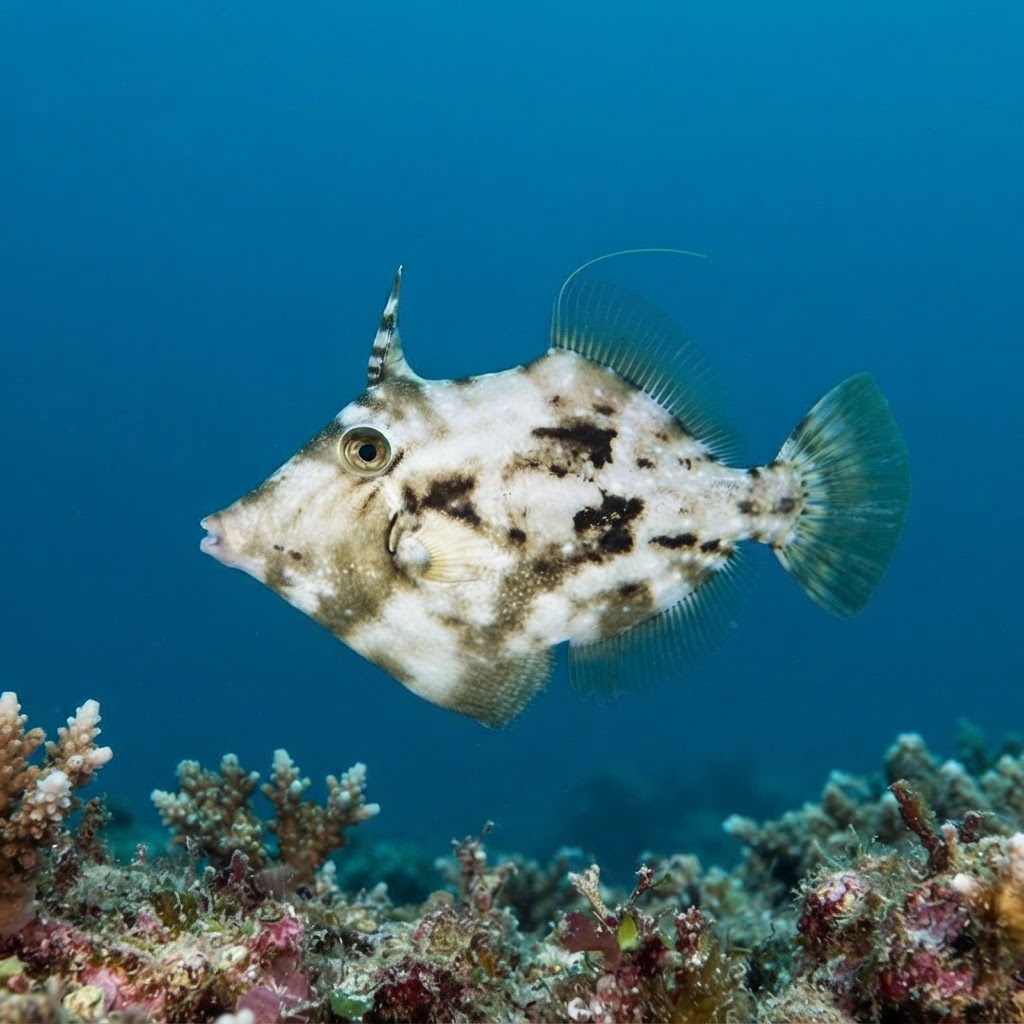
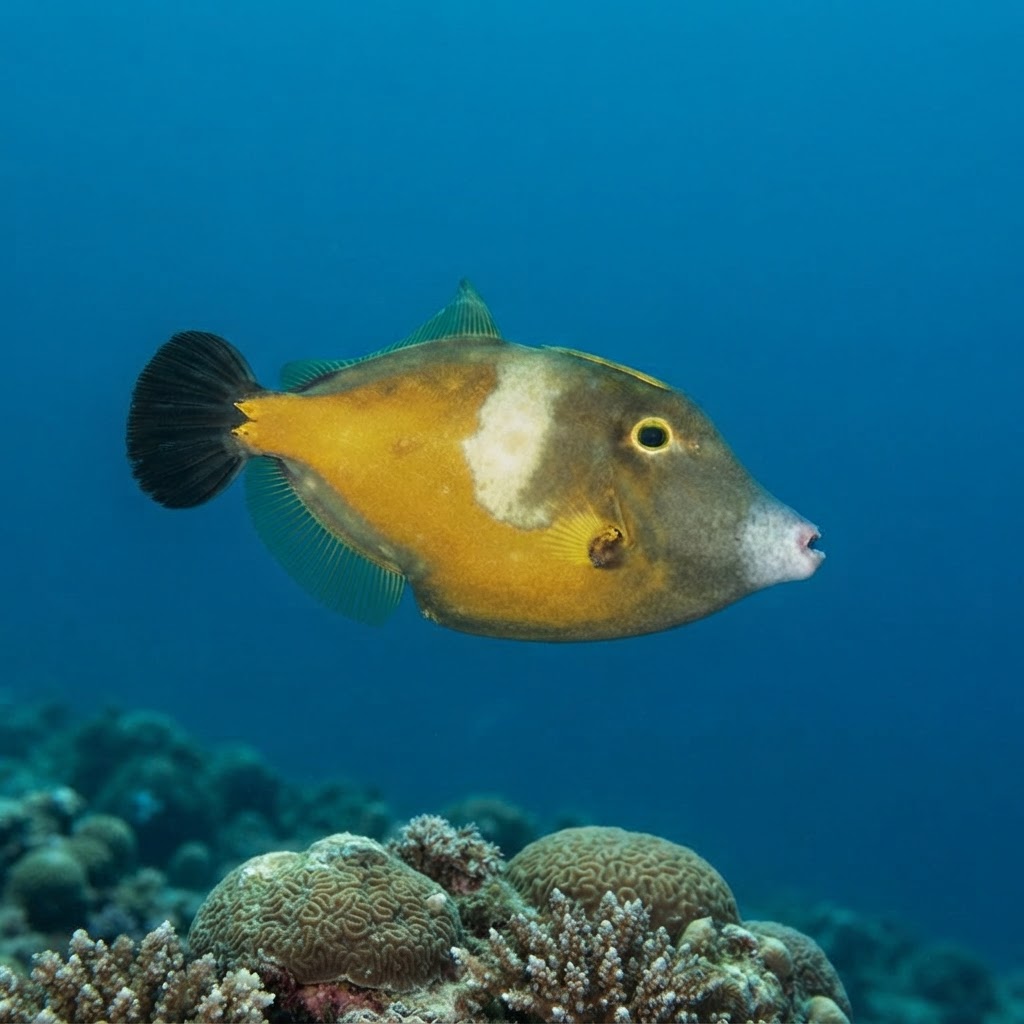
Grows to around 35 cm and shows a pale grey to olive body with a distinctive dark, curved band across the flank that gives it its name, shaped like a horseshoe. Like other leatherjackets it has a small, high-set mouth, a single spine tucked just ahead of the dorsal fin, and a compressed, almost diamond-shaped body that it uses to slip between rocks and kelp. It swims with slow, deliberate fin strokes rather than tail-driven bursts, which makes the body shape and marking easy to study once you spot one.
Expect to find it hovering low over rocky reef or drifting near kelp and sponge gardens rather than out in open water. It is generally unhurried around divers, often holding its position or easing off slowly instead of bolting, which gives you time to line up a good look at the horseshoe marking. Most logs describe single fish or loose pairs rather than groups, consistent with its uncommon-to-rare rating at most sites.
Like other leatherjackets it can raise a locking dorsal spine when threatened, wedging itself into a crevice so predators cannot easily pull it free.
Sightings show no detected seasonal pattern, and with a water-temperature niche of 14.7 to 20.1 C it fits the cooler, temperate conditions found off southern Australia year-round. Any month you are diving these regions gives you a fair shot at one.
Reef neighbours a diver could mistake it for. Use the identification notes above to tell them apart.
This is an Australia-only sighting in the data, most reliably logged in Victoria and Western Australia, with a smaller but steady presence in South Australia. Victorian sites around Port Phillip Bay and the western reefs, plus Western Australian temperate reefs, are where divers report it most.
Mapping where Horse-shoe Leatherjacket is logged…
It is logged almost exclusively in Australia, with the strongest records from Victoria and Western Australia and a smaller number of sightings in South Australia.
There is no clear seasonal peak in the sighting data, and its temperature range of roughly 15 to 20 C is typical of southern Australian waters year-round, so it can turn up on any dive in these regions.
Look for a compressed, diamond-shaped body around 35 cm long, a pale grey-olive colour, and a curved dark band across the side shaped like a horseshoe. It swims slowly using its fins rather than fast tail strokes, which makes the marking easy to confirm.
They typically reach around 35 cm in length, a mid-sized filefish easily spotted against open rock or kelp.
No, they pose no danger to divers and are calm, slow-moving fish that are easy to observe at close range.
Site and sighting data is aggregated from diver logs, iNaturalist and GBIF. For taxonomy and conservation status:
Orangespotted Filefish
836 sites