Antennablennius bifilum
A small, uncommon reef blenny found mostly on rocky reefs in KwaZulu-Natal and Ponta do Ouro, in water around 23.5 to 29C.
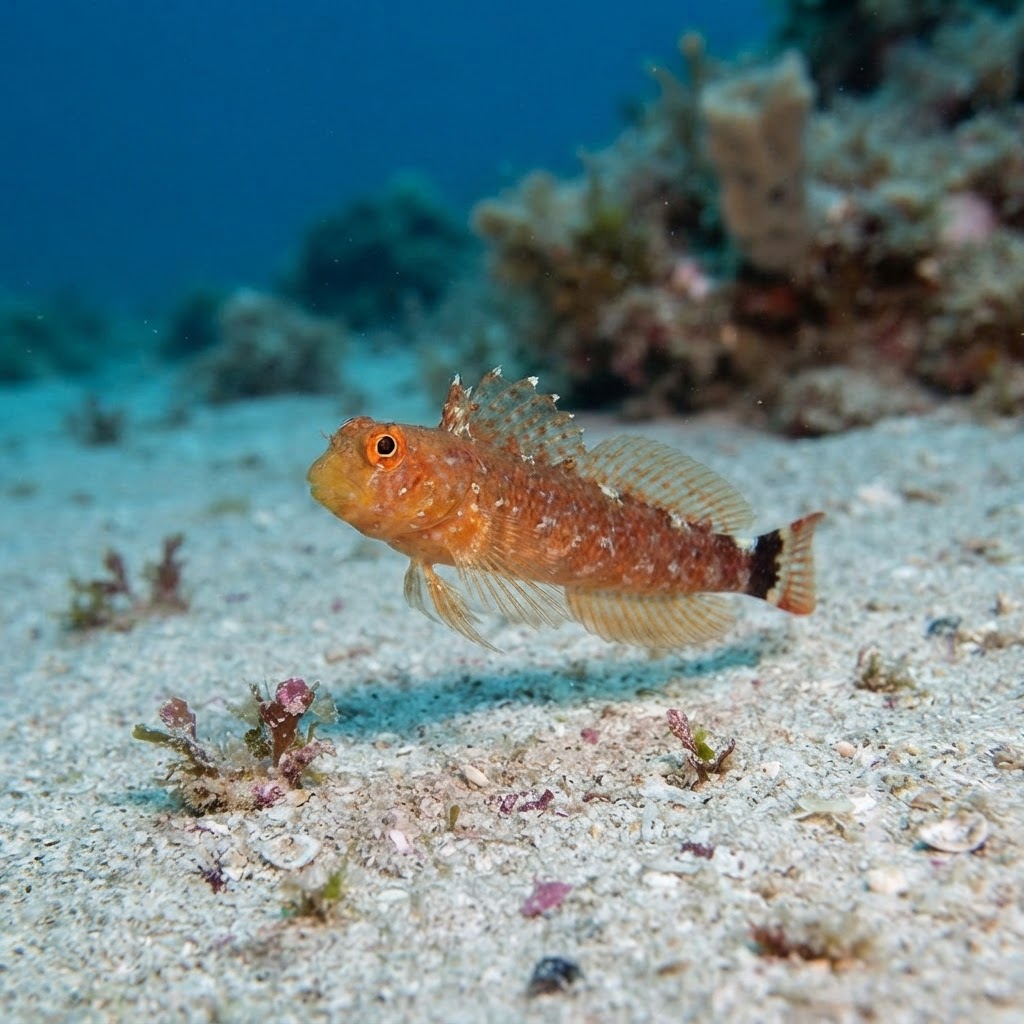
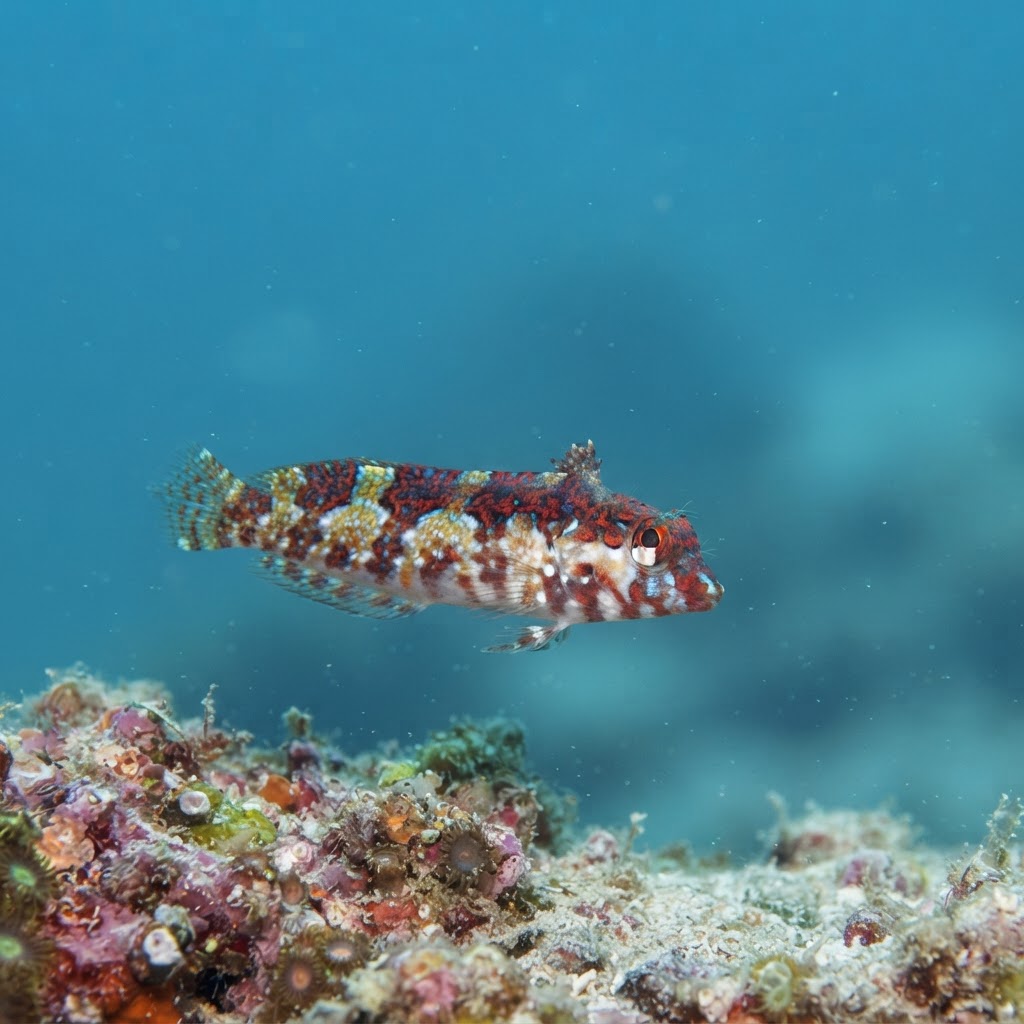
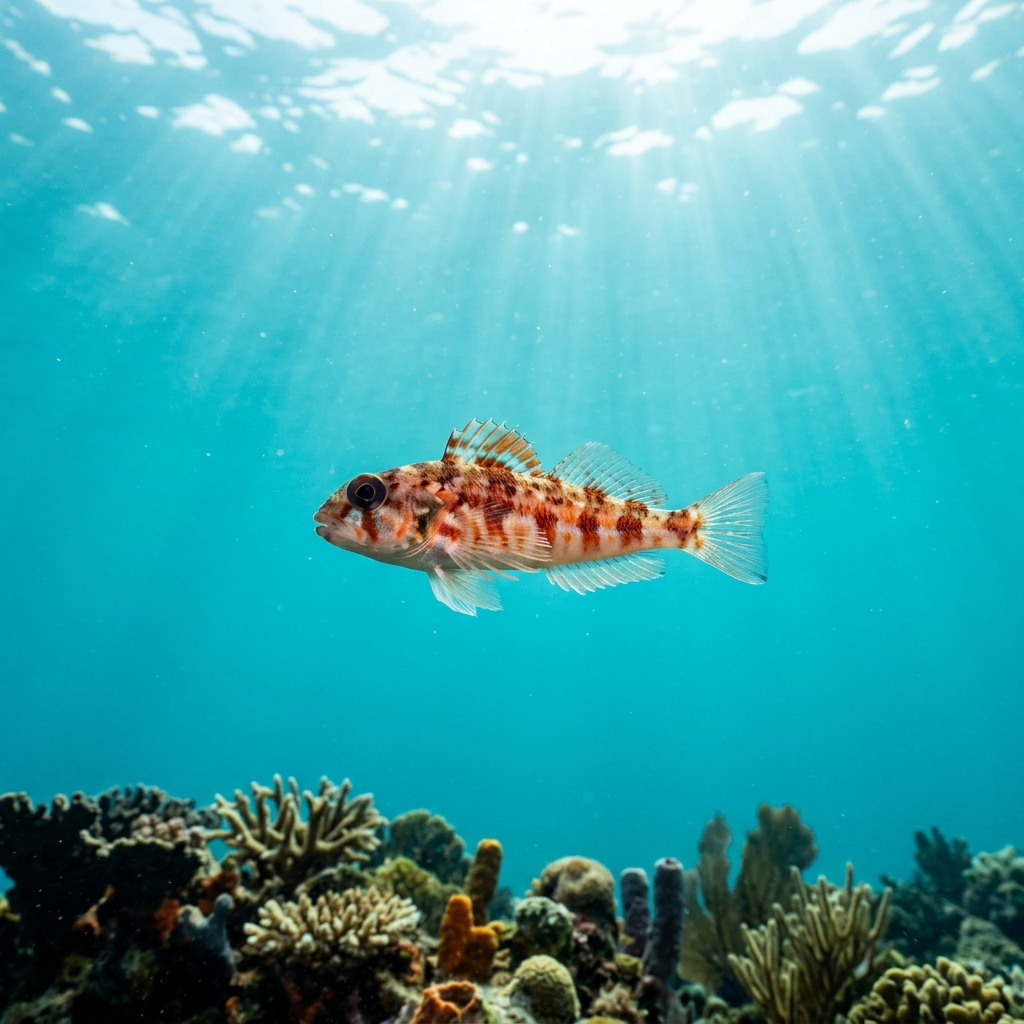
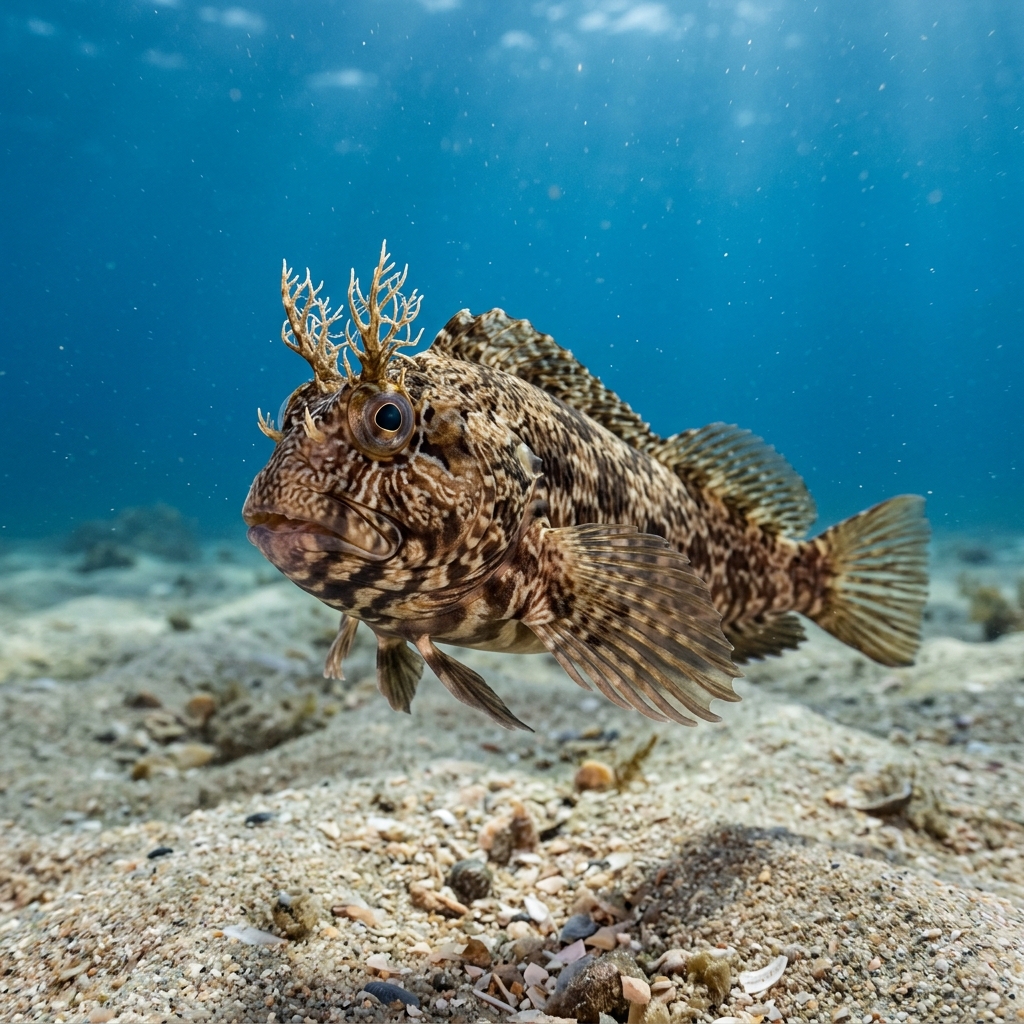
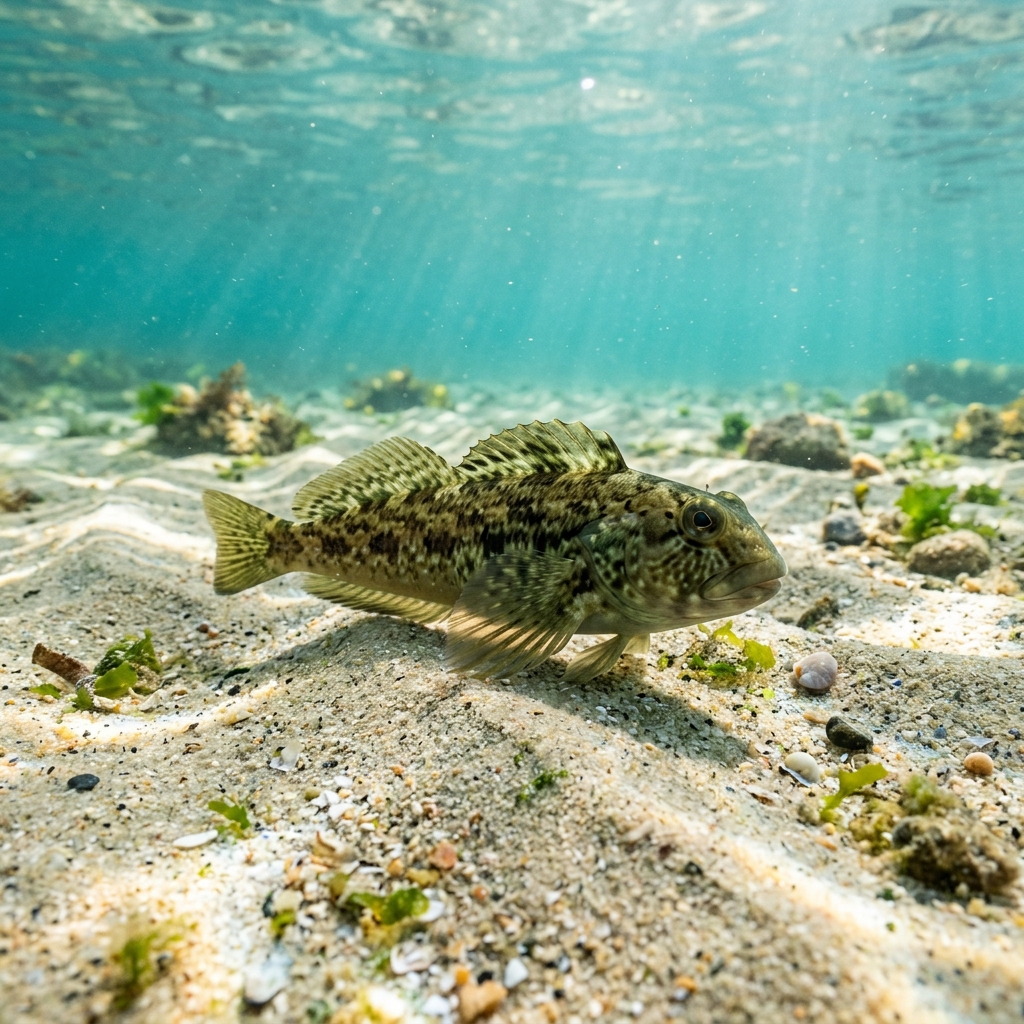
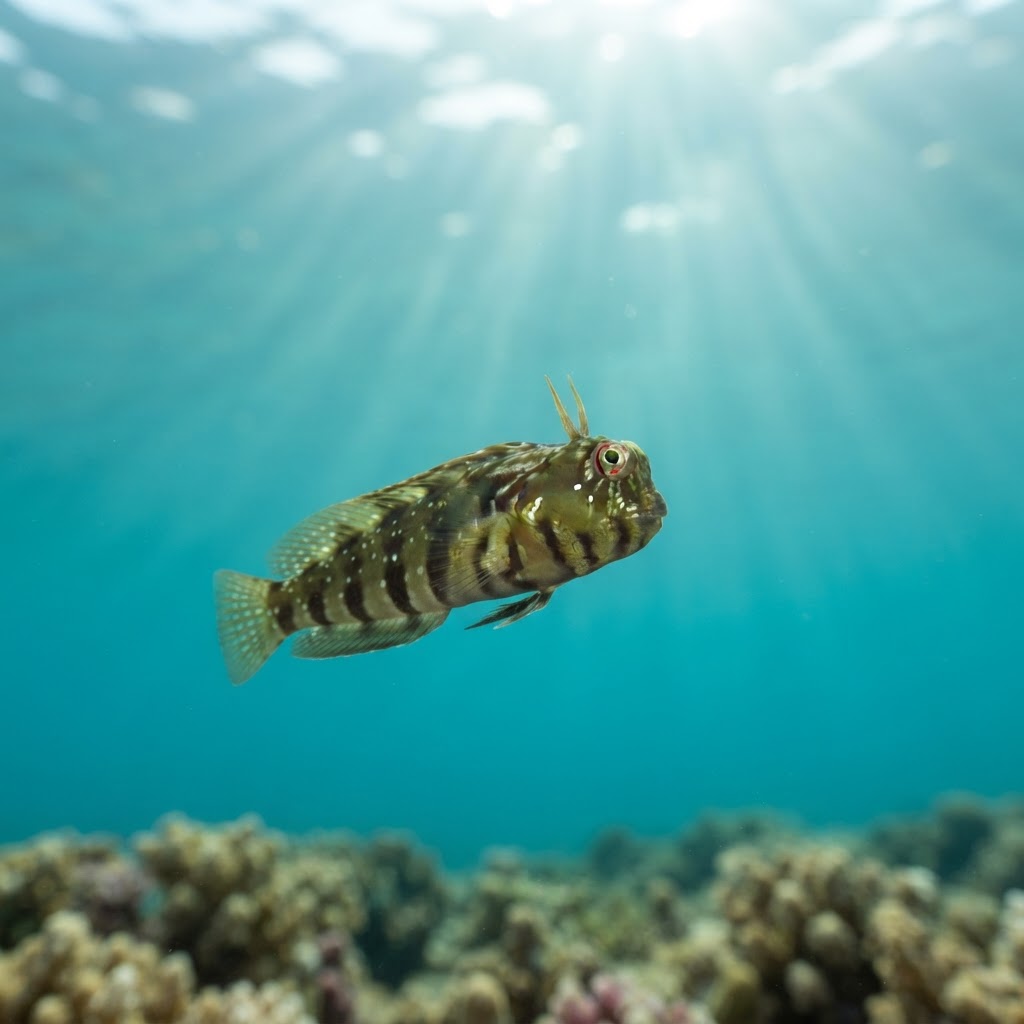
A small blenny reaching around 6 centimetres, with a slender, elongated body that sits propped on its pectoral fins against rock or reef. Look for the paired filaments (horn-like cirri) above the eyes, which give this species its common name. Colouring is mottled brown to olive, blending well with algae-covered rock, so it is often spotted only when it moves or when a diver looks closely into crevices.
Spends most of its time perched motionless on rock or reef structure, propped up on its pectoral fins while it watches for small prey or intruders. It tends to stay close to a chosen crevice and will dart back into cover rather than swim off into open water when a diver approaches. Because it is small and well camouflaged, most sightings come from divers who slow down and scan rock faces and reef nooks rather than mid-water.
Those twin head filaments are sensory structures, not just decoration, helping this blenny detect movement and texture in the tight rocky gaps it favours over open reef.
No clear seasonal pattern shows up in the sightings, and it sits comfortably in water from 23.5 to 29C, so it is a year-round find on these reefs rather than a seasonal target.
Reef neighbours a diver could mistake it for. Use the identification notes above to tell them apart.
Most reliably logged on rocky and reef sites in KwaZulu-Natal, South Africa, which accounts for the bulk of confirmed sightings, with a smaller but real presence across the border in Ponta do Ouro, Mozambique. Divers doing reef and rock dives along this stretch of the southeast African coast have the best odds of finding one tucked into a crevice.
Mapping where Horned Rockskipper is logged…
The most reliable region is KwaZulu-Natal in South Africa, with additional sightings across the border at Ponta do Ouro in Mozambique. It favours rocky reef terrain where it can wedge into crevices.
There is no strong season in the sighting data, and it is found year-round in water between 23.5 and 29C, so any time of year on these reefs works.
Look for a small, slender blenny around 6cm long, mottled brown to olive, perched on rock rather than swimming freely. The paired filaments above its eyes are the key giveaway that separates it from plainer-headed blennies.
They are small, typically reaching around 6 centimetres in length, which is why they are easy to miss unless you are looking closely at rock crevices.
No, they pose no danger to divers. They are a tiny, shy reef fish that retreats into cover rather than confronting anything nearby.
Its most distinctive feature is the pair of horn-like filaments above each eye, which are thought to help it sense its immediate surroundings while wedged into tight rocky gaps.
Site and sighting data is aggregated from diver logs, iNaturalist and GBIF. For taxonomy and conservation status:
Rusty Blenny
2,605 sites