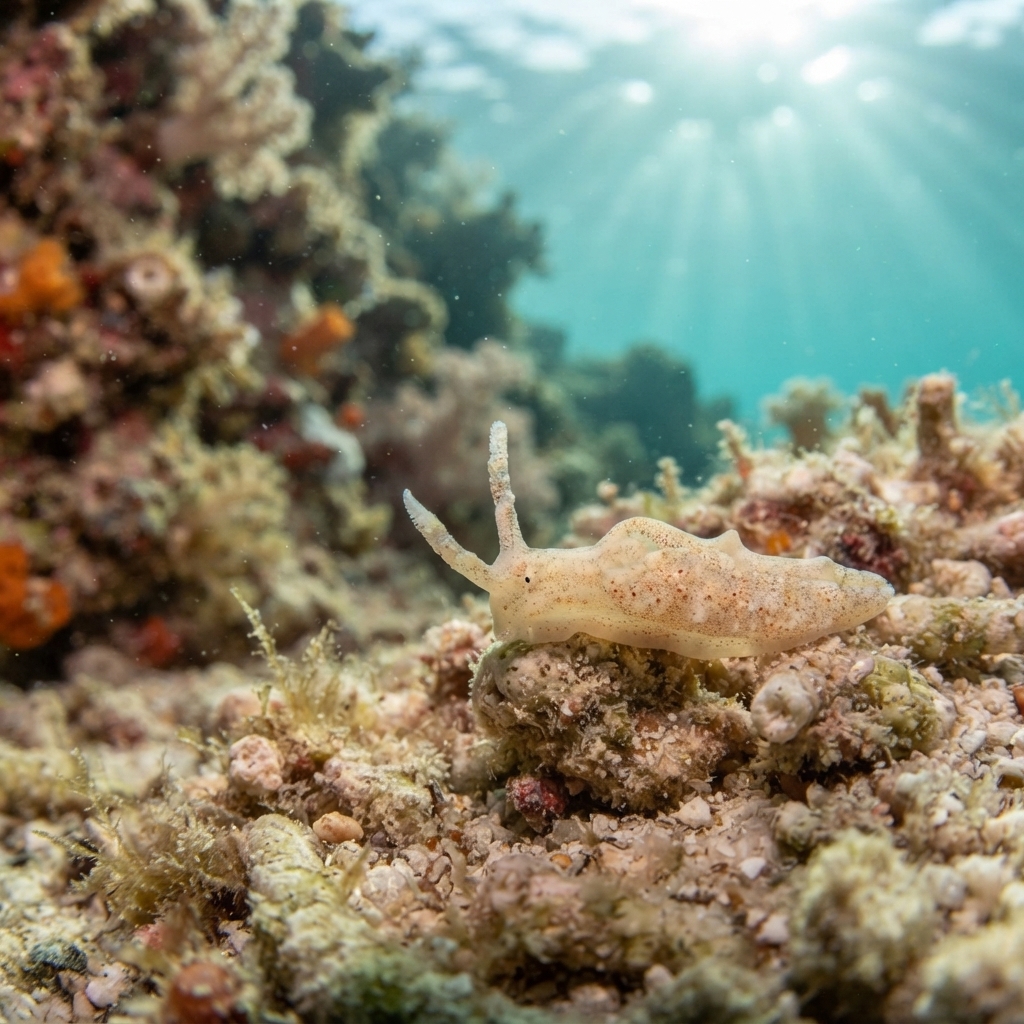
Elysia cornigera
A 1cm sea slug most reliably found in Basse-Terre, Guadeloupe and Grand Cayman, on reefs warm enough year-round to spot it any month.
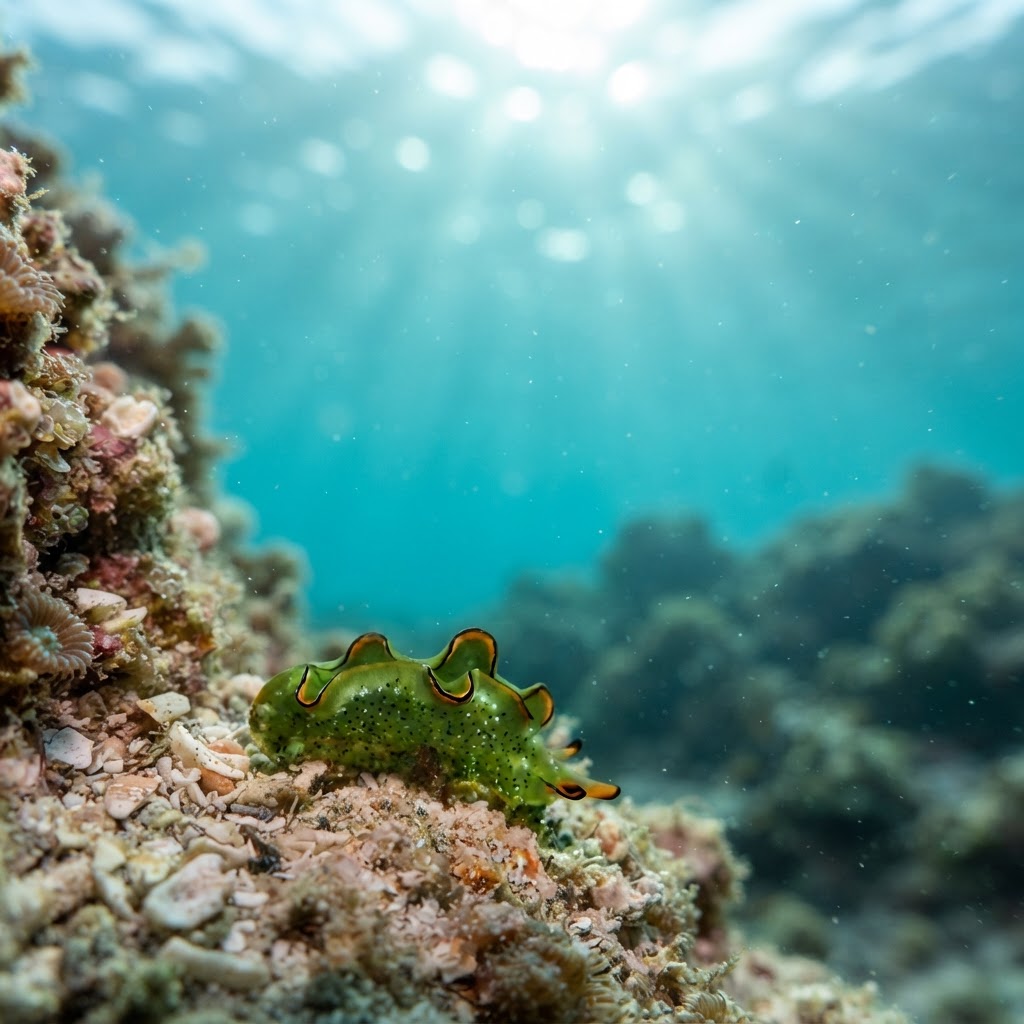
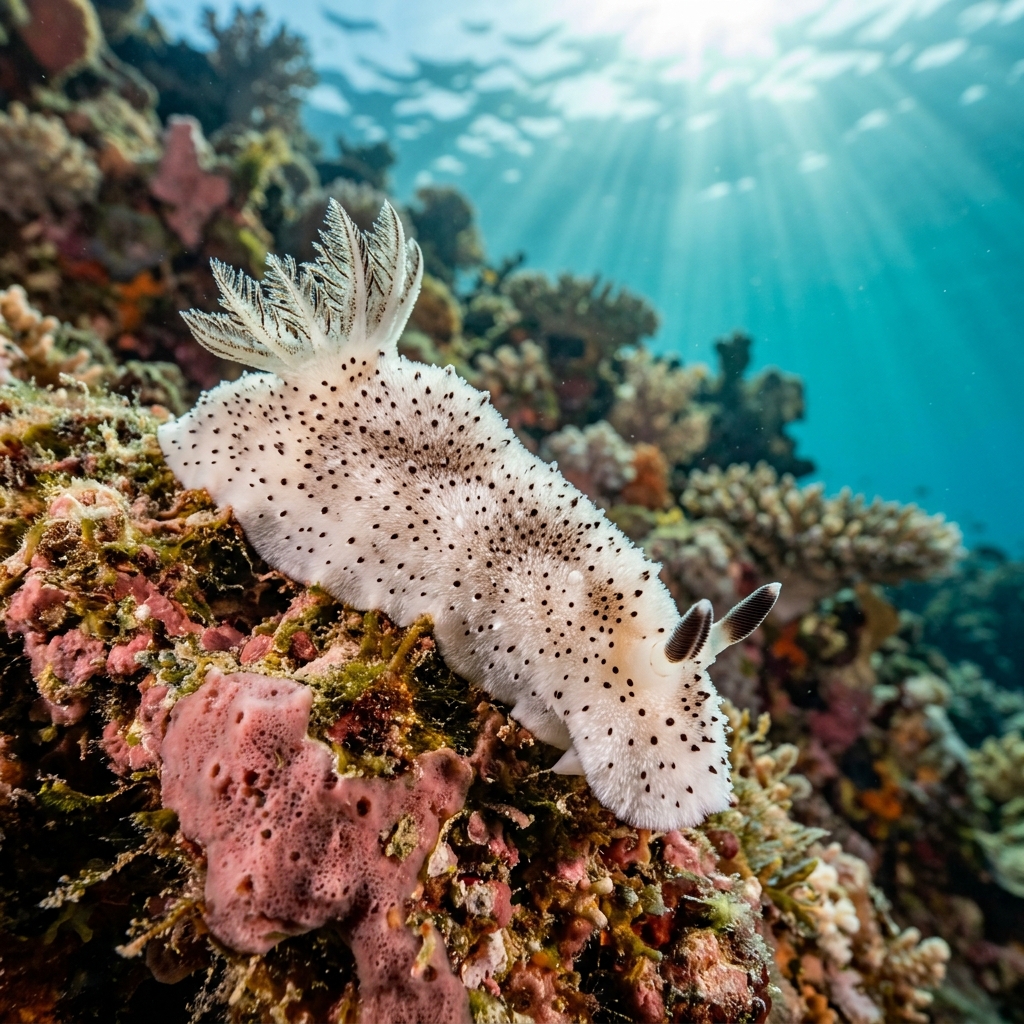
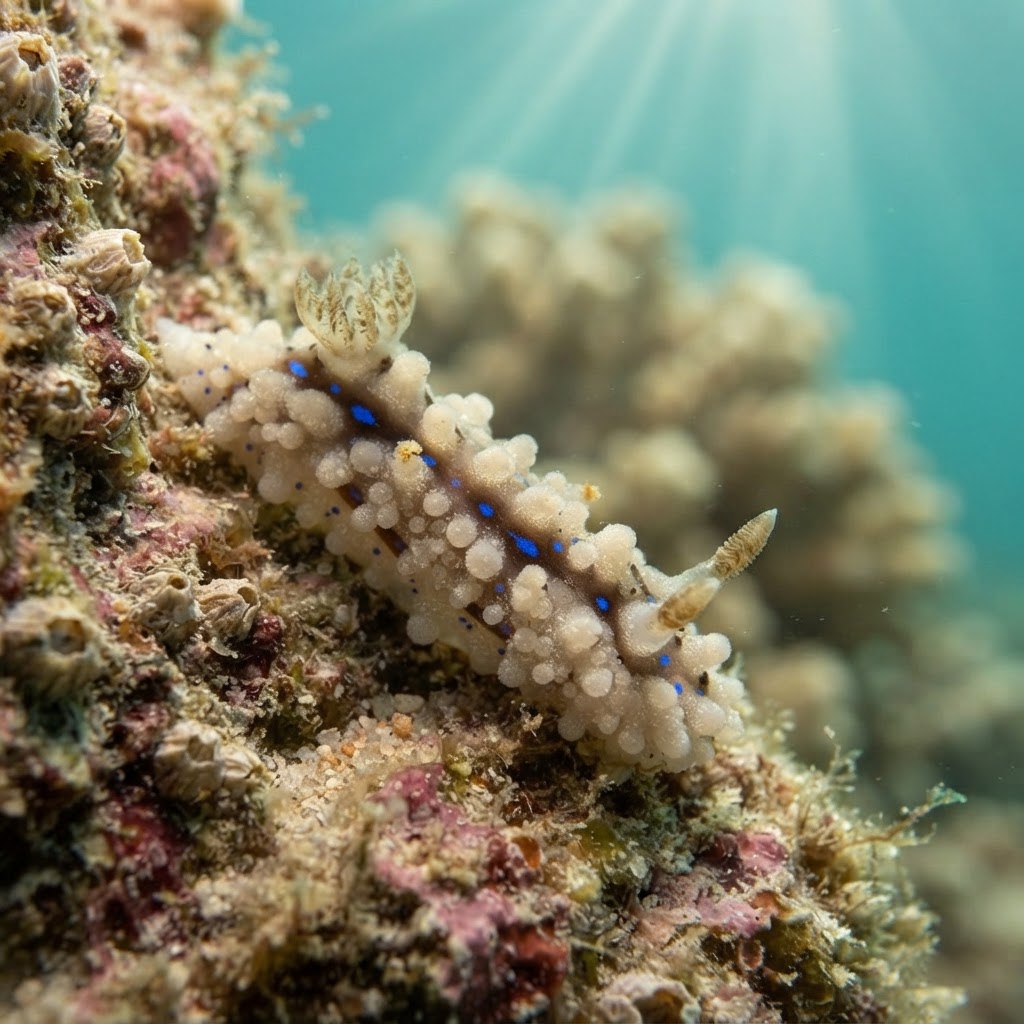
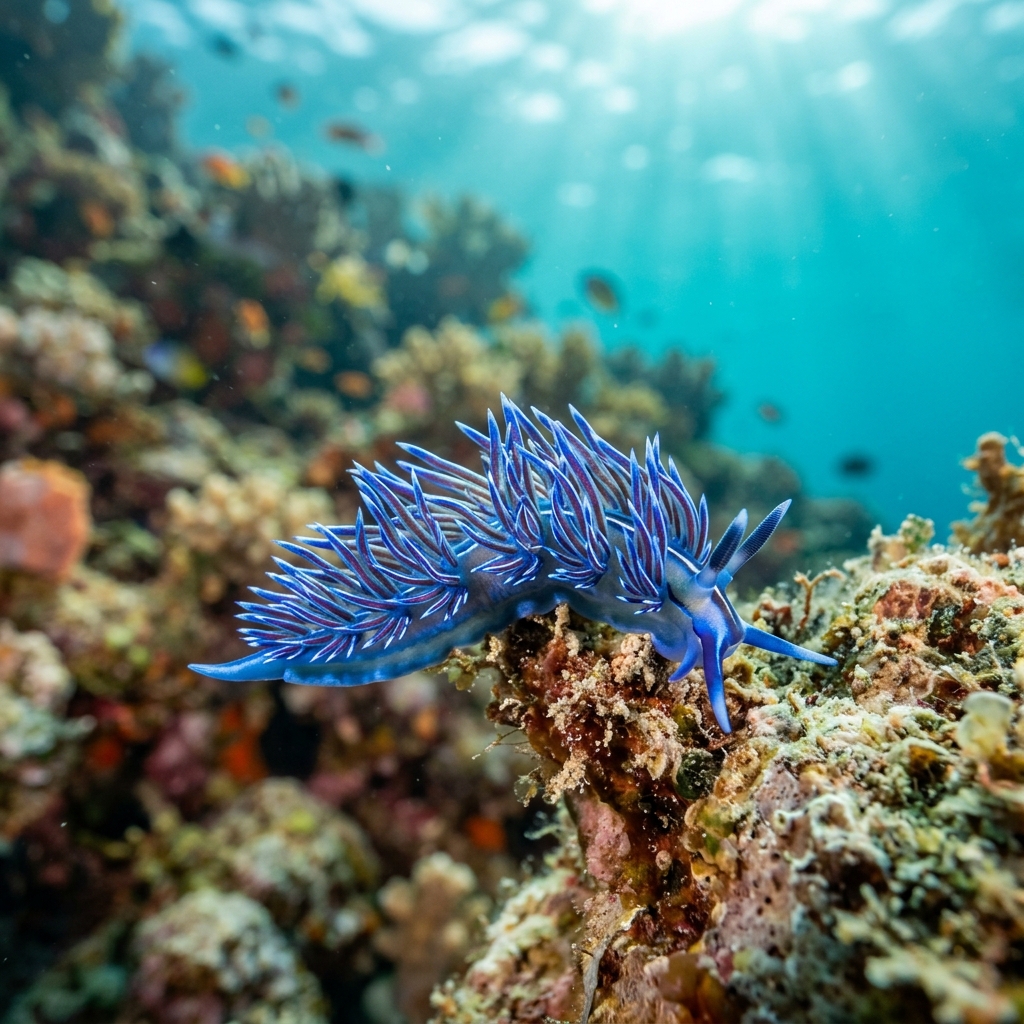
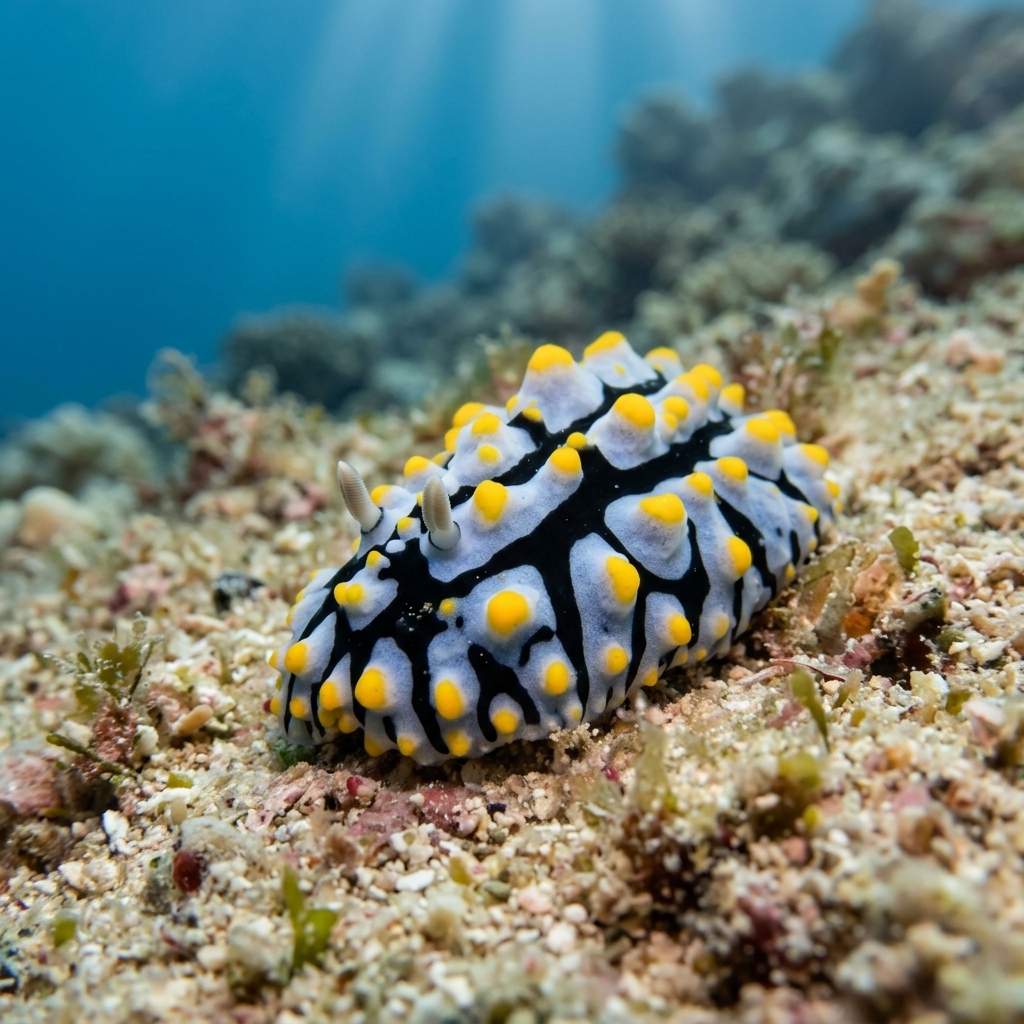
Barely a centimetre long, so you're hunting for a speck rather than swimming past something obvious. Look for a slender, leaf-shaped body in mottled green tones with two curved, horn-like appendages (rhinophores) projecting from the head, which is what gives this slug its name. The parapodia (the flap-like wings along its back) are often edged or speckled, breaking up the outline against algae.
Found grazing slowly over algae-covered rock and rubble, where it feeds on green algae and can incorporate the algae's chloroplasts into its own tissue for a while, giving it a faint photosynthetic boost. It shows no reaction to divers beyond continuing to graze, since at this size it relies on being overlooked rather than on fleeing. Most sightings come from divers doing deliberate slow, close-focus searches rather than spotting it on a normal swim-past.
Like other members of its family, it can retain functioning chloroplasts from the algae it eats inside its own cells, effectively running on borrowed solar power for days at a time.
No clear season shows up in the sighting data, and with a comfortable range of roughly 25 to 31 C, warm-water reefs in Guadeloupe and the Caymans suit it all year. Go any month and search the same microhabitats rather than waiting for a particular time of year.
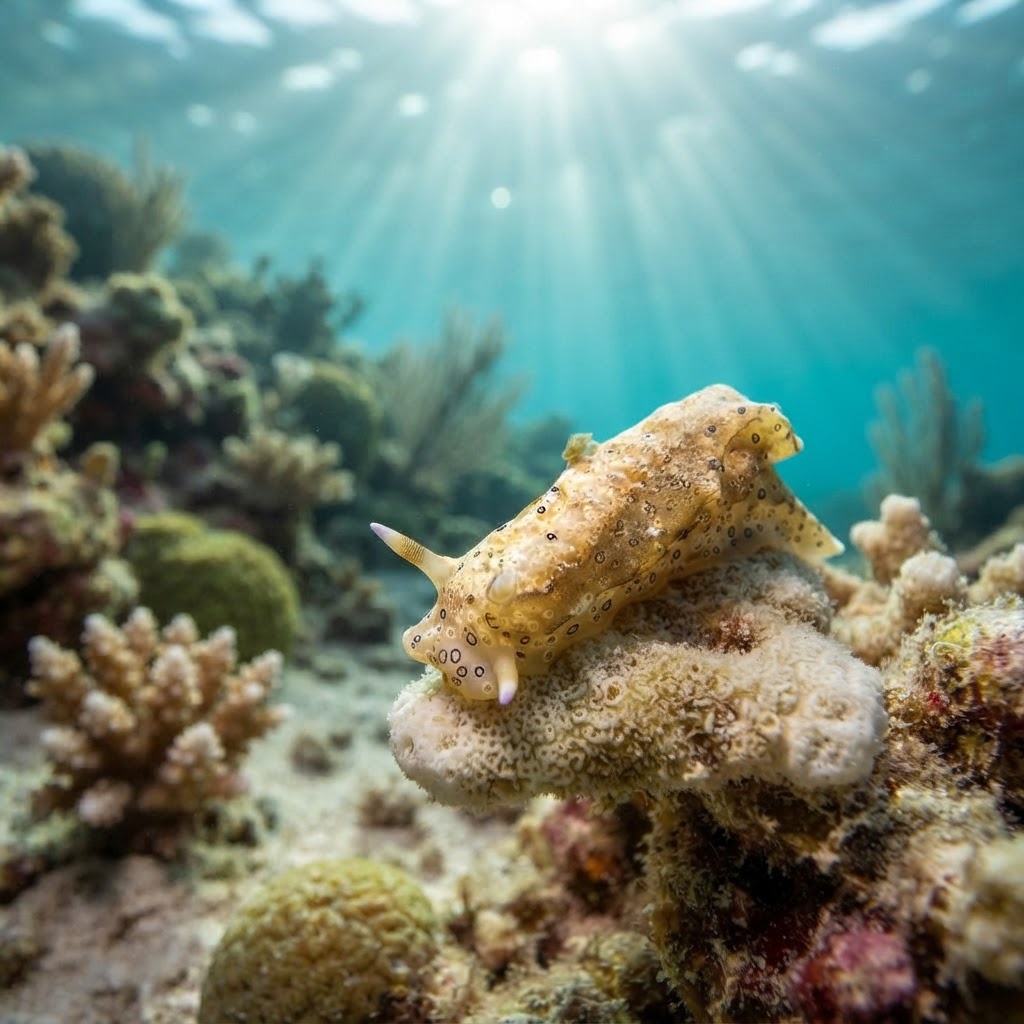
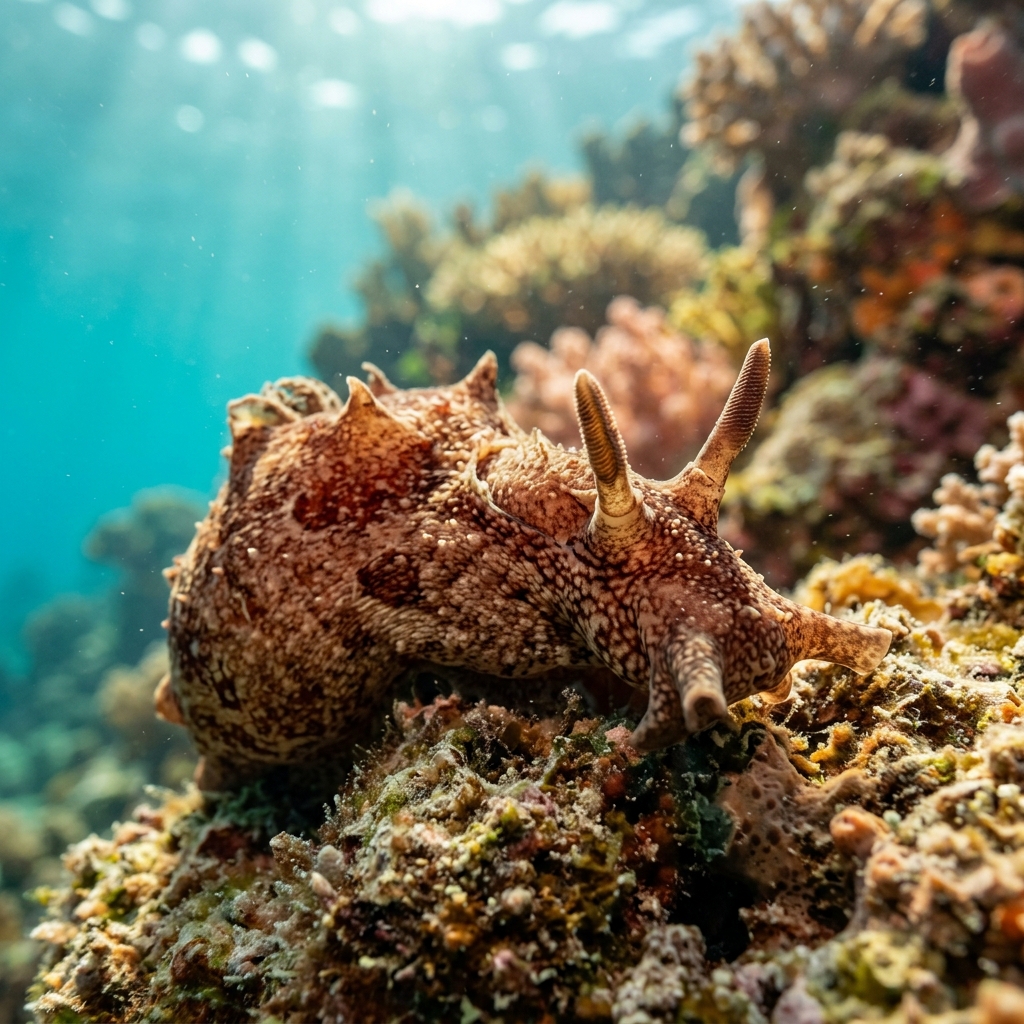
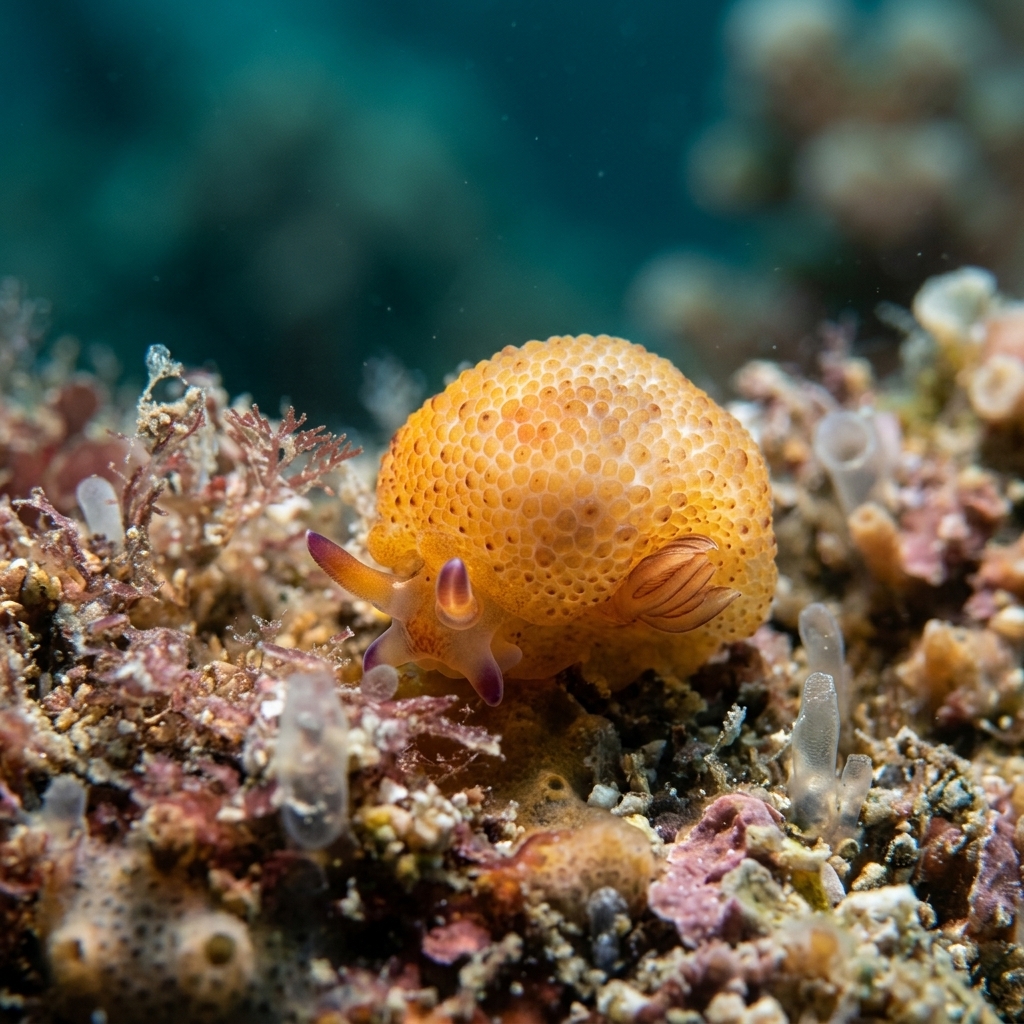
Reef neighbours a diver could mistake it for. Use the identification notes above to tell them apart.
Most consistently logged in Basse-Terre, Guadeloupe, which accounts for the bulk of sightings, with a second reliable population around Grand Cayman in the Cayman Islands. A single Bermuda record shows it turns up outside the Caribbean core too, but Guadeloupe and Grand Cayman are where divers actually go looking for it.
Mapping where Horned Elysia is logged…
Best logged in Basse-Terre, Guadeloupe, with a second solid population around Grand Cayman in the Cayman Islands. A rarer record from Bermuda shows it isn't confined to the Caribbean, but Guadeloupe and Grand Cayman are the two places worth targeting.
There's no detected season in the sighting data, and its warm-water niche of roughly 25 to 31C means it's present on tropical reefs year-round. Any month diving Guadeloupe or Grand Cayman gives a fair shot.
Look for a 1cm, leaf-shaped green slug with two curved, horn-like rhinophores on its head and mottled or speckled wing-like parapodia along its back. It moves slowly over algae-covered rock, so patience and a close look matter more than speed.
About 1cm long, making it one of the smaller sea slugs divers try to spot. It's easily mistaken for a fleck of algae until you look closely.
It can absorb chloroplasts from the algae it eats and keep them functioning in its own tissue for a while, giving it a temporary, slug-powered form of photosynthesis.
Site and sighting data is aggregated from diver logs, iNaturalist and GBIF. For taxonomy and conservation status:
Light-spotted Aegires
3,168 sites