Gymnothorax pseudothyrsoideus
Look for this uncommon moray in Queensland, Palawan and Sulawesi, tucked into reef crevices in warm 21-29C water year-round.
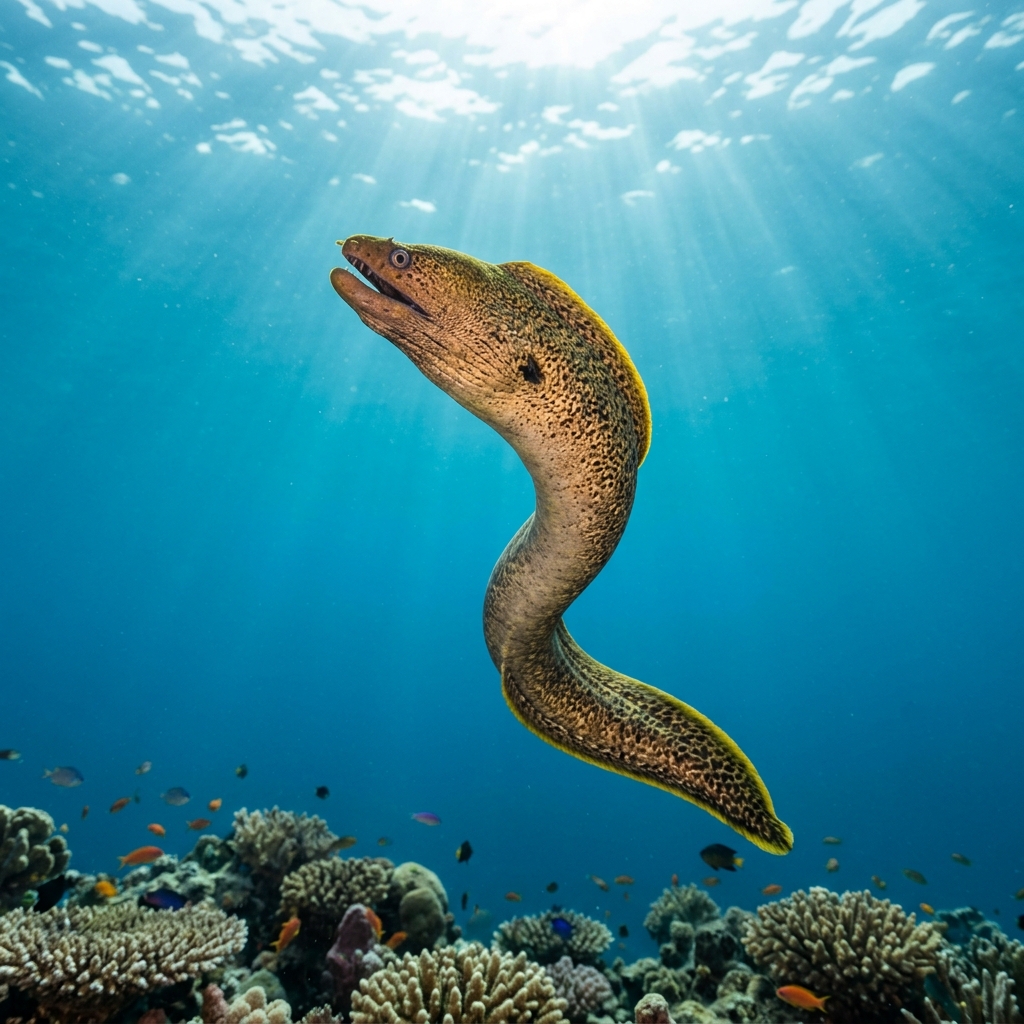
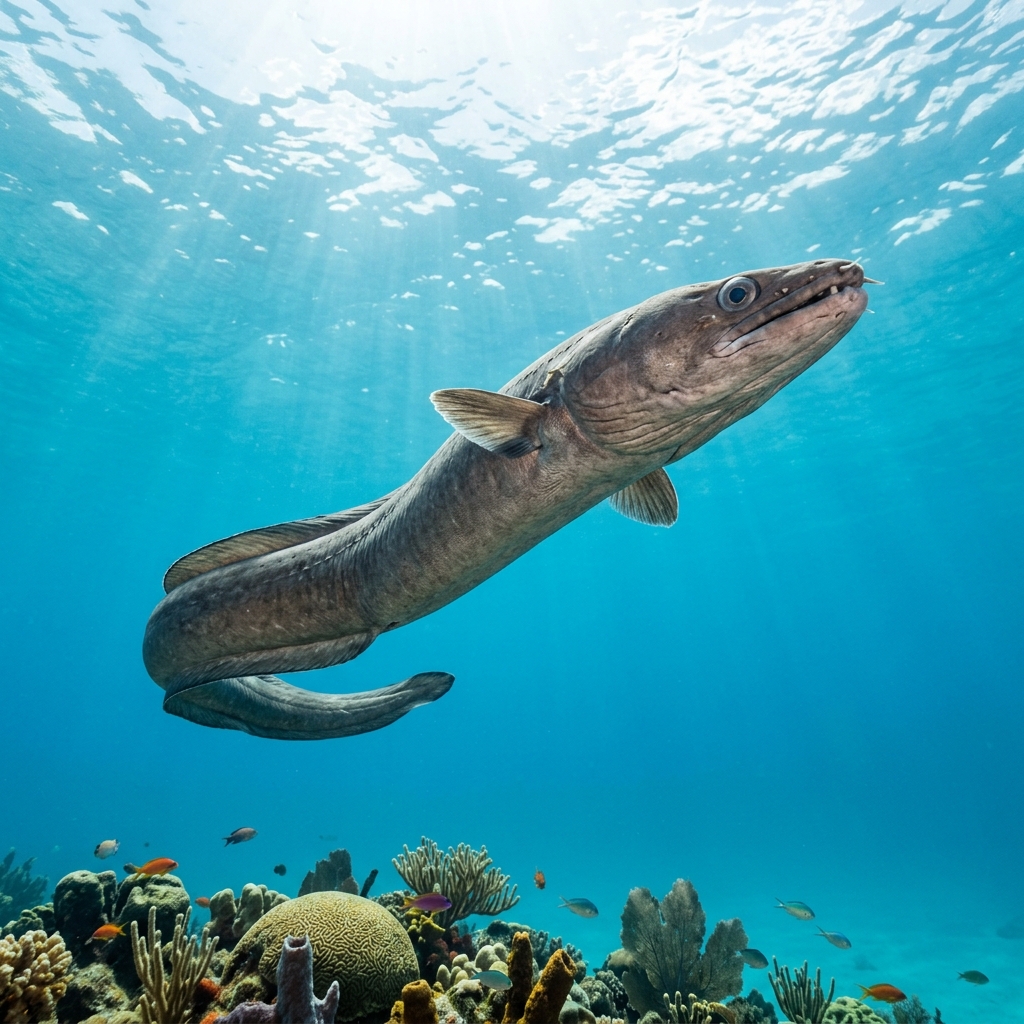
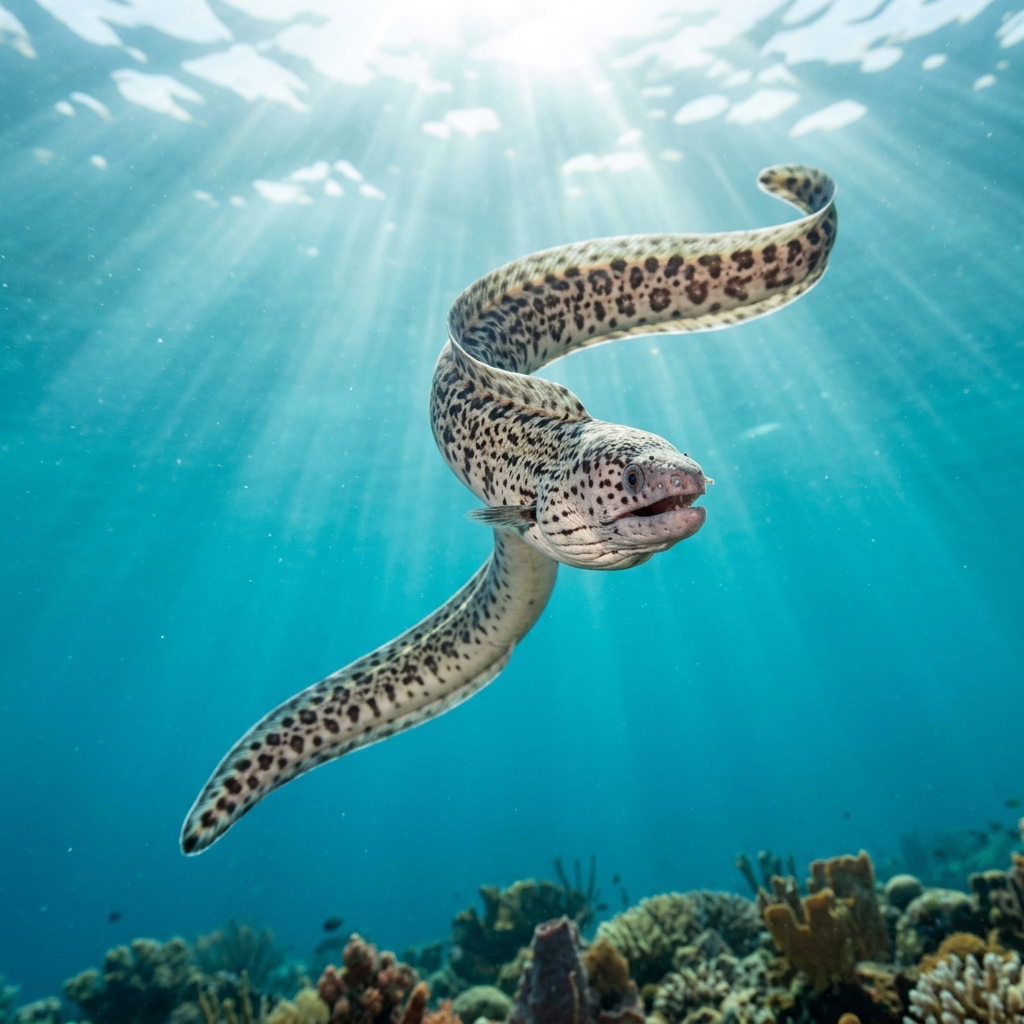
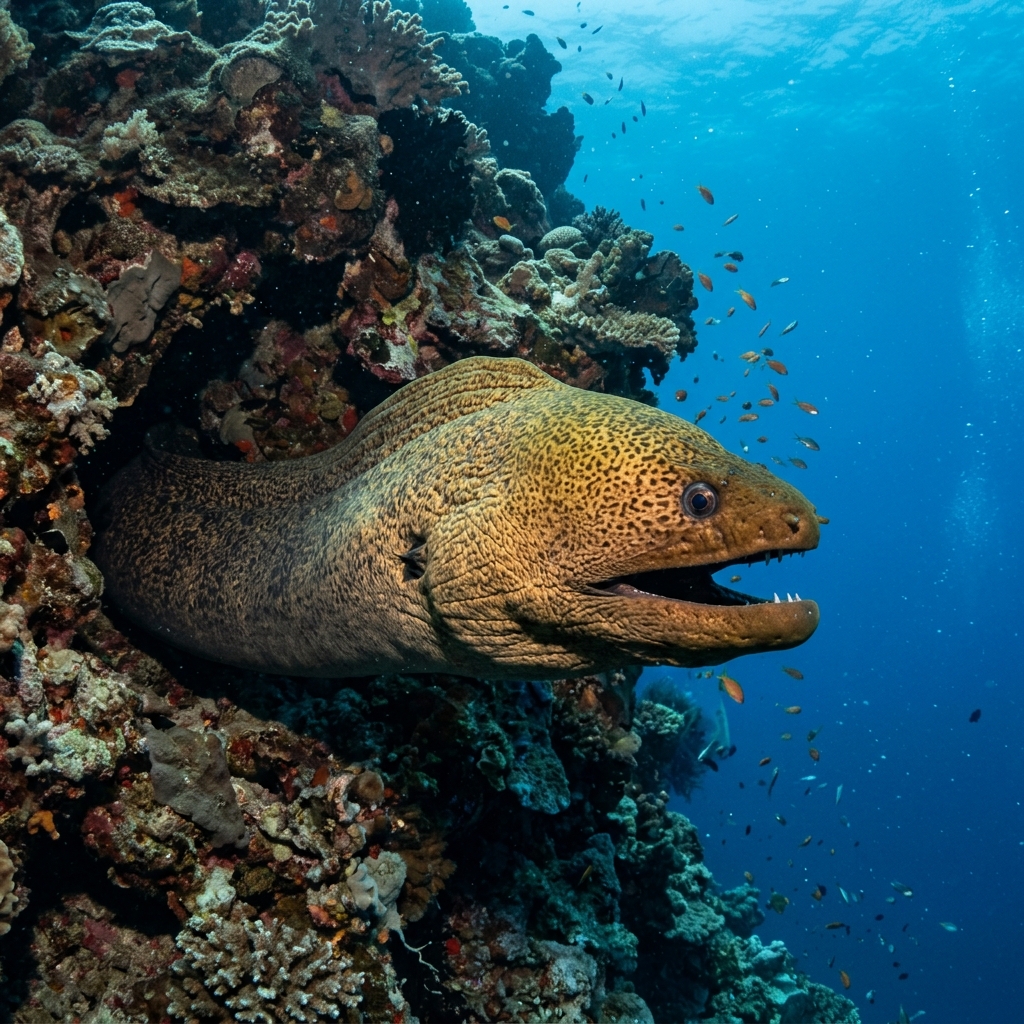
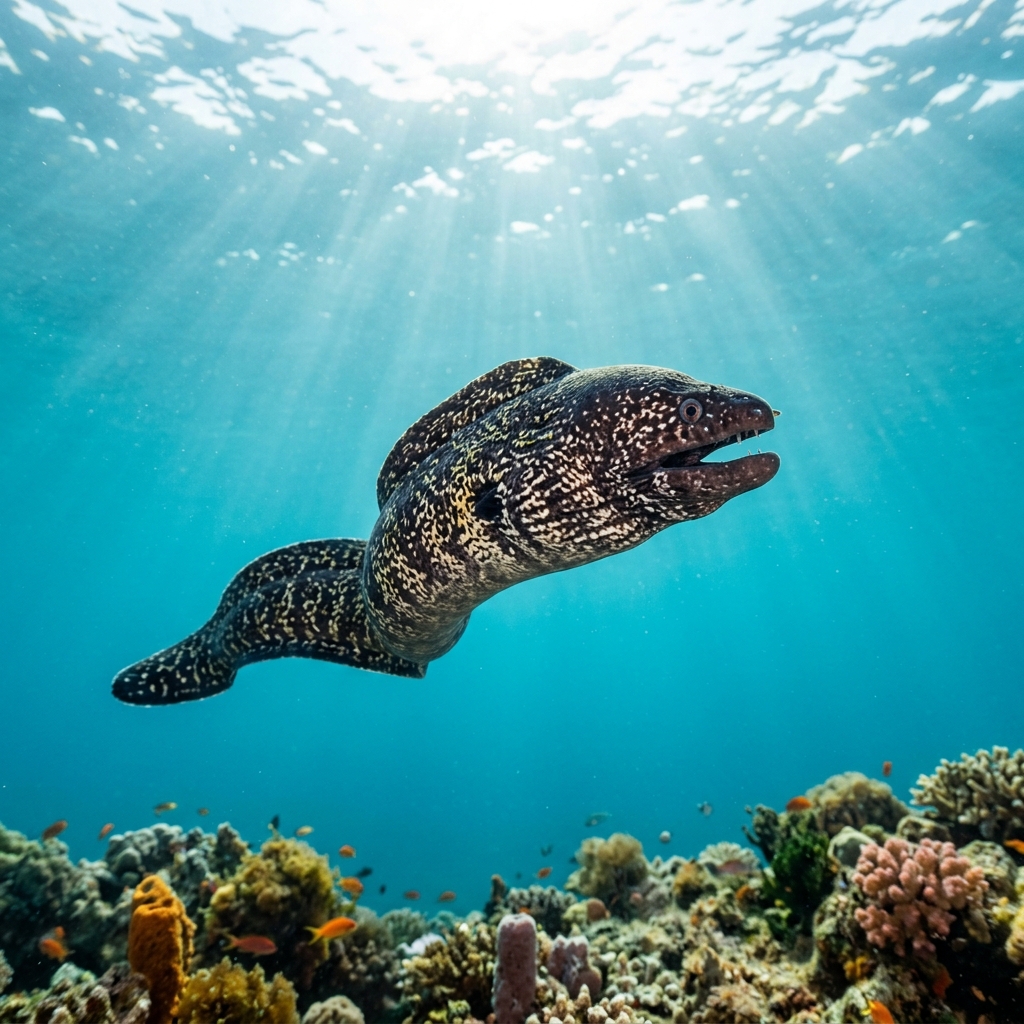
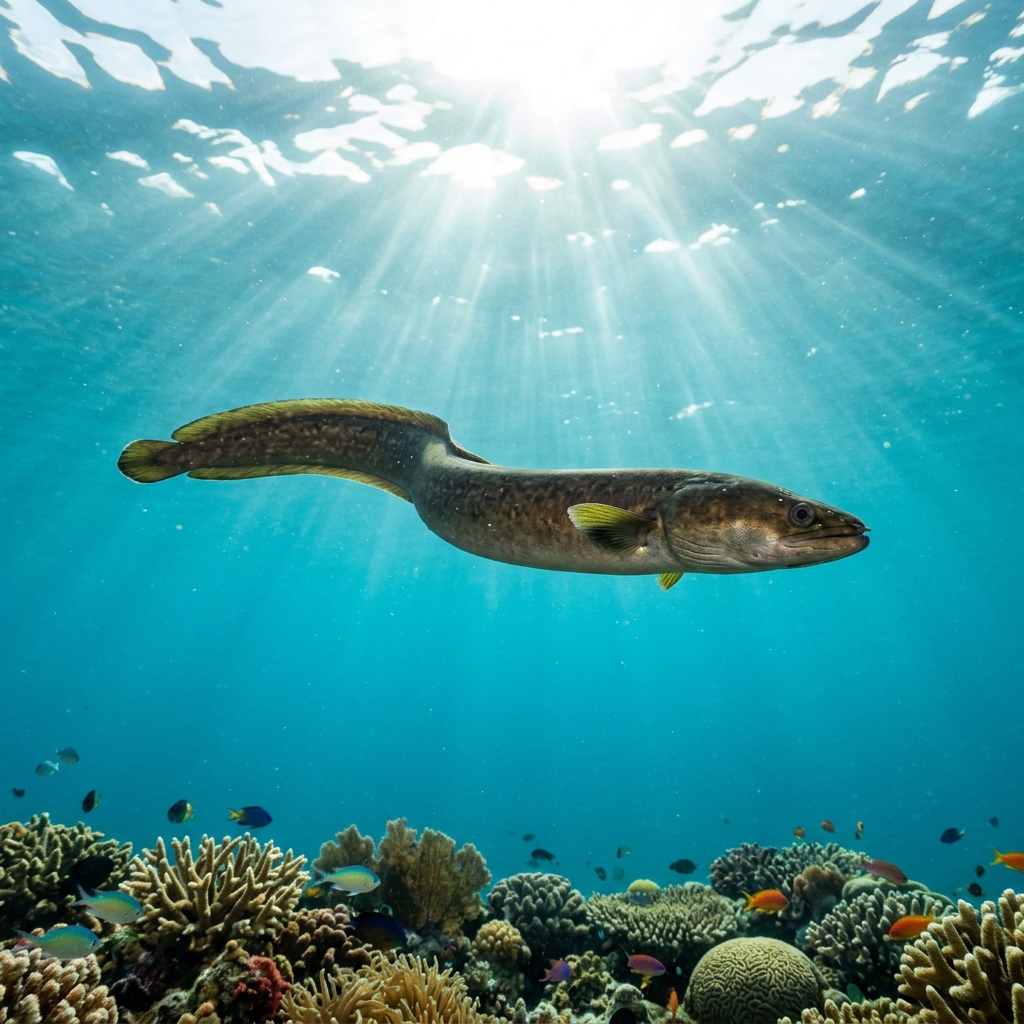
Grows to around 56 cm, modest for a moray, with a slender dark brown to grey body covered in fine mottling that breaks up its outline against reef rubble. The giveaway is the tall, continuous dorsal fin that runs high along the back, more pronounced than on most reef morays, which is where the common name comes from. Usually seen with just the head and a stretch of that raised fin poking out of a crevice rather than the full body on show.
Spends most of the day wedged into a hole or crevice on the reef with just its head visible, watching the water go by rather than patrolling in the open. Divers who log it usually describe a brief sighting, uncommon or rare at most sites, rather than a lingering encounter, so it pays to scan low ledges and rubble patches closely. Like other morays it relies on smell and a strong bite rather than speed, and shows little interest in divers who keep their distance.
That raised dorsal fin is doing double duty: on a body already broken up by mottled colouring, it adds another line that helps the eel disappear against coral rubble and shadow, which is likely part of why sightings logged as uncommon to rare even where it's present.
No clear seasonal pattern shows up in the data, and with a comfort range of 21.1 to 29.1C it has warm water year-round across its Indo-Pacific range, so any month is fair game.
Reef neighbours a diver could mistake it for. Use the identification notes above to tell them apart.
Most reliably logged on reefs in Australia, particularly Queensland and Western Australia, and across the Philippines in Luzon, Palawan, Mindanao and the Visayas. Indonesia also turns up strong numbers, especially Sulawesi and Nusa Tenggara, with smaller but real populations in Malaysia, Fiji, New Caledonia and Brunei.
Mapping where Highfin Moray is logged…
Best chances are on reefs in Queensland and Western Australia, plus the Philippines across Luzon, Palawan, Mindanao and the Visayas. Sulawesi and Nusa Tenggara in Indonesia also hold decent numbers.
There's no strong season in the sighting data, and it tolerates warm water from about 21 to 29C, so it's a year-round find on tropical Indo-Pacific reefs rather than a seasonal target.
Look for a small, mottled brown-grey moray with a noticeably tall dorsal fin running along its back, usually with just the head and fin edge showing from a reef crevice. At around 56 cm it's on the smaller side for a moray.
They typically reach about 56 cm in length, making them one of the more modestly sized morays divers encounter on Indo-Pacific reefs.
No, they're not considered dangerous to divers. Like most morays they stay tucked in crevices and only bite if provoked or hand-fed, so simply avoid poking into holes.
Site and sighting data is aggregated from diver logs, iNaturalist and GBIF. For taxonomy and conservation status:
Garden Eel
2,448 sites