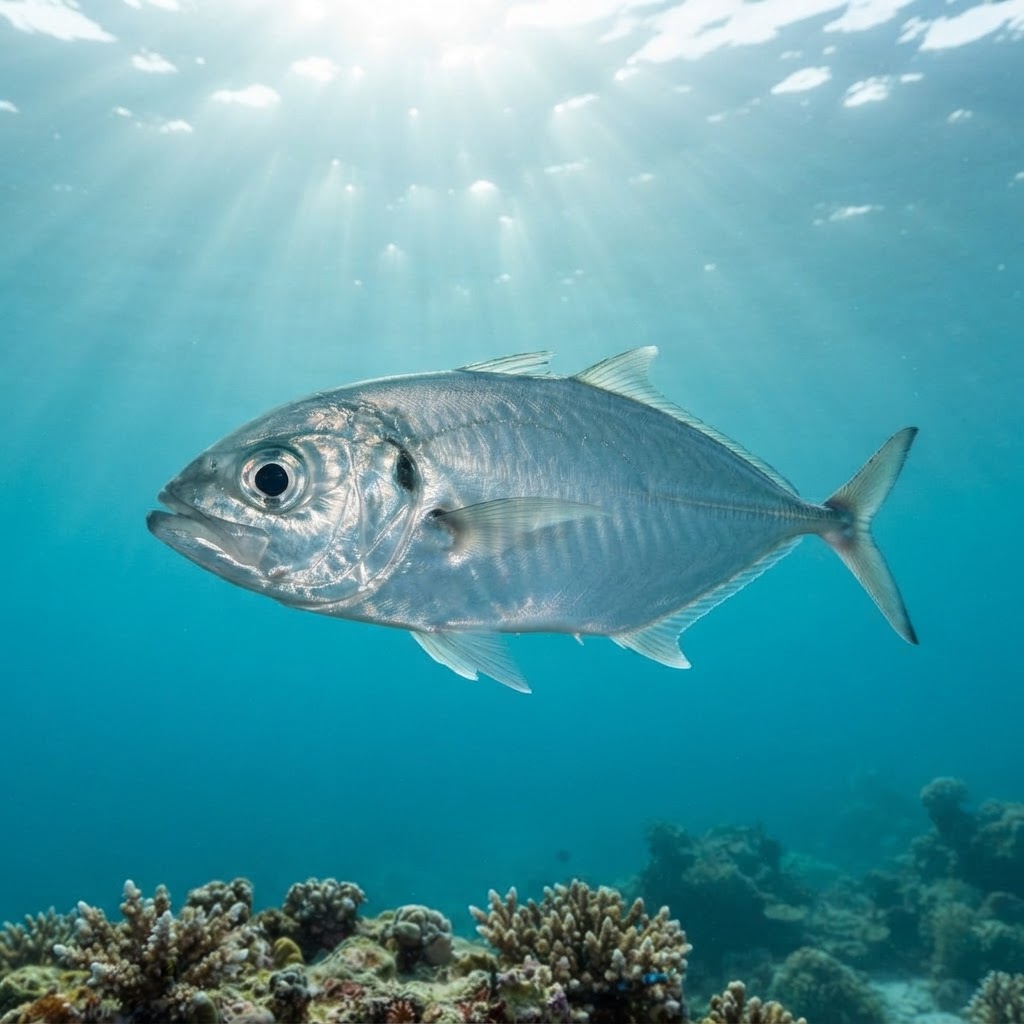
Alepes vari
Silvery schooling jacks logged at 22 sites around Koh Phi Phi, Thailand, in warm 24-29C water year-round.
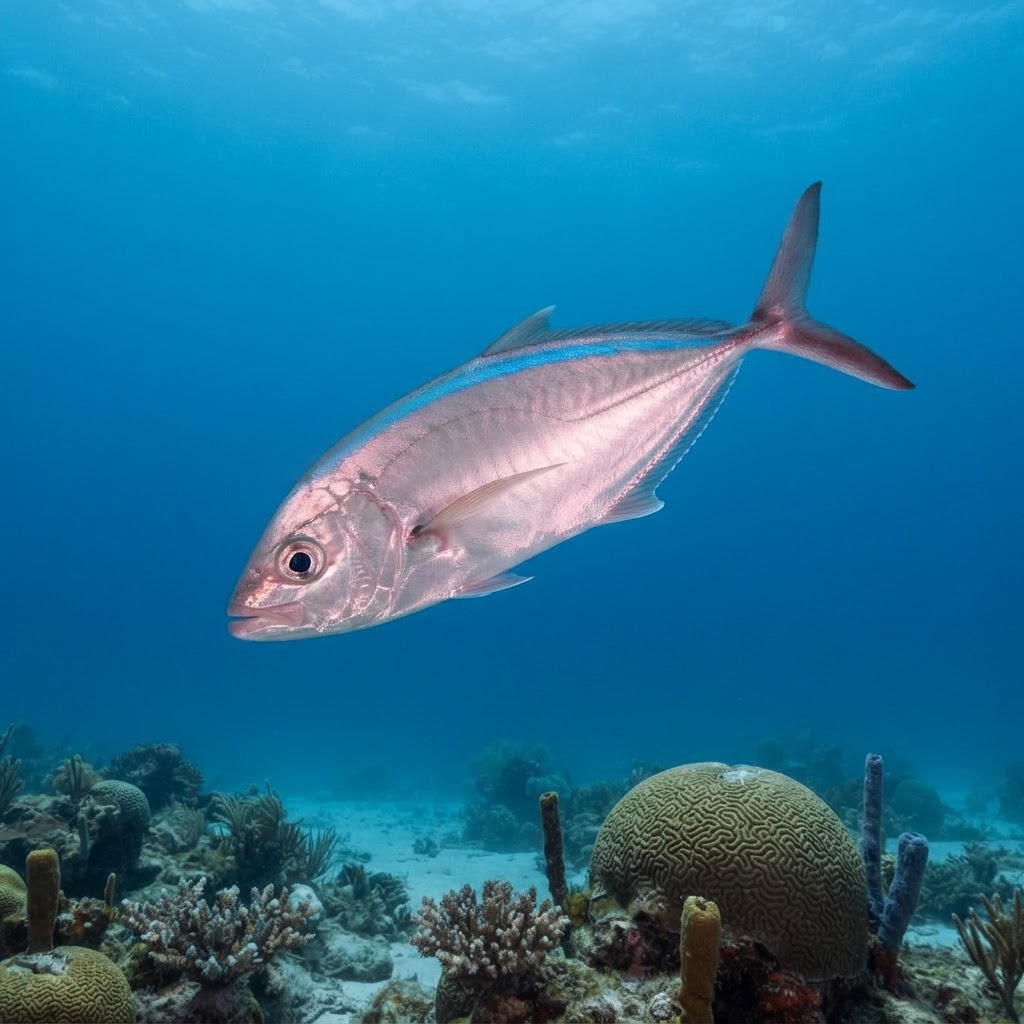
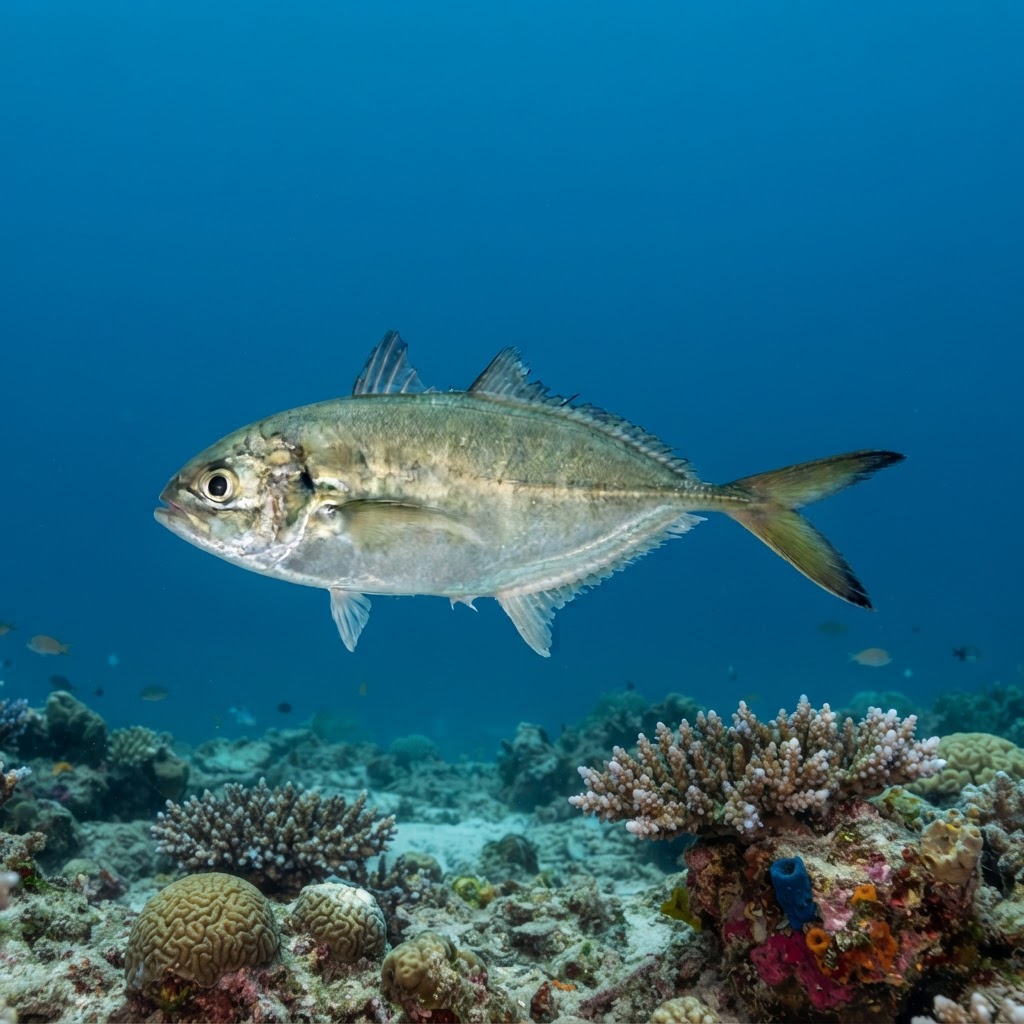
Slim, laterally flattened body with bright silver flanks fading to a pale blue-green back, growing to around 43 cm. Look for the small dark spot on the upper edge of the gill cover, a common giveaway for scads, plus the narrow row of scutes (hardened scales) running along the rear half of the lateral line. Usually seen in loose schools rather than alone, all fish roughly the same size and colouring.
Divers usually find them moving in loose, unhurried schools over reef slopes and open sandy patches rather than tucked into structure. They tend to keep a bit of distance from divers, drifting off as a group rather than scattering in panic, and are logged as an uncommon but recognisable sighting rather than a guaranteed one.
Like other scads, they feed on small plankton and baitfish by filtering the water column, which is why you often see them hovering mid-water over reef rather than grazing the bottom like many jacks.
No clear season shows up in the data, and with a comfortable range of 23.8 to 29.2 C this fits typical year-round tropical reef conditions across its Thai and Indonesian sites.
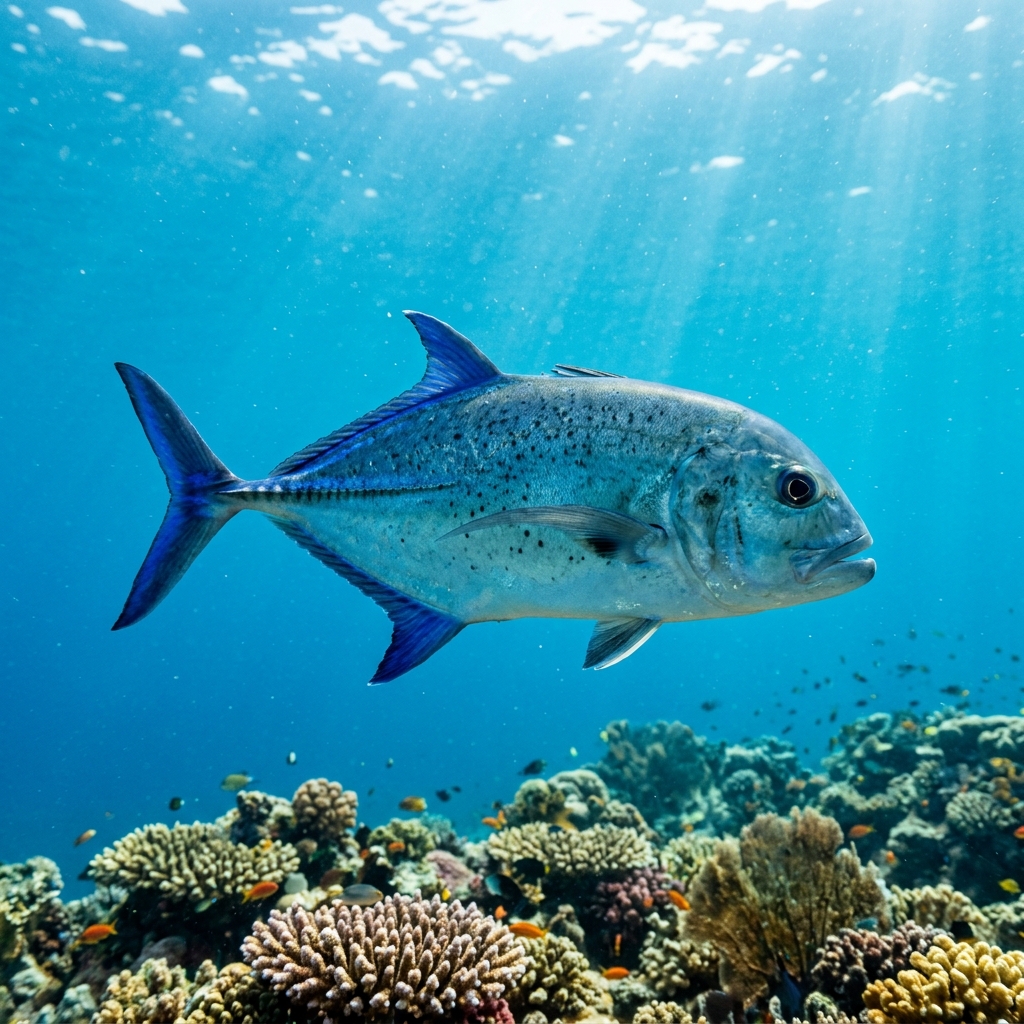
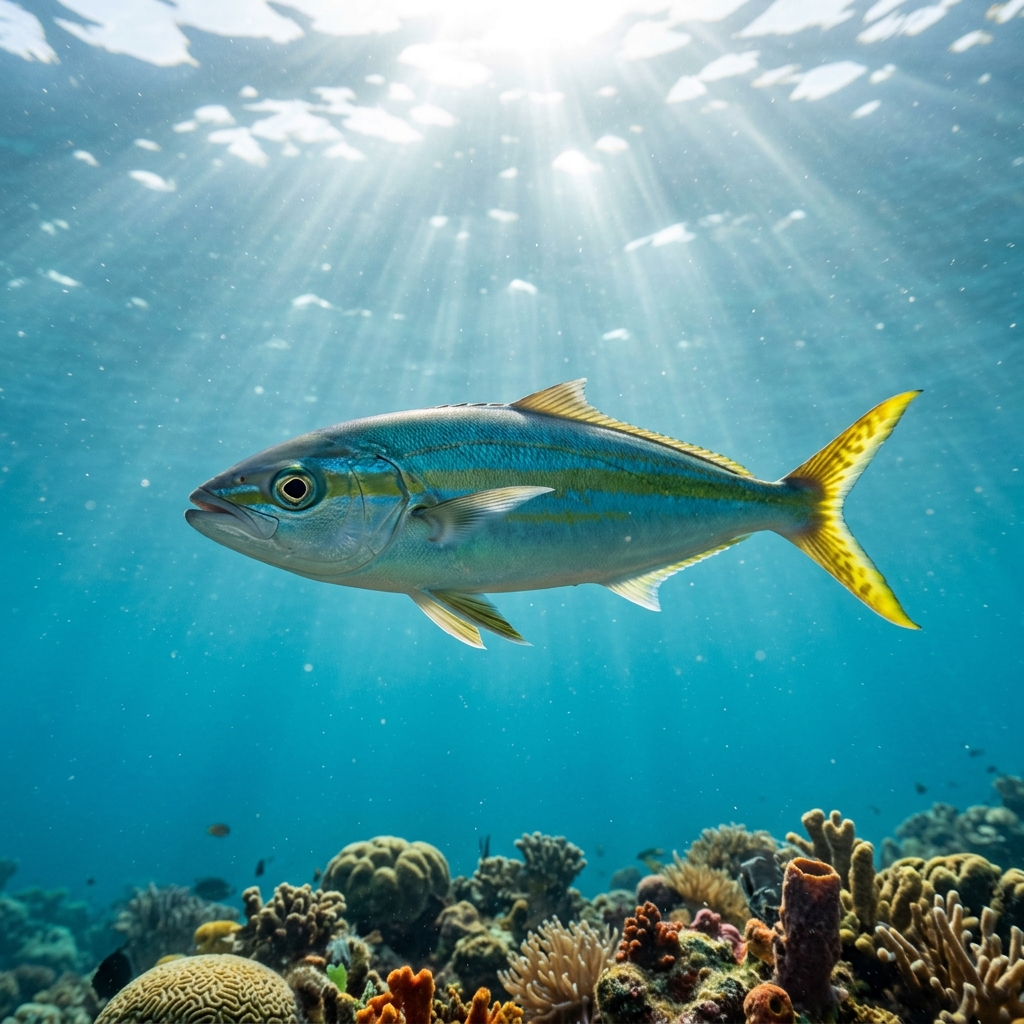
Reef neighbours a diver could mistake it for. Use the identification notes above to tell them apart.
Most reliably logged around Koh Phi Phi in Thailand, with further sightings at Pattaya and Phuket, so Thailand is the strongest bet by far. Outside Thailand it turns up occasionally in Raja Ampat, Indonesia, and off Sabah, Malaysia.
Mapping where Herring Scad is logged…
Thailand is the standout location, especially around Koh Phi Phi, with further sightings at Pattaya and Phuket. Smaller numbers have also been logged in Raja Ampat, Indonesia, and Sabah, Malaysia.
There is no strong seasonal pattern in the sightings data, and the species is comfortable across a warm 23.8 to 29.2 C range, so it can turn up on tropical reefs at any time of year.
Look for a slim silvery jack around 43 cm with a small dark spot on the gill cover and a school of similarly sized fish drifting together over open reef or sand. The body is flattened side to side with a pale blue-green back fading to bright silver flanks.
They reach around 43 cm in length, making them a mid-sized member of the jack and trevally family rather than one of the larger open-water predators in that group.
No, they pose no danger to divers. They are a schooling, plankton-feeding fish that keeps its distance and shows no aggressive behaviour around people.
Site and sighting data is aggregated from diver logs, iNaturalist and GBIF. For taxonomy and conservation status:
Bigeye Trevally
2,591 sites