Ardeadoris egretta
White nudibranch with orange-tipped gills, most reliably logged in Visayas and Okinawa on warm reefs year-round.
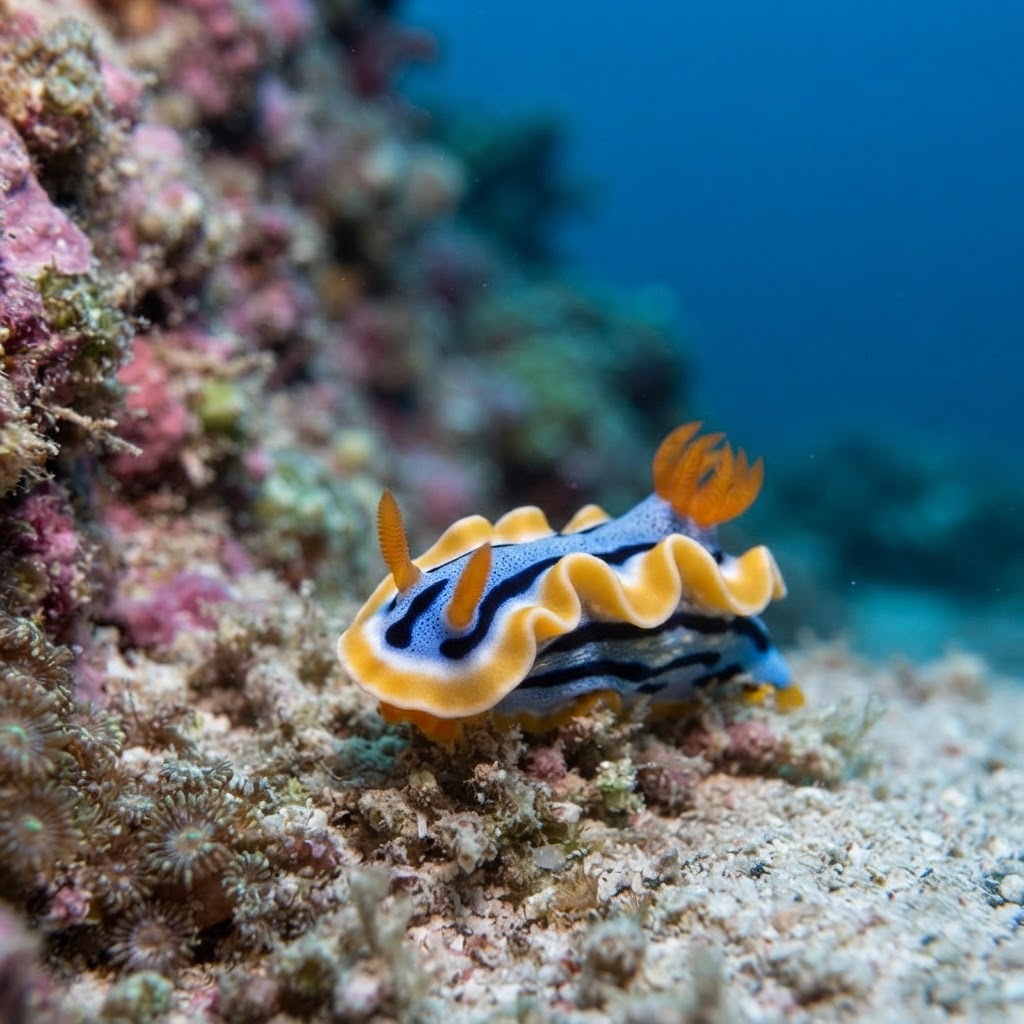
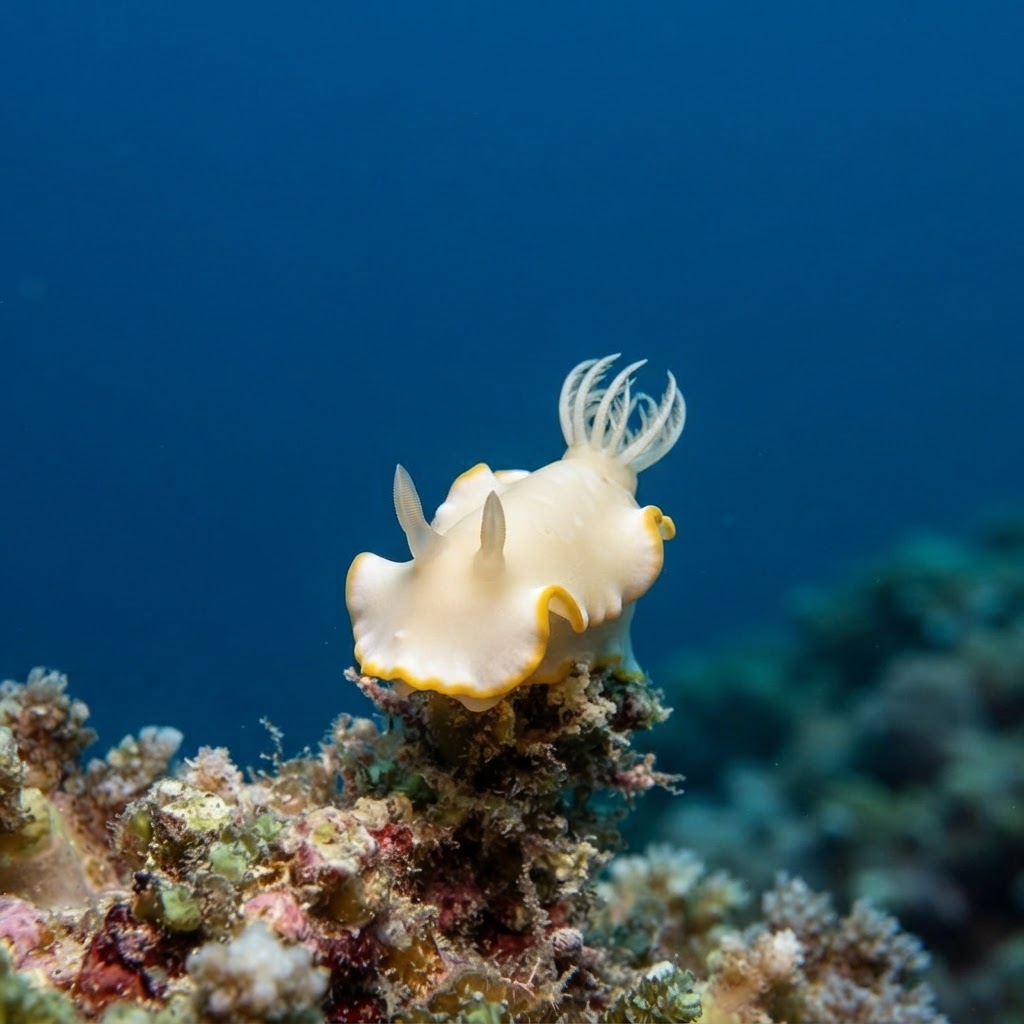
Grows to about 7cm, with a translucent white to cream body edged in a thin orange or yellow line running the length of the mantle. The gills and rhinophores (the small paired sensory horns on the head) are tipped in orange, giving a two-tone look against the pale body. Look for a smooth, elongated oval shape gliding slowly across reef substrate rather than swimming.
Found creeping slowly over reef substrate and rubble, usually solo, as it hunts for the sponges it feeds on. It pays no attention to divers and won't react to a slow, steady approach, making it an easy subject for macro photography once spotted. Most sightings come from typical daytime reef dives rather than night dives.
Like other chromodorid nudibranchs, it likely stores or repurposes chemical compounds from the sponges it eats as a defence against predators, which is part of why these slugs can afford to move so slowly and stay so exposed on open reef.
No clear seasonal pattern shows up in sightings, and with a comfortable range of 25.6 to 31.6C it stays active on tropical reefs all year, so any month works.
Reef neighbours a diver could mistake it for. Use the identification notes above to tell them apart.
Most consistently logged in the Philippines, especially across Visayas and Luzon, with strong numbers also coming out of Okinawa and the Ryukyu Islands in Japan. Orchid Island in Taiwan is another dependable spot, and it turns up occasionally in Sabah, Malaysia.
Mapping where Heron Ardeadoris is logged…
The Philippines is the strongest bet, particularly Visayas and Luzon, followed by Okinawa and the Ryukyu Islands in Japan and Orchid Island in Taiwan. It also appears occasionally in Sabah, Malaysia.
There's no detected season, so it's a year-round find on warm tropical reefs between roughly 25.6 and 31.6C.
Look for a pale white to cream body around 7cm long with a thin orange or yellow line tracing the mantle edge, plus orange-tipped gills and rhinophores. It moves slowly across the reef rather than swimming.
Around 7cm long, a typical size for reef-associated nudibranchs in the Chromodorididae family.
No, it poses no threat to divers and can be safely observed and photographed up close without disturbing it.
Site and sighting data is aggregated from diver logs, iNaturalist and GBIF. For taxonomy and conservation status:
Light-spotted Aegires
3,168 sites