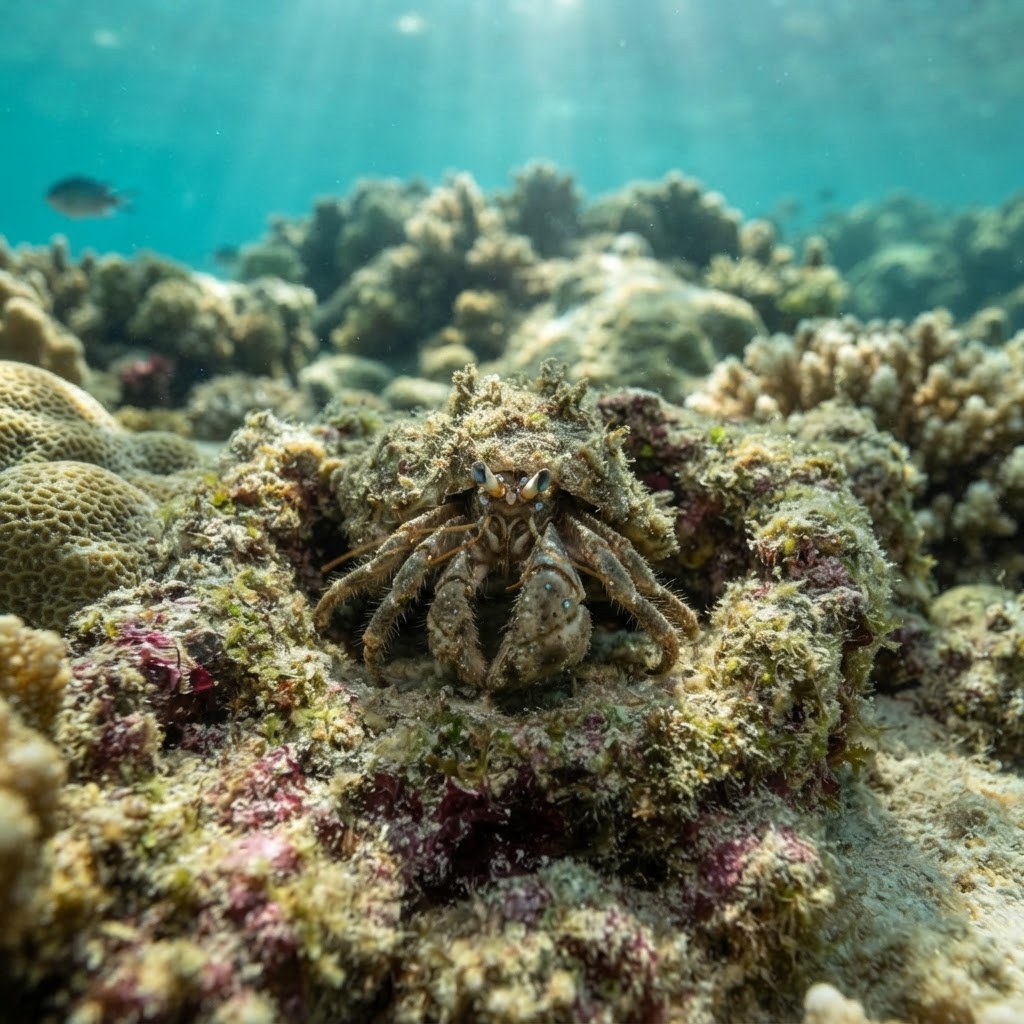
Dardanus scutellatus
Uncommon but worth the hunt: look for this hermit crab tucked into shells across the Visayas, Philippines, in reefs from 23 to 30C.
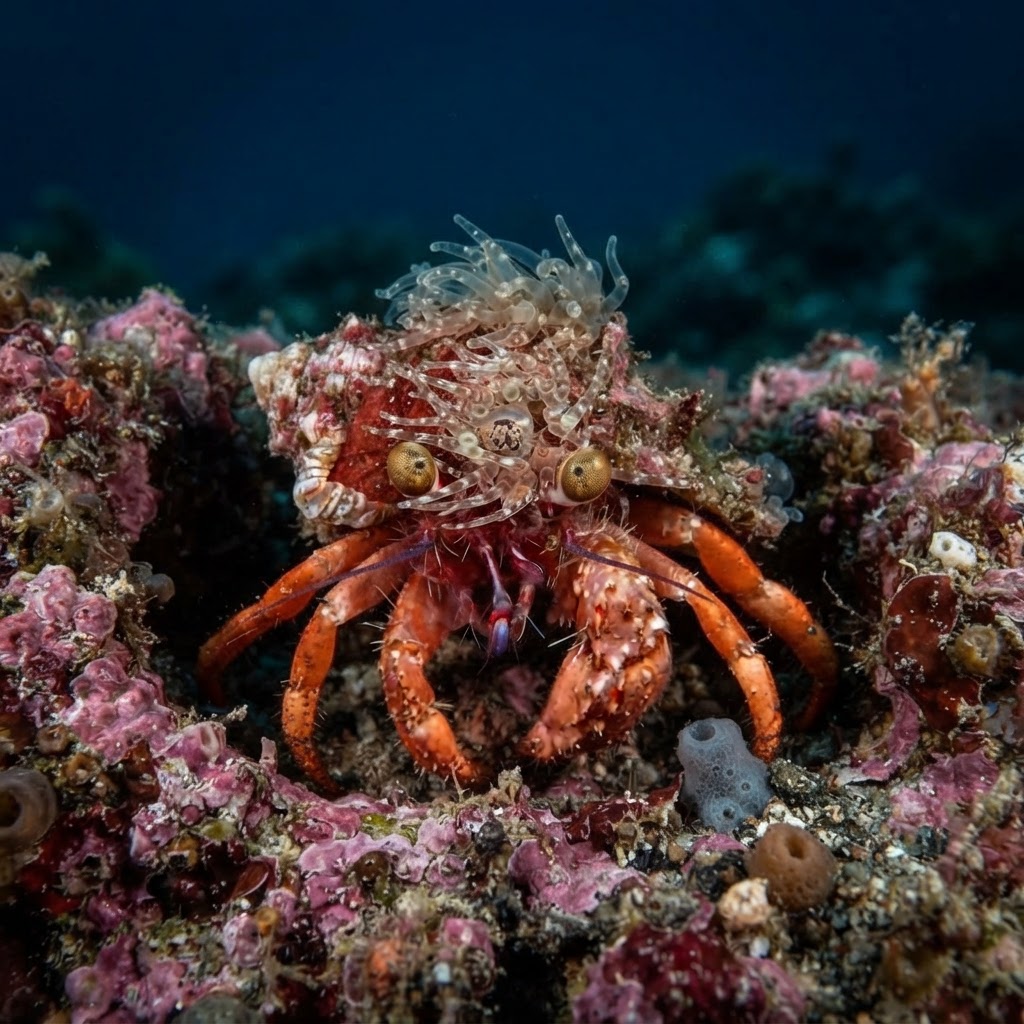
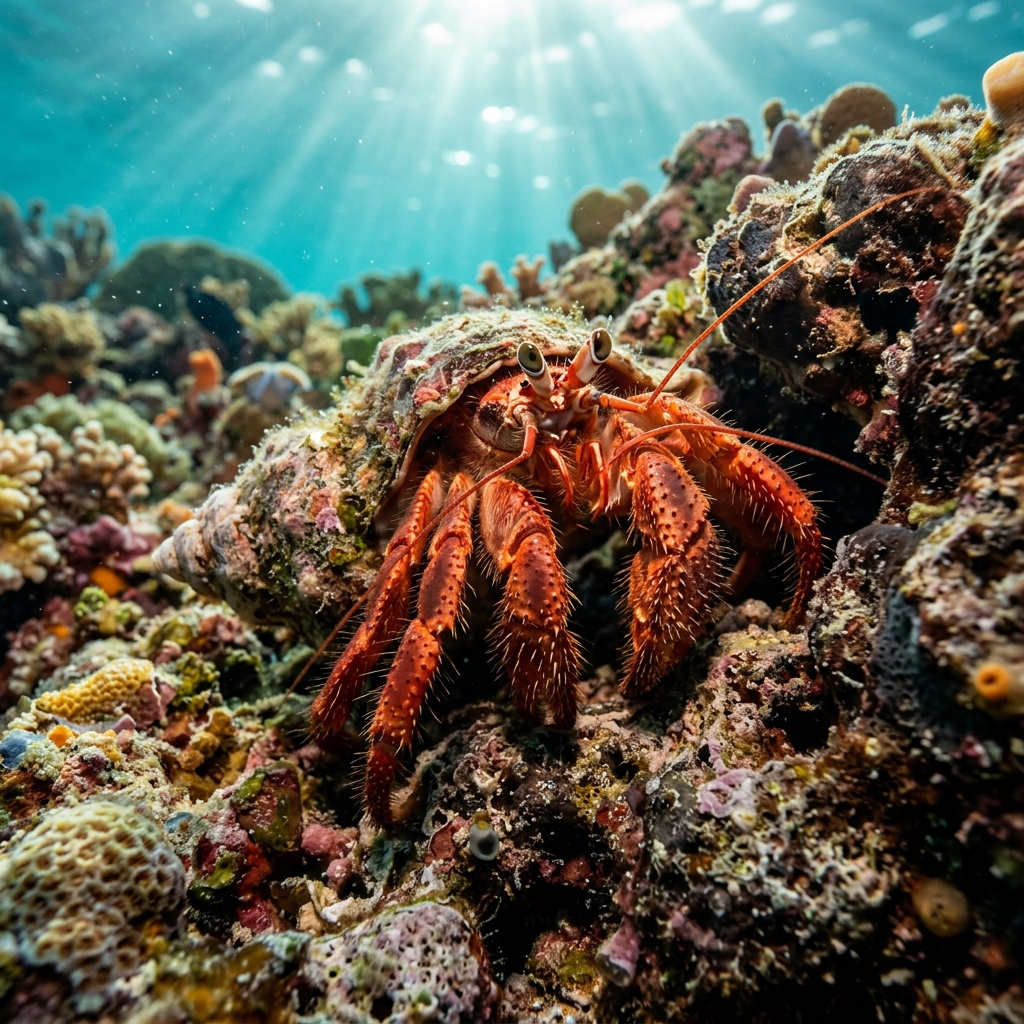
Look for a chunky crab body hauling around a borrowed snail shell rather than growing its own, with long, spindly walking legs often striped or mottled in red and cream. The claws are noticeably uneven in size, one larger and used to block the shell opening when it retreats. Most sightings are on the seabed or reef rubble rather than up on coral, moving with a slow, deliberate shuffle.
Expect to find it wandering slowly over sand, rubble, or reef flats, often at night or in shaded corners during the day, dragging its adopted shell along as portable armour. It is generally unbothered by divers and will simply pull back into its shell rather than flee if you get close. Look near the base of coral heads and along sediment patches where it forages for scraps.
As it grows, it has to abandon its current shell and go shell-shopping for a bigger one, sometimes squaring off with other hermit crabs over a good vacancy.
No clear seasonal pattern shows up in the data, and with a comfortable range of roughly 23 to 30C it likely stays active on tropical reefs year-round. Treat this as a sighting you can plan around a destination rather than a calendar month.
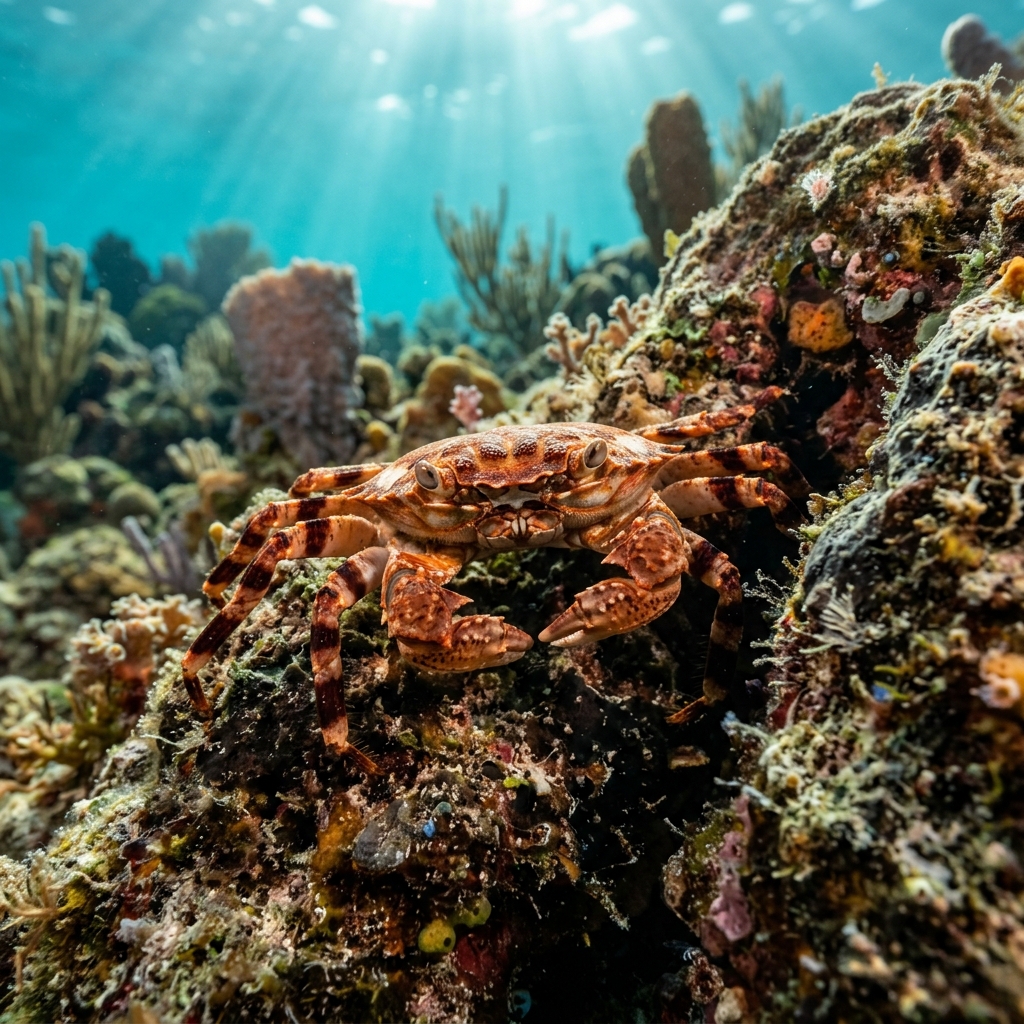
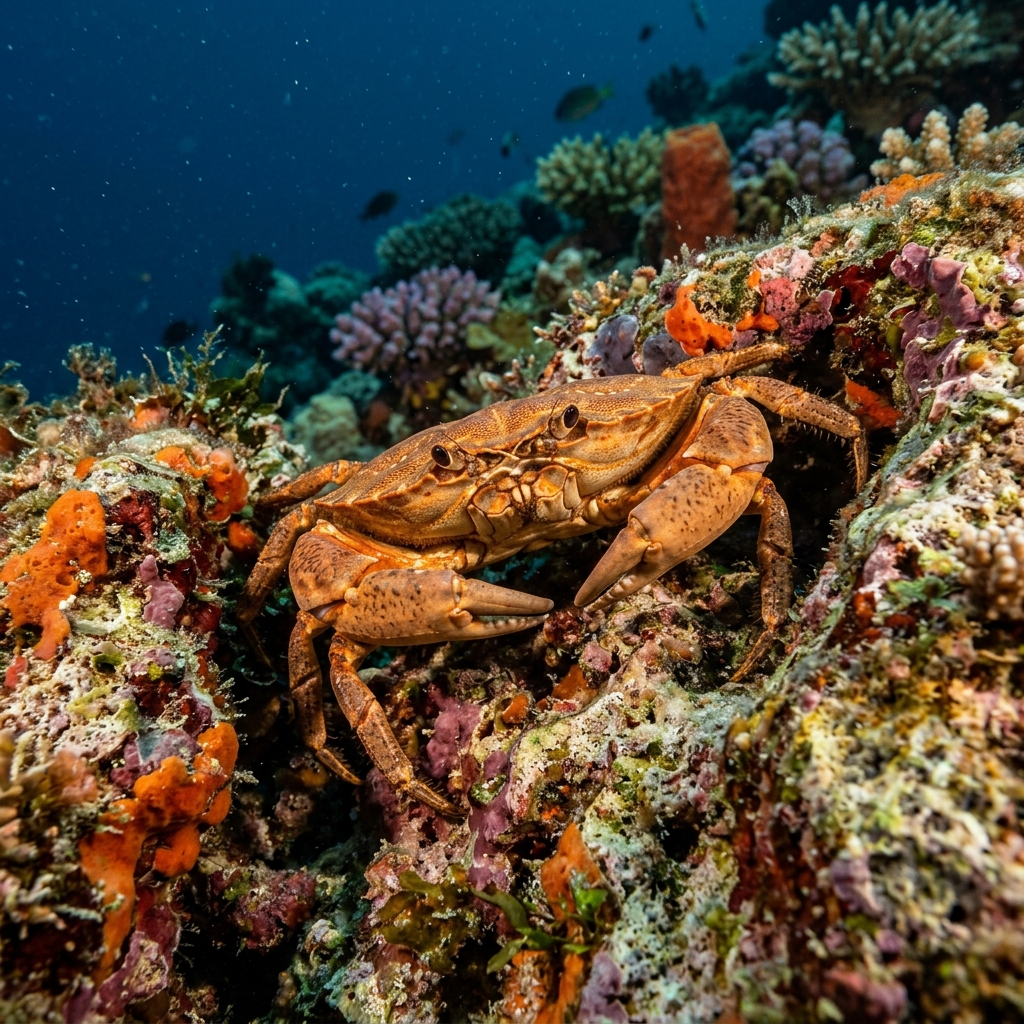
Reef neighbours a diver could mistake it for. Use the identification notes above to tell them apart.
Most commonly logged across the Visayas in the Philippines, which accounts for the bulk of sightings, with smaller but reliable populations around Apra Harbor in Guam and the Mamanuca Islands in Fiji. Divers have also picked it up around Nouméa in New Caledonia, the Society Islands in French Polynesia, and Kwajalein Atoll in the Marshall Islands.
Mapping where Blue-eyed Hermit Crab is logged…
The Visayas region of the Philippines is by far the most reliable spot, with additional sightings logged around Guam's Apra Harbor, Fiji's Mamanuca Islands, New Caledonia, French Polynesia, and the Marshall Islands.
There is no strong seasonal signal in the sightings, and its comfortable temperature range of about 23 to 30C suggests it is present on tropical reefs throughout the year.
Look for a crab-like animal dragging a borrowed snail shell rather than a fixed shell of its own, with uneven claws and long, often striped legs. It moves slowly over sand or rubble rather than climbing coral.
It is logged as uncommon at nearly every site where divers have recorded it, so it is a real find rather than a guaranteed sighting, but not exceptionally rare either.
Site and sighting data is aggregated from diver logs, iNaturalist and GBIF. For taxonomy and conservation status:
European Green Crab
2,469 sites