Calcinus minutus
Small shell-dwelling crab logged across Visayas and Bali reefs, tucked into rubble year-round in warm tropical water.
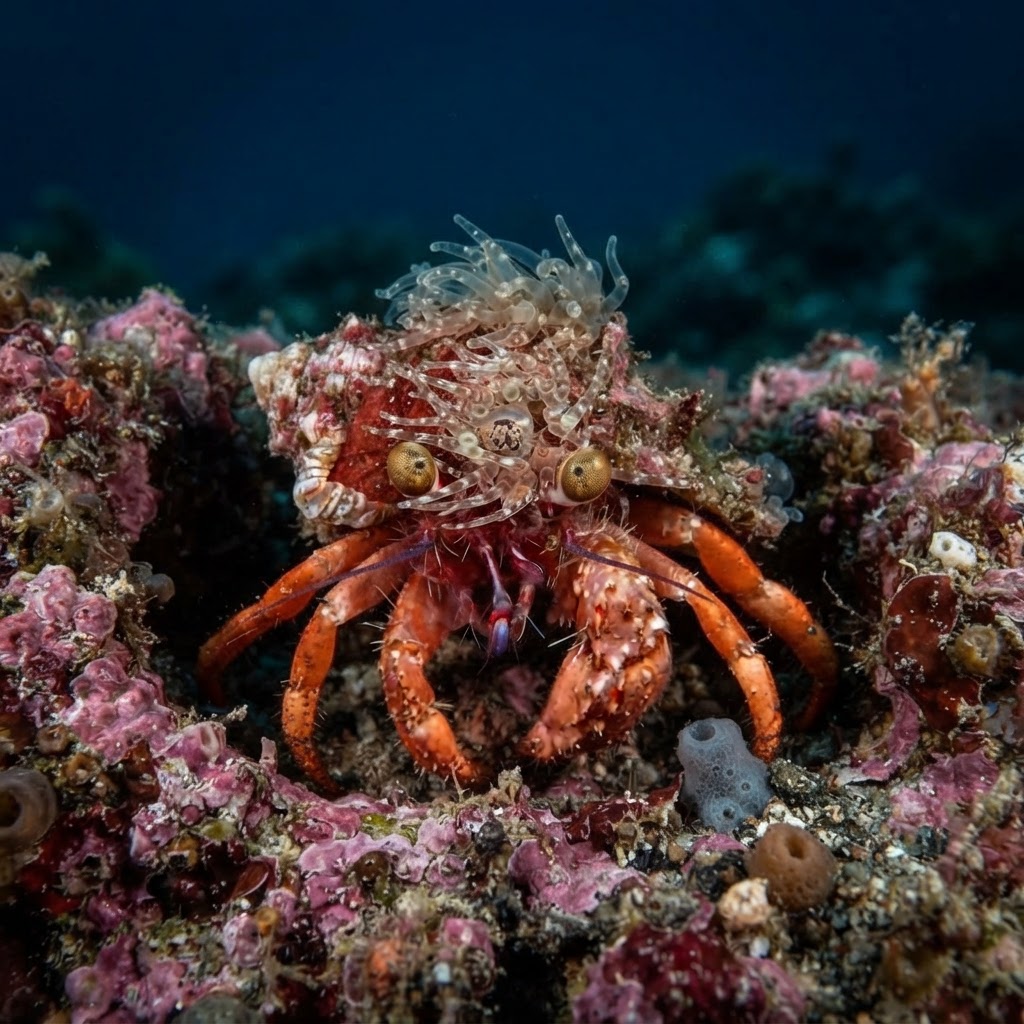
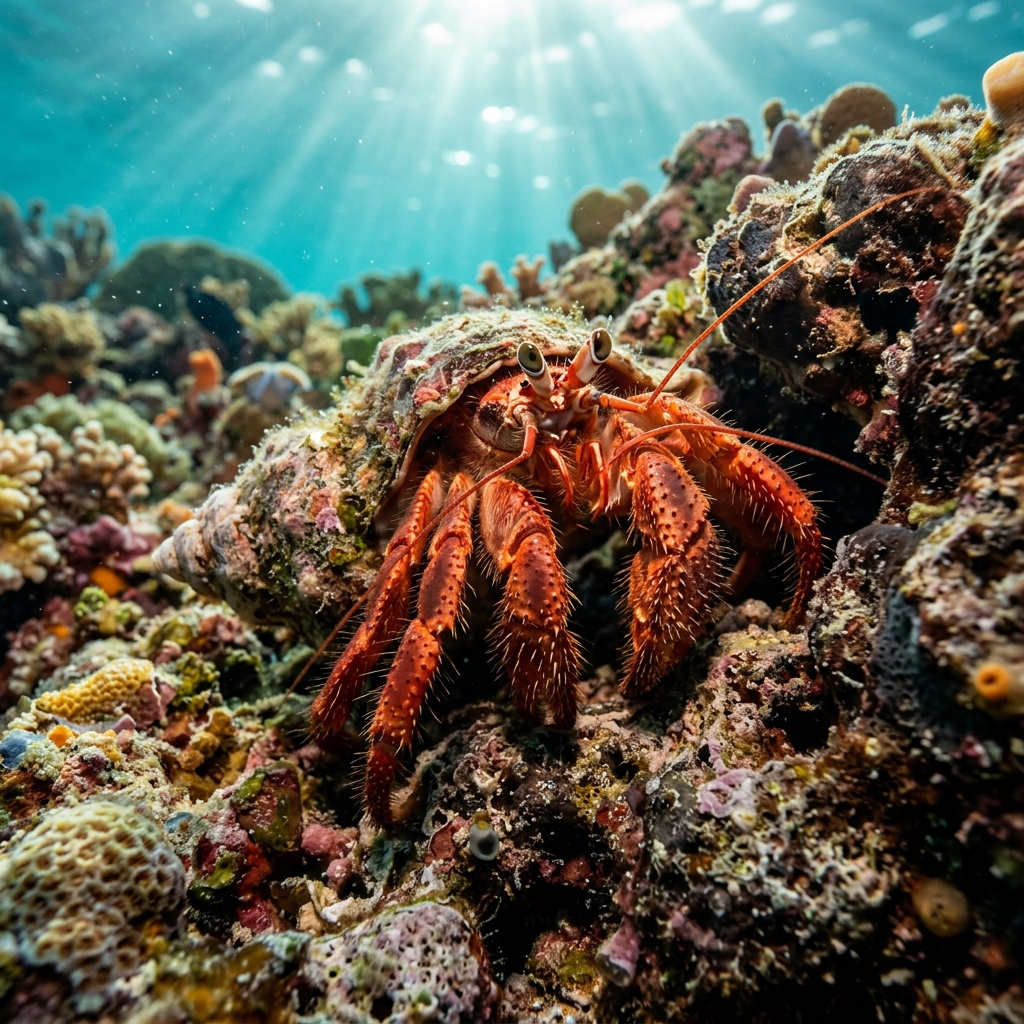
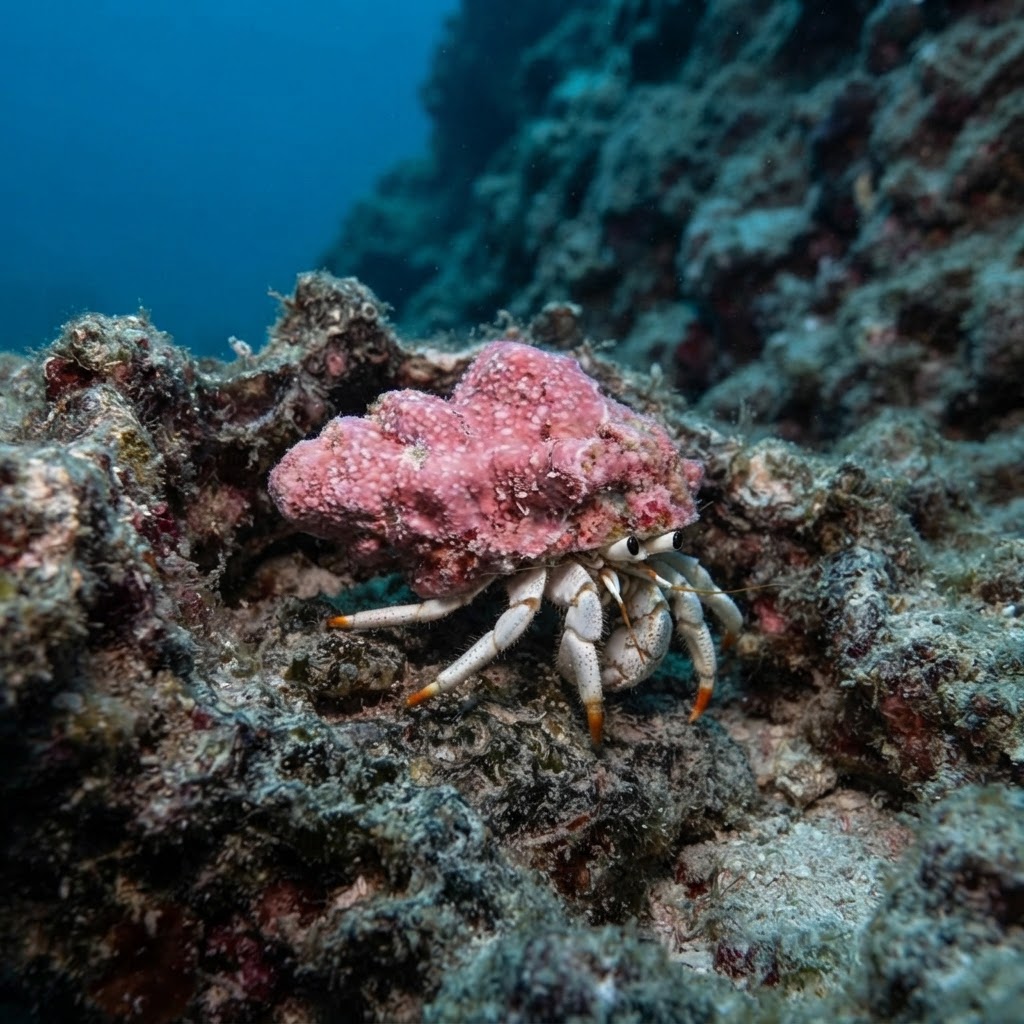
A small crustacean recognised by the borrowed snail shell it drags around rather than any body colour of its own, with only the front legs, claws and eyestalks visible at the shell opening. The claws are often a contrasting pale or reddish tone against darker walking legs, and one claw is usually noticeably larger, used to seal the shell entrance when it withdraws. Look for it moving across rubble and sand patches rather than swimming, with a jerky, deliberate walk.
Divers typically spot it picking its way across rubble, sand patches or the base of reef structure, scavenging for scraps rather than actively hunting. It tends to freeze or withdraw fully into its shell when a torch or hand comes close, then resumes walking once the disturbance passes. Most sightings come from close-focus looks at the substrate rather than open water, since it rarely strays far from the reef floor.
As it grows it has to abandon its current shell and hunt for a roomier one, sometimes queuing up with other hermit crabs in a size order to swap shells in sequence as each one moves up.
No clear seasonal pattern shows up in the sightings, so treat this as a year-round find. It sits comfortably in water from the low 20s up to nearly 30C, which covers most tropical reef conditions across its range at any time of year.
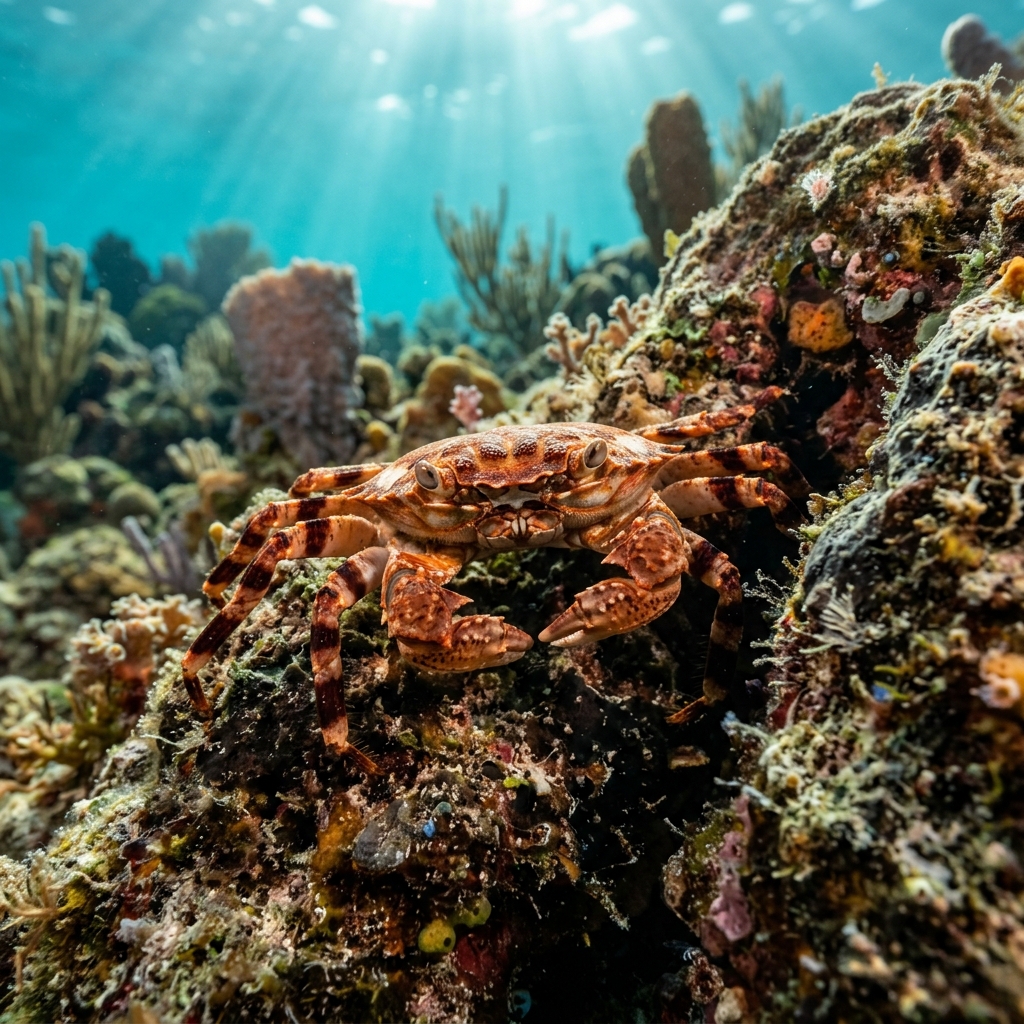
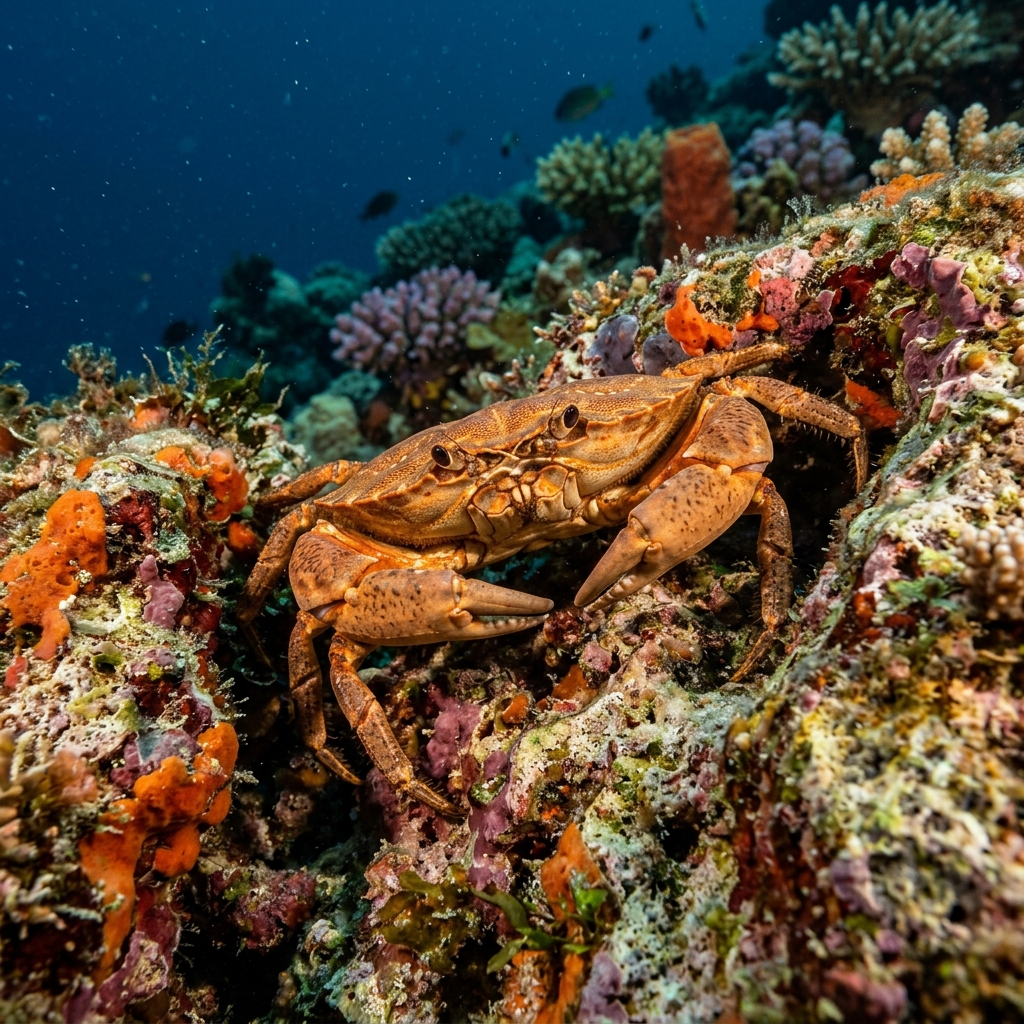
Reef neighbours a diver could mistake it for. Use the identification notes above to tell them apart.
Most commonly logged across the Visayas region in the Philippines and Bali in Indonesia, with a further reliable presence around Apra Harbor in Guam. Smaller numbers turn up on Australian reefs in New South Wales and Queensland, and it has also been recorded at Raja Ampat and the Cocos Islands, though sightings there are sparser.
Mapping where Small White Hermit Crab is logged…
It shows up most reliably on reefs and rubble patches in the Visayas region of the Philippines and around Bali in Indonesia. Guam's Apra Harbor and parts of New South Wales and Queensland in Australia also produce steady sightings.
There is no strong season in the sighting data, so it is considered a year-round find. Warm reef temperatures between roughly 22 and 30C suit it across the calendar in most of its recorded range.
Look for a borrowed snail shell being dragged across rubble or sand, with only claws, legs and eyestalks showing at the opening. One claw is usually larger than the other and is used to plug the shell when it retreats inside.
No. It poses no threat to divers and will simply withdraw into its shell if approached too closely.
It has a soft, unprotected abdomen and relies entirely on a scavenged snail shell for defence, upgrading to a bigger shell as it grows rather than building its own.
Site and sighting data is aggregated from diver logs, iNaturalist and GBIF. For taxonomy and conservation status:
European Green Crab
2,469 sites