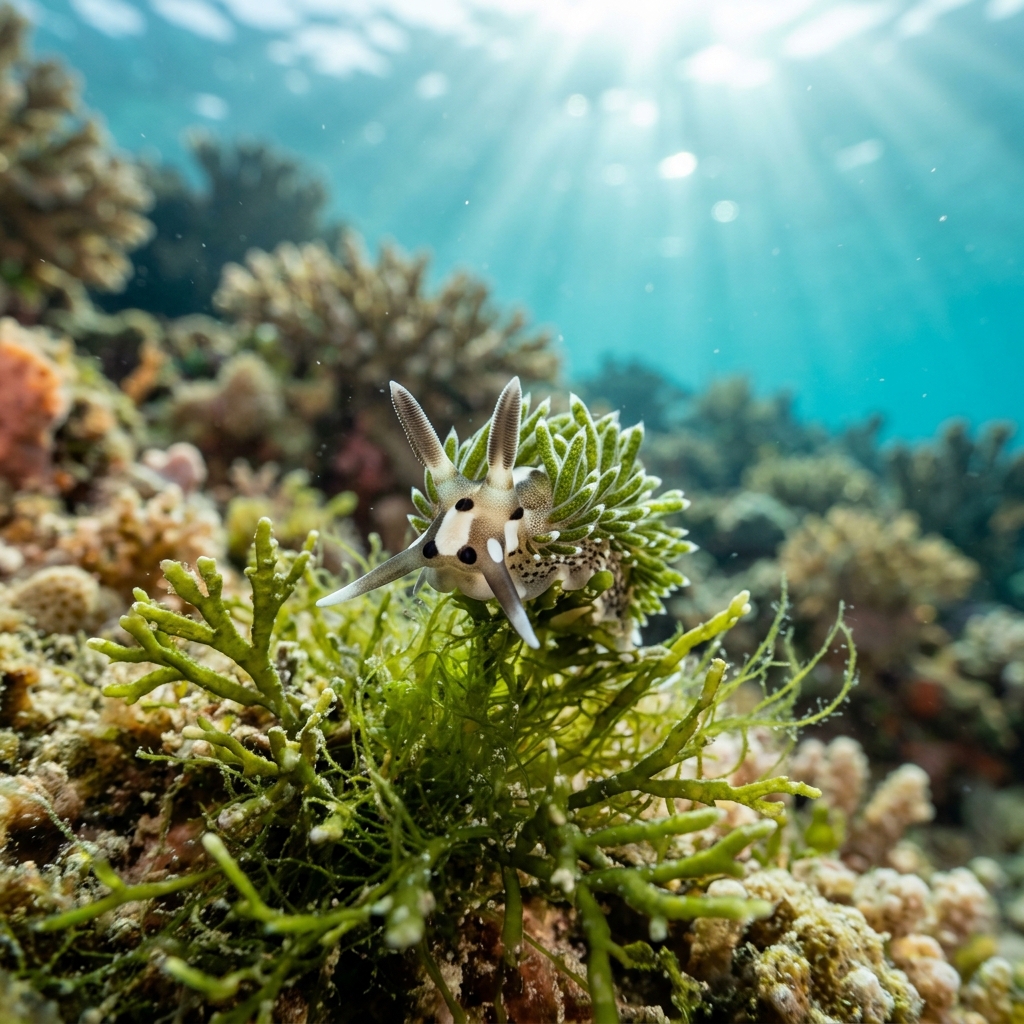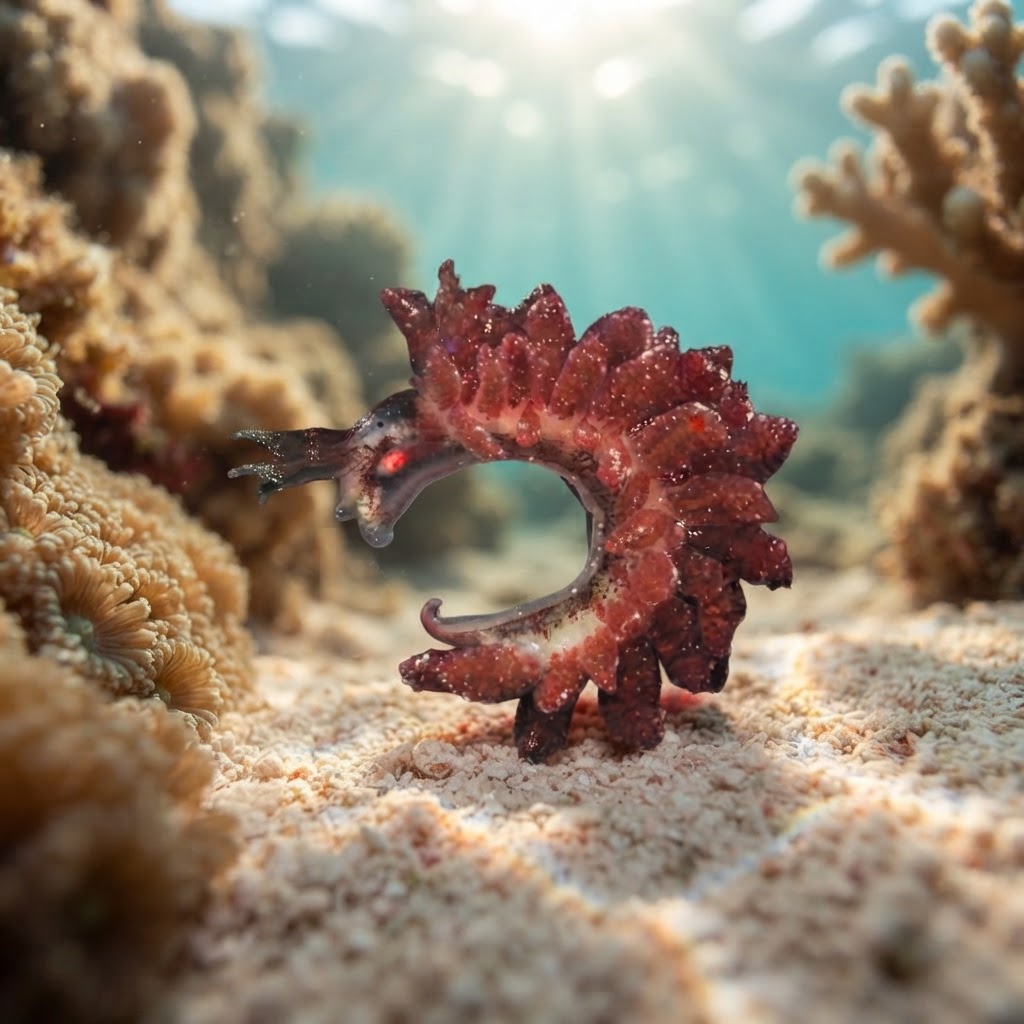
Hermaea bifida
A 1cm sap-sucking sea slug logged mainly in Zeeland's cool waters (10.7-17.5C) - here's how to spot one on your next dive.
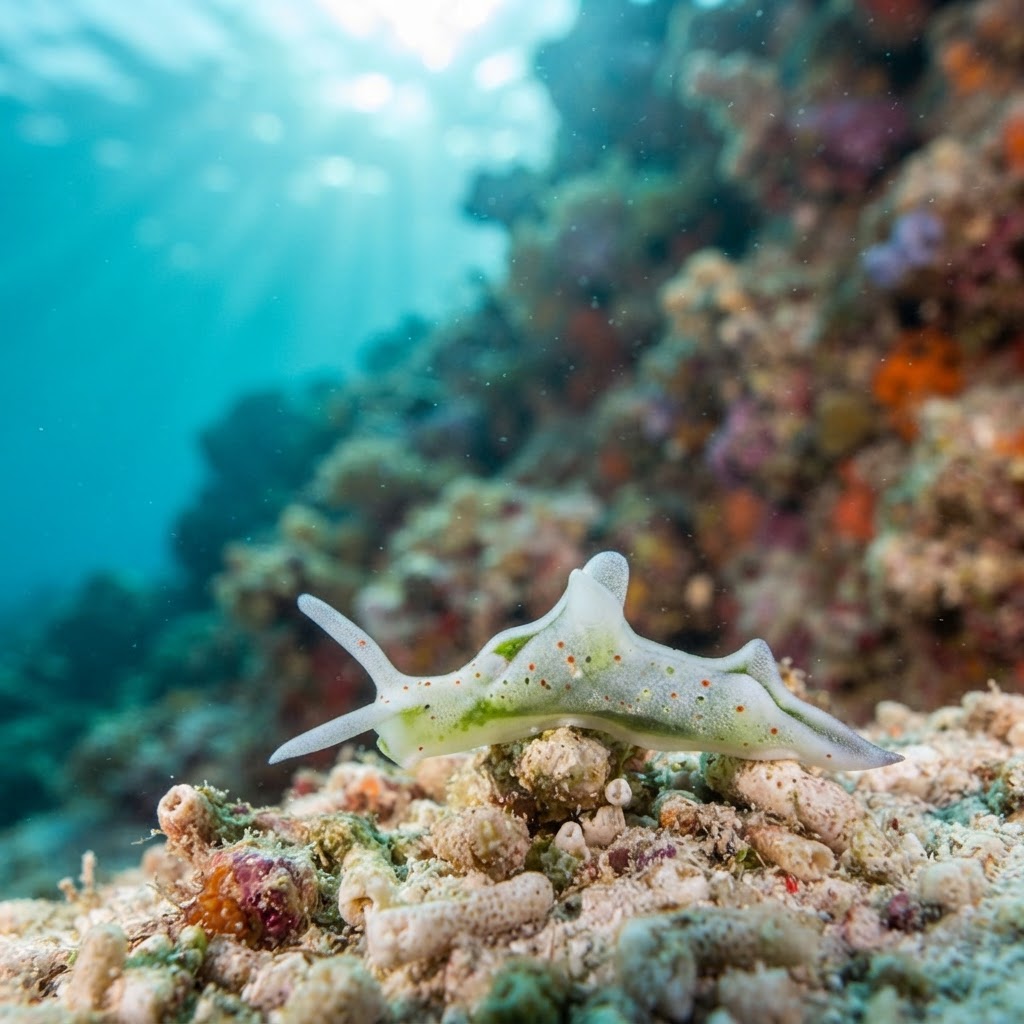
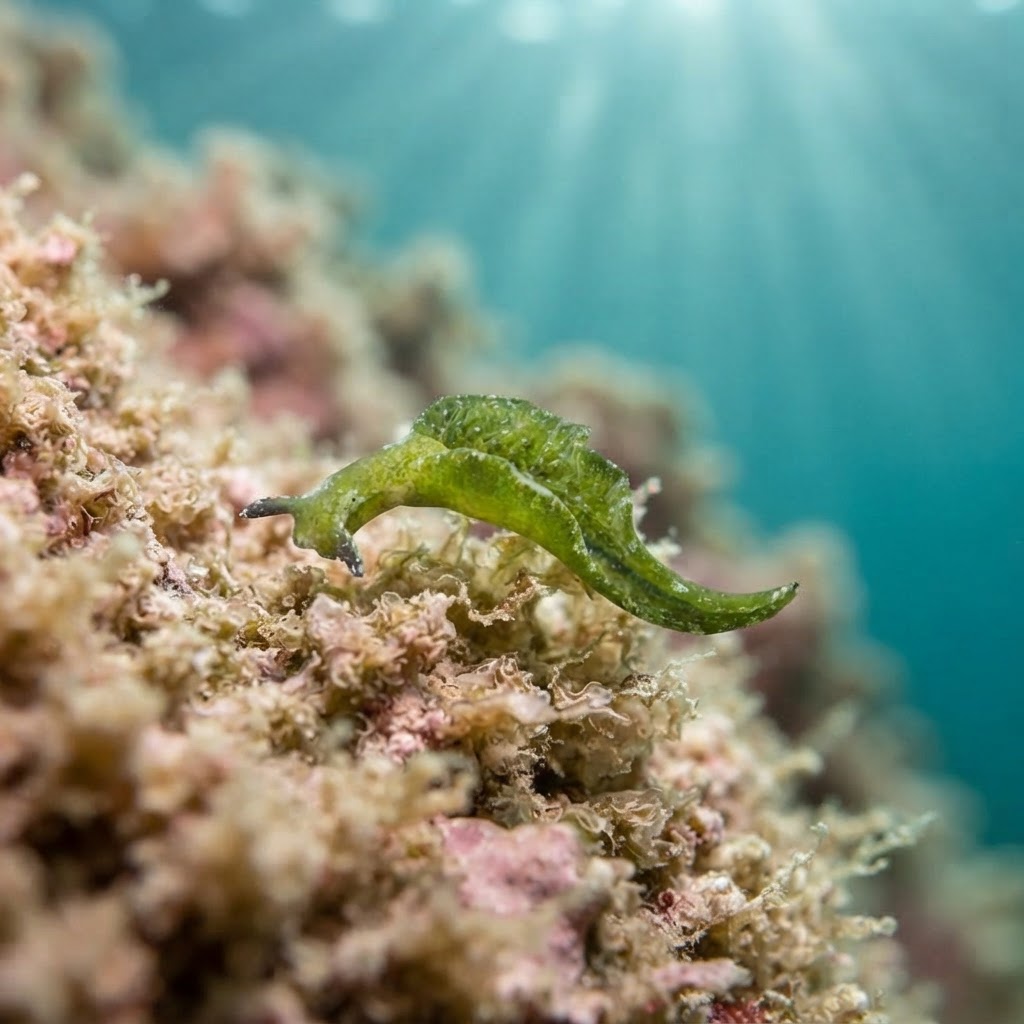
Barely a centimetre long and easy to swim straight past, this slug has a slender, translucent body through which branched, leaf-like digestive glands (cerata) show as green or reddish-brown lines running down its back. The colour comes largely from the algae it feeds on showing through the skin, so individuals vary from pale green to olive depending on diet. Look closely on algae fronds rather than open rock, since its shape and size blend it into the weed.
Divers find it clinging to or grazing slowly over filamentous green algae, which is both its camouflage and its food source. It doesn't react to divers in any noticeable way, being far too small and slow to register a threat, so the challenge is spotting it rather than approaching it. Most logged sightings are during the day on shallow, algae-rich rock and harbour walls rather than in open water.
Like other sacoglossan slugs, it feeds by piercing algal cells and sucking out the contents, and some species in this group can retain the algae's chloroplasts in their own tissue for a time, effectively running on borrowed photosynthesis.
Sightings don't show a clear seasonal pattern, and with a temperature niche running from 10.7 to 17.5C, it seems to tolerate a fair spread of temperate conditions across the year. Treat it as a year-round possibility at its known sites rather than planning around a specific month.
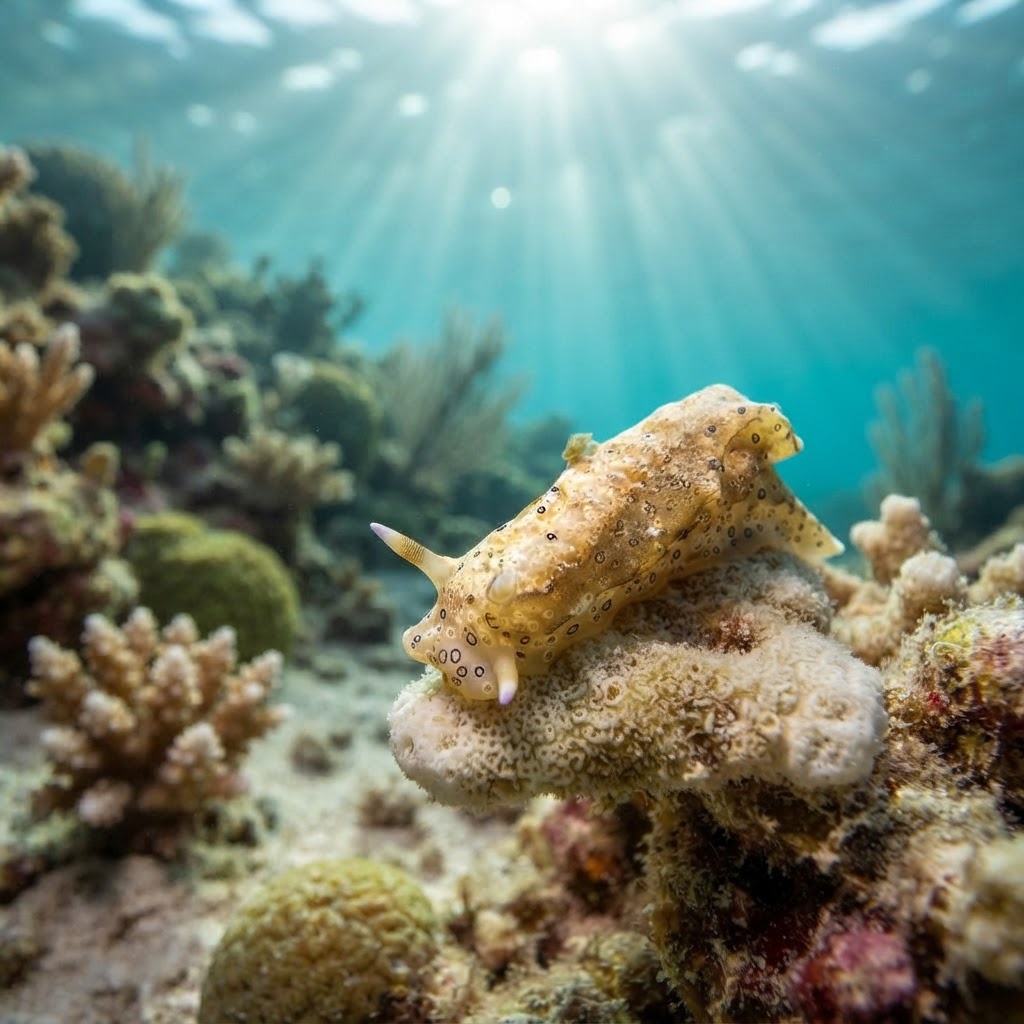
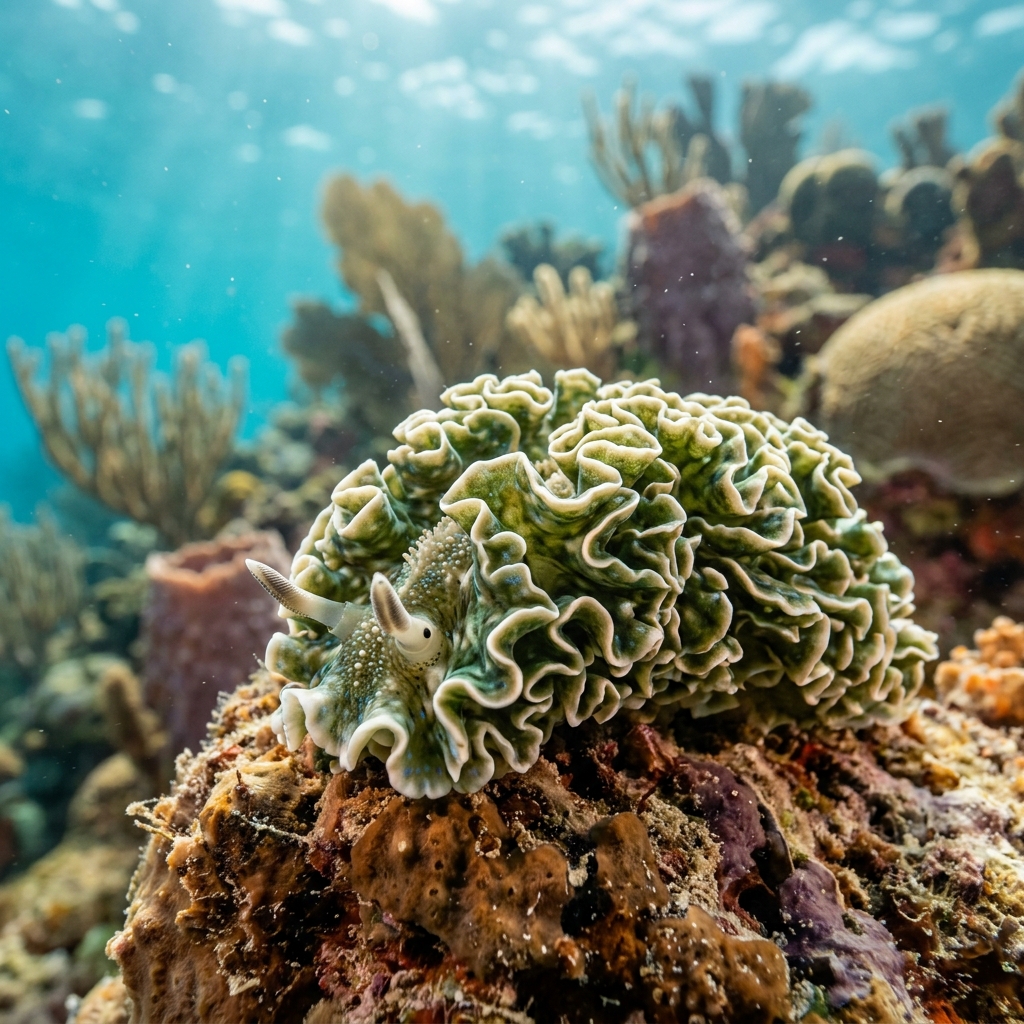
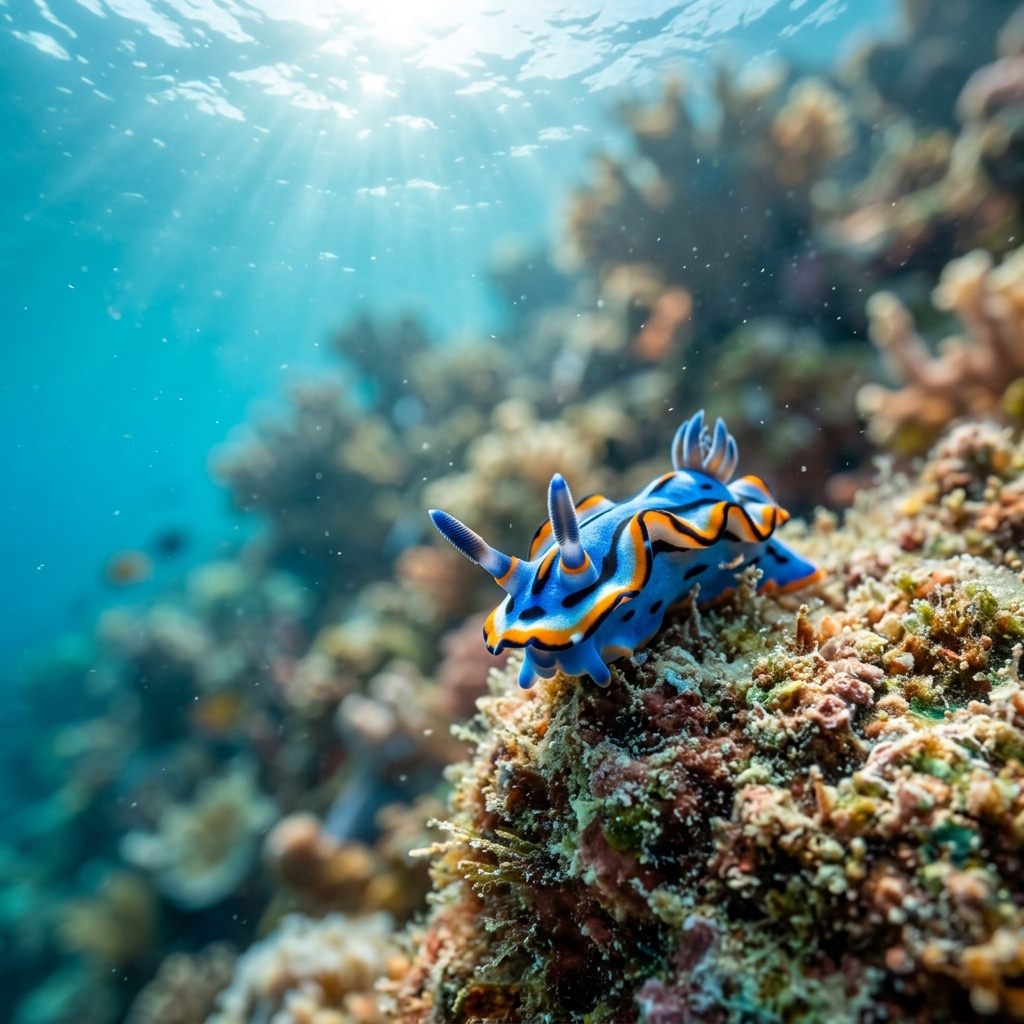
Reef neighbours a diver could mistake it for. Use the identification notes above to tell them apart.
Zeeland in the Netherlands is by far the most reliable place to find it, with sightings logged across many sites there, making it something of a regional specialty. Smaller numbers turn up in Occitanie, France, and in Wales, UK, so it's worth checking algae-covered rock and harbour structures at temperate sites in any of these areas.
Mapping where Hermaea bifida is logged…
Zeeland in the Netherlands has the strongest and most consistent record of sightings. It's also been logged in Occitanie, France, and in Wales, UK, though less frequently.
There's no strong seasonal pattern in the sightings, and it's found across a range of cooler temperate temperatures (10.7 to 17.5C), so it's treated as a year-round find at its known sites.
Look for a translucent slug about 1cm long with branched, leaf-like digestive glands showing through its back as green or brownish lines. It's usually found clinging to filamentous algae, which it closely matches in colour.
It's a tiny species, typically around 1cm long, so it takes a slow, close look at algae-covered surfaces to spot one.
No. It poses no risk to divers and has no means of harming anything much larger than the algae it feeds on.
It's a sap-sucking slug that pierces algal cells to feed on their contents, a feeding style shared by its close relatives in the Sacoglossa group, some of which can even hold onto the algae's chloroplasts afterwards.
Site and sighting data is aggregated from diver logs, iNaturalist and GBIF. For taxonomy and conservation status:
Elysia Timida
573 sites