Koumansetta hectori
A tiny reef goby seen most often around Koh Lipe and the Visayas, sitting still on rubble in 25-29 C water year-round.
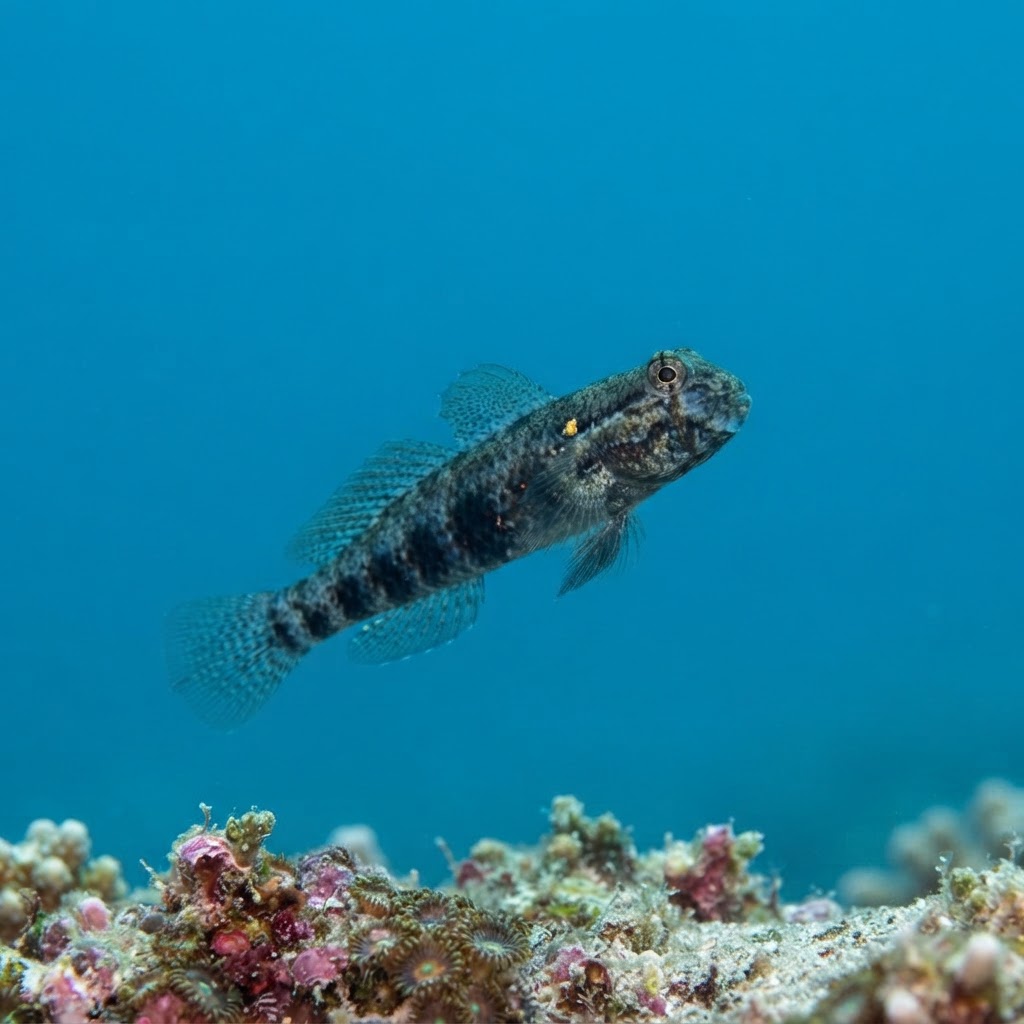
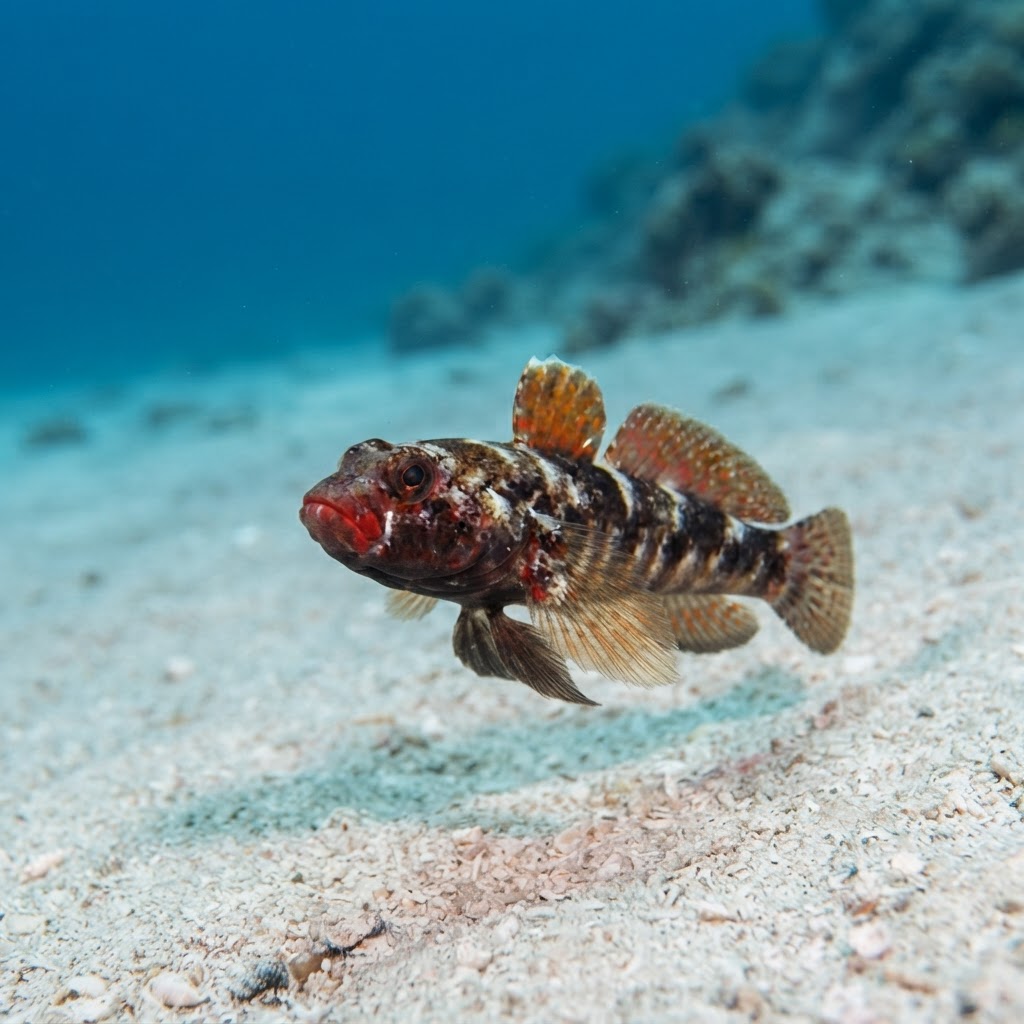
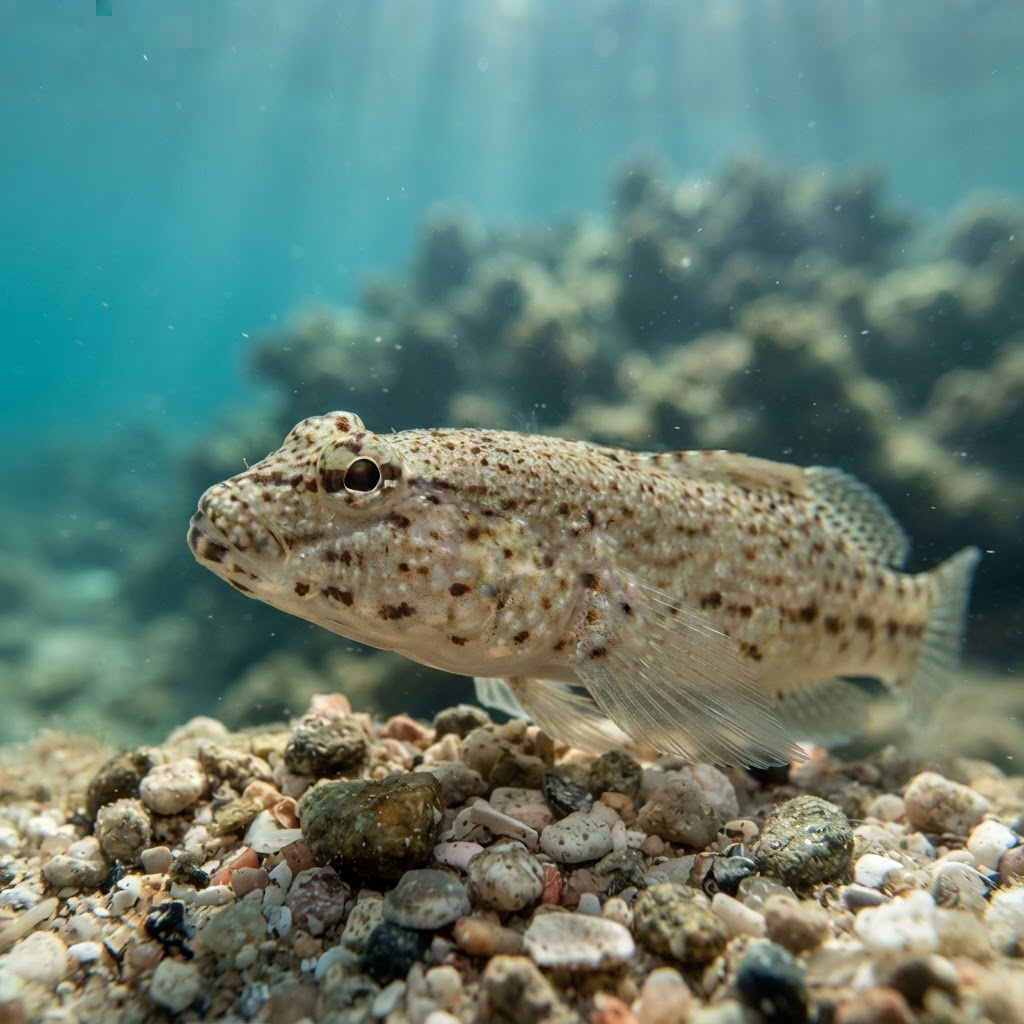
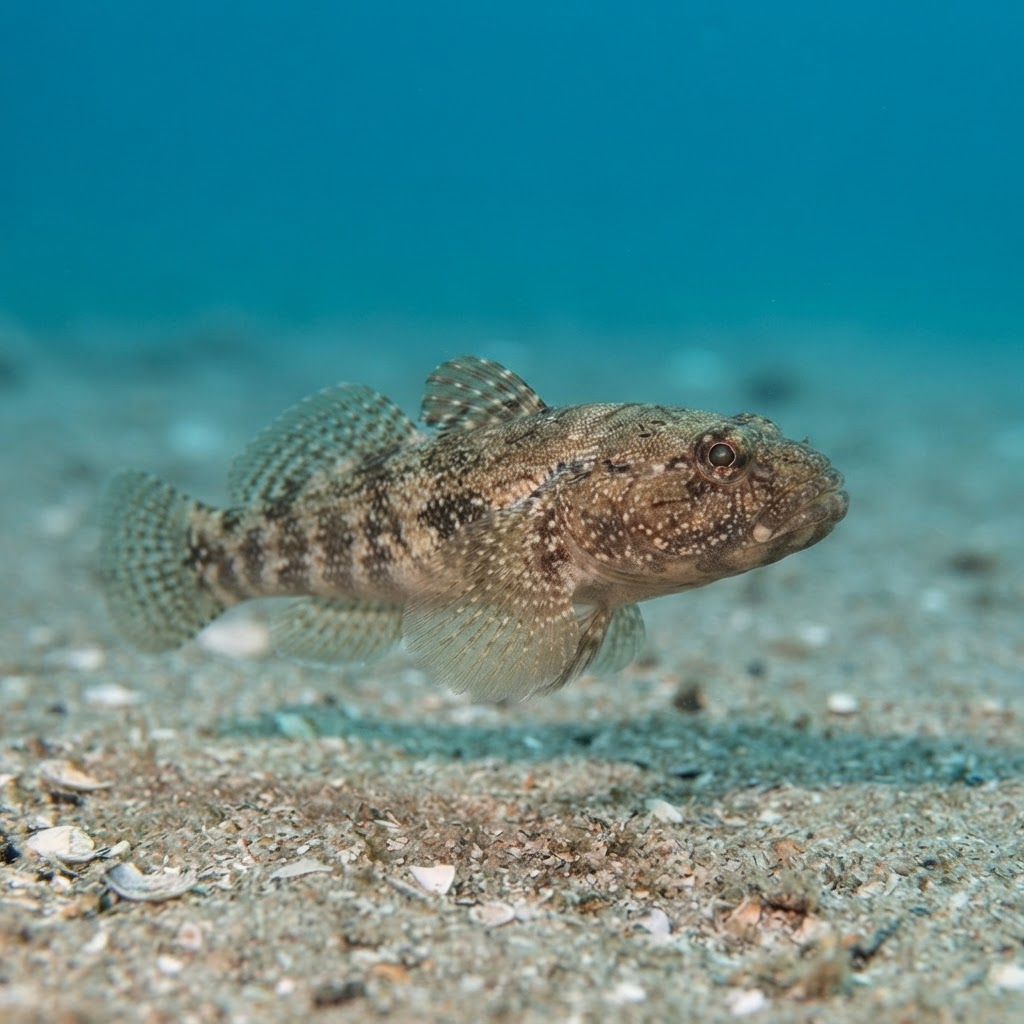
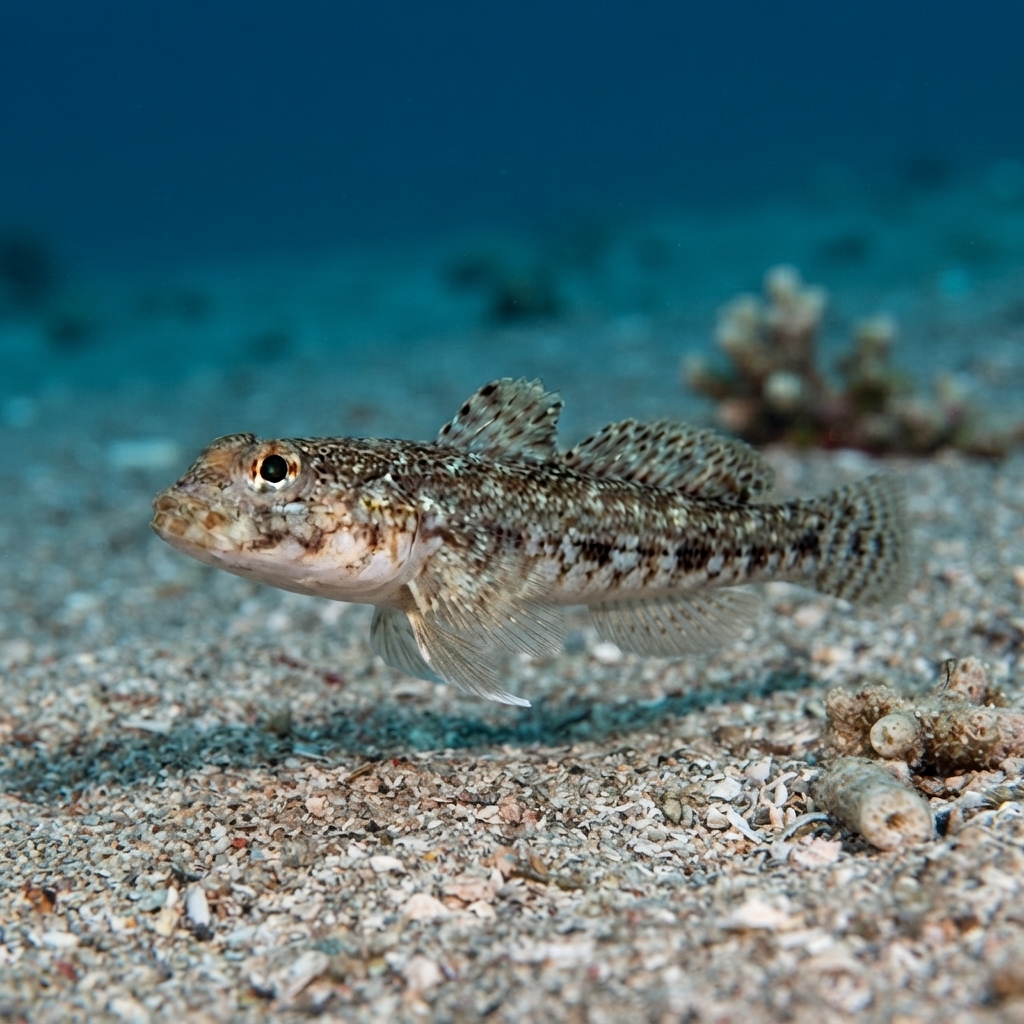
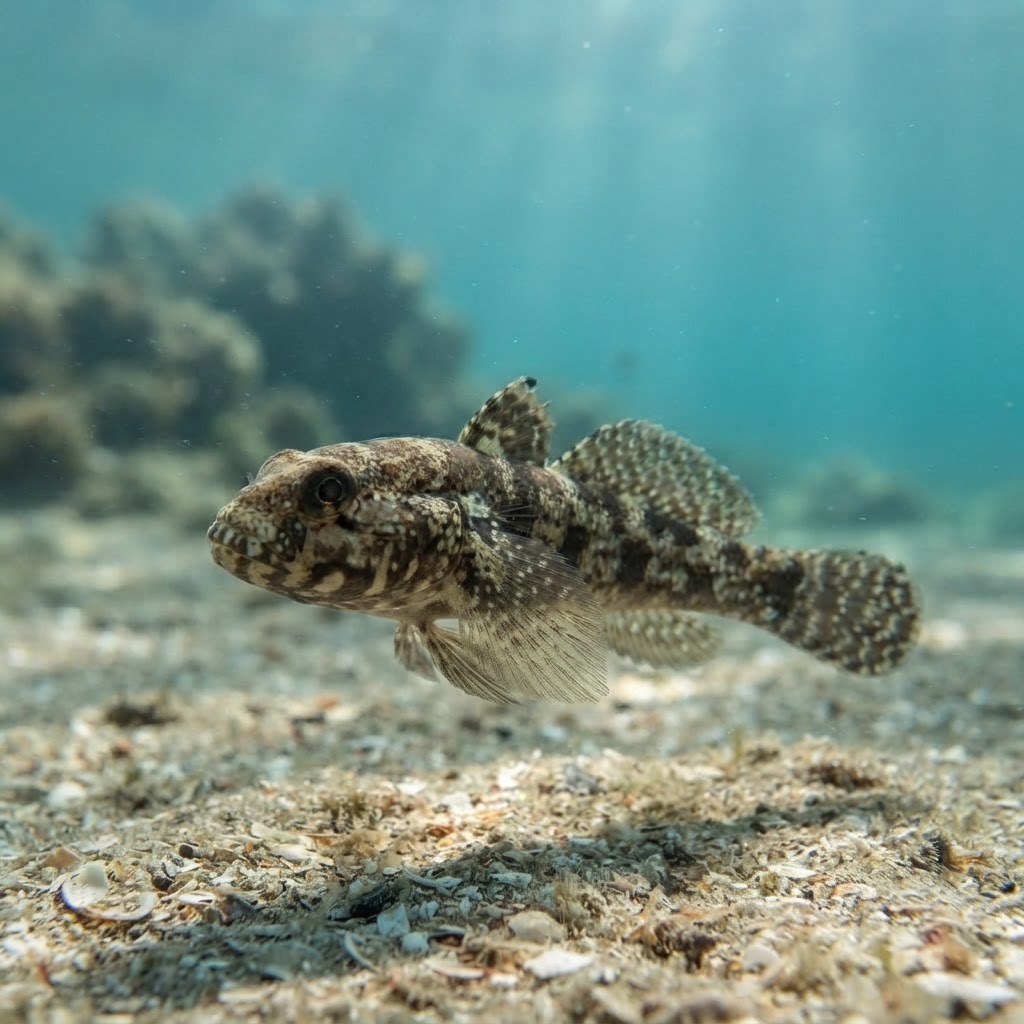
A small goby, around 6 cm, that perches rather than swims, propped on its pelvic fins on rubble or coral rock. Look for a pale, semi-translucent body marked with rows of dark spots and a distinctive dark, eye-like blotch pattern along the dorsal fin. It holds still for long stretches, which is often the easiest way to pick it out from busier, faster-moving reef fish nearby.
Spends most of its time perched motionless on coral rubble, dead coral or rocky patches rather than swimming in open water, making it a fish for divers who slow down and scan the substrate. It tends to hold its ground as divers approach, darting only a short distance if disturbed before settling again nearby. Most sightings come from shallow to moderate reef and rubble zones rather than open sand or deep drop-offs.
Like other small gobies, it likely relies on its mottled, spotted camouflage rather than speed to avoid predators, staying still against rubble instead of fleeing into open water.
Sightings show no clear seasonal pattern, and it sits comfortably in water from about 24.7 to 29.2 C, so it is a year-round find on the reefs where it occurs.
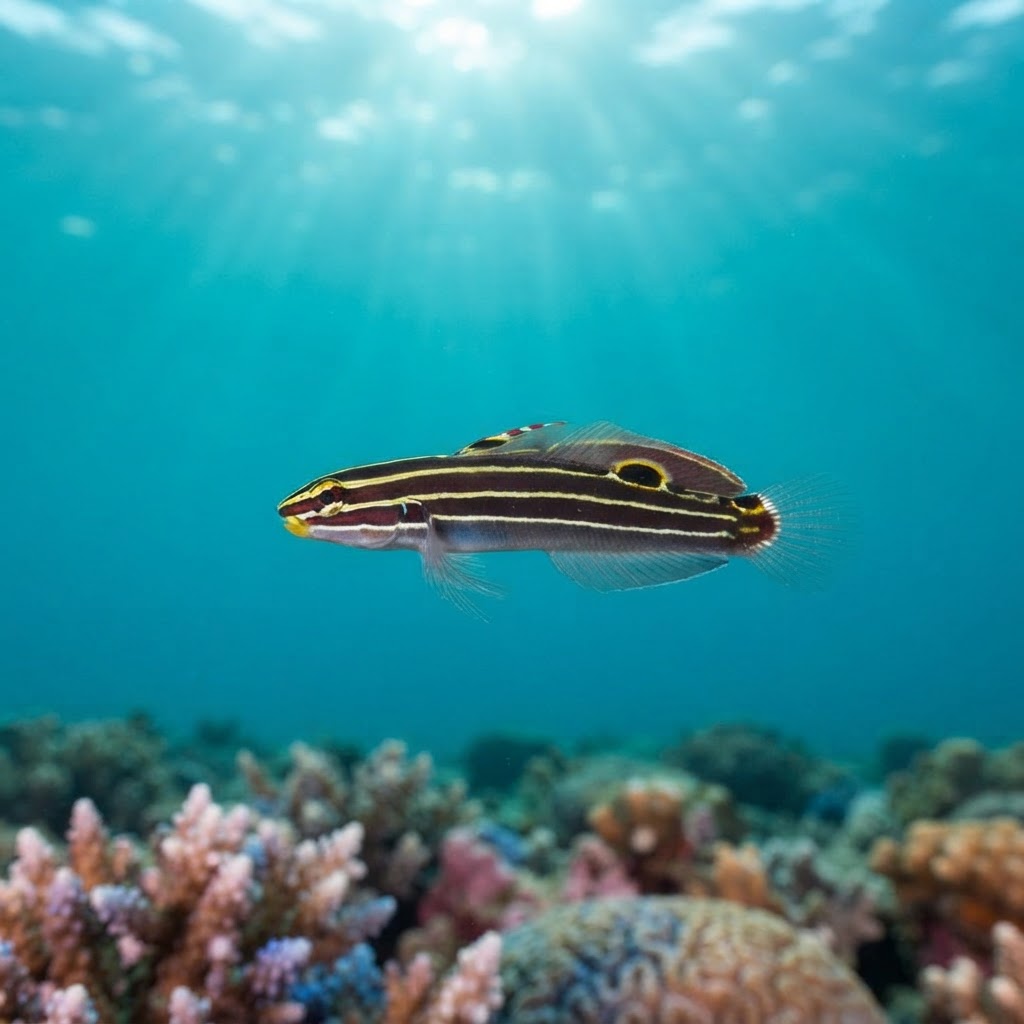
Reef neighbours a diver could mistake it for. Use the identification notes above to tell them apart.
Most reliably logged in Thailand, especially around Koh Lipe and Koh Phi Phi, and across the Philippines, particularly the Visayas and Palawan. It also turns up with a solid presence in Sabah, Malaysia, and has been recorded in the Andaman Islands of India and at Nosy Be in Madagascar.
Mapping where Hector's Goby is logged…
It is most consistently found in Thailand around Koh Lipe and Koh Phi Phi, and across the Philippines in the Visayas and Palawan. Sabah in Malaysia and the Andaman Islands in India also have recorded sightings.
There is no strong seasonal pattern in sightings, and it lives in warm 25-29 C water year-round, so any time you are diving its regions is a fair chance to spot one.
Look for a small, pale goby around 6 cm long perched still on rubble or coral rock, with rows of dark spots and an eye-like marking pattern along the dorsal fin. It rarely swims far, making it easier to study once spotted.
They stay small, reaching only around 6 cm, so most divers need to look closely at rubble patches rather than scanning the water column.
Site and sighting data is aggregated from diver logs, iNaturalist and GBIF. For taxonomy and conservation status:
Slender Goby
806 sites