Chelidonura amoena
A 3cm slug most divers overlook, best found on muck dives in Luzon, the Visayas, and Malaysia's east coast year-round.
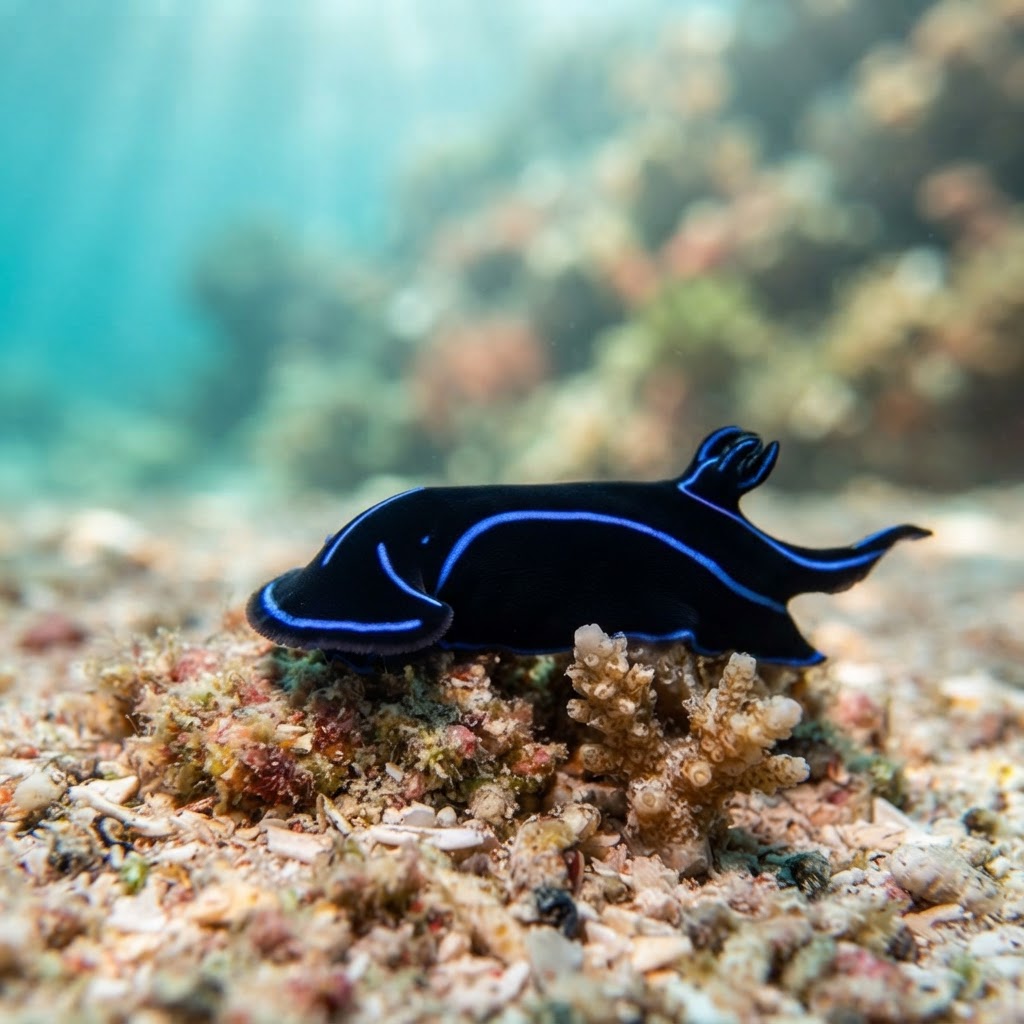
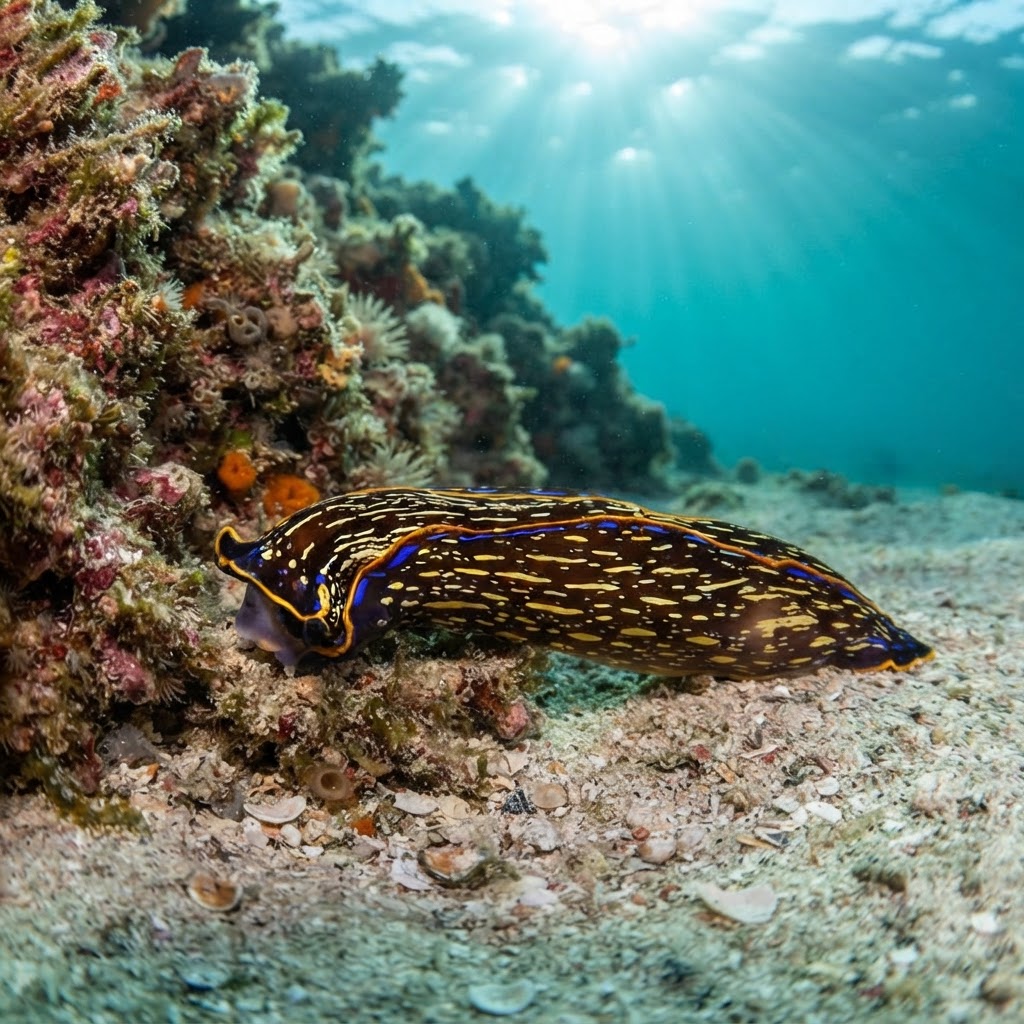
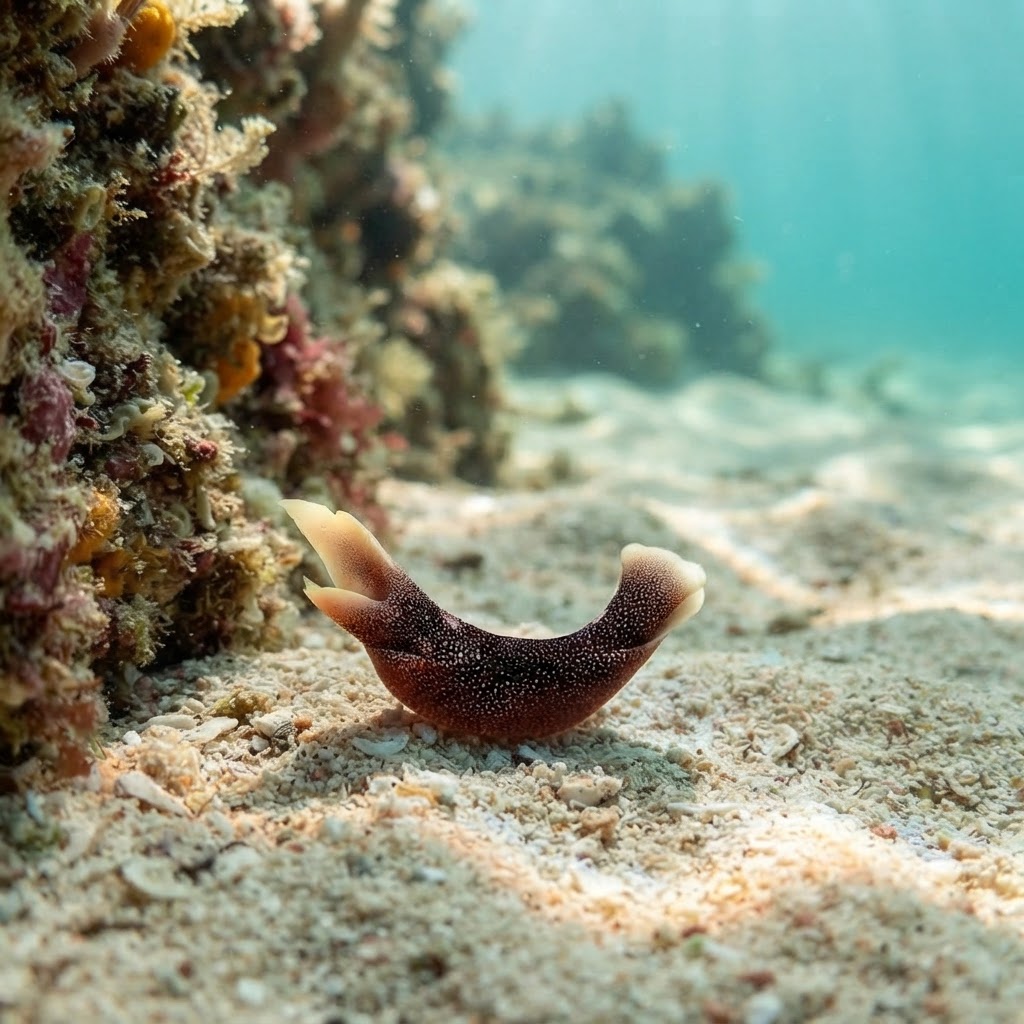
A small, torpedo-shaped slug no bigger than 3cm, easiest to spot by the smooth, shield-like flap covering its head, which gives the whole family their name. Body colour is typically a soft translucent grey or brown with fine orange or yellow margins running along the edges of the foot and the paddle-like tail flaps. It moves in a slow glide across sand and rubble rather than climbing, and lacks the external gills or showy frills of a typical nudibranch.
Spends its time slowly ploughing across sand, silt, and rubble patches, often at night or during dusk dives when muck critters are most active. It hunts small invertebrates buried in the substrate and shows little reaction to divers, staying put or continuing its glide even with a torch and camera close by. Most sightings come from slow-paced macro dives rather than open reef swims, since it is easy to miss against a busy sandy bottom.
Like other aglajids, it hunts other small slugs and worms hidden in the sediment, using chemical cues to track prey rather than relying on sight.
No clear seasonal pattern shows up in the sightings, and with a comfortable range of roughly 25 to 31C it turns up on warm tropical reefs across the region all year. Plan around good muck-diving conditions and calm, sandy sites rather than a particular month.
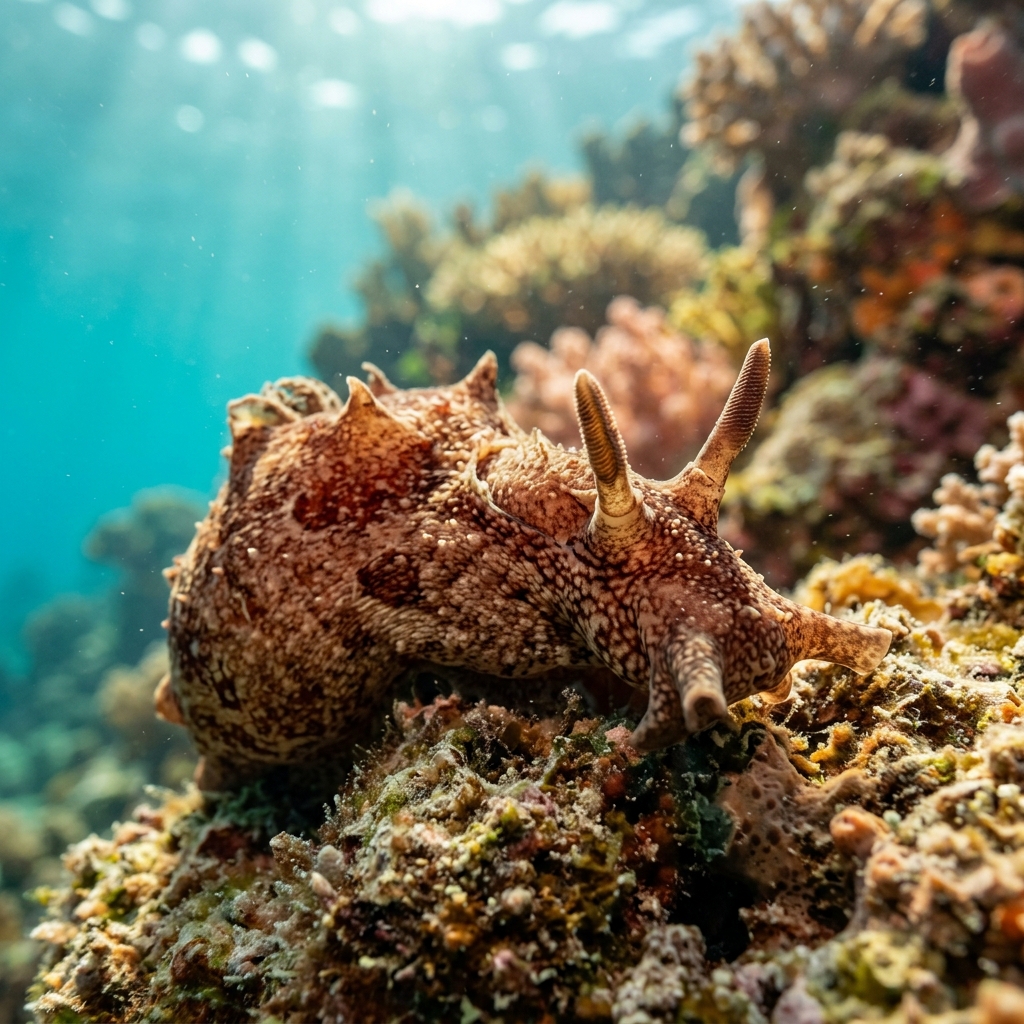
Reef neighbours a diver could mistake it for. Use the identification notes above to tell them apart.
Most reliably logged on muck and reef sites across the Philippines, especially Luzon and the Visayas, and along Peninsular Malaysia's east coast, which together account for the bulk of sightings. Okinawa and the wider Ryukyu Islands in Japan, Taiwan's Kenting and Longdong sites, and parts of West Papua in Indonesia also turn up steady records for divers doing slow, close-focus dives.
Mapping where Lovely Headshield Slug is logged…
It shows up most often in the Philippines, particularly Luzon and the Visayas, and along Peninsular Malaysia's east coast. Okinawa in Japan and Kenting and Longdong in Taiwan also produce steady sightings for divers doing muck or macro-focused dives.
There is no strong seasonal pattern in the sightings, and it lives comfortably in water from about 25 to 31C, so it is present on tropical reefs throughout the year.
It stays small, typically around 3cm in length, which makes it a target for divers doing slow macro or muck dives rather than a wide-angle reef swim.
Look for a small, smooth-bodied slug with a shield-shaped head flap, translucent grey or brown colouring, and thin orange or yellow edging along its body and tail flaps. It glides slowly over sand and rubble instead of climbing on coral.
No, it poses no risk to divers. It has no stinging cells or venom of concern and simply glides across the substrate, ignoring divers entirely.
It is a predator, not a grazer, hunting other small slugs and worms buried in sand using chemical trails to find them, which is unusual for a slug this size and shape.
Site and sighting data is aggregated from diver logs, iNaturalist and GBIF. For taxonomy and conservation status:
Light-spotted Aegires
3,168 sites