Aglaja tricolorata
A rare find in Occitanie and Provence, France, this mottled slug turns up in water around 15 to 21C on a lucky, sharp-eyed dive.
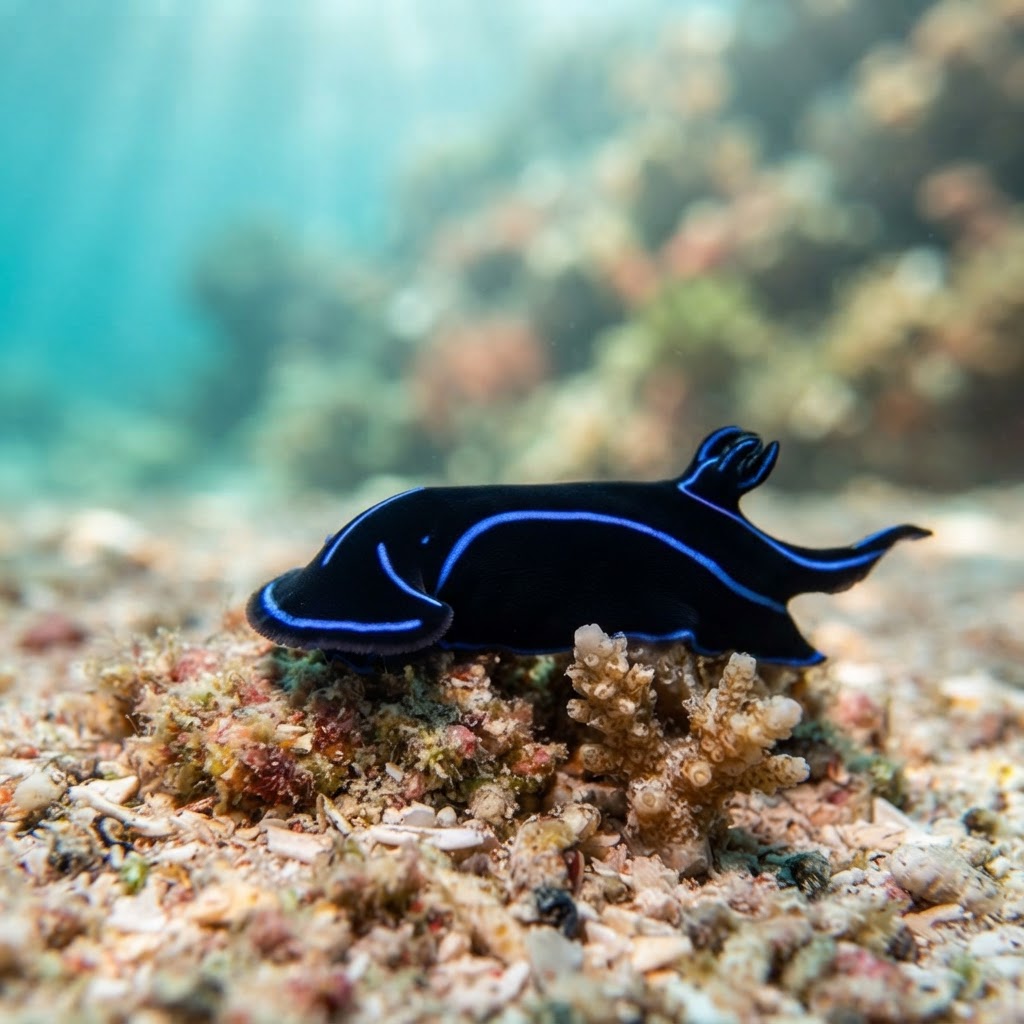
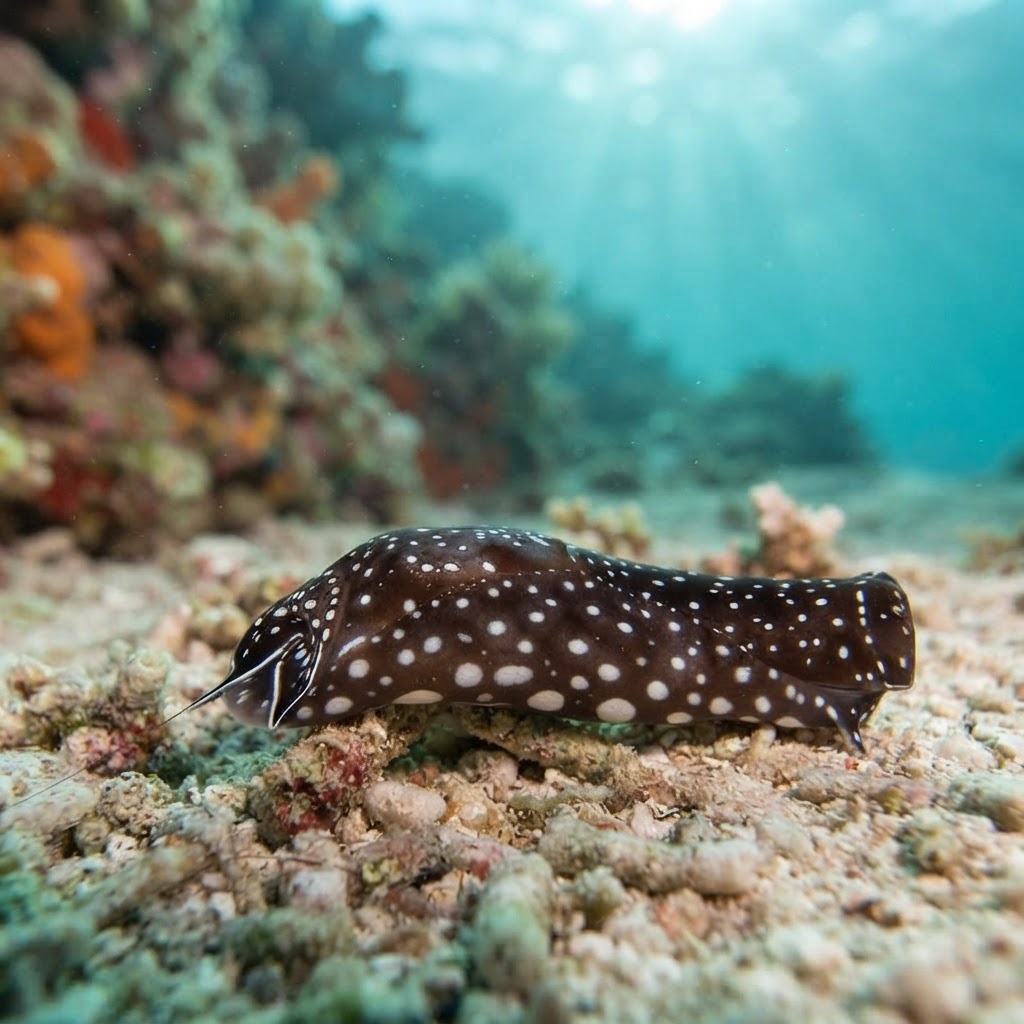
A soft-bodied slug with a broad, rounded head shield that gives the family its name, rather than a coiled shell you'd notice underwater. Colouring runs mottled brown, cream and grey, blending into sand and silty rubble, and the body looks almost slug-like flattened rather than tall. Size in the water is modest, easy to miss unless you're already scanning the substrate closely for movement.
Typically spotted moving slowly over sand, mud or silty patches rather than out on open reef, often partly buried or blending into the substrate. It shows no real reaction to divers beyond its usual slow glide, so a close, patient look is the only way to confirm an ID. Most logs come from daytime dives, suggesting it's findable without needing a night dive.
Aglajid slugs like this one are predatory, hunting other small molluscs and worms in the sediment rather than grazing algae like many of their shelled relatives.
Sighting data doesn't show a clear season, and the observed water temperature range of 15.1 to 21.1C spans much of the Mediterranean diving year, so it's best treated as a possible year-round find rather than tied to a specific month.
Reef neighbours a diver could mistake it for. Use the identification notes above to tell them apart.
Most divers log this one in France, especially Occitanie and the French Riviera & Provence, with a smaller number of sightings from Northern Greece. Across the ten known sites it's consistently a rare find rather than a reliable target, so treat any sighting as a bonus on a Mediterranean dive rather than the main goal.
Mapping where Three-coloured Aglaja is logged…
It's mostly logged in France, particularly Occitanie and the French Riviera & Provence, with a smaller number of sightings from Northern Greece. It stays rare at every known site, so sightings are a matter of patience and sharp eyes rather than a guaranteed find.
There's no detectable seasonal pattern in the sighting data, and it's been observed across a temperature range of roughly 15 to 21C, so it's best approached as a year-round possibility rather than a seasonal target.
Look for a small, soft-bodied slug with a rounded head shield rather than a visible shell, coloured in mottled brown and cream that blends into sand or silt. It moves slowly over soft substrate, which is often the first clue that separates it from reef-dwelling look-alikes.
No, they pose no risk to divers. They're slow-moving, soft-bodied animals best appreciated with a careful look rather than handling.
Unlike many sea slugs that graze algae or sponges, aglajids like this one are active hunters, preying on small molluscs and worms buried in sand and mud.
Site and sighting data is aggregated from diver logs, iNaturalist and GBIF. For taxonomy and conservation status:
Light-spotted Aegires
3,168 sites