Neomonachus schauinslandi
One of the world's rarest seals, spotted across Hawaiian dive sites in warm 24-27 °C waters. Here's where divers log encounters and what to look for.
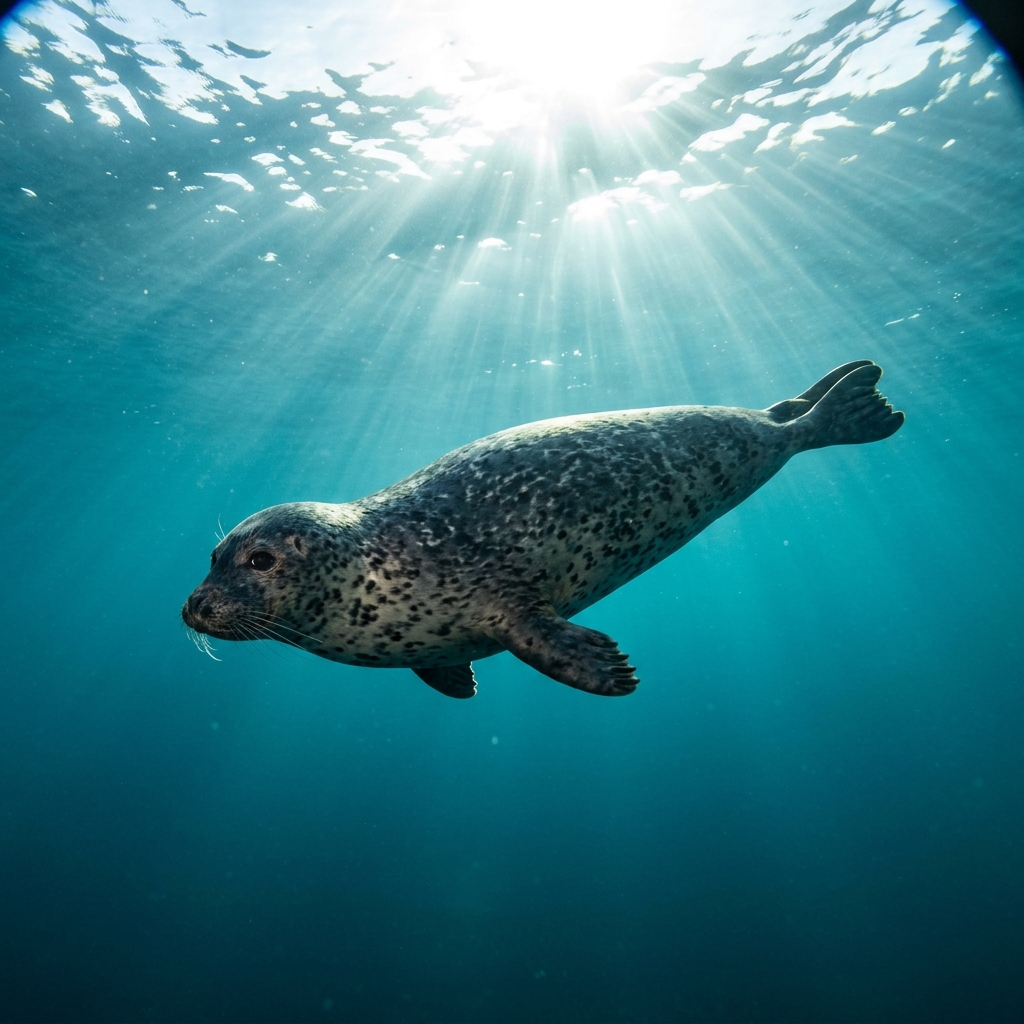
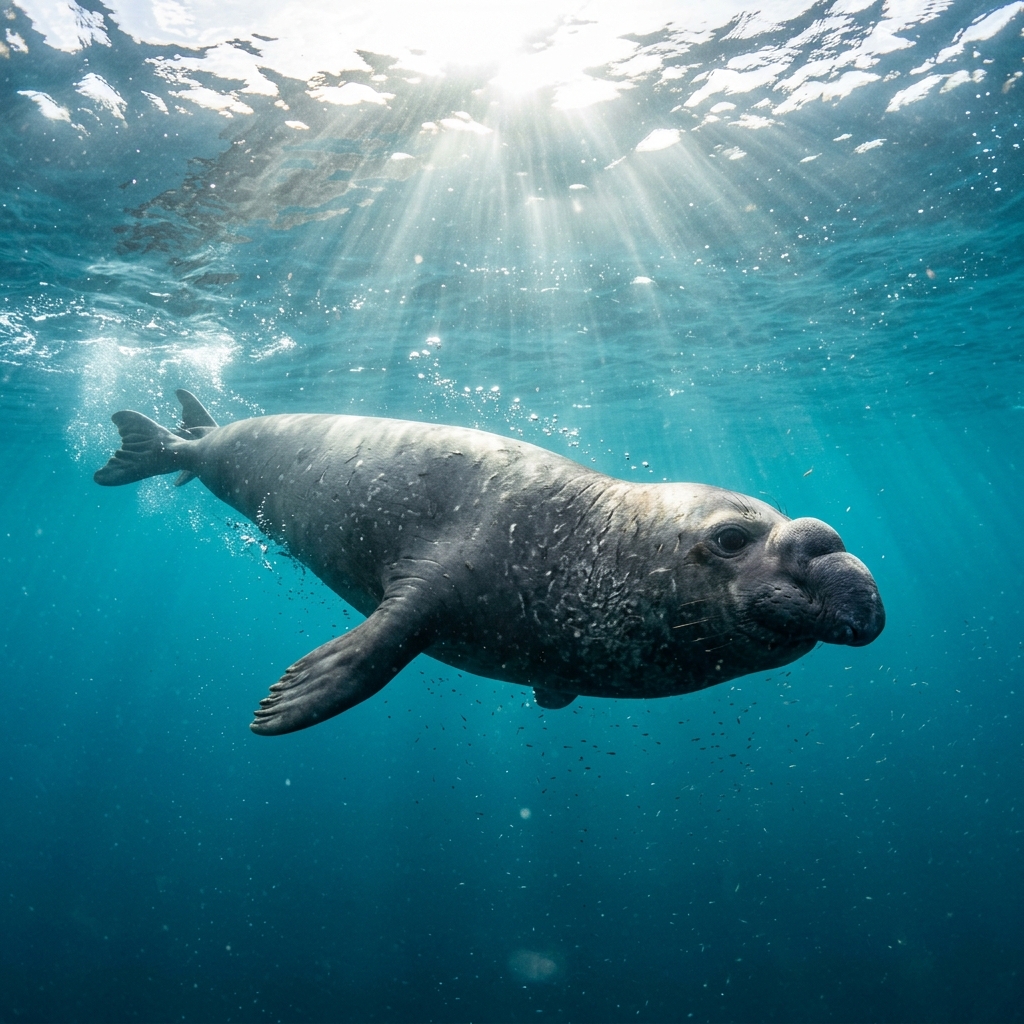
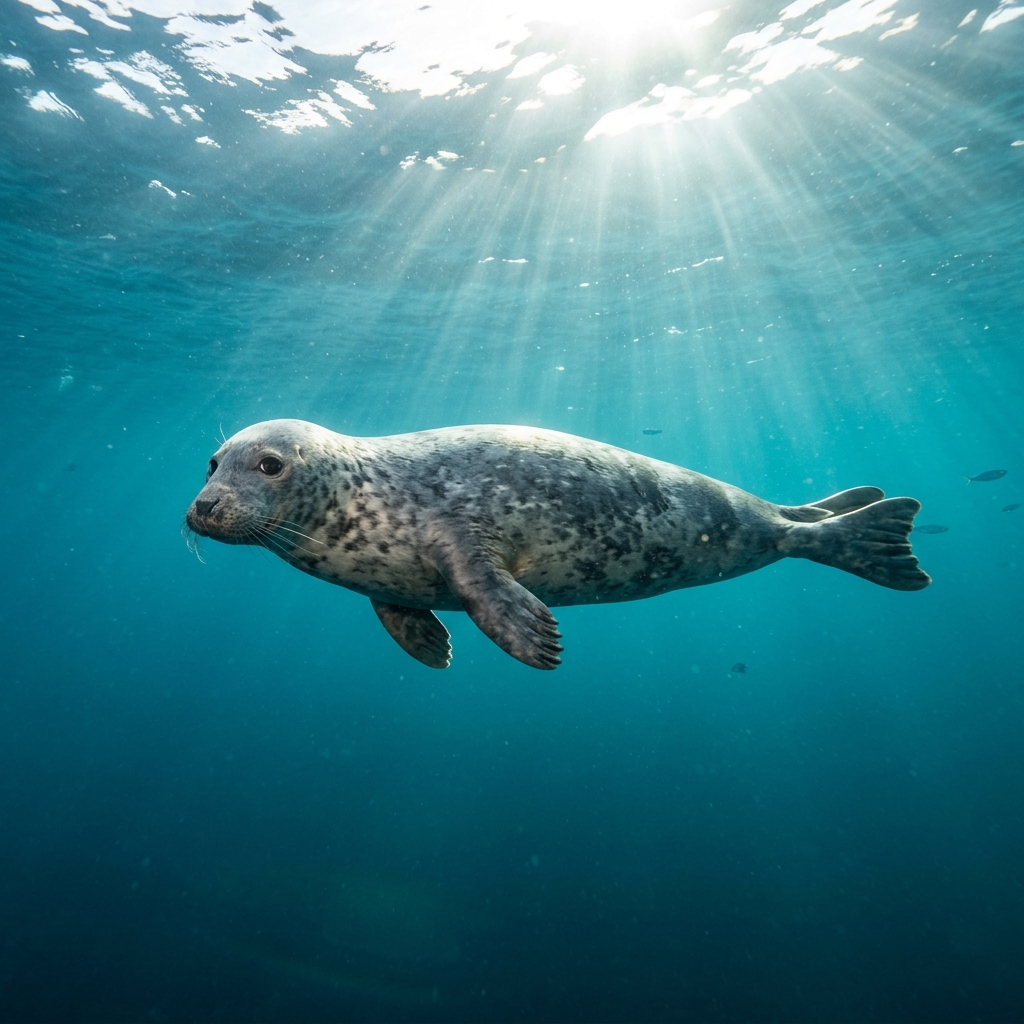
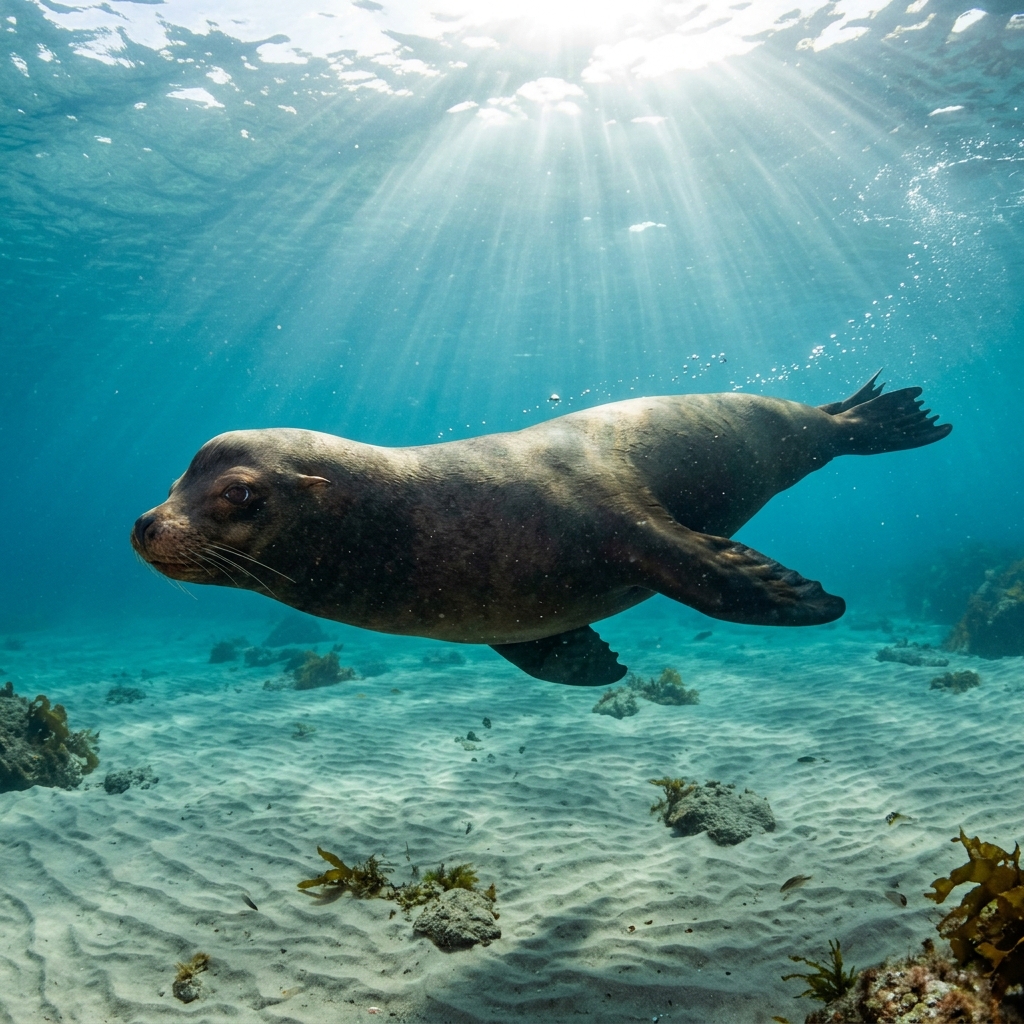
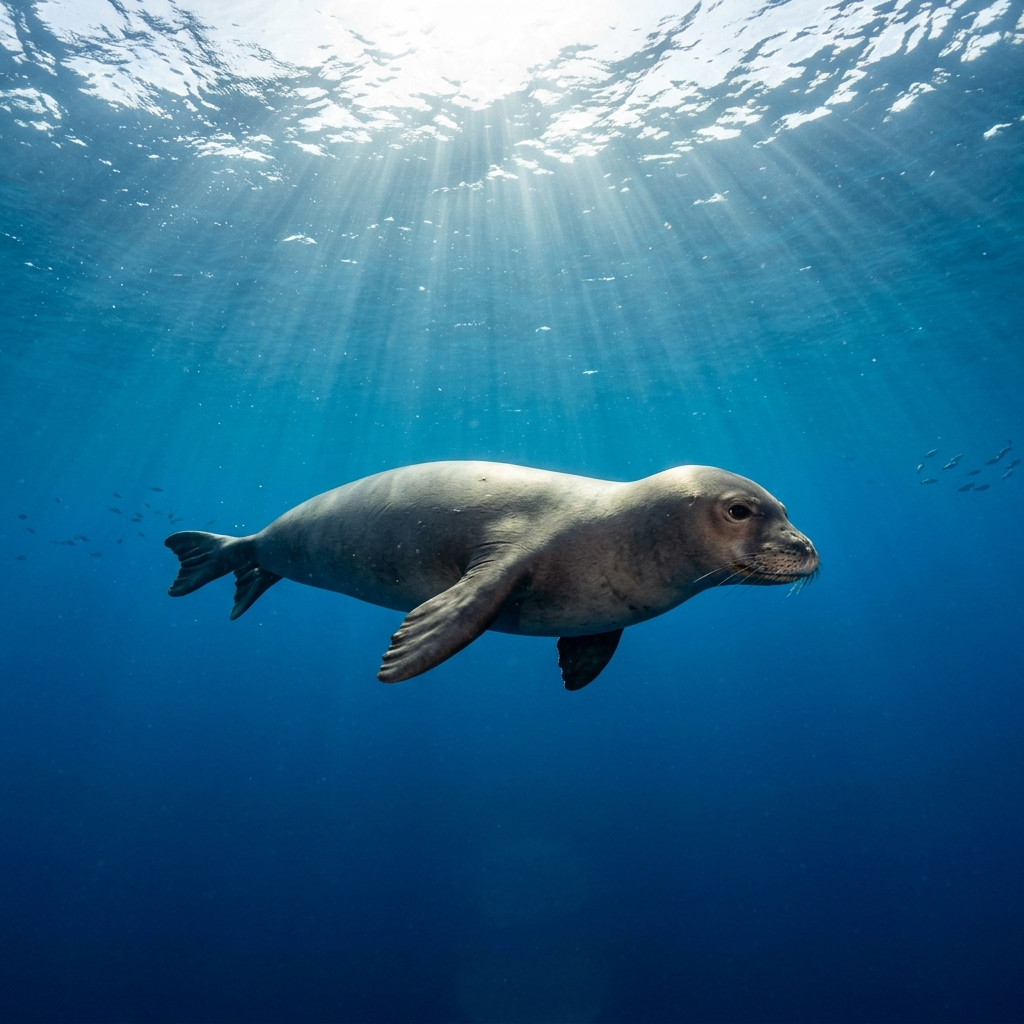
A large, smooth-coated seal with a grey to silver-brown back and noticeably pale, creamy undersides, giving it a clean two-tone look underwater. The body is torpedo-shaped and noticeably plump, with a relatively small, rounded head and large dark eyes that stand out against the face. Unlike sea lions, it has no visible ear flaps and moves through the water with a sinuous, almost effortless whole-body undulation. Its uniform colouration and lack of bold markings make it unmistakable in Hawaiian waters, where no other wild seal is resident.
Most diver encounters involve seals resting on sandy bottoms or reef flats, occasionally hauled out on the surface nearby. In the water they tend to be curious but unhurried, and a calm, still diver may be treated to a close pass before the animal loses interest and moves on. They are most often seen alone, as adults are largely solitary outside of breeding.
With a global population numbering only in the low thousands, this is one of the most endangered marine mammals on the planet, and every wild encounter represents a significant portion of the entire species.
There is no clear seasonal peak in the dive data, so encounters are possible year-round. The species occupies warm Hawaiian waters consistently, and the observed temperature range of roughly 24 to 27 °C reflects stable conditions across the islands throughout the year.
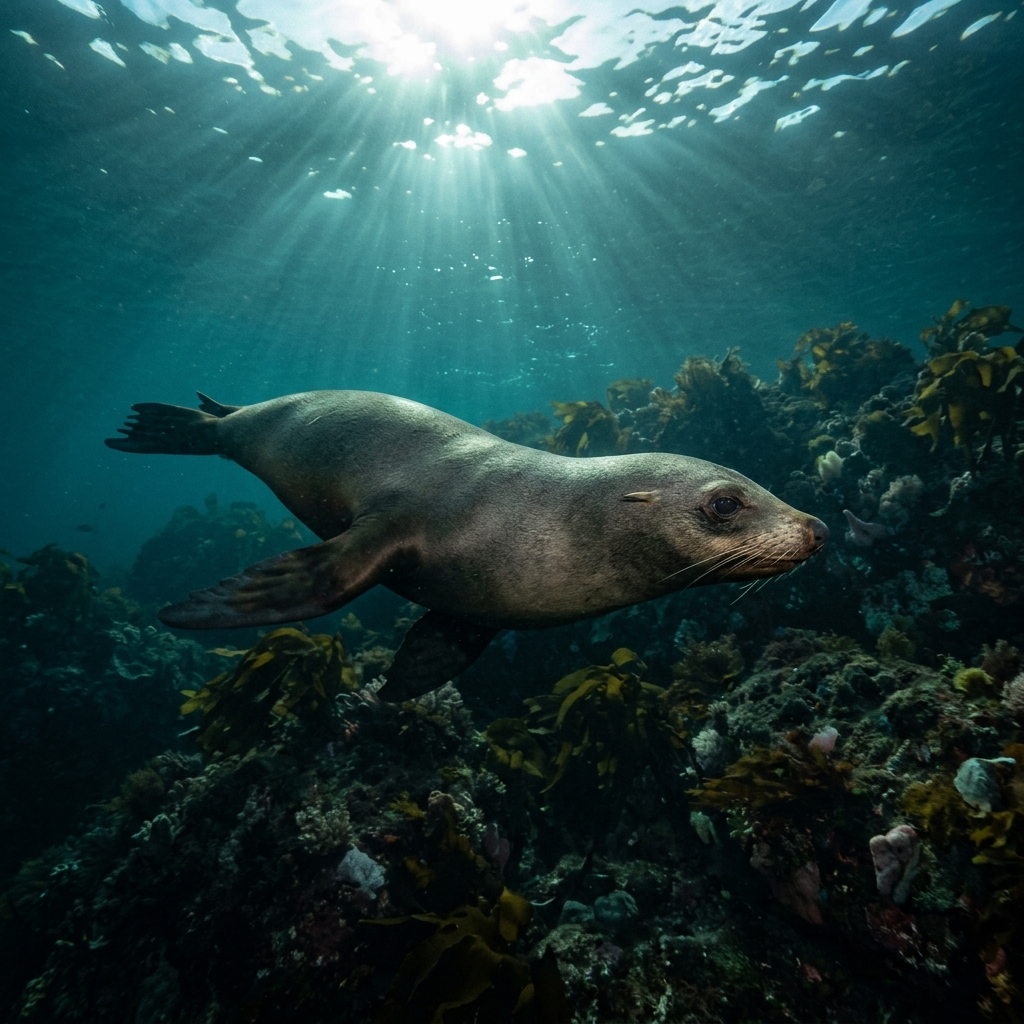
Reef neighbours a diver could mistake it for. Use the identification notes above to tell them apart.
All recorded dive sites are in Hawaii, United States, making it the only place on Earth to encounter this species underwater. Sightings are spread across the Hawaiian island chain, and while encounters are rare at most sites, the entire archipelago sits within the seal's home range. Shallow coastal areas and sandy reef flats are the most productive places to look.
Mapping where Hawaiian Monk Seal is logged…
Hawaiian monk seals are found only in Hawaii, United States. Sightings have been logged across multiple sites in the Hawaiian island chain, from the main islands to the remote Northwestern Hawaiian Islands. Every encounter is rare, so there is no single 'best' site, but shallow sandy reef areas give you the best chance.
The dive data shows no strong seasonal pattern, so encounters are possible at any time of year. Hawaii's consistently warm coastal waters, typically in the 24 to 27 °C range, keep conditions stable year-round, and the seals do not migrate away from the archipelago.
Look for a large, smooth seal with a two-tone colouration: grey-brown on the back and pale cream on the belly. It has no visible ear flaps, a rounded head with big dark eyes, and moves with a fluid, whole-body undulation rather than the side-to-side flapping you see in sea lions. In Hawaii, there is simply nothing else that looks like it.
They are listed as Vulnerable, with one of the smallest wild populations of any marine mammal. The total wild population numbers only in the low thousands. Recovery efforts by NOAA and local organisations have stabilised numbers somewhat, but the species remains at serious risk from entanglement, habitat loss, and climate-driven changes to prey availability.
Adults typically reach around 2.1 to 2.4 metres in length and can weigh between 170 and 270 kilograms. Females tend to be slightly larger than males, which is unusual among seals, though the difference is not obvious underwater.
No, Hawaiian monk seals are not considered dangerous to divers. They are generally calm and curious in the water. However, they are protected by law in the United States, and it is illegal to approach, disturb, or interact with them. Maintain distance and let the seal decide how close it wants to come.
The Hawaiian Monk Seal is listed as vulnerable by the IUCN. Observe from a distance, avoid touching or feeding it, and report sightings to local marine research organisations.
Listed as Vulnerable, with a small and slowly recovering population restricted almost entirely to the Hawaiian archipelago. Divers should keep a respectful distance, never approach a resting seal on the beach or in the water, and report sightings to local wildlife authorities.
Site and sighting data is aggregated from diver logs, iNaturalist and GBIF. For taxonomy and conservation status:
Long-nosed Fur Seal
347 sites