Elysia pusilla
A tiny leaf-shaped slug logged across Luzon and Mindanao reefs, 24 to 30C year-round, easy to miss if you don't check the algae.
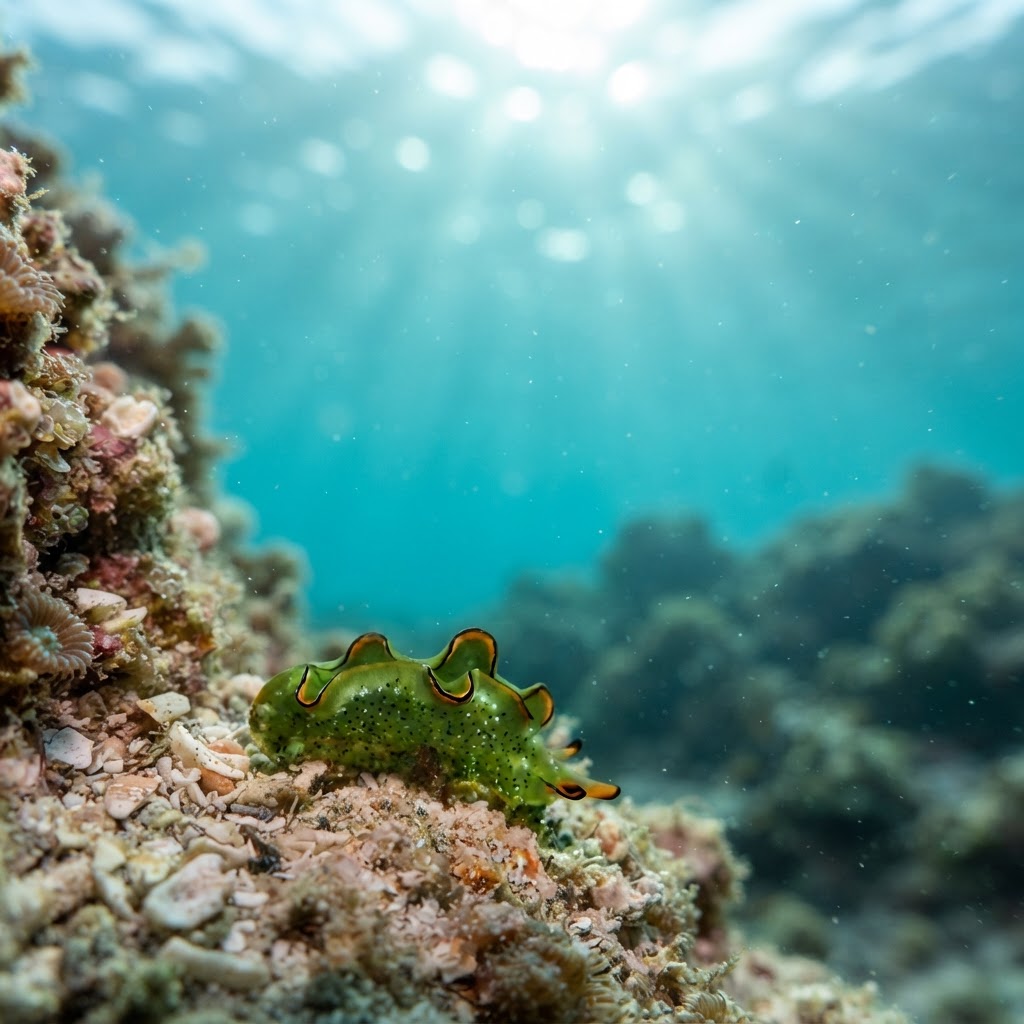
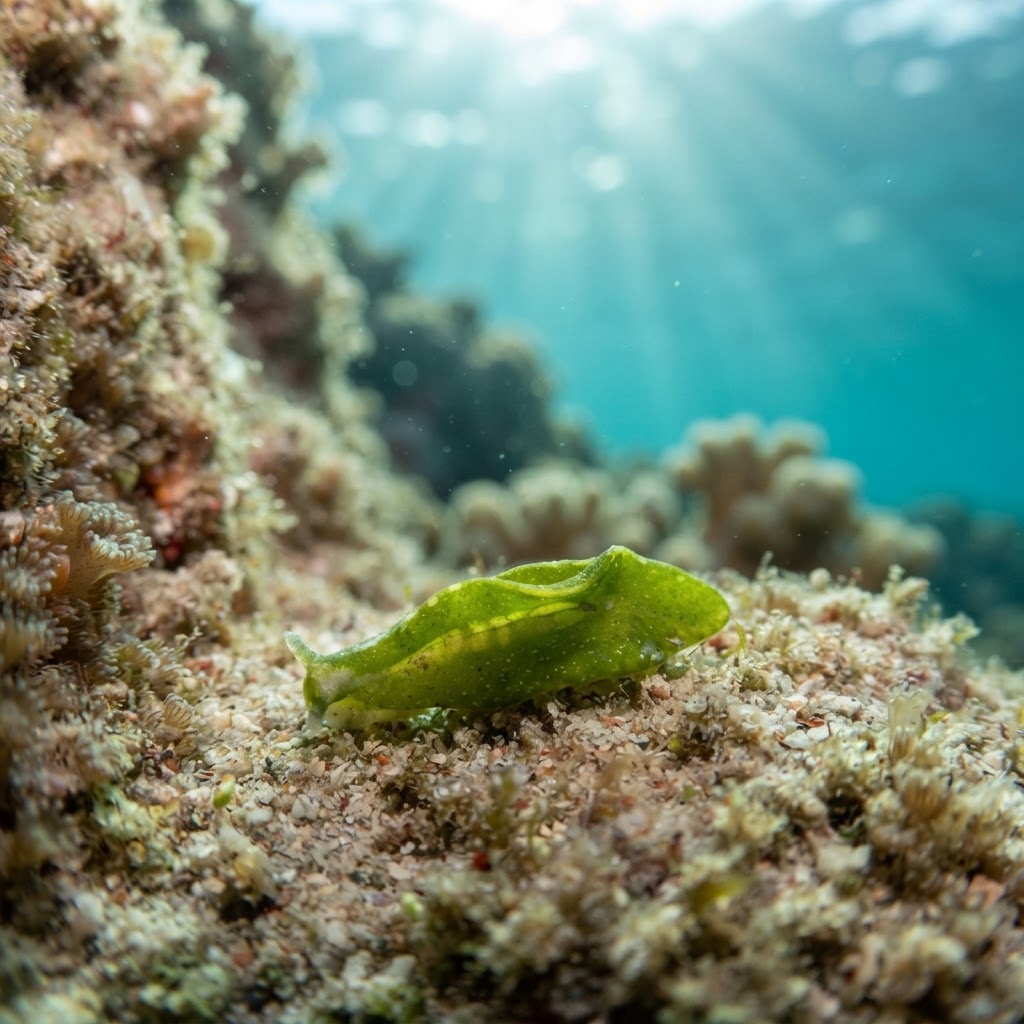
At roughly 2cm, this slug is a small, folded, leaf-like blob that looks more like a curled scrap of algae than an animal. It's mottled green to olive with flecks of white or brown, and its body forms rolled, taco-like lobes (parapodia) that hide the head. There's no obvious eye-catching mark, so divers usually find it by scanning Halimeda algae clusters closely rather than spotting it from a distance.
Divers find this one parked motionless on clumps of Halimeda algae, grazing slowly and barely reacting to a torch or a close look. It's not a swimmer you'll see cruising open reef, it's a patient macro find that rewards divers who stop and search algae beds rather than fin past them. Most sightings happen during the day on shallow reef flats and rubble patches where Halimeda grows thick.
Like other members of its family, it can retain functioning chloroplasts from the algae it eats, effectively running a bit of photosynthesis in its own tissue for a while after feeding.
No clear seasonal pattern shows up in the data, and with a comfortable range of roughly 24 to 30C it's a year-round find on the tropical reefs where it occurs. Plan the dive around finding the right algae, not a particular month.
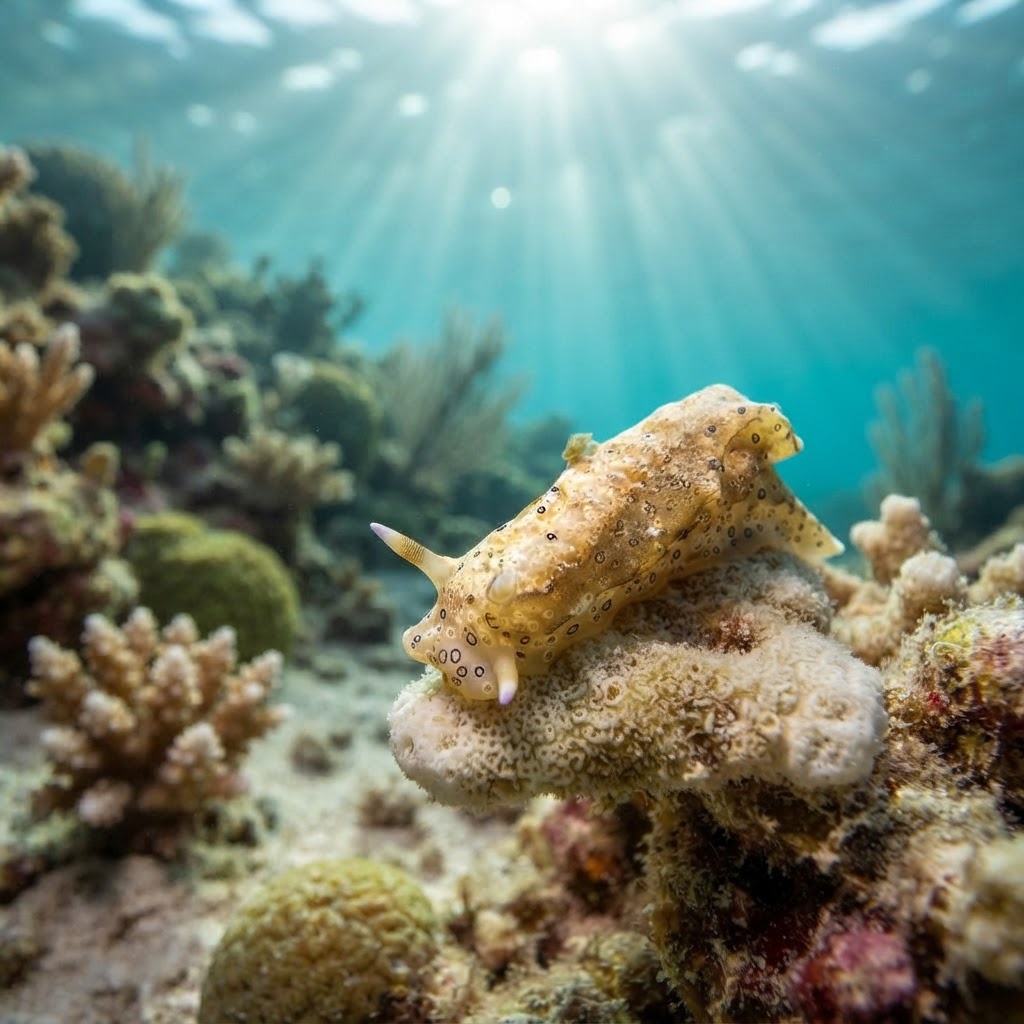
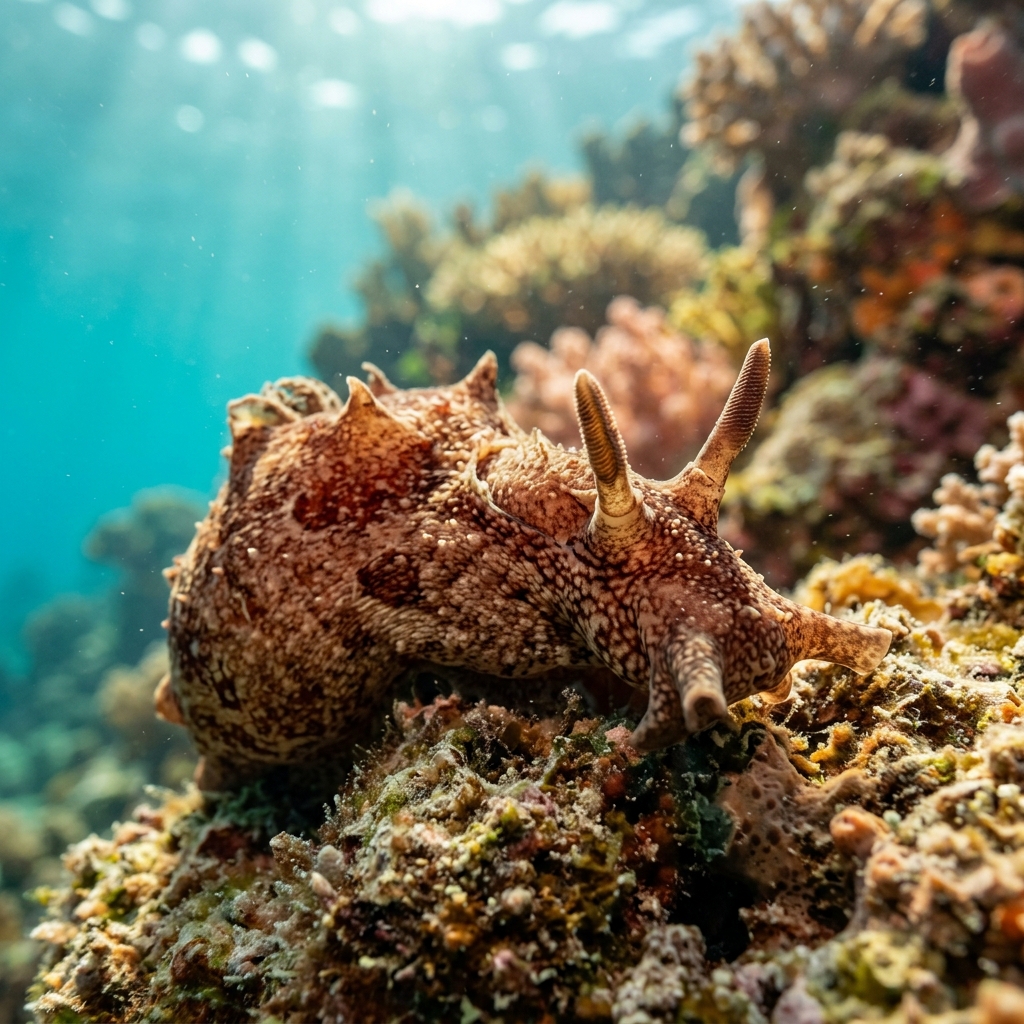
Reef neighbours a diver could mistake it for. Use the identification notes above to tell them apart.
Most reliably logged in the Philippines, especially Luzon and Mindanao, which together account for the bulk of sightings. Smaller but consistent populations turn up in Baja California, Mexico, and Western Australia, with an occasional record from Nosy Be, Madagascar.
Mapping where Halimeda Taco Slug is logged…
Best odds are in the Philippines, particularly Luzon and Mindanao, where it's logged most often. It also turns up in Baja California, Mexico, and off Western Australia.
There's no strong seasonal signal in sighting data, and it tolerates roughly 24 to 30C water, so it's considered a year-round find wherever it occurs.
Look for a tiny, roughly 2cm folded green-and-white blob tucked into Halimeda algae, with rolled lobes that make it resemble a scrap of algae rather than an animal.
They're small, typically around 2cm, so most divers need to look closely at algae clumps rather than expect to spot one at a distance.
It can hold onto chloroplasts from the algae it grazes, letting its body carry out a limited form of photosynthesis for a period after feeding.
No, it poses no threat to divers. It's a slow-moving grazer with no sting or bite to worry about.
Site and sighting data is aggregated from diver logs, iNaturalist and GBIF. For taxonomy and conservation status:
Light-spotted Aegires
3,168 sites