Dardanus lagopodes
Spot this bristly, borrowed-shell reef scavenger in the Visayas or Okinawa, most active on night dives year-round in 23-30C water.
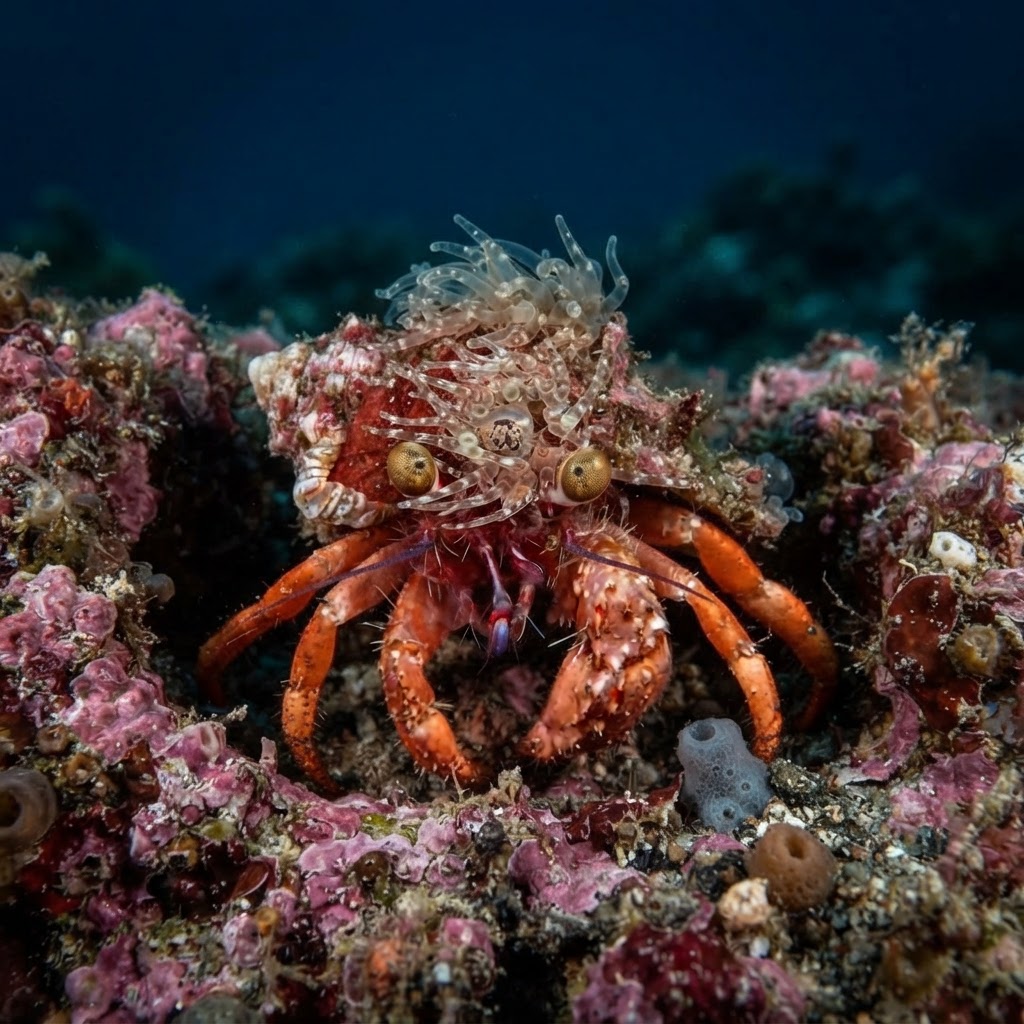
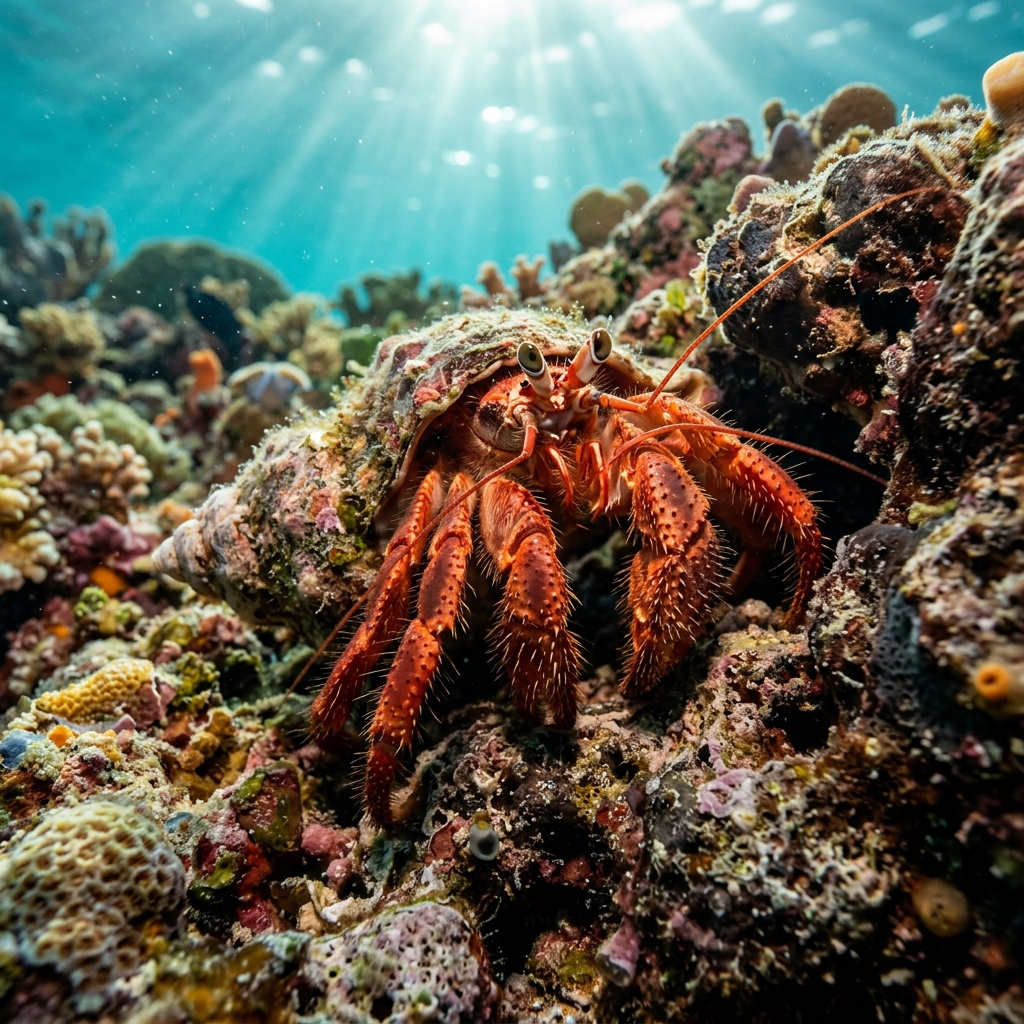
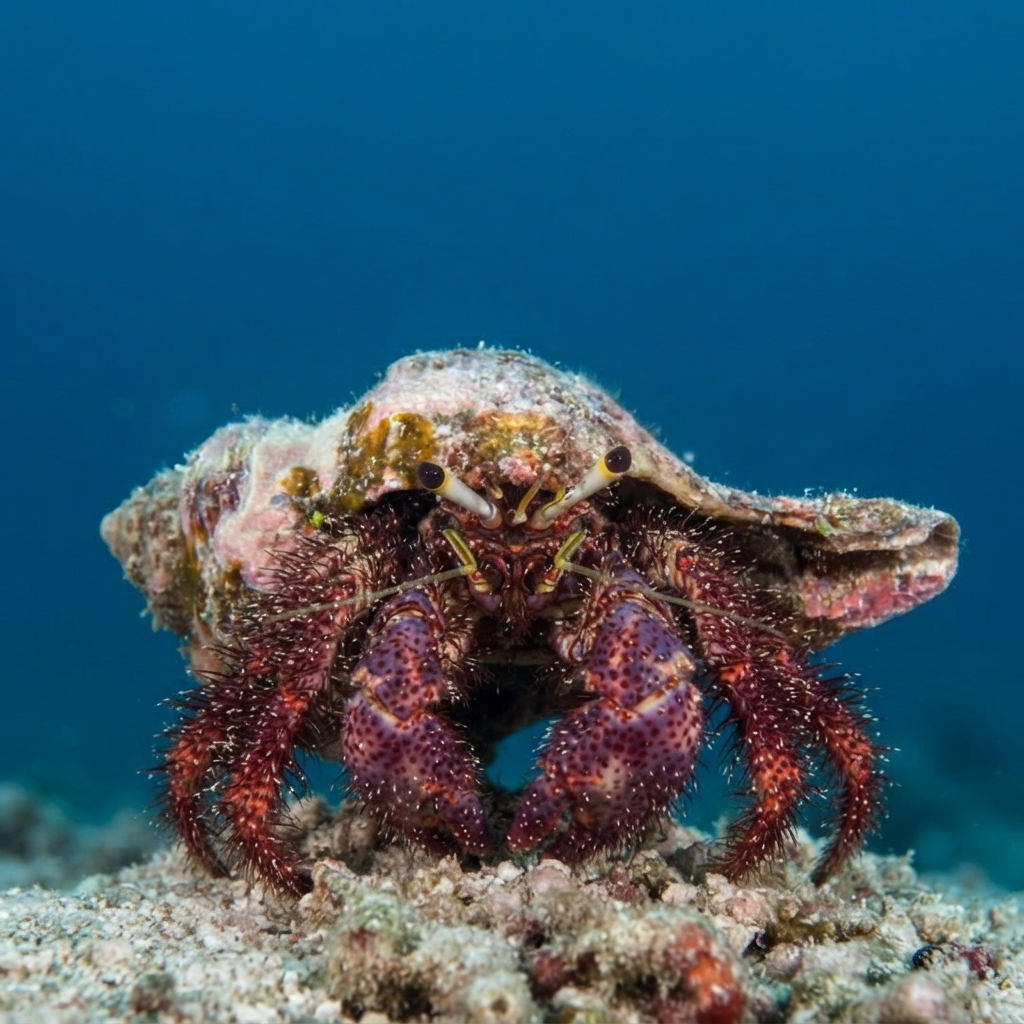
Look for a bulky, bristle-covered body in reddish to orange tones, with hairy legs and long antennae poking out of a scavenged snail shell. The claws are noticeably unequal in size, and the whole animal has a shaggy, textured look rather than the smooth carapace of a true crab. Size varies with the borrowed shell it is occupying, so shell diameter is a better field cue than body length.
Divers most often spot this hermit crab shuffling across reef rubble or wedged into crevices during day and night dives alike, scavenging for scraps with its carnivorous diet keeping it busy near the substrate. It tends to retreat into its shell when a torch beam or diver hand gets close, then re-emerge once the disturbance passes. Most logs describe it as uncommon at any given site, so finding one usually takes a slow, close look at rubble patches rather than open sand or coral bommies.
Like all hermit crabs it does not grow its own shell, so as it grows it periodically evicts a snail or moves into an abandoned shell that better fits its body, meaning the same individual can look like a completely different size from one season to the next.
Sightings show no clear seasonal pattern, and with a comfortable range of 23.4 to 29.9C this crab stays active on tropical and subtropical reefs all year round. Divers logging it in the Philippines, Malaysia, and Japan report sightings across every month checked.
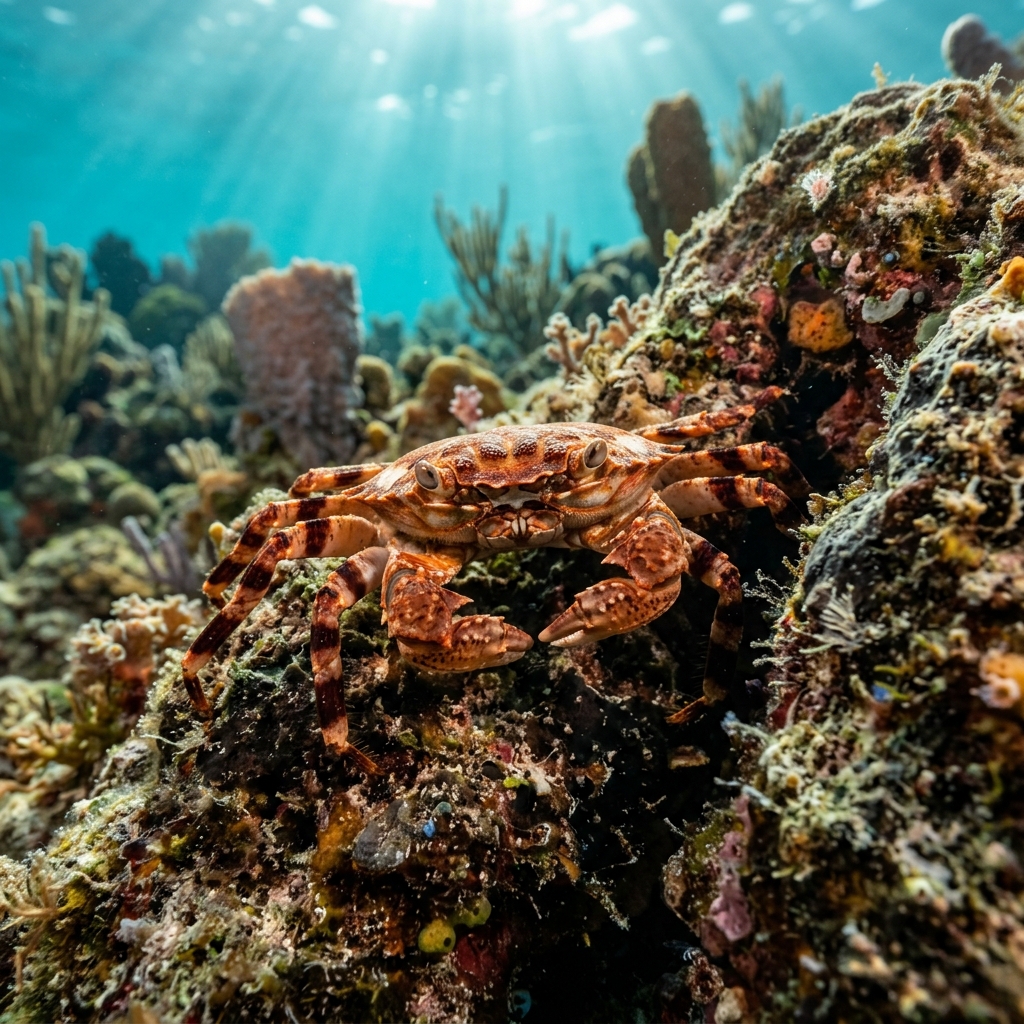
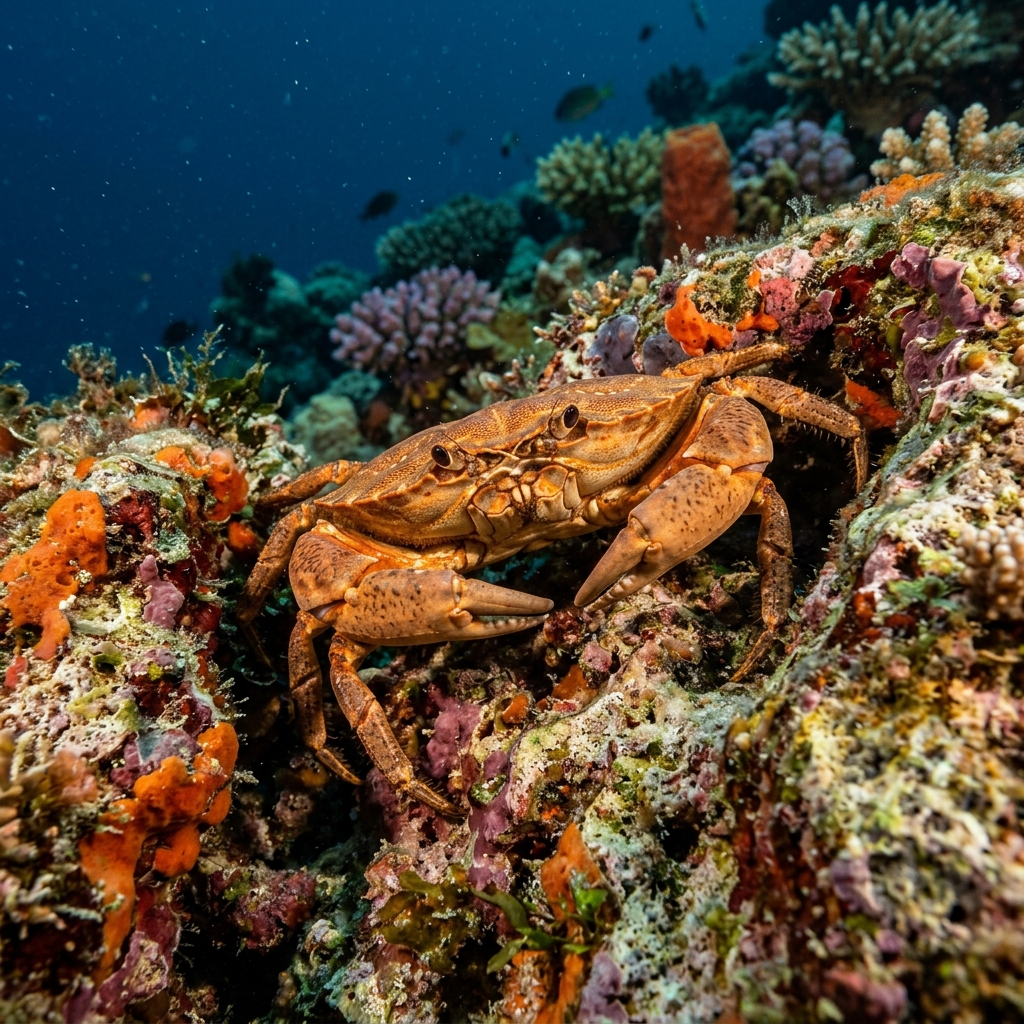
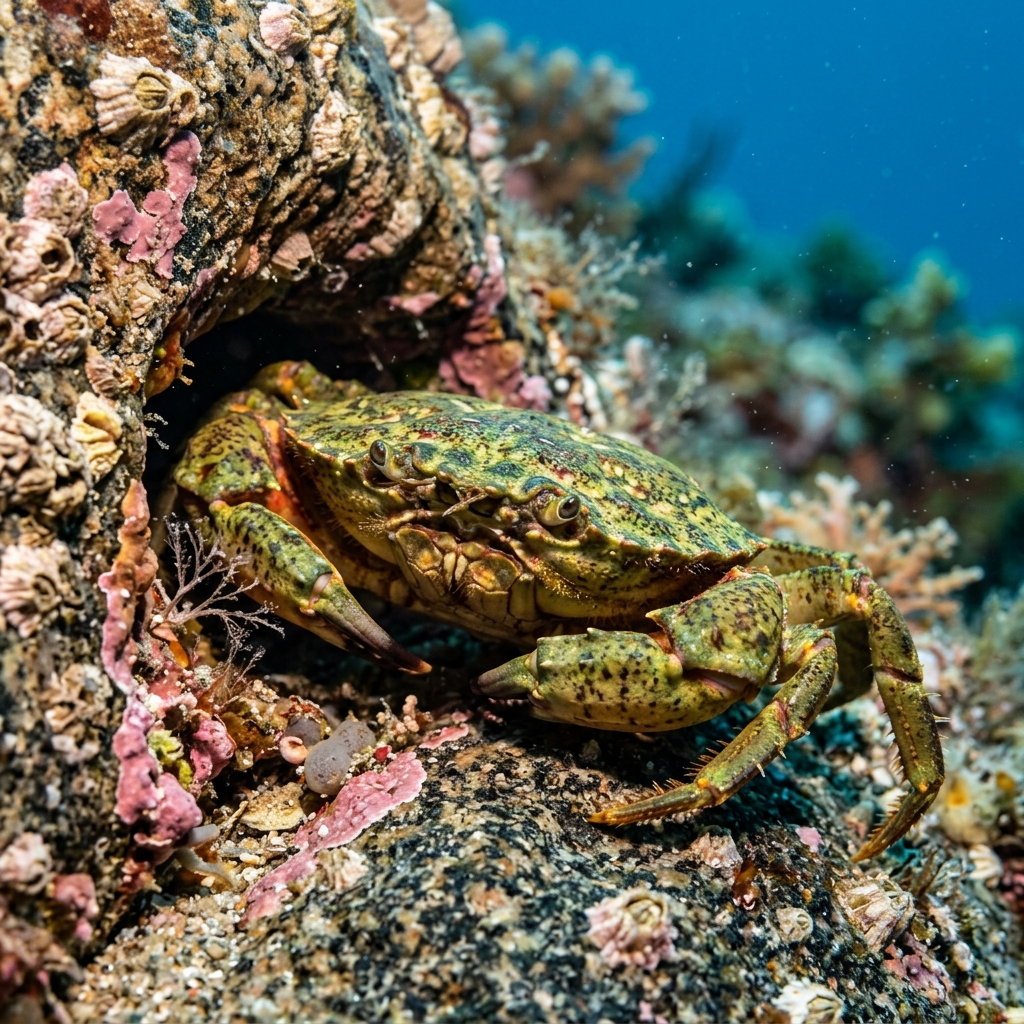
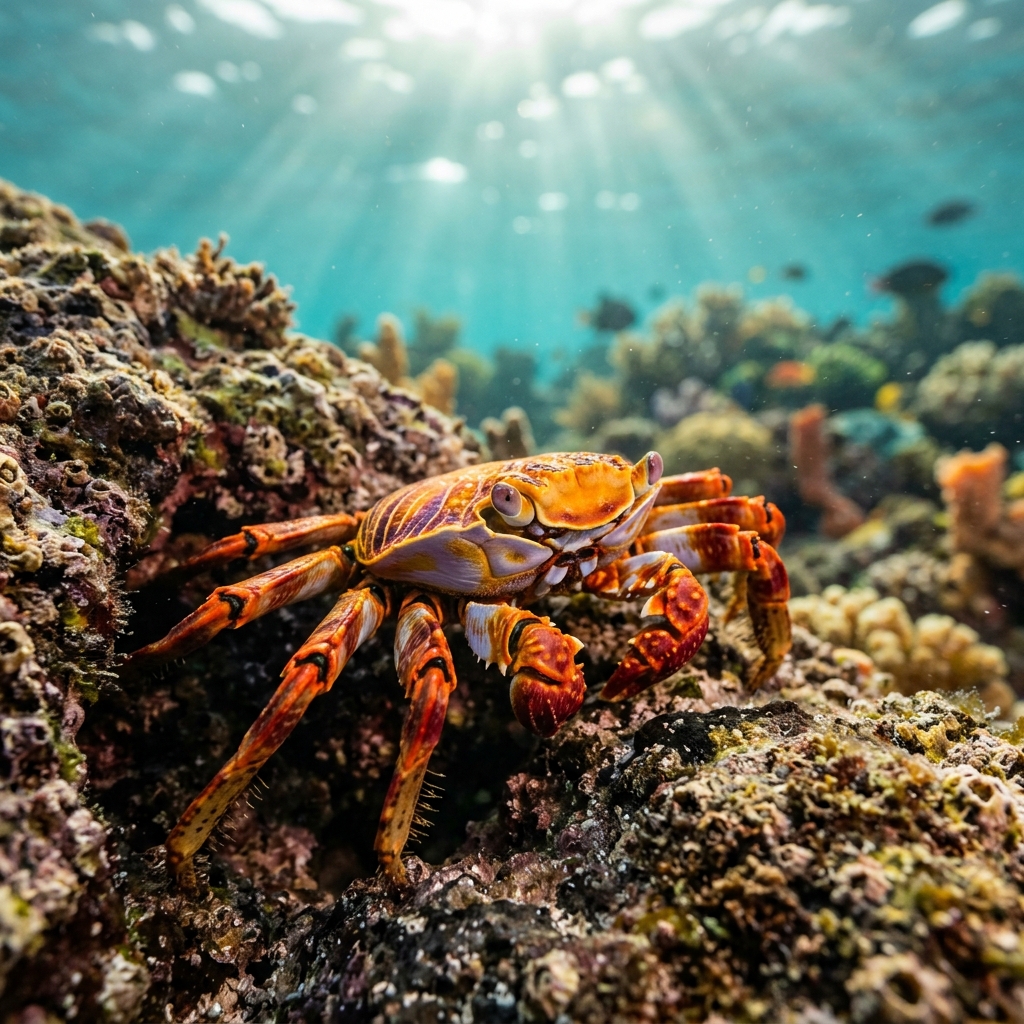
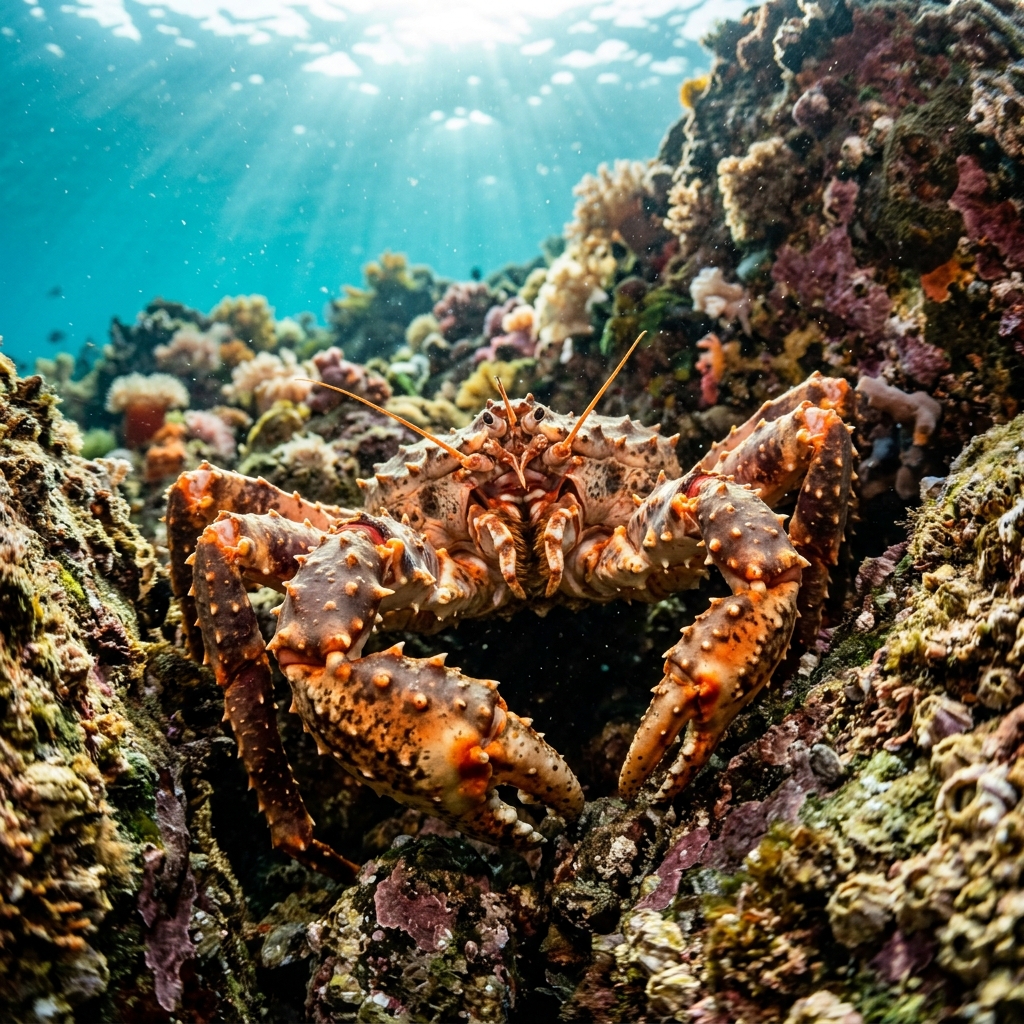
Reef neighbours a diver could mistake it for. Use the identification notes above to tell them apart.
This one turns up most reliably on reefs in the Philippines, especially around the Visayas, and is also a steady find across Peninsular Malaysia's East Coast and Sabah. Okinawa and the Ryukyu Islands in Japan hold a strong population too, with further sightings logged in Cambodia around Sihanoukville, in Phuket, Thailand, and as far east as French Polynesia's Society Islands.
Mapping where Hairy Red Hermit Crab is logged…
Strongest sightings come from the Visayas in the Philippines, plus Peninsular Malaysia's East Coast and Sabah in Malaysia. Okinawa in Japan and Sihanoukville in Cambodia are also reliable spots, with a smaller presence in Phuket, Thailand and French Polynesia's Society Islands.
There is no strong seasonal pattern in the sighting data, so it is considered a year-round find. Its comfortable temperature range of roughly 23 to 30C matches tropical reef conditions in its main range countries throughout the year.
Check for a bristly, reddish-orange body with hairy legs and antennae emerging from a borrowed snail shell, plus noticeably mismatched claw sizes. The shaggy texture and asymmetric claws separate it from smooth-carapace true crabs on the same reef.
Exact size figures are not well documented for this species, and apparent size depends heavily on the shell it is currently occupying. Divers should judge it by shell diameter and leg span rather than expecting a fixed body length.
It never builds its own shell and instead recycles empty snail shells throughout its life, trading up to a roomier one as it grows. This constant shell-swapping means the same crab can look markedly different in size across separate sightings.
Site and sighting data is aggregated from diver logs, iNaturalist and GBIF. For taxonomy and conservation status:
European Green Crab
2,469 sites